Saratoga Springs Clarifies Its Role Regarding City ICE Activity
SARATOGA SPRINGS — Last week, a chaotic scene that involved ICE Officers, area residents and local police took place on a Massachusetts street in the city that calls itself the “The Heart of the Commonwealth.”
On May 8, Worcester Police officers were dispatched for a report of a federal agent surrounded by a group of about 25 people, as well as in response to a call saying ICE officers were on scene and refusing to show a warrant to the crowd.
“When officers arrived on scene, they observed a chaotic scene with several federal agents from various agencies attempting to take a female into custody,” according to a statement released by the Worcester Police Department.
Arrests related to the event were eventually made and as the “chaotic incident is still under investigation,” local authorities noted the purpose for their response: “Worcester Police officers responded to preserve the peace and prevent anyone from being injured.”
Following a recent event in Saratoga Springs, where at least one person was detained in an ICE Enforcement & Removal Operation – an occurrence in which city police played no role – Saratoga Springs Public Safety Commissioner Tim Coll last week explained to the council the department’s level of involvement in events led by U.S. Immigration and Customs Enforcement.
“ICE does not have to coordinate with us, but I’ve asked them to do that, and they’ve promised they would. The Saratoga Springs Police Department does not enforce federal immigration law,” Coll said. “We do not have oversight over ICE.”
Coll, who met with U.S. Immigration and Customs Enforcement leadership on April 30, told the council that city police have no legal authority to enforce federal immigration law.
“The purpose of the meeting was to make sure we are deconflicting in coordinating enforcement activities in our city. As you can imagine, if the Saratoga Springs Police Department is conducting an arrest warrant or search warrant in a certain location and ICE is doing the same, you are creating a dangerous situation where we could have a crossfire situation,” the public safety commissioner said.
“They’d tell us when they are in the city doing enforcement activity and they’d tell us when they leave. The primary reason for that is for officer safety,” Coll said. “But I want to be clear: If an agent – and some of them are my friends – are doing what they’re told through their leadership, and if that person is in a dangerous situation and calls for help, we are going to help them. I’m not just going to sit here being a public safety commissioner and have an ICE agent get killed because of a dangerous situation.”
During the public council meeting, which took place at City Hall May 6, Finance Commissioner Minita Sanghvi asked for clarity regarding whether agents identify themselves.
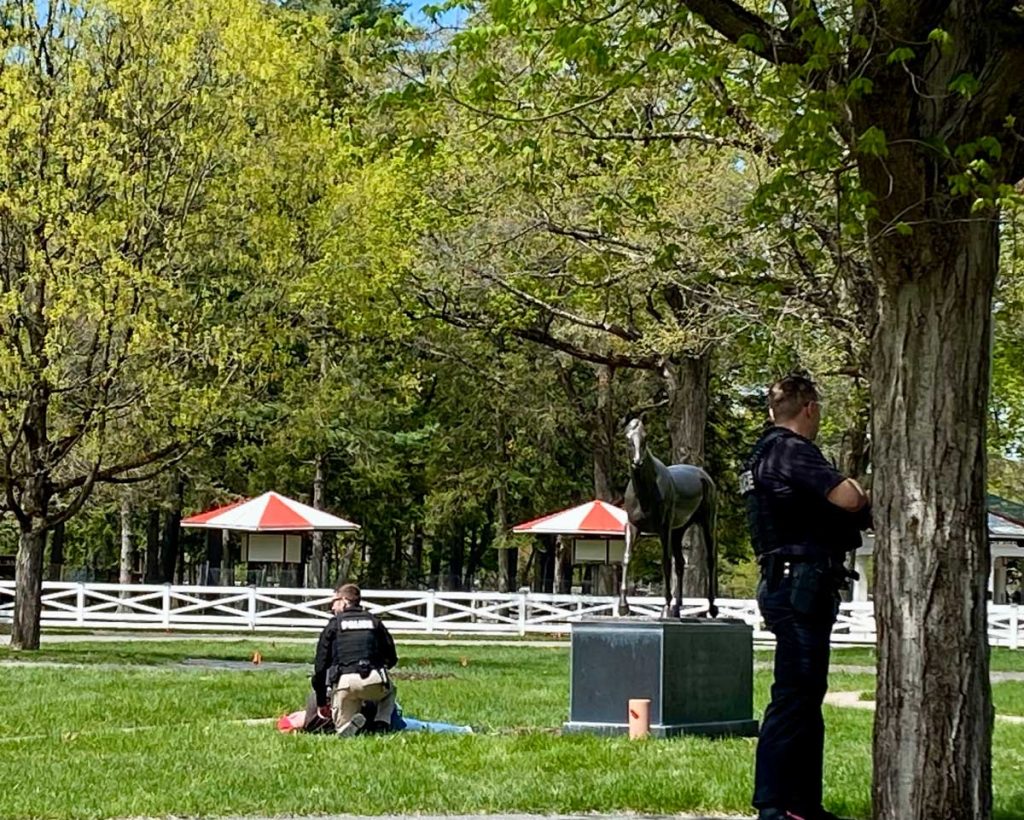
“ICE will identify themselves – their identity on their vests – usually that they’re either ‘ICE’ or they are ‘POLICE,’” said Coll. “Many times, they will issue criminal warrants. Additionally, they will issue administrative warrants.”
A judicial warrant is a written order – issued by the courts and signed by a judge, while an administrative warrant is a written document issued by a federal agency and usually signed by an immigration officer, according to an April 24 article published by the Milwaukee Journal Sentinel describing the difference between the two.
“Sometimes they engage in what is called the ‘expedited removal’ process,” Coll said. “There are different due processes for each of those enforcement activities they engage in.”