Saratoga “Psycho” Killer: New Thriller Features Spa City


“Marion” book cover via St. Martin’s Press.

SARATOGA SPRINGS — Could the quaint city of Saratoga Springs produce a serial killer?

In “Marion,” a forthcoming novel that reimagines the plot of the classic horror film “Psycho,” the protagonist is a Saratoga native cast in the Marion Crane role. But rather than succumb to the knife-wielding, mother-obsessed, shower-stalking Norman Bates, this Marion fights back.

Author Leah Rowan (a pen name) used “Psycho” as the basis for her plot but altered much of the original story. What emerged is an unpredictable, twist-heavy thriller in which Saratoga Springs plays a key role.

“I think it’s an interesting location because it is very far from New York City, but then it’s got its own culture and all these hotels,” Rowan told Saratoga TODAY. “It’s a destination in its own right.”

The book’s Marion character, much like her movie counterpart, steals a large sum of cash and boards an Upstate-bound bus in Manhattan. But the bus breaks down in New Paltz, where the Norman character operates an aging motel that he insists is on the brink of major renovations. When Marion finds that the handsome and seemingly friendly Norman isn’t quite right in the head, her anger towards the abusive men she’s encountered in her life suddenly gushes forth, much like the blood that spills out of certain characters’ bodies.

“Psycho” was set in Arizona, and as Rowan noted in her interview with Saratoga TODAY, the exact location of the story isn’t terribly crucial. But since the author splits her time between Brooklyn and the Catskills, her familiarity with New York State helped inform Marion’s movements and destinations. Although only a relatively small percentage of the novel takes place in Saratoga, the city looms large in the story, right up until the final sentences.

Attentive readers will spot references to the Times Union newspaper, the Saratoga Springs train station, the Children’s Museum at Saratoga, and the Saratoga Casino Hotel. But it may be hard to focus on these details when absorbed in the story, which manically twists in all directions like a killer’s knife plunged into a victim.

“I don’t know what this says about me, but I had so much fun writing this book,” Rowan said. “Literally, more fun than I’ve ever had… I think horror is really having a moment. I think it’s because there are a lot of horrors in the world. I think writing about them in a way that’s fun and almost absurd, at times, helps us process things.”

Of course, the idea of a psychotic killer running amok in Saratoga is absurd. Why, Saratogians wouldn’t even harm a fly.

Saratogians Vie for Visionary of the Year

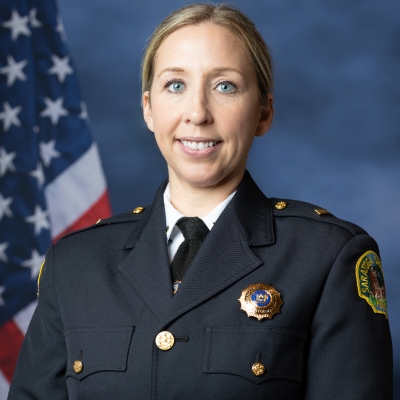
Photos of Saratoga Springs Police Lieutenant Angela McGovern and Chef Noah Frese via Blood Cancer United’s Visionary of the Year Albany.

SARATOGA SPRINGS — Lieutenant Angela McGovern of the Saratoga Springs Police Department and Chef Noah Frese, of Noah’s Italian and Siro’s fame, are both vying for Blood Cancer United’s Visionary of the Year honor for the Albany area.

Visionary of the Year is a 10-week philanthropic challenge. Each of the ten candidates is tasked with forming a fundraising team that will compete to earn the most donations between the dates of March 6 and May 15. The funds will be used by Blood Cancer United to support patients and their families, support research efforts and clinical trials, and advocate to break down barriers to accessing care.

“When I was nominated to do this, I instantly thought of a few people: One is my grandmother, who has multiple myeloma, and the other is retired Troy Police Sergeant Jim O’Brien, who lost his life to blood cancer,” McGovern wrote to Saratoga TODAY. “Our law enforcement officers spend most of their lives sacrificing for others and deserve to live long, healthy retirements. Jim was only 47 years old and had been in law enforcement from 1984 until 2010, when he had to retire due to his illness. He would pass away in December of that same year.”

“I want to use this opportunity and this campaign to show the local community who police really are,” McGovern continued. “We are kind-hearted, caring, and compassionate people who truly love and want to protect our little slices of the world.” 

McGovern’s fundraising efforts include several local events, such as the Big Hole Golf Tournament at the Saratoga Lake Golf Course on May 9, and a “Jail for Bail” event during which McGovern will build cells at the Saratoga Springs City Center and arrest some local “VIPs” who will have to bail themselves out before the other cellmates.

Those interested in supporting McGovern’s fundraising campaign can follow along with her Instagram account (@inpursuitofacure) or her Facebook page (https://www.facebook.com/inpursuitofacure).

In his Visionary of the Year profile, Chef Noah Frese detailed the impact that cancer has had on his busy life, much of it spent in kitchens. 

“This past fall, I lost my Mimi to cancer,” Frese wrote. “She was my inspiration, always there to support me and make sure I had every opportunity in life. Losing her made me realize how precious health and time are and how important it is to fight for a future where no family has to endure the pain of this disease. Now, as a father, I feel an even deeper purpose to help find a cure, so that children like my own can grow up healthy and full of opportunities.”

To support Frese’s campaign, visit pages.lls.org/voy/uny/alb26/nfrese.

Task Force Meets to Combat Animal Abuse


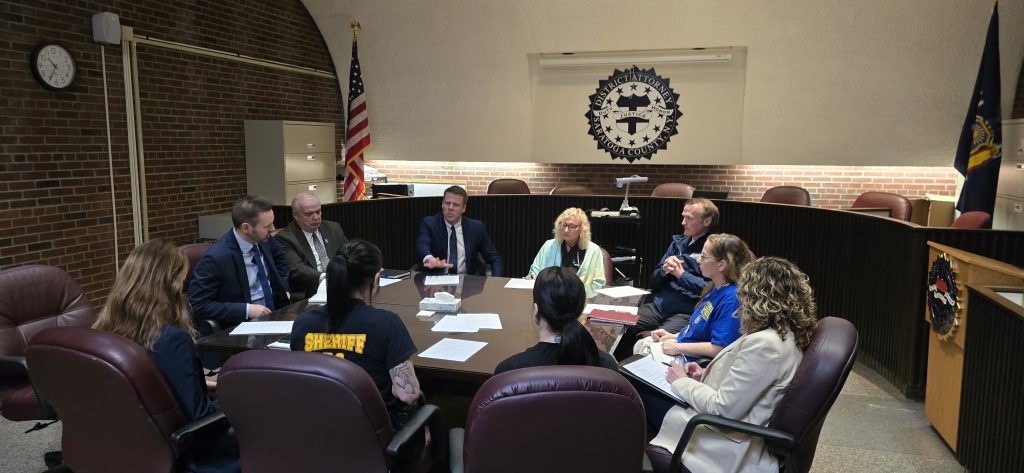
The Saratoga County Animal Abuse Task Force held a meeting April 1 to discuss new tactics for combating animal abuse (Aidan Cahill)

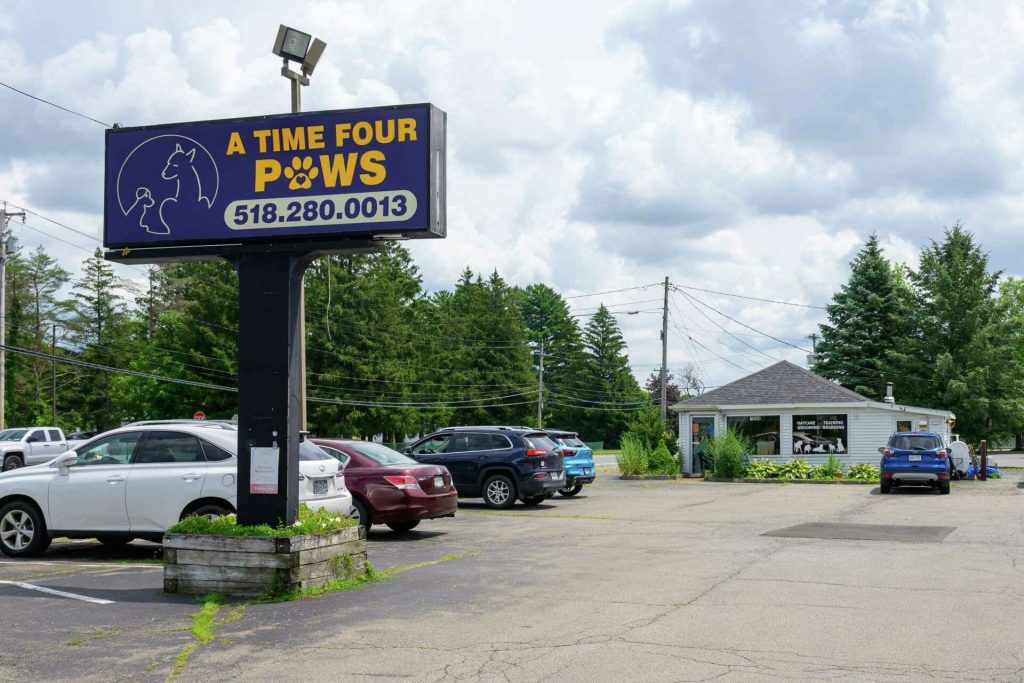
Sheriff Jeff Brown said one of the factors that led to the formation of the task force was the recent case of animal abuse at A Time Four Paws
(Courtesy of the Saratoga County DA’s Office).

After a summer which saw several high-profile animal abuse incidents in Saratoga, the county is taking action. 

A new task force has been formed to combat the issue and develop a coordinated response to incidents of abuse in Saratoga County. The task force is comprised of members of the Saratoga County District Attorney’s Office, Saratoga County Sheriff’s Department, animal control officers, Saratoga County Health Department, elected officials and the Saratoga County Animal Shelter. 

The task force invited members of the media to attend a meeting on April 1 where they went over recent changes to policies and procedures related to animal abuse. 

One of those changes was the introduction of a thermal camera to detect bruising on an animal without having to shave it. District Attorney Brett Eby said the camera was bought with asset forfeiture funds and it was given to the Saratoga County Sheriff’s Office at the meeting.

The purchase and use of the camera was lauded by Saratoga County Animal Shelter Director Kelly Devall. 

“The one problem that we have is a lot of these animals are beaten in some way, shape or form and it’s very hard to detect the bruising,” Devall said.  “We did have one case where we were able to shave the dog and see very clear bruising. In other cases, we won’t be that lucky.” 

The shelter also recently received a new one-touch x-ray machine to help treat injuries more effectively as well as a new laser therapy machine to assist in treating animals with skin problems. 

On the law enforcement side, Deputies are being equipped with devices to measure heat and ammonium content in areas where animals are found to better assess the conditions the animals were living in. 

“Instead of walking in and saying the ammonium scent a was really strong, they will have an actual reading of what was going on, or how high the temperature was that the animals were having to exist in with no food and no water and the impact that could be having on those animals as far as their lungs go,” Devall said. 

Saratoga County Sheriff Jeff Brown said that deputies trained in animal abuse investigations will have access to these tools to help in their investigations. 

The task force came about after an incident at A Time Four Paws in the Town of Halfmoon, where multiple animals were found confined in an areas without proper ventilation or sufficient access to water in July 2025. One of the animals, a French bulldog named Gus tragically died from heatstroke as a result of the incident. 

The owner of A Time Fourr Paws, Yvette Giovanni, was recently indicted on charges of aggravated cruelty to animals, criminal mischief in the second degree, and 11 counts of overdriving, torturing, and injuring animals. The incident, along with another incident in the Town of Argyle led local lawmakers to propose legislation to regulate boarding facilities statewide. The bill is currently in committee. 

Brown said that the incident at A Time Four Paws highlighted the need for more coordination among the agencies involved in combating animal abuse. 

“One of the reasons that this task force was formed that was such a large case,” Brown said. “There were people coming in from all over on that.  We thought the task force would formalize those relationships. So when those big all hands-on-deck cases come in, we built the relationships and we’re more ready to respond to those cases.”

Another major development that came as a result of the animal abuse cases was the introduction of a county-wide animal abuse registry. In September, the Board of Supervisors unanimously passed the law creating the registry with it first being implemented in January of this year. 

Under the law, those who have been convicted of animal abuse offenses are required to register as an animal abuser and submit a photo. So far, one person has been added to the registry, Richard Mark Doyle, who pled guilty to animal abuse this year.  

Saratoga is one of 20 counties in New York to implement the registry. While independent groups compile this information, there is no state registry statewide. 

“There are different independent groups that will take all of the county registries, and they compile them on to one website,” Eby said. “Obviously, it would be better to have a statewide registry, but in Saratoga County, we didn’t want to wait for Albany to get tough on animal abuse and take it as seriously as we are.”

Prescribed Fires Planned at Saratoga National Historical Park

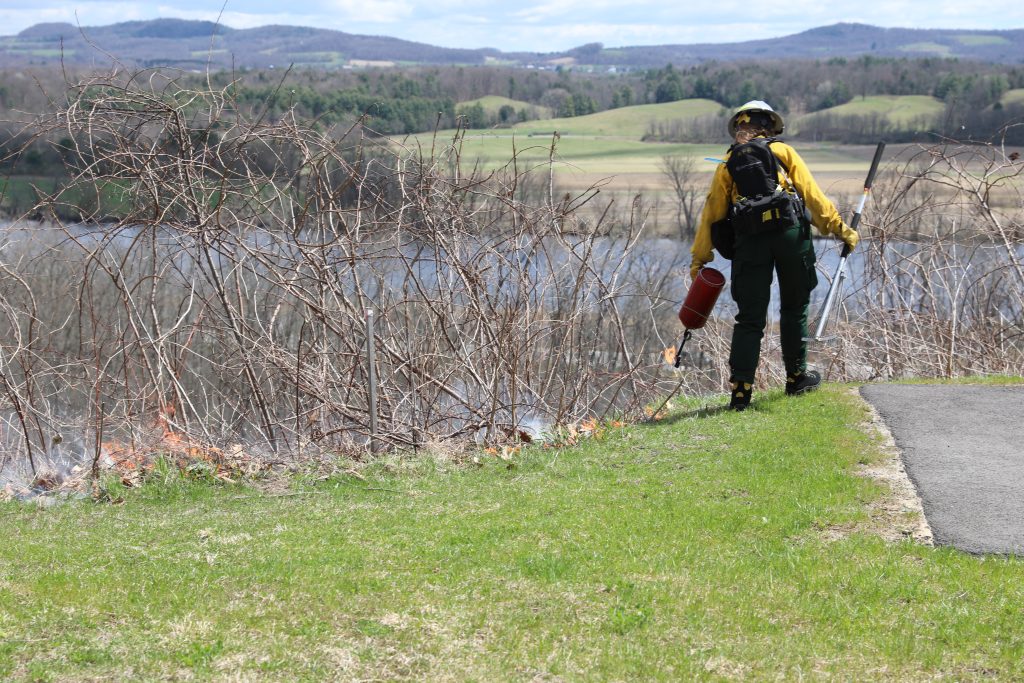
Saratoga National Historical Park has announced it will conduct prescribed burns this coming Spring (Courtesy of NPS).

Saratoga National Historical Park will conduct several prescribed fires in the coming weeks. This year, the National Park Service (NPS) will burn approximately 120 acres of grasses, shrubs and woodlands at the park, focusing on the fields in the vicinity of Tour Stops 4 and 8.

 Depending on favorable weather and site conditions, the first burns could take place early to mid-April. Because certain prescription parameters must be met, including wind speed, relative humidity, fuel moisture and drought index, NPS cannot schedule upcoming prescribed fires precisely. 

While burns are underway, the park may temporarily close roads, visitor use facilities, parking areas and hiking trails. Park staff will post notifications of burns and closures in the alerts section of the park’s website and on social media on the days they take place.

 NPS uses prescribed fire as a tool for natural resource management throughout the country. The prescribed fire program at Saratoga National Historical Park has three primary objectives: restoration and perpetuation of scenic and cultural landscapes, including native plant species; reduction of wildland fuel loading; and enhancement of wildlife habitat.

Firefighters from the National Wildland Fire Service, the New York State Department of Environmental Conservation and the Albany Pine Bush Preserve may provide assistance.

For more information about Saratoga National Historical Park, please call the Visitor Center at (518) 670-2985, visit www.nps.gov/sara, or find the park on Facebook or X (formerly Twitter) @SaratogaNHP.

Spring Frame Styles for 2026: Where Fashion Meets Function

As Saratoga transitions into spring, wardrobes begin to lighten, colors soften, and accessories take center stage. In 2026, eyewear continues to lead that transformation — blending artistry, craftsmanship, and personal expression in ways that feel both modern and timeless.

Today’s eyewear is no longer simply functional. It is often the most visible and defining accessory a person wears daily. The right frame can brighten the complexion, balance facial features, and quietly communicate confidence and sophistication.

This spring’s trends reflect a return to elevated simplicity with moments of bold individuality.

Sculptural Silhouettes

Designers are embracing architectural shapes that feel expressive yet wearable. Softly squared frames, modern cat-eyes, and geometric rounds are leading the season. These silhouettes create visual interest without overpowering the face, making them ideal for both professional settings and social occasions.

Refined Metals & Lightweight Luxury

Minimalist metal frames continue to gain popularity, especially in warm gold, champagne, and brushed bronze tones. These lightweight designs offer elegance without heaviness, providing all-day comfort with a polished finish. Subtle detailing at the temple or bridge adds dimension without distraction.

Rich Acetates & Layered Neutrals

Translucent blush tones, olive greens, layered tortoise shells, and crystal-inspired finishes are emerging as seasonal favorites. These hues feel fresh and versatile, complementing spring wardrobes while maintaining a timeless foundation.

Rather than loud patterns, many designers are leaning into depth and craftsmanship — subtle variations in acetate that create texture and movement when viewed up close.

Statement Sunglasses

As days grow brighter, sunglasses take on renewed importance. Oversized yet balanced designs are trending this season, offering glamour paired with protection. Gradient lenses, sculpted temples, and lightweight construction make modern sun wear both stylish and practical.

Luxury houses such as Face A Face, Saint Laurent, Gucci, and Dita continue to influence spring collections with meticulous craftsmanship and design-forward aesthetics. Each brand brings a distinct personality — from bold artistic expression to refined Parisian elegance.

The Power of Personal Styling

While trends provide inspiration, the true art of eyewear lies in personalization. Face shape, skin tone, lifestyle needs, and prescription considerations all influence the final choice. What works beautifully on display may feel entirely different once fitted and adjusted for daily wear.

This is why personalized styling has become increasingly valued. Taking the time to explore frame proportions, lens technology, and lifestyle usage ensures that eyewear performs as beautifully as it looks.

At Family Vision Care Center in Saratoga Springs, April has traditionally been a month dedicated to celebrating designer eyewear and thoughtful styling. This year, the practice is introducing an Exclusive Designer Styling Month, featuring Styling Wednesdays throughout April.

These dedicated styling days are designed to give patients one-on-one time with experienced opticians, allowing for curated exploration of designer collections and customized lens recommendations. Whether refreshing everyday eyewear, selecting prescription sunglasses, or considering a second pair for computer use, the goal remains the same: combining fashion with visual precision.

As spring unfolds, eyewear offers one of the most impactful and practical style updates available. Unlike seasonal clothing, a thoughtfully selected frame is worn daily — making its influence both immediate and lasting.

In a community that appreciates quality and craftsmanship, designer eyewear continues to represent more than a trend. It reflects individuality, attention to detail, and the quiet confidence that comes from wearing something that truly fits.

Spring 2026 invites a fresh perspective — and sometimes, that new perspective begins with the frames through which we see the world.

Susan Halstead is a NYS and Nationally Licensed Optician at Family Vision Care Center, 6B Carpenter Lane in Saratoga. Susan can be reached at (518)584-6111 or shalstead@eyecarespecialtiesny.com

Today’s eyewear is no longer simply functional. It is often the most visible and defining accessory a person wears daily. The right frame can brighten the complexion, balance facial features, and quietly communicate confidence and sophistication.

This spring’s trends reflect a return to elevated simplicity with moments of bold individuality.

Sculptural Silhouettes

Designers are embracing architectural shapes that feel expressive yet wearable. Softly squared frames, modern cat-eyes, and geometric rounds are leading the season. These silhouettes create visual interest without overpowering the face, making them ideal for both professional settings and social occasions.

Refined Metals & Lightweight Luxury

Minimalist metal frames continue to gain popularity, especially in warm gold, champagne, and brushed bronze tones. These lightweight designs offer elegance without heaviness, providing all-day comfort with a polished finish. Subtle detailing at the temple or bridge adds dimension without distraction.

Rich Acetates & Layered Neutrals

Translucent blush tones, olive greens, layered tortoise shells, and crystal-inspired finishes are emerging as seasonal favorites. These hues feel fresh and versatile, complementing spring wardrobes while maintaining a timeless foundation.

Rather than loud patterns, many designers are leaning into depth and craftsmanship — subtle variations in acetate that create texture and movement when viewed up close.

Statement Sunglasses

As days grow brighter, sunglasses take on renewed importance. Oversized yet balanced designs are trending this season, offering glamour paired with protection. Gradient lenses, sculpted temples, and lightweight construction make modern sun wear both stylish and practical.

Luxury houses such as Face A Face, Saint Laurent, Gucci, and Dita continue to influence spring collections with meticulous craftsmanship and design-forward aesthetics. Each brand brings a distinct personality — from bold artistic expression to refined Parisian elegance.

The Power of Personal Styling

While trends provide inspiration, the true art of eyewear lies in personalization. Face shape, skin tone, lifestyle needs, and prescription considerations all influence the final choice. What works beautifully on display may feel entirely different once fitted and adjusted for daily wear.

This is why personalized styling has become increasingly valued. Taking the time to explore frame proportions, lens technology, and lifestyle usage ensures that eyewear performs as beautifully as it looks.

At Family Vision Care Center in Saratoga Springs, April has traditionally been a month dedicated to celebrating designer eyewear and thoughtful styling. This year, the practice is introducing an Exclusive Designer Styling Month, featuring Styling Wednesdays throughout April.

These dedicated styling days are designed to give patients one-on-one time with experienced opticians, allowing for curated exploration of designer collections and customized lens recommendations. Whether refreshing everyday eyewear, selecting prescription sunglasses, or considering a second pair for computer use, the goal remains the same: combining fashion with visual precision.

As spring unfolds, eyewear offers one of the most impactful and practical style updates available. Unlike seasonal clothing, a thoughtfully selected frame is worn daily — making its influence both immediate and lasting.

In a community that appreciates quality and craftsmanship, designer eyewear continues to represent more than a trend. It reflects individuality, attention to detail, and the quiet confidence that comes from wearing something that truly fits.

Spring 2026 invites a fresh perspective — and sometimes, that new perspective begins with the frames through which we see the world.

Susan Halstead is a NYS and Nationally Licensed Optician at Family Vision Care Center, 6B Carpenter Lane in Saratoga. Susan can be reached at (518)584-6111 or shalstead@eyecarespecialtiesny.com

Season Preview: State Champ Blue Streaks Run it Back

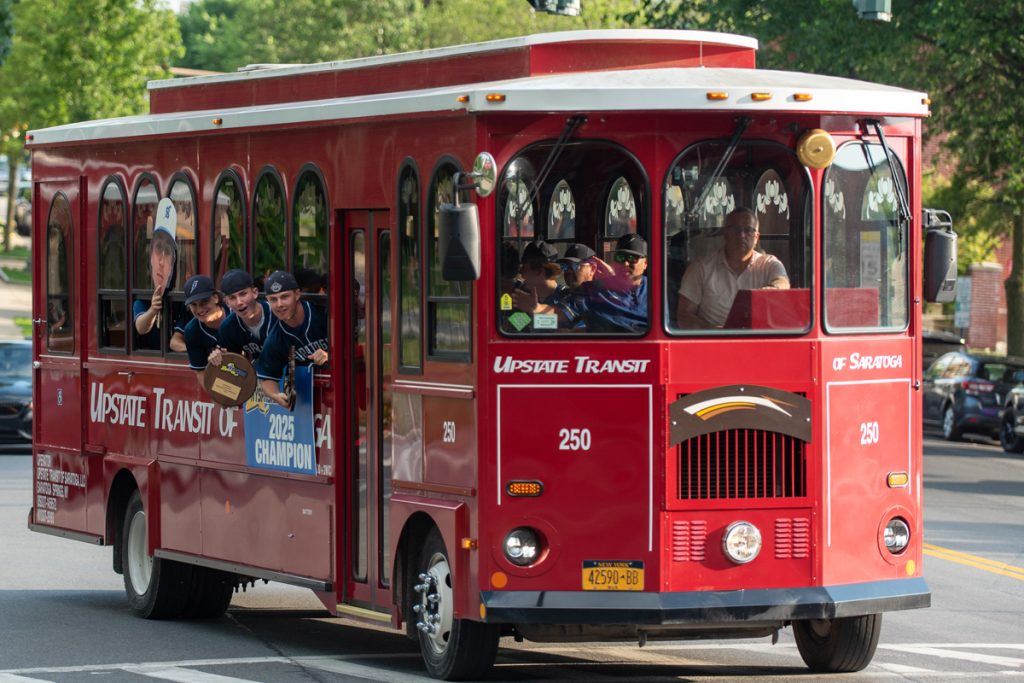
A trolley transports members of the state champion Saratoga Springs baseball team from Congress Park to City Hall during a downtown parade in 2025. Photo by Aidan Cahill.

SARATOGA SPRINGS — In the majors, the New York Yankees have faced criticism for essentially running back their 2025 team, which fell in the American League Division Series to the Toronto Blue Jays. But for the Saratoga Springs Blue Streaks, who capped off last season with their first-ever Class AAA state title, running it back is a blessing.

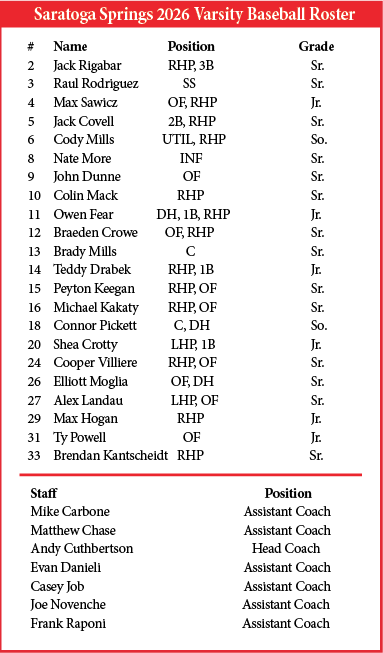
15 of the 22 members of last year’s championship Saratoga squad will return in 2026. 

On March 26, the Blue Streaks headed to the Walt Disney World Resort in Florida for spring training at the ESPN Wide World of Sports Baseball Complex. Regular season play begins on April 4 at Baldwinsville. 

Before opening day, two starting roles will be decided: left field and first base. But the rest of the starters will return, and their morale, said Head Coach Andy Cuthbertson, is high.

“The team chemistry is kind of where it was when it left off last year,” Cuthbertson told Saratoga TODAY. “In terms of the cohesiveness of the team, what they went through last year, a lot of guys are bringing that same energy into the preseason right now. And the new guys that are joining the squad, although they might have been on JV last year, I think they understand what a monumental season that we had last year, and they understand what the culture is that’s already in place. They’ve jumped right in, and it feels natural.”

Last year’s historic season was notable not just for how it ended, but also for how it took shape. The Blue Streaks lost 6 of their first 12 games before then winning 15 straight. To reach the state championship, Saratoga battled Niagara Falls in an extra-innings contest decided by just one run. In the title game, they defeated Ketcham, a team appearing in its third-straight state championship.

The road to a state title is long, arduous, and unpredictable. In 2026, the Blue Streaks will take it one game at a time.

“We’re not coming right out and saying, ‘Hey, let’s be state champions again,’” Cuthbertson said. “There’s a mentality of one inning at a time, one game at a time. You’ve got to fall in love with the process, and the outcome will fall in place if that happens.”

Schuylerville Teachers and Students Explore the Possibilities of Artificial Intelligence


Pete Carner works with students during a lesson using the Gemini AI platform.
(Courtesy of Schuylerville Central School District.)

“AI can be a helpful tool, but it should support learning—not replace it.”

That’s the guiding mindset at Schuylerville Central School District, where teachers and students alike are exploring the role artificial intelligence can play in the classroom. Over the past six months, educators have been experimenting with AI in lessons and activities, culminating in a Superintendent’s Conference Day dedicated to learning about the powerful ways these tools can support everyday teaching. One of the tools is MagicSchool, an Ed Law 2-D compliant AI platform designed with safety measures in place that suggests age-appropriate prompts and resources to support student learning.

Elementary School

Pete Carner’s 4th grade classroom utilizes thinking classroom strategies on a daily basis. This approach gives students opportunities to work in small groups on collaborative tasks, using vertical, moveable whiteboards. Students actively engage in problem-solving and discussion, creating a more student-centered learning environment. Within this structure, Carner’s 4th graders use Gemini, an AI chatbot developed by Google. In one classroom activity, students used Gemini to create a variety of mini projects based on the short story “Fireflies.” Working in small groups, students took on different creative roles, including designing Kahoot quizzes, writing poetry inspired by the story, developing a test for the class, scripting short plays, and producing character interviews.

“AI was used as a support tool to help generate ideas, outline content, and guide the creative process,” said Carner. “But ultimately, students remained responsible for refining, verifying, and presenting their final work.”

During the activity, one group discovered an error in a Kahoot question generated with help from Gemini, prompting a real-time discussion about accuracy and critical thinking. 

“It was a great learning moment,” Carner said. “Students saw firsthand that AI isn’t always accurate, and that they need to review and check their work. At the elementary level, it’s about giving students early exposure to AI so they can learn how to use it responsibly as they progress through school.”

Middle School

At the middle school level, teachers are experimenting with a variety of AI tools to enhance instruction. Seventh grade social studies teacher Rebecca Nesbitt has explored MagicSchool’s multiple translation tool to help students better understand new vocabulary. In English Language Arts classes, Kerri Brennan’s students used an AI idea generator to brainstorm and expand ideas for narrative writing assignments, while other AI tools are being incorporated throughout the unit to support writing feedback, sentence starters, literary devices, and proofreading. In addition, technology teacher Mark Belden is helping students build foundational skills through a digital literacy course, ensuring they understand how to responsibly and effectively interact with emerging technologies. 

Three Schuylerville Middle School students—Timothy Larson, Natalie Maisano, and Sandra Price—also shared their experiences using the AI platform MagicSchool. The students described the tool as helpful for brainstorming ideas, improving their writing, and gaining a better understanding of lesson topics.

Rather than viewing AI as something that simply provides answers, the students emphasized how it can serve as a starting point that helps them think through problems and strengthen their own work. 

“If you don’t understand a lesson, you can use AI to help you,” said Natalie Maisano, highlighting the tool’s role as a learning aid rather than a shortcut. “It’s there to help you improve on what you’re doing but not give you the answers.”

High School

At the high school level, English teacher Anna Flores is incorporating AI into writing instruction in several creative ways. Each fall, students are asked to write a narrative that features a monster encounter. Flores encourages those who struggle with creative writing to use an AI chatbot that asks guiding questions to help them develop ideas while still maintaining their own creative direction. She also uses AI-generated paragraphs with intentional grammar and editing mistakes to help students practice revising and identifying errors. In argumentative writing units, students use AI to generate potential counterclaims, allowing them to better understand opposing viewpoints and strengthen their own arguments.

In science classes, Tom Robinson has been experimenting with ways AI can support students as they develop ideas for projects and assignments. He encourages students to use AI as a starting point to help generate ideas or explore different approaches to a topic. In his anatomy class, Robinson has experimented with creating a study bot designed to guide students toward answers to unit essay questions without simply giving them the answer. As students build background knowledge in the unit, he plans to expand its use.

“These teachers represent just a few of the many educators in the district who are exploring how artificial intelligence can support instruction and student engagement,” said Director of Curriculum and Instruction Amy Steele-Whitney. “When used thoughtfully, AI can act as a catalyst for learning, but it should never replace the thinking and creativity that students bring to the process themselves.”

Professional Development Day

During the March 13 Superintendent’s Conference Day, K-12 teachers participated in breakout sessions focused on how they can use artificial intelligence and digital tools in meaningful ways. The day was planned and coordinated by Schuylerville Director of Curriculum and Instruction Amy Steele-Whitney, in alignment with the district’s goal for the 2025-26 school year.

Saratoga Man Survives Plane Crash


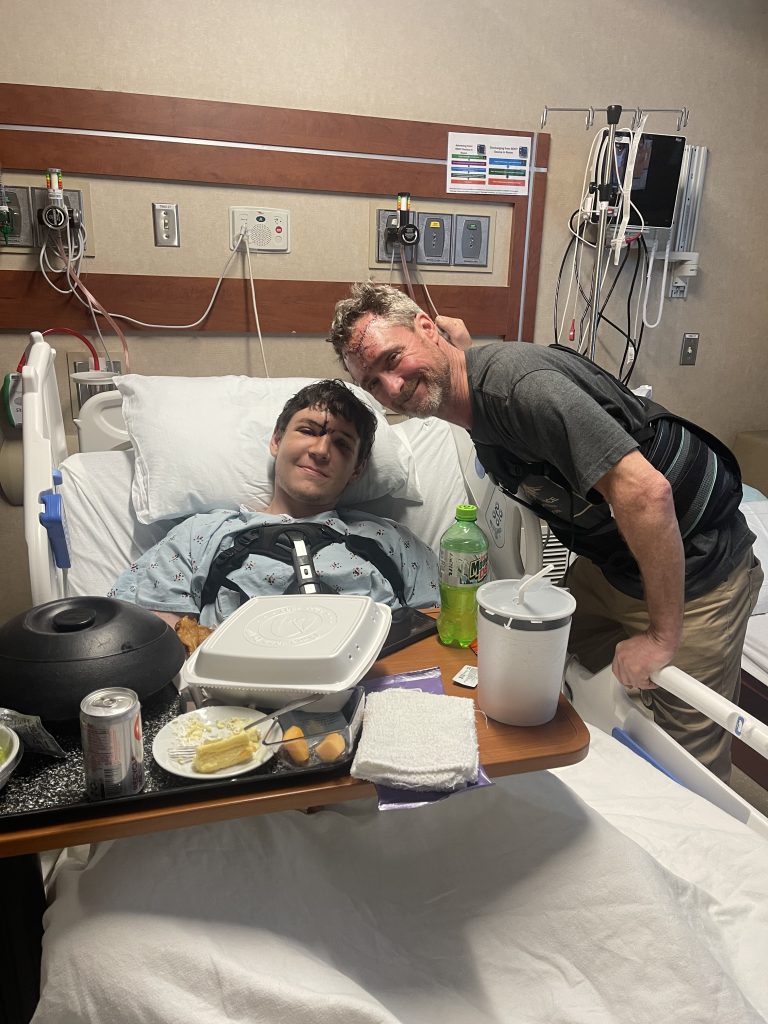
Beasley required 28 stitches after his head slammed into the dashboard of the aircraft (Courtesy of Tina Smith)

Beasley said he and his nephew Nathan, (left), didn’t panic when they lost power and instead focused on getting it down safely.  (Courtesy of Tina Smith)

It was a beautiful day in North Carolina for Jeff Beasley. 

On March 8, the 47-year-old resident of Saratoga Springs was in Indian Trail, North Carolina visiting his family for his sister’s birthday when he decided to go up in a small plane with his nephew, Nathan. The 21-year-old had just received his pilot’s license and was excited to show off his skills to his family. Beasley volunteered to go up first. 

After completing pre-flight checks, the two had just taken off when Beasley noticed something was wrong. 

“I noticed something, it just felt like the thrust wasn’t there,” Beasley said. “About the same time my nephew made the comment, ‘uh oh.’” 

At that point both men noticed that the propellor on the single engine Piper 28 wasn’t spinning as fast and the engine appeared to be stalling. Beasley said that he and his nephew didn’t panic and instead focused on getting the plane down safely. Both of them struggled to find a place to land as most of the area surrounding the airport was wooded. 

“Everywhere I looked, it was just thick woods, and I knew if we went into the woods, we were most likely not going to make it,” Beasley said. 

Beasley then spotted the place where they would eventually land — a cow pasture about a mile away from the airport in the opposite direction from where they took off. 

“I said, ‘Do you think we can get over there?’” Jeff recalls asking Nathan.  “And he said, ‘I don’t know, but we’re gonna try.’” 

At about 30 feet off the ground, they struck a tree which seared off the left side of the aircraft, according to the National Transportation Safety Board, which released a preliminary report on the crash — something Beasley believes may have saved his life. 

“If we would have landed without interference, I think maybe we would have rolled that plane many times in the field because it’s a cow field, it’s not very smooth, and planes aren’t exactly known for their suspensions,” Beasley said. 

When the plane hit the ground, Beasley was slammed against the dashboard, resulting in a concussion, several broken rips, lacerations in his face, a possible bruised lung, and an air pocket between his chest and lung. He also lost four pints of blood in the ordeal. The force was so severe that his face broke the steel yoke of the aircraft, Beasley said.

His nephew suffered a broken hand, and a compression fracture in his back.

Beasley recalls being in and out of consciousness after the crash. He remembers hearing his nephew call out to him and telling his nephew to get up as he was lying face down in a cow pasture. He also remembers joking with the EMTs on the way to the hospital.

According to the Union County Sherriff’s Office, Nathan was airlifted to Atrium Hospital in Charlotte while Beasley was transported by ambulance.

The aircraft involved was a Piper PA-28 registered to JTS Aircraft LLC, a company based out of South Carolina. It first received its airworthiness certification in 1969, was overhauled in 2016 and passed its annual inspection as recently as Dec. 2025, according to the NTSB. 

Inspection of the aircraft after the accident showed it had no water or debris in the fuel tank, and the engine didn’t have any external signs of catastrophic engine failure. Prior to the accident the airframe had flown 2,200 miles since it was overhauled in 2016. 

Helping Beasley recover from the incident has been his longtime girlfriend, Tina Smith. Smith, who was in Las Vegas on a separate trip quickly rushed to Charlotte and was there within a day of the accident. Beasley said she’s been by his side ever since, helping him manage the pain and healing process.

“I wouldn’t be able to do without her,” Beasley said. “There’s been some bad nights where I can’t sleep, and I’m driving her crazy because she wants to sleep. I thank her so much for that. This has not been easy for her, and she’s just doing it all right now.” 

He’s also grateful for the outpouring of support from friends who have been dropping by with food and even offered to drive to Charlotte to bring him back to New York. 

While Beasley said he’s not afraid of flying, he doesn’t plan on flying in any small planes again — especially not ones made in the 60s. He said his nephew can’t wait to get back in the air despite the accident. 

Beasley said that at no point were either of them afraid they weren’t going to make it. While Beasley said he’s not afraid to die, he wants to be there for his kids and make sure he’s there for them. He said that the biggest message he got from the crash is to hug your loved ones, as cliché as it sounds.

“The things that mean the most to me in life are the simple ones,” Beasley said “It’s easy conversations on a Sunday morning, waking up and having breakfast with people you love. It’s packing my kid’s lunches and helping them with their homework, as aggravating as it might be, planning parties, playing golf trips and going on a boat. Lake George in the summertime. Life’s beautiful.”

Henry Hilton and Woodlawn: Power, Ambition, and a Gilded Age Fall


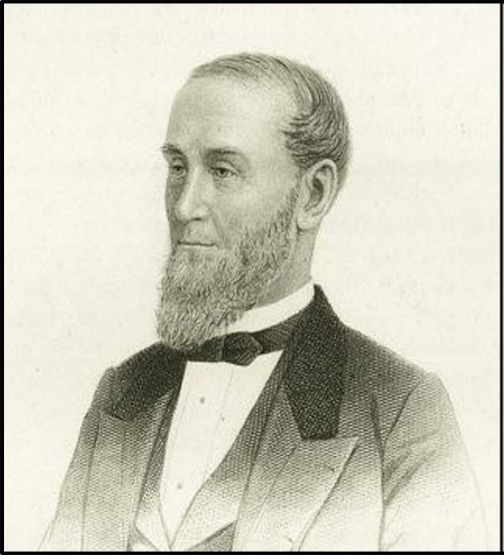
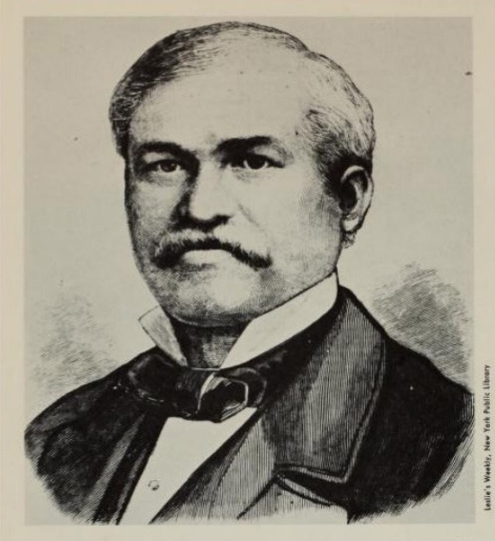
Photo of Alexander T. Stewart provided by The Saratoga County History Center.

Photo of Henry Hilton provided by The Saratoga County History Center.

Michael Murray is a 4th generation Saratogian fascinated by the history of Saratoga Springs and the people who made that history.  Mike’s previous article “A West Side Story” about growing up near Woodlawn Oval led to a request for a presentation by the Wesley Community which led to research of Henry Hilton and Woodlawn which led to this essay. 

Saratoga Springs is a community shaped by ambition, wealth, and strong personalities. Its streets and landmarks bear the names of early settlers, political leaders, and presidents—Bryan, Clark, Clement, Putnam, Walworth, Waterbury, among others. One name, however, is notably absent despite its once-towering presence in the city’s history: Henry Hilton.

Hilton played a central role in one of the most dramatic and controversial chapters of Gilded Age Saratoga Springs. His rise to power, fueled by proximity to immense wealth, was matched only by the speed and scale of his fall.

The story begins with Judge Henry Walton, an early landowner who inherited vast acreage in what would become Saratoga Springs. Walton sold portions of his land to early settlers but retained a large, forested estate he named “Wood Lawn.” In 1878, that estate—approximately 600 acres—was purchased by Henry Hilton, who promptly renamed it “Woodlawn.” Hilton expanded the property to more than 1,100 acres, transforming it into a park-like landscape with over 20 miles of carriage trails, multiple lodges and barns, and an athletic field and running track known as the Woodlawn Oval.

Today, that land forms the campus of Skidmore College, and Hilton’s Woodlawn Oval is home to The Wesley Community. Yet Hilton himself has largely vanished from local commemoration.

Henry Hilton was born in Newburgh, New York, in 1824, the youngest son of Scots-Irish immigrants. At age 15, he moved to New York City to complete his education while working as a law clerk. He was admitted to the bar in 1846 and quickly advanced through prestigious law partnerships, eventually becoming a partner at Campbell & Cleveland, a prominent New York City firm.

One of the firm’s most important clients was Alexander Turney Stewart, the legendary “Merchant Prince” of 19th-century America. Stewart revolutionized retail by creating the American department store, built factories in Europe and the United States to supply his dry goods empire, and expanded into wholesale trade. Through his legal work, Hilton met Stewart and married a cousin of Stewart’s wife in 1849. By 1850, Hilton had become Stewart’s personal attorney, gaining access to extraordinary wealth, influence, and social standing. Over time, Hilton evolved from trusted adviser to confidant and, effectively, surrogate son.

Hilton’s public career rose alongside his private fortunes. He served as a Judge of the Court of Common Pleas from 1858 to 1863, was listed on the rolls of Tammany Hall in 1860 and was appointed a commissioner of New York City Parks in 1870. During his tenure, Central Park was under development, allowing Hilton to learn park design principles firsthand from Frederick Law Olmsted and Calvert Vaux—experience he later applied at Woodlawn.

His reputation, however, suffered its first serious blow during the so-called “Hawkins Scandal.” English sculptor Benjamin Waterhouse Hawkins had been commissioned to create dinosaur sculptures for public display. Tammany Hall viewed the project as a threat to plans for what would become the American Museum of Natural History. Hawkins’s studio and sculptures were destroyed by vandals. Although William “Boss” Tweed was initially suspected, responsibility ultimately fell on Hilton. Nothing was ever proven, but Hilton resigned from the Parks Commission shortly afterward.

Stewart remained Hilton’s greatest protector. By the 1860s and 1870s, Stewart earned an estimated $2 million annually—roughly $36 million today—and left an estate valued at $50 million, equivalent to tens of billions in modern terms. Stewart used his wealth philanthropically, particularly to benefit working people. He purchased 10,000 acres on Long Island to create Garden City, built the Central Long Island Railroad to serve commuters, and constructed a hotel for working women that offered safe, respectable, and affordable housing.

Stewart also purchased Saratoga Springs’ Grand Union Hotel in 1872, transforming it into the largest and most luxurious hotel in the world, complete with elevators and indoor plumbing. He appointed Hilton chairman of the railroad board and relied on him extensively in business affairs.

When Stewart died in 1876, he left Hilton a bequest of $1 million and named him executor of his estate, with explicit instructions to divest Stewart’s widow of all commercial holdings. Litigation from Stewart’s relatives followed immediately. Within a year, Hilton had exchanged his $1 million inheritance with Mrs. Stewart for full control of Stewart’s vast business empire.

The consequences were swift and damaging. In the summer of 1877, financier Joseph Seligman—an investor in Stewart’s railroad and a longtime Grand Union patron—arrived in Saratoga Springs with his family, only to be denied lodging at the hotel. The incident ignited national outrage and accusations of antisemitism. Hilton, now managing the hotel, was reportedly motivated by personal grievances: resentment over not being invited to a celebration hosted by Seligman honoring President Grant’s reelection, and anger over Seligman’s involvement in anti-Tammany Hall reform efforts.

Hilton further inflamed public opinion by completing Stewart’s hotel for working women, only to close it within months, claiming financial losses. The backlash was severe. Businesses once associated with Stewart’s benevolence and success saw sales collapse.

Amid this turmoil, Hilton retreated to Saratoga Springs, purchasing and expanding Woodlawn in 1878. That same year, Stewart’s body was stolen from its grave. Hilton offered a reward for information, but no credible ransom demand emerged until 1884, when Mrs. Stewart independently paid $20,000 for a bag of bones that was interred at St. Paul’s Cathedral in Garden City.

In 1883, the former A.T. Stewart empire, now under Hilton’s control, declared bankruptcy. Hilton transferred remaining assets to his five children. Mrs. Stewart died in 1885 and was buried in the cathedral she and her husband had built—beside the remains recovered years earlier.

Henry Hilton’s name may not appear on Saratoga Springs street signs, but his legacy endures in its landscape. Woodlawn, once a private symbol of power and retreat, remains a defining feature of the city—a reminder of ambition, controversy, and the volatile fortunes of the Gilded Age.