

New Report Cites Spike in Saratoga Region -Homeless Population Doubled in New York 2022-2004
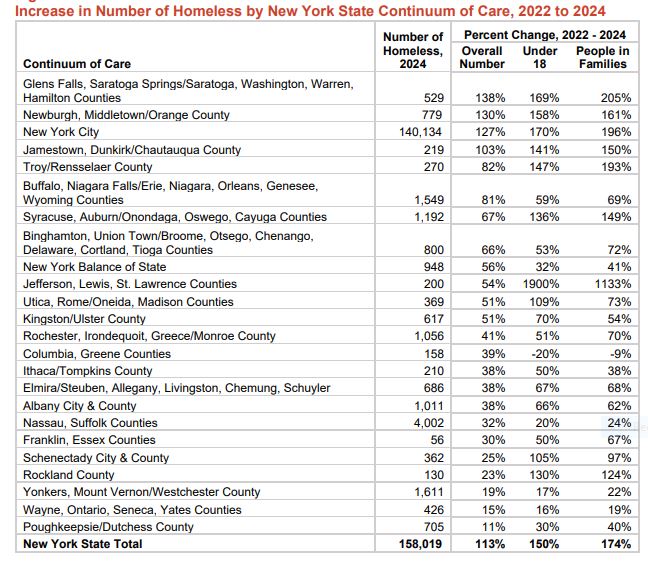
Saratoga Springs, Glens Falls, and surrounding counties tops the list for the largest increase in number of homeless at 138% over the past two-year period, according to the DiNapoli report.
SARATOGA SPRINGS —Homelessness in New York state has grown sharply, more than doubling between January 2022 and January 2024, according to a new report released by New York State Comptroller Thomas P. DiNapoli.
Homelessness grew by 53.1% from January 2023 to January 2024, more than four times the rest of the nation.
The large spike was driven by New York City and the influx of asylum seekers, but the rest of the state also had double- and triple-digit rate increases, led by Glens Falls, Saratoga and the surrounding counties, according to the 10-page report, released on Jan. 22.
“New York needs to examine how it’s using current housing resources while taking more action to address this urgent situation,” DiNapoli said in a statement.
Homelessness decreased in New York between 2020 and 2022, but since 2022 and the end of pandemic eviction moratoriums, it has increased faster than the rest of the nation, more than doubling between 2022 and 2024 compared to only 20.7% growth in the rest of the nation. Only Illinois had a higher increase at 180%.
People who were homeless were disproportionately Hispanic or Black, and 10% suffered from severe mental illness or chronic substance abuse.
Homelessness among veterans remains low, at less than 1%. New York also had among the lowest shares of senior homelessness (2.5%) and chronically homeless (3.6%) among other states.
The rest of the state’s regions had increases ranging from 11% in Poughkeepsie/Dutchess County to 138% in Glens Falls, Saratoga Springs and surrounding counties. Outside of New York City, Long Island had the largest number of homeless in 2024 followed by Westchester County and counties around Buffalo and Niagara Falls.
New York is second to California in the number of permanent supportive housing units (52,462 vs. 78,758) and permanent housing beds (21,672 vs. 26,059), but lags other large states in the number of year-round beds for rapid rehousing – 4,887. California has more than 28,000, Texas almost 11,000 and Florida 7,500.
To read the 10-page report, go to: www.osc.ny.gov.