

Skipping the Preakness
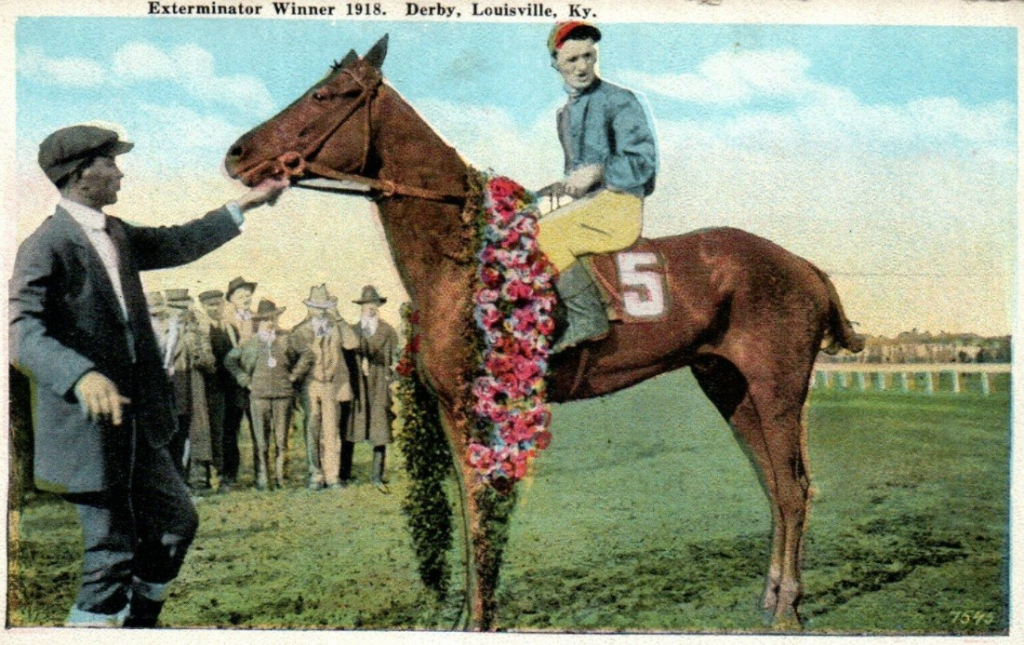
Since Mystik Dan’s runner-up finish in the 2024 Preakness, we have not seen the Kentucky Derby winner contest the second jewel of the Triple Crown, which is disappointing, although that decision has proved successful.
This spring, the connections of the Derby winner have opted to not contest in the Preakness Stakes. The most unusual next outing for a Derby winner must have occurred in 1918, when the Hall of Fame gelding, Exterminator, was entered to run on the grass in a hunt event by his owner, Willis Sharpe Kilmer.
Exterminator was listed for the Turf and Field Handicap, to be run across Hempstead Turnpike from the present UBS Arena at what was then the steeplechase annex known as the Belmont Park Terminal, which had a turf track.
What could possibly inspire the owner of a Derby winner to contest in such an unusual event? I believe the answer is patriotism and sportsmanship on the part of Mr. Kilmer. He had witnessed the New York State Racing Commission granting a license to Belmont Park Terminal Course during the 1911-12 racing ban, due to the not-for-profit status of events planned there, and how this had kept racing alive in the Empire State during that dark period.
The Belmont Park Terminal was the scene in 1911 where the secretary of the United Hunts Racing Association, Harry A. Buck, who was also assistant secretary of the Turf and Field Club, insisted on being arrested to force a test case of the anti-gambling laws. Harry Buck had his roots in journalism, being the son of Col. E.A. Buck, publisher of The Spirit of the Times, the leading sports publication in the nineteenth century, and his effort was successful in the courts.
It seems incredible that the Kentucky Derby winner was entered in an event offering a $700 purse to be run on grass, and indeed the New York Times report of the race stated, “The presence of the Derby winner overawed many of the owners.” It must be assumed that Exterminator’s owner, Willis Sharpe Kilmer, was committed to making the hunt meeting a success for the sponsoring association.
The same New York Times article continues, “The United Hunts, which determined to keep up amateur racing by running its meeting while the other associations waited for less troublesome times, had every reason to be pleased with the stand taken. There never was a more successful meeting held by amateurs and one that brought out more high-class horses, both on the flat and over the obstacles. The Long Islanders turned out in force to give countenance to the continuance of the sport, and the special trains from New York were well-filled by racing enthusiasts attracted by the races, which fulfilled all the promise of excitement given by the entries.”
Detailing the Turf and Field Handicap results in the New York Herald from May 26, 1918, during a time our nation was involved in a war in Europe and experiencing the awful effects of a global pandemic, is the following article. The headline is exciting: “Society Enjoys Horsemanship at the United Hunts Meet at Belmont Park Terminal; Army Officers Display Skill in Saddle in International Military Race – Exterminator Runs Second.” The article really draws in a race fan, of any era, with the description of that day,
“Coincident with the spring meeting the Turf and Field Club reopened its hospitable doors, and the memory goes back in vain over many years of experience in the social side of race days to recall a similar incident of greater animation or more varied interest. It was decidedly a military scene…Accustomed colors in civilian attire were lost in the dominant shades of olive drab of American uniforms, the multiple colors of the British and the horizon blue of the Italian uniforms. More than fifty officers in various branches of the allied service were among the guests at the club luncheon which prefaced the first race. . .”
The Daily Racing Form of May 29, 1918, in reporting the results of the Turf and Field Highweight Handicap, amazingly the next start for ‘Old Bones’ after shedding the garland of roses, stated:
“Exterminator plainly showed that he did not like the turf course and failed to respond when called on in the stretch, finishing a length behind the winner.”
Perhaps Mr. Kilmer expected Exterminator to win easily and did not anticipate a turf horse like Kilts to enter, but his sporting heart was in the right place. Exterminator ran in many more races in 1918, the most exciting being Saratoga’s annual Travers Stakes, where the Derby winner ran against the Preakness winner (War Cloud) and the Belmont Stakes winner (Johren). Perhaps we can hope this year’s Travers will include the winners of the Triple Crown classics.