

Transfer on Death Deeds in New York Developments in the Last Two Years
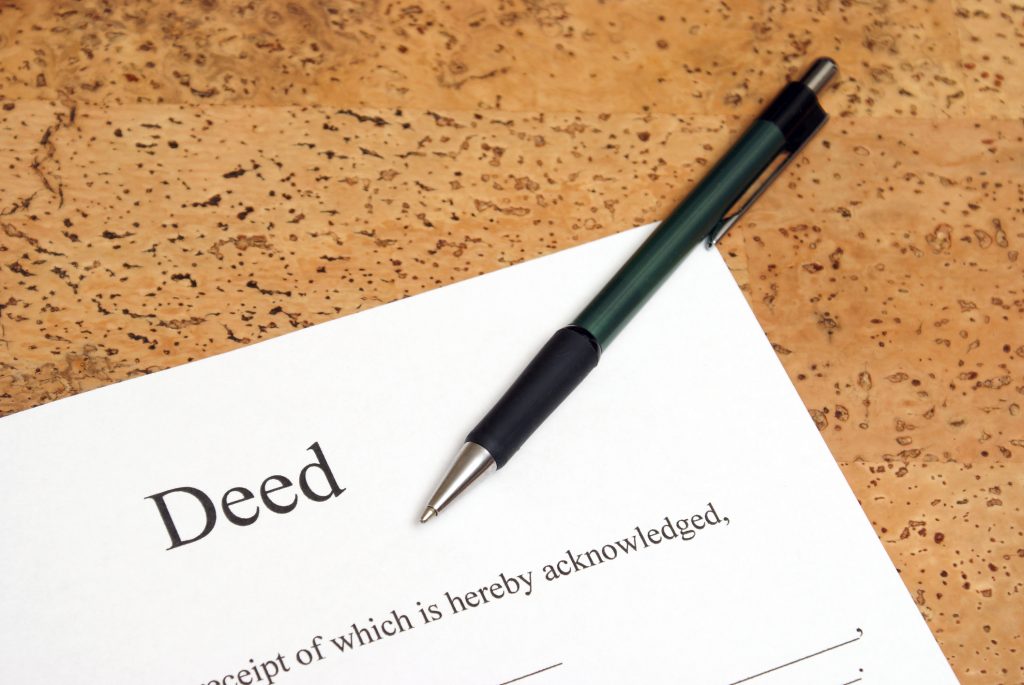
New York’s transfer on death deed law went into effect on July 19, 2024 – a little over two years ago. Shortly after the statute went into effect, I wrote an article describing this new type of deed. Now that two years have passed, I thought it would be useful to reflect on how the use of the transfer on death deed has developed.
Below you will find a refresher on what a transfer on death deed (TOD deed) is and how it works. In addition, I will explain the things we have learned from two years of using this new estate planning option.
What is a TOD Deed?
A TOD Deed allows you to give your property to a beneficiary, but to delay the vesting of their interest until after your death. Upon your death, the property is owned by the beneficiary, and no court proceeding is required to facilitate their ownership. You may also revoke the deed at any time before your death.
Is the TOD Deed notarized?
Yes. A TOD Deed needs to be signed before a notary public and two witnesses. This is different than a typical real estate deed, which needs to be signed before a notary public but does not need to be witnessed.
The fact that two witnesses are needed, but not needed for other types of deeds, is an important point. If you try to draft a TOD deed without proper legal assistance, you may miss the additional step of having it witnessed by two people. In the event you make that mistake, a court would likely find the deed invalid.
Is the TOD Deed recorded?
Yes. Like all deeds, the TOD Deed should be recorded in the County Clerk’s Office where the real property is located. Initially, it was thought that the two tax forms that usually accompany a deed recording would have to be filed with the deed. Those forms are the RP-5217 and the TP-584.
One thing we have learned in the last two years is that those two forms do not need to be filed with a TOD deed. As a result, the filing and recording fees for a deed – which usually total around $200.00 – are in fact lower. The recording fee for a TOD deed is generally around $65.00.
Why do a TOD deed?
The TOD Deed is a simple way to transfer property to a beneficiary after you die, without the need to have a Surrogate’s Court proceeding or creating a living trust. Also, since the beneficiary is obtaining the property after your death, they will get a step-up in tax basis to the value as of the time of your death.
Does it affect my estate?
This is an interesting issue that has developed in the last two years. There is a provision of the TOD statute that says if your probate estate is insolvent, then the property subject to the TOD deed could be used to pay claims or allowances against your estate.
What does this mean for the property?
It means that if a decedent’s probate estate (the estate controlled by the decedent’s Last Will and Testament) does not have enough money to pay all the claims and allowances against the estate, then there could be a lien against the real estate conveyed by the TOD deed.
How much of a problem is this?
It may be no problem at all, because if the probate estate is not insolvent, then there would be no potential lien against the real property conveyed by the TOD deed. An insolvent probate estate is an estate that has more claims and allowances against it than there are assets in the probate estate to satisfy them.
The practical problem this presents is that if you transfer your home to your child, your child may want to sell it after you die. When your child goes to sell the home, the buyer will likely want to get title insurance on the purchase. Since this lien issue may exist, the buyer of the home may not be able to get title insurance and the sale would not close.
Is there a way to deal with this?
Since this issue is relatively new, some title insurance companies may not even raise it as a problem. If they do, title insurance companies have historically been willing to issue title insurance for the sale of a home if they are provided with affidavits from the seller assuring them that the potential lien problem is not an issue with regard to this particular property.
Any other considerations?
A TOD deed is an estate planning option that, like all estate planning, should be reviewed periodically. By periodically, I mean every five years or when there is an important change in your life, i.e. a death in the family or the desire to change death beneficiaries of your assets. As a result, if you do a TOD deed, you should periodically review whether you want to keep the deed as is or potentially make a change.
TOD deeds have been a welcome addition to estate planning options available over the last two years, and we will continue to keep track of developments related to them. As always, you should consult an experienced estate planning attorney to understand what estate planning options are best for you and your family.
Matthew J. Dorsey, Esq. is a Shareholder with O’Connell and Aronowitz, 1 Court Street, Saratoga Springs, NY. Over his twenty-nine years of practice, he has focused in the areas of elder law, estate planning, and estate administration. Mr. Dorsey can be reached at (518)584-5205, mdorsey@oalaw.com and www.oalaw.com.