

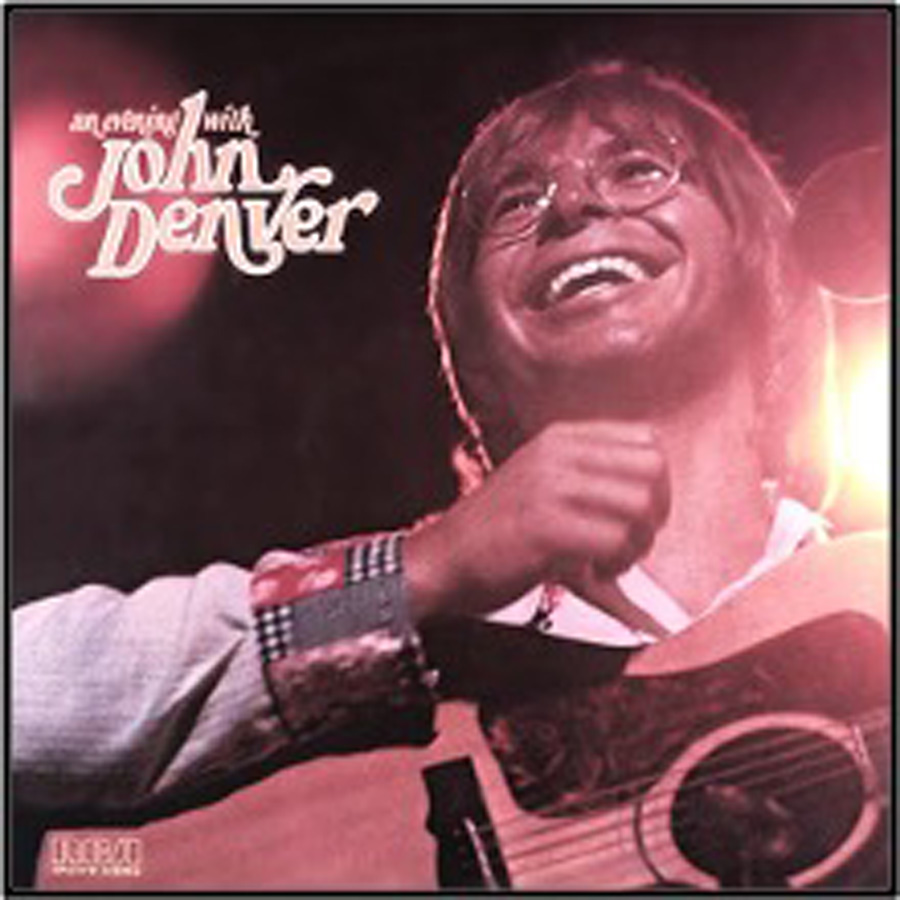
An Evening with John Denver
Michael Murray is a 4th generation Saratogian fascinated by the history of Saratoga Springs and the people who made that history. Mike’s previous articles include “A West Side Story” about growing up near Woodlawn Oval and “Henry Hilton and Woodlawn.”
In 2026, the Saratoga Performing Arts Center marks its sixtieth anniversary of presenting classical and popular entertainment. For six decades it has served as the summer home of the New York City Ballet and the Philadelphia Orchestra. Its stage has welcomed touring Broadway musicals –“Your Own Thing” (1969) – “Fiddler on the Roof” (1970) – “Jesus Christ Superstar” (1971) – D’yoly Carte Opera Company (1976) – first opera “Boris Godunov” (1974) – Saratoga Newport Jazz Festival (1978) and in 1999 the theatrical spectacle “Riverdance”. Among its many milestones are record attendances exceeding 30,000, the first canceled performance, and, of course, the raising of the curtain for the very first time.
That curtain was raised for that first time in June 1966 for Governor Nelson Rockefeller’s dedication of the new Arts Center by three young college students, Andy (Yo-Yo), Pat, and Mike from Saratoga Springs. The young men were hired through the local chapter of the International Theatrical and Stage Employees Union as half of a six-man union crew that assembled the theatre’s stage. The local union negotiated with the Arts Center for a contract to supply a skilled work force for the theatre. After 2 weeks of work the Arts Center agreed to a three-year contract with the union local, insisting the three college kids work every show.
The college kid’s initial task was to move more than forty tons of stage counterweight – 32 pound cast iron ingots – from the loading dock across the building to stage right (audience left) and then up , via rope and bucket, 110 feet to the loading bridge.
The three young men had grown up together in Saratoga Springs, played football at Saratoga High and were in the same graduating class. In 1966 they were attending the same local community college and working as bartenders in various Saratoga Springs bars and restaurants. The local union made the young men apprentice stagehands and they were taught their craft by three veteran New York City stagehands, Artie, Bernie, and Roger, men who might have stepped out of a Damon Runyon story.
The three veterans invited the apprentices out for a night of carousing which ended when the bars closed. That first night on the town and other nights, the senior members of the sextet required the guidance of the young men to get to their beds. The following mornings, bright and early the three young men were on the job and hard at work when the veteran stagehands showed up, much the worse from the previous night. The New York City stagehands began referring to the young college kids as “the three bad kids”, a nickname that stuck for years and friendships that lasted a lifetime! The apprentices raised the curtain and helped prepare for every performance that inaugural season, including the opening ballet “A Midsummer Night’s Dream”.
The 1971 season – the Arts Center’s sixth – featured an August 2nd performance by The Who before 33,000 fans, as well as a scheduled June 25th concert by Mary Travers. A violent midday storm, on the 25th, changed everything. High winds toppled trees, limbs crashed onto power lines, and just under 2 ½ inches of rain fell in roughly an hour. Lightning struck repeatedly, Saratoga Spa Park lost more than 800 trees, and the Avenue of Pines became impassable. Yet, “the show must go on”.
The Arts Center itself was undamaged. At 3:30 p.m. the six man stage crew reported as usual to prepare for Mary Travers. The three young men who had begun as apprentices in 1966 were now veteran hands. The Arts Center had not yet announced any cancelation, and the performers had not arrived. The stage crew waited on the loading dock.
A little before 4 p.m. an older station wagon pulled up to the loading dock. A young man with long blonde hair stepped out and took two guitars from the station wagon’s rear – the signal, the crew thought to begin work. He only had four guitars and no useful information. The hands adjourned to the crew room for coffee. Five minutes later the same long-haired guitarist appeared at the door, asked for a cup of coffee and if he could join them.
He sat down, introduced himself as John Denver (“who?”) and spent the afternoon and early evening with the crew, sharing their dinner of pizza and beer. Eventually the Mary Travers concert was formally canceled, however 1,400 ticket holders had taken their seats in the auditorium. Travers and Denver were called into a meeting with Arts Center management. They agreed to perform a short set for the waiting audience. The full Mary Travers concert was rescheduled for September. For just under an hour, the two folk singers turned the amphitheater into a coffeehouse. “The show did go on…”
Three years later, on August 4, 1974, John Denver returned to the Arts Center as a superstar. He arrived not in a station wagon but with four tractor trailers of scenery, sound and lights. Early in the load-in he stepped onto the stage, got everyone’s attention and shouted the names of all six stagehands from that rainy late afternoon in 1971 – followed by a jubilant “Far Out” as he gestured to the trucks at the loading dock. The long-haired guitar player had remembered his Saratoga time with the stage crew – and every single name.
The three “bad kids” continued to work at the Arts Center for many summer seasons – Mike served as the local union’s president for 20 years – while enjoying successful careers in unrelated fields. Through their years as stage hands the “bad kids” worked with and met many show business personalities and savored many wonderful memories. Memories like playing volleyball with the band “Huey Lewis and the News” after the band’s sound check, or advising Hal Holbrook about where to go for dinner, or having a chat with Frank Sinatra after his performance (“great show kid”) while his security men anxiously urging him out the door, and many more such memories.
More than the memories are the relationships formed through the often intense teamwork of putting on a show. Those relationships lasted lifetimes and often touched multiple lives. Many family members of stagehands became stagehands through family contacts, and thus the original relationships live on into the next generation.
Two of the seven men – six stage hands and one future superstar – who shared pizza and beer on June 25th 1971 are still living. Pat and Mike, former “bad kids” – and yes, they are of Irish descent – cherish their life-long friendship and shared memories.