Author: Aidan Cahill

City Approves Agreement with State over 2020 Protests.

In their regular meeting of the new term, the Saratoga Springs City Council agreed to enact new changes to how the city handles protests after an investigation by the New York State Attorney General’s Office. 

The agreement comes after the state launched an investigation into how police and elected officials handled the 2020 Black Lives Matter protests. 

Under the terms of the agreement, the city neither confirms nor denies the findings of the investigation but agrees to implement changes and recommendations to how the police conduct operations during protests and other demonstrations. 

Under the agreement the city will agree to remove all criminal penalties for failing to file a demonstration declaration or parade permit, but they may impose fines. In addition, under the agreement elected officials are specifically forbidden from ordering or influencing the Police Department to investigate, arrest, and or engage in surveillance of anyone engaged in first amendment activities. They’re also forbidden from ordering or influencing decisions on police deployment. 

The agreement also dictates various policy changes to how the Police Department handles protests and first amendment activities. Under the agreement, the department is required designate and train designated “protest liaison” officer to assist with protests over 25 people. In addition, they must implement a four-tiered response to protests and are prohibited from investigating and surveilling individuals based solely on their involvement in first amendment activities — among other requirements. 

They’re also prohibited from treating protests differently based on the message of the protest. 

Under the agreement, the city has 90 days to implement the agreed-upon changes. Public Safety Commissioner Tim Coll said the agreement will cost the city $200,000 every year.

Public opinion was mixed on the agreement, with some saying that the agreement didn’t go far enough to address past wrongs while others said the report was one sided and shouldn’t be signed by the city.

Despite these concerns, prior to the vote the agreement received the endorsement of both Mayor John Safford and Coll. Coll said that the agreement was an alternative to litigation and that the relationship between the city and Attorney General’s office. 

“Over the past 18 months, the city has had extensive and at times spirited discussions with the OAG on this matter,” Coll said. “Ultimately, we were able to find common ground and that understanding is reflected in this agreement.” 

Ultimately, the agreement was passed by city council unanimously. After the meeting, Safford praised the agreement calling it a positive thing for the city and saying that they will continue to work with the Attorney General’s Office. Coll meanwhile said that a lot of the changes in the agreement have already been implemented and that they’ve seen positive results from the changes. 

In addition, after the agreement was approved New York Attorney General Leticia James put out a statement calling the changes the “most extensive ever secured,” by her related to first amendment activity. 

“New Yorkers have the fundamental right to speak out, organize, and protest without fear of unlawful interruption or retaliation,” said Attorney General James. “Our investigation found that Saratoga Springs repeatedly violated those rights and targeted protesters because of their message. This agreement is a significant step toward rebuilding trust between the Saratoga Springs community and its police force and will ensure everyone is able to safely express their beliefs.” 

Commission Recommends Minor Changes to City Charter

The Charter Review Commission has released a report outlining proposed changes to the Saratoga Springs Charter — the document establishing the City of Saratoga Springs. 

The changes in this phase of the Charter Review Commission’s work only require a vote of the City Council; however, further recommendations could come that would require a referendum. 

The proposed changes will be presented by the Commission at the Jan. 20 City Council meeting. During the Jan. 6 City Council meeting, Mayor John Safford praised the work of the Commission, saying that they did “exactly what I asked them to do.” 

The Commission went title by title of the charter, looking for areas to improve upon. Of the 14 Titles in the Charter, only Titles one, nine and 13 didn’t receive any changes in the initial review. 

Here is a breakdown of all the changes recommended by the Commission. 

Title 2

Title 2 of the Charter, which establishes city offices, saw changes to the position of Supervisor, how vacancies are handled and the establishment of rules for City Council. 

Under the proposed changes, the language of the charter will no longer require two supervisors, instead establishing the number as “One or more,” depending on County Law. In addition, the supervisors will no longer be required at all meetings and are instead required to report at least quarterly to City Council. 

In terms of conduct of City Council, under the proposed changes, the mayor would be required to present rules on how City Council conducts business at the start of a new term. Those rules would have to be approved by the City Council by the third meeting, or the rules revert to the previous year. 

In addition to rules of order, the Commission recommended establishing a new section of Title 2 specifically dictating that all departments establish policies and procedures regarding Freedom of Information. 

The final, and most contested recommendation came in regard to vacancies on City Council. Under the new policy, City Council has 70-90 days to call for a special election if the vacancy is over 180 days away from a general election. If the vacancy occurs less than 180 days away from a general election, then the special election can occur concurrently with the general election. The measure was recommended by a vote of 7-4. 

Title 3

Title 3, which establishes the mayor’s office, saw some minor changes. Some of these changes had to do with updates to the Charter, reflecting previously established changes to names and city codes. It also changed the requirement for comprehensive plan review to take place once every 10 years rather than every five. 

The other notable change was the official establishment of the position of City Historian, replacing the section on public information in the charter. 

Title 4 

Changes to how the city manages finances were also recommended. Under the proposed changes, the Finance Commissioner is no longer required to conduct annual random audits, instead requiring audits be done when deemed necessary. Audits of the Finance Department would also be required to be undertaken by an independent auditor designated by City Council. 

The Commission also recommended formally strengthening language in the charter that establishes repercussions for those who make illegal payments, establishing that those who make illegal payments may be subject to removal. Another notable change was the requirement that all budget transfer requests have a written explanation — rather than just those which exceed 10% of the budget. 

The final provision recommended in Title 4 is the establishment of an IT Administrator to oversee all information technology in the city and to establish a policy manual. 

Title 5 

Only minor changes were made to Title 5, which establishes the Public Works Department. Such changes include changes to language and clarification of the duties of the department. 

Title 6 

The most notable change to Title Six of the charter was the formal establishment of the Civilian Review Board. The purpose of the board is to review grievances made against the Police Department. This board was previously established by City Council and had its first meeting in May 2025. 

In addition to the Civilian Review Board, minor changes were made with updated language reflecting state law. 

Title 7 

The most proposed changes came to Title 7, which governs the Accounts Department. Under the proposed changes, the role of the City Assessor was almost completely rewritten with stronger requirements for training and certification of those who carry out the role and clarification regarding how assessments are to be carried out. 

The other change to the Accounts Department is the establishment of the position of Risk and Safety Administrator to oversee insurance matters within the city and establish a policy and procedures manual for all city departments to follow. 

Title 8 

Only one change was made to Title 8 of the Charter, which deals with legal matters. Under the proposed change, contracts with outside lawyers will now require prior approval from City Council before any services are rendered. 

Title 11 

Title 11, which deals with contracts, saw two changes and clarifications. The first was a raising of the threshold for requiring bids. Under the proposed change, the threshold for a public works project needing a notice of bids will go from $20,000 to $35,000 while the bid threshold for a purchase contract will go from $10,000 to $20,000. In addition, the selection of bids will conform to state law rather than just the lowest bidder. 

Next Steps

Mayor Safford said that the Commission will continue to review the charter and will possibly recommend larger ones down the road. As for whether these changes will be considered by City Council soon, he said that the Council will discuss the proposed changes and may or may not implement them. 

New York Bill Mandating Warning Labels on Social Media Signed into Law

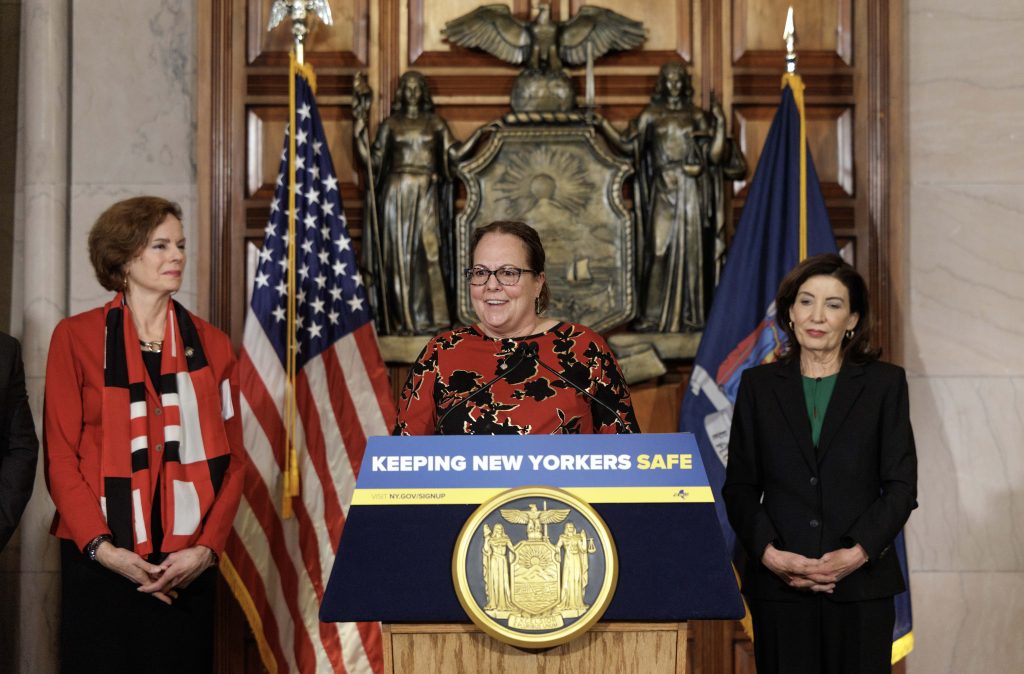
A new bill signed into law by Governor Kathy Hochul will require warning labels to be displayed on any social media platform that offers auto-play or infinite scrolling and other features. 

The new law was signed on Dec. 26 and will go into effect sometime in 2026. Under the new bill, platforms would be required to display an un skippable warning when a user initially uses one of the features cited in the law and periodically based on continued use. 

“Keeping New Yorkers safe has been my top priority since taking office, and that includes protecting our kids from the potential harms of social media features that encourage excessive use,” Governor Hochul said. “New Yorkers deserve transparency. With the amount of information that can be shared online, it is essential that we prioritize mental health and take the steps necessary to ensure that people are aware of any potential risks.” 

The new legislation comes after a 2023 advisory by the U.S. Surgeon General’s Office said that children and adolescents who use social media for more than three hours a day are more than twice as likely to develop mental health symptoms than those who don’t. This was notable as the Surgeon General’s Office placed the average social media usage of those aged 13-17 at 3.5 hours a day. 

The legislation cited this advisory and subsequent calls by the Surgeon General’s Office to implement warning labels as the primary motivator behind the bill. While the law is designed to target younger users, it doesn’t specifically require that the warning exclusively target them. 

In addition to infinite scrolling and autoplay, the law also targets features such as like counts or push notifications not explicitly requested by the user. The text and scope of the warning was not written into the legislation and will be determined later by the Commissioner of Mental Health in coordination with the Commissioners of Health and Education. 

Platforms who violate the law will be subject to a maximum of $5000 or further relief, depending on what the court decides. 

New York isn’t the first jurisdiction to target social media platforms. In Oct. 2025, New York City filed a lawsuit in Federal Court against several social media platforms, accusing them of encouraging addiction through their algorithms and engaging in practices akin to gambling through features such as likes and dislikes. 

Three other states — California, Colorado and Minnesota — enacted similar legislation this year while outside the US, Australia outright banned social media for anyone under 16. 

It’s unclear what legal hurtles the New York law run into. Soon after Colorado passed it’s law requiring platforms to tell users about the dangers of social media, a lawsuit was filed by industry group NetChoice. 

As a result, their law was struck down by a federal judge in a preliminary injunction. It has since been appealed. 

“The Court fully appreciates Colorado’s legitimate effort to protect the children and adolescents of our state from the impacts of social media use on their health and wellbeing,” Judge William J. Martínez wrote in his ruling. “The Court concludes, however, that it is substantially likely NetChoice will succeed on the merits of its claims that Colorado may not pursue this laudable goal by compelling social media companies to speak its expressive messages.”

Kratom Regulations Signed into Law in New York

Cari Scribner became an advocate for more regulation of the substance Kratom after her son, Nickolas, died in 2024 from the substance (Courtesy of Governor Kathy Hochul’s Office).

Nearly a year after the Saratoga County Board of Supervisors passed a resolution imploring the state to pass regulations on Kratom, their request has been answered. 

New York Governor Kathy Hochul signed two bills into law which would require warning labels on all Kratom products sold in New York and prohibit selling it to those under 21 — on par with the minimum age for substances like alcohol tabaco and cannabis. 

“Warning. This product has not been approved by the FDA. Side effects may include nausea, agitation, hallucinations, difficulty breathing, liver damage, and death,” the label is required to read. In addition, advertising or packaging stating, suggesting or implying that Kratom is all natural is banned under the new law. 

The law restricting age of sale of Kratom takes effect immediately while the law requiring the new labels will take effect in one year. Retailers and manufacturers who violate the new laws are subject to a maximum fine of $500 for the first offense, with manufacturers receiving a max fine of $1000 for any subsequent offenses. 

“Kratom is a commercial substance that is commonly labeled an “all-natural herb”, leading people to believe it’s completely safe — but the reality is it can be extremely dangerous and unfortunately, in some cases, lethal,” Governor Hochul said. “No parent in New York should have to endure the loss of a child to a substance simply because they didn’t know what was in it. This legislation ensures transparency and strengthens our public health laws so that information about the ingredients and potential harmful risks associated with kratom are clear.”

Kratom or Mitragyna speciosa comes from a tree in Southeast Asia, according to the United States Drug Enforcement Administration (DEA) — which has placed it on its “Drugs of Concern” list. In low doses, the substance has a stimulant effect while at high doses, the substance has the opposite effect, according to the DEA. 

Kratom (pictured here) is not currently regulated by the FDA or DEA. As of publication it and Kratom derived products can easily be purchased in the United States — including in Saratoga County ( Courtesy of the DEA)

According to the Food and Drug Administration (FDA), there are no drugs, dietary supplements, or food additives approved for use in the United States. Both the FDA and DEA have warned against use of the substance due to health concerns and the high potential for addiction. Both agencies have also acknowledged a lack of research on the matter. 

While there hasn’t been any federal action on the matter, some states have implemented regulations on the substance. According to the Legislative Analysis and Public Policy Association, 24 states plus D.C. have regulated the substance with six states (Alabama, Arkansas, Indiana, Rhode Island, Vermont, and Wisconsin) plus D.C. classifying it as a controlled substance. 

New York’s laws were prompted by the Nov. 2024 death of Saratoga County Sewer District worker, Nickolas Scribner and the subsequent advocacy of his mother, Cari. In Feb. 2025, she addressed the Saratoga County Board of Supervisors about her son’s death and the actions needed on the matter. 

 “Nick had a very common affliction: insomnia. Since he was a child, he could not sleep,” his mother, Cari Scribner said, as previously reported by Saratoga TODAY. “A friend told him about an herbal, all-natural energy enhancer to overcome fatigue with no side effects. This substance was kratom. Of all the adults that I’ve talked to about it about 10% have heard of it; of all the kids I’ve talked to about it, it’s 100%.”

According to Scribner, her son did not mix the substance with other drugs or alcohol and asphyxiated from the contents of his own stomach while sleeping on his back. After the death of her son Scribner began pushing for more regulations on Kratom in order to prevent other parents from going through what she went through. 

These efforts worked. By the time Scribner addressed the board, four pieces of legislation had been introduced at the state level to regulate Kratom. The next month, the Saratoga Country Board of Supervisors passed a resolution urging the state to take action on the substance. 

In signing the bills into law, Governor Hochul thanked Scribner for her efforts championing the legislation. 

“Given the choice to retreat into the pain and the anguish of the unspeakable loss of a child, or to turn around and try to save other families from knowing the pain that she and her family have experienced because of the loss of her beloved son, she [Scribner] became a fierce advocate,” Governor Hochul said. 

Scribner also spoke at the signing and thanked the Saratoga County Board of Supervisors and state legislators for their support in passing regulations. She said in going to legislators, she received nothing but empathy and respect. 

“I am grateful for all the support of these new laws restricting kratom and protecting people from potentially serious and lethal side effects,” Scribner said. “We are spreading the word about kratom being a drug, not an herb, to keep other families from suffering the loss my family underwent.”

Correction: A previous version of this article incorrectly listed the effective date of the laws at January 1. This has been updated with the correct information.

Stefanik Drops out of Governor’s Race and will not run for Reelection in Congress.

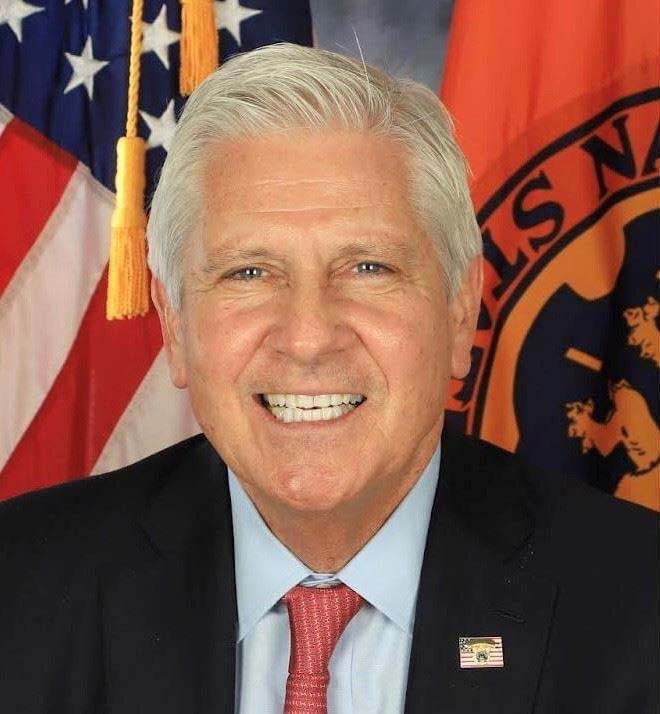
Bruce Blakeman received state and national endorsements after Congresswoman Stefanik dropped out of the race for governor (Courtesy of Nassau County)
Elise Stefanik announced she was dropping out of the race for governor, citing the need to be a mom and a primary challenge 
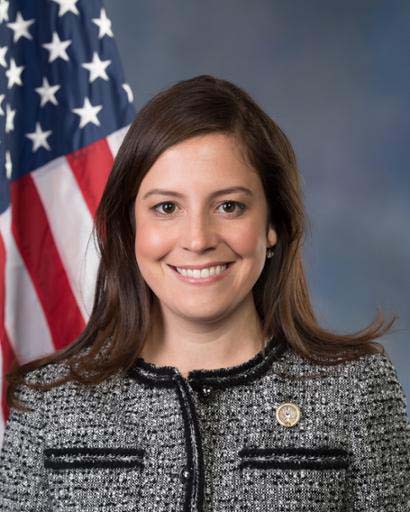
(official portrait)

Less than 50 days into her campaign to secure New York’s top office, Republican Congresswoman Elise Stafanik has called it quits. 

Stefanik announced that she has suspended her campaign for governor of New York and that she would not be seeking reelection to Congress. 

The announcement came Dec. 19 on both social media and in a statement sent to members of the media. Stefanik cited both the need to spend time with her four-year-old son and the strain of competing in a primary election as the reasons for the suspension of her campaign. 

While Stefanik was widely seen as the Republican’s top choice for governor, receiving the endorsement of many New York politicians, including Assemblywoman Mary Beth Walsh, State Senator James Tedisco and New York Republican Party Chair Ed Cox, she wasn’t running unopposed for the party’s nomination. 

On Dec. 8, Nassau County Executive Bruce Blakeman announced that he would also be seeking the Republican nod, triggering a potential primary challenge for the longtime Town of Saratoga based Congresswoman. Despite believing that she would beat Blakeman in a primary, Stefanik cited this as one of the reasons she dropped out. 

“While we would have overwhelmingly won this primary, it is not an effective use of our time or your generous resources to spend the first half of next year in an unnecessary and protracted Republican primary, especially in a challenging state like New York,” Stefanik said in her statement. 

Shortly after Stefanik’s announcement, President Donald Trump — who hadn’t endorsed a candidate to this point — posted on social media endorsing Blakeman for New York’s Governor. The same was true for Cox who also threw his support for Blakeman. 

“Bruce Blakeman has my endorsement, and I urge our State Committee and party leaders to join me,” Cox said in a statement. 

As for what comes next for the 21st congressional district, so far 11 candidates have filed to run for the vacant seat, according to records from the Federal Election Commission. On the Democratic side, dairy farmer Blake Gendebien leads in terms of fundraising with $3,669,237.32 raised as of September. On the Republican side, Sticker Mule CEO Anthony Constantino leads with $2,603,478.61 raised, the majority coming from loans he made to his campaign.

Saratoga County Student Athletes Score High Marks on and off the Field

School districts across the county are celebrating successes on and off the field as the list of scholar athlete teams was announced. 

The New York State Public High School Athletic Association (NYSPHSAA) announced its list of scholar-athlete teams Dec. 11. To qualify for the list, 75% of a team roster must have a 90.0% average or higher across all their classes for the designated marking period. 

Across the 12 school districts and private high schools in Saratoga County, 114 teams met this threshold — equating to 1,305 student athletes. 

The Saratoga Springs High School had the most athletes with 219 student athletes scoring a 90 or above average across the 13 teams it fielded. Shenendehowa wasn’t far behind with 216 student athletes across 13 teams. 

“The Scholar-Athlete program remains one of the most meaningful recognitions we provide as an Association,” said Dr. Robert Zayas, NYSPHSAA Executive Director. “The dedication shown by these student-athletes, balancing rigorous academic responsibilities with their commitments to interscholastic athletics, is truly remarkable.” 

School Breakdown 

Ballston Spa- 137 athletes across 11 teams 

Burnt Hills- Ballston Lake- 172 athletes across 12 teams

Corinth- 62 athletes across 9 teams

Galway- 50 athletes across 5 teams

Mechanicville- 85 athletes across 8 teams

Saratoga Catholic- 50 athletes across 7 teams

Saratoga Springs- 219 athletes across 13 teams 

Schuylerville- 96 athletes across 9 teams. 

Shen- 216 athletes across 13 teams

South Glens Falls- 125 athletes across 12 teams

Stillwater- 51 athletes across 7 teams 

Waterford- 42 athletes across 8 teams 

Online Transaction Ends in Robbery

A Schenectady teen has been arrested after an online transaction ended in an attempted robbery in the City of Mechanicville. 

Mechanicville Police say Natalia Adair, 18, was arrested Dec. 15 in Schenectady in connection with a robbery that occurred the day prior. 

The robbery occurred on South Central Avenue on Dec. 14. Police say a 21-year-old man was assaulted by three people as they attempted to rob him. The man told police that two of the individuals wore ski masks and at least one struck him in the head with a handgun. 

The robbery occurred after the victim arranged a meeting online with someone he thought was a customer looking to purchase a watch. 

The next day, police located the vehicle and arrested Adair. She is charged with 1st degree attempted robbery, 4th degree attempted grand larceny,4th degree conspiracy, and 2nd degree assault.

Police say more arrests are expected as they continue to try to identify others involved in the attempted robbery. 

“This incident highlights the very real dangers associated with meeting unknown individuals through online marketplaces,” said Chief William Rabbitt. “We strongly encourage residents to take precautions when conducting in-person transactions. Meeting in public, well-lit locations and avoiding private residences can significantly reduce risk.” 

Hospitals Restrict Visitors as Influenza Rates Spike

Albany Med Health System has become the latest hospital system to restrict visitors to patients in their facilities. 

The new guidelines went into effect on Dec. 15 and impacted Saratoga Hospital, Glens Falls Hospital, Albany Medical Center and Columbia Memorial Hospital. 

Under the new restrictions, children under 12, visitors with flu-like symptoms, rashes and diarrhea are all prohibited from visiting patients.  In addition, only two visitors are allowed to visit a patient’s bedside at one time. 

In a press release, the hospital said the restrictions were put in place to help limit transmission of illnesses to protect visitors and staff. 

Albany Med isn’t the first local hospital to implement visitor restrictions. Ellis Medicine implemented similar restrictions on Dec. 3 and Trinity Health System — which includes St. Peter’s Hospital in Albany and Samaritan Hospital in Troy — implemented the restrictions on Dec. 8. 

The restrictions come amid a spike in flu cases across New York. As of Dec. 6, there have been 24,287 lab confirmed cases of flu in New York State this season resulting in 1,399 hospitalizations for the virus, according to the Department of Health. Saratoga County alone has seen 134 lab confirmed cases, a rate of 55.75 cases per 100,000 residents. These cases have resulted in 5 hospitalizations. 

Downstate has been hit hardest by the virus with Kings County (Brooklyn) seeing 4,314 cases — the most anywhere in the state. Meanwhile, Westchester County has seen the highest rate of cases 184.91 cases per 100,000 residents. In terms of hospitalization, Bronx County has seen the most with 197 hospitalizations at a rate of 14.23 per 100,000 residents. 

Over and Out of Luck: Burglar Busted after Calling for Ride on Walkie Talkie

Close-up Shot of Police Car Siren Lights. Offices of the Law Ready for Action, Chase the Criminals, Arrest Offenders and Fight Crime. Stylish Cinematic Lights with Dark Sky

Two men are facing felony charges after a burglary in the Town of Stillwater was foiled by the Saratoga County Sherriff’s Office and an ill-fated walkie talkie transmission. 

Joseph Briggs, 43, of Johnsonville and Michael Briggs Sr., 49, of Buskirk were arrested after a robbery on Brickyard Road in the Town of Stillwater on Dec. 15. According to the Sheriff’s Office, the two men forcibly entered a residence to commit a burglary. While doing this, they kept in contact via walkie talkie. 

Michael Brigs Sr. was arrested after an off-duty deputy provided a description of his vehicle leading to a stop on Halfway House Road. His partner in crime, Joseph Briggs, was caught by deputies after he called Michael on the radio requesting to be picked up from a bike path on Halfway House Road. 

Michael Briggs Sr. was also found in possession of a firearm — despite having a criminal record. He was charged with 2nd degree burglary — a class C felony, 3rd degree criminal possession of a weapon — a class D felony and 4th degree conspiracy — a Class E felony. 

Joseph Briggs was charged with 2nd degree burglary, 4th degree conspiracy, possession of burglar’s tools and petit larceny — the later two being class A misdemeanors. It’s unclear as of publishing if the two men had any familial relationship. 

They were arraigned in Stillwater Town Court and remanded to the Saratoga County Jail to await further proceedings. 

The two could also face federal consequences for using the radios for crime. A 2021 bulletin issued by the FCC states that using personal radios to carry out crime may be subject to fines, seizure of equipment and potential criminal prosecution. It’s unclear if such penalties will be imposed in this case. As of time of publication, no charges have been filed in federal court regarding the matter. 

Saratoga Springs Does Well in Annual State Tests

The New York Department of Education has released the results of last year’s standardized tests. 

The results were released on Dec. 4 by the Department of Education. Tests for math and English Language Arts are given to students in grades three through eight while science exams are given to students in grades five and eight. The State also released data regarding the latest round of regents administered. 

Under the state’s current system, raw test scores are scaled based on the difficulty of the test and sorted into one of four levels to determine proficiency. Level one means a student is not proficient in the subject; level two is partially proficient; level three is proficient; and level four exceeds expectations. 

On the Regents exams — which are taken at the high school level — the exams are sorted into five levels based on student score. Below 55 is level one; 55-64 is level 2; 65-75 is level 3; 76-84 is level 4; and 85-100 is level 5. In order to be considered proficient, a student must score in level 3 or higher, while getting a regents diploma requires a score in level 4 or higher. 

Overall, Saratoga Springs did well in all the tests administered. In all subjects tested, the School District did better than the statewide results and saw more than half of students achieve a proficient rating or higher. 

Across the three subjects tested at the elementary and middle school level, — grades 3-8 for math and English Language Arts (ELA) and math, grades 5 and 8 for science — Saratoga Springs did the best in Math at 77% proficiency among students, well above the statewide proficiency of 58%. 

As for the other two categories, Saratoga Springs achieved 66% of students proficient in ELA and 68% proficient in science — compared to statewide proficiency of 53% in ELA and 51% proficiency in science. 

As for Regents exams, Saratoga Springs did the best in U.S. History and Government — achieving 94% proficiency compared to 75% at the state level. Its lowest proficiency was in Algebra 1 where 77% of students achieved proficiency, compared to 56% statewide. 

It was a similar story in Ballston Spa where students scored better than the statewide total, although with closer margins. 

In science, Ballston Spa achieved 69% proficiency compared to statewide proficiency of 51%. In ELA the margins were closer with 56% proficiency compared to 53% statewide. As for math, the State didn’t report Ballston Spa’s total proficiency across all grades, as one 7th grade student took the Regents exam. That said, all grades shown outpaced the state, with grade 8 achieving the highest proficiency at 82% compared to the rest of New York’s 60%. 

In terms of proficiency during the Regents exam, Ballston Spa’s top score came in Algebra 2 where they achieved 90% proficiency compared to 75% for New York as a whole. Their lowest proficiency score was in US History and Government, where they achieved 77% proficiency compared to 75% statewide. 

As for Schuylerville, they had very similar scores to Ballston Spa. 

In ELA for grades 3-8, the School District achieved the same exam proficiency as their neighbors to the southwest — 56% proficiency. In science, Schuylerville achieved 55% proficiency. 

Like Ballston Spa, Schuylerville had one grade 7 student take the Regents exam, so combined data is unavailable. In terms of grade level statistics, grade 4 achieved lower scores in math than the whole of New York State, 57% proficiency compared to 59%, while grade 8 outpaced the statewide statistics with 74% proficiency. 

Schuylerville’s best proficiency in the Regents exam came in physics where all 18 students who took the exam at Schuylerville achieved proficiency. The majority of students scored in the level 4 category — the highest level reported by the state for physics. 

Like Ballston Spa, Schuylerville’s lowest proficiency was in US History and Government — achieving 84% proficiency compared to 75% statewide. 

In a press release announcing the results of the statewide testing, the Department of Education highlighted the States’s NY Inspires program for helping schools achieve higher results. 

“This data tells a clear story: when educators have strong training, aligned curriculum, and consistent support, students benefit,” Commissioner Betty A. Rosa said. “Our professional development efforts, literacy initiatives, and curriculum guidance are working, and we see that reflected in classrooms across the state. A comprehensive, multi-measure assessment strategy gives us the insight we need to continue moving forward together. New York’s students deserve nothing less.”

Full data is available at saratogatoday.com