Luke Tallman
SARATOGA SPRINGS —Luke Tallman, age 35, passed away on Thursday, June 20, 2024. At the family’s request there will be no calling hours or service at this time. For online condolences, visit www.compassionatefuneralcare.com

SARATOGA SPRINGS —Luke Tallman, age 35, passed away on Thursday, June 20, 2024. At the family’s request there will be no calling hours or service at this time. For online condolences, visit www.compassionatefuneralcare.com
SARATOGA SPRINGS —Eleanor Paterson, age 84, passed away on Saturday, June 22, 2024. At the family’s request there will be no calling hours or service at this time. For online condolences, visit www.compassionatefuneralcare.com
SOUTH GLENS FALLS — Gary Robert Simzer, age 83, passed from this life into eternity on Sunday, June 23, 2024. In accordance with Gary’s wishes, there will be no calling hours. The funeral service will be private as requested by the family. For online condolences, visit www.compassionatefuneralcare.com
TROY — Michael Anthony (Peanut) Burnett, 64, passed away peacefully on June 19, 2024 at St. Peter’s hospital after a long illness. Viewing was private. Burial took place June 27 at Maplewood Cemetery. A celebration of life will be scheduled at a later date. Please visit www.burkefuneralhome.com

SARATOGA SPRINGS —Dawn J. McMahon, 88, passed away on Wednesday, June 19, 2024, at Wesley Nursing Home, after spending her last 25 years living at Embury Apartments on the Wesley campus. She was born in Oneida, New York on January 20, 1936 to Ralph Urben and Bernice Bea Bouveau. She moved to Saratoga Springs as a young teenager and loved the city where she would grow up. She attended St. Clement’s and St. Peter’s schools. She would marry and have four children at a young age, and was always a proud and devoted mother, grandmother and great-grandmother to her children, grandchildren and great-grandchildren. She loved the house on Nelson Avenue where she spent most of her life, and would often make treats for many of the neighborhood kids that would come around to play with her own children. After raising her children, she decided to take classes at the local Saratoga BOCES to start her own cosmetology career, of which she was so proud. She still loved working with children and was a much- loved teacher’s aide in the Saratoga Springs City School system for several years. She would later meet and marry a man with whom she would spend the remaining years of her life, traveling to Florida and finally settling in the apartment that she loved on the top floor of the Embury East tower, where she enjoyed the fantastic view over the city that she cherished and knew so well.
She is predeceased by her husband, Patrick McMahon (April 2012); her brother, Bruce Urben (April 2023); her oldest daughter, Michelle (Nichols) Meisburger (January 2017); and her grandson, Shawn Nichols (September 1992).
She is survived by her son, Michael (Robin) Nichols of Wilton; her daughter, Melody (John) Jaenisch of Florida; and her son, Mark Holiday of Saratoga Springs. She is also survived by her granddaughters, Miranda (Frank) Luman and Ariana Scheidt, both of South Glens Falls; grandsons, Peter (Samantha) Meisburger of Ballston Spa; Eric (Jessie) Nichols of Ft. Edward; David (Caitlin) Nichols of Hudson Falls; and Ryan Nichols of Union City, New Jersey; as well as great-grandchildren, Brandin Luman, Raygen Luman and Graham Meisburger.
Relatives and friends are invited to call from 3:00 – 5:00 p.m. on Wednesday, July 3 at William J. Burke & Sons/ Bussing and Cunniff Funeral Homes, 628 N. Broadway, Saratoga Springs, NY, with a celebration of life to immediately follow at Italian-American Club (ITAM) at 247 Grand Avenue.
Burial at the Gerald B. H. Solomon Saratoga National Cemetery, 200 Duell Rd, Schuylerville, NY, will be held later this summer, where she will be buried with her husband Patrick, a veteran of the Korean War.
Online remembrances may be made at www.burkefuneralhome.com.
The Saratoga Wilton Flag Day Parade on July 4 will mark the inaugural parade for the Bikeatoga Bicycle Battalion.
All persons with a bike, large or small bike, e-bike or pedal powered are invited patriotically decorate their bikes and selves for the Saratoga Elks Flag Day Parade, according to a statement from Dan Lynch, of bikeatoga.org.
Cyclists will be meeting on 2nd Street, between N. Broadway and Bryan St. starting at 4:30 p.m. The Bikeatoga Bicycle Brigade will be stepping out shortly after 5 p.m. and riding in front of Santa Claus.

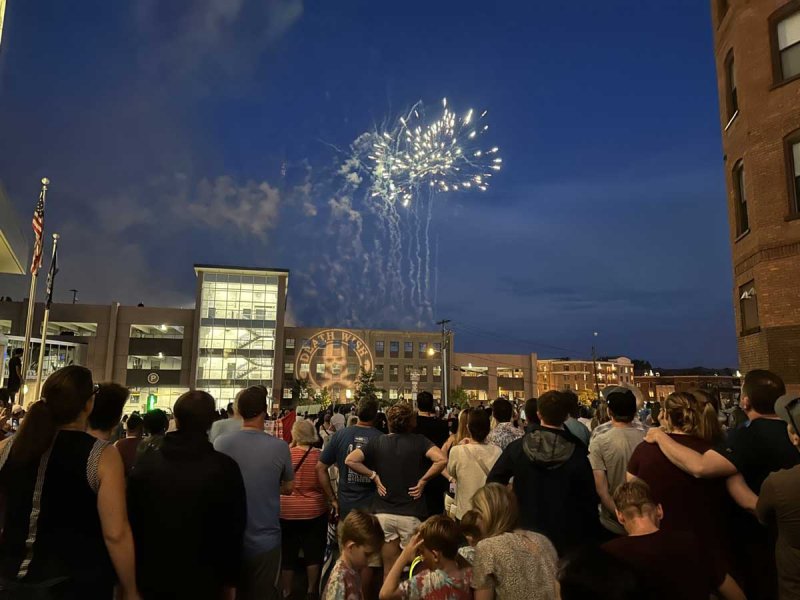
July 4 Celebration in Saratoga Springs features live music, Flag Day parade, and a fireworks display.
SARATOGA SPRINGS — Saratoga’s All-American Celebration is back on July 4 in downtown Saratoga Springs.
The day will include the annual Firecracker4 Road Race, the Saratoga-Wilton Elks’ 55th annual Flag Day parade, a family-friendly concert featuring Tops of Trees and a spectacular fireworks display. All events are free and open to the public.
This year will also feature the Saratoga-Wilton Elks Flag Day parade, rescheduled due to June’s Belmont Stakes Racing Festival.
Schedule of events:
– Firecracker Road Race 4 begins at 9 a.m. at the Saratoga Springs City Center
– Saratoga-Wilton Elks’ 55th annual Flag Day parade steps off at 5 p.m. on Broadway
{loadmoduleid 268}
– Tops of Trees performs from 7:30 to 9 p.m. on Ellsworth Jones Place stage
– Fireworks display starts shortly after 9 p.m. from the top level of the Saratoga Springs City Center Garage
The event is organized by the Saratoga County Chamber of Commerce. Saratoga’s All-American Celebration draws thousands of attendees each year.
Registration for the Firecracker4 Road Race is now open at https://fc4.squarespace.com/firecracker4.
More information about Saratoga’s All-American Celebration can be found online at www.saratoga.org/tourism/4th-of-july/.

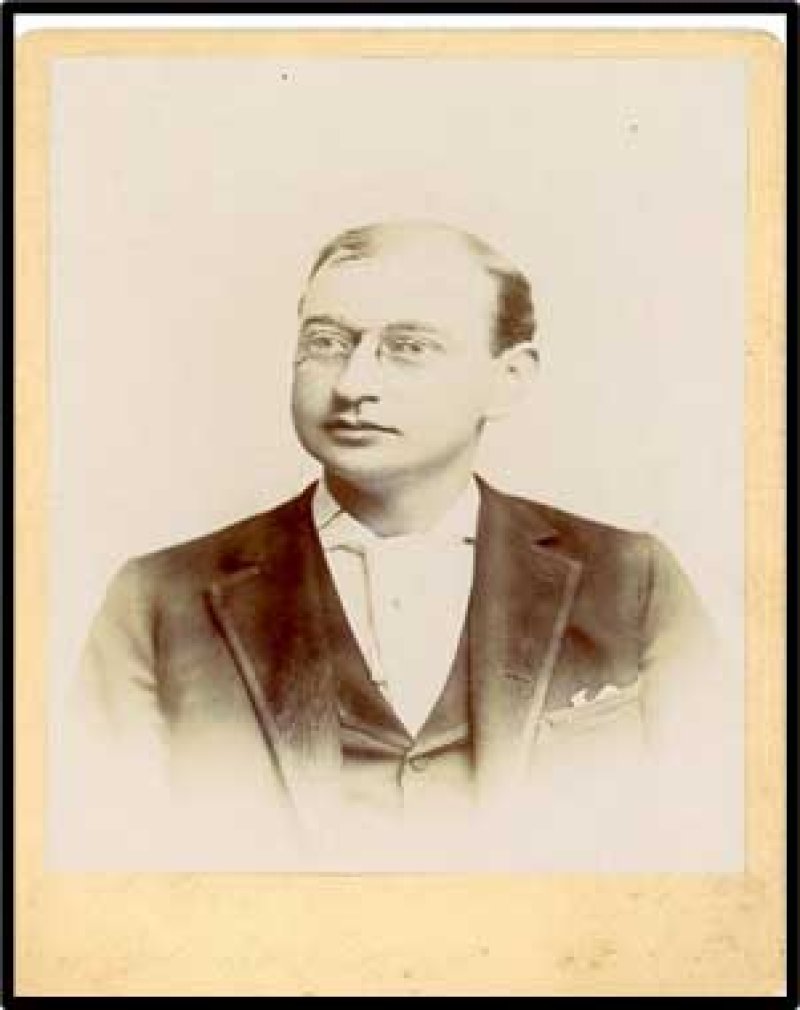
George Laing Corliss
Histories mysteries are so fascinating and solving them is rewarding. A group of photos were found in an antique shop recently and thankfully some were identified with a name on the reverse. A cabinet style card with a photographer’s imprint of Epler & Arnold Saratoga, N.Y. shows a distinguished man wearing pince-nez glasses. On the reverse someone had written the name – George L. Corliss. An unfamiliar name to me, I began searching for him on Ancestry.com. From census and death records I found he was born in Providence, Rhode Island on January 1, 1863 to Charles and Anna Laing Corliss. Unfortunately, he never knew his father who died barely two months before George L. was born. And George L. died at the young age of 39 and is buried in Greenridge Cemetery in Saratoga Springs. His life had been cut short due to medical problems.
The Corlis name is renowned throughout the region. Captain John Corlis, great grandfather of George L., of Haverhill, Massachusetts had served in the Revolutionary War and later moved to Easton, Washington County. John’s son, Hiram, was a physician and surgeon in Greenwich. Hiram had at least two sons. One was George L.’s father, Charles, and the other was George H. Corliss. George H. Corliss designed, built, and patented a sewing machine in 1843, three years before Elias Howe, who is credited with the invention and perfection of the sewing machine.
George moved from Washington County to Providence, Rhode Island, to work more closely with metal foundries. Here he studied draftsmanship and created the steam engine that revolutionized the efficient production of industrial power. His company is also credited with building parts for the iron-clad Monitor during the Civil War. The Centennial Celebration held in Philadelphia in 1876 was powered by an enormous Corliss steam engine. When George H. died in 1888, he had 48 patents issued to him with 12 more pending.
George L.’s father, Charles also moved from Washington County to Providence, R. I. where he was employed at Corliss & Nightingale, his elder brother’s company. Charles died in November 1862 less than two months before the birth of his son. The widow, Anna Laing Corliss was left with three young children to care for. Within three years they moved back to her hometown of Schuylerville. By 1875 they were living in Saratoga Springs with her sister and brother-in-law, Johnathan Howland.
George L. attended the public schools until the age of sixteen. He then moved to Chicago where he was employed as a bookkeeper for the Commercial National Bank of Chicago for the next eight years. While he was in Chicago his mother died in 1880. He was just seventeen. He became active in the Democratic Party in Chicago and served as secretary and treasurer of the 9th Ward Democratic Party.
Returning to Saratoga Springs in 1887 he entered the employment of the First National Bank, a position he held for a dozen years. He also served as a member of the Board of Water Commissions. Subsequently he was elected supervisor of Saratoga Springs in 1899, a position he held until 1902. His sister, Mary Emma Corliss, married Edgar T. Brackett, a prominent attorney and business leader in Saratoga Springs. Brackett had been a lawyer for Richard Canfield (the Prince of Gamblers), but later staunchly opposed gambling in Saratoga. He served in the New York State Senate from 1896 until 1906 and then returned in 1909-1912. George L’s older brother, Charles was involved in Troy politics where he was deputy commissioner of public safety.
George L. and his wife, Florence K. Hubbard, were married in 1895. They were the parents of two daughters, Florence (1896-1917) and Elizabeth (1899-1985). They lived at 203 Caroline Street. George L.’s life was tragically cut short at the age of 39. He had fractured his left leg five years earlier as a result of a fall. It never healed properly and troubled him ever since. In early February 1902 he became ill with chronic nephritis, kidney inflammation that causes swelling of the hands and feet because the kidneys do not function properly to carry off excess fluid. With treatment he seemed to be improving when an artery in his right leg ruptured causing gangrene to set in (antibiotics would not be available for another forty years).
The doctors decided amputation above the right knee was necessary. The operation was performed at his Caroline Street residence by Dr. D. C. Moriata, and Drs. Fish, Lester and Thompson. The anesthesiologist was Dr. Thomas Bennett of New York City. According to newspaper reports the operation lasted twenty minutes. George L. seemed to improve for a day until edema (fluid) in the lungs caused his death on March 7, 1902. His obituary was published in numerous newspapers throughout the northeast. The funeral was conducted from his Caroline Street home with the burial at the Greenridge Cemetery. He was survived by his wife, two daughters, his sister, and brother.
New York State Attorney General Letitia James has issued the city an Assurance Of Discontinuance (AOD) proposal. It would be part of the settlement growing out of the AG’s investigation of the Saratoga Springs Police Department. If implemented, it would require that the city allow not just Black Lives Matter but any group, including the Proud Boys, to block city streets and disrupt City Council meetings. It is quite stunning. It basically precludes the city’s police department from enforcing key codes essential to the city’s functioning.
It provides wide immunity from arrest for any demonstrators who violate city codes.
Among other provisions to hamper the city from exerting its authority, Attorney General Letitia James’ proposed agreement would grant demonstrators the right to block streets and sidewalks at their discretion. According to James, any group that wants to demonstrate can now control the city’s streets. The document reads:

This is the cover letter for the AOD. As readers will observe, it asserts, “The AOD would restrict the city of Saratoga Springs, the SSPD, and those acting in concert with them [emphasis added], from seeking criminal charges for most non-violent violations of law.” It is hard to believe that lawyers drafted this. “Those acting in concert with them” could be the New York State Police, the Saratoga County Sheriff’s Department, the FBI, or Homeland Security, as we saw during the Belmont Stakes. How does the Attorney General expect to enforce this AOD on these organizations? Does the Attorney General plan to go after these other law enforcement groups to restrict their operations when they occur in Saratoga Springs?


The AOD lays out a series of general prohibitions. Keep in mind these prohibitions would apply to any demonstration whether it be BLM or the Proud Boys.
No horse-mounted police.
No officers on bicycles.
Any arrest related to a demonstration must be made during the demonstration.
The city is precluded from enforcing parade requirements or from enforcing the requirement to fill out a demonstration declaration.
The city cannot enforce its rules for decorum at its Council meetings or “other official city function” except in the case of violence, physical injury, or significant property damage.


There are sound reasons for delaying the arrest of persons involved in the protest until after the event. Arresting someone during a demonstration is an extremely provocative act that logically has the potential to produce a scrum. It is reasonable for the police to refrain from arrests during a demonstration where possible. In fact, the AG’s insistence that the police can only make arrests during a demonstration is at odds with their requirement that the police use all means possible to de-escalate.
There is also the real possibility that someone may have committed a crime that was not apparent at the time. The fact that the original crime was unobserved and not acted upon during the demonstration is no reason to place the perpetrator beyond culpability.
Police on horseback are a key element in dealing with crowds. The rider’s elevation allows them to see things that a person on the ground would not. Officers on horseback are also an effective tool for separating demonstrators and counter demonstrators in a crowd. The AG’s proposal offers no explanation as to why the use of officers on horseback is prohibited nor do they explain why they are prohibiting police on bicycles.
Item #55 prohibits the police “…from investigating, arresting, or seeking charges against any individual for expressive conduct at any city council meeting or other city function in the absence of particularized allegation of violence, physical injury, or significant property damage caused by such individual.” The AG appears shockingly unconcerned about the need to maintain order at Council meetings that have been repeatedly shut down by demonstrators.
The AOD lays out four “tiers” of response to demonstrations they want the police to follow. The first tier is for demonstrations that involve no violence or the “significant” destruction of property.
The second tier is appropriate if the police are “aware of a specific and credible threat that violence or significant property damage may occur at the demonstration.” However, there is no guidance on distinguishing “significant” from “not significant” property damage.
In this case, the police can only act if a person has committed a felony. They are precluded from acting on persons committing violations or misdemeanors. (In a subsequent section and in conflict with item c, they are allowed to arrest for misdemeanors as well.) This still precludes the police from acting on violations such as disorderly conduct.


More problematic are the prohibitions in the AOD that significantly restrict investigations into the pre-activities of the group demonstrating.
The police are allowed to go to Tier 2 if they have overwhelming evidence that a crime will occur at the demonstration. This becomes meaningless if, as #56 details, they are virtually precluded from any type of surveillance prior to the demonstration.
They are also precluded from recording the demonstration, so no pictures or videos are taken, which further hinders the police from proving a crime.

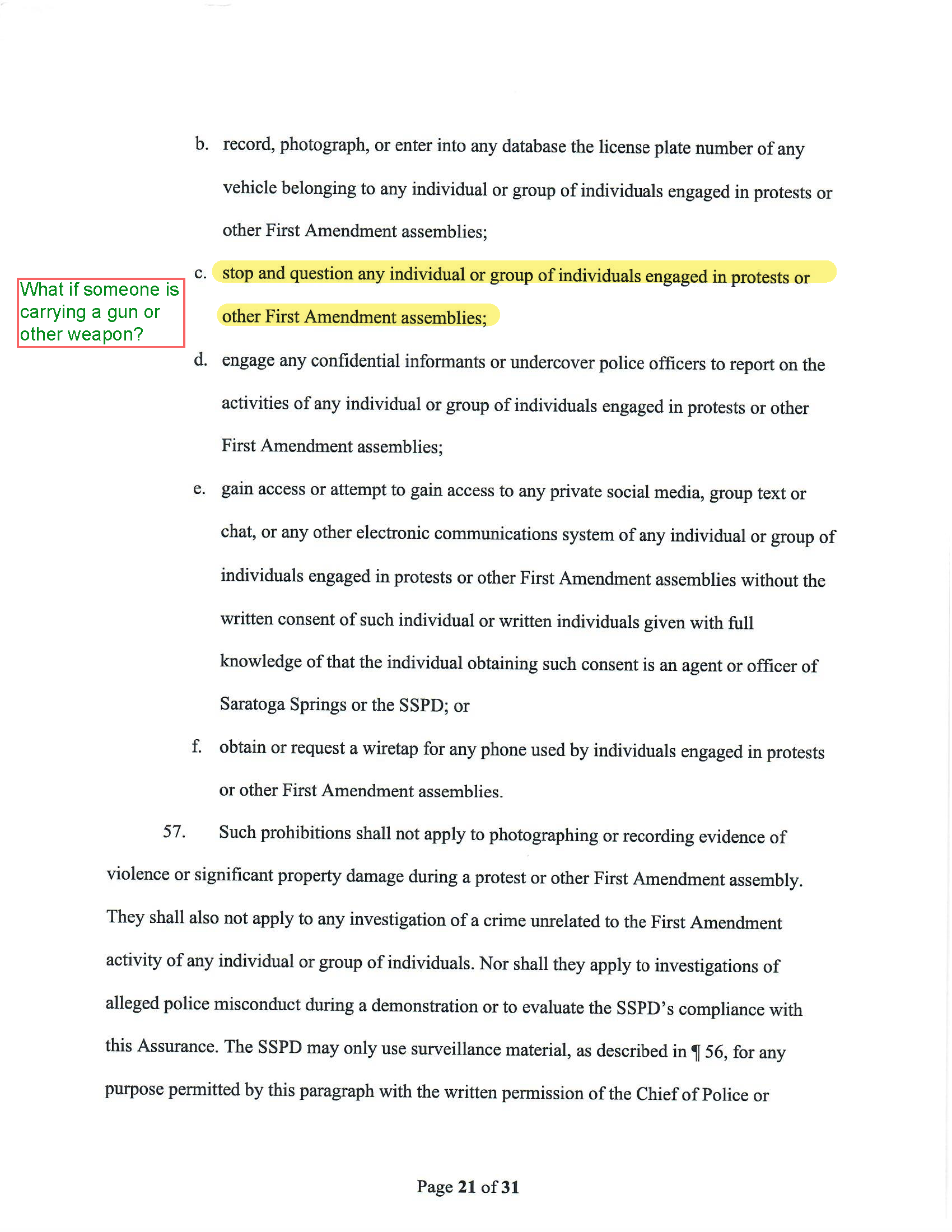
Given how poorly written and organized this document is, annotating it is a bit of a challenge. The third tier is triggered by actual acts of violence or property destruction. What constitutes significant versus insignificant property damage is never addressed. Similarly, what constitutes an “imminent” threat is never clarified. The document does tell us it is ok for demonstrators to throw water bottles in spite of the fact that Water bottles as projectiles are potentially dangerous.
This tier cautions that the police may only deploy “a limited number of officers sufficient to address the specific individuals engaged in the acts of violence or property damage (snark warning: for some reason, they left out the word significant, which qualifies every other reference to damage in the document).”
How many officers represent a “limited number” is anyone’s guess.
As the AOD proposal precludes the city from requiring a demonstration declaration that would provide the time of the event and the organizer’s estimate of the number of people involved, the police chief’s ability to prepare for the demonstration in terms of bringing in additional officers or other organizations such as the sheriff’s department is made all the more difficult.

This is real madness. Contrary to the AG’s approach to crowd control, if there is violence or property destruction, it is time to request that the “crowd” disperse. Dear reader, imagine for a moment that you are the city’s chief of police and members of a demonstration are acting violently or destroying property. Wouldn’t you consider it time to try to arrest the perpetrators and ask the crowd to disperse?
Here, the situation is that protesters “are seeking to gain unauthorized entry, or physically blocking others’ entry, into a sensitive location. A sensitive location includes, but is not limited to, a police precinct, courthouse, other government building, hospital, clinic, medical facility, or medical provider.”
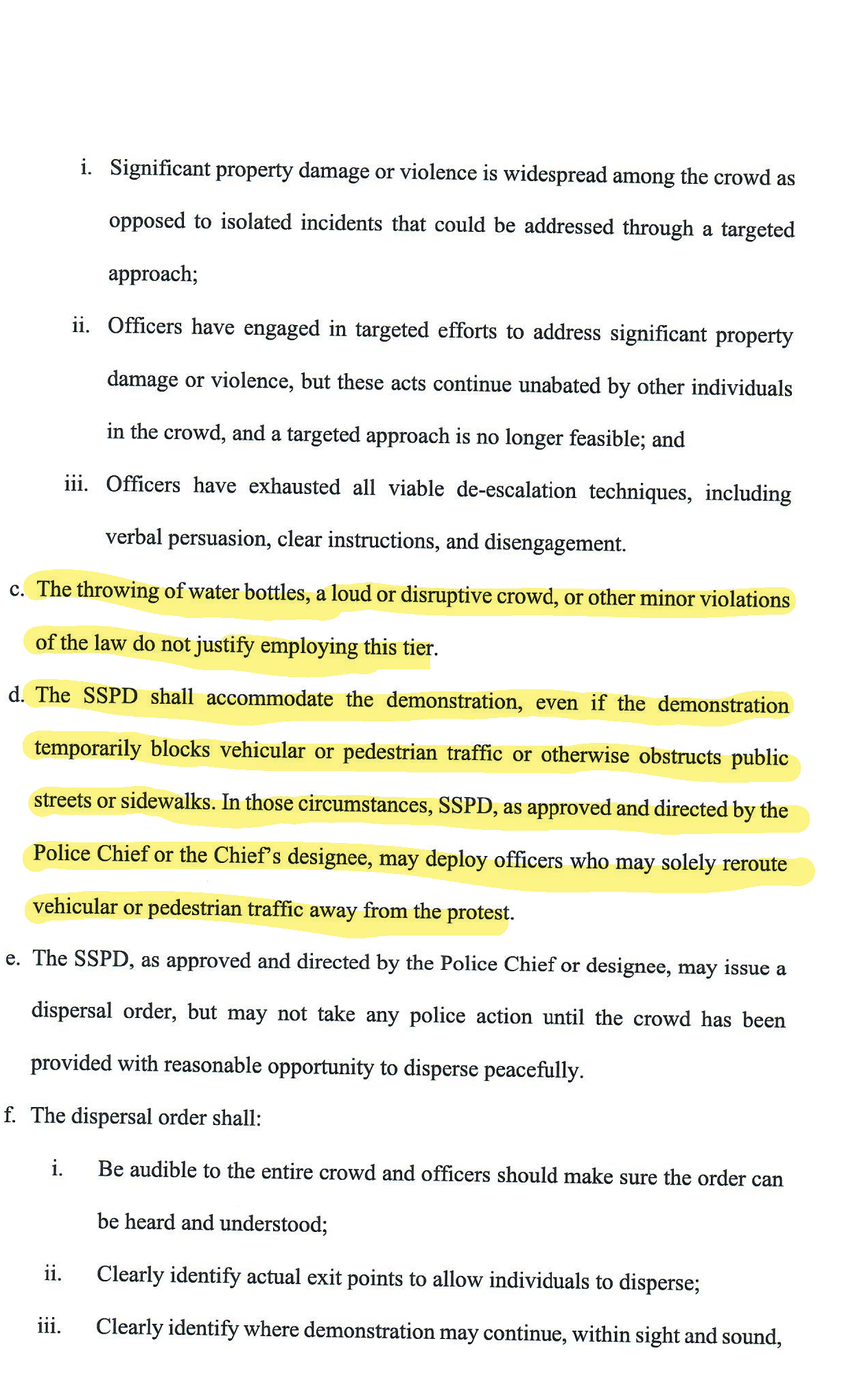
For some reason, the authors felt the need to remind the city that the demonstrators may take over the street, block traffic and throw water bottles and still must be “accommodated.” This section appears to be a case of cut-and-paste.
The police must give the protesters three warnings to disperse, allowing five minutes for each warning. So the crowd can block access or remain in a “sensitive area” for fifteen minutes. Given the history of BLM demonstrations, it is reasonable to assume that they will occupy the area until just before the fifteen minutes are up and potentially move to another sensitive location and start the countdown again.

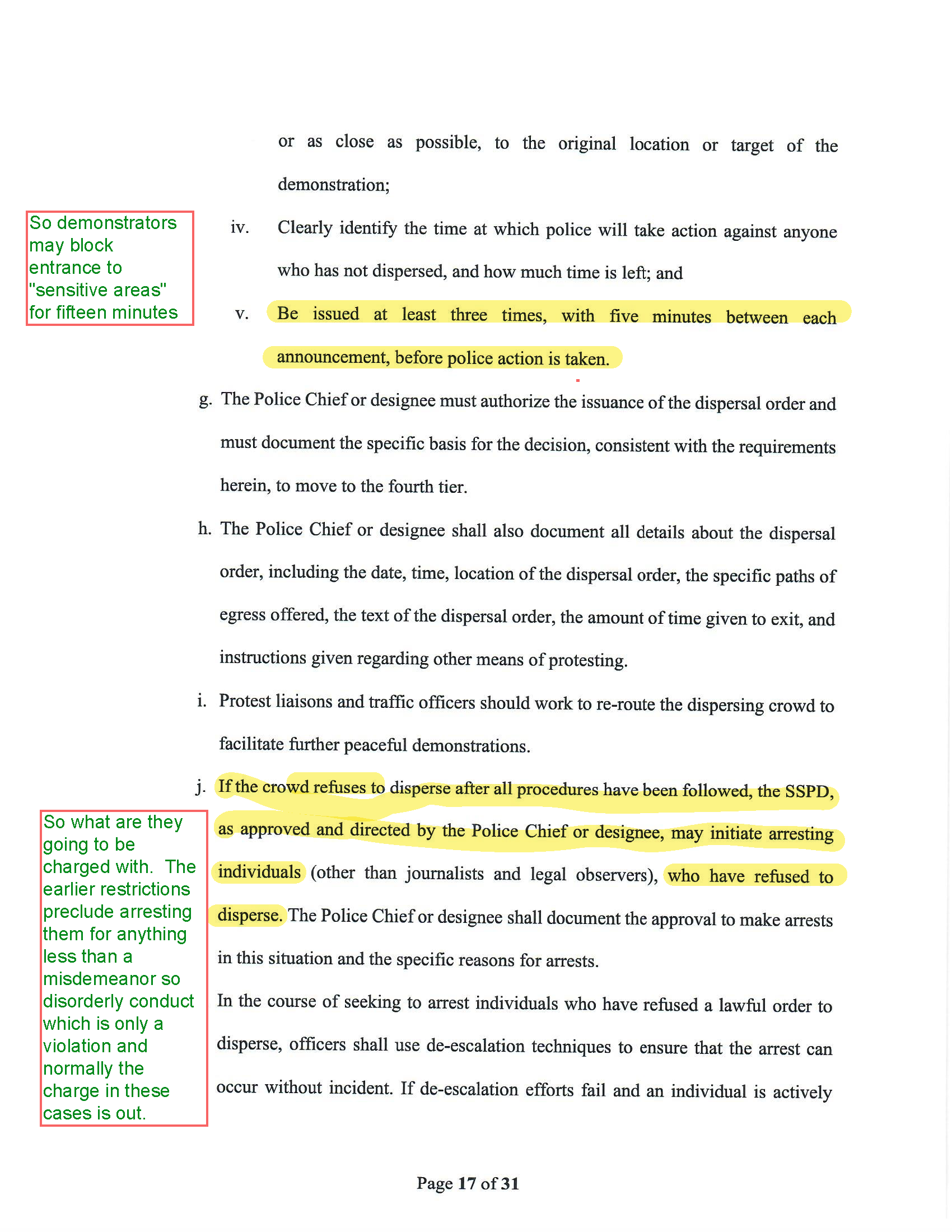
Let’s assume the protesters simply block the “sensitive” location for fifteen minutes and decline to disperse. What can they be charged with? Typically, the charge would be for disorderly conduct, which is a violation. According to the AOD, the police are precluded from charging protesters for violations. So what are the police to do? The AOD conveniently doesn’t address this.
I am a strong civil libertarian and believe the government should enforce its laws uniformly. It should not consider ideology, race, religion, or nationality in its actions. I expect, though, that many of the creators and supporters of the hands-off standards being proposed by Attorney General Tish James would be outraged if these were applied to a Proud Boys demonstration blocking the intersection of Broadway and Lake Avenue and shouting racist slogans.
In effect, the proposed restrictions in Letitia James’s proposal would attract any group that wants to make a splash and get attention for whatever cause they are pursuing. As the proposal also restricts police intelligence operations regarding potential demonstrations, the city will operate in a black box regarding threats. A surprise action would leave the police department and community vulnerable in terms of having adequate staffing resources to protect demonstrators and the public.
James appears either indifferent or ineptly blind regarding the potential for explosive conditions that her proposal would cause. Consider the Belmont concert that drew crowds to Broadway. What if the Proud Boys decided to have a demonstration and waded into the crowd, yelling racist and homophobic slurs? What would the potential be for a riot, and how could the police address this, given Tish James’ prohibitions?
This AOD is clearly not the result of attorneys carefully considering the protection of First Amendment rights. Apparently, a group in the AG’s office sat around a table and carelessly tossed out ideas packaged as the AOD proposal, which she then authorized. While it is an opening proposal from James, it is an extreme position to start negotiations from and must be taken seriously by the city and replied to at a great cost of time and money. Interestingly, the original AG report listed only a half dozen reasonable demands, many of which the city was already practicing. This new proposal is quite bizarre, and unfortunately, the press is not covering this for whatever reason. One can only wonder how this fits into James’ political ambitions. Would she really support this kind of policing of a Proud Boys demonstration? The citizens of Saratoga Springs and New York deserve better.