

Breaking the Mold
Editor’s Choice | Manzi Sculpture

Within Alice Manzi’s luminous glasswork is a profound interplay between frailty and strength. An area sculptor who spent more than 30 years creating metal and rock statues for public spaces, Alice is now revealing her softer side with expressive figurative forms imbued with optical energy.
“It’s a totally new thing for me,” said Alice, who has traditionally practiced a more academic understanding of the human form. A Brooklyn native who was always tinkering in her garage as a young girl, Alice’s mentor, Ron Mehlman taught her how to sculpt. While in Italy, Alice learned the art of liturgical statuary from artist and Dominican priest Father Thomas McGlynn, creator of Portugal’s 18’ statue of Our Lady of Fatima.
Since then, Alice has taught sculpture, life drawing, and anatomy, serving on the faculty of Skidmore College and Russell Sage College. Her public commissions have included the National Museum of Dance’s bronze Athena-inspired induction awards (1991), and the life-size bronze sculptures of French and Indian War hero Robert Rogers on Roger’s Island in Fort Edward (2005), as well as Minne Ha Ha (2014), a fictional Native American character in Henry Wadsworth Longfellow’s 1855 epic poem The Song of Hiawatha (and the inspiration for the Lake George Steamboat Company ship with the same name).
Frozen in Time
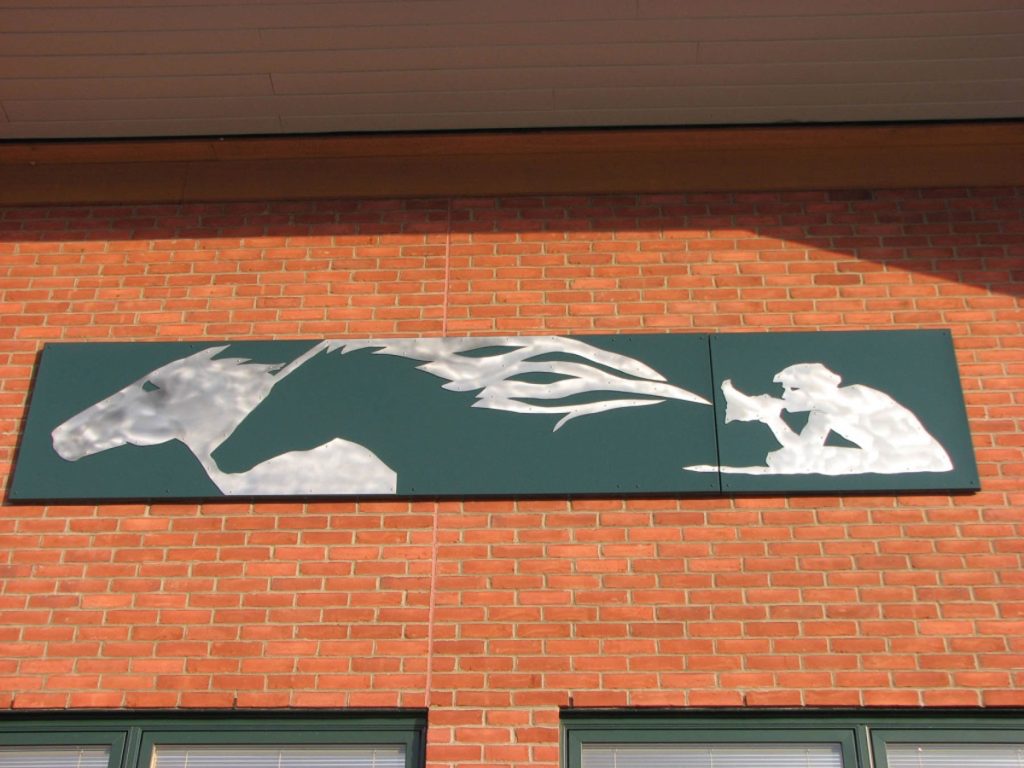
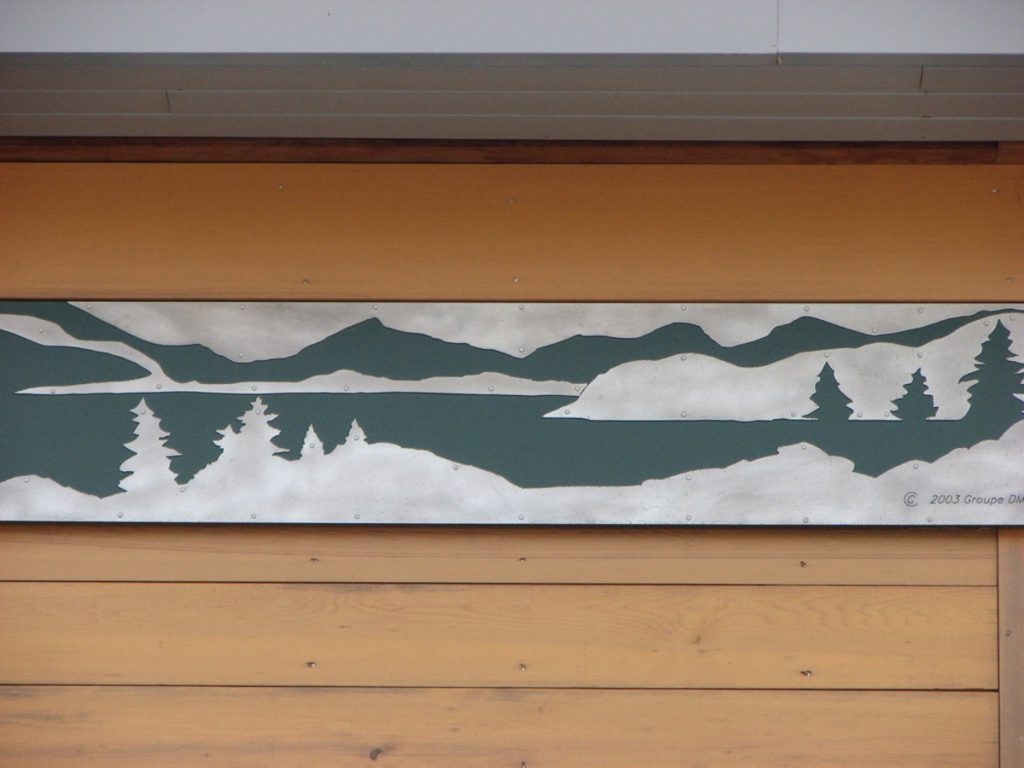
In 2003, Alice teamed up with local artists Beverley Mastrianni and Anne Diggory to create the “Rhythms of Saratoga,” a 54’ architectural frieze for the Saratoga Springs Train Station. A decorative element that adds regional flare, the brushed aluminum images depict the New York City skyline, the Hudson Valley, and Congress Park’s Spit and Spat alongside a pair of galloping horses. The team also completed the station’s mosaic floor installation, and a 20’ frieze for the building’s trackside exterior wall.
“They still look exactly the way they did all those years ago,” said Alice.
When Congressman Paul Tonko hired Alice to design a sculptural focal point for what would become Amsterdam’s Riverlink Park in 1997, she based the monument on the Painted Rocks of Amsterdam, an example of Mohawk Indian rock painting dating back to at least 1750 that is now under water. By working from an 1836 watercolor painting by Mohawk Valley artist Rufus Grider, Alice recreated the landmark just 200 feet from its original location.
The structure’s completion was put on hold for more than a decade however, to allow for pollution from the site (which was once a coal plant) to be remediated. When it finally finished in 2011, Tropical Storm Irene inundated the city. This fall, Alice completed The Painted Rocks of Amsterdam restoration, which features 16 native warriors, a woman, and a flying goose.
Sculpture’s Golden Rule
As an experienced multimedia artist, when Alice won a grant from the New York State Council of the Arts to explore the figure in glass, she didn’t anticipate how difficult the medium would be to work with.
Then Alice discovered that by twisting tubes of glass within the torches’ flame and manipulating it with graphite tools she’d fabricated, she was able to create ethereal representations of the human form.
She’s now made hundreds of the 5 1/2″ to 7 1/2″ tall figures in different colors, yet each one uniquely follows sculpture’s golden rule. “A good sculpture should draw you in, and these do that,” she said.
Alice Manzi’s glasswork is available at the Larkin Gallery in Provincetown, Mass. and online at manzisculpture.com. For updates, follow
@glassfiguresofsaratoga on Facebook.