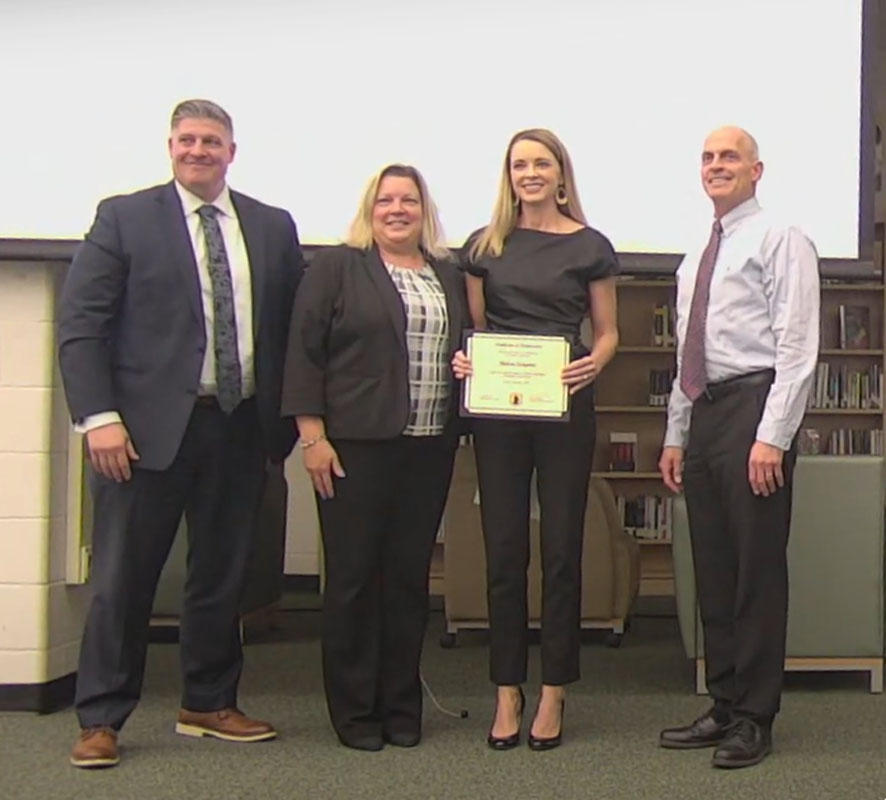
School Psychologist Chelsea Cangeleri is recognized by the Ballston Spa Central School District Board of Education at a November 6 meeting. Photo via the event livestream.
BALLSTON SPA — Chelsea Cangeleri, the Ballston Spa Middle School psychologist, was recognized by the district’s Board of Education last week for receiving the New York Association of School Psychologists’ (NYASP) Presidential Service Award. The honor recognizes NYASP members who exceed duties and services to the organization.
“[Chelsea] is a true leader in our department,” said Director of Secondary Special Education Daina Sisk at the board meeting. “She’s a leader, she’s a collaborator, and I am very grateful to have the opportunity to work with her every day.”
Cangeleri won the award at the annual NYASP conference held last month in Syracuse. The event brings together hundreds of psychologists from across New York and nearby states.
Cangeleri previously won the NYASP Chapter F School Psychologist of the Year award in 2022.
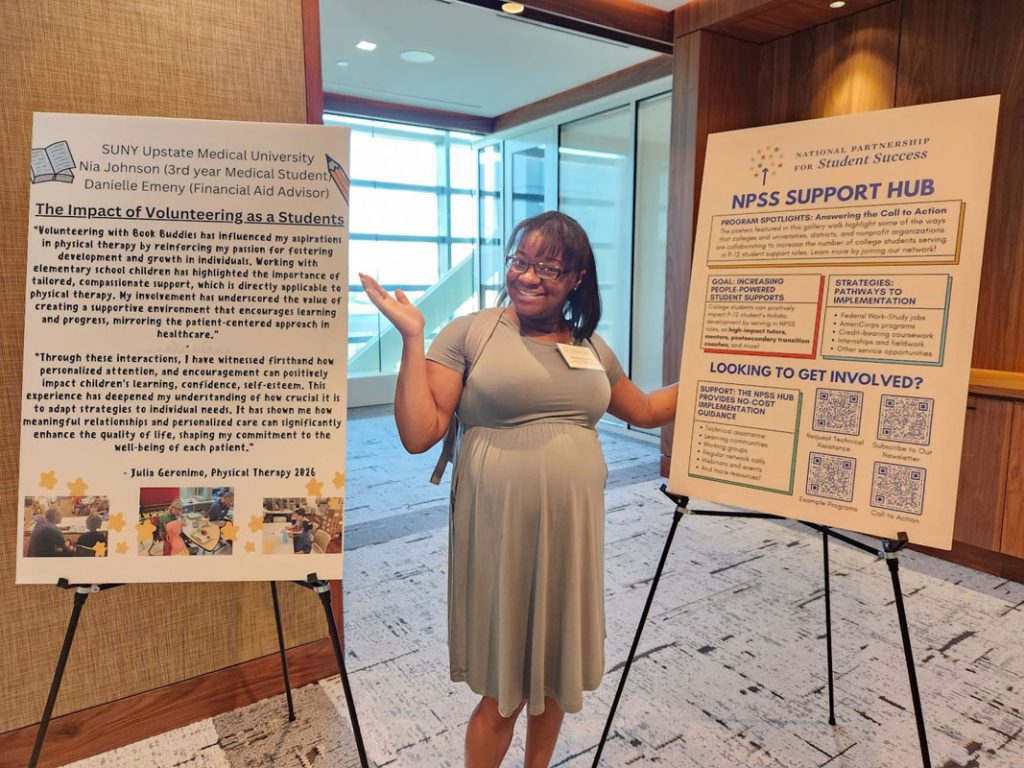
Danielle Emeny, an Empire State University student, appears at the White House for the National Partnership for Student Success. Photo via Empire State University.
SARATOGA SPRINGS — Danielle Emeny, a student in Empire State University’s Doctor of Education program, was recently invited to the White House by President Joe Biden and Vice President Kamala Harris to celebrate the National Partnership for Student Success and paint the way forward for educational equity across the country.
The National Partnership for Student Success is a public-private partnership led by the U.S. Department of Education, AmeriCorps, and Johns Hopkins University, that focuses on evidence-based student support. The partnership connects school districts with local, state, and federal agencies and resources while connecting students to community and service-oriented activities. Emeny helped pilot the program at SUNY Upstate as a member of their professional staff, in collaboration with staff at SUNY Onondaga Community College and SUNY College of Environmental Science and Forestry.
Educational equity is at the center of Emeny’s personal, professional, and academic goals. At Empire State University, Emeny is working toward a Doctor of Education degree and focusing on research surrounding graduate students with disabilities in higher education. This is a personal mission for Emeny, who suffered a traumatic brain injury in 2022 shortly before her studies began.
“This changed how my brain processed data as well as nearly obliterated my ability to read printed text,” Emeny said in a statement. “Fortunately, I can read for short periods of time on a computer if the text is inverted white on a black background, but this sudden shift in my adult life made me realize that accessible does not necessarily mean equal. I wish to focus on this topic to make sure that other students who need support services can get services that are useful in a timely fashion and to make accessibility mean access.”
As this work continues, Emeny said she hopes to bring the program to other campuses and bring financial resources to other students that could help keep them in school.
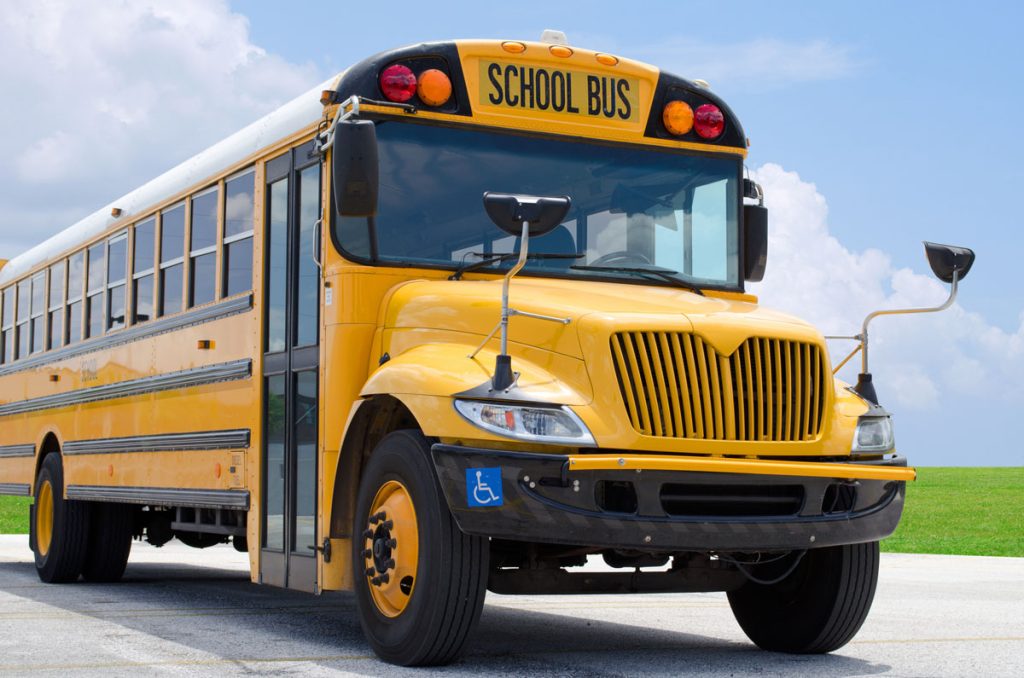
Yellow school bus on the blacktop on a beautiful sunny day.
SARATOGA SPRINGS — Recent bus cancellations by the Saratoga Springs City School District caused some parents to vent their frustrations in a local Facebook group.
On November 6, one parent posted to the group “What’s Going on Saratoga” that she was notified that her son’s bus was canceled less than 90 minutes before dismissal. “I have no idea the procedure, can’t seem to find it in the handbook, and no one is answering the phone there,” the parent wrote.
Screenshots of Saratoga Springs school district notifications stated that “due to the school bus driver shortage and employee illness,” buses 461 and 466 were both canceled, along with all after-school late buses.
Earlier this year, the district cut two full-time transportation department positions as part of its 2024-2025 budget. Although neither of the positions were technically drivers, they were a dispatcher and mechanic, both of whom sometimes served as substitute bus drivers when necessary.
At an April 25 budget adoption meeting, bus dispatcher Dean Musgrove expressed his opposition to the cuts. “It’s really going to do a lot of damage to our department and I don’t think you realize the extent of it,” Musgrove said. “I have a hard time understanding why $180,000 can’t be located to cover these two positions that you’re talking about cutting…Even though they’re not technically driver positions, they are actually drivers.”
In April, Superintendent of Schools Dr. Michael Patton said there had been “significant sacrifices” in order to achieve a balanced budget. “We truly appreciate the feedback that we do receive from transportation,” he said. “Mr. Musgrove and I had several conversations.” Dr. Patton also noted that other similarly-sized school districts had fewer dispatchers and routing specialists than Saratoga Springs.
Bus driver shortages have been an ongoing issue both locally and across the country. Data from the Economic Policy Institute (EPI) indicates that from September 2019 to September 2023, there was a 15.1% decrease in the total number of K-12 bus drivers nationwide. Private school bus driver employment also declined by 21.5% over the same four-year period.
Several factors have contributed to the shortage, including low wages. According to the EPI, school bus driver wages are significantly lower than most other workers. Drivers earned an average of $20 per hour in 2022, which is nearly 17% less than the median wage for all workers. Drivers only work an average of around 32 hours per week, which means their weekly wages are also below average. Many drivers also don’t work during summers, which decreases their yearly income.
The Saratoga Springs school district currently has a bus driver job opening that pays $22.15 per hour, which is below the median wage for all workers in the economy ($24.04), according to data from 2022.
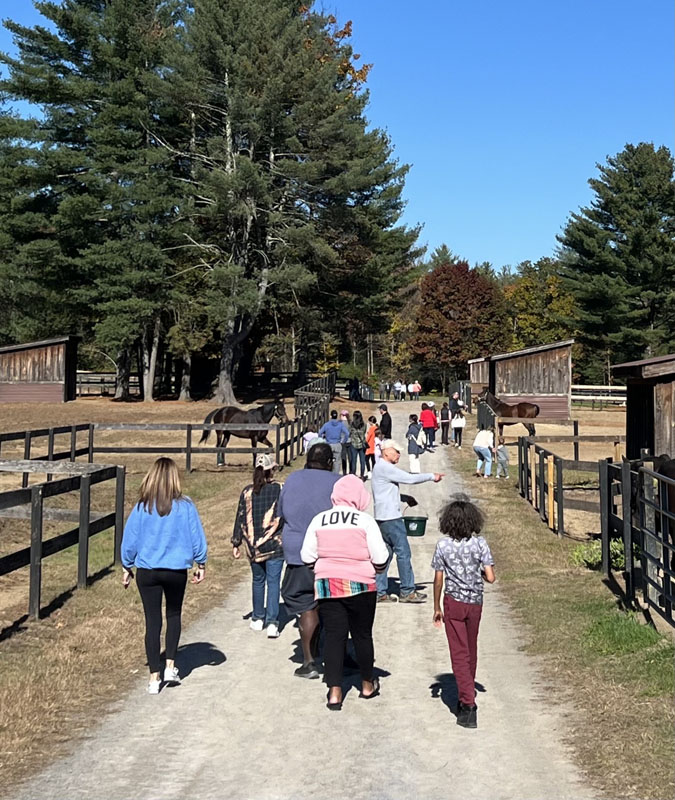
Students and families from Maple Avenue Elementary recently visited Old Friends at Cabin Creek, a thoroughbred retirement farm in Greenfield. Visitors enjoyed free guided tours, got to pet the horses, and fed the horses treats. Photo via the Saratoga Springs City School District.
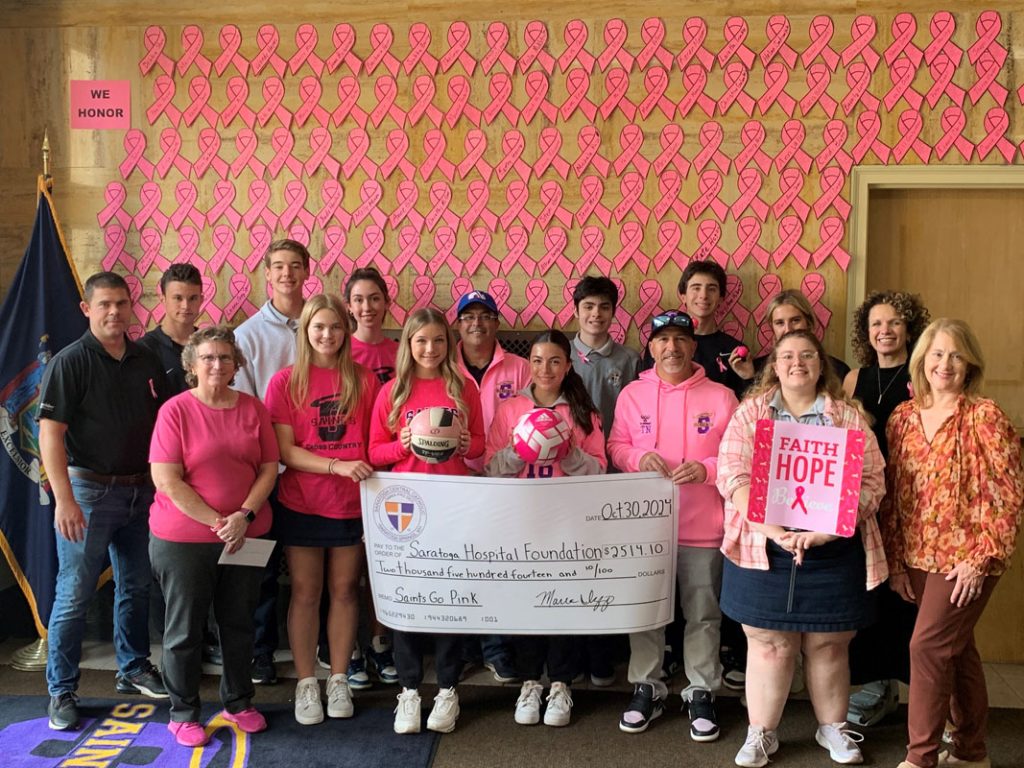
SARATOGA SPRINGS — Saratoga Central Catholic and its sister school St. Mary’s Elementary raised slightly more than $2,500 for the Mollie Wilmot Radiation Oncology Center at Saratoga Hospital as part of its annual Pink Day.
Throughout October, all Spa Catholic fall sports teams hosted Pink Games and the student council sold pink ribbons. On October 18, both schools held dress-down days, where students, faculty, and staff dressed in pink and made donations to support the cause. At Spa Catholic, the day culminated in an assembly where a representative from the Mollie Wilmot Center shared information about the work the center does.
Photo provided by the NAMI Capital Region Board of Directors.
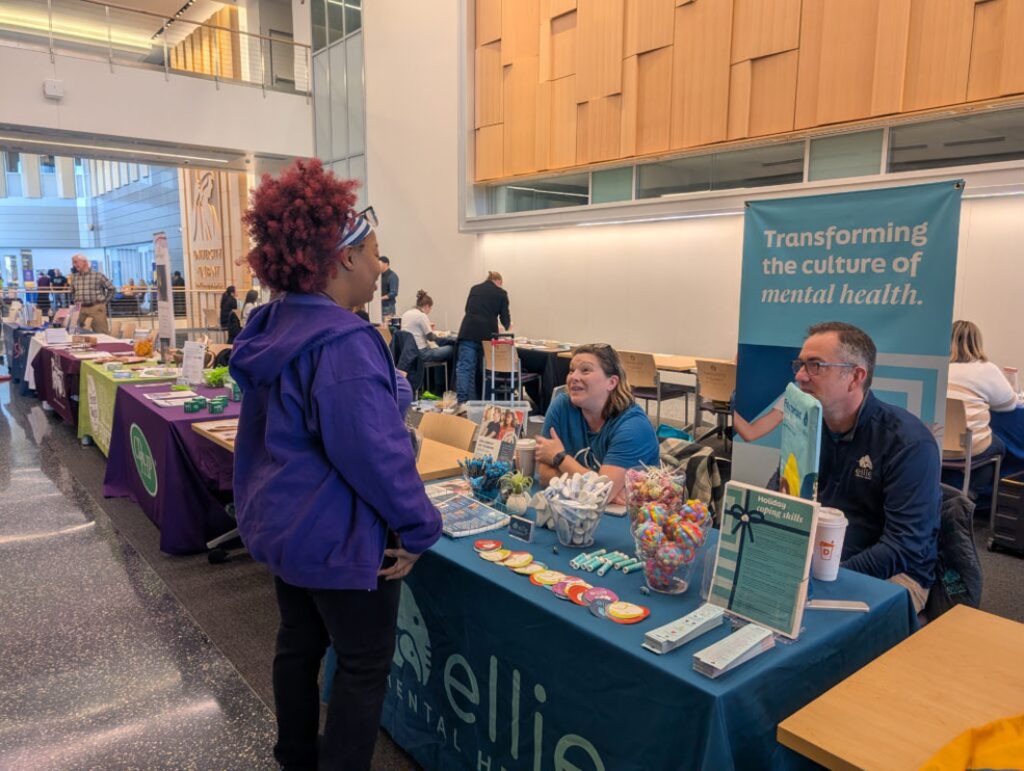
ALBANY — Local universities such as Skidmore College, Empire State University, and Siena College joined forces to co-host the 2024 New York State Capital Region Mental Health Week Program last month. The event offered dozens of free trainings, workshops, seminars, and other activities to promote positive wellness and self-care.
The program included a Capital Region Mental Health Town Hall on World Mental Health Day, October 10. The town hall included prominent leaders in the mental health field, as well as a group of student panelists representing each of the participating colleges. The students discussed ways to address the youth mental health crisis.
SARATOGA SPRINGS — At the Waldorf School of Saratoga Springs, 6th graders collaborated on a life-sized reproduction of a Peruvian textile in recognition of both Indigenous People’s Day and Hispanic Heritage Month.
They worked together to use a grid-transfer technique to copy the image onto large paper and then painted the geometric pattern with red and black paint. The original, vintage textile is an example of a Peruvian poncho, which would have been a wearable work of art.
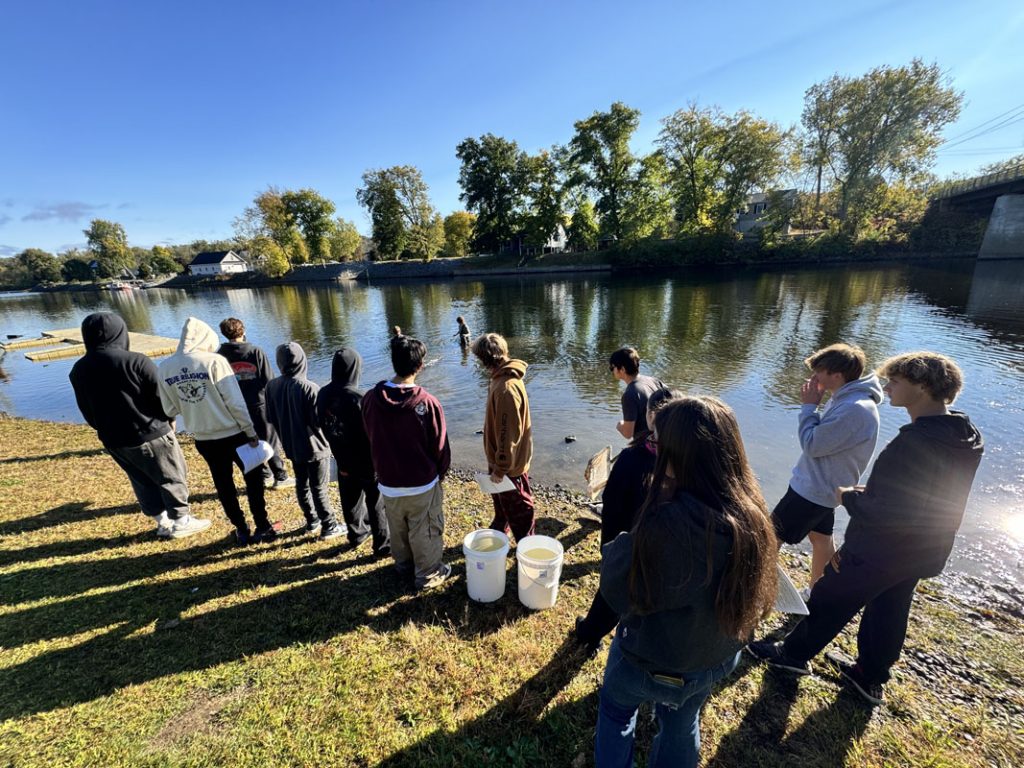
Schuylerville High School students study the Hudson River at Fort Hardy Park. Photo via the Schuylerville Central School District.
SCHUYLERVILLE — 50 Schuylerville High School students took part in the recent “Day in the Life of the Hudson River” initiative that included nearly 100 school districts from across New York State.
In partnership with the Hudson River National Estuarine Research Reserve and Columbia University’s Lamont-Doherty Earth Observatory, the event was designed to have students collect data from various areas of the Hudson River.
Using seine nets, minnow pots, water-testing gear, and other tools, the students caught fish, tracked the river’s tides and currents, checked water salinity, examined water chemistry and quality, and conducted soil core sampling at Fort Hardy Park.
“It gives a snapshot of the river’s ecosystem and health,” said student Ethan Meskill in a statement. “The Hudson is a very important waterway that supports a lot of animals and plants. Since the river is threatened by pollution and invasive species, we need to do our part to protect it.”
All data gathered by students was submitted to the Hudson River Estuary Program of the New York State Department of Environmental Conservation. Agriculture Science and Technology Teacher Carlyn Miller said that Schuylerville will receive the analyzed data back later this fall and continue the conversation in the classroom.
“It was really great to be able to connect with other teachers who participated, but also with the state officials who guided the process,” Miller said. “Seeing how much our Hudson River locations work together and influence everything downriver from where we are here in Schuylerville is incredible.”
Skidmore College Professor of Biology Jason Breves poses with some of his research subjects. Photo via Skidmore College.
SARATOGA SPRINGS — Skidmore College Professor of Biology Jason Breves recently became the first researcher from a liberal arts college to receive a top global honor in the field of comparative endocrinology when he won the 2025 Grace E. Pickford Medal from the International Federation of Comparative Endocrinological Societies.
Upon receiving the medal, Breves will deliver a lecture describing his research at the federation’s conference in Sendai, Japan in July 2025.
“I’m honored to receive this medal from such a distinguished community of endocrinologists and appreciate that the research I’ve pursued is receiving this recognition,” Breves said in a statement. “I’m especially proud to see Skidmore listed among the small number of top institutions whose researchers have received the Pickford Medal. This award is an example of our strong natural science programs at Skidmore and the robust research that fellow faculty and I have been able to pursue together with Skidmore students.”
The lead scientist in Skidmore College’s Laboratory of Comparative Physiology, Breves works to understand how the endocrine system enables animals to thrive in dynamic environments.
WILTON — Kelly’s Angels, a local charity, announced last week that it is now accepting applications from high school seniors for its expanded college scholarship program that includes 14 Capital Region institutions and $52,000 in scholarships.
“These scholarships aim to encourage students who have faced adversity at a young age to keep persevering and moving forward,” said Mark Mulholland, founder and president of Kelly’s Angels, in a statement.
Two $1,500 scholarships will be awarded at each of the following area high schools: Saratoga Springs, Saratoga Central Catholic, South Glens Falls, Fort Edward, Glens Falls, Hoosic Valley, Hudson Falls, Lake George, Mechanicville, Queensbury, Ravena-Coeymans-Selkirk, Shenendehowa, Stillwater, and Whitehall.
To qualify for this scholarship, the student must be a graduating senior at one of the 14 eligible high schools, have plans to continue their education at an institution of higher learning, be a hardworking student (but not necessarily the highest achieving), have a need for financial assistance, have persevered in the face of adversity, and have shown a commitment to serving others, especially other children.
Online applications are being accepted now through March 14, 2025. For more information, email kellysangelsinc@gmail.com.
Kelly’s Angels is a 501(c)(3) charitable organization that supports children in New York’s Capital Region whose lives have been forever changed by the loss of a parent or sibling to cancer or other illness, and families who are battling a life-threatening condition. Kelly’s Angels was founded in 2010 by WNYT-TV/NewsChannel13 anchor Mark Mulholland in memory of his late wife, Kelly, who lost her battle with cancer in 2007 at the age of 37.