On Friday, October 2 between 3:00 and 6:00 p.m., include Brookside in your dinner plans. Order some delicious Miller’s Backyard Barbecue and pick it up from Saratoga County History Center at Brookside Museum. Chicken and pulled pork dinners are available for $16.00 and beef brisket dinners for $21.00 (beef brisket by pre-order only). All dinners include baked potato, coleslaw and cornbread. An 8 oz. serving of mac & cheese is also available for $5.00. Drive-thru pickup/take out only. Pre-order online to reserve your meal at brooksidemuseum.orgordering.
The Tang Museum at Skidmore College invites audiences to discover experimental and documentary films in a special Whole Grain presentation of the Flaherty Film Seminar Screenings, Thursday, October 8, through Saturday, October 10.
Presented by the Tang, Skidmore’s John B. Moore Documentary Studies Collaborative (MDOCS), and Troy’s Picture Lock One microcinema, the three-day event features six programs of the 2026 Flaherty Film Seminar, each consisting of experimental and documentary short works followed by a moderated discussion. All programs are free and open to the public, with registration requested.
In keeping with the Flaherty’s longstanding principle of “non-preconception,” the contents of each program will not be revealed until the screening begins. The approach invites audiences to encounter films with an open mind, then explore their responses together. Each program builds on the others, allowing ideas and connections to develop across the three days.
This year’s theme, Gestures of Refusal, explores how memory is constructed, displaced, and reclaimed. The films engage with archives, fragmented narratives, and acts of remembering to consider histories shaped by empire and erasure, and how images can make those histories visible.
While the in-person Flaherty Film Seminar takes place in Marlboro, Vermont, the Tang is one of five locations worldwide hosting local Flaherty Film Seminar experiences, alongside New York City; Salaya, Thailand; Warsaw, Poland; and Buenos Aires, Argentina.
Screening Schedule
Each screening runs approximately 90 minutes and is followed by a moderated discussion.
• Thursday, October 8: Program 1 at 6 p.m.
• Friday, October 9: Program 2 at 6 p.m.; Program 3 at 8 p.m.
• Saturday, October 10: Program 4 at 1 p.m.; Program 5 at 3:30 p.m.; Program 6 at 7 p.m.
All screenings take place at the Tang Museum, 815 North Broadway, Saratoga Springs, and are free and open to the public. Audiences may attend one or more screenings, to register go to tang.skidmore.edu/calendar/2991-whole-grain-flaherty-film-seminar-screenings.
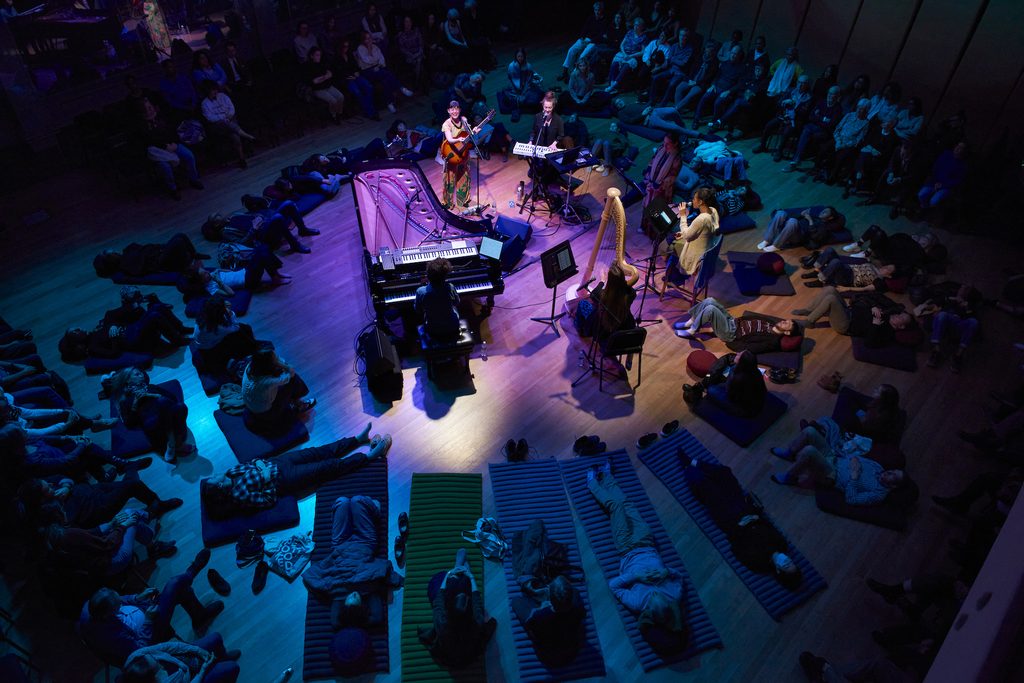
A Carnegie Hall Well-Being Concert (Courtesy of Skidmore College)
A new concert series at Skidmore College begins with a simple premise: People who spend their days caring for others or carrying significant emotional demands deserve spaces for their own restoration and connection.
Grammy-nominated and NAACP Image Award-winning vocalist, composer, writer, and performer Somi will open Skidmore’s Well-Being Concert series at 2 p.m. Sunday, Sept. 27, at the Arthur Zankel Music Center.
Skidmore is one of more than 25 organizations around the world partnering with Carnegie Hall to bring Well-Being Concerts to their local communities during the 2026-27 season. Carnegie Hall provides partners with training, resources, and guidance to adapt the model for their own audiences and communities.
Locally, the initiative has grown into a partnership spanning health care, survivor services, the justice system, and wellness. Saratoga Hospital, Wellspring, the Saratoga County District Attorney’s Office, and Yoga Mandali are helping the College reach people who may particularly benefit from intentional space for rest, reflection and connection.
“At Skidmore, we have long believed that the arts can do more than inspire us — they can bring us together and contribute meaningfully to the well-being of our communities. This series reflects that belief and the spirit of Creative Thought Matters: using creativity to respond thoughtfully to the world around us. We are proud to work with Carnegie Hall and our community partners to bring this experience to our campus and Saratoga Springs and, especially, to create space for people who spend so much of their lives caring for others,” said Marc C. Conner, President of Skidmore College.
The Saratoga County District Attorney’s Office works with victims of crime and connects people experiencing addiction and mental health challenges with treatment and rehabilitative programs.
“I commend Skidmore College for recognizing the powerful role that music and community can play in supporting well-being and healing,” said Saratoga County District Attorney Brett Eby. “Programs like these are a great concept because they can give survivors a safe and meaningful way to find comfort and cope with the trauma they have experienced. The power of music to promote healing and support mental health should not be underestimated.”
The series is informed by a growing body of research showing that musical engagement can have significant effects on psychological and physiological measures of stress. A 2025 peer-reviewed study of Carnegie Hall’s inaugural Well-Being Concerts, which included healthcare workers and people affected by the justice system, found increases in participants’ perceived well-being and identified relaxation, introspection, and interpersonal connection as important elements of the experience.
For Somi’s performance, about 120 audience members will join the artists onstage in Zankel’s Helen Filene Ladd Concert Hall. The audience will sit in the round at the same level as the performers, placing listeners inside the performance rather than at a distance from it.
Instead of traditional rows of seats, audience members may choose from chairs, cushions, and mats, to settle into the experience in the way that feels most comfortable to them.
Somi’s musical world draws from jazz, soul, African musical traditions, and story-based songwriting. Skidmore theater artist and educator Teisha Duncan will host the concert and weave simple restorative practices into the performance, including breathing, mindfulness, reflection, and deep listening.
No previous experience with mindfulness or meditation is needed, and there is no prescribed way to participate.
After the performance, the experience will continue with a reception featuring light refreshments and opportunities to connect with other audience members, community partners, and local resources. The informal gathering offers space to linger, continue the conversation, and learn more about organizations serving the community.
A portion of the intimate onstage capacity is reserved for invited community members through Skidmore’s partner organizations, helping remove cost as a barrier for those reached through the series’ community outreach. The remaining tickets are open to the public, and anyone interested in the experience is encouraged to attend.
General admission tickets are $15. A $30 Community Support ticket helps support another person’s free access to the experience. Skidmore students, faculty, and staff may attend free of cost.
Tickets are available online at skidmore.edu/zankel-music-center, or by visiting the box office Tuesday through Friday, 1 to 5 p.m.
Straight Edge and the Black Belt Adventures, Scripted Micheal Yuhasz and Illustrated by Doug Hills
(Courtesy of Michael Yuhasz)
Greasy fingers flipping through unexplored glossy comic book pages.
That was a typical Saturday morning in 2014 for Michael Yuhasz and his son.
They would scavenge for old comic books at Comic Depot before lunch at Hattie’s Chicken Shack.
One Saturday Yuhasz remembers his son picking out a particularly violent comic, prompting a paternal response.
Sparked by rejection, Caleb said, “Dad, you should create your own comic book.”
The result?
“Straight Edge and the Black Belt Adventures,” a comic book series promoting a lifestyle without drugs or alcohol and warning about the perils of social media and adolescence.
It seems that Yuhasz, who is a Taekwondo Grandmaster, a former elementary school teacher, and a father has synthesized his background into a timely message.
“Kids are on their phones over 100 times a day. They’re on them all the time and it’s kind of how we live now,” said Yuhasz. “So, I tried to make the villain inside the comic book a mogul that built an app that was so addictive to the children.”
Sound familiar?
Just last month Meta, the company that controls Facebook and Instagram, reached a landmark settlement with 47 states agreeing to pay up to $17.1 billion in penalties over claims it endangered children with addictive social media platforms.
This is the largest state consumer protection settlement in history outside of the Big Tobacco settlements of the 1990s.
“I looked at it from the standpoint that I can bring awareness this way by having the kids say, ‘you know what? Maybe I do look at my phone a little bit too much,’” said Yuhasz.
As governments and industry leaders litigate over free choice versus predatory business practices, Yuhasz hopes his comics will inspire healthier hobbies for the youth.
“By reading the comic book it might inspire them to find other genres, comics, or other type of trade paperbacks that they might be interested in that isn’t just a quick scroll,” Yuhasz hopes.
“Straight Edge and the Black Belt Adventures” is available now at Adirondack Taekwondo in Clifton Park and online at straightedgecomic.com.
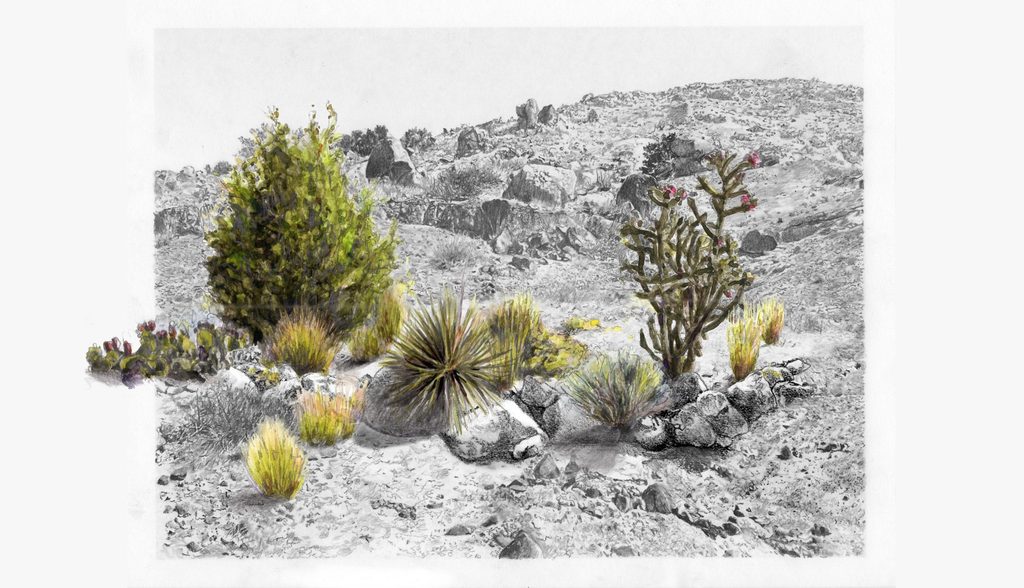
Cedra Wood, 500 Dams – Towards a Return of Anaya Springs, 2024, Still from Digital Animation (Courtesy of the Artist and Survival Kit Collective)
The Tang Museum at Skidmore College presents 500 Dams: Art, Ecology, and Radical Care at Anaya Springs, an exhibition tracing a more than two-decade effort to regenerate degraded grasslands in New Mexico through hand-built stone dams and the art, mapping, and ecological research that have grown around the project. The exhibition opens September 26 and runs through January 10, 2027.
For more than two decades, artist Bill Gilbert and landscape architect Anne Nelson have walked the high-desert landscape of Anaya Springs, building low stone dams by hand to slow rainwater runoff, capture soil and seeds, and help grasses and other plants take hold. Historic overgrazing and erosion had stripped vegetation and topsoil from the landscape, reducing its ability to absorb and retain water. What began as a daily practice on land they purchased in 2003 now encompasses more than 1,700 dams, far beyond Gilbert’s original estimate of 500.
Their work at Anaya Springs later expanded through the Survival Kit Collective (SKC), bringing together artists, scientists, mapping specialists, friends, and family to study, document, and interpret the changing landscape.
500 Dams: Art, Ecology, and Radical Care at Anaya Springs brings that experiment into the Tang Museum, where visitors can encounter the work of the SKC members including interactive maps charting Anaya Springs’ watersheds, dams, and plant life; data examining soil moisture and plant diversity; aerial films of creek beds; botanical watercolors; ceramic maps based on the contours of the land and patterns of water flow; a hand-drawn animation of Gilbert and Nelson building a dam; and large-scale adobe works embedded with seeds.
“500 Dams is about the power of personal agency and collective effort,” said exhibition curator Rachel Seligman, the Assistant Director for Curatorial Affairs and Malloy Curator at the Tang. “What began with the simple act of placing a few stones in the landscape has grown to more than 1,700 dams over two decades. By focusing on the small and local, the project shows how sustained attention and care can build resilience, inspire collaboration, and make meaningful change possible.”
Four of the Survival Kit Collective’s eight members will extend the exhibition’s inquiry through public programs at the Tang this fall.
New Mexico artist and educator Ruben Olguin, whose adobe sculptures incorporate native seeds, joins Skidmore sustainability director Tarah Rowse for a Dunkerley Dialogue on September 24.
In November, artist and University of New Mexico emeritus professor Bill Gilbert gives an artist talk followed by a conversation with Charlie Bettigole, a graphic information systems (GIS) specialist and former director of Skidmore’s GIS Center for Interdisciplinary Research; artist Lynn Grimes, whose work combines botanical observation, natural history, and art; moderated by Seligman. The following day, Bettigole leads a beginner GIS cartography workshop, and Grimes leads a flora zine-making workshop.
The 14th annual Boston Terrier Parade will commence on Sunday, September 20 at 11 a.m. in front of the Spirit of Life statue in Congress Park. Pups and their pals can expect a stroll down Broadway ending at Bailey’s for an afterparty with a raffle giveaway
Donations are requested to help support Northeast Boston Terrier Rescue. Despite the name, all dogs are welcome. Sign up begins at 10:15.
The Saratoga County History Center at Brookside Museum announced that it is seeking craft vendors for its 26th Annual Artisan’s Market. This juried market is to be held at the Saratoga County History Center at Brookside Museum from November 28 through December 23.
The Artisan’s Market features only handmade and handcrafted products created by the vendor. The market is heavily attended. The museum utilizes social media, posters, email blasts, press releases and media announcements, our newsletter and website to promote this eagerly anticipated event.
“Many people wait for the market to open to do their holiday shopping. It’s the perfect place to find distinctive and one-of-a-kind gifts. It’s a wonderful opportunity for crafters of all kinds and supports the museums,” remarked Beth Silvestri, Retail Manager.
Interested Artisans, please email bsilvestri@brooksidemuseum.org for more information.
Carpe Diem Theater is launching a new program this fall with Showcase: A Rehearsal Musical, an original musical by Erin J. Reifler and Kevin Renn, directed by Carson Crow.
The production is the inaugural show of Carpe Diem’s New Works program, an initiative designed to give local emerging theater artists an opportunity to develop and perform original works by professional creatives.
Showcase: A Rehearsal Musical is a musical comedy featuring music and lyrics by Erin J. Reifler, with book and additional lyrics by Kevin Renn. The show follows a group of BFA musical theater students facing a last-minute crisis. With the rehearsal hall closing in an hour and a morning flight to New York City ahead of them, the students need one final rehearsal before their college Senior Showcase. But when their aloof professor is nowhere to be found, the students are left to run the rehearsal themselves while trying to figure out what comes next for their careers.
Featuring 11 original songs, the 90-minute musical takes a comedic look at the realities of pursuing a career in theater, including the pressure to succeed, the uncertainty of the industry and the determination it takes to keep chasing a dream.
“This is a unique opportunity to spotlight local talent while demonstrating the creative capabilities of the arts community here in the Capital Region,” said Brady Walsh, Carpe Diem Theater’s Artistic Director. “New York City is not the only greenhouse for new musicals and original ideas. We can foster those creative spaces in our own backyard.”
Walsh said the production also provides an opportunity to connect established theater artists with performers and collaborators in the region.
“This top-tier team was in need of time and space for their piece and is thrilled to be in Saratoga for that development,” Walsh said. “We, as the local theater makers, are searching for collaborators that can expand our horizons and challenge our existing structures for production. This has been a hugely rewarding and mutually beneficial project for all involved.”
The cast features 10 Capital Region performers between the ages of 16 and 27, bringing together young actors at different stages of their theater training and careers.
There will be three shows of Showcase: A Rehearsal Musical: September 25 and 26 at 7 p.m. and on September 27 at 1 p.m. Tickets to the event can be purchased at carpediemtheater.org.
Site from “Find Me in Congress Park” (Courtesy of Saratoga Springs Preservation Foundation)
Join docent George DeMers on Sunday, September 20 for the Autumn Stroll, “Historic West Side.” As you walk the neighborhood, George will share its diverse history through existing buildings as well as those lost over the years. Once nicknamed “Dublin” for its Irish immigrants, and later home to a thriving Black residential and business district, George will share their stories as well as the impact Urban Renewal had on the neighborhood and its residents. This tour meets at the entrance of the Gideon Putnam Burying Ground, located on South Franklin Street.
On Sunday, September 27, local author Patrice Mastrianni offers her new walking tour, “Find Me in Congress Park” based on research from her popular children’s book, Find Me in Saratoga. As you explore Congress Park, Patrice will provide her unique perspective on many of the landmarks you know and love, all based on personal stories from antique journals – and some fun rumors! – as well as historic facts. This tour meets at Congress Spring, the covered pavilion on the south side of E. Congress Street inside Congress Park.
All Sunday morning tours begin at 10:30AM, last approximately 90 minutes, and require walking and standing on varied terrain. Tours are limited to thirty participants, and tickets must be purchased in advance. The cost per tour is $15 for SSPF members and $20 for non-members. For additional information on Sunday Strolls or to purchase tickets visit, saratogapreservation.org.
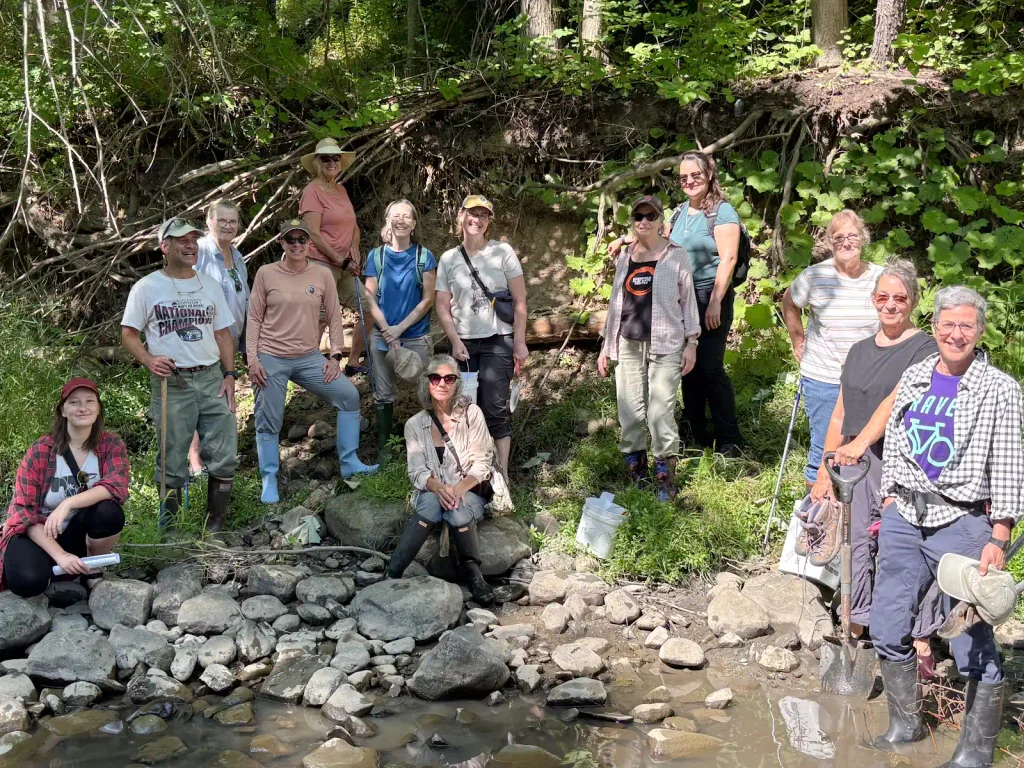
(Donald Rodbell leads community members on a fieldtrip to see glacial lake clay deposits along the Alplaus Kill in Glenville)
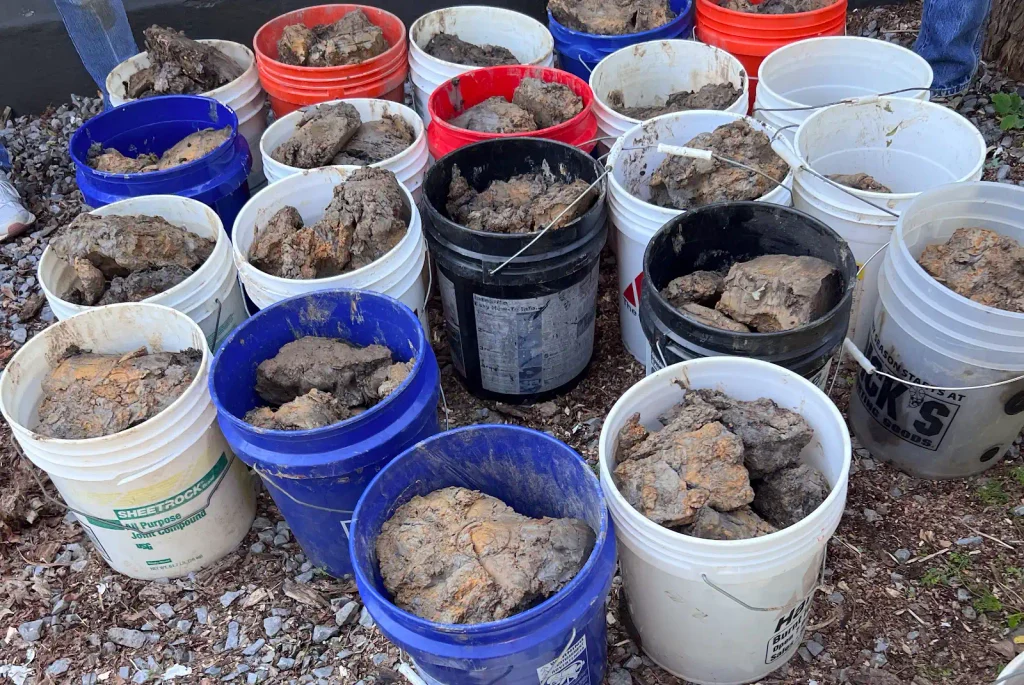
(Approximately 800 lbs of clay dug from the West Glenville hills that is ready to be processed at Main Street Studio)
What started with a discovery of a stoneware factory in Galway NY on an 1866 map has grown into a unique community arts program bringing together local historians, geologists, ceramic artists and local residents to uncover the region’s pottery-making past – and make something new from the clay that was once a valuable resource across upstate NY.
The program, called An Expedition in Wild Clay, organized by Main Street Studio in Charlton and funded in part by Saratoga Arts Community Arts Regrant Program includes a series of free presentations, field trips, experiments and hands-on making sessions led by area experts. The goal is for community members to work together to find clay suitable for making pottery, processing it, and making something together with it.
“Our studio community is inspired by working with natural materials,” said Dana Nemec, co-founder of Main Street Studio. “When we started thinking about the clay that most people complain about finding in their gardens and fields — we got excited. We started to wonder how previous generations worked with that ‘nuisance’ clay and what we could make with it today.”
The expedition has been guided by an impressive team of local experts. Arlene Rhodes of the Galway Preservation Society has shared historical clues from old maps, census records, and oral histories tracing the Hudson & French pottery business. Donald Rodbell, Professor of Geosciences at Union College, led participants to the banks of the Alplaus Kill in Glenville to see layers of glacial clay deposited approximately 15,000 years ago — the same clay that artisans have long sought out for pottery making. Don Shore, co-founder of L’Esperance Tile Works in Rock City Falls, has been testing clay samples and guiding the group through processing and firing techniques. And ceramic artist and kiln builder Jordan Becker, owner of Firelight Studio in Saratoga Springs, has been leading a kiln building effort to construct a wood-fired kiln from clay the group dug themselves.
“We started with a map and a mystery,” Nemec continued. “What we found was a community of people who all have something to contribute — a farmer who knew ‘where the geese go’ is where we’d find clay, homeowners and historians with clues of where clay was dug generations ago, a geologist who helped us understand why this area is so rich in clay deposits, community members ready to lend a hand, and many talented artists who can turn raw earth into something beautiful.”
There is still time to get involved. On Saturday, September 19, the public is invited to Main Street Studio to make small clay objects alongside local ceramic artists, while Jordan Becker constructs a primitive wood-fire kiln from over 800 lbs of clay dug by community volunteers from the West Glenville hills. On Tuesday, September 22, Arlene Rhodes will give an in-depth presentation at Main Street Studio tracing the history of the area’s 19th century pottery industry through old maps, land deeds and census records. The closing Wild Clay Reception & Silent Auction on Saturday, October 17 from 5 to 9 p.m. will feature fired clay pieces by community members and local artists, a silent auction, and live music. All events are free and open to the public at Main Street Studio located at 786 Charlton Rd, Ballston Lake. More information and event registration can be found at www.mainstreetcharlton.com or by emailing info@mainstreetcharlton.com.