

Historian Visits Region on Five Year Anniversary of Pandemic Shutdown with New Book of Stories from NY’s Essential Workers
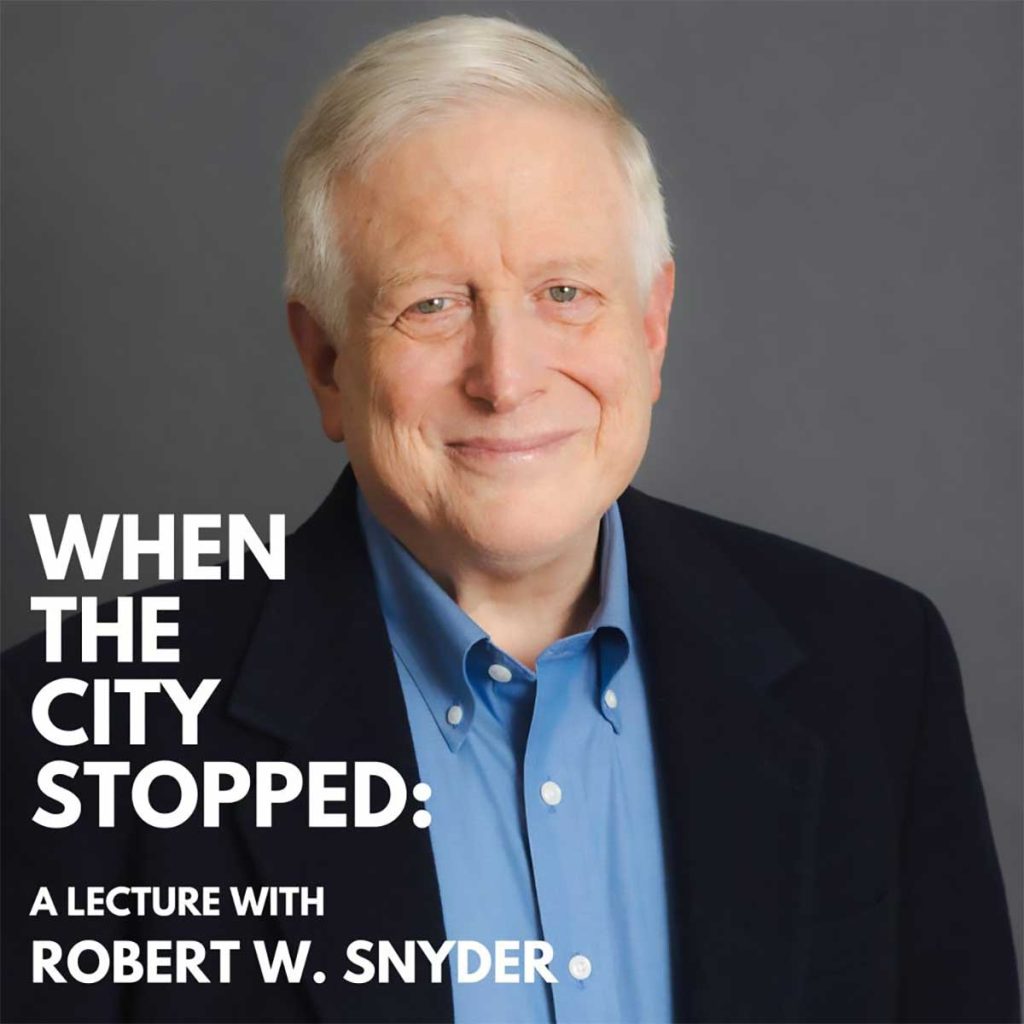
Robert Snyder visits the region March 28-29 to speak about his new book When the City Stopped: Stories from New York’s Essential Workers.
ALBANY — The Great White Way earned its nickname generations ago and became known the world over for its illumination of lively activity down the backbone of the world’s greatest city. Five years ago nearly to the day, everything came to an ominous halt.
“On March 20, with Broadway closed, schools closed, and refrigerator trucks set up outside hospitals to handle an anticipated overflow of dead bodies, the governor announced his New York on Pause Plan,” recounts Manhattan Borough Historian Robert W. Snyder. “New York was now a city under lockdown at the epicenter of a global pandemic.” The chilling retelling introduces his new book: When the City Stopped: Stories from New York’s Essential Workers.
Snyder visits the Capital Region next week, when he will share the stories of COVID-19 in the words of ordinary New Yorkers. A talk takes place at 2 p.m. Friday, March 28 at the University at Albany, and at 2 p.m. Saturday, March 29, at the New York State Museum’s Huxley Theater. Both events are free to attend.
Snyder, who was appointed Manhattan Borough Historian in 2019, revisits the spring of 2020 when across the city’s largely vacant streets direct human connection carried the threat of mortal danger. The book highlights the fear and uncertainty of life in the early weeks and months of the pandemic, as well as the solidarity that sustained the city.
The stories in the book are based on oral histories and first-person narratives. These are the words of bus drivers and restaurant workers, schoolteachers and paramedics, cab drivers, sales clerks, members of law enforcement, and supermarket cashiers.
Nurse Patricia Tiu tells the story of a female patient who spent a week in the hospital to have surgery performed. While in the hospital, the patient tested positive for COVID-19. “She asked the nurse if the nurse could stand where she could see her until she falls asleep from the sedation because she doesn’t want to die alone. That was the last thing she said.”
The stories portray 43 different New Yorkers who worked on the frontlines, struggled through the COVID-19 pandemic and faced the uncertainties of the virus head-on.
“Years after having to worry about infections because of damage my lungs had suffered on 9/11 – I would once again have fear that I could die of a virus by going to work,” says 60-year-old fire department battalion chief Simon Ressner. “My nose starts itching. DON’T TOUCH YOUR FACE!!”
Snyder says he wrote the book in memory of all who were lost, and in honor of the frontline workers faced danger so that others may live. “As Manhattan Borough Historian, I wanted to produce a book that would ensure that the experiences of New Yorkers during the pandemic were not forgotten.”
It is very much a survivor’s story as well as a reminder of the suddenness and unpredictability that life may present at any given time; an emotional collection to carry forward for everyone alive today.
To fail to learn from the tragedies of the pandemic would be a tragedy twice over, writes Snyder. “If we are to learn anything… the best place to begin is with the words of the people who drove the ambulances, cared for patients, punched cash registers, drove buses, ran trains, and faced death daily so that others may live. Remembering their stories and sacrifices is the best way to prepare for a better future.”
When the City Stopped: Stories from New York’s Essential Workers, was published March 15, 2025 by Three Hills Books, an imprint of Cornell University Press. Author and historian Robert Snyder will speak at the University at Albany, 2 pm to 3:30 pm Friday, March 28- Humanities HU 354, 1400 Washington Ave, Albany, and 2 – 3 p.m. Saturday, March 29, Huxley Theater, New York State Museum, 222 Madison Ave., Albany.