

Measles Case Leads to Mask Requirements at Saratoga Hospital
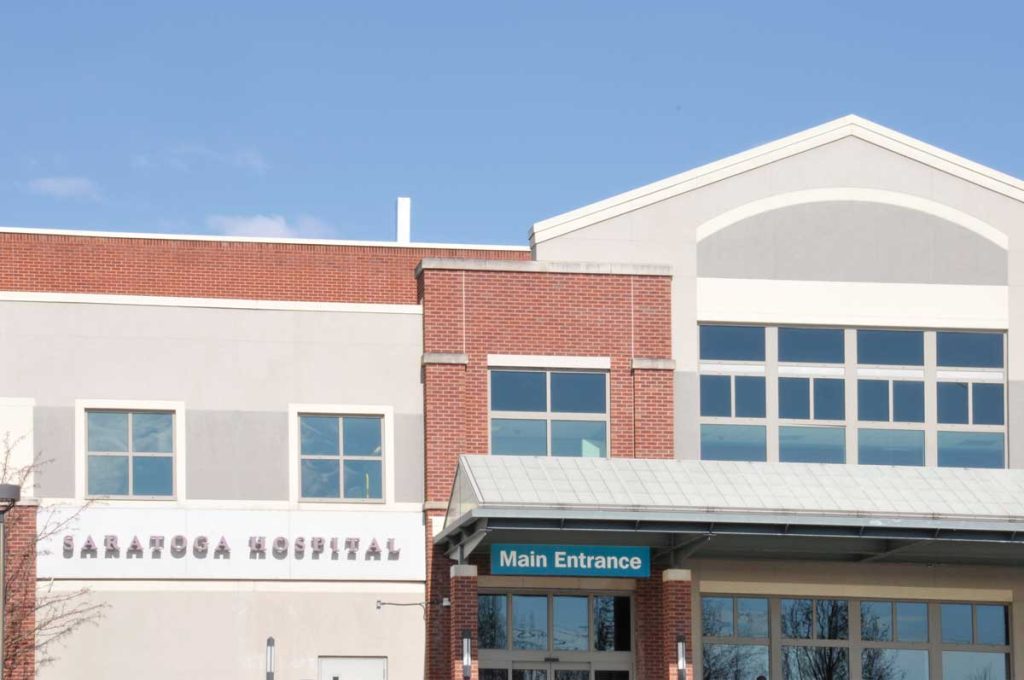
Saratoga Hospital. File photo
A measles case in Saratoga triggered a five day mask requirement at Saratoga Hospital.
The masking requirement went into effect July 18 and lasted until July 22. The notice came after someone who was later confirmed to have measles sought treatment at the hospital on July 14.
According to the New York State Health Department, the individual is an adult from Vermont who has a recent history of international travel. They first sought treatment at Saratoga Hospital before seeking treatment at Albany Medical Center on July 16.
“Our Emergency Department is fully prepared for serious illnesses that may present at our doors,” said
Dr. Jason Mouzakes, Albany Medical Center Executive Vice President, and Hospital General Director. “Our team acted immediately and appropriately to minimize exposure. The patient arrived masked and was immediately isolated at the hospital. The Department of Health was notified, per protocol, and we are continuing to monitor the situation.”
The Health Department said that although the risk of infection is low, individuals who were at the Saratoga Hospital emergency department are encouraged to contact the hospital while those at Albany Med have already been identified and contacted.
Measles is a highly contagious respiratory illness that causes rashes and fever. It is spread by coughing and sneezing into the air and can be contracted by breathing in the virus or by touching a surface and later touching your eyes, mouth or nose, according to the Health Department. The illness can survive in the air or on a surface for two hours. Someone with the disease can spread it for four days before the onset of symptoms.
So far in 2025, the US has seen 1309 confirmed cases of measles — the worst since 1992, according to the Centers for Disease Control. These cases have resulted in 164 hospitalizations and three deaths in the US.
In April, the Department of Health issued a travel advisory advising those traveling to areas with outbreaks to ensure that they’re vaccinated against the disease and monitor for symptoms three weeks after they return.
The advisory listed several countries where major outbreaks have occurred. One of the countries listed was Canada which has seen 3,822 cases of measles, according to Health Canada. Looking specifically at the two provinces New York shares a border with, there have been 2,245 cases in Ontario and 36 cases in Quebec.
Both the CDC and Department of Health have advised those who aren’t already vaccinated to get vaccinated.
“Measles remains a threat to public health and exposure during travel is something we need to consider. It’s important that New Yorkers ensure they are immunized against measles,” State Health Commissioner Dr. James McDonald said. “Protect yourself and your family against measles and make sure you are up to date on immunization with the measles, mumps, and rubella (MMR) vaccine.”
In the US, 92% of measles cases have occurred in individuals whose vaccination status was listed unknown or unvaccinated according to the CDC. Prior to the introduction of the vaccine, it is estimated that three to four million people a year were infected with the disease with 48,000 requiring hospitalization and 400-500 dying yearly.