

Saratoga Boy Makes Good
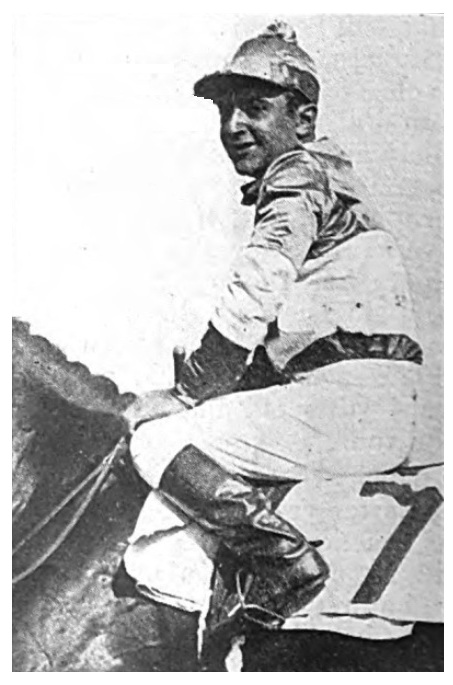
(Courtesy of The National Turf Digest April 1930)
On a sultry summer mid-August Sunday in 1906, Frank Catrone was welcomed into the world in New Haven, Connecticut.
In 1910 his father, Dominick Catrone, relocated to High Rock Avenue, and established a small grocery store on Lake Avenue, across from the Saratogian office and behind City Hall, specializing in fresh fruits and vegetables. Young Frankie, as an unpaid dependent, was an asset, carrying out every task in the store while learning to interface with the customers.
Frank was a small child, yet that never lessened his determination and perhaps enhanced it. At a young age he became aware of the horse sport in his hometown and wanted to become part of it. He had a younger brother named Salvatore, who was equally fascinated by the racehorses arriving each summer and the excitement that augured.
The boys would follow their father around the shop and picked up the words to the traditional Italian songs he sung and hummed, which lightened his load while sharpening his timing between tasks.
One of young Frankie’s duties was roasting peanuts in front of the shop. This irresistible aroma attracted customers to the grocery, anxious to satiate their appetites. Frank Catrone would long recall the day a small chap about his size pulled up in a big sports car, attracted by the tantalizing scent. Frankie inquired about his livelihood and learned he was a jockey. That’s for me, Frankie decided then and there.
Frank Catrone sought work along the Saratoga backside, and secured a position as a hot walker, cooling out the horses and mucking out stalls. He went on to rubbing and grooming the thoroughbreds, and because he learned quickly and adopted stable routines, he attracted the attention of one of racing’s greatest trainers, Sam Hildreth.
Trainer Hildreth had a special affinity for the Spa. He married a Saratoga girl there, the former Mary Cook, and the annual celebration of their wedding anniversary on August 4 was one of the high notes of the season.
Mr. Hildreth always surrounded himself with good subordinates. He never had other than a first-class rider or stable foreman. He would tolerate drinkers, and explained to other trainers who questioned that, “a drunk will get sober,” the Old Master explained, “but a fool won’t get wise.” Sam Hildreth, known all over the turf world as Uncle Tom, suggested making an exercise rider of the ninety-pound teenager Frank Catrone, giving him his first leg up.
While exercising the Rancocas Stables horses that Sam Hildreth trained, Frankie sang the Italian songs he learned in the grocery, with his fellow riders calling him Caruso. He became the “third call” rider for Rancocas, behind Earl Sande and LaVerne Fator, learning from the best, and began a career that would span a lifetime.
He had several good years riding, and would proudly recall years later, “I was never a great rider, but I won my share of races.” After Sam Hildreth died in 1929, Frank Catrone rode freelance with success, bringing movie director Raoul Walsh’s Greyola home first in the Agua Caliente Derby.
Falling in a smother of dust at Saratoga in 1930 seemed minor, and Frankie went on to win a subsequent race that day. Yet, overcoming the injury from that fall led to weight gain. He gave up the saddle in 1937 and turned to training.
As a trainer, Frank Catrone was a disciple of his mentor, which served him well. Not qualifying for military service during WWII, he told the Saratogian, “I’m four feet, nine inches. At least that’s what the Army told me when they turned me down. They didn’t want me because I was too small a target.”
With the Valdina Farm of Texas, Frank Catrone enjoyed much success, and saddled two entries in the wartime 1942 Kentucky Derby, finishing third and ninth. The owners of Valdina Farm, Emerson Woodward and his wife Bessie, were tragically killed in a train/auto collision in May of 1943.
Frank Catrone moved on to train horses for Alan T. Simmons through the end of the 1940s, and later oilman William G. Helis and his son during the 1950s and into the 1960s, racing mostly in the west and the south, with only infrequent visits to Saratoga Springs.
Mid-westerners Dan and Ada Rice were bit by the thoroughbred bug, and went into racing in a big way, when the yearling sales were staged in Kentucky, as Saratoga was closed due to WWII. Operating a stock farm in Illinois and a breeding operation in Kentucky, both named with a contraction of their first names, Danada, they competed under Mrs. Rice’s name in cerise and white silks, emblazoned with her “ALR” initials.
Frank Catrone was assigned their east coast string, which included the May 1962 Danada homebred foal Lucky Debonair. Nothing came easy for Frankie, and on the first Saturday in May 1965, the Kentucky Derby was delayed 30 minutes due to a fire in the Churchill Downs grandstand. Under Willie Shoemaker, Lucky Debonair won the 91st running on his third birthday, which thrilled Dominick Catrone, watching from Saratoga.
Scribe Arthur Daley described Frankie as not so debonair, and a blocky little guy who failed to qualify as Mr. Five-By-Five, because of his height. Frank Catrone would forever be a product of Sam Hildreth’s “old school” and would criticize NYRA for conducting winter racing and was in turn criticized by Robyn Smith for not hiring lady jockeys.
The Danada Stable was dispersed after Dan Rice’s death in Autumn 1975, leading to Frank Catrone’s retirement.