Epinard’s Stateside Visit

In the years prior to transpontine jet service, international competition with thoroughbred horses was rare, and required a long ocean voyage. American horses had raced in England and the Continent, and European horses had come to America for breeding purposes, yet no European horses had traveled westward for competition.

During the Saratoga meeting in 1923, August Belmont and other members of the Jockey Club suggested a challenge contest, featuring victors from both shores. Mr. Belmont had raced his horses extensively in Europe during the 1911-1912 New York racing ban.

This resulted in an October 1923 match race at Belmont Park, termed the International Stakes, where the Kentucky Derby winner Zev defeated the Epsom Derby winner Papyrus on a muddy track.

In Paris the following month Pierre Wertheimer, owner of the French champion Epinard, issued a challenge to race Zev, “or any other horse America cares to name.”

Following a meeting with Mr. Belmont in New York, Pierre Wertheimer consented to bring Epinard to the United States, for a series of international races to be run at Belmont Park, Aqueduct, and Latonia, Kentucky in September and October of 1924.

Ironically Epinard’s dam, Epine Blanche, was a mare August Belmont developed in France and after being acquired by Mr. Wertheimer, bred to his sire Badajoz.

Devaluation of the French Franc due to war debts may have inspired Epinard’s owner to travel. Mr. Wertheimer’s French business interest was a theatrical make-up company, which he was at this same time expanding along with Coco Chanel to market her fragrance Chanel No. 5.

Trainer Eugene Leigh was a great believer in giving a horse a change of scene, yet realized Epinard would need time to adjust to the surface change to harder American tracks, and running in the counter-clockwise direction, rather than the European style of running to the right (sometimes referred to as “continental” style).

Gene Leigh was born in Illinois, and had trained and was part owner of the 1894 Kentucky Derby winner Chant. He had also relocated to Europe during New York’s racing ban. He decided to prepare Epinard in Saratoga Springs, which demonstrated that the salubrious reputation of the Spa as an equine training and conditioning center had spread across the ocean to European countries.

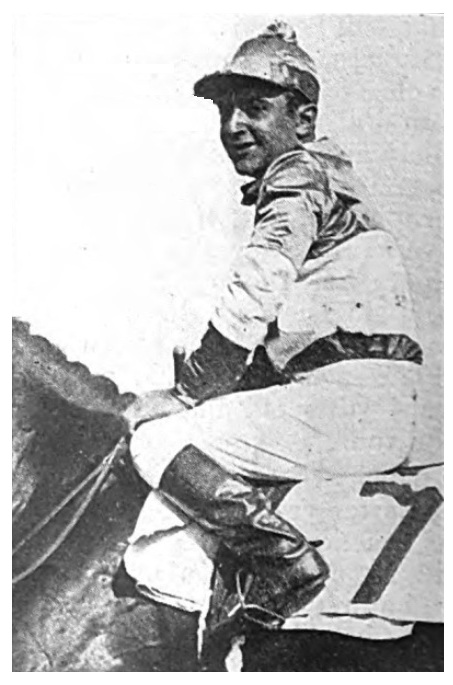
The connections of Epinard boarded RMS Berengaria in early July and arrived at Saratoga Springs on the twenty second. Everett Haynes, a bluegrass native, was in the saddle for all of Epinard’s French victories, also traveled to the Spa.

Epinard (the French word for spinach) was known to be a very good starter with a noticeably odd, or crabby gait, similar in action to that of his damsire, Rock Sand. The chestnut won six races out of seven starts as a two-year-old, and much like Man o’ War, was beaten only through a bad start.

Epinard was not always ready to work at Saratoga, and would often fight his jockey, anxious to return to his stable and his mascot/talisman, Peter, an Airedale terrier.

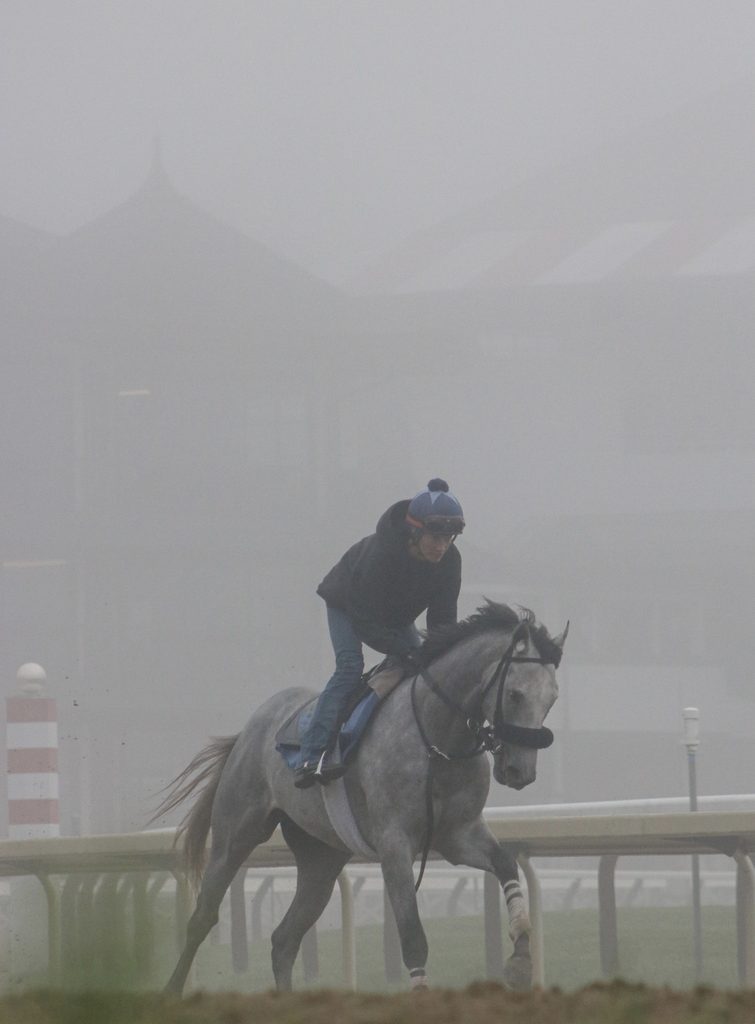
 In order to work Epinard counter-clockwise along the rail, with so many other horses on the main track and the Oklahoma, he was frequently taken to the Simms Estate, the present-day Godolphin facility.

Many admirers of the French champion were at the track each morning to see him work out. The horse, with a very recognizable blaze, delighted his fans when he passed the grandstand, where he stopped and bowed to his audience. Turf writer C. J. Fitzgerald commented on Epinard’s intelligence, “When lined up for inspection he returned the critical appraisement of the public like the monarch he is.”

The final week of the Saratoga meet would see Epinard depart for his Labor Day engagement at Belmont Park. On his final Saturday there, following the fifth race, he was brought to the paddock for all to see, and saddled by trainer Leigh in the picturesque enclosure, who gave a leg-up to jockey Everett Haynes in the blue and white colors of owner Wertheimer. Thirty thousand race-mad enthusiasts, by far the biggest throng that ever watched the races at Saratoga, gave the French horse huge applause.

Heavy rains the night before left the track in poor condition and occasioned much scratching. Eugene Leigh decided to abandon the planned time trial, instead following the bugle’s call, Epinard was led by outrider Redcoat Murray and paraded on the main track, his first appearance under colors in the US.

The large crowd stood at attention and removed caps, as the band honored their guest with playing La Marseillaise, the strains of the French anthem rang out across the racetrack. As the Star-Spangled Banner was played, Epinard was brought to attention in front of the grandstand. The New York Times reported, “the great French 4-year-old was accorded an amazing reception.”

Epinard disappointed his owner by finishing “runner-up” (sous) in all three international races during September and October, and was retired to stud and France in November. Jockey Club Chairman Belmont passed away in December.

Taking the Winning Shot – Ogdensburg native Kinnon LaRose picks up his first Saratoga Race Course career win after taking over Tom Amoss’ stable in March

Basketball and Thoroughbred racing share one important trait: success often comes from taking a shot.

Kinnon LaRose is someone who knows that.

Following a Division I college basketball career, the 28-year-old Ogdensburg native took a chance in becoming a Thoroughbred trainer, and it is already paying off.

Since taking over Tom Amoss’ horses in March, LaRose had 12 winners from 76 starters prior to July 5 when he brought 23 horses to Saratoga Race Course – a place where childhood family trips first fueled his interest in racing.

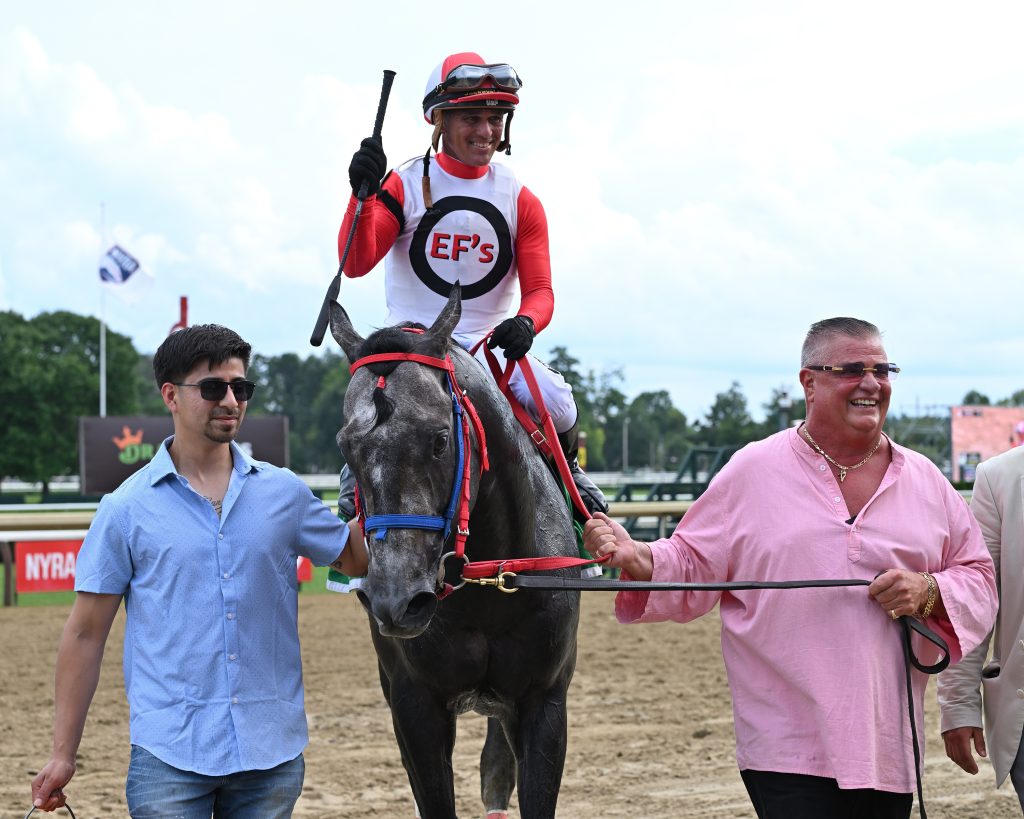
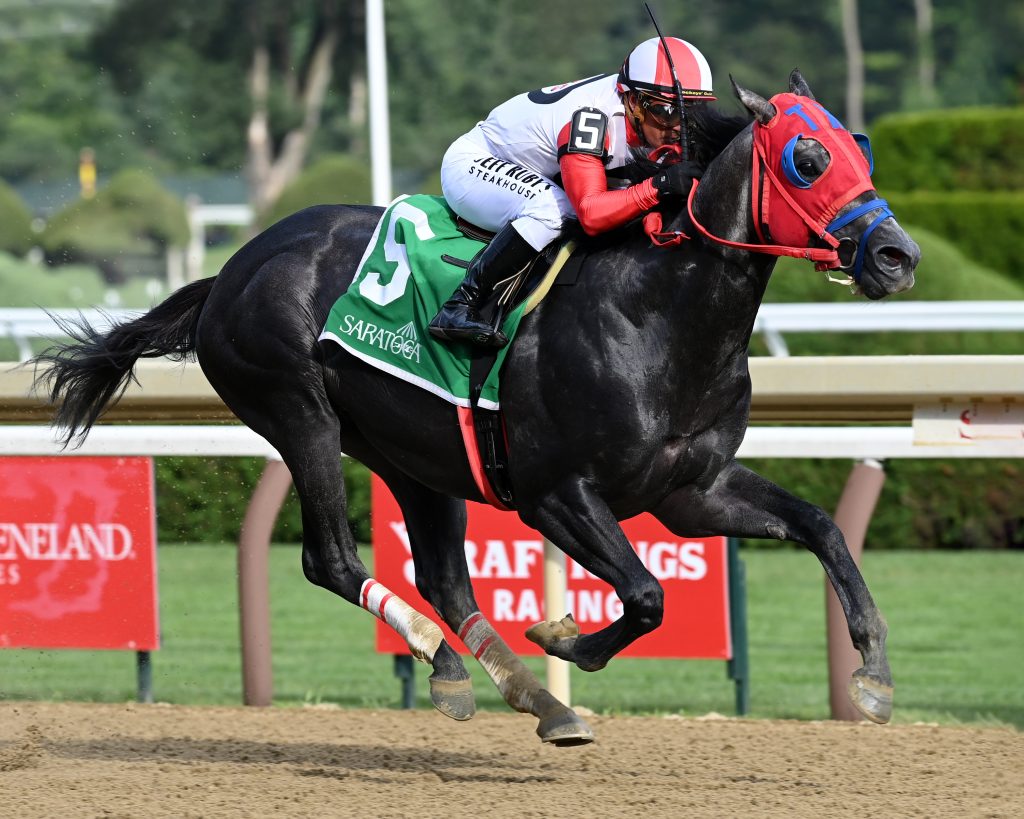
LaRose earned his first Saratoga winner on Saturday as Midnight Still, a 2-year-old colt making his second career start, stalked the pace, then took command inside the sixteenth pole and drew away by 6¼ lengths.

“It means world to me. It was awesome,” he said. “I grew up coming here as a kid. I never really dreamed that I’d be in this position. I couldn’t be more appreciative to Tom Amoss for giving me this opportunity and all the owners for sticking with me. We’re still learning and still trying to figure it all out. Hopefully, we’re heading in the right direction.”

LaRose’s direction in racing began as a child when his family, including his father Steve, regularly crossed the St. Lawrence River to visit Rideau Carlton Raceway and Woodbine Mohawk Park.

“They always loved their races,” he said. “We grew up going to the harness tracks, then every summer, we would come down to Saratoga. I always loved coming to Saratoga and I couldn’t wait for the trip to come. This has been with my family for a long time with the handicapping, watching the races, and enjoying it that way.”

When he wasn’t going to harness tracks or Saratoga, LaRose developed as one of the top basketball players in New York. At Ogdensburg Free Academy, he scored 1,769 points, including 756 points during his senior year that placed him on the all-state first team.

From there, LaRose spent a season at Siena University before transferring to Sacred Heart for his last two seasons where he was a captain. Despite focusing on basketball and his sports management studies, he still made time for Saratoga during the summer when racing was on the television every day in the off-campus housing with his teammates.

“I followed it all through high school and in college, too,” he said. “When we weren’t playing during summertime, Saratoga was on in my house. They were like, ‘Why are we watching the races?’ I loved it.”

After earning a master’s degree in strategic communication and public during the COVID-19 pandemic, faced an uncertain future and wasn’t sure if basketball remained an option.

“I thought I was going to play for four years and try to keep playing basketball as long as I could,” he said. “I was in limbo whether to keep playing or not after college.”

While searching for work, LaRose followed Amoss on NYRA-TV and Fox Sports, impressed by his knowledge and expertise. He also found common ground with Amoss: both developed a passion for racing at a young age and both studied marketing and communications at college. Unlike LaRose, Amoss gained experience as a teenage stablehand for Hall of Fame trainer Jack VanBerg.

LaRose then took his shot by sending an email to Amoss about working for him. Amoss got back to him promptly.

“This opportunity kind of presented itself,” LaRose said. “I reached out to Tom, and he called me back the next day. I said, ‘I’m going to try pursuing this. Let’s go see what happens.’”

Amoss invited LaRose to join his operation for the 2020 Keeneland fall meet, starting him with demanding tasks such as cleaning stalls and hotwalking horses. It was a test that LaRose passed.

“I put him through six months of hell to see if he could handle it,” Amoss said. “He kept coming back for more with the thirst to learn. I knew he was special. At that point, I took him under my wing and said, ‘I’m going to get you where you want to be.’”

LaRose later became Amoss’ assistant before taking over the stable after this retirement. While LaRose handles the day-to-day operations, Amoss is still there for advice.

“I’m not out here every morning, but Kinnon and I talk every day,” Amoss said. “We go over his plans with horses, and I can recall I was well schooled when I first started training, but there are some things that you wouldn’t mind having advice on. He’s not afraid to ask, and I’m always there for him.”

Amoss is proud of LaRose’s accomplishments over the last four months, especially after Midnight Still’s victory. Amoss helped Double Down Racing purchase the colt for $350,000 at the Keeneland yearling sales in September.

“Talk about a kid coming full circle,” Amoss said. “I’m really proud of him. I’ll get the assist. I bought this horse as a yearling, but Kinnon did all the heavy lifting.”

Besides Midnight Still, LaRose trains Stress Relief, a five-length winner in her debut at Churchill Downs last month now targeting the Grade 3 Adirondack Stakes on Aug. 3, and It’s Our Time, who broke his maiden by 17¾ lengths at Saratoga last August.

More than six years after being a captain at Sacred Heart, LaRose still applies the teamwork philosophy to managing his stable.

“I certainly had that responsibility of trying to get people to perform at their best,” he said. “I try to take that same approach. I’m showing up to work every day, learning from different people, learning what their different skill sets are, and trying to get the best out of them.”

Now that LaRose has that winning experience as a former high school and college basketball player and as a trainer, he has a preference.

“Now that being on this side is for sure,” he said about being in the Saratoga Race Course Winner’s Circle for the first time. “We’re happy to be here.”

Saratoga Race Course Kicks Into Gear

The Saratoga meeting began operating at full speed last week with an assist from beautiful weather. So far, the racing has been competitive with good sized fields. The crowds have increased as the meet moves closer to its traditional (recent traditional) mid-July opening. 

The opening day stories have been focused mostly on riders and trainers rather than horses.

Trainers

The variety in winning trainers has been astounding. In an age where super-trainers dominate most race meets, this one has been a refreshing exception. Of the first 69 races run this year 46 separate trainers have found the winner’s circle. That variety harkens back to a time when barns were smaller and winning one or two races could make your season. The somewhat mean practice of focusing later in the meet on trainers who had yet to “get off the duck” (have a winner) will be more difficult this year with so many trainers having won a race so early in the meet.

One trainer who has excelled early in an unusual fashion is Horatio de Paz. De Paz scored with first time starting two-year-olds on consecutive days at big prices. Winning first time for DePaz (other than with horses owned by Barry K. Schwartz) is out of character and the tote board reflected that. Both won in impressive fashion.

Trainer Mike Maker continued his knack for claiming horses and turning them into winners “going long on the grass” by doing so twice this week. Both Maker winners had interesting jockey connections with Sunday’s winner being the first winner for champion rider Irad Ortiz, Jr. who has had a belated return to Saratoga and the other – Ole Crazy Bone – surviving an unusual mistake by jockey Flavien Prat mistaking the finish line in the Bowling Green Stakes leading to a desperately tight nose victory.  

Castellano Seeking Return

The spill on opening day had some developments this week as jockey Paco Lopez was suspended 30 days for reckless riding (he has appealed). His mount – I Love Giraffes – suffered a fractured hip and will be sidelined for an extended period and her return to racing in question. Hall of Fame rider Javier Castellano, who was immediately thought suffered only minor injuries, has yet to return and will be out another week or two with back soreness. When speaking with Castellano on Sunday, he told me “This week I have had significant improvement in my movement and my mobility. I’m trying everything that I can to get back as soon as possible! I’m hopeful that it won’t be too much longer.”

Jockey Action

Controversy ensued Sunday just prior to the 4th Race, which was scheduled for two-year-olds on the grass at a flat mile.  The race was to begin the Pick-6 with a large carryover. 

The configuration of the grass courses at Saratoga presents some distance limitations with distances between 5 1/2 furlongs and a mile being unavailable. The mile distance has a very short run up to the first turn and accordingly has been considered inappropriate for two-year-olds due to their inexperience.  Grass races for the babies have either been sprints or a mile and one-sixteenths usually run later in the meet. 

Last year the racing office scheduled two races at a mile early in the meet and did so again this year. The one race run this year for juveniles at a mile had only six runners, but it was an eventful affair and more importantly, in the eyes of the riders, a dangerous one. They reportedly indicated those conditions were no longer acceptable and became even more adamant when Sunday’s race was scheduled to go with a full ten-horse field. 

Safety concerns of the riders regarding the distance and composition of the field were not timely communicated or addressed, leading to a showdown between the racing office and the riders after betting had commenced. In the end the New York Racing Association changed the distance of the race to a mile and a sixteenth to provide more distance to the first turn. (When finally run the race was uneventful.)

What ensued thereafter was ugly. Pick 6 and other horizontal wagering cancelled; the racing card delayed a full 20 minutes; bitter feeling expressed by NYRA’s on air personalities, and nuanced statements by riders and racing officials each casting blame on the other. Frustrated bettors (inartfully referred to as “gamblers” by NYRA officials) viewed this either as incompetence or arrogance. 

The mile grass distance was sought by some trainers as an option for their two-year-olds, but given the riders’ concerns it would be wise to run such races at a mile and sixteenth going forward. 

An unforced error for no discernible reason. 

Triangulation: Tradition, Transition, and Transformation


Starting a tradition of going to the races with his father, Kevin Cox has transitioned from a New York City police officer to a professional handicapper

Kevin Cox

Kevin Cox views his Saratoga Springs experience as triangulated with tradition, transition, and transformation, particularly when it comes to horse racing and handicapping.

The youthful 55-year-old, known as the “Brooklyn Cowboy,” has taken his childhood tradition of coming to Saratoga Racecourse with his parents, who helped him transform that into a second career as a professional handicapper, writer, and racing analysis for his Substack platform and other opportunities.

“My father got me into the sport,” he said. “My mother helped me get the ball rolling. So, it’s clearly the right path, and then I morphed into writing a column.”

The Saratoga tradition started for Cox when he was eight years old as his father Walter “Bijou” Cox and mother Patricia DeAngelo Cox brought him to the area. Over the next several summers, Cox and his father continued that tradition by watching the workouts and races at the track while staying at the Brentwood Hotel, eating at the Weathervane, and playing at Murphy’s Driving Range and Mini Golf.

Cox’s father also taught him about handicapping races. While Cox was growing up, his father often brought that day’s Daily Racing Form to their Prospect Park home in Brooklyn for post-race analysis and refining his handicapping skills.

“That’s how I got my love of handicapping,” Cox said. “He would bring home the ‘Form’ and save them. He tried to come up with the systems. I still have some of his copious notes on different systems. It’s kind of cool to see his handwriting on some of the old forms.”

It has been 21 years since his father’s passing. However, Cox created another tradition that started with his father’s birthday on Aug. 13, 2005: a memorial race in which a horse ironically named The Daddy won the race with domination. There is also plaque in honoring his father beneath the former scratchboard near the eighth pole.

Since then, Cox has continued to celebrate his father’s Aug. 13 birthday with an annual lobster gathering among family and friends that include Sackatoga Stables Operating Manager Jack Knowlton and trainer James Ferarro, as well as his column and Twitter post as a tribute to the father-son relationship and traditions.

“Every year, on his birthday, I put an opening in my column. It’s a tribute to him. Basically, it’s about traditions,” Cox said. “It’s about the same things we used to do: stayed the same hotel, drank the water, played mini golf, went for the twin lobsters. It’s those memories until I started becoming old enough where I was able to rent a place for a couple weeks on my own.”

After purchasing a summer home on Madison Street, Cox has created another tradition: painting salvaged a lawn jockey each year. For the last 18 years, he has painted a theme or something symbolic to reflect the Saratoga racing season that started with the West Point Thoroughbred colors when he won his first race as a jockey agent.

To commemorate America’s 250th anniversary, Cox selected a design inspired by the 13-year-old horse Fourth of July, a winner of 7-of-25 races and competed twice at Saratoga. After thorough research, he found the silks that represented the horse’s career before going through the challenging painting process as he calls it a “labor of love.”

“Every year is a theme, an event, or a horse,” he said. “I always come up with something creative. It takes me five hours to do. It’s a beveled surface. It’s not like painting on a flat surface. I’m on my back going underneath [to paint it].” 

Despite Cox’s passion for horse racing and handicapping, his mother wanted a career for him. After his mother submitted the application on his behalf to New York City Police Department, Cox went through the training process, received the same shield number used by his uncle, and was sworn as an officer by 20 years old.

For the next 20 years, Cox was a member of the New York City Police Department. After spending 15 years as a transit and plain clothes officer, he transitioned into a mounted officer as he rode Carnival House, a gelding whose lone win in 28 starts occurred in a $5,000 maiden claiming race at Colonial Downs in 1999.

During his service, particularly after the Sept. 11, 2001 terrorist attacks, Cox also had an epiphany of following a dream: working on the Aqueduct backstretch.

“After Sept. 11th being down there and realizing how many people didn’t get to live out their dreams, I decided to follow mine a little bit,” he said. “I wanted to work for somebody and learn things.”

Following his 9 p.m.-6 a.m. shift with the NYPD, he spent his mornings on the Aqueduct backstretch doing various tasks that included massaging horses for the late Joseph Aquilino, helping other trainers like Ferraro and Gary Contessa, and even learning how to become a jockey agent.

Once Cox retired from the NYPD and experiencing the challenges of being a jockey agent, he transformed his second career into a professional handicapper, especially after winning $40,000 at a Belmont handicapping contest that landed him a spot on the Esquire Network docuseries Horseplayers in which he displayed his signature appearance with the black cowboy hat and boots.

Building from that success, Cox launched a handicapping column and later expanded his work to the Substack platform with help from his cousin Stephen DeAngelo and Laura Arth, founder of the marketing and communications company Triangulate.

Cox, an advisory board member for Old Friends at Cabin Creek and the Thoroughbred Aftercare Alliance, also makes appearances for Capital OTB with his Play of the Day every Friday and Saturday that has produced a flat-bet profit for the last four years. He also provides analysis for other tracks and events, including the Breeders’ Cup. 

During his 12½ years of handicapping close to 25,000 races, which includes 5,000 winners, Cox has never taken off a day as he has battled through illness and computer glitches to publish his analysis. While Cox spends about seven hours on a given 10-race card, he wouldn’t have it any other way.

“I’m master of my own domain,” he said. “Seriously, how many people are fortunate enough to do their job in their underwear!”

Saratoga Race Course kicks off its season

Saratoga Race Course concluded its 4th of July weekend kicking off its 2026 season.  Friday’s opening day card was threatened by the extreme heat and rampant speculation of cancellation, but The New York Racing Association decided to continue as planned. New York State regulations prevent racing when the heat index reaches or exceeds 105 degrees and while it approached that threshold it was never reached and the card proceeded.

Friday Spill

While the heat did not factor much in the day’s racing, the 8th race saw a potentially disastrous spill involving four horses. While the spill was violent, horses and riders came out mostly unscathed, with only rider Javier Castellano injured enough to take off his mounts for the weekend. Of the four fallen horses, only I Love Giraffes suffered an injury that will require her to go to the sidelines for a few months.

The incident involved rider Paco Lopez who is notorious for his aggressive and reckless riding. Lopez riding, I Love Giraffes, repeatedly bumped Pillar of Beauty ridden by Junior Alvarado, from behind, eventually clipping heels with that rival and falling. Lopez’s consistent involvement in dangerous riding incidents needs to be reviewed. He poses a constant threat to horses and riders and reportedly (and not surprisingly) is unwelcome in the Saratoga Jockeys’ room. Racing authorities and/or the Jockeys’ Guild should be proactive in curbing this recklessness. 

Strange Doings at Saratoga

As pointed out repeatedly in this column, strange things happen at Saratoga, particularly early in the meet.  This year proved no exception as a new “strange thing” happened before the running of the Belmont Derby Stakes. Valets mistakenly swapped the saddles of Tyler Gaffalione and Ricardo Santana, correcting the error caused a significant delay in the paddock which West End Kid’s trainer William Walden bitterly stated cost his charge the race saying “he got pretty upset at that and it all spiraled into a short post parade as they pretty much went straight to the gate”

 While this is a new one, it follows a historic pattern of mistakes made early in the meet that negatively impact horsemen and the bettors. 

Dead Heats

Sunday’s card saw not one but two dead heats, most notably, the dead heat for win in the Kelso Stakes between Zulu Kingdom and Mi Bago. While dead heats are not exceedingly rare, this one took an unusually long 15 minutes to be declared. In another unforced error by racing officials, no one alerted track announcer, Frank Mirahmadi, that a dead was declared. When the numbers were put up on the board with the lower numerical number first and before any dead heat symbol was shown, Mirahmadi announced the one horse as the winner causing confusion among fans. The usual protocol is to inform the track announcer that a dead heat has been declared before the numbers go up on the board to avoid this situation. 

This posting of numbers before the dead heat symbol needs to be discontinued. The technology should be readily available to show the dead heat symbol before or immediately upon placing the numbers on the board and the common courtesy of informing the track announcer should always be followed.

Controversial Disqualification

A disqualification in the last race on July 4th has proven unpopular with many seasoned observers.  The winner, Coach of the Year, ridden by Jose Lezcano drew off easily at odds of better than 20-1 only to see the stewards and rival riders announce a review of his actions mid-stretch. To many the move by Lezcano of angling out in the stretch was simply “race riding” but the chaos that ensued among two of his rivals running outside his horse warranted a disqualification in the eyes of the stewards. While I found the decision to be borderline it is unquestionably a departure from the recent similar decisions. Therefore, this may signal a new stricter interpretation of permissible “herding”.  Consistency is desired by all parties and if this is to be the new standard let’s hope it is consistently and uniformly applied over the course of the meeting. 

Leo O’Brien Stakes

The Sunday card was kicked off by the first steeplechase race of the season and the newly minted Leo O’Brien Stakes. The race is named in honor of long-time New York trainer Leo O’Brien whose roots began as a steeplechase rider and trainer in Ireland and the United States and particularly excelling at Saratoga. O’Brien passed away early this year at 85 years old after living a full life that saw him conquer, steeplechase and flat racing both in his native Ireland and his beloved New York. O’Brien was always generous with his time, knowledge and fortune to friends and strangers alike, and his legacy of all that is good about racing is properly marked with a race named in his honor. His family celebrated the event with his daughter Leona giving a wonderful tribute in an interview prior to the race. Kudos to the New York Racing Association for recognizing such an influential figure in New York racing. 

Odd Racing Partnerships

The affectionate Sicilian donkey, shown at Sun Briar Court, the Kilmer breeding facility in Binghamton
(Martin Bystrak)

Thoroughbred horses are generally nervous, but frequently make friends in the barn, where they spend quite a bit of their time indoors, and need pleasant distractions. Today, several goats reside on the Saratoga Racetrack backside, and their fossil record reveals a hoofed relationship with horses, yet their present-day rapport is what makes them good companion animals.

The Westbury Stables won the 1902 Saratoga Special with Irish Lad, who had a goat companion named Billy, naturally. The Seagram Stable’s goat evinced a strong desire to masticate Mr. Whitney’s newly planted shrubs on his rebuilt racetrack. 

Trainer George Phillips had an extensive menagerie, with a rooster and a pair of monkeys at his barn, along with a rambunctious goat named Eli, who loved to butt unsuspecting visitors to his stable.

Cats seem like natural stable mates, and besides camaraderie, they help to control the unwelcome presence of vermin.

Hall of Fame trainer Sam Hildreth, whose worldly remains repose just down Lincoln Avenue from the track, employed a parrot named Dick as a companion to his champion McChesney. The bird perched on a beam above Big Mac’s stall and exercised a salty vocabulary, similar to that coming out of the White House these days.

When Pierre Werthheimer’s French champion Epinard arrived in Saratoga in 1924, he was accompanied by his mascot and talisman, Peter, a hyper-alert Airedale terrier.

Leader on the turf Joseph E. Widener had an old German shepherd dog travel and reside with his horses at Saratoga. The notion of a “dog-in-the-manger” goes back to Aesop. Another owner who valued the shepherd dog was Liz Whitney who also employed a white circus horse with china-blue eyes for her lead pony, which the racers adored.

Hirsch Jacobs was a Brooklyn boy who started by racing pigeons, and each year at the Spa he would rehabilitate birds injured at the track. Both he and his horses appreciated the cooing.

Willis Sharpe Kilmer had built a personal fortune with quasi-medical products, a crafty man of business who would do anything to keep his prized equine herd healthy and happy. An introduction he made, and what became another breeding interest for Mr. Kilmer, was the Sicilian donkey stock he had acquired in his travels to Mediterranean countries. These composed animals had a calming effect on his high-dollar, high-strung thoroughbreds and provided a sense of familiarity, especially when traveling together with his racing strings on railcars to remote racetrack stables.

Recognizing that thoroughbreds like donkey company, many other owners and trainers sought these contented little companions. A portion of this sought after donkey production, with their distinctive cross-marks along their spine and over their shoulders, were gifted by Mr. Kilmer to others in the industry, with Racing Hall of Fame members Alfred G. Vanderbilt and Max Hirsch being among the recipients.

Legend has it that Jesus Christ arrived in Jerusalem on the back of a Sicilian donkey when he was welcomed there on the first Palm Sunday, and the faithful quadruped followed the fateful procession up Calvary, and stood in the shadow of the cross, which henceforth has marked the breed.

The fat, placid, dove-gray Sicilian donkey would live in the same stall box, travel together in a motor van, and walk together to the paddock, helping the thoroughbred to maintain composure while moving through the excited summertime crowd at Saratoga Race Course.

Finding Opportunities at both the Local and International Stage


Glens Falls native Makaia Carpenter has found a career as an exercise rider started at Saratoga Springs and brought her to Saudi Arabia

Makaia Carpenter (Photo Provided by Tony Podlaski)

Makaia Carpenter always had the passion for working with horses since she was younger, but she needed opportunities to make it happen.

For more than a decade, the Glens Falls native has found those opportunities, building a career as an exercise rider – whether at Saratoga, other racetracks across the United States, or even in Saudi Arabia.

Carpenter has been galloping horses each morning for a variety of trainers, including Richard “Kerry” Metevier, Anthony Dutrow, and Michelle Nevin. She also ridden horses for Saratoga Springs native Jen Paragallo and Marialice Coffey.

“I’ve been pretty lucky,” she said. “Everything has taken off. I’m so lucky to just wake up and do something every day that I absolutely love.”

One of the people who has been supportive of Carpenter’s love for horses is her mother, Suzanne Carpenter, who asked a familiar question that is applicable to many younger children.

“I was three years old when my mom asked me what I want to be when I grew up, and I told her a cowgirl,” Carpenter said. “She did buy me little boots and hats, so I can say that my mother, since day one, has been supportive.”

Carpenter’s trail into riding horses didn’t happen immediately. Like many middle school and high school girls, she tried other sports, but she struggled to find success. Knowing that other girls were taking riding lessons, she began convincing her mother about this venture.

“I was terrible at school sports like soccer and basketball. I couldn’t do anything with a ball, a goal, or a bat. I really want to take riding lessons. I had heard a couple kids in school take riding lessons. That’s what I want to do.”

However, Carpenter faced a common challenge for families whose children are involved in youth sports, including equestrian riding: a 60-minute private lesson that can start at $100 or more, depending on the instructor.

“I didn’t come from a lot of money, and horses cost a lot of money,” she said. “My mother said if you want riding lessons, then we’re going to have to work something out.”

To help cover riding lessons, Carpenter and her mother, who still works as a special education teacher during the school year, worked for Bill Johnson and his Stonegate Stables in Fort Edward during the summer.

Once Carpenter graduated early from Glens Falls High School, she began working with horses for Jeffrey Tucker and his Stone Bridge Farm in Gansevoort. Over the next four years, she learned how to handle Thoroughbreds, particularly yearlings preparing for the Fasig-Tipton sales. 

“I was good with the horses on the ground. They utilized me where I excelled, which was on the ground with young horses,” she said. “There’s a lot to be said for learning from the ground up.”

However, just 18 years old at the time, Carpenter wanted more – especially the chance to ride.

“I saw the exercise riders out on the track, and it dawned on me that I could have a career where I just rode horses every day,” she said. “I kept dreaming about being a rider. I became kind of obsessed with the idea of being a rider. However, you cannot just walk in and become a rider.”

After six years of working on farms, Carpenter began to worry that her dream might never become reality.

“People start galloping horses when they’re 18 years old, and I’m going through my whole life with just a dream. I didn’t want to do that,” she said. 

Carpenter took an unorthodox approach by visiting barns on the Oklahoma Training Track in search of an opportunity. After receiving no offers beyond hotwalking, she caught a break from Hall of Fame trainer Nick Zito and veteran outrider Lance Cronk.

Together, they helped Carpenter become an exercise rider with her first horse – Heavenly Lucky.

“She took great care of me. She was so sweet,” Carpenter said. “I took her out to the track. I pointed her in the right direction. She knew what to do. At that point, I had talked to a couple of people about what I was supposed to do. I was going in a little bit blind.”

“Lance also took me kind of under his wing and said, ‘Makaia, make sure you mind this about the traffic,’” she added. “He went over some key points with me early so that I wouldn’t go out there and get myself in trouble.”

From Saratoga, Carpenter followed Zito’s stable to Keeneland, Churchill Downs, and Oaklawn Park before branching out to other trainers that included Paragallo, who brought her to Belmont Park and Aqueduct before going to Tampa Bay Downs for the winter.

Earlier this year at Tampa Bay Downs, trainer Greg Sacco needed an exercise rider for Just Beat the Odds for the Grade 2 Riyadh Dirt Sprint at King Abdulaziz Racecourse in Saudi Arabia.

Sacco contacted Carpenter, about working with the 6-year-old gelding for a couple of weeks in Saudi Arabia as preparation for the race. Leaving the country for the first time, Carpenter took the opportunity and helped prepare Just Beat the Odds, who finished just behind winner Imagination.

“That was the experience of a lifetime. The racetrack experience was incredible,” she said. “Though, it was a little bit like culture shock for me. I did a lot of reading before I went to kind of learn what was expected of me. Going to Saudi really made me realize that there’s a lot more out there.”

Now, Carpenter continues to wake up at 3:45 a.m. to commute from South Glens Falls to Saratoga. For her, it’s worth it, especially if there are more opportunities, whether it is riding horses or assisting in the training.

“I’m kind of happy to stay where I’m at,” she said. “However, being in different barns, I feel like there are so many opportunities.”

Saratoga Race Course Begins its Longest Meeting

The 2026 Saratoga race meeting begins Friday July 3rd offering a historic 46 racing days, almost doubling the traditional 24 day meets of yesteryear.  The way the calendar falls this year July 4th and Labor Day are as far apart as possible thereby making for a long racing season. The New York Racing Association has decided to continue from its opening July 3rd right through Labor Day, running a modified schedule by racing only four days per week for the first three weeks (with Wednesdays being dark) most of July.  The usual five day per week schedule will resume July 29th.

Competition

This is an important race meet for the New York Racing Association which has enjoyed the popularity of its Saratoga meet. This year, in addition to the competing Del Mar meet on the West Coast, Saratoga faces stiff competition from two Kentucky race tracks. Ellis Park in Kentucky has offered increased purses for its summer meet and figures to draw away several Kentucky bred maidens which will run for purses of $100,000 in maiden races there. Separately, Kentucky Downs, with its short, boutique meet offering grass racing, overlaps the Saratoga meet on six of its seven race days. This overlaps more than in other years and in the past, we have seen horses, trainers and jockeys lured to Kentucky Downs from Saratoga by the oversized purses offered on those days.

It remains to be seen to what degree increased racing competition will dilute the quality and quantity of horses, jockeys and trainers participating in the Saratoga meet but it figures to be significant. NOTE: The weather is always a wild card both here and in Kentucky and at least for opening day and opening weekend the expected heat could jeopardize the Saratoga cards. 

Racing

Significant race dates:

August 1st – Jim Dandy Stkes 3-year-olds

August 8th – Whitney Stakes – older horses

August 22nd – The Alabama Stakes – 3-year-old fillies

August 29th – The Traves Stakes – 3-year-olds

The highlight of the Saratoga meet is always the Travers Stakes – known as the Mid-Summer Derby.   This year’s renewal has already been thrown a curve when it was announced that Kentucky Derby and Belmont Stakes winner Golden Tempo has suffered a slight illness and will be skipping the Jim Dandy Stakes. Trainer Cheri DeVaux now plans to train Golden Tempo directly to the Travers without a prep race and such a change could be significant. Golden Tempo as of now is a question mark.

The marquee race for older horses, the Whitney Stakes to be run on August 8th is expected to draw a stellar cast as usual. The race has already generated some buzz with trainer Mark Casse announcing plans to enter his classy filly Nitrogen against the boys. Nitrogen has an affinity for the Saratoga course and the old adage “horse for courses” most certainly was a factor in these plans. It figures to draw its usual strong field.

On-track Attendance

This year may prove a daunting one for the New York Racing Association as it tries to extend the excitement of Saratoga racing to a long 46 days.  A racing facility without fans can be a sterile place and even Saratoga is not immune. In recent years there have been days (and parts of days) where the facility is more empty than full and despite good overall attendance figures hollowness can emerge.  The length of the race day, the number of race days and (despite protestations to the contrary by some), the cost of the race day can combine to depress on-track attendance. To maintain enthusiasm the New York Racing Association would be wise to take steps to ensure that people are in the building for the bulk of each racing day, particularly local residents.  

Farewell to Aqueduct

Racing said goodbye to Aqueduct Race Track this weekend with the final race run Sunday afternoon. The sendoff was bittersweet as many fans attended the final day jamming the now limited space dedicated to horse racing at the facility. The crowd was decidedly different than a large stakes day crowd in terms of dress, style, affluence – it seemed genuine and passionate about what the facility personally meant to them.

Races were run at this location for an astounding 132 years. A full review of its importance to racing and the legendary performances and performers on these grounds is beyond the scope of this column but suffice it to say it cannot be overstated. 

In addition to races of major importance, for decades it was the economic engine of the New York Racing Association and provided the revenue to sustain the more expensive Belmont Park and Saratoga operations. It’s location on the New York City subway system made it a home for all economic classes. 

In later years Aqueduct was converted largely into a casino and fell upon tough times as a racing facility. However, to judge Aqueduct on its final state and disregard its history is a mistake. Change happens but Aqueduct carried the load for decades. Farewell Aqueduct– racing owed you more. 

Ringside at the Racetrack

Saratoga Race Track Y.M.C.A. Branch
(Bill Orzell)

In an effort to keep the back stretch staff and jockeys out of billiard halls and bar rooms, a racetrack recreation center was constructed in 1928. These high minded ideals were furthered by operations coming under the Young Men’s Christian Association, or YMCA.

The grounds provided a ball diamond, and the back of the structure offered a fine space for an outdoor illuminated boxing ring.  The activities for boxing training, including running, speed bag, heavy bag, and sparring, are complementary to those required to keep a jockey fit.

Both sports require strength, speed and endurance, and also require the participants to make weight. The squared-circle of the boxing ring, and padded gloves, also provided an outlet to vent those small differences that arose in the close quarters on the backside. For many years boxing matches were staged at the Jockey “Y” between amateurs, which included jockeys, exercise riders and grooms.

During the Great Depression, economic failures placed the Jockey “Y” under the operation of the Saratoga Association. The 1930’s also saw the entrance of Francis John “Jock” Labelle, Saratoga native and star High School athlete, despite an unlikely 5’2” stature. He gained his lifelong nickname after he ran away from home with ambitions to become a jockey.

Jock operated a lunch counter on Church Street, and was a basketball official at scholastic/college games, where his humorous demeanor enchanted fans and earned him a tour with the Harlem Globetrotters.

He acted as personal trainer to heavyweight boxing contender and Saratoga resident Bob Pastor, and was in his corner as a second in his championship challenge with Joe Louis in the Brown Bomber’s hometown of Detroit. Jock LaBelle organized the boxing programs at the Jockey “Y” and often times acted as both announcer and referee. Jock also launched successful recreation programs at Hialeah, Delaware Park and Atlantic City racetracks.

The decade of the 1940’s began with the affable George Bull as President of the Saratoga Association and Anna Clare, who had recently been appointed Track Supervisor upon the death of her husband Tom, both strongly behind the broad operations of the Recreation Center.

In the 1950’s, established trainers such as Max Hirsch and Lucien Laurin would look to bring on exercise riders and grooms with boxing abilities, to improve their stable’s ring chances during August at the Spa.

The public was always welcome at the bouts, and real interest was shown by many prominent persons in racing, who would sponsor prizes for the fighters. Notables included Prince Aly Khan and Alfred G. Vanderbilt, who even qualified as a boxing Ref!

The boxing matches continued into the 1960’s, but with jockeys more often acting as judges, rather than combatants. Jockey Angel Cordero became a sponsor of middle-weight fighter Roul Melendez and Victor Gonzales.

By the late 1960’s interest in participating in boxing contests waned, and basketball became the preferred recreation among the backstretch employees. With the hoop sport contested among individuals, or teams of 3 or 5, lent to the participation of many more workers during their free time.

In 1968, a basketball court, which could also be used for volleyball, replaced the squared-circle of the Recreation Center boxing ring.

News & Notes: 


Stake Races:

Friday, July 3

Schuylerville: F2YO, 6 Furlong – Dirt, Purse $200,000

Saranac: 3YO, 1 1/16 Mile – Turf, Purse $150,000

Wild Applause: 1 Mile – Turf, Purse $150,000

Saturday, July 4

Belmont Derby: 3Yo, 1 1/8 Mile – Turf, Purse $750,000

Sanford: 2YO, 6 Furlongs – Dirt, Purse $225,000

Suburban Presented by Subourbon Life: 4&UP, 1 1/4 Mile – Dirt, Purse $500,000

Belmont Oaks: F3YO, 1 1/8 Mile – Turf, Purse $600,000

Sunday, June 5

Kelso: 4&UP, 1 Mile – Turf, Purse $225,000

Leo O’Brien: 4&UP, 2 3/8 Mile – Turf (Steeplechase), Purse $150,000

Harvey Pack: 4&UP, 5 1/2 Furlongs – Turf, Purse $200,000

friday, july 3:

Admission gates open at 11a.m. with an 11-race program underway at 1:10 p.m. 

Saratoga Casino Hotel Harness Track Fundraiser:  

Fans can purchase a specially designed T-shirt to support those impacted by the recent fire at Saratoga Casino Hotel Harness Track. Available at the NYRA Gift Store with 100 percent of all sales donated to the Saratoga Harness Horseperson’s Association.

Saratoga 250, America’s Turning Point Cannon:

A three-pound replica cannon will be prominently displayed near the paddock throughout the holiday weekend. This exact working replica of a 1777 Saratoga Campaign cannon will be part of the 250th commemoration of the “Henry Knox Noble Train of Artillery.”

Victory at Saratoga Samplings:

All weekend long, fans 21 and older can enjoy complimentary samplings of the Saratoga 250 signature summer cocktail, Victory at Saratoga, which features Freeman’s Farm at Saratoga Bourbon produced by War Cannon Spirits of Crown Point, NY. Available at the Saratoga 250 Tent by the paddock.

Horse Themed Carnival Game:

Fans can win prizes on Friday and Saturday at a horse-themed roller ball carnival game, located in the backyard near Horse Sense.

saturday, july 4:

Admission gates open at 11 a.m. with an 11-race program underway at 12:35 p.m.

Dollar Dogs:

$1 Carnegie Deli Hot Dogs are available at concession stands where hot dogs are traditionally sold.

1776:

Saratoga’s Home Made Theater will perform a musical selection from the Tony Award-winning production “1776,” bringing the story of America’s founding to life through song.

Ma’alwyck Fife and Drum Corps and Historical Reenactors:

The Scotia-based Ma’alwyck Fife and Drum Corps will help transport guests back to the Revolutionary War era. The ensemble will feature percussionist Andrew Janack, who performs regularly with the Albany Symphony Orchestra, alongside flutist and fife player Dr. Yvonne Chavez Hansbrough. The musicians will be accompanied by historical reenactors in period attire roaming the grounds and interacting with fans.

Declaration of Independence Reading:

Following the 4th race, Town of Saratoga Historian and Vice Chair of the Saratoga 250 Commission, Sean Kelleher, will offer a reading of the Preamble to the Declaration of Independence.

Uncle Sam:

A beloved American icon whose roots are traced back to nearby Troy, NY, Uncle Sam will stroll the track grounds in celebration of Independence Day.

Adirondack Dreamcatcher Farm:

Complimentary pony rides, a petting zoo and opportunities for children to interact with friendly farm animals will be available free of charge in the Saratoga Family Zone.

Subourbon Life Samplings:

Fans 21 and older can enjoy complimentary samples of Subourbon Life Bourbon-based Ready-to-Drink cocktails just outside Subourbon Beverage Express, while supplies last.

Saratoga Springs Fireworks:

Saratoga’s All-American Celebration will culminate with a spectacular fireworks display from atop the Saratoga Springs City Center Parking Garage at 9 p.m.
Sunday, july 5:

Admission Gates Open at 11 a.m. with a 9-race program underway at 1:10 p.m.

Yankee Doodle Band:

The patriotic Opening Weekend celebration continues with performances from the Yankee Doodle Band of Rensselaer, NY. Founded in 1927, the Yankee Doodle Band has earned recognition at American Legion events, parades and patriotic ceremonies. 

Adirondack Dreamcatcher Farm:

Complimentary pony rides, a petting zoo and opportunities for children to interact with friendly farm animals will be available free of charge in the Saratoga Family Zone.

FIFA World Cup 26 Viewing Parties all Weekend

Michelob Ultra, the official beer sponsor of FIFA World Cup 26™, will host FIFA World Cup 26™ Viewing Parties in partnership with Saratoga Eagle Sales & Service each day of Opening Weekend. Fans on-track will enjoy big-screen televisions in the Backyard Festival Tent with the opportunity to take home official giveaways from Michelob Ultra and other FIFA World Cup 26™ partners, while supplies last. Drink specials, soccer-themed décor, interactive activations and an inflatable soccer shootout game will be part of the entertainment. 

Saratoga Tumbler Giveaway, Presented by Saratoga 250:  

Fans can celebrate America’s 250th anniversary on Friday and Saturday with a Stars and Stripes Saratoga tumbler presented by Saratoga 250. The 16-ounce, double-walled insulated clear tumbler features the logos of Saratoga Race Course and Saratoga 250. Free with paid admission, while supplies last.