

Tariffs
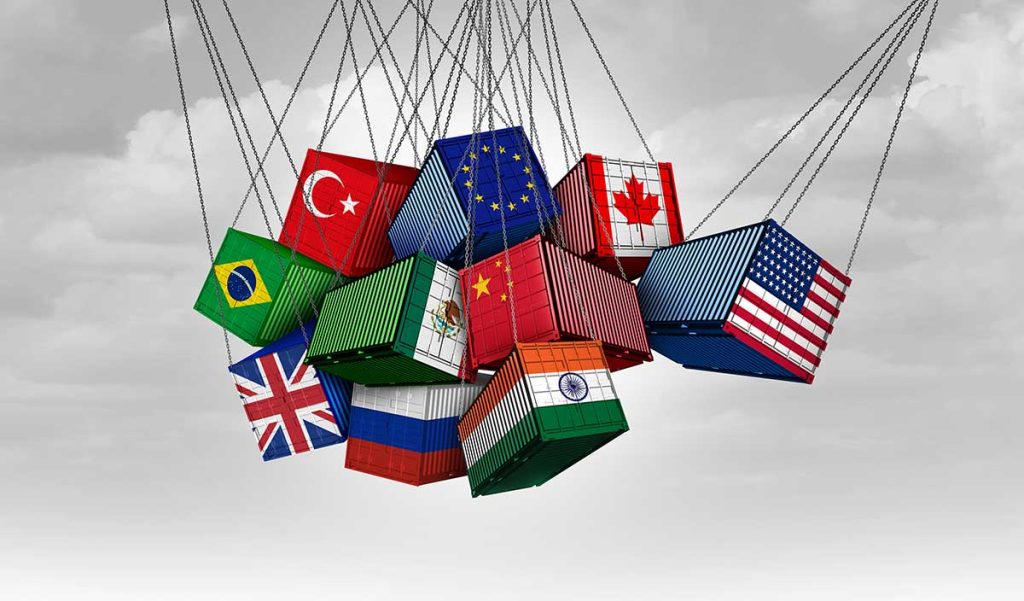
It’s far too early to know whether Trump’s tariff gambit will pay off, but the market’s initial reaction is enough to give most investors pause. While tariffs can be a useful tool, they are not the solution for all problems, so it’s useful to understand what they can and cannot do.
The objective of tariffs have traditionally included the onshoring of manufacturing, the protection of domestic industry, the “righting” of a trade imbalance, and the collection of additional tax revenues. Some of these objectives are mutually exclusive so, when applying tariffs, it is necessary to establish the intended objective, and to communicate that objective clearly so that the various parties, including market participants and policy makers, can gauge their effectiveness, depth, and duration.
When discussed at the macro level, tariffs can seem pretty abstract, so let’s bring them down to Earth.
I currently have a trade imbalance with the grocery store. This imbalance exists because the grocery store has more of something I want, than I have of what it wants. Let’s say that I decide that the imbalance is unacceptable so I slap a 25% tariff, which is a price increase in the form of a surtax, on everything from the grocery store. A few things may happen.
First, I may substitute away and start shopping at a different grocery store; one that doesn’t have a tariff. If the goal was to get me to support a different store, then mission accomplished. If the goal was to generate tariff revenue, or to get me to “onshore” production of what I purchase, then the tariff was self-defeating.
Second, I may choose not to change my habits, and just pay the tariff. If the goal here was to generate revenue, then great; if it was to get me to change my ways, then it was unsuccessful.
Third, I may choose to “onshore”, by growing my own food. This may take considerable investment since I will need to learn how to grow various vegetables; acquire land; raise livestock; build facilities for cultivation, processing, and harvesting; mitigate the risks of bad weather and disease; and feed myself in the meantime.
In this instance, tariffs reduce my available capital for the investments necessary to surpass these various barriers to entry, thereby delaying the successful completion of my “onshoring”. Here, a better solution might be to provide subsidies and tax breaks, which would help me make the investments and complete the various tasks required to successfully begin production.
Tariff policies need clear, concise goals. Without them, it’s impossible to know what activity is being encouraged or discouraged, or whether goals have been achieved, and it makes it difficult for trading partners to negotiate conditions that are acceptable to both parties.
Because many of the possible outcomes of any tariff regime are mutually exclusive, the goal cannot simply be “all of the above”.
While we believe there are almost certainly some trading partners acting in bad faith, and a more aggressive trading policy may be laudable in those instances, it stands to reason that a more targeted approach concisely conveyed to the public might be more effective at accomplishing the various objectives while reducing market volatility.
As always, and especially during times of heightened volatility, be sure to work closely with your Certified Financial Planner® professional to help ensure that your portfolio continues to reflect your needs.
Stephen Kyne, CFP® is a Partner at Sterling Manor Financial, LLC in Saratoga Springs.
Sterling Manor Financial, LLC is an SEC Registered Investment Advisor and does not provide tax or legal advice, nor is it a third-party administrator. This piece contains forward-looking statements which are opinion, not guaranteed, and subject to change.