The Battle of Saratoga: The Turning Point of the Revolutionary War
As we celebrate the 250th anniversary of our country, it’s a perfect time to reflect on some of the events that led to America’s Independence from British rule.
The Saratoga area played an important role and was considered ground zero as the “Turning Point of the Revolutionary War.” The clash of arms that took place here in Stillwater during 1777 changed the trajectory of the war in the favor of the thirteen newly christened states.
The Battle of Saratoga is considered one of the most important battles of world history.
Although not on the massive scale of Waterloo or Stalingrad, it had similar repercussions that were felt around the globe. Let’s take a look at the events that led up to the battle, the combatants, the battle itself and the aftermath that helped shape our great country.
Independence Day
It was on the Fourth of July in the year 1776 that the thirteen colonies declared their independence from British rule. The Declaration of Independence formalized the breaking of all political ties with Great Britain. From that day forward the colonies would be free and independent states. Two months later the country was formally named The United States of America.
The document had been a long time coming. It was a culmination of the many years of harsh and unfair laws and tariffs that the British had placed on their subjects here in the colonies. “Taxation without Representation” empowered the revolutionists and became their rallying cry for freedom.
The most famous phrase in the document are the words of Thomas Jefferson, “Life, Liberty and the Pursuit of Happiness.” The American patriots would shed blood, sweat and tears over the next 7 years to achieve that ultimate goal.
The conflict..It’s beginnings
From the colonies’ viewpoint the Declaration formalized the break from British rule. The actual hostilities began a year earlier with the battle of Lexington and Concord. In the Spring of 1775, the battle was fought outside of Boston. Using guerrilla style tactics, the colonists were able to push the enemy back to Boston Harbor.
The battle of Bunker Hill later that year was a victory for the patriots. They inflicted heavy casualties on the redcoats while suffering much fewer of their own losses. The two battles gave the colonists the confidence that they needed early in the war. It simultaneously galvanized the British to put a military end to any thoughts concerning a sovereign nation here in America.
The Battles of 1776
It was two months after the Declaration of Independence was adopted that the adversaries clashed in the Battle of Brooklyn. In terms of numbers, it was one of the largest battles of the entire war.19,000 British troops faced off against George Washington’s much smaller force numbering approximately 10,000.
Washington’s forces were thoroughly beaten by the British. It gave the redcoats control of New York City and its gateway to the high seas for the rest of the war. There was one saving grace.
In a stroke of genius, Washington maneuvered his army out of harm’s way. It saved it from complete destruction and a war ending catastrophe.
The British victory at Brooklyn brought a time of low confidence to America’s cause. General Washington needed a victory for the army to regain much needed morale. On the day after Christmas of 1776, the general with a small portion of his army crossed the Delaware River and attacked the German mercenary post at Trenton, New Jersey. The surprise attack was a complete success. Although a minor victory by military standards, it gave the demoralized patriots the jolt it needed to continue the war. A week later Washington’s army soundly defeated a British garrison at Princeton. The victory there brought further encouragement to the patriots.
The best laid plans of mice and men
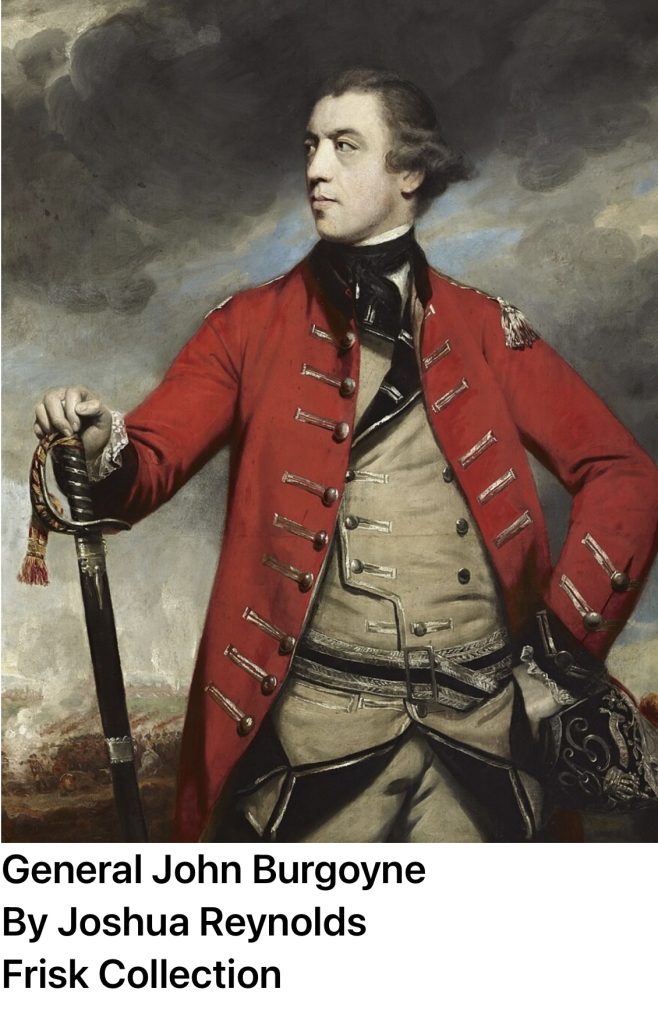
The British plans looked simple enough. Their goal in the Summer of 1777 was to seize the city of Albany. Its location made it a prime objective for control of the Hudson River while isolating New England from participating in the war. A plan was set in place to have three British armies converge on the city. The three-pronged assault appeared to be a brilliant plan. In reality, it was ill conceived. The British High Command located in London gave vague orders to their generals thousands of miles from home. In addition, communications between the British commanders involved with the plan moved at a snail’s pace. The only army that made it close to its objective was that of General John Burgoyne consisting of 8,000 combatants. He was put in the unenviable position of having to take on an American army that would swell to approximately 15,000 soldiers at the culmination of the battle of Saratoga.
Saratoga.. The Turning Point
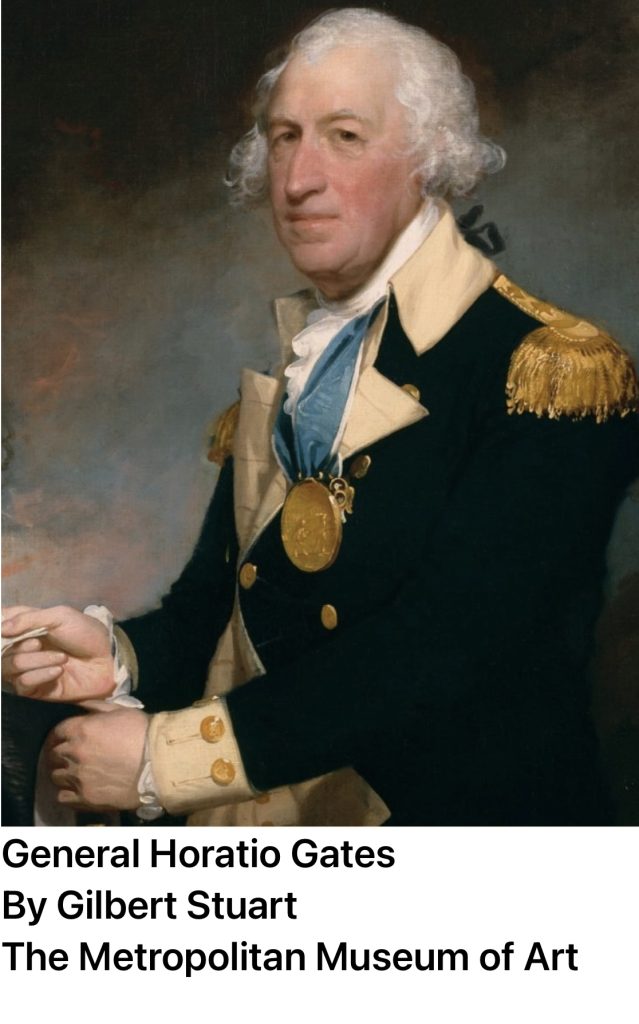
The American forces were commanded by Major General Horatio Gates. He had taken command of the army when Phillip Schuyler was relieved prior to the battle. Schuyler’s dismissal was unfair. He had been wrongfully blamed for losing battles in Quebec and at Fort Ticonderoga. He would be exonerated in 1778 from any fault in the two defeats. Schuyler deserves credit for slowing down the enemy’s advance, burning bridges, destroying food crops and blocking roadways hindering the British advance towards Albany.
The confusion as to the naming of the battle stems from the fact that in 1777 the village of Schuylerville was known as Saratoga. The battle actually took place in Stillwater. Since Old Saratoga was the nearest population center, the battle took on its name. In 1831, the village was renamed Schuylerville to honor Phillip Schuyler.
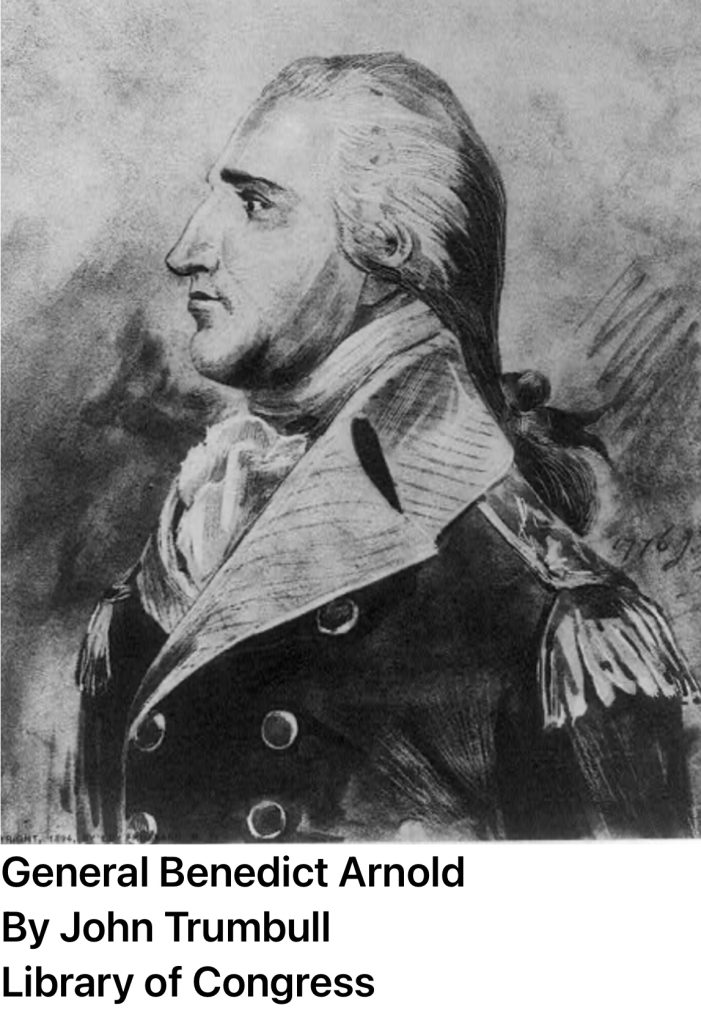
Gates, the newly appointed army commander, was a seasoned veteran having served as a general in both the British and American armies. It was his good fortune to have some of the best brigade commanders in the Continental Army at his disposal. The most important and senior in rank of Gates’ generals was Benedict Arnold. Later a traitor to the American cause, at the onset of the Battle of Saratoga he was in command of the left wing of Gates’ army.
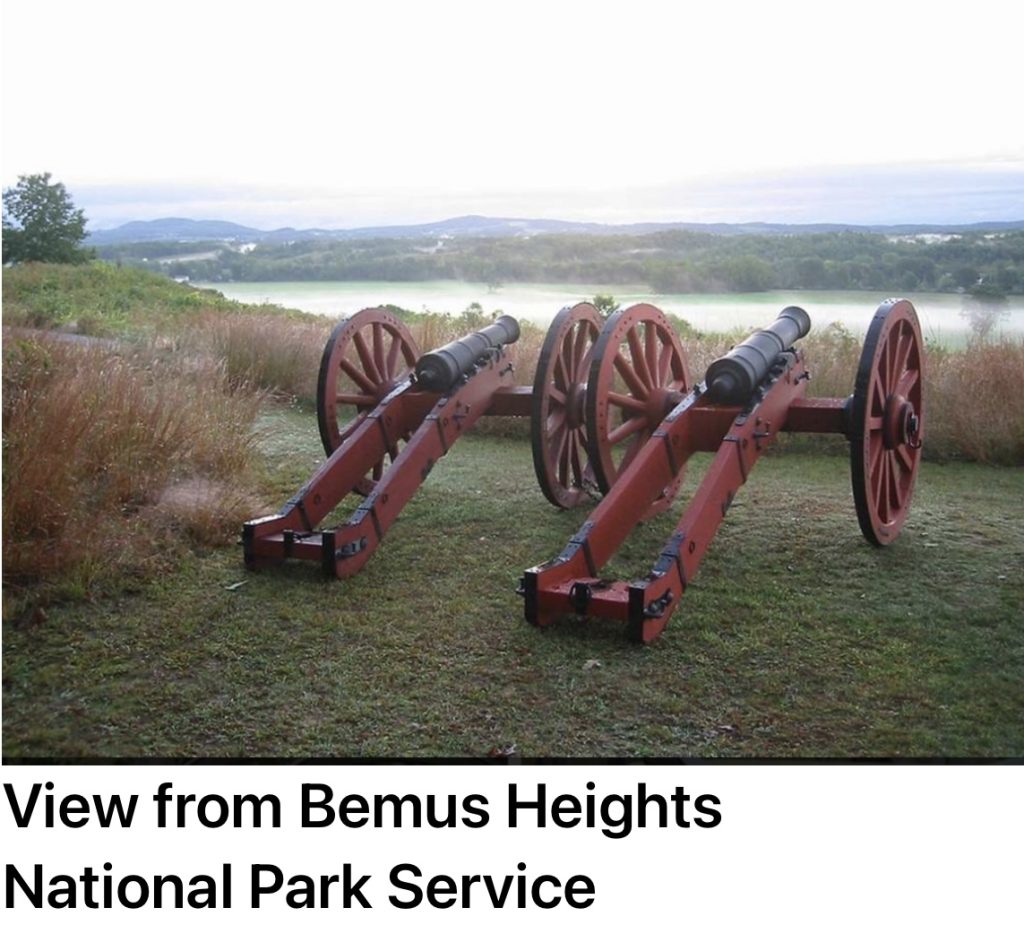
The first battle of the campaign commenced on September 19th. General Burgoyne led the British attack near Freeman’s Farm, located in Stillwater, approximately 8 miles from Schuylerville. He was met by Benedict Arnold’s command. The adversaries clashed in 4 hours of up-close combat. Arnold was sure that he could destroy Burgoyne’s army that day. He pleaded with Gates for reinforcements. They were denied. Arnold was forced to make an orderly retreat back to Bemis Heights. Gates, the more cautious of the two, had decided to place his entire army behind the fortified area at the Heights. There he could await any British attack in a strong defensive position. The British, although nominally the victor that day, suffered twice the casualties of the Americans. More importantly, many of the more capable officers of Burgoyne’s army were killed in the battle.
The refusal of reinforcements led to a serious rift between the two generals. Arnold was furious that he was denied the support to win the battle. Shouting matches between he and Gates over the correct approach to the battle brought about the dismissal of Arnold. Although relieved of his command, he refused to leave the camp. This would have a profound effect on the second battle of Saratoga less than a month later.
Who was right? In this case, both viewpoints were valid. Arnold most likely would have taken the day with more support. On the other hand, Gates’ plan placed the entire army in a strong defensive position. There, on the higher ground he could wait out any attack by the weakened British forces.
The Battle of Bemis Heights
After the Battle at Freeman’s Farm, both armies dug into their previous positions. Burgoyne was still hopeful that help from New York City would arrive to reinforce his army. He was building castles in the air. No such thing would happen. For three weeks the lull in the fighting continued. The demoralized redcoats, with a lack of food, ammunition and supplies, found themselves in a very precarious situation.
The realization crystallized in Burgoyne’s mind that he had no alternative other than to storm the stronghold at Bemis Heights. His original plan was to attack with his entire army. Hours before the battle Burgoyne met with his brigade commanders. They all had serious doubts that it would succeed. They feared that a flanking maneuver by Gates’ troops to their unguarded rear would put the entire army in great danger. Burgoyne agreed and left camp with a lesser force of his best troops. He decided to probe the left flank of the Heights. Gates, aware of his movements, sent out detachments of his army to meet the redcoats’ advance.
On October 7, 1777 the battle commenced. It quickly turned into a chaotic state. The British General, Simon Fraser led a bayonet charge against the Americans. He was mortally wounded, leaving his command in total disarray. At the same time sharpshooting riflemen were picking off many of the redcoat officers. The word got back to Arnold that Gates would not pursue the enemy, allowing the British to escape. General Arnold saw an opportunity to destroy Burgoyne’s detachment before they could reach their defensive position. His actions would cover him with glory. With no command and in Gates’ doghouse he mounted a horse and joined the fray. He rode into the teeth of the enemy. The men on the field cheered as he led them into pitched battle. In one heroic moment after another his tenacity drove the British into a frantic retreat. In the final moments of the battle Arnold was shot in the leg. Refusing doctors’ advice, he would not allow the leg to be amputated. Inept surgery left Arnold with one leg two inches shorter than the other. For the rest of his life, he walked with a painful limp.
In 1867 a stone monument was erected displaying a boot with no other markings on the exact ground of his injury. It symbolized recognition for the wound Arnold suffered at Saratoga. At the same time, it did not allow his name or any markings of honor on the stone. The betrayal of his country later in the war stripped Arnold of any heroics that preceded the disgrace of being branded a traitor.
After the disaster at Bemis Heights the British retreated to a defensive position at Schuylerville.
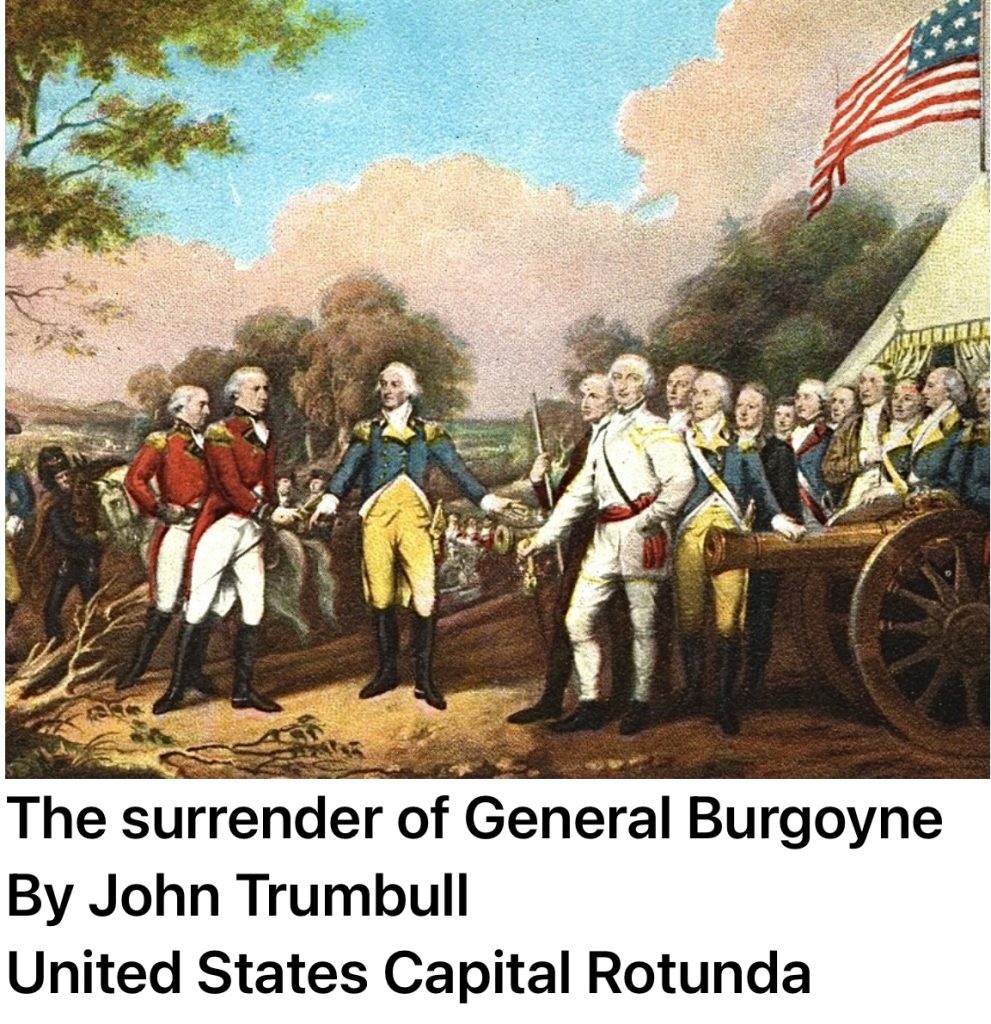
For eight days Burgoyne contemplated his next move. For him, the only exit was the complete capitulation of his army. On October 17, 1777, he met Gates on an open field in the village of Schuylerville and formally surrendered his army. The battle of Saratoga was over. Its repercussions were about to be felt around the world.
Victory has many fathers..Defeat is an orphan
The prying eyes of the European powers closely watched the events that took place at Saratoga. The patriots had proved beyond a doubt that they could win the war against their British counterparts. France decided to join the fray with a military presence. This was a major development to the cause. Spain and the Netherlands soon followed. America was now allied with three European powers against the British. The alliances would prove vital in gaining complete freedom from their long time masters.
As we celebrate the 250th anniversary of America’s Independence it can also be a time to contemplate the world changing events that took place here in 1777. Because of the fortitude and bravery of the men that fought for America’s freedom in those dark hours, we as citizens have reaped the rewards. To be born here is a blessing. We live in the country that Thomas Jefferson envisioned 250 years ago, a home of “Life, Liberty and the Pursuit of Happiness.”