

“A Righteous Gift”: Country Music’s Most Distinctive Artist is Coming to Saratoga
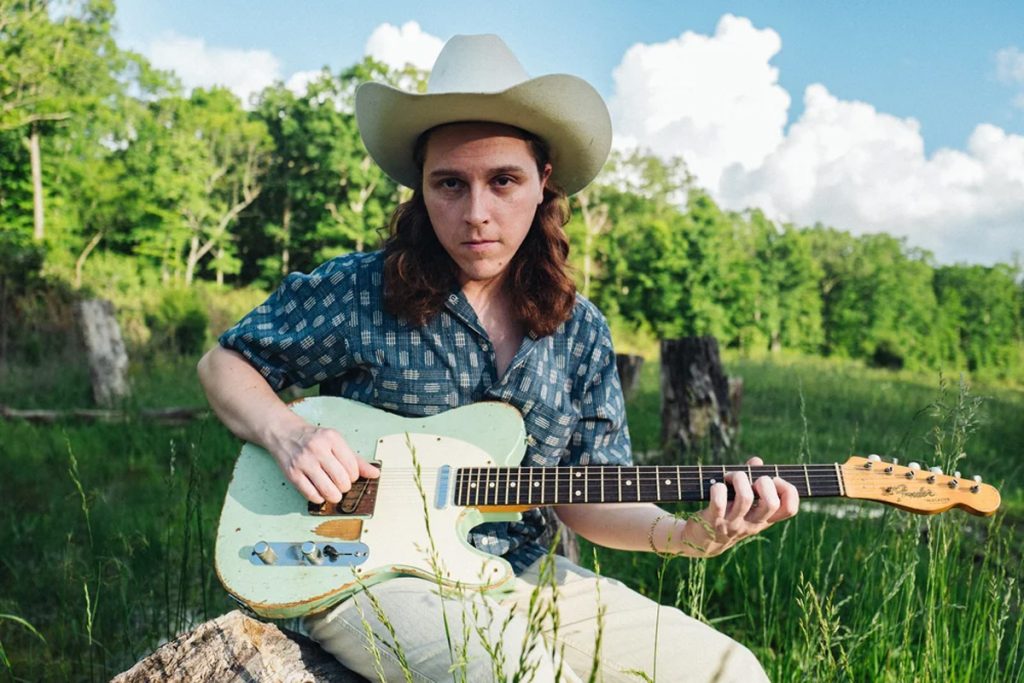
SARATOGA SPRINGS — Daniel Donato is like a Quentin Tarantino movie.
The musician referenced Tarantino’s “The Hateful Eight” in our interview, and the film serves as something of a shortcut to explaining Donato’s unique sound. The movie is assuredly a Western, filled with genre conventions and set a decade after the Civil War. But it’s also a 21st century Tarantino flick, stuffed with the maestro’s signature dialogue and exaggerated violence.
Similarly, Donato is a traditional country artist in the vein of Marty Robbins or Merle Haggard. But he’s also unconventional and improvisational like the Grateful Dead. It’s a recipe of musical flavors that demands its own category; one that Donato has labeled “cosmic country.”
This swirl of Stetson and psychedelia can quickly become addictive to those receptive to its sound, creating some buzz around Donato that’s similar in many respects to the rising popularity of Billy Strings, a bluegrass traditionalist/jam bander who will headline a concert in Albany later this year.
Donato’s cosmic voyage will pass through Saratoga Springs, where he’s scheduled to play at Putnam Place on Sept. 25. It’ll be the artist’s second Spa City performance following a 2022 co-headlining show at Putnam with the Kitchen Dwellers.
Ahead of the concert, Saratoga TODAY spoke with the artist about his new album “Horizons” (released less than a month ago), his upbringing, and his fanbase. That conversation is presented here in Q&A format, with some light editing for length and clarity.
Saratoga TODAY: When you start working on a new album, is there something specific you want to achieve with that album, like a certain sound, or are you trying to explore certain ideas? And if so, what was your objective with “Horizons”?
Daniel Donato: Well, ideas can take form and they can be personalized in many forms. Ideas can be personalized in the form of sounds, lyrics, and composition, at least musically speaking, and arrangement. So, the whole thing really is an idea. With “Horizons,” I wanted to have a message of faith on an individual level of people, not like on a collective, dogmatic level. But just on the individual level of really righteously trying to show up for life and truly experience what’s going on. The whole record goes through varying levels of that. There’s some deeper songs and there’s songs that you don’t have to dig as deep. So that’s kind of the idea. Really, it’s an album of faith, but just on an individual level.
ST: Do you feel like this album was a little bit more in the direction of traditional country? I’ve seen other people describe it that way, but I was curious if you felt that the album had that sound.
DD: I think parts of it does, yeah. If you watch “The Hateful Eight” by Tarantino, there’s elements of that movie that are very traditional and Western, but then there are elements of it as well that are also horrific and modern in terms of the props and the violence that is conveyed in that as well. So, I think it starts in a traditional place. It starts in a country place, and it ends in a cosmic place.
ST: That’s a great movie, by the way, very underrated in my opinion.
DD: Oh my God, yeah.
ST: Nowadays, it seems like there’s so much emphasis on touring and live shows. How important are albums to you? Do you see a studio album as, “This is the reason why I’m a musician?” Or is it more 50/50 between that and live shows?
DD: The reason why I believe I’m a musician is that is my purpose, to add service into the world, to bring service to the world. Hopefully in other forms too; I’d love to be a father. But that is my main form of service to the world, is music. And so music can happen in the form of video. It can happen at a live show. It could happen on an album. Whatever form it is that I’m being called to do at that present moment, the forms are more or less secondary, as the service in itself is happening in any of the forms. The service is primary, and the forms are secondary. It’s not really up to me to decide which form is the preferred modality of any single listener. It’s really just my job to make sure that we have opportunities set up for people to experience cosmic country, whatever form it is; whether it be live, whether it be on our archival releases, whether it be on an album, could be anything. Cosmic country also can be experienced in the storytelling that we have with our posters that we do for every tour as well, and all kinds of things like that.
ST: Obviously, Nashville has had such a strong influence on you, but I saw that you started out in Atlantic City. That combination, going from New Jersey to Nashville, what kind of influence do you think that had on you?
DD: My parents are from Jersey. People in Nashville don’t really understand that. In Tennessee, everyone’s like, “Oh, you’re from the Northeast.” And it’s like, yeah, but Long Island is different than Philly, and Philly is different than Atlantic City, and Atlantic City is different than North Jersey. My dad’s from East Brunswick and my mom’s from Atlantic City. Those are both tough and rough places to grow up, economically and socially. You have that influence and then you also have that general modality of the Northeast, which is you have to keep your nose to the grindstone and work hard every day. The South has that but in different ways. So, the way that Jersey affected me really was through my parents and my household, and then growing up in Nashville was just part of the cosmic design of my life because it really didn’t make any contextual sense for anyone in our family to move to Tennessee. Nobody in my family had ever thought about living in Tennessee, let alone ever actually doing it. So, I’m grateful that both of those things happened.
ST: I’m curious about the demographics of people you find coming to your shows. Are there a lot of people who are into the Dead or Phish who are saying, “Oh, maybe I like country music a little bit more than I thought I did?” Or do you find that it’s more people who love country music who are embracing the jam and the improvisational aspect of it?
DD: There’s people coming to our shows that are discovering country music that I just assumed everybody knew and loved. And then there’s people coming to our shows that already know country music and that are discovering the types of music that, like Widespread Panic and Phish and the Dead have curated, that I thought everybody would just know. So, the secondary blessing of what we’re doing is we’re getting to reveal a tapestry of influence and deliver people an experience of discovery, which is such a righteous gift.