At the June 16, 2026, Saratoga Springs City Council meeting Mayor John Safford introduced a resolution to adopt changes to the city charter recommended by the Charter Review Commission.
In a very strange incident, Public Works Commissioner BK Keramati vigorously attacked the resolution and then voted to adopt it. The resolution passed unanimously.
While I was pleased that Keramati voted for the charter changes, given how strenuously he had opposed passing the changes just before the vote, and given that he offered no explanation for his change of heart, this seemed especially odd.
I was especially curious as to why he changed his vote, because to date, he has loyally and uncritically supported the local Democratic Committee, whose opposition to the proposed changes was caustic. His vote had to have angered them, so it would have been truly revealing to know which of the committee’s false allegations Keramati disagreed with.
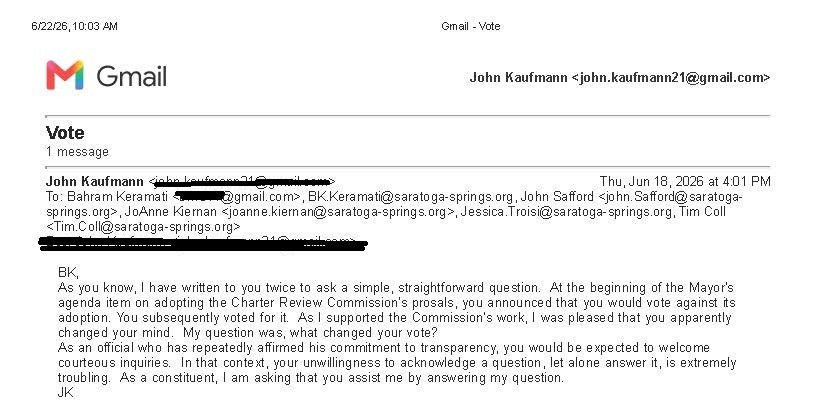
I wrote three emails to Keramati politely asking him why he changed his vote. I copied the other members of the Council on one of the emails.
Commissioner Keramati did not reply to any of my emails.
So, in the interest of pursuing the truth, I actually attended the last Council meeting to ask that he answer my question. (22 seconds)
Refusing To Answer the Public Why They Voted A Certain Way Is A Violation Of Trust
I was disappointed once again as Commissioner Keramati was silent, refusing to explain to the public his reasons for his vote.
Being a public official in this age of recrimination is not easy. They are the subject of continual attack, both fair and unfair. There are limits to the time they can devote to their duties as well.
Still, at the heart of democracy is transparency. For BK Keramati to effectively stonewall on the issue of the city’s fundamental document, the charter, and refuse to reveal why he voted the way he did, is most unfortunate.
The Supporting Videos
Keramati Opposes Vote On Charter Changes (1 Minute 55 Seconds)
Keramati Votes For Charter Changes (6 Minutes and 3 Seconds)
Unless you live under a rock somewhere in the South Pacific, you know that Taylor Swift and Travis Kelce were married on July 4, 2026. The event was so excessively lavish that it must have cost as much as Jeff Bezos’ wedding, in which Bezos basically rented the city of Venice, Italy.
I think I can legitimately call myself a romantic. I cry at movies. I am not above enjoying a chick flick in which the couple lives happily ever after. My own wedding was a modest and warm event at our home with about twenty members of Jane’s and my extended families.
A Spectacle As Romantic As…
The Swift/Kelce wedding was held in Madison Square Garden (MSG). The Garden is better known for hosting some of the greatest boxing matches of all time than for its romanticism. Reportedly, to provide the needed effort for some sort of love theme, Swift and Kelce had planned to erect a castle inside MSG. It would seem to make some sort of effort at a Walt Disney Snow White fantasy (Could it really not be tacky?).
There were widespread reports before the wedding that the venue would feature a large fairytale “castle” set as part of the décor. Entertainment outlets reported that crews were building an elaborate temporary structure with grand staircases, faux trees, white railings, and garden scenery to transform the arena into a storybook setting.
However, shortly before the ceremony, other reports—including one from People citing sources close to the event—said those “castle” rumors were overstated. According to those sources, there was no literal castle. Instead, the arena was transformed into an elaborate indoor garden with grass, canopies, flowers, trees, and a stage for the ceremony.
What An AI Search Produced
According to published reports, some 1,000 people were invited to the nuptials.
I am trying to wrap my head around all this.
Who has a thousand friends they want at their wedding? How do you even put together a list of a thousand? Maybe if I subscribed to Ancestry.com, I could come up with a thousand.
This is a further sign of this blogger’s age and his retro culture. Being old-school, I view a wedding as a way for people who actually care about the couple getting married to express their joy for the bride and groom. Concomitantly, it is an expression of kinship by the bride and groom with the people privileged to be invited.
I also consider it more than quaint for the bride and groom to personally express their appreciation to each of their guests for coming.
I rather doubt that Ms. Taylor and Mr. Kelsey found the time (and probably not the interest) to personally greet the guests who may have made the trip.
I also wonder what kind of gift to give to two people who have such great wealth. They probably don’t need a good frying pan or a chafing dish.
So, Why Put On Such An Event?
The cost of this event is estimated to be well over $20,000,000.00
There was a time, a charming time, when modesty was considered a virtue and when putting on an event as excessive as this wedding would have been taboo. I was curious as to the scale of J.P. Morgan’s weddings (1800’s), who, at the time, was considered one of the richest, if not the richest, men in the world. He was married twice, and each was a small private affair.
One possibility is that this event is part of a branding/advertising strategy. As Ms. Swift is estimated to be worth over two billion dollars and her concerts are uniformly sold out, she does not appear to require such publicity. (I don’t know what Mr. Kelce’s money situation is, but I expect he is comfortable and the route to his financial fortunes is firmly planted on football turf.)
I Am Honestly Perplexed.
I truly do not understand why Ms. Swift and Mr. Kelce put this event on.
Why would they invite a thousand people? What was the purpose of this thing?
When I think of the people who work two or three jobs to support their families and do not have health care, and I look at this wedding, the most glaring expression of conspicuous consumption I have ever seen, I simply scratch my head.
The Saratoga Springs Democratic Committee, now led by Ron Kim, issued a white paper on their Facebook page attacking the current Charter Commission’s work the day before the Commission’s proposals were to come before the City Council for a vote. The problem is that it is manifestly obvious fromtheir criticisms that they never bothered to actually read the proposed changes. The Democrats remoteness from reality regarding the actual contents of the unanimously adopted charter changes is simply stunning. (Their entire paper is at the end of this post.)
Here, for example, is item #4 from their attack.
The problem is that due to sloppy wording in the charter, audits actually were not required to be conducted by the Finance Department under the charter. Vincent DeLeonardis, who served two administrations as City Attorney and chairs the Charter Commission, patiently walks the Council and members of the public through what little relationship the Democratic Committee’s criticism had to what was actually being proposed. One has to wonder how Kim and the other unknown authors could have written this.
[JK:This video is 2 minutes and three seconds long]
The following is an excerpt from the Saratoga Springs Democratic Committee’s attack regarding Assessments.
7. Say hello to the MAGA-fication of the Assessment Review Board. Under the proposed changes, the Board of Assessment Review loses its mandate to ensure “equity and fairness,” and non-resident property owners lose their guaranteed notice-and-hearing rights related to property assessments — both removed with no explanation.
Saratoga Springs Democratic Committee
Here DeLeonardis again exposes the ignorance of the authors.
[JK: This video is 1 minute and 22 seconds long]
Peter Martin’s Memory Problems
Earlier in the evening, during the public hearing on the proposed charter changes, Peter Martin spoke in support of the Democratic Committee’s claim that the new language about “supervisors” endangers our representation in county government. Martin had been the Commissioner of Public Safety and also at one time represented Saratoga Springs at the Saratoga County Board of Supervisors.
Martin offered remarks that were lawyerly in the worst sense of the word. While Martin was considerably more adroit in his remarks than the Democratic Committee’s white paper, they were just as disingenuous.
The real clincher in Martin’s remarks came when DeLeonardis observed that he had served with Martin on the 2018 Charter Commission. In that role, Martin had voted for the very language he now opposes as did Gordon Boyd who is also curiously now a vocal opponent of the proposed change in charter language.
For a refresher on Gordon Boyd’s Kafka arguments regarding the supervisor controversy, [check out this link.]
All the Democratic Committee’s Claims Were False
All the claims of some kind of MAGA conspiracy, as asserted by Kim, Boyd, et al in the Saratoga Springs Democratic Committee in their paper, are of similar inauthenticity. The Saratoga Springs Democratic Committee newsletter urged people to attend the Council meeting at which the charter changes were to be adopted. I believe five of the usual committee members showed up. They were fervent in their attack on the proposed charter changes. It appeared they all unfortunately relied on the veracity of the claims made by Kim and whoever helped him write the piece.
The Following Is The Complete Statement From the Saratoga Springs Democratic Committee From Their Facebook Page
ON TUESDAY, JUNE 16TH, the Saratoga Springs City Council is poised to approve sweeping Charter changes that ignore state law, weaken the city’s financial controls, sidestep voter input, and disenfranchise all of us.
Mayor Safford’s Charter Review Commission is proposing seismic shifts in the balance of power in Saratoga Springs, curtailing citizens’ rights in order for city leadership to shirk accountability. Our City Charter is like the U.S. Constitution, it’s the foundation of our government. The Mayor wants to change it without fully disclosing or even calculating how these changes will impact City functions and what it will cost.
We can’t let the Mayor do this. Please join us at Tuesday’s City Council meeting and speak out!
**City Council Regular Meeting**
Tuesday, June 16, 7:00pm
474 Broadway, City Council Room
Saratoga Springs, NY 12866
11 REASONS TO SPEAK OUT AGAINST THE CHARTER CHANGES
1. Saratogians have no say. There are many, many proposed changes–every section of the Charter has been changed, yet there have only been two public hearings before the City Council (the bare minimum), no independent legal review or budgetary analysis of how these changes will impact our City, and what these changes will cost taxpayers. Every proposed change should go before voters.
2. Saratogians will lose power within the county. Our current charter guarantees the city two County Supervisors, but this proposal opens the door for the City to lose one Supervisor. That means Saratoga Springs could have the same level of representation as towns 1/30th our size! And according to the State’s Municipal Home Rule Law, altering the structure or method of electing an elective office generally requires a public vote. The city could easily have a lawsuit on their hands by sidestepping state law.
3. We have no idea how much this will cost. These are YOUR tax dollars and YOUR representatives, yet the city has made no attempt to produce a full, independent review of what these changes will cost and how they’ll impact the city’s budget and operations.
4. Yet, financial oversight will be gutted. Under the current charter, our Commissioner of Finance is required to produce annual internal audits. Under the proposed changes, these audits become optional and an annual review of the City’s investment policy is eliminated entirely!
5. And city-wide reassessments could jack up your taxes. By changing assessor duties and eliminating the Commissioner of Accounts’ ability to manage assessments, the City would open the door to full citywide property reassessments for the first time in over 20 years! Could a citywide reassessment shift the property tax burden from corporations to residents? Without a proper analysis, we’re all in the dark–and on the hook.
6. Say goodbye to real accountability for police misconduct. While the charter codifies the City’s Civilian Review Board, the body charged with increasing police accountability and credibility with the public, a companion local law would strip the Board’s subpoena power at the same time — shredding prior reforms and leaving police misconduct investigations up to the police themselves.
7. Say hello to the MAGA-fication of the Assessment Review Board. Under the proposed changes, the Board of Assessment Review loses its mandate to ensure “equity and fairness,” and non-resident property owners lose their guaranteed notice-and-hearing rights related to property assessments — both removed with no explanation.
8. Opening the door to rigged bids for City contracts that cost you more. The proposed changes weaken the City’s competitive bidding protections by significantly raising bid thresholds ($20K→$35K and $10K→$20K) and eliminating current language that requires the City to seek the “lowest responsible bidder.” Competitive bidding ensures transparency, prevents conflicts of interest, and saves taxpayer dollars – so why is Saratoga Springs looking to gut these protections?
9. Rolling back City planning while development pressures grow. The proposed changes would cut the frequency with which our City’s Comprehensive Plan needs to be reviewed (from 5 years to 10 years), even as the city faces increasingly serious development pressures and an affordable housing crisis. Plus, the duties of some of the planning boards we rely on to keep the City on track are reduced with no rationale whatsoever.
10. Charter Review Commission members cash out–and you lose. At least one Charter Commission member will get a new paid position out of the proposed Charter changes as the City Historian–at exactly the same time as our Finance Commissioner looks to institute a hiring freeze. Plus, it’s rumored that the Chair of the Commission will soon be given a cushy City Court judgeship as thanks for his work on these sweeping changes.
11. The City’s own Attorney says voters should have a say. At the Agenda Meeting this morning, our own City Attorney stated on the record that these changes should be approved by the voters in a referendum.
…And this isn’t even the half of it! Join us at Tuesday’s City Council meeting (6/16) to make your voice heard, and please share with neighbors!
At the June 16 Saratoga Springs City Council Meeting, Finance Commissioner JoAnne Kiernan did a presentation on the city’s finances. People who follow this blog know that I have written extensively, and regrettably, about the utter mismanagement in the Finance Department under former Finance Commissioner Minita Sanghvi. For four years, Ms. Sanghvi failed to provide accurate and readable financial reports. As her email auto reply continued to affirm during her term in office, she viewed her job as part-time, and the result has been a debacle. She simply failed to devote the time required to both understand and manage the city’s money. Her budgets often had wildly optimistic assumptions about city income and projected expenses that were obviously inadequate given past spending patterns. Now the proverbial chickens have come home to roost.
In a report to the Council, Kiernan, without naming Sanghvi, detailed how the finance office under Sanghvi dangerously squandered the city’s reserves to hide the utter inability of her office to carry out the most basic of fiscal procedures. It has left the city vulnerable by squandering its financial reserves and failing to craft a way by which the city could live within its means.
Sanghvi Systematically Drained The City’s Reserves
Kiernan’s presentation included several charts documenting the city’s financial problems.
The chart below documents how Sanghvi ran continual deficits of increasing size. She balanced the books by drawing on the city’s reserves rather than controlling costs or increasing revenues. The bitter truth was that her budgets documented her utter ignorance of the city’s spending.
The tan/yellow line at the top of this chart shows the city’s actual expenditures each year from 2022. The green line displays how much the city took in as revenue. At the bottom, in blue, is the 2022 surplus (Sanghvi drew on the budget created by former Finance Commissioner Michele Madigan), and in red are the growing annual deficits.
The city is required to maintain a certain percentage in reserve money each year. Sanghvi managed to blow the huge reserve she inherited from Michele Madigan. The city is now just above the city’s minimum surplus required by New York State.
What The Auditor Revealed
Emblematic of the problem was the revelation at the beginning of this year that this city’s accounting firm was unable to audit our books. The firm cited that the city’s books are in disarray.
Finance Commissioner JoAnne Kiernan is a stand-up professional. Note that she never mentions Minita Sanghvi by name, but her presentation was easy to understand, and its implications were devastating.
This city finally has a real professional who does not view her role as “only part-time” as her predecessor did. Kiernan is an accountant by profession, and it shows.
The video is 32 seconds.
Some of the Auditor’s Observations
Incomplete reconciliations [JK: Absolutely stunning revelation. This is fundamental to any kind of bookkeeping.]
Insufficient documentation for journal entries
Failure to use the city’s microfiche software as part of the city’s internal control process
Misposting of financial information
Spreadsheets not updated to reflect actual transactions
Problems with bond payments, postings, and fund transfers “due to and from” accounts
Required interest payments were not completed
Commissioner Coll and Commissioner Kiernan Discuss Who Was Responsible For The Crisis (2 minutes 17 seconds)
A Great Presentation On The State Of The City’s Finances (5 minutes 27 seconds)
This video is of Commissioner Kiernan’s full presentation on the city’s finances. It’s not long, and it is very well done. You will not need an accounting degree to follow her slides and commentary.
I have to start off this post by asking why anyone from our city would supposedly seek to weaken our representation in our county government. This makes no sense, but this is what Gordon Boyd and Sarah Burger want us to believe.
Saratoga Springs Democratic Committee member Gordon Boyd and Saratoga Springs County Supervisor Sarah Burger, who is also on the Democratic committee, have continued to champion misinformation about a proposed charter change despite copious data and documents to the contrary. The extreme gap between reality and their allegations is nothing short of breathtaking. They have been falsely asserting that the proposed charter language would jeopardize the city’s representation on the Saratoga County Board of Supervisors. In remarks at the June 2, 2026, City Council meeting, Boyd went even further to falsely claim that remarks by Charter Review Commission member and former County Supervisor Matt Veitch and former Public Safety Commissioner and charter commission member Lew Benton now exposed some kind of grand conspiracy involving the town of Halfmoon.
In fact, both Veitch and Benton voted in favor of the proposed change to the Supervisor language, as did every other member of the bipartisan Commission, and they still support it.
Lew Benton, former Public Safety Commissioner and County Planner, has done a tremendous service by extensively documenting state, county, and city laws, relating to the disputed Supervisor language, along with a detailed history of the evolution of the relevant county and city statutes, in an email at the bottom of this post. Its thoroughness and specificity contrast dramatically with the disheartening stream of unsubstantiated sound bites meant to confuse the public, expressed by Boyd and Berger.
I welcome Gordon Boyd and Supervisor Burger to respond to Lew’s analysis. I promise to post whatever they submit unedited.
Some Background Regarding The Current Charter Commission
The current Charter Commission was appointed by Mayor John Safford in 2025. It includes representatives from both major parties, along with some members who have registered as unaffiliated with any political party. Most importantly, it includes a number of attorneys, including former city attorneys, who serve as resources for the committee on both the city’s operations and the federal, state, county, and local statutes that affect our city’s power. City Assistant Attorney Tony Izzo, who has served as staff to most, if not all, the former charter commissions, also attends the Commission’s meetings. A number of the current Charter Commission members have served on previous charter commissions.
Here are the 11 members of the Commission:
Vince DeLeonardis chairs the Commission. He served as the City Attorney during two administrations. He is not registered in a political party. He was originally appointed by Joanne Yepsen, a Democrat, and later by Meg Kelly, also a Democrat.
Matt Dorsey served as the City Attorney of Saratoga Springs under both Republican Mayor Scott Johnson and Republican Mayor Michael Lenz. He is a registered Republican.
Michael Lenz served as the city’s Mayor and as Finance Commissioner. He is a registered Republican
Deidre Ladd works for New York Assemblywoman Carrie Woerner, a Democrat, and is a member of the city’s Democratic Committee. She was a former Deputy Finance Commissioner under Democrat Michele Madigan.
Lew Benton served as the city’s Commissioner of Public Safety. He is a registered Democrat
Matt Jones is a partner in the law firm Jones, Steves, Grassi.
Stephen Towne served as Commissioner of Accounts. He is a CPA who has been employed by a large national accounting firm. He is a Republican.
Robert Murphy Jr. retired from the Saratoga Springs Fire Department, where he rose to the rank of assistant chief. He is currently the EMS coordinator for St. Peter’s Hospital. I do not know his registration.
Dorothy Rogers-Bullis is the founder and principal owner of drb Business Interiors. She has been a member of the City Center Board since 2017 and was appointed chair in 2024. I do not know her registration.
Molly Corbett is an attorney. She serves as a Supervisor in the Albany office of the Federal Defenders of New York.
Matt Veitch served as Saratoga Springs County Supervisor from 2008 until 2025, and served as the Board’s chair. He is a registered Republican, but he was recognized by the Saratoga Springs Democratic Committee and given an award for his bi-partisan work at their annual Starbuck luncheon.
This is a very impressive set of individuals overall, and the Commission is particularly strong in the field of law.
A thoughtful reader has to ask, why, as alleged by Boyd and Burger, would these people conspire to craft legislation to weaken the city’s representation at the county level? Remember, the vote was unanimous. It makes no sense because it is simply not true.
Gordon Boyd’s Disgraceful Misuse of Individuals Serving This City on the Commission. He Seems Unable to Distinguish Truth from Fiction, Blatantly Misrepresenting the Charter Commission Members’ Remarks
During the public comment period of the June 2, 2026, City Council meeting Boyd asserted:
“The charge you (the members of the city council) are putting into effect is to allow the county to reduce the number of supervisors that represent the city in Saratoga County.”
Gordon Boyd
While Mr. Boyd has repeatedly claimed that the city is allowing the county to reduce our representation by changing the wording of the charter, the city has no authority to affect the county’s decision on representation in any way. The county has enjoyed the legal authority to draft how communities are represented since the late 1700’s. As recently as 2021, the county redrafted the electoral map following the federal census results. It is truly bizarre that Boyd should want to sell this patently false narrative that the city has sovereignty.He knows better.
This is being done for the town of Halfmoon. This is what this is for. This is for this council to provide a permission slip that you are being asked to adopt that allows the town of Halfmoon supervisor to maintain his 25,666 weighted votes on the board.
Gordon Boyd
Boyd confusingly claims that changing the wording of the Saratoga Springs charter is intended to affect the county representation of the town of Halfmoon, a matter that was determined 6 years ago. He fails to explain how this minor change in the language of the Saratoga Springs charter will affect Halfmoon’s representation or what malevolent motive the Commission members have for supporting the change.
What is most disgraceful is the way Boyd misrepresents comments made by Matt Veitch and Lew Benton at a Charter Commission meeting to claim they support his wild accusations. Veitch and Benton merely informed Boyd of the history of the Halfmoon Supervisor Kevin Tollison’s successful opposition to sharing representation for his town with anyone after the 2020 census. Both Veitch and Benton voted for the proposed Supervisor text change, as did everyone else on the Commission, and they are still in support of that change. It verges on real craziness for Boyd and his allies to allege that the deal for Tollison six years ago would somehow be affected by a tweak in the Saratoga Springs charter six years later.
Burger Supports Boyd’s Story And Opposes Text Change On Supervisors
Saratoga Springs County Supervisor Sarah Burger began her remarks at the same Council meeting with a long and disingenuous statement praising the Charter Review Commission members and their work. This did not stop her from continuing the narrative that the language proposed by the Commission for the Supervisors would somehow disenfranchise Saratogians. Most grotesquely, she suggested that adopting this work of the Commission would be somehow racist. She never explains how it would be racist, nor, despite being a lawyer, does she explain what was wrong with the text proposal. Instead, she offered the folksy, “If it ain’t broke, don’t fix it.”
It Is Broke
The Mayor charged the Commission with developing two sets of recommendations regarding the charter. State law requires that certain changes, including those that would affect the powers of elected officials in our charter, be made only by referendum. State law also provides that other changes to the charter may be made by a majority of the City Council.
Our charter has not been changed in decades. There are elements to the charter that are inconsistent and obsolete. There are elements of our charter that unnecessarily undermine efficiency. There are also simple grammatical elements that need cleaning up. The charter also needed greater clarity on how to fill vacancies on the Council, as demonstrated by the confusion that followed former Public Works Commissioner Jason Golub’s resignation. These are the changes the Charter Commission has forwarded to the City Council for their consideration.
The proposed changes to the charter to be considered by the Council are relatively minor. Mr. Boyd and Ms. Burger apparently had to resort to creating a dubious controversy to discredit the Charter Review Commission because the proposed changes were all modest and merited. As I observed earlier, why would the Commission, with diverse backgrounds and expertise vote unanimously to propose that the City Council sabotage our representation in county government?
The real question is why Boyd and Burger want the public to falsely think the Commission and potentially the Council want to do this.
Benton White Paper
Some Thoughts on the City’s Most Recent Tempest in a Teapot
I understand Gordon Boyd gave me an honorable mention at the June 2 Council hearing on proposed amendments to the City Charter. I suppose I should be flattered.
As told to me, Gordon was speaking against a proposed change to TITLE 2.1,Officers, eligibility, terms of office, salaries.
That Title lists City elected officers. In addition to the Mayor and the four Commissioners, it includes “Two Supervisors”. As a member of the 2000 – 2001 Charter Revision Commission I can safely say that the “Two” simply recognized the status quo that had (has) existed since 1968.
But in hindsight, that language was ill advised for it may have suggested that the number of supervisors representing the City in Ballston Spa was a function reserved to Charter law. It is not. But it has now been, innocently or not, misrepresented. Perhaps those with open minds will consider the facts of the matter before taking sides.
As I understand it, Gordon somehow misinterpreted remarks I made as a member of the current City Charter Review Commission as supportive of his position against the proposed new language. I regret any misinterpretation or misunderstanding of comments I may have made, for I support the new language and voted to advance it to the City Council for its consideration. Why? Because the new language correctly recognizes that more than one supervisor representing any County municipality, predicated on population thresholds established by the Board of Supervisors, consistent with the New York State Municipal Home Rule Law.
The proposed new language reads “One or more Supervisors as may be established by County Law.” The proposed new language simply represents that by NYS Law the County determines, following each Decennial Census, the population threshold that triggers how many additional supervisors a town or city will have. Apparently Gordon and others falsely believe that the City through its Charter, local law or resolution may determine the number of Saratoga Springs Supervisors. It can not.
No city in New York can unilaterally decide how many representatives it has on a County Board of Supervisors. Because county legislative bodies must comply with “one person, one vote” constitutional standards, the apportionment of representatives is determined by the county and state, not by individual municipalities.
Understanding how representation is structured in New York clarifies why a city cannot make this decision on its own.
County Jurisdiction: Apportionment and representation on a county Board of Supervisors are exclusively county-level matters. Any changes must be enacted by the county through the New York State Municipal Home Rule Law.
Constitutional “One Person, One Vote”: In the 1960s, courts mandated that all county legislative bodies must provide equal representation based on population. If a city’s population represents X percentage of the total county population, its combined representation or total voting power must reflect that exact percentage.
Weighted Voting: In counties that still utilize a Board of Supervisors (rather than elected county legislators), city and town supervisors’ voting power is mathematically weighted based on the population they represent.
City Charters: While a city has the power under the Municipal Home Rule Law to amend its own city charter it cannot dictate the structural makeup of the county board.
Any changes to the number of city representatives, their districts, or their voting weights require a county-wide redistricting plan or a revision of the county charter. Saratoga is non-charter. county. As such, it is guided by NYS County Law, the NYS General Municipal Law and the NYS Municipal Home Rule Law.
Brief History of the Transition and Maintenance of the Saratoga County’s Fractional Weighted Voting System and Number of Supervisors
Before the late 1960s, the Board of Supervisors operated on a traditional one-municipality-one representative model, as it had since it was established in 1791. This meant that rural towns with tiny populations had the same voting power as rapidly growing urban and suburban areas.
Not until 1986 did the County, as part of its 21st Century Study Commission appointed by then Supervisor Roy McDonald, seriously consider a change of form. Part of that initiative included a Saratoga County Government Study element, chaired by then-Charlton Supervisor Fred Hequembourg. I served as staff.
The Hequembourg study group ultimately decided not to recommend transitioning to a charter county with a county legislature but did move to create an appointed County Administrator title along with other modest changes. It seems we are stuck with a antiquated County government and there is no initiative to change it, certainly not from within.
Saratoga Springs transitioned from one to two county supervisors following the adoption of Saratoga County Local Law No. 2 of 1968. This law restructured the Board of Supervisors to comply with the federal one -person-one-vote constitutional redistricting principles.
With its 1962 decision in Baker v. Carr, the US Supreme Court established that redistricting questions are justiciable (meaning they are legal questions the courts can resolve rather than political questions left to legislators) under the Equal Protection Clause. Then, the Court’s 1964 decision in Reynolds v. Sims established the “one person, one vote” doctrine, which requires every state legislative district to contain roughly the same number of people. When each representative has the same number of constituents, people are equally represented, and their votes have an equal opportunity to influence policies in their state.
In decisions made in 1962 (Baker v. Carr) and 1964 (Wesberry v. Sanders, Reynolds v. Sims) the United States Supreme Court made clear that the equal protection clause of the U.S. Constitution requires legislative districts to be “substantially equal in population.”
In 1968 this principle was extended by the Court to apply to local governments (Avery v. Midland County).
Towns and cities within counties were, of course, not equal in population. Thus in 1968 counties with boards of supervisors found their governance structure immediately in violation of the U.S. constitution. Faced with this legal dilemma, those counties wishing to retain the Board of Supervisors form – and not opt to adopt charters and legislatures – had to structure an alternative approach meet the complying with 1962 one-person-one mandate.
Historically, most of NY’s 57 counties outside New York City were governed by boards of supervisors. Today only 16 retain the board of supervisors form. The boards are made of the supervisors of each of the towns and cities in the county, augmented by additional supervisors elected from wards within each city (if any) in the county. However, since Saratoga Springs elects its representatives at large and not by wards or districts, its number of supervisors is determined by the same process applied to the Counties 19 towns.
One option that allowed retaining a board of supervisors, while also abiding by the one-person-one-vote decision was to create a weighted voting system that equally represented citizens by giving supervisors different voting strength within the board, based upon their municipality’s size relative to that of other towns and cities in the county. And by LOCAL LAW NO. 2 OF 1968, the Saratoga County Board of Supervisors did just that.
1968 (The Local Law): Prompted by federal court mandates enforcing proportional representation, Saratoga County passed Local Law No. 2. This established a population-based threshold system. Municipalities would automatically receive an additional county supervisor once their population crossed a specific threshold (initially set for one supervisor per 12,000 residents, and amended over the decades to 27,500 following the 2020 Census.
Of course, to maintain Constitutional compliance the County must amend the original 1968 Local Law following certification of each successive Decennial Census to reflect population changes. The next census will be conducted in 2030. Baring a change in the current 27,500 threshold, current 2030 population estimates would result in No Change to the Board’s composition. Only Saratoga Springs and Clifton Park would have two supervisors, the other 19 municipalities would have one.
Following the certified results of the 2020 Decennial Census, the County Board of Supervisors adopted the following Local Law. It details its most current makeup and establish the 27,500 threshold
COUNTY OF SARATOGA LOCAL LAW – 2022
A LOCAL LAW TO AMEND LOCAL LAW NO. 2 OF 1968, AS LAST AMENDED BY LOCAL LAW NO. 5 OF 2011, TO INCREASE THE POPULATION THRESHOLD FOR AN ADDITIONAL COUNTY SUPERVISOR
BE IT ENACTED by the Saratoga County Board of Supervisors as follows:
SECTION 1. That paragraphs a.) and b.) of Section 2 of Local Law No. 2 of 1968, as last amended by Local Law 5 of 2011, be amended as follows:
“SECTION 2. Such system of weighted voting shall be as follows:
a.) Each municipality shall elect one (1) Supervisor where its population is less than [25,000] 27,500 according to the latest decennial census and each Supervisor shall cast one (1) vote for each person in [his] their district according to such census.
b.) Where any such municipality shall have a population of [25,000] 27,500 one additional Supervisor shall be elected therefrom and one additional thereafter as each whole multiple of [25,000] 27,500 is attained. Such Supervisors shall each cast that number of votes arrived at by dividing the total population of each municipality by the number of its Supervisors.”
SECTION 2. That SECTION 3. of said Local Law No. 2 of 1968, as last amended by
Local Law No. 5 of 2011, be further amended as follows:
“SECTION 3. The composition of the Saratoga County Board of Supervisors shall consist of twenty-three (23) Supervisors, with two (2) Supervisors each from the City of Saratoga Springs and the Town of Clifton Park, and one (1) Supervisor each from the City of Mechanicville and the remaining Towns of the County of Saratoga, and, hereafter, such number shall automatically increase by the addition of an additional Supervisor from each Town or City as its population, based on a County-wide Official Federal Census, shall reach [25,000] 27,500 or whole multiples thereof.”
SECTION 3. This Local Law is subject to a permissive referendum as provided in
Section 24 of the Municipal Home Rule Law.
SECTION 4. This Local Law shall take effect after it is filed as provided by law.
Up until now, the Saratoga Springs Democratic Committee has been mounting a focused attack on only one proposed charter change, the one that would affect the wording regarding the city’s County Supervisors. In a recent email to the four Saratoga Springs City Council members endorsed by One Saratoga and the chair and vice chair of One Saratoga, Democrat County Supervisor and Saratoga Springs Democratic Committee member Sarah Burger, however, expanded the attack by warning them all to stay out of charter change altogether. In the meantime, Democrat Public Works Commissioner BK Keramati, who had at a previous meeting suggested charter change language to the Supervisors that gained the support of all his fellow Council members, flipped his position and embraced the new Democratic position laid out by Burger: sending all charter changes to referendum. The problem for Burger, Keramati, and the Democratic Committee is that New York state law is very specific about what can and cannot go to a referendum.
Sarah Burger’s Email
On May 31, 2026, Sarah Burger sent an email to the sitting Council members who were endorsed by One Saratoga, along with two members of One Saratoga’s leadership.
The email is poorly written and poorly researched. It apparently serves several purposes, including ingratiating herself with the leadership of the Saratoga Springs Democratic Committee. The criticism of her by members of the Committee for taking the One Saratoga line in the last election was unrelenting, and apparently, she is seeking to ingratiate herself with them again.
Last year, Mayor Safford established a charter commission with two missions: one was to present to the Council changes that could be adopted by the City Council, and secondly, to present further changes that would have to be approved by referendum in November as laid out in Sections 23 and 24 of the New York State Municipal Home Rule Law. The committee is bipartisan, and many members have served the city in various capacities. The commission is chaired by former City Attorney Vince DeLeonardis. They delivered their proposals, which could be adopted by the Council at the close of 2025, and the Council has been reviewing and discussing them over the past few months. In a previous post, I wrote about the phony issue Gordon Boyd created about proposed language regarding the city supervisors. Sarah Burger has now taken the Democrats’ attack to a higher level.
In her email, Ms. Berger bizarrely warns the recipients that it will be “political suicide” for them to involve themselves in the “formation of our governing document.” She goes on to claim that some of the proposals “require (her word) a public referendum.” Ms. Burger is an attorney. I wrote to Ms. Burger asking: given all the restrictions in New York regarding when referenda can be used, which provisions in the proposed charter changes she referenced in her email would allow for a referendum on it, let alone mandate one, and which statute she draws on to support her claim. She did not respond. I wrote her a follow-up request, which was similarly ignored.
Unlike California, Florida, Washington, Arizona, Colorado, and Oregon, New York State severely restricts the use of referendums, so it is unclear what she believes can go to a referendum and what the basis of her claim is
Regrettably, as noted earlier, I believe that the purpose of Ms. Burger’s email was political rather than a serious attempt to assist the city and One Saratoga. In order to ingratiate herself with the leadership of the city’s Democratic Committee, she is stirring the proverbial pot.
Ms. Berger is shrewd enough to know that the Commissioners she emailed will not abrogate their authority. Her help is disingenuous. Her main goal seems to be to provide as large a platform as possible for the Democratic Committee to muddy the waters as part of a strategy to discredit Mayor Safford’s commission. Her praise for the commission at the beginning of the last Council meeting, followed by her attempt to discredit their work, was striking in its disconnect.
Her email appears below.
BK Keramati Flips, Then He Flops, And Then He Flips Again
At the June 1 City Council pre-agenda meeting, he switched yet again, adopting Sarah Burger’s new narrative.
He seems, like Sarah, to be ignorant of state law on referenda and advocated putting all the individual charter proposal items, particularly the one dealing with Supervisors, on the Council’s ballots to let the public pick and choose, a practice that state law very narrowly limits. Clearly, the local Democratic Committee put the heat on Keramati to follow the new party line.
City Attorney Tony Izzo took the mic and tried to help Keramati understand the law. It is not clear that Keramati grasps what Tony is trying to explain to him.
Berger’s Letter
Sarah Burger <> Date: May 31, 2026, at 10:12:48 AM EDT To: Courtney DeLeonardis <>, Jessica Troisi <>, Tim Coll <>, John Safford <>, JoAnne Kiernan <>, Jeffrey Partridge <> Subject:Charter amendments
Good morning,
Ive given some thought to the proposed charter amendments that are before the council and overall while substantively I may agree with some of them I think the council voting on process for city elections, this supervisor issue, for example, is political suicide for One Saratoga.
There is simply no reason for you all to insert yourselves as elected officials in the formation of our governing document. This is an unforced error.
I firmly believe some of this requires public referendum and taking the voice of the voters away in amending our governing document for these type of substantive changes may down the road fly back on you.
I very strongly urge you to consider sending all proposed amendments to the voters. I want to see you all be successful in the things you are doing as council members. This does not need to be around your necks politically.
Just my two cents.
PS I think the best answer may be as my father always said “when you do not have to do something, do nothing.”
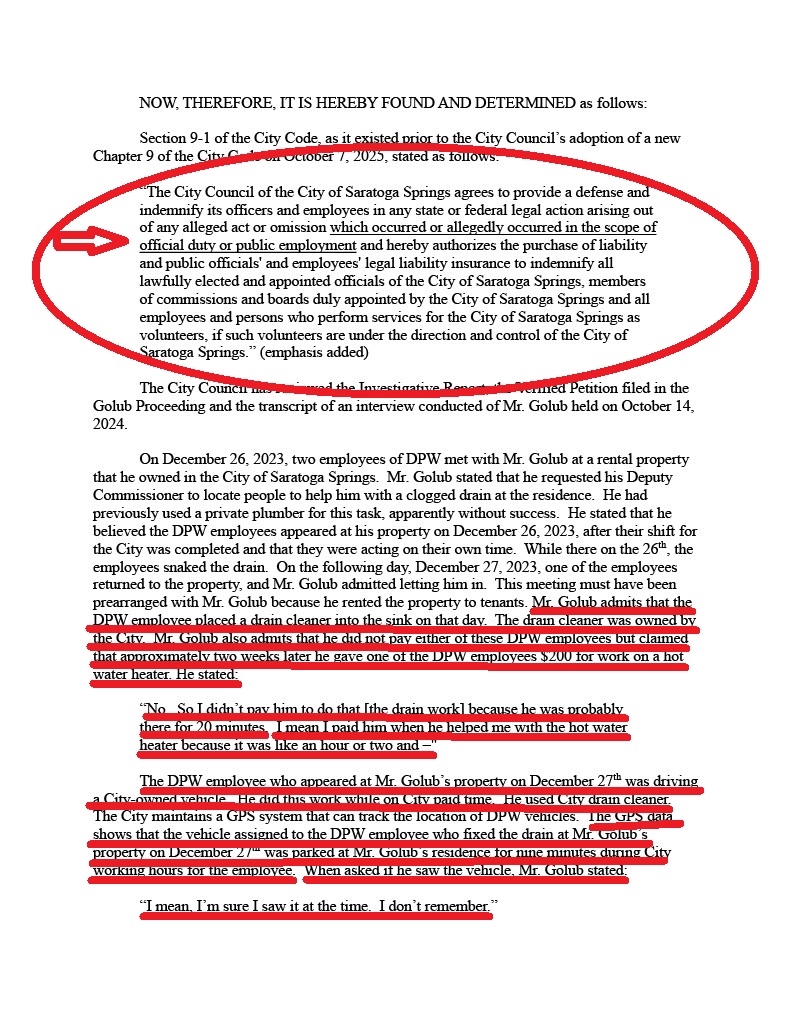
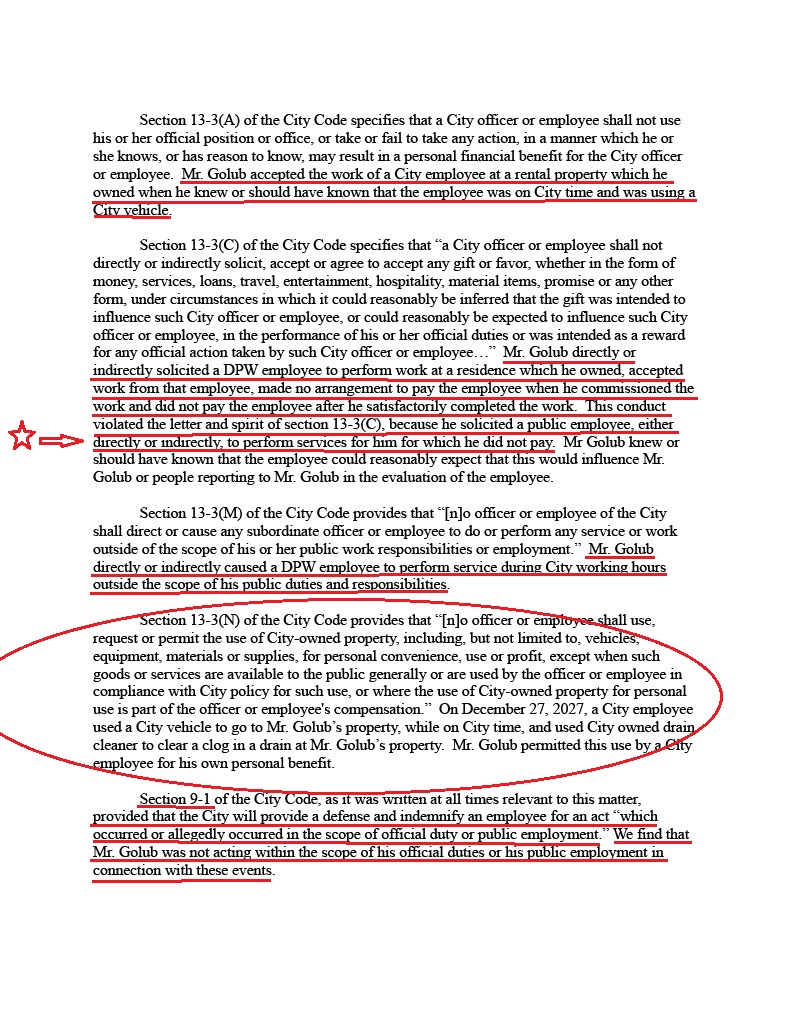
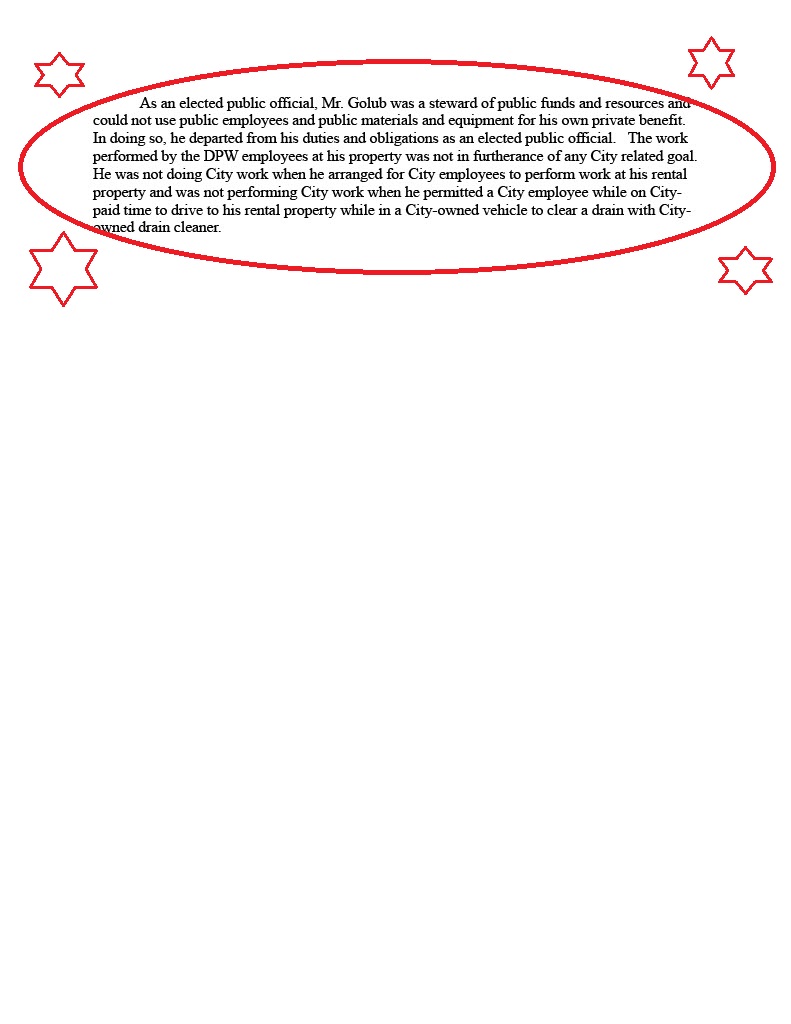
The Saratoga Springs City Council on Tuesday, June 2, 2026, will consider a resolution to deny payment of former Public Works Commissioner Jason Golub’s legal bills. Golub had city DPW employees work on a drain at a rental property Golub owned. The employees were operating on city time, using city equipment, and city materials. The criminal case against Golub was dismissed on a technicality with the charging document.
The resolution (below) is devastating. The key issue is that the city’s indemnity law is meant to protect elected officials from lawsuits growing out of something they did during the performance of their official duties. By his own statements, it is documented that Golub was operating as a private citizen with a plumbing problem on a property he owned when he had the city’s employees do the work.
Lew’s First Email To Saratoga Springs Public Works Commissioner BK Keramati
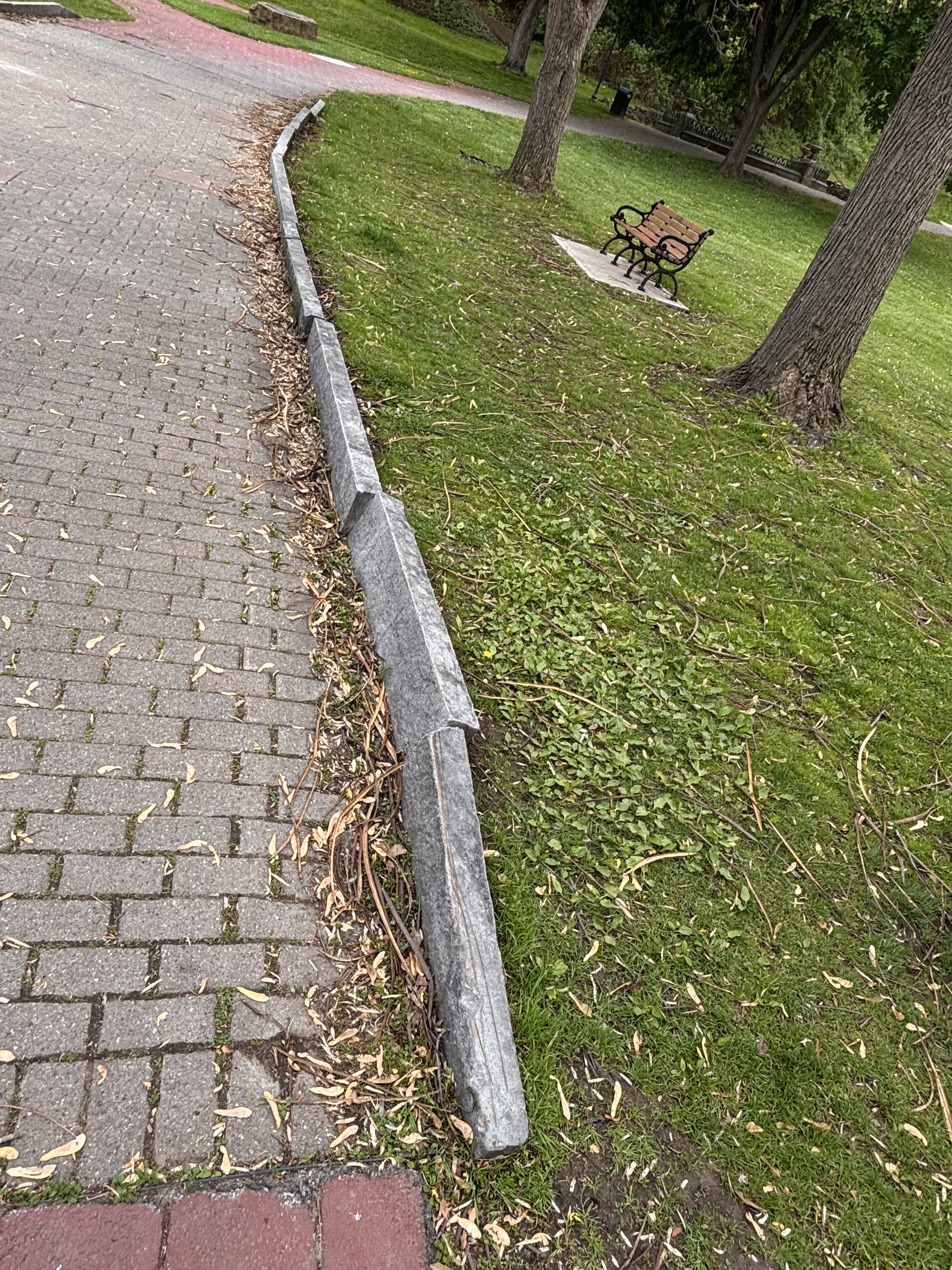
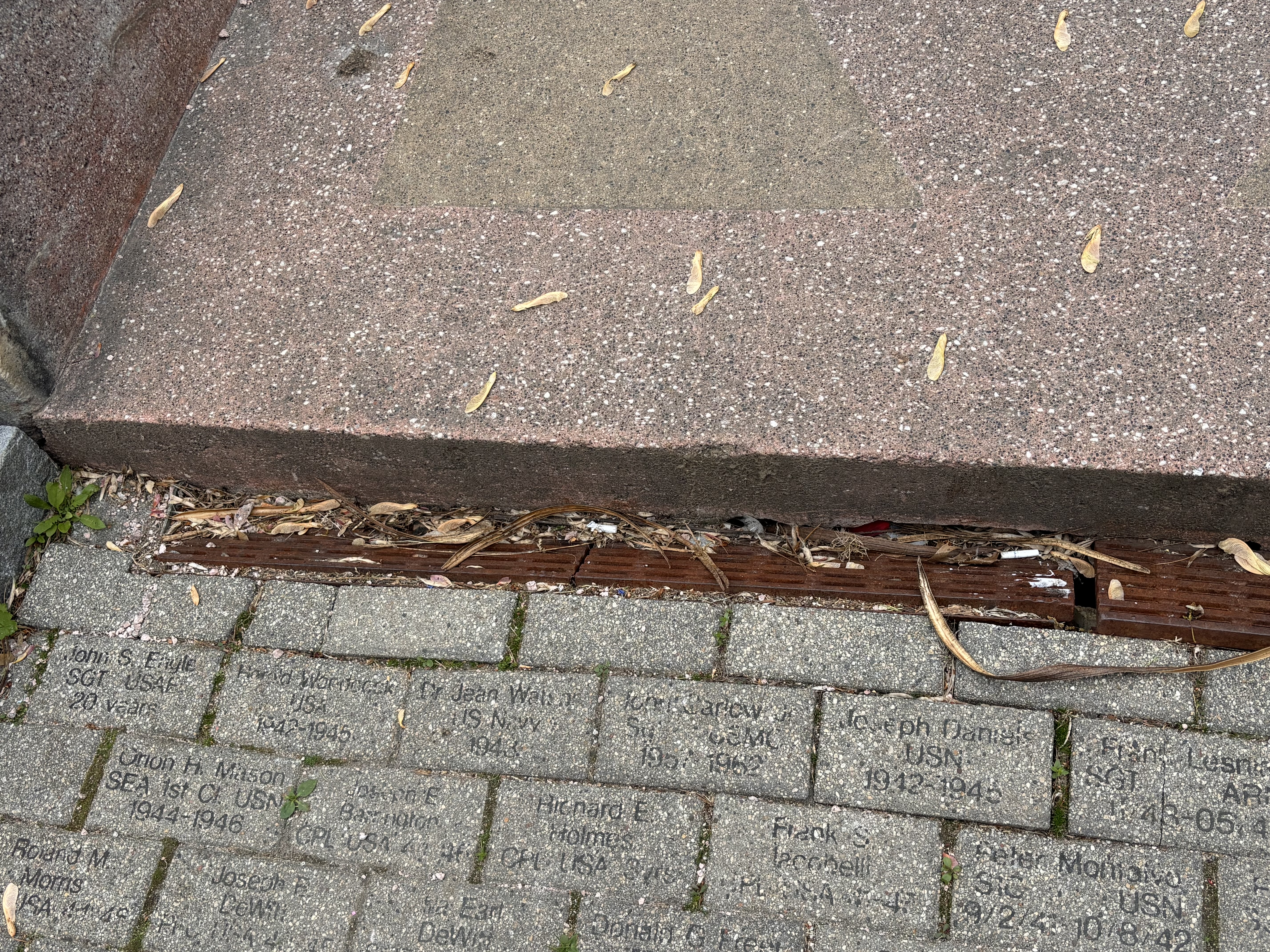
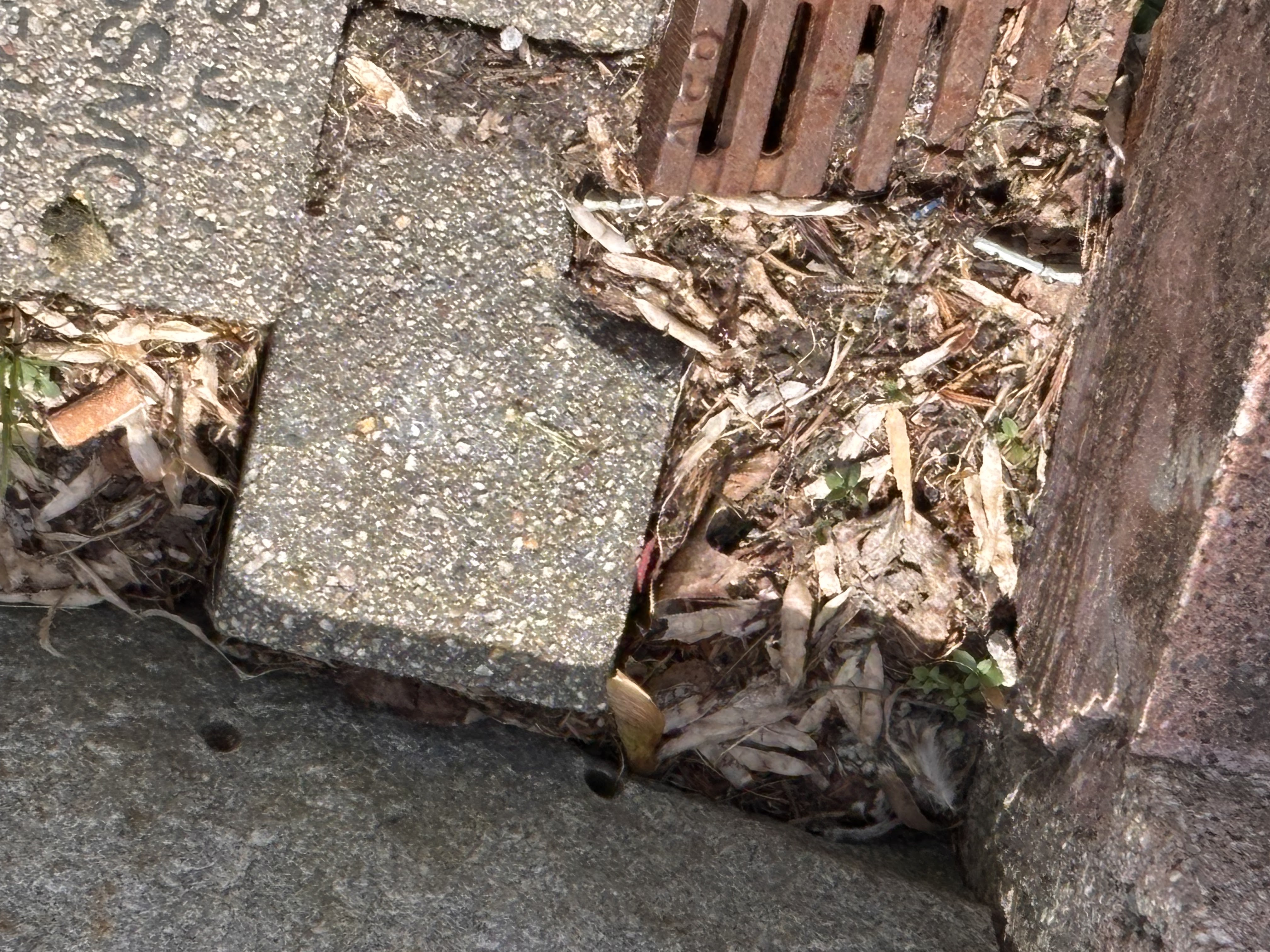
From: Lew Benton <l> Date: Wed, May 20, 2026 at 6:23 PM Subject: Congress Park Veterans Walk Condition To: BK Keramati <> CC: John Safford <>, JoAnne Kiernan <>, Tim Coll <>, Jessica Troisi <>, Matthew Veitch <>
Commissioner,
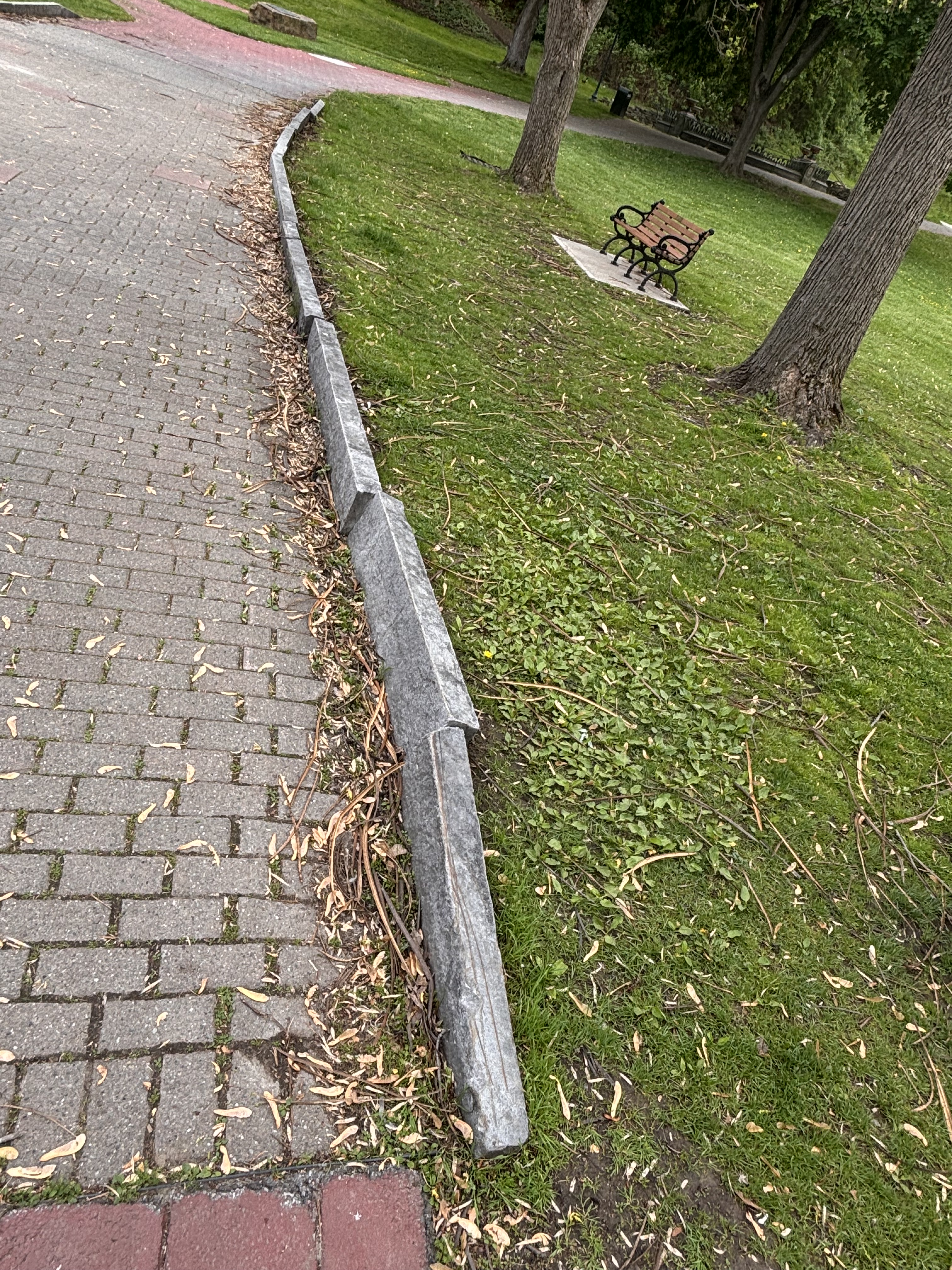
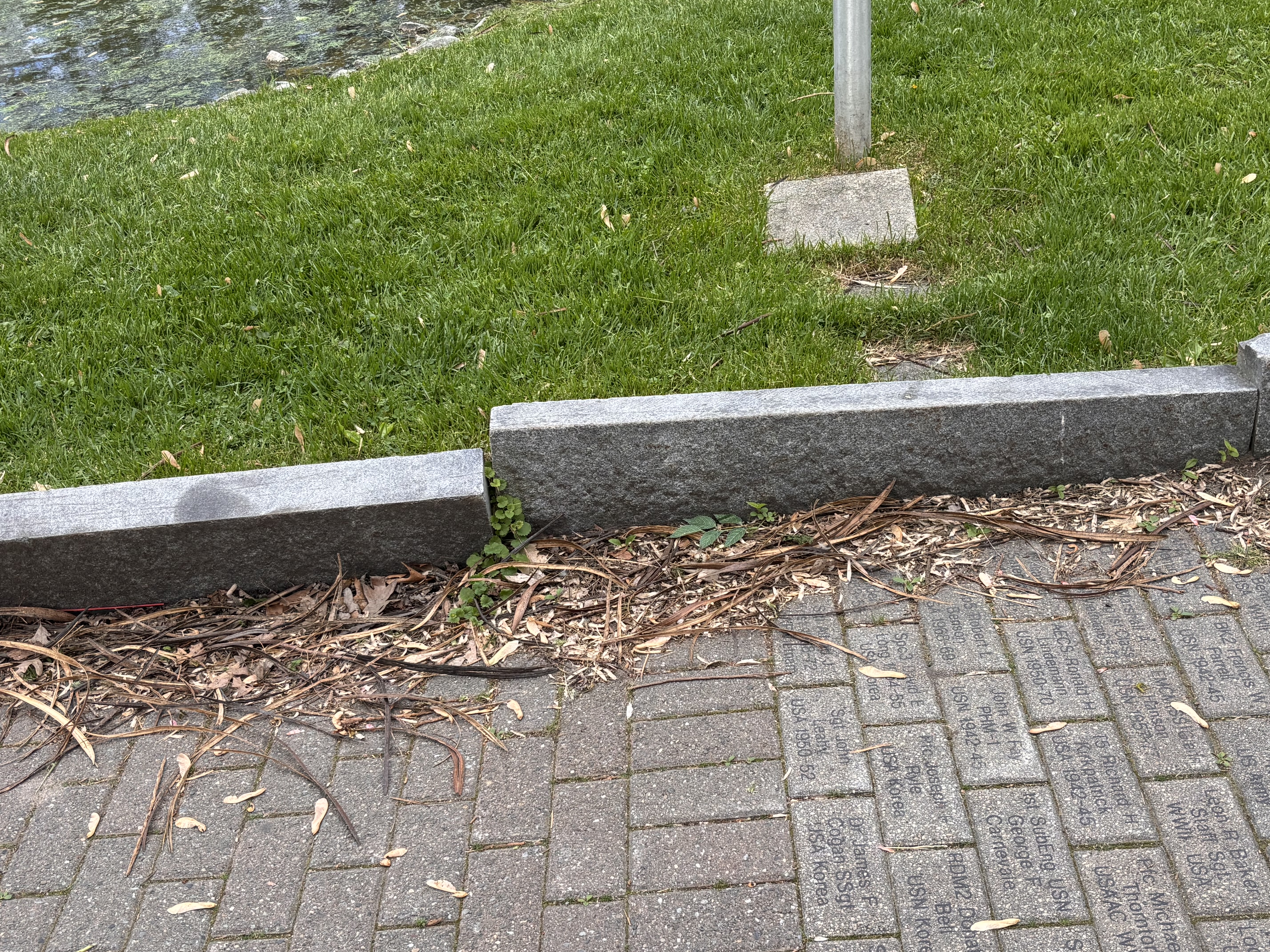
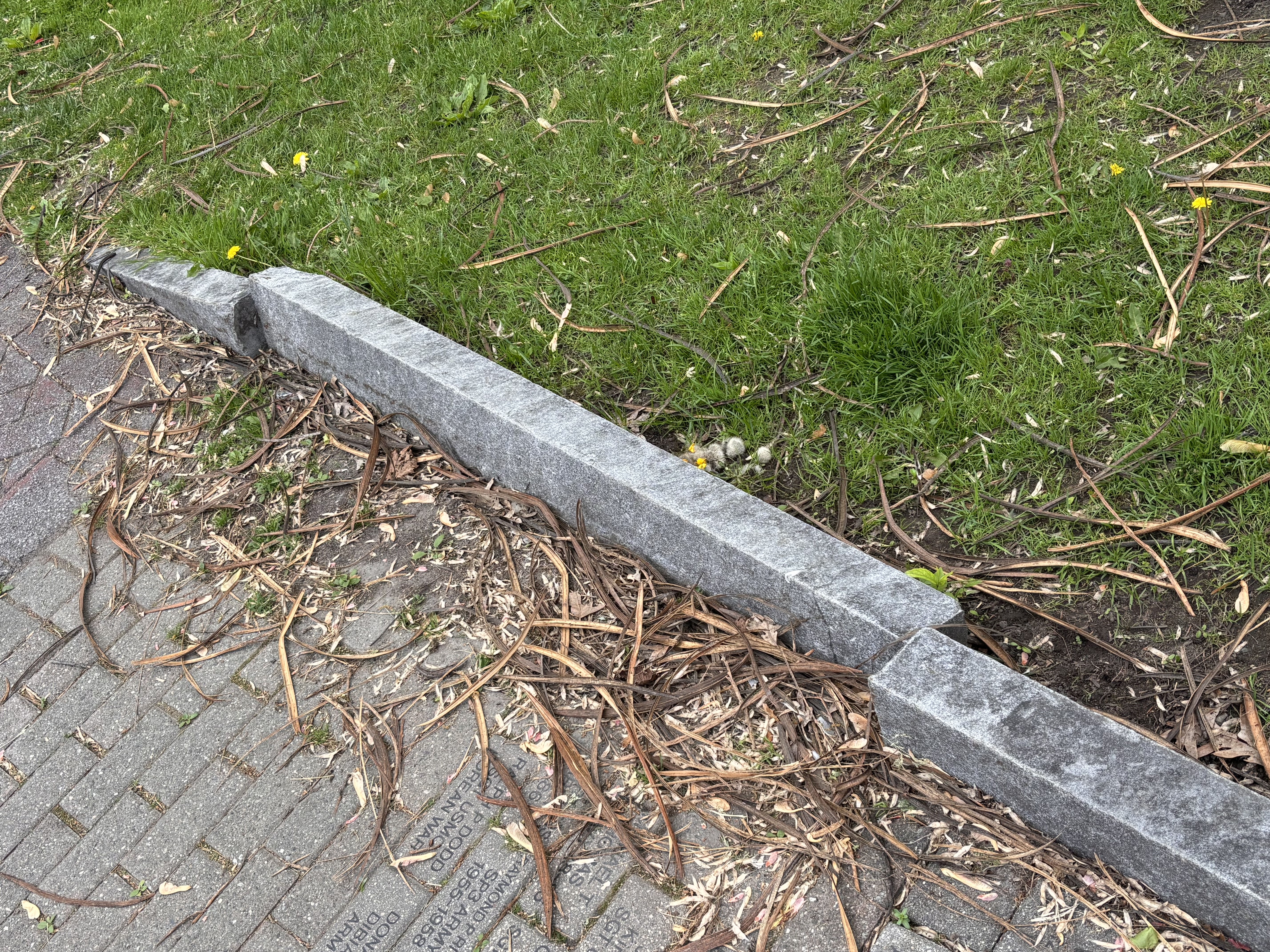
This year, as last and with Memorial Day around the corner, I ask PW to repoint the granite curbing flanking the Veterans Walk in Congress Park. Bricks should be power washed.
The attached photos taken today clearly show the Walk’s state of disrepair.
Last year I made the same suggestion to the then commissioner. Regrettably it was ignored. In the interim the Walk’s condition has further deteriorated.
Ultimately all bricks should be removed, thoroughly cleaned and relaid on an appropriate level base allowing good drainage. Engraved bricks no longer legible should be replaced.
I am confident that many who are named on the Walk, their families and others would gladly help underwrite the improvements.
Hundreds of the community members names and service dates are inscribed on the Walk. Some attest to the multi-generational service of Saratoga families and to those KIA.
Thank you for your attention to this matter.
Lew Benton
Lew’s Second Email
To:BK Keramati
From: Lew Benton
Commissioner,
Several days ago I sent via email photographs of the deteriorated condition of the Veterans Walk.
Perhaps you did not receive my note. So here again are some recent photos. I hope they will encourage PW to initiate the necessary improvements: i.e., granite curbing repointing, brick cleaning and leveling, replacement of worn bricks and those with illegible names.
I noted in my original email that the same request had been made last year prior to Memorial
Day but no action was taken. I trust you agree that the current condition is untenable and an affront to those whose service is memorialized there.
Thank you.
L. Benton
Lew’s Third Email
Commissioner (BK),
Thank you for your response to my recent emails detailing the deteriorating condition of the Veterans Walk in Congress Park.
I appreciate your comments regarding budget constraints. It’s a never-ending battle. And I am well aware that the current City budget, as those of the last three or four years, is likely to be in deficit. In fact, the Council should have been well aware that the 2026 budget advanced by Finance was seriously out of balance.
However, as I mentioned in my initial note, I see no reason why the repointing of the granite curbs lining the walk and removing, cleaning and relaying the bricks could not be done by force account or city labor. While labor intensive, I doubt that there would be any material costs.
I note that the 2026 Park and Casio Operating Budget includes $370.009 for labor, $15,000
for “Other Supplies,” $8,500 for “Landscaping” and $5,000 for “Professional Services.” Is there nothing to be found in these lines and other PW operating lines that could be transferred to the
Veterans Walk budget account?
And regrettably the Veterans Walk operating line has been zeroed out. That is all the more disturbing because the Walk’s current advanced stage of deterioration has been well known for some time.
In my nearly 40 years experience in local, county and state government and eight years on the City Council, I know even in the leanest of times there is $ to be found to address such needs. This is particularly true if the need is real, low cost, and the proposed improvement would remove, as in this case, a rather ugly blemish and a potential trip hazard. Of course not to finally act degrades the service of those whose names are inscribed in the Walk and mirrors the neglect of other Park amenities such as the Reservoir.
Finally, and as I mentioned in my initial email, I’m sure that private donations earmarked exclusively for Walk restoration would be made available if requested. And I am certain that some veterans and others would be willing to solicit same.
[JK: Mike Brandi, former chair and now vice-chair of the Saratoga Springs City Republican Committee, sent the press release below. After an investigation into a bizarre donation to Democrat/Working Families Party candidate Joe Seeman’s unsuccessful Assembly campaign, the New York State Board of Elections found that former Saratoga Springs Accounts Commissioner Dillon Moran used a gross sexual name when he entered a false name as a donor to Seeman’s campaign. Moran claimed that the donation was the result of a pernicious hack, but the Board determined that Moran was the source of the improper donation.]
For immediate release. From the desk of Mike Brandi.
New York State Board of Elections finds Dillon Moran was the source of the funds of illicit “Jack Meehoff” donation; No Evidence of Hacking.
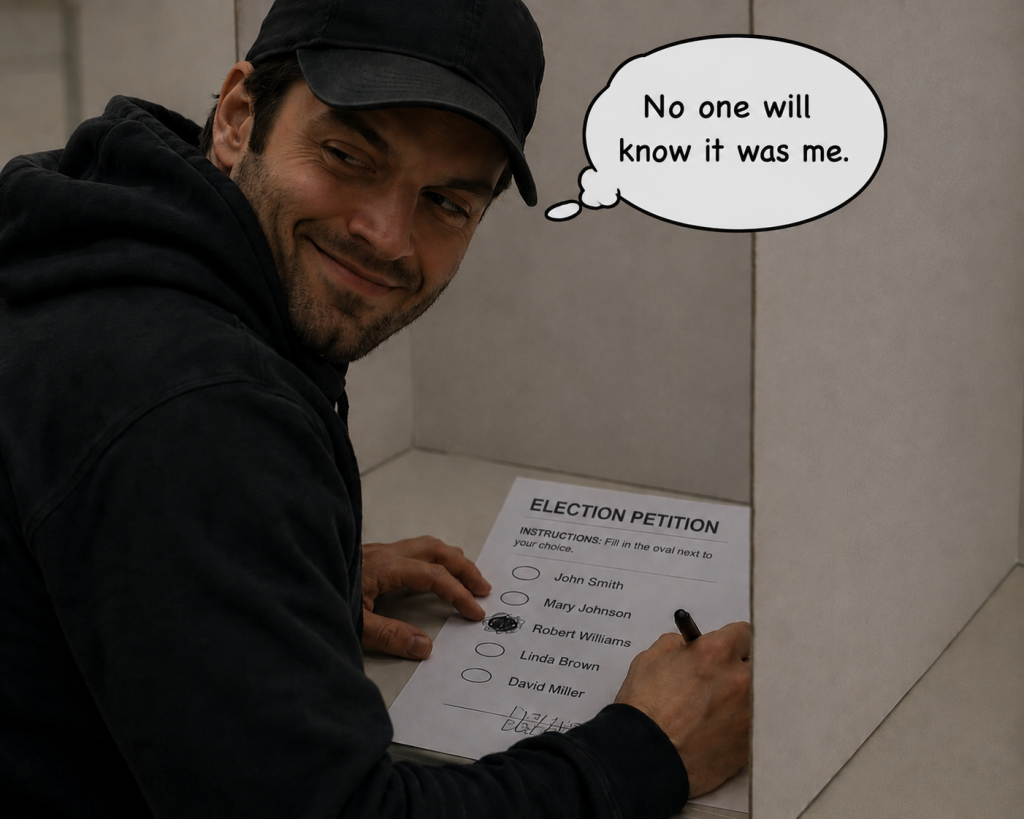
Records obtained through a Freedom of Information Law (FOIL) request to the New York State Board of Elections reveal that the failed Assembly campaign committee of Joe Seeman accepted an illegal campaign contribution submitted under a fictitious and lewd pseudonym tied to former Saratoga Springs Commissioner of Accounts Dillon Moran.
In its 27-day post-election filing, the Seeman campaign reported receiving a $100 contribution on October 31, 2024, from a contributor identified as “Jack Meehoff,” listing an address of 177 Lake Avenue and an employer of “City of Saratoga Springs.”
That address belongs to Dillon Moran.
Campaign finance records further show that Moran had previously donated $200 to the Seeman campaign under his real name using the same address.
Shortly thereafter, the New York State Board of Elections Enforcement Counsel contacted the Seeman campaign and advised that it had reported a contribution under a fictitious name. Enforcement Counsel instructed the campaign that it was required to disgorge the contribution by donating the funds either to the State or to a legitimate charitable organization.
On January 10, the Seeman campaign’s treasurer informed the Board of Elections that she had “done some sleuthing” and determined that the “Jack Meehoff” contribution had in fact come from Dillon Moran, who allegedly claimed that he had been “hacked.” The treasurer then asked whether the campaign could simply amend the filing to replace “Meehoff” with Moran and retain the contribution.
In response to the hacking allegation, Enforcement Counsel requested additional information in order to properly assess the matter.
Following an investigation, the Public Campaign Finance Board determined that the illicit contribution did in fact originate from Dillon Moran and that the contribution was submitted from a network associated with other contributions Moran made to political committees. The Board found no evidence that either Moran or the Seeman campaign had been victims of hacking.
New York Election Law prohibits political committees from accepting contributions made in any name other than the true name of the contributor.
The Board of Elections ordered the Seeman campaign to disgorge the $100 contribution within 30 days or face a $350 civil penalty. In the alternative, the campaign could have provided an affidavit from Moran admitting that he was the true source of the contribution. No such affidavit was ever provided.
On January 9, 2026, the Seeman campaign ultimately disgorged the unlawful contribution by donating $100 to charity.
The facts are clear: Dillon Moran made an official political contribution using a lewd pseudonym. Not only was this unlawful, but it was wildly inappropriate and unbecoming of a public official.
A healthy democracy requires elections conducted transparently and in accordance with the law. Moran’s cavalier treatment of campaign finance requirements demonstrates precisely why Saratoga Springs voters made the right decision in rejecting him in 2025.
When confronted, Moran resorted to the now-familiar “I was hacked” excuse — an explanation that collapsed under scrutiny after investigators concluded there was no evidence of hacking and determined that Moran himself was the source of the illegal contribution.






 11 REASONS TO SPEAK OUT AGAINST THE CHARTER CHANGES