Author: John Reardon

It’s Tea Time!

Hello  my Foodie Friends! 

April can still be a chilly month. Having a cup of tea can help those “chill to the bone” days. So, let’s have a hot cup of tea together. It is a well-known fact that I am a coffee drinker but I drink and love tea also. It is a comfort drink from my childhood. As a child, I was not allowed to have coffee, but tea with honey was a favorite. As I grew older, tea time became a special bonding moment that included advice from Mom. I can still visualize her putting the tea kettle on the stove and when the whistle blew, she gave you her full attention. Our time together included chatting, laughing and having a fun conversation while having a cup of hot tea. Looking back, I realize that this time was special and that tea time was my opportunity to have my mom’s company or my dad’s and talk to them.

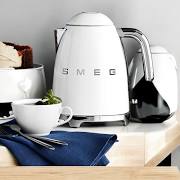
There are lots of ways to make tea but they always start with hot water. Options for boiling water can include beautiful electric tea kettles along with stove top tea kettles made of stainless steel and ones made of enamel over steel. Electric tea kettles are perfect if you are like me and are multi tasking in the kitchen and home all the time then forgetting about the water boiling.  Having an auto-shut off on an electric tea kettle is a good option for us!  

If you prefer to use a stove top tea kettle, stop by Compliments to the Chef to see our colorful assortment of LeCreuset tea kettles. LeCreuset tea kettles are crafted from fast-heating premium carbon steel and finished with a colorful enamel in a stylish palette of colors to complement any kitchen. Tea kettles are perfect for preparing French press coffee, oatmeal and much more in addition to tea. The LeCreuset tea kettles are made of durable carbon steel that heats water rapidly, and a fixed single-tone whistle alerts when the water has reached a rolling boil. The kettles make excellent gifts and are a beautiful way to add a touch of color to the kitchen.

There are many moments over tea we can connect through everyday conversations. Creating tea time can give us moments to pause, check in, and to enjoy each other’s company. Stop by Compliments to the Chef, your Neighborhood Kitchen and Cutlery Store located at 33 Railroad Place for those culinary tools to help you with your special moments with friends and family.  Remember my friends “Life Happens in the Kitchen”.

Take Care, John & Paula

Fishing for Compliments!

Hello  my  Foodie Friends!   

Here is another story I love to tell each start of the fishing season.  I have so many great memories of my father and his love of fishing. It did not matter if it was the ocean or a little creek in Vermont where he grew up.  He loved fishing and my brothers and I loved going with him.  My brothers were more successful than I was at this sport.  I think I talked too much back then as a child where I was kindly told to be quiet during our fishing adventures.

As I reminisce on the experience of fishing with my father, I realize that fishing was a way for him to relax and reconnect with his love for the outdoors. At that time, he worked 12 hours a day Monday through Saturday, which did not allow a lot of time to spend with his family. However, when he began getting one afternoon off during the week in the summer, I was excited when he chose to make that afternoon our special time to go fishing together. 

My father’s prep assignment for his three boys was to dig for worms and have the poles ready to go when he got home. I think that the digging for worms was my favorite part. 

As I got a little older, my favorite part about fishing with my father was the many hours talking about his childhood and my dreams for the future. We didn’t catch many fish, but my memories are a much greater treasure than any mess of fish.

The memories and experience of fishing was something I tried to transfer and share with my son and daughter. When my son John was younger, I would take him fishing as often as I could. It turned out that by age five, he was better at fishing then I was. He would say to me “Daddy, you talk too much and scare the fish away!”

To this day, I still give fishing my best, and consider it a successful day if I can get my son to spend six hours with me. We do share our love of eating fresh fish.  

One important tool that is handy when flipping and lifting fish from a pan is a fish spatula. The fish spatula is an elongated and thinner version of the common metal spatula, designed to easily slip under delicate fillets of fish. It also has long slots that allow any liquid (for example, when poaching) to drain away.  A fish spatula can be used for more than just flipping fish; it’s a versatile tool that can slide as easily under pancakes as it can hefty burgers. The slats in the blade allow any drippings, liquid, or grease to slip through, while the offset helps slide the blade over the edge of the pan and under whatever you want to turn. 

Take time with your family to try out the time-honored sport of fishing. Stop by Compliments to the Chef, your Neighborhood Kitchen and Cutlery store located at 33 Railroad Place. Pick up the gadgets that help you cook up your catches. Try fishing for compliments this spring.  Remember my Foodie Friends, “Life Happens in the Kitchen”. 

Take Care, John & Paula

Getting  the Scoop

Hello  my Foodie Friends!

      Among my “many talents” is the natural ability to tell a good story.  Many of my stories are from my parents, relatives and siblings and are based on gatherings of family events that have occurred over the years. Getting the scoop on family stories is something we do beginning in our childhood and continues through our years with our own children. Family stories are a collection of tales about people, places, and events related to your family and your ancestors. Every person has a story to tell.

The memorable stories of our lives and of others in our family take on special importance, even if everyone tells different versions of the same event. These tales are family heirlooms held close to the heart. They are a gift to each generation that preserves them by remembering them and passing them on to future generations, and will become some of the most valuable and exciting information you can document about your family history. By getting the scoop on your family stories, and learning more about the personalities and heritage of your ancestors, they become more than just names and dates. They become real people with real struggles and dreams and triumphs in their lives just like you.

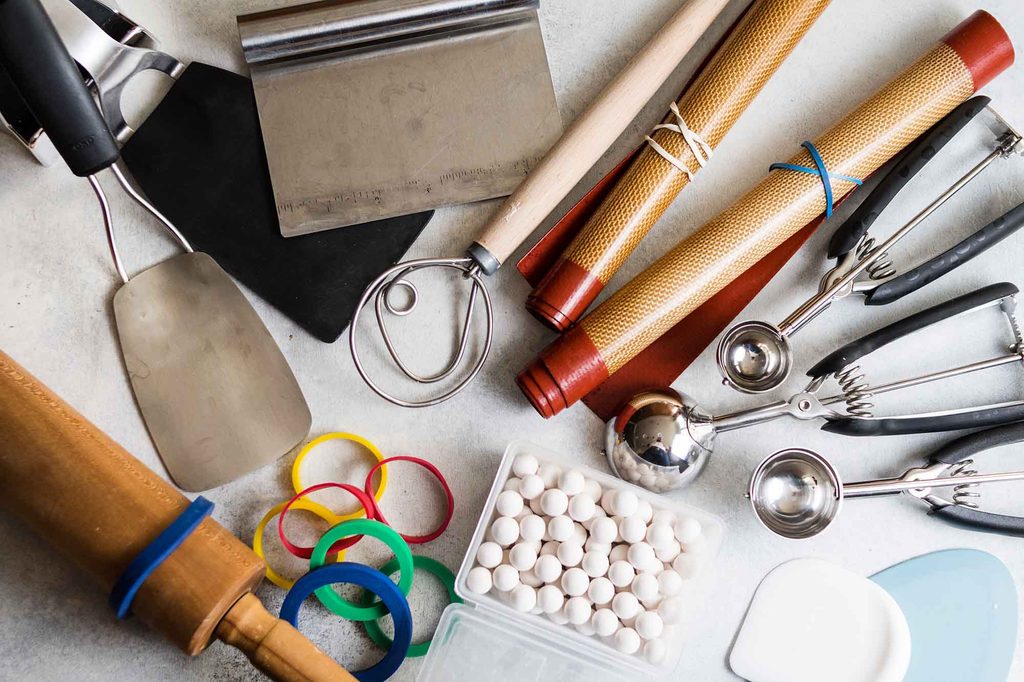
This week’s top cooking tool is the portion scoop.  This is one item that we love in the kitchen.  Portion scoops are standard-sized scoops used to measure out food, both cooked and uncooked. They look like ice cream scoops and have a spring release that scrapes your food/ice cream/cookie dough out of the scoop once it has been measured. 

Portion scoops are designed for kitchen professionals to standardize their products and to keep a handle on costs. These scoop sizes ensure that they get exactly the same number of servings (or balls of dough) per batch or per recipe without wasting any product – and that the customers always get the same amount of product for their money. And it is how they keep the cookies in a bakery display window looking so perfect, too.

There are so many innovative things to make with a scoop. Here are 10 things to make with a Scoop

1. Assemble sandwiches. Whether you’re making chicken salad sandwiches or ice cream sandwiches, a large scoop will give you just the right amount of filling. Smash it a little, and add the top of the sandwich. The same idea applies for homemade ravioli, enchiladas, stuffed zucchini or peppers, and pot stickers.

2. Form cookies. This works whether you’re making no bake cookies or ones that need to be cooked. All of the cookies will be perfect circles if they start out as nice balls, and since they’re all the same size, they’ll all be finished cooking at the same time.

3. Fill muffin tins. Whether you’re making muffins, cupcakes, or eggs in your muffin tin, a scoop will give you the same amount of batter in each cup. No one will fight over whose cupcake is bigger!

4. Make pancakes. It’s nice to not worry about the size of each pancake. If you use the same scoop for each pancake, the finished products will all be exactly the same size. Or, if you use a smaller scoop and a larger scoop, you can easily make a Mickey Mouse pancake.

5. Make easy truffles. Start with a simple chocolate ganache. I use 6-8 ounces of semi-sweet chocolate chips, 3 tablespoons of butter (cut into small cubes), and 1/2 cup of heavy cream. Mix that together and microwave in 30-second increments until you’re able to stir it into a smooth, creamy liquid. Then let it cool, just enough that it will hold its shape. Use a scoop to form balls of chocolate, and then roll them in powdered sugar, colored sugar, chopped nuts, sprinkles, cocoa powder, or whatever you want.

6. Brownie lollipops. This is a fun recipe where you start with a slightly cooled pan of brownies. They need to be warm enough to work with, but not so hot that they fall apart. Using a small scoop, form brownie balls (avoid the hard edges; eat those instead). Insert a stick into each one, and then dip it into melted chocolate. Finish the lollipops off with a sprinkle of powdered sugar, colored sugar, sprinkles, or other garnish.

7. Dessert balls. What little athlete wouldn’t like a baseball made from Rice Krispies? Or a soccer ball made from a brownie and decorated with frosting? Or even a basketball made from cantaloupe? Use a scoop to make the balls.

8. Meatballs. Honestly, Paula makes her meatballs by hand. However, when she has to make large amounts for a large gathering, she uses a scoop to form them into perfect balls. You can also use a scoop to form crab cakes (press the balls down a bit) and hamburgers (press them down a lot).

9. Form dumplings. When I was little, my mom made dumplings to go with stews. They’re basically balls of dough dropped into hot broth towards the end of cooking. 

10. Fill your decorator. I use my smallest scoop to fill my decorator with frosting for making cakes and egg yolks for filling deviled eggs. I use a larger scoop to fill my cookie press. I use a scoop because the spring makes the sticky stuff pop right out into the decorator or press easily, and I don’t have to dirty a bunch of spoons.

Below is a cookie recipe that I remember my mother making. I remember as a child, loading my pockets with these cookies and handing them off to my brothers and sisters while my mother and aunts were in the kitchen making tons of Italian cookies for a family event. Well, that’s another family story I have!! Stop by Compliments to the Chef, your Neighborhood Kitchen and Cutlery store located at 33 Railroad Place. We have a variety of scoop sizes to meet your culinary needs. During the times you are in the kitchen cooking and eating with your family, get the scoop and share family stories. Your family stories are guaranteed to become absolutely priceless possessions in your family for many generations to come. Remember my Foodie Friends; “Life Happens in the Kitchen”.

Take Care, John & Paula
Hop on Over for Popovers 


Hello my Foodie Friends!

Many of our foodies may be traveling to visit family or friends this weekend, or may be hosting a breakfast or dinner. Often times we are not sure what to bring or serve to add to the meal that is being made. One item that is always welcomed is popovers. With this month being still a bit chilly with lots of rain, April days can be a perfect time for popovers. If you have ever eaten them, you know what a warming joy they can bring. As you crack open the steaming golden and feather-light roll, and butter the interior and spread it with jam, a mouth-watering anticipation begins to build.

Popovers are best eaten straight from the oven, putting them in a category of food that is one of deliberate enjoyment. You must plan, gather everyone around the table and eat them up at once. It is the pure pleasure of eating. Popovers can be a deceptively simple item that will impress your guests and tickle their taste buds. Not only are popovers cost effective, they’re also a breeze to make as long as you follow a few simple rules: make sure the pan is hot before pouring in the batter, don’t fill the cups more than half full, and no opening the oven while they’re baking.

Having the correct pan is important to making airy popovers with golden domes. The secret is how the batter lies in the pan. Popover pans are used for making popovers. They are specially constructed to convey the heat directly to the batter, which needs to be added to a hot pan, similar to the way Yorkshire puddings are made. Popover pans are also made with tall, narrow cups, which create a distinctive shape. This creates steam that helps the popovers expand and become light and hollow on the inside. Then you can stuff them with things. A popover pan is deep with steep-sided wells.  This forces the batter upwards creating puffy domes and crispy sides. Investing in a real popover pan eventually starts to feel quite justifiable. These tins are really only useful for making popovers, but oh, what beautiful popovers they make! The trick is to make sure the pan is very hot before you add the butter and the batter.

At Compliments to the Chef, we carry popover pans from Nordic ware and USA Pan.  Both the Nordic Ware pan and USA pans are made in the U.S.A. These pans are designed to allow maximum airflow, so popovers reach their full height. 

This weekend, if you are not sure what to pop on over with to visit a friend or a family member, think about a creative popover to serve with the meal or ask them to hop on over for your popover treats. Come visit your Neighborhood Kitchen and Cutlery store located at 33 Railroad Place, where we have cool tools for cooks! Have fun with family and friends. Remember, “Life Happens in the Kitchen”.


Take Care,

John & Paula
A Spray of Oil 


Hello  my Foodie Friends!

It is officially springtime. Although the weather may still not be optimal, many of us are eager to get back to our outdoor cooking. Creating our favorite meat and vegetable dishes on our grills becomes an art of being the “grill master.”  Cooking outdoors can be a time to create wonderful and healthy dishes using your favorite olive oil or cooking oil.  Spraying oil on your vegetables, fish, and meat can be a method of adding flavor, sealing in moisture and adding nutrition to your product. 

As a child, I can recall the moment my father exclaimed to me, “The time has come for you to help me with the grilling.” Cooking outdoors was the only time my father contributed to the cooking job of the household.  He did consider himself the “subject matter expert” of cooking foods on his much-beloved outdoor grill.  

The use of oil was always the first step my father used to prep the grill grate.  One of the first outdoor cooking tasks my father empowered me with was the spraying of the grill.  He handed me what looked like a spray bottle that was filled with olive oil to lightly spray on the rack to help prevent the product from sticking.  

As you know from my previous writings, I am the eldest of three boys (who always found some type of mischievous actions to encounter). With clear direction, my father patiently showed me how to lightly apply the oil to the heated grill grates.  With confidence that I would perform the job well, he left me to go inside to get the vegetables and beef that we would be adding to the grill.  As my father handed me the sprayer, I assured him that I was “the man for the job.” I did begin with good intentions as I began to repeat the exact motions my father displayed with the spraying of the oil.  What I soon realized was that the spray bottle was a lot of fun. Doing some unique dancing, I creatively continued to apply the oil with swinging motions spraying in various directions with pizzazz.  As I was enjoying myself, my two other brothers looked on with curiosity and envy.   They both soon approached me, spurring the temptation that was too great to avoid spraying them.  Before I realized what had overtaken me, the spray bottle in my hand had fully saturated both of my brothers with oil in their hair and clothes.  My father soon returned, taking the spray bottle out of my hands in a split second that flashed before my eyes.  At this point – I think you can guess where I spent the remainder of my day.   

The use of oil misters and spray bottles is a small item that can be used to spray or atomize oil to add flavor, control, fat, and eliminate the environmentally unfriendly factors of aerosol sprays.  An oil mister and sprayer are refillable, adding a stylish gadget to your kitchen and can come in a pump mister or a spray bottle design.  Both will give you a fine mist that can be sprayed across your product while it is cooking.  

One of the designs we carry is the EVO oil spray bottle. It is an award-winning non-aerosol sprayer designed by Michael Graves Design Group that provides a comfortable ergonomic trigger making it easy to use.  The spray head creates a fan-shaped mist that allows you to evenly coat the surface of pans, food, or your grill. Sprayers and misters allow you to buy your favorite cooking oils in bulk to refill your sprayer.  This is an excellent way of controlling flavor, calorie content, and managing your nutrition.  

Stop by Compliments to the Chef, your Neighborhood Kitchen and Cutlery store located at 33 Railroad Place, to pick up the EVO oil sprayer we have available.  Have fun cooking the fabulous vegetables that are being sold in the markets nearby.  This is a great time of the year to be outdoors and to have fun cooking.  Remember my Foodie Friends; “Life Happens in the Kitchen” or outdoors on your favorite grill.  Have FUN (and let the children help even if they seem to get a bit creative with the gadgets)!!


Take Care,

John & Paula

Whose Turn is it to Wash the Dishes?

Hello my Foodie Friends!  

Each week we write about the fun of creating and cooking fabulous dishes.  However, with making these dishes comes the mess and dreaded task of cleaning up which becomes someone’s responsibility. Many conflicts occur within a household on whose turn it is to wash the dishes. I remember in my childhood years fighting with my four other siblings on who would be assigned the chore of doing the dishes. Having grown up in an Italian household with five children, my mother ran a tight ship and made sure all of us were assigned cleaning duties. Fighting over who was going to wash the dishes was a common occurrence even after my mother made it clear whose job it was that evening. When we shared and helped each other in our household chores, we then had plenty of time to go and do what we wanted afterwards. 

Through the years we learned that washing the dishes did not take that long when each of us helped out. As we completed the tasks of doing chores together and playing together, we became good friends; a friendship that still holds today. 

“You know you’re an adult when you get excited when there is a new sponge in the sink”. Author Unknown. To this day, believe it or not, I enjoy washing dishes. I love bringing home new types of items to help me with this chore. One of our favorite items we carry is the Jetz-Scrubz cleaning sponge. This sponge will not scratch even the finest surfaces. They can last for several months and can be cleaned in the top tray of your dishwasher. The sponge has a foam side that holds suds longer and has a scratch-free scrubber side for pots and pans. Jetz-Scrubz is also made in the USA. 

So, whose ever job it is to wash the dishes, try out this really cool sponge!  Come visit Compliments to the Chef, your Neighborhood Kitchen and Cutlery Store located on 33 Railroad Place in Saratoga where we have Tools for Cooks! Have fun cooking and cleaning up.  Remember my Foodie Friends, “Life Happens in the Kitchen”. 

Bring on the Corned Beef and Cabbage

Hello my Foodie Friends!   

The upcoming week includes a very fun holiday; it is St. Patrick’s Day. My mother, who was Italian, used to say “Everyone is Irish on St. Patty’s day”.  My father, who was Irish, always agreed because if he didn’t, he ran the risk of not getting her delicious Corned Beef and Cabbage. So, here is to all of our “Irish” lads and lassies.

Preparing Corned Beef and Cabbage does require some essential tools. As you look for tools to use to make your Corned Beef and Cabbage; you may need a Dutch oven or a stock pot, and a good chef (cook’s knife). The chef’s knife (sometimes called a cook’s knife) is the most important knife to have in your kitchen and within your knife collection. A chef’s knife is the go-to tool for more than 90 percent of daily kitchen tasks including most slicing and dicing of fruits, vegetables, meats, and fish. And while a chef’s knife may be the “king of the kitchen,” it should not be used to butcher or carve poultry, to remove the skin of large vegetables such as butternut squash, or, as some people have tried, to puncture a hole in cans. The broadness of a chef’s knife blade makes it unwieldy for tasks better suited to a smaller knife.

Many of our customers ask me what is the best brand knife to have. Choosing a chef’s knife “is like choosing a dance partner.” A knife that feels comfortable and graceful in your hand might feel klutzy to someone else. When you start shopping for that perfect chef’s knife—one that will make slicing, dicing, chopping, and mincing more pleasurable, precise, and effortless—it’s important to identify your personal preferences, and to realize that there isn’t one knife that’s right for everyone. Finding your ideal knife might take a little time, but you’ll know it when you’ve found it. Once you’ve got a knife in your hand you should immediately get a sense of its fit. It should feel comfortable, like a natural extension of your hand. It should inspire confidence, not instill fear. If it feels wrong, move on. If it feels pretty good; start chopping (or mock chopping), noting how you respond to the knife’s physical characteristics.

Weight: You’ll need to try several knives to find your ideal knife weight. One school of thought believes a hefty chef’s knife cuts through foods easier because it “falls” with more force. Another thinks a lighter chef’s knife flows more freely and lets you maneuver the knife more skillfully. Bottom line: Choose the style that feels right to you.

Balance: “Perfect balance” is in the palm of the beholder. Judge balance by gripping the knife by its handle. If it feels uncomfortably weighted toward the back of the handle or toward the blade, then it probably isn’t for you. An unbalanced knife will make you work harder. Side-to-side balance is also important. When you come down on the blade, the knife shouldn’t feel unstable, as if it wants to teeter toward one side or the other.

Size: An 8-inch chef’s knife is the most popular among home cooks because of its versatility. A 10-incher’s longer blade can cut more volume but may feel intimidating. A 6-inch chef’s knife can offer an element of agility, like that of a paring knife, but falls short when working with volume or when slicing through something large, like a watermelon.

As you prepare for your St. Patrick’s Day celebration events; Stop by Compliments to the Chef, your Neighborhood Kitchen and Cutlery store located at 33 Railroad Place and let us help you choose the best knife for you. We carry some of the best knives made in the world. As you celebrate, be sure to compliment the chef and the host. Remember my Foodie Friends “Life Happens in the Kitchen!”. 

Take Care, 

John & Paula
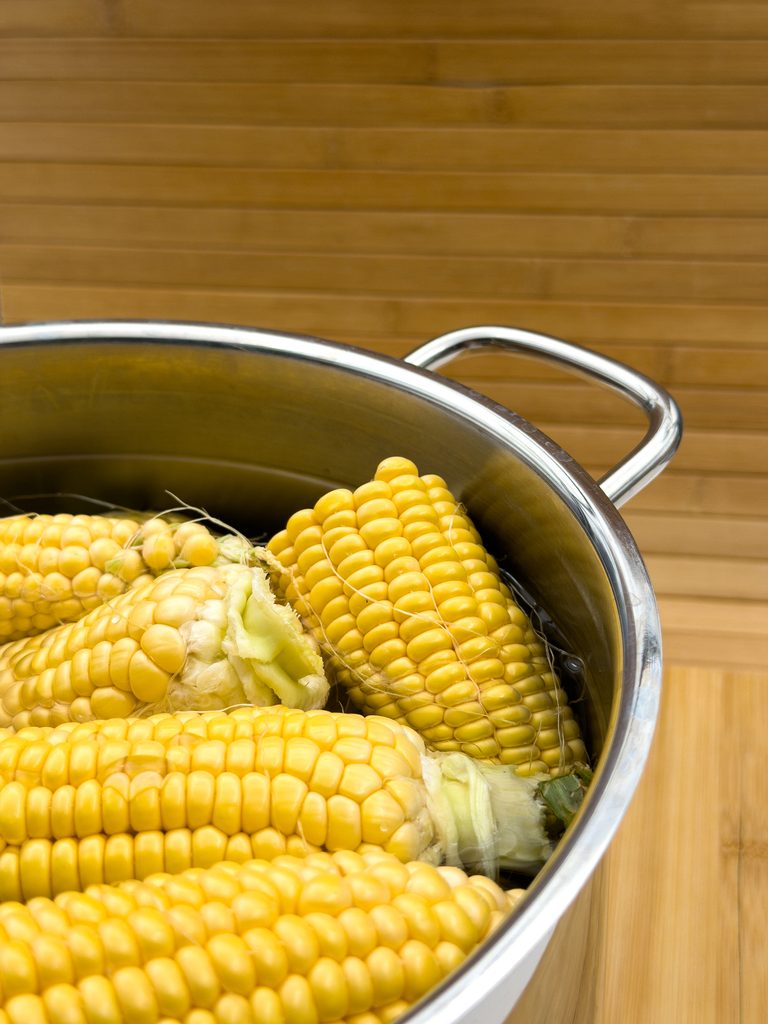


Here is a classic St. Patrick’s Day Recipe: Corned Beef and Cabbage

Ingredients

Instructions

Best Spuds

Hello my Foodie Friends!   

Oftentimes when I am asked what I want for dinner, I respond “what ever you make, I want potatoes with it”.  Growing up with an Irish father, we often had potatoes as a staple to each meal. However, my father did not like it when I played with my food, and I enjoyed playing with my mashed potatoes. I loved melting butter in my potatoes and then taking the gravy and making a mashed potato and gravy volcano or mashed potato snowmen. 

As I was restocking kitchen gadget supplies in our store, I had to smile recalling my childhood antics and the feel of my father glaring at me during my kitchen table play time. Part of my play time did also include going through my mother’s gadget drawer and trying to figure out what everything did. Many of us have a kitchen full of gadgets. Some we use daily, and some are hiding in our cupboards because we have no idea how to use them. Sometimes it’s good to take a good long look at the gadgets you own and determine what’s really useful and what is just taking up space.

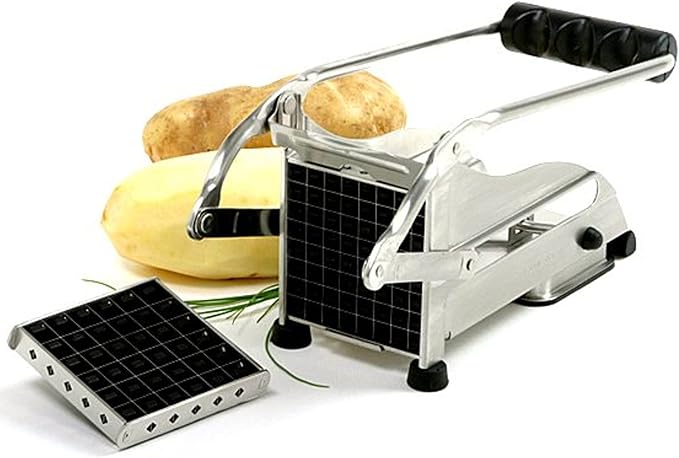
Whether you’re a proud avid cook or just starting your cooking endeavors, learning about different kitchen tools can be helpful. Some devices might seem like they only have one use. However, this certainly isn’t the case for potato ricers. I can clearly recall my mother using the potato ricer as she made various recipes with potatoes. This was one of her much-used gadgets. If you’ve never seen a potato ricer, it is built like an oversized garlic press. It has two handles you squeeze together, pressing the food and pushing it through the basket’s holes. Many potato ricer discs can be switched out to have different-sized slots, which makes it a versatile kitchen utensil.

My mother would often attest that the only way she would make mashed potatoes was using a ricer. The reason is that mashed potatoes made with a ricer helps to prevent over mashing that may make your mashed potatoes gluey. The ricer is gentle on potatoes and provides an even mash that gives them a nice texture. 

To achieve clump-free mashed potatoes, most experts recommend using a ricer. A ric-er is made up of the hopper, where you place the potato, and the plunger, which you press down to force the potato out. Forcing the cooked mealy potato through the ricer’s small holes creates rice-sized pieces of potato (hence the name) and the air that is in-corporated while pressing contributes to the light fluffiness.

We love cool tools for cooks. Stop by Compliments to the Chef, your Neighborhood Kitchen and Cutlery store located at 33 Railroad Place for the tools that make life a bit easier and can help you make your best spuds. Remember my Foodie Friends; “Life Happens in the Kitchen”. 

Take Care, 

John & Paula
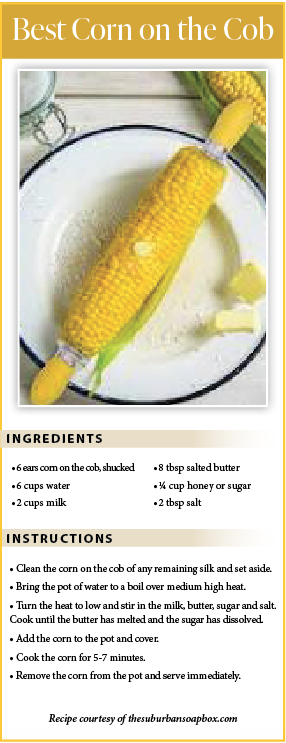
Snow Fort Army Chow

Hello my Foodie Friends!   

It has been a long winter this year with plenty of snow and colder days. We are in that time of year where we plan for meals that warm us up during the chilly days and plan for the upcoming snow days. As I glance at the large amount of snow in my yard, I reflect on many winter days that include my fondest childhood memories playing in the snow. Each winter, I enjoy sharing this story with you. 

I grew up during a time when the average household included at least four children and you were literally thrown outdoors to play and told not to come back home until the street lights came on. Playing in the snow included making homemade sleds to slide down the golf course hills, making snowmen, and of course, building the best snow fort in the neighborhood.  In our house we divided up the tasks to ensure that our “fort” could withstand repeated attacks of snowball-wielding elementary school kids. In the creation of our snow fort, my brother Danny was the engineer and he mapped out how high and thick the walls should be. My youngest brother Billy was the builder and shaped the inside of the fort for the chairs, refrigerator and snow TV. The baby of our family, Patty, was the support staff.  Since I was the oldest of the Reardon children’s clan, I was the recruiter and went door to door finding my soldiers and builders. We were not allowed to use the phone back then (adults only), so when I came to the door and knocked you could hear a stampede of children in the house trying to get to the door. To get them to work on the fort I would tell them that my mother was making meatball sandwiches!  My mother’s meatballs were the envy of the neighborhood and far exceeded the bologna and spam the other kids were getting. My first stops were Dave and Karl’s houses, and they lived next door to each other.  They were my age but were already almost as tall as most of our fathers at the age of six. Dave turned out to be 6’8” and Karl is 6’6”. If you want your walls to be the highest, I thought, get the tallest kids.  My mother would grimace when she saw them coming as she knew she would need a lot more meatballs. Our first forts were wrecked at night by teenagers until my brother Dan came up with the idea of putting water on the outside walls and it would turn them into ice.  You could hear the howls of the mean teenagers when they kicked the walls, and they didn’t give so easily.  

To this day, when I talk with some of my childhood friends, they join me in reminiscing about the fun snow forts, and the reward of my mother’s meatball sandwiches. To this day, her meatballs remain unparalleled. However, Paula’s meatballs are on target with them especially since my mother did share her “secret” method with Paula. 

At Compliments to the Chef, your Neighborhood Kitchen and Cutlery store located at 33 Railroad Place, we carry skillets to make your meatballs in, saucepans to make your sauce, baking sheets to pop your meatball sandwiches into the oven with, and other really “Cool Tools for Cooks”. Meatball sandwiches are a great way to deal with these frosty winter days.  The neighborhood kids will love you! Remember my Foodie Friends; “Life Happens in the Kitchen”.

Take Care, 

John & Paula


Meatball Subs

Ingredients:

·4(6-inch-long) sub, hero or hoagie rolls, split lengthwise but still attached on one side

·1-egg

·Kosher salt and black pepper

·2 garlic cloves, peeled

·Extra-virgin olive oil, for greasing

·1 pound ground beef (at least 15 percent fat)

·½ cup finely grated Parmesan, plus more for serving

·2 tablespoons chopped basil leaves, plus more for serving

·2 cups marinara sauce (homemade or from a 24-ounce jar)

·4 slices mozzarella or provolone


INSTRUCTIONS

Step 1

Heat the broiler to high with a rack no more than 6 inches from the heat source. (See Tip if you don’t have a broiler.) Using a fork, scrape out some of the interior of the rolls until you get about 1 cup bread crumbs. Add them to a large bowl along with ½ cup water, the egg, 1 teaspoon salt and several grinds of pepper. Finely grate 1 garlic clove into the mixture, then stir to combine. Let sit for 5 minutes.

Step 2

Lightly grease a large (12-inch), oven-proof skillet with olive oil. To the bread crumbs, add the beef, Parmesan and chopped basil. Stir with your hands until combined, avoiding over mixing. Roll into 12 balls (about 2 heaping tablespoons/2 ounces each) and place them in the prepared skillet as you go. Broil the meatballs until browned and nearly cooked through, 5 to 7 minutes.

Step 3

Move the skillet to the stovetop. Add the marinara sauce, stir to coat the meatballs, and warm over medium-low heat while you toast the rolls: Place the rolls on a baking sheet, cut-side up, and broil until lightly golden, 1 to 2 minutes. Rub the cut sides of the roll with the second garlic clove.

Step 4

Divide the meatballs and sauce among the rolls, then top with mozzarella. Broil until the mozzarella is melted and browned in spots, 1 to 2 minutes. Top with more grated Parmesan, basil leaves and black pepper.

Tip

If you don’t have a broiler, you can make this recipe using a 450-degree oven. The meatballs will take about 15 minutes to cook through (or you can sear them on the stove), and the bread-toasting and cheese-melting will take 2 to 4 minutes each.

Recipe courtesy of Ali Slagle at nytimes.com

 “Coffee is my Good Morning”


Hello my Foodie Friends!   

For many of us, our daily routine can include that morning coffee or tea. Making your coffee is a routine, a way to start your morning. Over the years, I have fallen more in love with coffee. Having a great tasting cup of coffee in the morning is an important start to my day.  Many of us need that cup of coffee in the morning to get us going. There are few things that a coffee fan loves more than waking up to a great cup of Joe. Wake up coffee offers the kick you need to get your day started. Waking up to a good cup of coffee is an American tradition! Just saying the word coffee will make you recall those wonderful aromas that have surrounded our kitchens, local coffee houses and convenience stores forever. Even if you don’t like the taste of coffee, you probably still like the smell of it.

There are many ways to make coffee. Our cups of coffee are very important to us since we start with that “necessary cup”. If you like coffee, you will find that you have many choices that include coffee or espresso or even the delicious variations of each. 

Use of coffee maker, French Press and espresso machines: 

Drip Coffee Maker

Drip coffee makers are very popular, as they are found in so many homes and offices today. Drip coffee makers provide a simple way of making coffee, whether you take it black or with cream. They might not produce specialty coffees or rich espressos, but sometimes all you want is a basic brew. Drip coffee makers are essentially automatic pour-over machines, and with pour-over coffee experiencing a resurgence, now might be the perfect time to try a drip coffee maker. This style of coffee maker usually brews a large carafe of coffee, which is ideal when you have several coffee drinkers in your household. 

French Press

People who use a press know and act like it is their own secret. You can see it in the smile they have when they talk about it as they are purchasing one for a friend.  You can also see it in their frowns when they need one because the old one is lost due to a move, or they are visiting here for an extended vacation and need one now.  My customers have many different passions for their favorite products, but French Press people are knowledgeable loyals. While the drip method may be known for being easy and convenient, using a French press isn’t exactly difficult. Pour coarse ground coffee into the bottom of the carafe, followed by nearly boiling water. Boil your water and then let it cool slightly before pouring it over the grounds to get the perfect temperature. After allowing it to sit and steep for a few minutes (four to five minutes is best), slowly press the plunger down so the water and grounds can separate. What’s left is pure happiness.

Espresso

Espresso is a type of coffee that includes the method of brewing coffee that uses high water pressure and finely ground beans to make a small, concentrated shot. While darkly roasted beans have historically been more popular in Italy, where espresso was invented, any kind of coffee bean from any origin and at any roast level can be used to make espresso. One of espresso’s defining characteristics, aside from its concentrated flavor and more syrupy body, is a top layer of foam known as the crema, which is a by-product of the high-pressure extraction process. Espresso can be combined with milk (or additional water) to make other espresso-based drinks, such as macchiato, cappuccino, latte, americano, and more.-

At Compliments to the Chef, your Neighborhood Kitchen and Cutlery Store located at 33 Railroad Place, we carry espresso machines and offer top end super automatic machines, various models of drip coffee makers and French presses. Our assortment includes incredible espresso and coffee machines by Breville and Capresso,  and the amazing JURA coffee machines that are associated with the best coffee quality, simple operation and stunning design. We also carry pour over accessories if you choose that option. Remember my Foodie Friends, “Life Happens in the Kitchen”. 

Take Care, John & Paula