Let’s talk about desserts, a confectionery course that completes your meal or maybe more than that, brings joy to everyone’s face after a delicious bite. There is no denying the fact that desserts bring us some level of happiness. My father-in-law’s favorite part of the meal was the dessert. Although he would always finish everything on his dinner plate, he would have room for the anticipated dessert that was to come. I have to admit, that I have a bit of a sweet tooth as well.
Among the plethora of baking items that our customers have been coming into the store for; the cooking torch has become a must-have kitchen accessory for any gourmet home chef. The cooking torch lets you achieve that crunchy, caramelized layer of sugar on top of your custard. The cooking torch is not limited to just crème brûleé, though. You can use it for bread puddings, baked Alaska, and even for melting cheese on top of soup. Here are some other ways to use your cooking torch: Although we love adorning fiber- and protein-packed oatmeal with fun and healthy toppings, some mornings need a little more than a drizzle of honey. Torching your toppings is the perfect way to give your oats an exciting new makeover. Not to mention, it’ll totally wake you up. Top your bowl with fat-blasting unsweetened cocoa powder and cinnamon, and torch away to lend the spices some smokiness. For those with a sweet tooth, make a simple bananas foster oatmeal by mixing a few drops of vanilla extract into the oats and then garnishing with sliced bananas, cinnamon, and honey. Then, allow the torch to caramelize the toppings. Whether you’re layering slices on sourdough or sprinkling the good stuff on a bowl of homemade French onion soup, perfectly melted cheese can be achieved in minutes with a kitchen torch. For meat that’s best served a little undone—like lamb, prime rib, and roast beef—lightly char the surface with your torch before popping the protein in the oven. This method also works well with fish. Just scald the skin on your salmon fillet for that extra bite. And for a crowd-pleasing appetizer, wrap grilled asparagus in turkey bacon and set it aflame to up the flavor factor and impress your guests before dinner is even served.
Stop by Compliments to the Chef, your Neighborhood Kitchen and Cutlery store located at 33 Railroad Place, to get the tools you need to make delicious desserts and when you are asked to “carry the torch”. Remember my Foodie Friends; “Life Happens in the Kitchen”.
Clarification Regarding “The Organic Divide”In our September 25 article, The Organic Divide: Commercial USDA Organic vs. Farmers Market Organic, we used the term “Farmers Market Organic” to describe the growing practices of some small, local farms. We want to clarify that “Farmers Market Organic” is not a USDA designation or a separate organic certification category.
The term “organic” is federally regulated through the USDA National Organic Program, and farms that represent their products as organic are subject to federal certification requirements, with limited exemptions for certain small operations.
Our intent was to highlight the value of knowing where your food comes from and the opportunity farmers’ markets provide shoppers to talk directly with farmers about how their food is grown. Some small farms may follow the same growing practices required under organic standards but choose not to pursue USDA certification; therefore, those practices have not gone through the same certification and oversight process.
Growing practices vary from farm to farm, and we always encourage shoppers to ask questions and learn more from the farmers themselves.
We appreciate the opportunity to clarify the distinction between USDA organic certification and individual farming practices.
Working at the farmers’ market may seem like the perfect opportunity to enjoy all the delicious food it has to offer. In reality, I’m usually working, and when I do get a chance to grab something, I’m pretty predictable. Give me an açaí bowl from Thorn + Roots, and I’m happy.
My 12-year-old daughter, on the other hand, takes a very different approach to market food. She is what I would call a farmers’ market food connoisseur. She has eaten her way through an impressive number of prepared food vendors and, unlike her mother, is always willing to try something different.
So, when it came time to write about all the delicious prepared foods at the Saratoga Farmers’ Market, I decided to consult the real expert.
I asked her a simple question: If someone came to the farmers’ market hungry, what would you tell them to eat?
“Well, it depends on what kind of day it is!”
Fair enough.
If it’s a cold day and you’re very hungry, she recommends heading to Euro Delicacies for something hearty like stuffed peppers or lasagna. Or, stop at Daily Fresh for a hot combo plate with mutter paneer or one of their flavorful curries with rice. According to my expert, a samosa is a must.
If you’re looking for something delicious but quick and casual, she has options for that, too: a ham and cheese croissant from Bakery Suzanne, a chai snickerdoodle from Night Work Bread, or empanadas from Yaggo’s Munchie Machine.
And if it’s the kind of market day that calls for something cold and refreshing? A smoothie from Jenny Jo’s is on the list.
At this point in our interview, I realized that I’ve been approaching market food all wrong. While I’ve been faithfully returning to my beloved açaí bowl, my daughter has developed an entire eating strategy based on weather, hunger level, and mood.
And she still has plenty more recommendations.
Even after all that market eating, she still has things on her list to try, including a gochujang sausage roll from Saratoga Sausagesmith and a mango lassi from Daily Fresh.
So, what does our resident food connoisseur have to say to anyone who has never come to the market hungry?
“You’re missing out! There’s everything from BBQ chicken to loaded nachos!”
I think I’ll take her word for it, and maybe, just maybe, venture beyond my açaí bowl next week.
The Saratoga Farmers’ Market is open Wednesdays, 3–6 PM, and Saturdays, 9 AM–1 PM, at High Rock Park in downtown Saratoga, and Mondays, 2–5 PM in Clifton Park. Visit www.saratogafarmersmarket.org to sign up for the weekly newsletter and follow the market on Facebook and Instagram.
Making someone special their favorite meal can be one of the nicest gifts to give someone. Gifting a meal takes the experience – both for you and the recipient – to the next level. What better way to acknowledge exciting news than with a gourmet dinner experience? Gifting a meal is a unique way to show your appreciation, whether it’s for a special occasion, new baby, birthday, sympathy, or just because you want to show someone you care – making a special meal can be an invaluable gift that the recipient will surely love. Food is wonderful because it is involved in nearly every part of our lives. We celebrate by eating; we welcome people into our lives by eating and inviting them to share a meal with us. We begin new relationships often over meals and drinks. People display their love and care for others by giving them the best they have of their food and inviting you to participate.
In preparing that special meal, there may be some cool culinary tools you need to help.
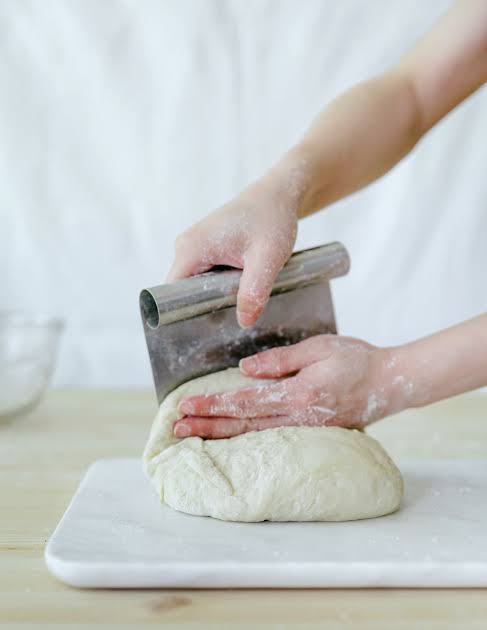
One tool that has become a “must have” in the kitchen drawer is the bench scraper. A bench scraper, which is also called a pastry scraper or dough scraper, is also used in working with pastry, bread, and other doughs. But even if you don’t bake regularly, it can still be a worthy investment for general cooking prep. It’s also space-efficient and easy to stow away in a prep drawer, and is a crazy-easy-to-clean, dishwasher-safe tool that can last you for decades. A bench scraper is one of those inexpensive utensils that lasts a lifetime and has a million uses.
When chopping vegetables, a bench scraper makes short work of transferring the veggies from the cutting board to the skillet or soup pot without losing half the veggies onto the floor during the transfer. Think of that flat piece of metal as a wide extension of your hand. Imagine the joy you would feel by only making ONE journey from your cutting board to your soup pot instead of your usual six trips as you balance those diced veggies on your knife or in your hand. You can also use your trusty scraper to smash whole cloves of garlic or to smash boiled potatoes before frying them.
I have to admit, I love a home cooked meal. Bonding and showing love during a delicious meal is a great example of food bringing people together. We cook with our hearts as much as with our hands, because usually when we cook, it is for other people, to make them happy and content.
Stop by Compliments to the Chef, your Neighborhood Kitchen and Cutlery store located at 33 Railroad Place to find those cool tools that can help you as you plan out your menus and get chopping. Remember my Foodie Friends, “Life Happens in the Kitchen”.
Fall is a magical time at the market. Farmers’ tables are overflowing with color and variety and it’s a delight to walk around the market with a hot drink and a treat, filling your bags with the fruits of the season. Just be sure to pack your hat and gloves when there’s a nip in the air!
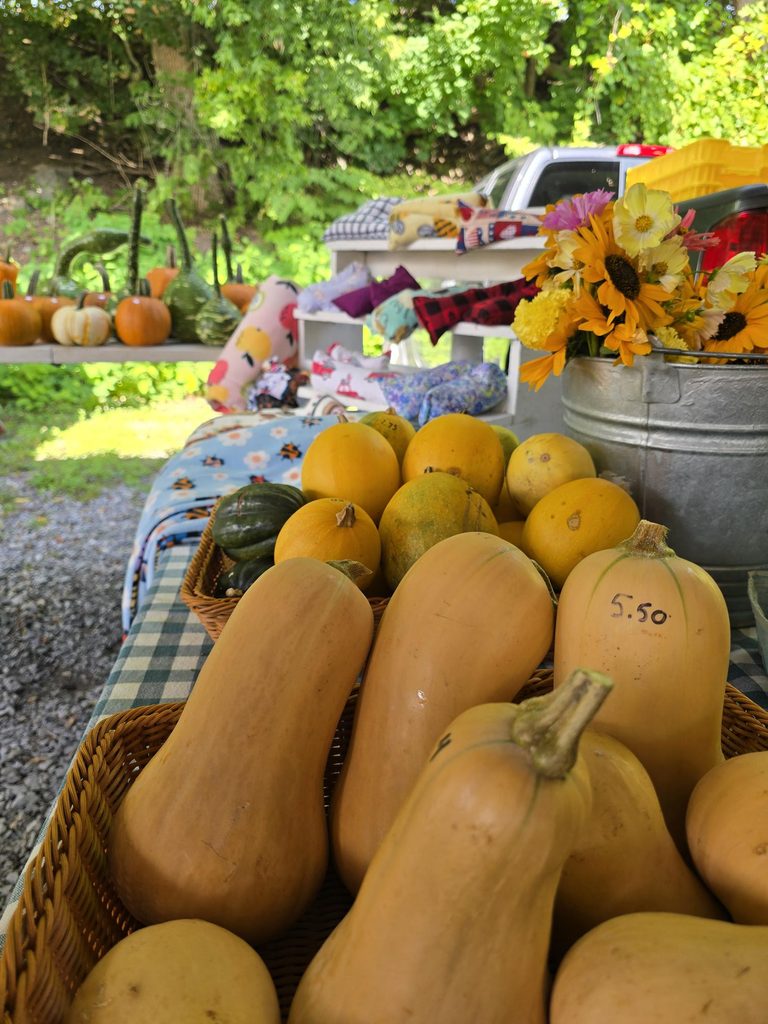
Autumn heralds the return of hale and hearty vegetables. Cole crops like broccoli, cabbage, cauliflower, kohlrabi, and kale are especially sweet and abundant. You’ll also find specialty items like fresh ginger, fennel, and radicchios of every shape and color. Carrots, beets, and watermelon radishes are particularly flavorful, and sweet potatoes and winter squashes like acorn, delicata, kabocha and butternuts are perfect for your soups, curries, and sides. Sweet peppers, green beans, and a sprinkling of tomatoes are also usually available until frost.
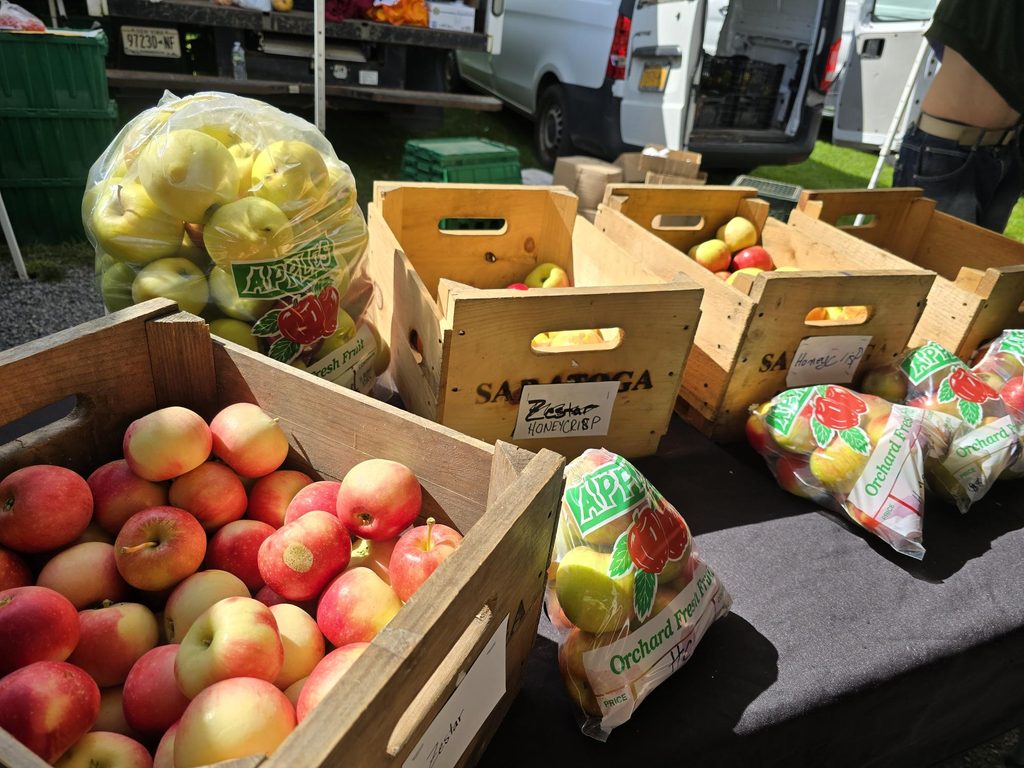
Fall fruits delight as well. Fresh apples including sweet and crunchy Honeycrisps are abundant at Saratoga Apple and deep red raspberries can be found at Scotch Ridge Berry Farm.
Every home and table must have beauty. Consider buying ornate dahlias and aromatic eucalyptus at Scotch Ridge Farm, everlasting dried bouquets at Lovin’ Mama Farm, and colorful bunches at Halfmoon Harvest. To adorn your porches and patios, you can add potted mums from Burger’s Marketgarden, decorative gourds from Kokinda Farm, and pumpkins from Gomez Veggie Ville.
After a long hike or bike admiring the foliage, there’s nothing quite like a slow-cooker meal or a hearty soup. Longlesson Farm, Thymeless Homestead, Grazin’ Acres, May-K-Mark, Jireh Organic Farm and Livestock, Hepatica Farm, and Holly & Vine Farm offer various cuts of meat for your favorite braises, stews, and roasts.
As you’re unwinding from the day reading a book by the woodstove, try a sip of bourbon from Yankee Distillers or a hot toddy with a fine spirit from Old Tavern Farm or Springbrook Hollow Farm Distillery. You’ll certainly sleep like a baby.
Warm hearts and full bellies are hallmarks of the Saratoga Farmers’ Market. Your farmers are excited to share their fall bounty with you and it’s easy to linger while listening to music, doing an activity with your kids, and eating a delicious snack or meal from one of our prepared food vendors. There is an air of celebration at the market right now, so be sure to join us!
The Saratoga Farmers’ Market is open Wednesdays, 3–6 PM, and Saturdays, 9 AM–1 PM, at High Rock Park in downtown Saratoga, and Mondays, 2–5 PM in Clifton Park. Visit www.saratogafarmersmarket.org to sign up for the weekly newsletter and follow the market on Facebook and Instagram.
This is the time of year we reap the harvest of our hard work from planting, watering, and fertilizing over the spring and summer months.
The seasons of our lives can be much like a harvest in that we have distinct periods of farming, nurturing, and experiencing the outcomes of our hard work. reminding us of the natural progression of family, transition, and the blessing of a growing family and groups of friends. Watching your children or family members grow can be a powerful moment in that you celebrate how much they have grown. Much like a farmer prepares the soil, plants, seeds, and tends to the crops, we spend our lives guiding those we love and instilling values, teaching life skills to prepare them for their lives ahead.
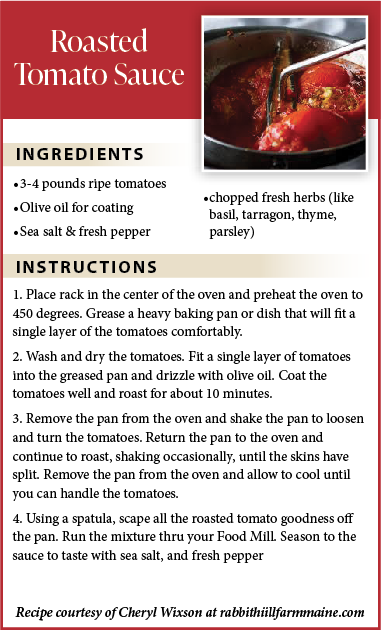
As we harvest crops, we get a chance to work with an entirely different group of ingredients. Fall acorn, butternut squash, pumpkin, parsnips, brussels sprouts and corn are among the late season harvest. Each offering a cook flavor profiles that include hearty, traditional, robust flavored foods that replace the lighter fare of spring and summer. Now is the time for braising, roasting, and grill meats that include sauces and gravies. Harvest making includes making apple/peach/ pear butters, making tomato sauce and putting pureed pumpkin in the freezer. From turning cooked apples into wholesome applesauce, freshly stewed tomatoes into a classic marinara, or steamed potatoes into a mash, the food mill proves its standing by being masterful with ingredients that are notoriously fussy to prep. Think of a food mill as being the low-tech version of a food processor—there’s no plug or motor, just a hand-crank that moves with a little help from you and your biceps. What can a food mill do that a processor can’t? Just ask any homesteader or canning enthusiast what their favorite time-saving tools are and you can bet the food mill is right up there at the top of the list. This is because a food mill can simultaneously purée and strain foods so efficiently that it renders the once tedious task of peeling fruit and vegetables obsolete.
A standard food mill consists of three parts: a bowl, a perforated plate that sits at the bottom, and the aforementioned hand-crank that is responsible for moving the metal blade that pushes the food through the plate. The result of this old-timey churning is a smooth purée without a seed, peel, pit, or stem in sight. The Food Mill is a tool that allows for fine and coarse milling. The changeable bottoms give you the ability to seed your harvest by the bushel. The food mill is a cross between a food processor and a sieve. You turn the handle and an angled blade presses the contents of the mill through a perforated disk, keeping any remnants like seeds or skin safely out of your puree. Unlike a food processor or a blender, a food mill does not incorporate air into the puree altering its texture. The result is a denser puree that is ideal for foods like applesauce or tomato sauce. Many of today’s food mills are designed to fit snugly over a vessel that catches the puree allowing you to mill in place with one hand while simultaneously cranking with the other.
For the harvest season, Stop by Compliments to the Chef, your Neighborhood Kitchen and Cutlery store, located at 33 Railroad Place to pick up the essentials you need for your culinary delights. Have a thrilling time milling and enjoy your harvest. Remember my Foodie Friends, “Life Happens in the Kitchen!”
Commercial USDA Organic vs. Farmers Market Organic
Leaning Birch Farm
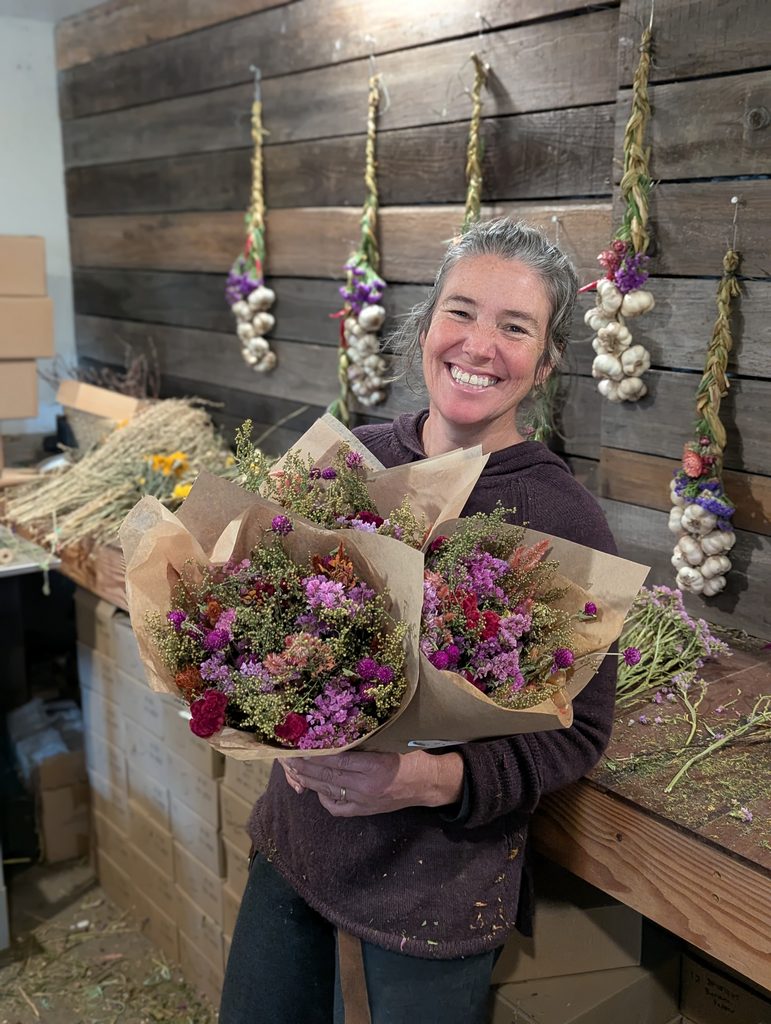
Lovin’ Mama farm
For health-conscious and environmentally aware shoppers, “organic” promises food grown without synthetic pesticides, genetically modified organisms (GMOs), or artificial fertilizers. However, a fluorescent-lit supermarket aisle offers a very different organic product than a weekend farmers’ market. While both options offer organic products, they reflect fundamentally different philosophies of agriculture, economics, and sustainability. Understanding the difference between the two is key to making truly informed food choices.
Jacob’s Farm
The Corporate Standard: Commercial USDA Organic
To understand commercial organic food, one must understand the USDA National Organic Program. Established to create a uniform standard, the USDA organic seal guarantees that a product meets strict federal regulations. For large commercial growers, achieving certification is a rigorous, bureaucratic, and expensive process involving meticulous record-keeping and mandatory third-party inspections.
The primary advantage of commercial USDA organic is accessibility. It allows large-scale monoculture farms to distribute organic fruits, vegetables, and meat to supermarket chains nationwide, making organic food available to millions of consumers at relatively stable prices.
However, “commercial organic” is still commercial. Crops are bred for durability and shelf life rather than peak flavor. A commercial organic tomato might be free of synthetic chemicals, but it is often picked green, chilled, and then shipped thousands of miles in a carbon-emitting semi-truck. Because large-scale organic farming relies on allowed organic pesticides and intensive mechanized tilling, it can sometimes mirror the environmental strain of conventional industrial farming, albeit without the synthetic chemical runoff.
The Community Standard: Farmers Market Organic
In contrast, the local farmers’ market definition of organic shifts from a bureaucratic checklist to a personal relationship. When you buy organic food at a local market, you are usually buying from small-scale, highly diversified farms located only miles away.
Interestingly, most vendors at a farmers market that follow organic practices do not carry the official USDA organic seal. For a small family farm operating on thin margins, the thousands of dollars in annual certification fees and the mountain of paperwork required by the USDA can be prohibitive. Instead, many growers follow the USDA Organic guidelines and practice “beyond organic” farming without the government sticker. Although organic pesticides are available, most small market farmers rarely use them. Instead, they use compost, crop rotation, cover crops, insect-blocking netting, and beneficial insects to manage pests and soil health naturally. After all, isn’t organic farming all about caring for the soil and environment?
The hallmark of farmers market organic is freshness and biodiversity. Because the food does not need to survive a cross-country journey, farmers can grow varieties chosen exclusively for their superior flavor and nutritional density. The produce is typically harvested within 24 to 48 hours of sale, meaning it retains its peak vitamin content and taste.
Key Differences at a Glance
When choosing between these two options, consumers generally weigh three main categories:
• Transparency and Trust: Commercial organic relies on a third-party regulatory seal. You have to trust the government sticker because you will never meet the corporate farm owner. At a farmers market, transparency is direct. You can look the farmer in the eye and ask exactly how they manage pests or treat their soil.
• Environmental Impact: Commercial organic reduces the chemical load on the earth but still carries a massive carbon footprint due to global shipping logistics and plastic packaging. Farmers market organic has a much smaller supply chain, minimal packaging, and supports local biodiversity.
• Economics: Money spent on commercial organic food primarily benefits large agribusinesses and grocery conglomerates. Money spent at a farmers market goes directly into the pocket of the local grower, circulating wealth back into your immediate community.
Making the Right Choice
Neither option is necessarily superior; each serves a different purpose in a modern lifestyle. Commercial USDA organic lets busy families reduce chemical exposure conveniently and affordably during weekly supermarket runs. It provides consistency and convenience that local farmers’ markets simply cannot match year-round in colder climates.
Conversely, farmers’ market organic offers an artisanal, community-driven connection to our food system. It rewards the palate with vibrant flavors, supports the local economy, and champions small-scale ecological stewardship.
As interest in sustainable agriculture grows, consumers have more choices than ever. Understanding the difference between certification and farming practices can help shoppers make informed decisions based on what matters most to them.
The Saratoga Farmers’ Market is open Wednesdays, 3–6 PM, and Saturdays, 9 AM–1 PM, at High Rock Park in Saratoga Springs, and Mondays, 2–5 PM in Clifton Park. For details, visit saratogafarmersmarket.org or follow on Facebook and Instagram.
There are a few food items and food groups that have stayed with me my entire life and become like old friends. My love affair with French fries began with my mother creating ways to keep five kids happy with what was served at dinner. With its golden exterior, fluffy interior, and tantalizing aroma, this culinary masterpiece has captivated my taste buds and cemented its place as one of my favorite foods (especially when made right). During my childhood, going out to eat was rare. Sometimes, we would get the treat of going to a local restaurant to have hamburgers and fries. I loved the hamburgers. However, what I really wanted were the fries. Taking us kids out to eat was not fun for my parents. Often times, my brothers and I would play games with our French fries: One game we loved was building structures. We would stand fries up to make log cabins, fences, or tiny campfires on the plate. Or we would use long fries as magic wands, swords, or little people marching across the table. And of course, was the dipping ritual of stirring ketchup into intricate patterns or burying fries in a mountain of salt and sauce before taking a bite.
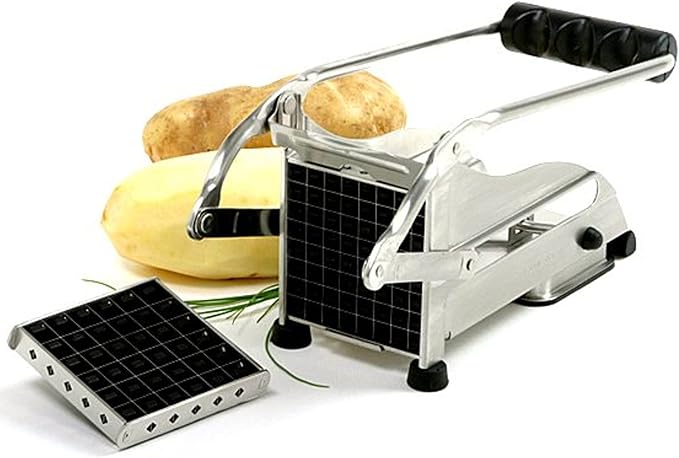
With five kids demanding French fries, my mother soon learned to master making French fries at home. A tool that has made making home made fries easier is the French fry cutter. Whether hosting a burger night or prepping snacks for a crowd, the use of a French fry cutter brings fun and efficiency to your kitchen. Its lever action arm and sharp blades make easy work of potatoes and other firm vegetables, so you can serve up restaurant-style fries in minutes and switch between thick or thin cuts. Nothing goes better with just about anything than a nice batch of salty, crunchy, greasy, hot French fries! One of the greatest strengths of French fries is their incredible versatility. They can be enjoyed as a standalone snack, a side dish to complement any meal, or even as a topping for salads and sandwiches. Whether you prefer them plain, seasoned with herbs, or smothered in cheese and bacon, French fries have the ability to elevate any culinary experience.
So, what’s for dinner? Consider adding homemade fries to your plan. Stop by Compliments to the Chef, your Neighborhood Kitchen and Cutlery store located at 33 Railroad Place, for the tools you need to make your food gatherings that bring your family together. Have fun with cooking and eating your creations. Remember my Foodie Friends, “Life Happens in the Kitchen”.
This is it! The moment to catch the last of the summer bounty into jars and freezer bags to enjoy through the dead of winter. This keeps your dollars circulating in the local economy, and preserving local food is one of the best ways to feed your family nutrient-dense, toxin-free food.
As a child in Northern California, my mom taught me to can and preserve out of necessity. Now, I run a farm kitchen, turning our organic farm’s extra produce into pantry goods.
The simplest canning project I can think of is pickling. My brine recipe is 1 cup water, 1 cup vinegar, and 1 Tbs salt. Bring the brine to a boil while you chop any vegetables you have in excess (green beans, zucchini, green tomatoes, hot peppers, etc). Prepare clean canning jars. Pack the jars with the chopped vegetables and add herbs or garlic if desired. Cover the vegetables with boiling-hot brine, leaving about a quarter inch of headspace in the jar; screw on clean lids until tight, then put in a boiling water bath for 15 minutes. Pull out the jars and let sit for a few days to pickle. My absolute favorites are pickled banana peppers and dilly zucchini pickles.
Drying herbs is another simple way to preserve the summer bounty. Take bundles of herbs and hang them on a wire using a paperclip opened up into a hook. The best herbs for air drying include sage, thyme, basil, marjoram, and oregano. Cilantro, dill, parsley, and scallions do best in a dehydrator set to 115 degrees. Once dry, store the leaves in a glass jar.
Then there’s freezing. This is the simplest way to preserve summer produce! The key is to spread out the fruit or blanched vegetables on trays to freeze, then pack them in freezer bags; otherwise, the soft fruit will freeze into a giant ice block. September is the perfect time to freeze tomatoes, green beans, peppers, and raspberries.
Putting in a little work to preserve September will go a long way in helping you survive the long winter with a delicious reminder of abundant summers!
The Saratoga Farmers’ Market is open Wednesdays, 3–6 PM, and Saturdays, 9 AM–1 PM, at High Rock Park in Saratoga Springs, and Mondays, 2–5 PM in Clifton Park. For details, visit saratogafarmersmarket.org or follow on Facebook and Instagram.
For many of our foodie families, school is back in session. Bake sales, carnivals, fairs, and overall appreciation time may call for us to make some of our favorite baked goods. The back-to-school season may mean a few extra hours back to yourself during the day, but little ones still get out of school pretty early, and you could find yourself racking your brain for something to keep them occupied besides digital entertainment. Cooking together is a great learning experience, plus it’s interactive and hands-on. Out of all the dishes you can cook with kids, baking something sweet has to be the most rewarding. There’s so much warm-fuzziness to be felt as you watch their eyes light up when they crack their first egg, press the mixer button, stir the batter, decorate with icing, and watch the treats rise through the oven window. They might be experiencing some of this for the first time.
How many of us have memories of baking as a child? I have to give my mother credit. Having five children running around the house and trying to get us all to join in to make an afterschool treat was not always a successful feat. Her methodology would include giving each of us an assigned duty with a designated spot in the kitchen. One thing to realize when baking with kids, is that it will be messy…it’s ok! My mother would take a deep breath and carry on as flour went flying or an egg hit the floor or the wall. Selecting which recipe to make included having to use some argumentation skills. What my mother did instead was to let us select two or three recipes, and then put on the calendar when we would make them. When the final product came out of the oven smelling delicious, the five of us would be so proud of what we accomplished. The best part of the experience was sharing what we made with friends in the neighborhood or bringing it to visit another family member, or even just taking about the experience at the dinner table that evening. My mother would smile, even if the experience made her crazy.
Cook up delicious recipes with your children. Take you taste buds on an adventure. Plan a good time to bake. Anticipate a child wanting to help. Keep on hand some easy mixes or ingredients for some easily made recipes. Stop by Compliments to the Chef, your Neighborhood Kitchen and Cutler store located at 33 Railroad Place, to help with the baking supplies you will need to have fun making your creations from baking pans, to rolling pins, measuring cups, spoons, spatulas, whisks, bowls, cookie cutters, scoops…you get the idea! Remember my Foodie Friends; “Life Happens in the Kitchen”.
Small farms are the heart of our local food system, but owning and operating them are not for the faint of heart. Farmers work long hours, in all weather, and need to be skilled in running a small business. The pressure is high to get it right. In 2024, the median income of farm-owners in America was about -$1,500, and in many cases, off-farm income was necessary for survival.
What’s life like for farmers in our area? This week, I asked five Saratoga Farmers’ Market vendors; Lindsay Fisk and Mark Bascom of Owl Wood Farm, Corinne Hansch and Matthew Leon of Lovin’ Mama Farm, Rose and Dan Fera of Leaning Birch Farm, Meghan and Nathan Mattison of Grazin’ Acres Farm, and Ariel Garland and Matt Campbell of May-K-Mark; for their insights on farming’s challenges.
One thing is clear: our farmers start their days early and end late, particularly in the summer. Ariel and Matt get up at 5 am to feed and water their animals and milk their dairy cows before heading to their off-farm jobs. When they return after 5 or 6 pm, they feed, water and milk again, move their herds to new pastures, and do seasonal jobs like haying and caring for newly-born calves and their mothers. Meghan and Nathan work from sunrise to sunset tending their animals and vegetable gardens with help from their older children. Likewise, our vegetable and flower farmers and their crews work from 7 or 8 am to 5:30 to 7:30 pm (or later on Fridays) on field and greenhouse jobs like bed preparation, planting, weeding, pruning and trellising, and market-related tasks, including harvesting, washing, and packing. In the summer months, our farmers work up to 80 hours of week at physically and mentally demanding activities.
With all to do on the farm, it’s hard to catch a break. Most of our farmers remark that they are able to relax a little on Sundays. The winter months are also less intense, with time for skiing, hiking, concerts, and in Lovin’ Mama’s case, writing a book and restoring a diner into a farm store and café.
Overall, our farmers are able to make a living on their farms and are able support 4-8 employees with a living wage. That being said, some farm-owners remark that they earn far less than minimum wage, and retirement and benefits are lacking from those without off-farm jobs. The upfront costs of starting a farm and access to affordable, productive land are daunting. Moreover, crop losses, injuries, and labor challenges are stressful and it’s far from easy to maintain a work-life balance. By necessity, our farmers must be savvy with their marketing, and selling their products direct-to-consumer at farmers’ markets is key to their success.
As Ariel remarks “farming is a labor of love; we certainly aren’t getting rich doing it, but our lives don’t feel full without it.” Our farmers truly love raising animals and growing flowers and produce and they are grateful for the support of their customers. Be sure to thank them the next time you’re at the market!
The Saratoga Farmers’ Market is open Wednesdays, 3–6 PM, and Saturdays, 9 AM–1 PM, at High Rock Park in Saratoga Springs and Mondays, 2–5 PM in Clifton Park. Visit saratogafarmersmarket.org to sign up for the weekly newsletter, and follow the market on Facebook and Instagram.