Guardianships, Kendra’s Law and the Mentally Ill

Article 81 of the Mental Hygiene Law outlines the legal provisions relating to guardianship of adults who are no longer able to handle their personal and/or financial affairs.  Adults suffering from chronic mental illness, such as bipolar disorder or schizophrenia, arguably cannot handle their personal or financial affairs, but they are not the most common subjects of Article 81 proceedings.

More commonly, Article 81 proceedings are brought with regard to older individuals suffering from Alzheimer’s Disease or other forms of dementia.  The proceedings are usually brought by family members, including spouses or children.

Those who suffer from mental illness may have functional deficits, which can sometimes lead to limitations presenting a danger to their welfare.  In contrast to an older individual suffering from Alzheimer’s Disease, the functional deficits of a mentally ill person can be intermittent.  As soon as the individual suffering from mental illness is getting proper treatment, i.e. consistent medication and/or therapy, the functional deficits may be manageable.

As a result, an Article 81 guardianship proceeding may be an inappropriate means of legal help for loved ones who seek assistance with a mentally ill friend or family member.  If this is the case, then what options exist under our current law to address the need?

One option to consider is Article 9.60 of the Mental Hygiene Law.  Article 9.60 is known as Kendra’s Law.  In January of 1999, Andrew Goldstein, a man with a long history of mental illness, pushed Kendra Webdale into the path of an oncoming subway train in Manhattan, causing her death.  Kendra was a 32 year-old journalist, originally from Fredonia, New York.  Prior to this tragedy, Mr. Goldstein had been in and out of mental health facilities, typically for short periods. Article 9.60 of the Mental Hygiene Law (MHL 9.60) was passed in honor of Kendra’s memory.

MHL 9.60 applies to adults who suffer from mental illness who are unlikely to survive safely in the community without supervision.  These individuals must have a history of lack of compliance with treatment for mental illness that resulted in: a) two inpatient hospitalizations in a mental health facility in the last three years, or b) one or more acts of serious violent behavior towards themselves or others in the last four years, or c) one or more threats or attempts at serious physical harm against themselves or others in the last four years.

The ultimate goal of MHL 9.60 is to bring mental health services to bear in critical cases to prevent another tragedy, like the death of Kendra Webdale.  MHL 9.60 proceedings are most commonly brought by county mental health authorities, but the statute does permit the proceeding to be brought by close family members and adults who live with the mentally ill individual.

The MHL 9.60 statute is titled “Assisted outpatient treatment,” which is often shortened to “AOT.”  As its name implies, the goal of the law is to put together a plan of outpatient treatment for the individual that can be made part of a judicial order.  For the proceeding to go forward, the petition must be accompanied by a statement by a physician that because of their examination of the individual or based on other factors, they believe the individual would benefit from AOT.

The judge hearing the case must find by “clear and convincing evidence” that AOT services are appropriate and that there is no “appropriate and feasible less restrictive alternative.”  If the judge so finds, he or she can order that the individual take appropriate medications and abide by a treatment plan designed to assist with their condition.  The treatment plan may include things like case management services, individual or group therapy, and alcohol or substance abuse treatment.  The court can order the AOT services plan to be in place for up to one year.

If the individual receiving AOT services fails to comply with the plan set forth for their treatment, MHL 9.60 provides a mechanism for him or her to be taken into custody and evaluated by appropriate medical professionals.  The law allows for the individual to be held for up to seventy-two hours, and potentially longer, based on the circumstances.

If someone who struggles with mental illness is not a good candidate for guardianship under Mental Hygiene Law Article 81, there may be tools that can be brought to bear under Mental Hygiene Law Article 9.60.  MHL 9.60 does not appoint a guardian for the individual, but rather mandates a program of assisted outpatient services to the mentally ill individual – which may help save their life, or potentially the life of another.

Matthew J. Dorsey, Esq. is a Partner with O’Connell and Aronowitz, 1 Court St, Saratoga Springs.  Over his 24 years of practice, he has focused in the areas of elder law, guardianship, estate planning, and estate administration.  Mr. Dorsey can be reached at 518-584-5205, mdorsey@oalaw.com, and www.oalaw.com

The Benefits of Spinal Alignment On Sports Performance

How Spinal Alignment Can Help You Improve Your Sports Performance

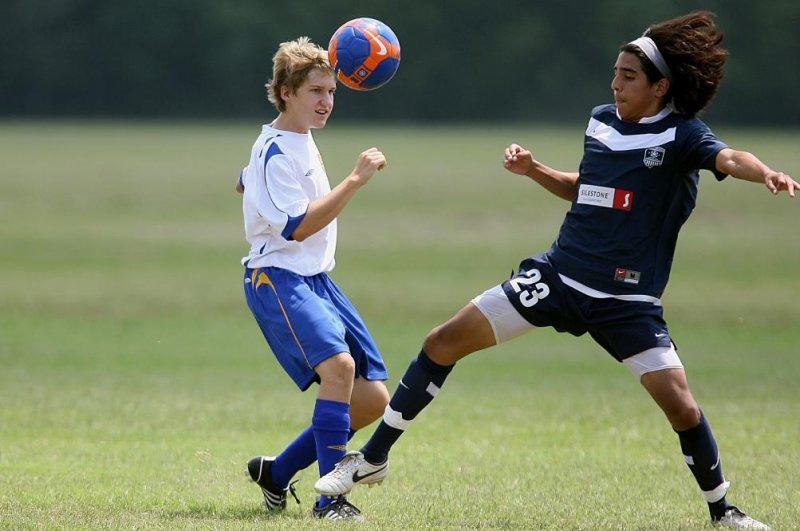
Do you have trouble meeting your athletic goals despite hours of practice time? Skill isn’t the only factor that affects your ability to run faster, throw a ball accurately or prevent the other team from scoring. A misaligned spine may compromise your range of motion, recovery time and flexibility, causing performance difficulties. Fortunately, spinal manipulations performed by your chiropractor can correct misalignments and help you excel at your favorite sport or activity.

6 Spinal Alignment Advantages

  • Fewer Injuries. Misalignments not only affect your spine but can also cause tightness in your muscles, ligaments, and tendons, increasing your risk of injury. Regular visits to your chiropractor will decrease misalignments, known as subluxations, and help you avoid aches, pains, and serious injuries.
  • Better Balance. Correcting subluxations may also have a positive effect on your balance, improving your ability to make a save, avoid a fall if you stumble or perfect your balance beam routine. During spinal manipulation treatment, your chiropractor uses gentle, hands-on pressure to improve the alignment of the vertebrae in your back and neck.
  • Improved Strength. Strength, an important factor in many sports, can decrease if you have a subluxation. The problem may affect your ability to grip or catch the ball, tackle opponents, run long distances or make key plays. Chiropractic provides a natural strength-boosting option. Brazilian researchers discovered that manipulating the vertebrae in the neck offered significant increases in strength. Judo athletes who received cervical (neck) spinal manipulation therapy improved their grip strength by 16 percent on the right side and 11 percent on the right side. Their results were published in the January 2012 issue of Manipulative and Physiological Therapeutics.
  • Quicker Healing Time. Correcting subluxations can also help you reduce healing time after an injury. Manipulations, electrical stimulation, ultrasound therapy, and other treatments decrease inflammation, ease spasms, enhance healing and improve the flow of blood and nutrients to the injured area.
  • Faster Recovery Time. Sports take a toll on your body, no matter how diligently you stretch and warm-up before starting an activity. Without an adequate rest period following exertion, you may increase your risk of injury. When your spine is aligned properly, you may notice that it doesn’t take quite as long to return to top form.
  • More Flexibility. Spinal manipulation, massage, and other treatments loosen tight joints and muscles, in addition to improving spinal alignment. These treatments increase your range of motion, prevent the formation of scar tissue, and decrease stiffness caused by tight muscles and joints.

Thanks to your visits to the chiropractor, you may find that it’s easier to follow through when you swing a golf club or racquet or notice that you can stretch a little farther when making a diving catch.

  • Enhanced Performance. You’ve probably noticed that your performance suffers if your back and neck hurt, your muscles are tight, or you have a throbbing headache.
  • Fortunately, aches and pains due to subluxations won’t prevent you from excelling when you make chiropractic therapy part of your training regimen. Treatments may also improve nerve function, improve your reaction time, and even help you breathe more deeply.

Would you like to enhance your sports ability with chiropractic treatment? We’ll devise a comprehensive treatment plan that will help you improve your performance and strength and avoid injuries. Contact us to schedule your appointment.

Save for Next Year

I know it violates a big rule of periodical publishing to print something out-of-season, but this is also a column about being a mom, and I tell you as a mom — if I don’t do something when I think of it, it won’t get done. So I’m sorry to tell you that, even though Halloween is over and we’ve moved on to thinking about The Most Wonderful Time of the Year (in which I include Thanksgiving), I have some Halloween ideas I need to share. I’ll leave it to you to decide if you want to save this list for future use; I know I myself will be referring to it often for many years to come.

This has to do with big kids — particularly, in my house, middle school and high school kids. This has to do with costumes — particularly, in my house, kids professing to not be at all interested in dressing up for Halloween and they wouldn’t have any idea what to wear as a costume anyway. This has to do with last-minute freak outs — particularly, in my house, the fact that the eleventh hour seems to be exactly when my children decide to do something they’d previously decided not to do, or change their minds about something previously decided upon, but they have no ideas about how to make it all happen. Yes, at the very last minute a couple of my boys decided they did want to dress up for Halloween after all.

We took to the internet to see if we could find costume ideas. Our standards were very low — we just wanted ideas that could be pulled together in a few minutes with things we had around the house, even if they were dumb, even if they challenged the very definition of “costume.” These were my favorites:

Ghost
One of the most classic Halloween costumes, and one of the easiest!

Cereal Killer
The picture I saw online of a “Cereal Killer” costume was of a bunch of mini cereal boxes affixed to a shirt with plastic knives stuck in each one and red paint around each knife puncture and on the shirt, but even just one regular sized cereal box could do.

50s guy or lumberjack
I’m grouping these two together because they both involve jeans — only the shirts change. 50s guy can wear just a white t-shirt with the sleeve rolled; a black leather jacket is a bonus. A lumberjack only needs a flannel shirt; suspenders would be a fun addition, but not necessary.

Nerd
Shirt tucked in, pants hiked up, and hair parted in the middle and slicked down seem to be the hallmarks of a “nerd,” at least in a “Halloween costume” kind of way. A pair of glasses would complete the look nicely, if you had them.

Swimmer
While a bathing suit and swim shirt wouldn’t be great for trick-or-treating in the cold, this could be a perfect costume for a Halloween party or to wear to school. A towel around the neck, flip flops, and goggles would all be good accessories if available.

Bag of leaves
All you need is a big garbage bag and leaves! Cut holes in the bottom of the garbage bag and step into it, pulling it up to the top of your legs (over your pants), and put some leaves in it — voila! You’re a bag of leaves!

Three hole punch guy
After googling “fast easy costumes for teens,” I also googled “Jim Halpert Halloween costumes” — Jim Halpert is a character on the show “The Office” whose Halloween costumes almost always involved the smallest amount of effort necessary. One of them was “Three-hole-punch Jim,” in which he cut out three large black circles (construction paper is perfect for this) and stuck them in a vertical row to one side of his shirt. Not only does this allow you to pass as technically having a costume, but the connection to the “The Office” adds an extra layer of comedy for anyone familiar with the show.

Jake from State Farm or Dave
I have to give credit for this one to some of the teens that have trick-or-treated at my house in past years. The first time I saw a teen wearing a red polo shirt and khakis with a nametag that said, “Jake from State Farm,” I laughed out loud! Similarly, one of Jim Halpert’s “costumes” on “The Office” was a nametag that said, “Dave.” When people asked him what he was, he’d point to the nametag and say, “Dave.” So dumb, yet so funny!

Error404:  Costume not found 
I thought this last idea was pretty clever: It’s just a matter of putting the words, “Error 404: Costume not found” on your shirt! It could be as easy as writing it on a piece of paper and sticking it to the front of your shirt.

You can see what I meant when I wrote in the beginning that it didn’t matter if the ideas I found were dumb or even challenged the very definition of “costume”! I really think this list is going to come in handy in my house in the coming years — I hope you find it as helpful as I do. Happy Thanksgiving to you all!

Kate and her husband have seven sons ages 17, 15, 13, 11, 9, 7, and 3. Follow her at www.facebook.com/kmtowne23, or email her at kmtowne23@gmail.com.

November is Long-Term Care Awareness Month

Seven-in-ten retirees will need some form of long-term care, which means that, for couples, there is a 91% chance of one spouse needing care. November is Long-Term Care Awareness Month. This is an issue that will affect nearly everyone, so it’s important to have a plan to provide for your care, while protecting your family and assets from the risks associated with long-term care.

People generally plan for their long-term care for two reasons. First, they want to make sure that they receive the best care available, by qualified caregivers. Second, if married, they want to make sure that their assets are protected so that their spouse will be able to continue his/her standard of living. The average widow outlives her husband by twelve years –what will those years look like if the couple’s nest egg was spent on her husband’s long-term care?

In this part of New York, long-term care can cost upwards of $10,000/month.  With an average nursing home stay of more than 2.5 years, you can see how quickly assets can be depleted. So, what is a person to do?

Often care begins with one spouse providing it, but the needs can quickly outpace the spouse’s ability or skill level.  Could your spouse pull you out of a bathtub today? Could they do it twenty years from now? Are they the most qualified person to provide care?   What if your spouse pre-deceases you? Who will take care of your spouse after you die?

Gifting and trusts used to be a popular way to protect assets, however uncertainty in the legal landscape makes this a risky strategy. There is currently a five-year look back period for gifts, and it’s very possible that period could be extended. Will you know when you’re five years from needing care? What if the look back goes to ten years? Today, we see this type of planning used when a more effective strategy isn’t available. 

The most effective strategy for planning for the day your health changes is private long-term care insurance. Insurance can provide the flexibility of receiving care from a qualified professional caregiver in your home, an assisted living facility, or a nursing home, or in all three setting as your needs change. This means that you can still be surrounded by your loved-ones, but without burdening them with your care.  We feel the prime age range for securing coverage is in your mid- to late-50s, while you’re still healthy enough to qualify, although your needs may differ.

Here’s what to look for in a long-term care policy:

1. A good insurance policy should include an inflation protection component, so that the policy’s benefit will increase as the cost of care increases. These inflation protection benefits are generally available with between 3% and 5% annual increases. 

2. A policy should allow you to receive care where and how you like: in your home, an assisted living facility, or a nursing home, as your needs demand.

3. Many policies will offer a cash benefit; a portion of your benefit paid directly to you rather than to your care provider. This benefit can be used for in-home modifications and other expenses related to your needs.

4. Your policy should provide a daily benefit large enough to cover the cost of care in the region you plan to receive it. Remember that any shortfall will have to be paid out-of-pocket. In the event the cost of care is lower than expected, the policy will generally provide benefits for a longer period of time.

5. Make sure your carrier has a high credit rating. Since any guarantees are based on the claims-paying ability of the carrier, you’ll want to be confident your carrier will still be around when it comes time to pay for your care. 

When you’re young and providing for a family, the risk to your family is that you’ll die prematurely. Once you’re retired, the risk is often no longer death, but the day your health changes.  Do you have a plan to provide for your care? Long-term care insurance is not the only way to plan for your care and associated expenses, but it is the most foolproof.  If you don’t qualify for insurance, then trust work or gifting may be necessary. 

At the very least, you should be discussing your needs with your family and your Certified Financial Planner® professional to ensure that you know your options, and are able to make an informed decision on a strategy.  Your advisor is the best person to educate you about the options, based on their understanding of your unique circumstances.

Securities offered through Cadaret, Grant & Co., Inc. Member FINRA/SIPC. Advisory services offered through Sterling Manor Financial, LLC, or Cadaret Grant & Co, SEC registered investment advisors. Sterling Manor Financial and Cadaret, Grant are separate entities.

Saratoga Senior Center Calendar

What’s Happening at the Center in November! 

Hot Club of Saratoga 
Saturday, November 13
Upstate NY’s premier gypsy swing ensemble, plays hot swing in the spirit of 1930’s Paris.

Tech Fair with Skidmore Students
Thursday, November 18 • 1- 3 p.m. 
The amazing Skidmore students are back to help you with ANY & ALL questions regarding technology! How to use: Email, cell phones, IPADS, Laptops, Kindles and more! Have you always wanted to try ZOOM, Facebook, Instagram, Spotify for music or order groceries for delivery? Here is your chance to learn. Appointments are for 30 minutes.

The Grand Hotels of Saratoga presented by Charlie Kuenzel
Friday, November 19 • 11 a.m.
In the 1800’s our city was the number one destination for summer travelers. The grand hotels would open for the summer season. Hotels with names like Grand Union, United States, Congress Hall and Grand Central to name a few. These enormous hotels were like the cruise ships of today, offering the very best in food, music and entertainment. Since Saratoga Springs was the spot to see and be seen, the large porches found at each hotel were lined with rocking chairs that provided the place to people watch on hot afternoons. Join Charlie and immerse yourself in the history of these “grand hotels.”

Introductory Classes to Clay Arts/ Ceramics   
Mondays in November • 9:30 a.m. – 12:30 p.m.
Have you always wanted to try your hand at clay? Maybe make a bowl or a vase? Come to this no pressure class to unleash your creative side. Already familiar with Clay Arts? There will be an additional class on Fridays from 9:30 a.m. – 12:30 p.m. There is a $10 materials fee for each monthly class.

Dancing with the Seniors 
The first and third Monday of the month • 2 p.m.
Facilitated by Monica Stoeher. Get your swing on! Learn the basic steps of dancing and listen to great music. No experience required. Let’s have fun! Monday, November 15. Monday, December 6 and Monday, December 20. 

TAI CHI IS BACK!
Mondays • 9-10 a.m. • Tai Chi with Frank

Fridays • 9-10 a.m. • Silver Sneakers Ener Chi with Shelia
Two chances to practice the ancient art of Tai Chi Tai chi is a series of gentle physical exercises and stretches. Each posture flows into the next without pause, ensuring that your body is in constant motion. It is sometimes described as meditation in motion because it promotes serenity through gentle movements — connecting the mind and body. 

Bright Cards Memory Program with Donald Ambrose
Mondays • 11 a.m.
Brain Games is back! The Bright Cards method will provide you with a fun, working and practical way to exercise your brain and improve a means of memorizing facts. 

NEW! Conversational Spanish
Fridays • 10 – 11 a.m.
Hola! Speaking in Spanish is now being offered at the center! Come and join Skidmore intern, Alejandra, if you would like to learn, practice or just converse in Spanish. 

BOOK CLUB AT THE CENTER
Tuesday, November 30 • 3 p.m.
NEW MEMBERS WELCOME! “The Queen of the Big Time” by Adriana Trigiani. Adriana returns to the charm and drama of small-town life with The Queen of the Big Time. This heartfelt story of the limits and power of love chronicles the remarkable lives of the Castellucas, an Italian-American family, over the course of three generations.

Medicare Information
Medicare Advantage Insurance representatives will be on site to answer your questions and distribute information about their insurance plans.

 Wellcare 
• Thursday, November 18 • 9-11 a.m. 

• Monday, November 22 • 10 a.m. -12 p.m. 
• Wednesday, December 1 • 10 a.m. -12 p.m. 

The Saratoga Senior Center will be CLOSED Thursday, November 25 for Thanksgiving!

Food Programs

Free Breakfast: Bagels & Coffee! 
Tuesday, November 23 • 8:30-10:30 a.m.
Thank you to Trackside Grill for the donation of bagels. Thank you Trackside Grill! 

Chef Dinner – Senior Center Staff    
Tuesday, November 30
To-Go Option 3-4:30 p.m. 
$11. Watch your eblast! How can it be anything but delicious! Chef Dinner Sponsored by CDPHP.

Simply Food by Maura: Pre-order your Thanksgiving Feast!
Single Meal $14. Roast Turkey, Stuffing, Mashed Potato, Green Beans, Gravy and Cranberry Sauce. Served with a homemade biscuit and a slice of pumpkin pie. Turkey Dinner for 4-6 available on request. Limited number of Homemade Apple, Apple Crumb, Pecan or Pumpkin Pies available $19. Must pre-order by Thursday, November 18.

VAN TRIPS 

Roosevelt Baths and Spa 
Monday, November 29
Begin the new week with a private soak in Saratoga’s naturally effervescent water. You will discover a delightfully buoyant quality to the mineral water. The mineral water is captured cold from underground springs, then mixed with warm fresh water to a neutral temperature for maximum benefits.

ONE DAY BUS TRIPS 

A DAY IN BOSTON 
Thursday, November 18
A day on your own in this amazing city! Member Price $53. Non-members welcome, please call the front desk. Between the beautiful architecture, unique culture, amazing history, and delicious food, it’s one of the most popular tourist destinations on the East Coast. November is a great time to get unique gifts for the up-coming holidays. 

NEW YORK CITY 
Wednesday, December 8
A day on your own! Member price $48. Non-members welcome, please call the front desk. There is no other place quite like New York City; from its world-class museums, art galleries and architecture to its role as the theatre and financial capital of the world. Spend the day on your own and explore the fascinating city. You will be dropped off at Bryant Park (42nd between 5th & 6th). All one-day bus trips leave from the train station on West Avenue. Our bus trips are open to the public, all ages, any residence. You do not have to be a member. 

Everyday Identity Protection Strategies

October is Cyber Security Awareness Month. 

Protecting your personal information, both online and in the physical world, is becoming ever more important, and ever more difficult, in our increasingly connected society. The good news is that there are steps you can take to help reduce the likelihood of becoming a victim of identity theft. 

This month, Neiman Marcus disclosed a data breach affecting nearly five million past and present customers. Earlier in the year the Colonial Pipeline shutdown affected millions of people. Recently, Equifax announced a data break affecting more than 100 million people. With all of these breaches, it’s important to check your information regularly to help ensure you are not a victim. If you are a victim, early detection is vital to minimizing the damage. 

Using a service like Credit Karma, which is a free app available for smartphones, can give you easy access to your credit scores and activity, and I find it to be a convenient option for the ongoing monitoring of activity on my accounts, as well as receiving notifications when a credit inquiry may be made. 

Consider checking on your child’s information as well. The identities of children are often stolen because they are seldom monitored. In those cases, you may not find out until your child applies for a student loan. The good news is, since minors can’t open credit cards, resolution is typically a bit easier than with adults. 

Most Americans are finding that their mailboxes are once again being stuffed with those “prequalified” credit card offers. In order to make it easy for you to apply, these offers are often prefilled with a lot of your personal information, making them easy targets for identity thieves. You can now turn a majority of these offers off by visiting www.optoutprescreen.com and opting-out. You can opt to turn them off for 5 years, or forever! 

As for the rest of your mail, be sure to shred anything which may have any personally identifiable information. Any mail that you throw away unopened should also be shredded because you don’t know what information it may include. 

Most people only send two kinds of mail from home: bill payments and greeting cards. Both of these typically contain a check with your name, account number, routing information, address, and phone number, a lot of what’s needed to steal your identity. What’s more is that we put up a little red flag on our mailboxes which makes it even easier for would-be thieves to find it! Consider bringing any of this type of mail to your post office or using a blue USPS mailbox which may be more secure. 

Almost every service provider and vendor you utilize offers paperless billing, and you should consider opting-in to these services. Doing so will help keep sensitive information out of your mailbox, but still can give you secure access online to view and print documents as needed. Secure online payments can eliminate the chances of outgoing checks being stolen as well. 

We’re all told to change our passwords frequently, and to use more sophisticated combinations of letters, numbers, and special characters to make it harder for people or bots to break into our systems. The overwhelming number of passwords and their complexity actually dissuade many people from taking the steps they should be to protect their access. Consider using a password manager to keep track of your passwords and do it in secure way. 

These services will store your various passwords in an encrypted format and will often require a single master password for gaining access. This limits the number of passwords you actually have to remember, allows you to have unique passwords for different sites, and eliminates the password-post-its or lists you probably have somewhere near your computer. 

When creating passwords, remember that they don’t have to be terribly complex to foil most brute force breaches (those where passwords are guessed). The passphrase “IHave3Dogs” would take approximately 27,000 years to hack, but the password “grandma” is hacked in under 2 hours. So, “IHave3Dogs” can be as effective as “1r48OisBP8” but a whole lot easier to remember! 

Even though you may have a secure password, you should still change it regularly. The reason is that you likely use similar user names and passwords across platforms. If a breach happens, and that data is stolen from a vendor, the combinations can be tried across other sites to gain access. Changing your passwords on a regular basis can help reduce the risk that a breach in one place could spread to your other services. 

We live in an ever-connected world and you need to be vigilant that the conveniences that connectivity offers don’t put you at risk of identity theft. While you may never be able to eliminate the chances, there is plenty you can do to reduce your risk.

Stephen Kyne, CFP® is a Partner at Sterling Manor Financial, LLC in Saratoga Springs, and Rhinebeck. 

Securities offered through Cadaret, Grant & Co., Inc. Member FINRA/SIPC. Advisory services offered through Sterling Manor Financial, LLC, or Cadaret Grant & Co, SEC registered investment advisors. Sterling Manor Financial and Cadaret, Grant are separate entities.

The First Foundation of Fitness: Stability

If you joined me in my last article, we had an overview of the four principles of fitness and how they interact with each other. The principles are seen whether we move around in everyday life, work out, or perform sports. Today, we’re going to dive into stability and what it means to you.

Let’s start by taking a short trip back to our classroom days and review a bit of neuroanatomy. Hang with me, and try to stay awake!

Our neuromuscular system is not just tendons, ligaments, joints, muscles, and bones that move us. It also includes a complex matrix comprising the brain, nerves, vision, inner ear, sensors, and multiple systems that work to keep us moving and upright.

You may remember the cerebellum during human anatomy in health class. At least you have heard of it. Well, It is the part of our brain next to the brainstem that controls movement. The cerebellum makes up only 10% of our brain’s size but holds over half of the total neurons in the human brain. It is responsible for maintaining and balancing posture, coordinates voluntary movements, and is also involved in language. While all of these functions are vitally important, the cerebellum’s ability to adapt, fine-tune, and ‘motor learn’ through experience directly relates to the fitness principle of stability.

Stability has a wide variety of definitions for human movement and function, depending on who you ask. I will define it as ‘our body’s ability to control a movement at or into a specific position.’ Our cerebellum does this without us thinking about it. Balance and stability are two separate things, but stability plays a significant role in balance. If we fail to stabilize our body or joints, whether moving or trying to stay still while resisting forces, movement dysfunctions, poor performance, or injury may occur.

Are you a high school athlete, master’s golfer, avid gardener, playful grandparent, or a hard-working warehouse worker? As we age, play, compete, work and live, we develop movement patterns that we gravitate towards and patterns that we avoid. Different components of stability are required within each of our daily lives. Athletes need a stable trunk and legs to cut from, jump onto, and resist being pushed by other players during competitions. Workers require the ability to coordinate reaching, lifting, bending, and carrying objects while looking where they are going. Walkers of all ages must coordinate walking, stepping over objects, looking around, and navigating terrains that aren’t always smooth.

So how do we train stability? How do we make it better?

Let’s focus on “global stability,” meaning our entire body works on remaining stable instead of a “joint by joint” approach. Remember, we are not individual body parts; we are whole people!

There are two main ways to challenge your stability. First, change your base of support (one foot, narrow feet.) Second, move your center of mass (reaching for something, leaning forward, carrying a weight on one side of your body.) Remember, to allow the cerebellum to ‘motor learn,’ we must challenge ourselves with new movements and unstable positions/loads. Frequency is key; the more we practice, the more precise we get.

There are infinite ways to sharpen your stability at home. I’ll review a few simple ways below. And remember, if these movements are new to you, they may be challenging.

1. Single Leg Balance

Stand tall with one foot in front of a counter or next to a wall. If needed, hold on to the wall or a sturdy piece of furniture for balance. Make sure you keep your knee slightly bent with the leg you’re standing on. If this is too challenging, standing with both feet on the ground with your feet touching each other. If you can stand on one leg for 30 seconds, try closing your eyes. If you’re looking for a different challenge, open your eyes and add turning your head left and right. You can even add standing on one leg to any upper body exercises you perform to challenge yourself. To sharpen your stability, you need to expose yourself to unfamiliar movements and situations.

2. Farmer Carries

Because life doesn’t always function while standing in one place, let’s move around a bit with this next one. Find a heavyweight or fill a bag with objects. The weight should feel like it is trying to pull you over. Start by staying nice and tall and not leaning to one side or the other. Begin walking slowly down the hallway while maintaining an upright posture. If this seems a bit easy, start marching, raising the knee to your waist height, holding each step for 3 seconds. Keep holding onto the weight without leaning!

3. Rotary Stability

Let’s look at the trunk and shoulders’ abilities to resist unstable forces. Start in a crawling position, on all fours. Bring your knees closer together, as well as your hands, creating a narrow base of support. Next, try to reach out in front of you with one arm and kick behind you with the opposite leg. Try to maintain this balanced position for 20 seconds. Repeat on the other side. Add a small weight into one of your hands or add head turns to make this more challenging. If you are looking to simplify this exercise, widen your support base back to the crawling position. Start with 3 sets of 20 seconds each.

4. Uneven Terrain Walking

Many of us spend a good deal of time walking, whether for our daily routine, exercise, or meditation. I would argue most of us stick to flat terrain or groomed trails. You can challenge your ability to move and adapt to new situations by walking on grass, gravel, rocks, and other non-flat surfaces. You may want to use a pair of hiking poles at first to expand your base of support. Walking to various music beats (rhythmically timed gait) can help develop new gait patterns and work on coordination and timing, also great for individuals with Parkinson’s.

Training the “fitness foundation” of stability helps sharpen your ability to adapt to new situations, react to new movements, and help maintain your balance when posed with an unpredictable environment. These things are a vital component of long-term fitness and living a fulfilling, active life. In the following three articles, we will be looking at mobility, power, and strength and how you can participate and improve in each area!

Dr. Robert Rehberger PT, DPT, OCS is a physical therapist at Goodemote Physical Therapy, serving Saratoga Springs and surrounding communities. He is a Board-Certified Orthopedic Specialist and has completed a Board-Certified Spine Fellowship in Ithaca, NY. He also serves as a wellness, fitness, and strength coach on a private basis.

At Goodemote PT, we work with individuals recovering from injury to help improve their quality of life and fitness. If you have any questions, call 518-306-6894 to set up an appointment or find us at GoodemotePT.com. Dr. Robert Rehberger can be reached at GPTmaple@gmail.com

Saratoga Senior Center Calendar

OCTOBER EVENTS

HEALTH FAIR & MEDICARE EXPO

Tuesday October 5 • 10 a.m. – 1 p.m. 

Meet one-on-one with senior-focused specialists, healthcare and Medicare professionals. Live music, presentations and more throughout the day! Free and open to the public.

• 10 a.m.: Medicare Scams presented by Gene Dumlo, NY Statewide Senior Action Council
• 11 a.m.: Balance Your Wellness Wheel with Sherri Rose 
• 12:30 p.m.: Live Music by Bonnie Grecco. Sponsored by Saratoga Life 
• 11 a.m.-12:30 p.m.: Hot Dogs and Snacks
• Tarot Card Reading
• Fresh Produce from Regional Food Bank
• Healthy Food & Nutrition with Siobhan from Cornell Cooperative Extension 
• Individual Balance Assessment with Goodemote Physical Therapy Sponsored by Burke Funeral Home 

OPEN HOUSE

Saturday, October 23 • 10 a.m. – 1 p.m.

Learn what the Center has to offer, grab a snack, mix, and mingle with friends and meet new ones!

• 10:30 a.m.: Live Music with Rick Bolton and Jackie Dugas 
• 12 p.m.: Live Music 
• Healthy Food & Nutrition with Siobhan from Cornell Cooperative Extension 
• Tech assistance: Cell Phone, Ipad, Kindle, etc. 
• Free Stewart’s Ice Cream Sundaes 
• Membership Specials, Raffles and more

SENIOR DAY FALL FESTIVAL  

Tuesday, October 26 • 11 a.m. – 1 p.m. at the Saratoga YMCA 

• Live Music with Garland Nelson 
• Dancing • Outdoor Games & Fall Activities 
• Free BBQ Lunch • Cider & Donuts • Pitney Meadows Farm

What’s New at the Center!

BRIGHT CARDS MEMORY PROGRAM WITH DONALD AMBROSE
Mondays  • 11 a.m.
Brain Games is back! The Bright Cards method will provide you with a fun, working and practical way to exercise your brain and improve a means of memorizing facts.

ALL BODIES CAN – DANCE CLASS
Mondays & Tuesdays  • 9 – 11 a.m.
Facilitated by Taylor Johnson, Skidmore Intern. This is a movement class for any person who is willing to move. All bodies can and are able to move in some way, shape, or form. Dancing is good for the body, mind, and soul, no matter the age or mobility.

DANCING WITH THE SENIORS
The first & 3rd Monday of the month.  • 2 p.m. at the center and via ZOOM
Facilitated by Monica Stoeher. Come and learn the basic steps of dancing and listen to great music. No experience required. Let’s have fun! Dates: Monday, Oct. 18. Monday, Nov. 1 & Nov. 15. Monday, Dec. 6 & Dec. 20.

IMMUNE SYSTEM BOOSTER
Tuesday, October 12    11 a.m.
Facilitated and sponsored by BlueShield of NENY. This year especially, we are all seeking ways to stay healthy and give our immune system a boost during cold and flu season. Join us for a discussion on how we can use food to help us stay strong.

TECH FAIR WITH SKIDMORE STUDENTS
Thursday, October 14  • 1 – 3 p.m. 
Skidmore students will be here to help you with ANY & ALL questions regarding technology! How to use: E-mail, cell phones, IPADS, Laptops, Kindles and more! Have you always wanted to try ZOOM, Facebook, Instagram, Spotify for music or order groceries for delivery? Here is your chance to learn.

NABA LOW VISION TECH AND WELLNESS EXPO
Tuesday, October 19 •  9 – 12 p.m. 
Free and open to the public. Meet the low vision technology professionals, local community services and NABA rehabilitation staff. Highlighted Presentation Topics: “What Low Vision Is & Today’s Treatment,” Gregory Pinto, MD Paul Pinto & Blackstone, MDs, & Caring for Vision with Diabetic Retinopathy, Amal Hussnain, MD Saratoga Ophthalmology.

HOLIDAY WREATHS WITH MARYLOU
Tuesday, October 19 • 1 p.m. 
$5 supply fee. It’s that time of year when the holidays are right around the corner! Join Marylou and make your festive fall or winter wreath. Supplies provided. If you have special items you want to put on your wreath, feel free to bring them in. Please sign up.

BREAKFAST & LEARN – “Discussion About Long Term Care” 
Thursday, October 21 • 10 – 11 a.m. 
Facilitated by Renee Birnbauam and Meloni Pratt of Choice Connections. Please sign up. Enjoy a continental breakfast and learn all the updated information on long-term care. Topics include Understand home care options; cost, levels of care. Understand senior housing, cost, amenities, levels of care. Review funding options available for care. Other care options and resources available in the community.

GANGSTERS OF SARATOGA
Friday, October 29  • 11 a.m. 
Presented by Greg Veitch. Greg tells the story of gambling, crime and corruption in the Spa City. Tales of bootleggers and shootouts, liquor raids and gambling dens, murder and political payoffs. Touching on such tales of nationally known gangsters like Meyer Lanky, Charles “Lucky” Luciano, Dutch Schultz and their exploits at Saratoga.

FALL RAKING
Sunday, October 24 
Call Senior Support Services if you need help with your lawn. Limited spots available, first come first served. 518-584-1621, ext. 209.

BOOK CLUB AT THE CENTER
Tuesday, October, 26 • 3 p.m.
The Story of Arthur Trulove by Elizabeth Berg. New members welcome! A moving novel about three people who find their way back from loss and loneliness to a different kind of happiness. Arthur, a widow, meets Maddy, a troubled teenage girl who is avoiding school by hiding out at the cemetery, where Arthur goes every day for lunch to have imaginary conversations with his late wife. The two strike up a friendship that draws them out of isolation. Maddy gives Arthur the name Truluv, for his loving and positive ways. With Arthur’s nosy neighbor Lucille, they create a loving and unconventional family.

TAROT CARD READINGS
Last Thursday of the month • 10-2 p.m. 
Facilitated by Mary Shimp. $5 donation. Do you have some unanswered questions about your life? A tarot card reading provides guidance to gain an insight into what the future holds. Call to make a 15 minute appointment.

OCTOBER FOOD PROGRAMS

Free Dine-In Box Lunch Program
Mondays in October • 12 p.m.
Sponsored by Saratoga National Bank. Limited number of lunches. You must sign up in advance each week and dine in at the Senior Center.

Free BBQ Lunch Under the Tent!
Friday, October 15 • 11:30 a.m. – 12:30 p.m.
Hot Dogs, popcorn and more! Please sign up in advance.

Free Breakfast – Bagels and Juice!
Wednesday, October 20  • 8:30-10:30.
Thank you to Trackside Grill for the donation of bagels and juice.

Old Bryan Inn Dinner
Tuesday, October 12
To-Go Option 3 – 4:30 pm. Dine-In Option: 4:30 p.m. $11. Menu to be determined! Watch your eblast! How can it be anything but delicious!

Simply Food by Maura
Tuesday, October 26
$11 Roast Turkey Dinner – stuffing, mashed potato, gravy, green beans. To Go dinner only 3-4:30 p.m., curbside pickup.

VAN TRIPS 

Albany Institue of Art 
Friday, October 22
Enjoy a guided tour touching on these current exhibitions: The Wyeths: Three Generations, Fashionable Frocks of the 1920s, Romancing the Rails: Train Travel in the 1920s and 1930s, The Hudson River School: Landscape Paintings from the Albany Institute. Lunch at Albany Pump Station. Pay $25 at sign up. Bring additional money for lunch. Leave the Center at 9 a.m.

Rivers Casino & Resort Schenectady
Wednesday, October 20
Try your luck at the Rivers Casino. Slots, table games, food and more. We leave the Center at 9 a.m., return about 4 p.m. Pay $10 at sign up. Please bring an additional money for lunch and gaming. 

Lunch Bunch -The Log Jam Restaurant & Outlet Shopping 
Monday, October 25
The Outlets are the ultimate stop for anyone who loves to shop! All the stores are closely located to one another Work up an appetite shopping. Then head to The Log Jam for comfortable, casual dining – Adirondack style! Enjoy your lunch in a beautiful log cabin with gorgeous stone fireplaces. Leave the Center at 9:30am, return about 3 p.m. Pay $10 at sign up. Bring lunch and shopping money

ONE DAY BUS TRIPS 

BOSTON – A Day on Your Own in This Amazing City! 
Thursday, November 18
Member Price $53. Non-members welcome, please call the front desk. Between the beautiful architecture, unique culture, amazing history, and delicious food, it’s one of the most popular tourist destinations on the East Coast. November is a great time to get unique gifts for the up-coming holidays. 

NEW YORK CITY – A Day on Your Own! 
Wednesday, December 8
Member price $48. Nonmembers welcome, please call the front desk. There is no other place quite like New York City; from its world-class museums, art galleries and architecture to its role as the theatre and financial capital of the world. Spend the day on your own and explore the fascinating city. You will be dropped off at Bryant Park (42nd between 5th & 6th). All one-day bus trips leave from the train station on West Avenue. Our bus trips are open to the public, all ages, any residence. You do not have to be a member.

SENIOR SUPPORT SERVICES

COMMUNITY CONNECTIONS
Are you a senior over 50 who needs no-contact assistance with grocery shopping, medical transportation, yard work, check-in calls or errands? Contact Senior Support Services at ext. 206. We need volunteers to help with this program.

Nobody’s Spot but Mine

There is a thing that I’m constantly dealing with, and I have to admit that I have no idea what the right answer is. Or not even the “right” answer, just the fairest and most peaceful one. I absolutely believe that being firm and consistent is the best way in most parenting situations, but with this I’ve been unsure and inconsistent, which I’m sure is one of the reasons it continues and continues and continues. It has to do with one’s Spot on the Couch.

We were blessed a few years ago to be able to get a sectional sofa for our TV room (the room where the most people want to sit at one time) to add to the regular couch we already had in there, so between the two pieces of furniture, there’s enough spots for everyone. If you figure one seat cushion for each person, and there are six cushions on the sectional and three on the couch, then all nine of us can, in theory, sit together all at once with no problem.

Except: The middle cushion spot on the couch is where one of my younger boys has always been most comfortable, and since that was a thing that started when he was just a baby, and having him sit there meant less crying, it has basically become “his spot.” As he’s gotten older, it’s been less and less necessary, but even still, when he sees someone sitting there, he’s likely to screech about someone sitting in his spot, and because I hate screeching, I tell whoever’s in the spot to get out of the spot. It makes it sound like I allow people to have their very own spot.

Except: In the beginning, when we first got the sectional and everyone wanted to claim spots on it, I specifically and vehemently said that there were no “spots.” No one had any claim to any part of that sofa, or the other couch (except that younger boy who sometimes still needs the middle cushion spot to keep me sane). Making this clear was necessary for a few reasons: (1) so that none of the boys had any expectations about being able to sit where they wanted whenever they wanted no matter what; and (2) in order to try to head off issues surrounding the Leaving of a Spot. 

This latter point has to do with short-term leavings (like when a boy has to get up to go to the bathroom but is coming right back), as well as long-term leavings (like when a boy gets up to go outside and play). Short-term leavings are pretty cut-and-dry, as far as I’m concerned — if someone gets up to go to the bathroom, it’s reasonable to say that no one can jump in that spot while they’re gone. I would have thought that long-term leavings would also be fairly straightforward — it doesn’t seem reasonable to me at all to think that if you get up and go outside to play for an hour, that you can come back in and demand that whoever is now sitting in the spot you were in when you left an hour to go to do something else should get up and let you sit there again. But my kids seem to think they can! I can’t tell you how many times I’ve had to intervene when two of them are fighting over a spot and one of them is saying it’s “his spot” because he was sitting there earlier in the day. What?! No.

Except: If my husband or I tell a boy to get up and do something — a chore, for example — then it doesn’t matter how long he’s gone, I do allow him to have his spot back when he’s finished. There are also the times when a boy gets up to a do voluntary leaving (like to play outside) and as soon as his rear end leaves the seat, another boy jumps into it gleefully and boasts about getting the spot — I’m not okay with that at all, and in those instances, I’ll usually tell that second boy to get out of the spot. 

“But Mom! You said there are no spots!” they’ll say from time to time when I’ve decided that a boy can go back to the spot he was in before, or when I tell someone to get out of the middle spot so my younger boy can sit there, and I’m always struck by how ridiculous it is that we have to have a rule like this, and that there are so many exceptions and considerations. 

Are you exhausted yet? I am, just writing about it! It’s absolutely why I’m coming across as unsure and inconsistent — because there just doesn’t seem to be a blanket rule that’s fair all the time in every situation for every child, and I’m very tired of having to think about it. 

One thing I do stick to in regard to the couches, though, with the firmest of firmnesses and the most consistent of consistencies, is that when we have company and I’d like for them to have the nicest spot to sit, or — even worse! — my husband or I would like to sit or lay down on the whatever piece of furniture we’ve decided we want to be on, whoever’s in the spot has to move. I’m sure you can imagine the howling and protestations that go on over that! But I’m fully confident that this is one rule that must stand. Poor kids.

Kate and her husband have seven sons ages 17, 15, 13, 11, 9, 7, and 3. Follow her at www.facebook.com/kmtowne23, or email her at kmtowne23@gmail.com.

Neck Pain

Our neck, also called the cervical spine, begins at the base of the skull and contains seven small vertebrae. Incredibly, the cervical spine supports the full weight of your head, which is on average about 12 pounds. While the cervical spine can move your head in nearly every direction, this flexibility makes the neck very susceptible to pain and injury.

The neck’s susceptibility to injury is due in part to biomechanics. Activities and events that affect cervical biomechanics include extended sitting, repetitive movement, accidents, falls and blows to the body or head, normal aging, and everyday wear and tear. Neck pain can be very bothersome, and it can have a variety of causes.

Here are some of the most typical causes of neck pain:

• Injury and accidents: A sudden forced movement of the head or neck in any direction and the resulting “rebound” in the opposite direction is known as whiplash. The sudden “whipping” motion injures the surrounding and supporting tissues of the neck and head. Muscles react by tightening and contracting, creating muscle fatigue, which can result in pain and stiffness. Severe whiplash can also be associated with injury to the intervertebral joints, discs, ligaments, muscles, and nerve roots. Car accidents are the most common cause of whiplash.

• Growing older: Degenerative disorders such as osteoarthritis, spinal stenosis, and degenerative disc disease directly affect the spine.

• Osteoarthritis, a common joint disorder, causes progressive deterioration of cartilage. The body reacts by forming bone spurs that affect joint motion.

• Spinal stenosis causes the small nerve passageways in the vertebrae to narrow, compressing and trapping nerve roots. Stenosis may cause neck, shoulder, and arm pain, as well as numbness, when these nerves are unable to function normally.

• Degenerative disc disease can cause reduction in the elasticity and height of intervertebral discs. Over time, a disc may bulge or herniate, causing tingling, numbness and pain that runs into the arm.

• Daily life: Poor posture, obesity and weak abdominal muscles often disrupt spinal balance, causing the neck to bend forward to compensate. Stress and emotional tension can cause muscles to tighten and contract, resulting in pain and stiffness. Postural stress can contribute to chronic neck pain with symptoms extending into the upper back and the arms.

Chiropractic Care of Neck Pain

During your visit, your doctor of chiropractic will perform exams to locate the source of your pain and will ask you questions about your current symptoms and remedies you may have already tried. For example:

• When did the pain start?
• What have you done for your neck pain?
• Does the pain radiate or travel to other parts of your body?
• Does anything reduce the pain or make it worse?

Your doctor of chiropractic will also do physical and neurological exams. In the physical exam, your doctor will observe your posture, range of motion, and physical condition, noting movement that causes pain. Your doctor will feel your spine, note its curvature and alignment, and feel for muscle spasm. A check of your shoulder area may also be performed. During the neurological exam, your doctor will test your reflexes, muscle strength, other nerve changes, and pain spread.

In some instances, your chiropractor might order tests to help diagnose your condition. An x-ray can show narrowed disc space, fractures, bone spurs, or arthritis. A computerized axial tomography scan (a CT or CAT scan) or a magnetic resonance imaging test (an MRI) can show bulging discs and herniation.

Doctors of chiropractic are conservative care doctors; their scope of practice does not include the use of drugs or surgery. If your chiropractor diagnoses a condition outside of this conservative scope, such as a neck fracture or an indication of an organic disease, they will refer you to the appropriate medical physician or specialist. They may also ask for permission to inform your family physician of the care you are receiving to ensure that your chiropractic care and medical care are properly coordinated.

Neck Adjustments

A neck adjustment (also known as cervical manipulation) is a precise procedure applied to the joints of the neck, usually by hand. A neck adjustment works to improve the mobility of the spine and to restore range of motion; it can also increase movement of the adjoining muscles. Patients typically notice an improved ability to turn and tilt the head, and a reduction of pain, soreness and stiffness.

Of course, your chiropractor will develop a program of care that may combine more than one type of treatment, depending on your personal needs. In addition to manipulation, the treatment plan may include mobilization, massage or rehabilitative exercises.