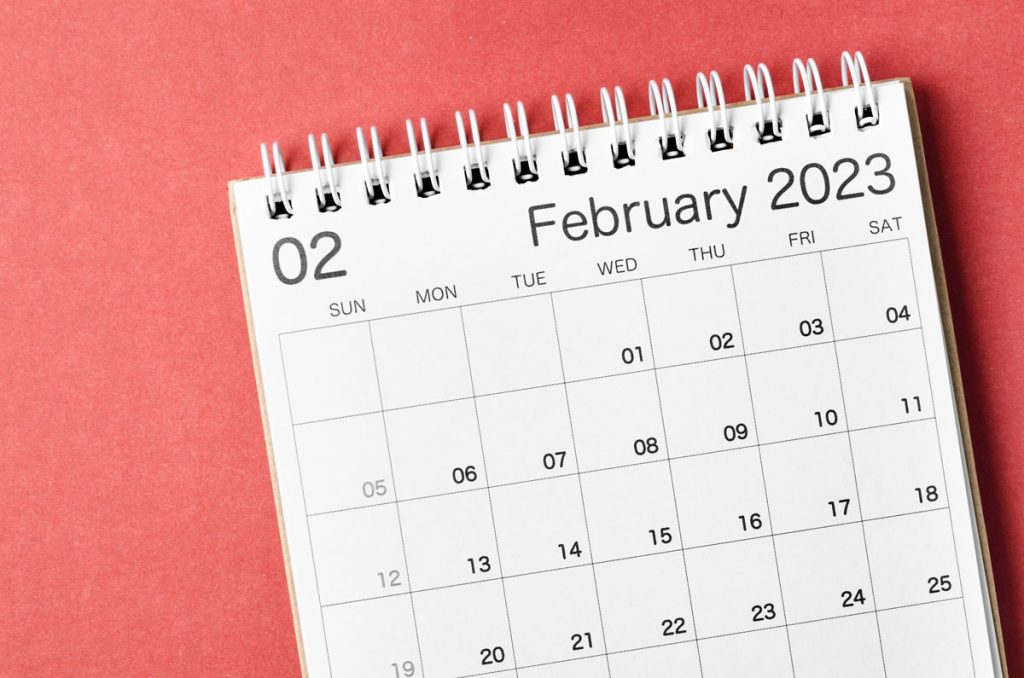
Death and Taxes – Questions and Answers on Estate and Gift Taxes: Find out Whether your Loved Ones Will have to Pay the Tax Man

There is a lot of misunderstanding when it comes to estate and gift taxes.  Over the last few years, the law in New York State has changed significantly.  What follows are questions and answers on some of the most common issues regarding estate and gift taxes.

When I die, will I have to pay taxes on my estate?

Generally speaking, you will only have to pay taxes on your estate if the value of your estate is above the state and/or federal estate tax exemption amounts when you die.  The current exemption amount for New York estate taxes is $6,580,000 and the current exemption amount for federal estate taxes is $12,920,000.  Certain deductions, like charitable deductions, can reduce the size of your taxable estate.

If my spouse inherits my estate, do they have to pay estate taxes?

No.  There is an unlimited marital deduction for estate taxes. Generally speaking, no matter what amount of assets your spouse inherits from you, they do not have to pay estate taxes on them.  The problem comes when your spouse later passes away, all of their estate (their own assets plus whatever they inherited from you) will potentially be subject to estate tax.

What is portability?

The federal estate tax exemption of the first spouse to die can be “ported” to the surviving spouse.  This means that if your spouse dies in 2023 and the federal estate tax exemption amount is $12,920,000, your spouse’s unused $12,920,000 exemption can be carried over to your estate tax return when you later pass away.  If the federal estate tax exemption when you die is $14,000,000 then your total estate tax exemption when you die is $26,920,000 ($12,920,000 + $14,000,000).

To take advantage of this “portability”, the surviving spouse must file an estate tax return for the first spouse to die – even though there will be no tax payable at that time due to the unlimited marital deduction.  Portability of the estate tax exemption only applies to federal estate taxes – not New York estate taxes.   

Are gifts taxable?

There are multiple exceptions that keep gifts from being taxable.  If your gift does not fit under one of the exceptions, then you must file a gift tax return – IRS Form 709 – and potentially pay gift taxes.

What are the exceptions to gift taxes?

Generally, a gift is not taxable if it is: a) made to your spouse, b) below the IRS annual exclusion amount, c) made to a charity, d) made to a political organization for its use, or e) paid directly to a medical or educational institution on someone’s behalf for qualified expenses.

What is the “IRS annual exclusion amount”?

The IRS annual exclusion amount represents a monetary value under which gifts can be made in a calendar year, without any applicable gift taxes.  In 2023, the amount is $17,000.  So in 2023, you can make a gift to someone of up to $17,000 without having to worry about gift taxes.

What if I give over the annual exclusion amount to someone?

If you give an amount over the annual exclusion amount, that excess amount needs to be reported on an IRS Form 709.  A gift tax is calculated on the amount over the annual exclusion, but you won’t have to pay a tax at that time, unless you’ve made taxable gifts over your lifetime in excess of the applicable limits. 

Do the recipients of my gifts need to pay tax?

Generally speaking, the recipient of a gift does not have to pay gift tax or income tax because of the gift.  The recipient may have to pay income tax on any income generated by the gifted asset. 

What is “gift splitting”?

You can “split” a gift by sharing the gift with your spouse.  For example, if you gift $30,000 to your child in 2023, that amount is over the $17,000 annual exclusion for 2023 and therefore gift taxes would potentially apply.  However, you can join with your spouse and “split” the gift into two gifts of $15,000 each, resulting in two gifts under the $17,000 annual exclusion for 2023.  That “split” means the gift is not taxable, however you do have to file a Form 709.

Navigating the intricacies of the state and federal tax codes can be challenging.  In order to minimize your tax burden and increase what you leave for your loved ones, you should consider contacting an experienced estate planning attorney or tax professional for advice. 

Matthew J. Dorsey, Esq. is a Senior Partner with O’Connell and Aronowitz, 1 Court Street, Saratoga Springs. Over his twenty-five years of practice, he has focused on the areas of elder law, estate planning, and estate administration. Mr. Dorsey can be reached at 518-584-5205, mdorsey@oalaw.com and www.oalaw.com


2023 Economic Preview 

2022 was an incredibly difficult year for the economy and the markets. In fact, it was the worst year for US stock markets since 2008. Rapidly rising interest rates meant that there were few places to hide as an investor, since even fixed income funds sank due to interest rate pressure. 

The S&P 500, the most broadly used US index, ended the year down 20%, while the NASDAQ suffered a 33% loss, according to FactSet. You’ll be in good company if you open your December statement and find that your balance dropped in 2022.

Down years happen, and it’s something that every investor must accept. The question is: where do we go from here?

We think that the economy and markets will be impacted by several factors. The first of which will be the continued raising of interest rates by the Fed.

Caught flat-footed in early 2022, the Fed began a rapid series of interest rate increases in a desperate attempt to rein in rampant inflation, which resulted from the wanton subsidies and stimulus of the government’s pandemic response. Since interest rates are essentially the price of money, raising them should slow down economic activity, although it can be a messy and very imprecise process.

The goal of the Fed is to reduce inflation, while maintaining employment, and keeping the economy from crashing into recession. This is the so-called “soft landing”.

We expect continued interest rates increases through the first quarter of the year, and hope that, by then, the Fed will take a breather. The risk, since the Fed relies on prior-period data, is that it won’t know if it’s gone too far, until after it’s gone too far. 

Recent economic data shows inflation beginning to ease, while we still have full employment, and an economy that rebounded in the 3rd and 4th quarters of 2022. One wonders, then, whether Jerome Powell would recognize a soft landing if it fell on him.

Internationally, we would be remiss if we didn’t give proper attention to the geopolitical risks facing the economy. 2022 saw much of the world deal with food, energy, and physical insecurities, all of which weighed heavily on economic activity. 

The war in Ukraine, which threatens to become a wider conflict, has weighed heavily on the region, and has likely pushed Europe into recession. Europe would deserve more credit for finding alternatives to Russian energy, if it hadn’t been so reliant on it in the first place. Its fate, and the fate of its markets in 2023, will likely be closely tied to events in Ukraine.

China’s somewhat manic departure from three years of zero-Covid has thrown the region into unknown territory. While the Chinese government has not issued official figures, many outside estimates indicate that a million citizens may die in just the first four months of 2023. The question will be whether, once the initial waves have passed through the population, the country will finally be able to get back to work, and will global supply gains finally normalize. 

The US is, by far, the largest and most diverse economy in the world. It is two-years removed from the brunt of the pandemic. It stands the greatest likelihood of staying resilient in the face of economic pressures, compared to most of the rest of the world. That said, we do believe opportunities exist international, especially if the dollar continues to come down from its 2022 highs.

We believe that inflation in the US has peaked and, barring being dragged into any major geopolitical issues, we believe the US markets stand a good chance of working toward a rebound in 2023.

This not to say that we think the NASDAQ will see the 50% increase it would need in order to recoup its 2022 losses, but we think the US economy continues to be resilient, and probably the best option for investors, relative to much of the rest of the world. We think that a US recession is still likely at some point in the not-too-distant future, however the ingredients are there to help make it fairly minor. 

Continue to work closely with your Certified Financial Planner® professional, as they help shepherd you through these uncertain times, and remember that markets ebb and flow and, while it’s impossible to say just when, we believe that the tide will come back in. Afterall, it always has.

Stephen Kyne CFP® is a Partner at Sterling Manor Financial in Saratoga Springs, and Rhinebeck.Securities offered through Cadaret, Grant & Co., Inc. Member FINRA/SIPC. Advisory services offered through Sterling Manor Financial, LLC, or Cadaret Grant & Co., Inc, SEC registered investment advisors. Sterling Manor Financial and Cadaret, Grant are separate entities.

Cleaning House for Christmas

A friend asked me recently who of the boys is the best at doing chores. I guess my definition of “best” would be “does what I ask without too much fussing” plus “does a really good job,” in which case I wouldn’t say that any of the boys rises to the top as consistently doing both, but they all basically do a fine job. 

I should also clarify that I don’t really assign regular chores. Here, it’s mostly a “this needs doing, and I’m telling you to do it” situation. The older boys are the ones we ask to do more heavy-lifting kinds of things and I try to play to their strengths. One of them kind of likes vacuuming, so he’s usually the one I ask to do that. I rotate between the older ones for washing and drying dishes. The big boys shovel for a neighbor, so the middle boys do the shoveling for our house. Taller boys are asked to bring the garbage cans up from the street after garbage pick-up; the strongest boys are asked to carry heavy things upstairs or downstairs. The younger boys are asked to do different things: pick up all the Legos off the floor and put them back in their bin; put all the toys back in the closet; find all the dirty socks in the house and put them by the washer machine. And of course, there are the things they all need to do: put their clothes away, rake the yard, bring in groceries from the van.

All that said, there is something that they all regularly amaze me with: they all seem to really enjoy participating in what they call “a deep clean,” and deep cleans are often done spontaneously by them, without me asking them to! 

For example, I’ve been watching my eight-year-old grow into the kind of boy who seems to enjoy spending his time deep cleaning certain areas of the house. Over the past few months, he has happily spent an hour or two in the front room and entryway, all on his own, getting things straightened up, throwing out garbage, sweeping up dirt and crumbs. He’s done the same in the toy closet, which is a large walk-in closet with four large shelves whose contents are usually all over the floor of the closet and spilling into the room. And I regularly find him cleaning and rearranging his desk. He inspires me!

It can’t go unmentioned that the original spontaneous deep cleaner in our house was our oldest — before he was old enough to work, he would make a summer project out of deep cleaning certain areas of the house. He set a great example for his younger brothers, not only the eight-year-old, but the others as well. My twelve-year-old has said to me several times recently that when school gets out for Christmas break, he wants us all to spend the first couple days cleaning the house so that it’s nice for Christmas, and when he says he wants “us all” to do it, he’s totally including himself. Others of the boys have chimed in, agreeing — they all want a clean house for Christmas and don’t mind doing what needs to be done in the forty-eight hours leading up to it to make it happen. They’ve said similar things before Thanksgiving and Easter for the past couple of years, and I can see that we’ve fallen into a nice every-few-months team-deep-clean. Every time we do, we all sit around happily in our clean spaces, enjoying the tranquility before life messes the house
up again. 

I myself prefer to do almost anything else to cleaning — I’m happy to take care of my family in all other ways (cooking, chauffeuring, doing laundry, grocery shopping, meal planning, working, taking care of sick people, helping with homework, reading to children, meeting with teachers, handling doctor appointments, etc., etc., etc.) — so I’m extra grateful for children who mostly do what I ask them to do chore-wise with a basic semblance of acceptability, and I feel completely undeserving of children that choose to spend free time and vacation time helping me get the house in order at an even deeper level. I love the feeling of “we’re all in this together” that working on the house this way creates.

So if any children or young adults are reading this, consider cleaning your house for your parents as a Christmas present — if they’re anything like me, they’ll be thrilled! I hope you all have a wonderful holiday season!

Kate and her husband have seven sons ages 18, 16, 14, 12, 10, 8, and 4. Email her at kmtowne23@gmail.com.

Chiropractic and Acupuncture

Doctors of chiropractic are experts in addressing musculoskeletal conditions without the use of drugs or surgery. While best known for spinal manipulation, chiropractors may use a variety of evidence-based therapies to help their patients. Some DCs are even trained in acupuncture or work in integrative clinics where acupuncture is provided, giving patients access to two of the most effective non-drug approaches to pain management.

If acupuncture is on the list of your doctor’s services, here’s what you should know—including what it entails, conditions it may help treat, and who should avoid this type of treatment.

What Is Acupuncture?

During acupuncture, hair-like needles are inserted into specific points in the body to achieve various therapeutic effects. One of its effects is the release of tight muscles, making it easier for patients to move. Acupuncture also stimulates the release of certain hormones in the brain, providing benefits for some medical conditions.

Conditions Acupuncture Can Treat

One of the conditions treated by acupuncture is pain. Acupuncture has a profound effect on pain. It causes the brain to release some of the body’s natural pain relievers. That makes it a way to get pain relief without taking addictive medications. And it can be used for pain that exists in one area of the body (called local pain) or pain that is more widespread (systemic or chronic pain).

For chronic pain, you get a beneficial effect because you’re altering the brain chemistry. This has been supported by research using MRI images. When you induce pain, certain pain centers in the brain light up on functional MRIs, when you needle the patient, they turn off.

In addition to traditional body acupuncture, there are specific microsystems utilized in acupuncture. Acupuncture administered to the head (called scalp acupuncture) can be beneficial for treating neurological and psychological conditions, even helping to resolve addictions. Acupuncture performed on the ear (auricular acupuncture) can help you stop smoking and ease withdrawal from drugs.

Acupuncture also works very well for people who experience post-chemotherapy neuropathy. In fact, most cancer institutes have incorporated acupuncture as part of their treatment programs.

Acupuncture vs. Dry Needling: What’s the Difference?

Sometimes acupuncture is confused with dry needling, but they aren’t the same thing. In dry needling, the needles are longer and placed based on myofascial trigger points, which are the same trigger points targeted when patients get a cortisone shot.

Dry needling is the exact same thing without shooting in the cortisone. You needle the trigger point to get the muscle to twitch and release. Studies have shown that results are similar between dry needling and injection, which shows that the benefits come from inserting the needle into the muscle.

This makes dry needling good for musculoskeletal complaints that involve a restriction in movement, such as frozen shoulder, neck pain and back pain. But it’s also helpful if you’ve experienced trauma to the muscle, whether through a sports injury, a car accident, or due to a medical condition like arthritis.

Who Should Avoid Acupuncture?

Despite acupuncture’s many benefits, this treatment isn’t right for everyone. A proper case history and examination must be performed to determine if the patient is a candidate for acupuncture. Taking blood thinners or having recent joint replacement surgery might be contraindications for treatment.

Some medical conditions require you to avoid acupuncture over certain regions of the body, like lymphedema, complex regional pain (CPRS), or cancer.

Combining Acupuncture and Chiropractic

While acupuncture and chiropractic services are two different treatments, they can be used together to potentially provide greater benefit.

What to Expect

One concern that many have is, “Does acupuncture hurt?” Not if it’s done properly. Ancient Chinese proverbs describe it as “less than a mosquito bite.” You might feel a little bit of discomfort, but most patients find the experience relaxing.

The needles used for acupuncture are much smaller than those used for injections—or about the thickness of a hair. That allows them to enter the body without causing the same discomfort you might experience when getting a shot.

Each acupuncture session generally lasts between 15 and 30 minutes and you should begin to feel its benefits after just a few treatments. Talk to your chiropractor to learn what options exist for your medical condition or concerns.

Potential Side Effects

The risks of acupuncture treatment are minimal. The most common side effects are drowsiness, minor bleeding or bruising, or a temporary increase in symptoms. Some people feel more energetic after an acupuncture session.

Serious adverse side effects are rare. Fainting is also a rare occurrence following needling. This is the same response that causes people to faint at the sight of blood and is due to an overactive nervous system (vasovagal response).

The risk of infection is low if you are receiving acupuncture anywhere in the Western hemisphere. The sterile needles are used only once and then discarded.

How to Pick an Acupuncture Practitioner

If your chiropractor offers acupuncture, this is a good place to start. Otherwise, look for a practitioner that is licensed in your state and has experience treating your type of problem.

Dr. Matt Smith has been a Chiropractor in Saratoga Springs for 36 years. He and his daughter Dr. Kevy Smith Minogue can be reached at 518-587-2064 or at MySaratogaChiropractor.com.

Saratoga Senior Center Calendar

A Day Full of Holiday Cheer

Friday, December 16

Sponsored by Highmark

• 11 a.m. Member Meeting & Building Update

There are a lot of rumours flying around about the building and our move. Come to the meeting for the latest news and get your questions answered.

• 12-2 p.m. Holiday Gift Wrap

 Hate to wrap? Bring in your gifts and we will wrap them for you!

• 1:30 p.m. Holiday Lunch Buffet $10

BBQ Chicken, Mashed Potatos, and more. RSVP required. Call the Front Desk.

• 2-3 p.m. Decorate Holiday Cookies

Member Holiday Party

Wednesday, December 21 • 1:30 – 3:30 p.m. • $8

Sponsored by Aetna

RSVP required. Call the Front Desk. 

• Live music by Jay Yager & Chris Dollard.

• Guest appearance by Kelsey Dodd.

• Buffet prepared by Prime at Saratoga National.

• Have you been naughty or nice? Santa will be here…

Holiday Sing-A-Long

Friday, December 23 • 1:30-2:30 p.m.Holiday music with Garland Nelson. A well known and loved Saratoga staple, Garland will get us all in the spirit.

The Joy of Food!
Eat Drink & Be Merry 

Dinner with The Olde Bryan 

Tuesday, December 13 • 5:30 p.m.
$12 per dinner. Chicken Cordon Blue. 

PaL’s Meals To Go  

3:30-5:30 p.m. Curbside Pick Up
$12 per dinner. 

Tuesday, December 6: Lasagna
Place order by Friday, December 2.

Tuesday, December 20: Chicken Picatta with Ziti Place order by Friday, December 16.

Continental Breakfast

Wednesday, December 28 • 9-10 a.m. 

Free. Start your day with friends, laughter and good food. Sponsored by Albany Guardian Society

 What’s New This Month!

Zentangle Art Program
facilitated by Katie Long

Thursday, December 15 • 2 p.m. • $5 

Make a holiday card and ornament with Zentangle. Zentangle is an American method for drawing, which pro-motes concentration and creativity and increases personal well-being.   

Chinese and American Mahjong

Thursdays • 1-4 p.m.

New players welcome! Mahjong is fun and enormously popular, a classic Chinese game of strategy, skill, and summation.

Bridge Has Started!  

Mondays • 1-4 p.m.

We have had many members ask about starting bridge back up.  So if you are interested in playing, come to the Center on Mondays and let’s get the games rolling again.  

Van Trips
Sponsored By Zieker Eye

Troy Savings Bank – Carl Gutkowski & James Fitzwilliam, Classical Flute & Piano

Tuesday, December 13 • Music at Noon

Carl Gutowski is a flutist based in the Hudson Valley and Cape Cod who performs regularly in solo and chamber music settings. James Fitzwilliam is a Hudson Valley pianist, organist and composer. He has served as Organist at Christ Episcopal Church in Poughkeepsie. Lunch at the Latham Diner following the performance. Pay $10 at signup. Concert is free. Bring money for lunch.  Leave the Center at 10:45am. Return about 3 p.m. 

Holiday Lighted Nights at Washington County Fairground

Thursday, December 15

The Holiday Lighted Nights flicker on at the Fairgrounds for its drive-thru holiday cheer. Enjoy close to two miles of large-scale holiday light displays, from Santa Clauses to North Pole scenes.  Pay $10 at sign up. Bring  additional money for snacks. Leave the Center at 3:45 p.m. Return about 6:30 p.m.

Lunch Bunch – Fo’Castle Farm

Tuesday, December 20

FoCastle Country store brings you back to a sweeter time… when neighbors gathered on the front porch while fireflies lit up the night sky.  Come back to that time and experience unique gifts that inspire the soul and life the spirit. Pay $10 at  ign up. Bring  additional money for lunch and shopping. Leave the Center at 9:30 a.m. Shop first then have lunch at the cafe. Return about 2:30 p.m.

Shopping for a Financial Advisor

One of the most popular New Year resolutions is to get your financial house in order. Understanding your finances, learning about the steps you should be taking, and then putting an action plan to work, are critical steps toward that worthwhile resolution. This is where hiring a financial advisor can make all the difference. 

When you’re thinking about hiring a financial advisor, it’s important that you do your due diligence to help make sure you and your advisor are well matched. Ideally, you and your advisor are both looking to establish a very long-term relationship, and part of that involves being very open and honest about your expectations, and asking probing questions. It’s also very important that your advisor be forthcoming with their expectations. Be sure to include the following questions in your vetting process. 

1. Are you a fiduciary? 

An advisor who is a fiduciary is legally required to put your interests ahead of their own, and ahead of the interests of their employer.

2. How are you compensated?

There are a few compensation models in the industry, and you have a right to know how you will be paying for the services you will receive. 

Commission Based – This “eat what you kill” compensation model means that your advisor only gets paid when a transaction takes place, and it had been the traditional model for decades. It has fallen out of favor with both clients and advisors because of the obvious conflict of interest it presents. 

Fee Based – Most advisors now operate under a fee-based structure. What this means is that they charge a stated fee for providing advice, as opposed to earning a sales commission. This fee is often a percentage of the assets they manage, but could also be hourly depending on the scope of work. Since the fee is assessed as a percentage of your balance, it changes as your accounts grow or shrink, and you and your advisor now have the same goal; to be careful stewards of your assets over time.  

Because certain important products, like life insurance, are inherently commission-based, a fee-based advisor has the latitude to provide these solutions as well. Here, again, it is important to understand if the advisor is a fiduciary.

3. Are you independent?

It’s important to consider whether the advisor works for a company with proprietary products to sell. Generally this will be common with insurance and mutual fund companies. Even with the best intentions, your advisor may be limited to, or incentivized for using, their employer’s products.

When the only tool in your toolbelt is a hammer, every problem starts to look like a nail. An independent advisor will generally have access to a universe of products, and be beholden only to you.  

4. Are you, or members of your team, a CFP®?

A Certified Financial Planner® professional is an advisor who has been through a rigorous education and examination process beyond the regular licensing requirements for the industry. A CFP® has demonstrated a level of proficiency across a wide range of planning topics, and has committed to a higher code of ethics. If your advisor is not a CFP® it could be beneficial to you that they are, at least, working directly with one in formulating their recommendations.

5. How much education can I expect from you?

The financial industry is full of jargon and acronyms. Every client has a different level of financial experience, and a good advisor will act as an educator to make sure you understand their recommendations. Most advisors don’t intend to talk over your head, but if you find them using language that you’re not familiar with, don’t be shy about asking for terms to be defined or strategies to be better explained. 

Good communication is the cornerstone of any relationship, and it’s crucial that you and your advisor are speaking the same language.  

6. How long have you been in practice?

There is no substitute for experience. Every advisor can look like a rock star during good times, but it’s important to know that they have been battle-tested and have the temperament to keep their head even if you’re losing yours, when volatility strikes.  In order to help shepherd you through the inevitable periods of uncertainty, they need to have been there before, and know the way through. 

Your relationship with your financial advisor can be the key to your financial success. It’s important that you feel comfortable asking them any questions, and that you’re satisfied with the answers they provide. When you find a good match, work closely with your advisor, and you’ll be well on your way to keeping your New Year resolution.  

Stephen Kyne CFP® is a Partner at Sterling Manor Financial in Saratoga Springs, and Rhinebeck.Securities offered through Cadaret, Grant & Co., Inc. Member FINRA/SIPC. Advisory services offered through Sterling Manor Financial, LLC, or Cadaret Grant & Co., Inc, SEC registered investment advisors. Sterling Manor Financial and Cadaret, Grant are separate entities.

Warm Clothes for Tall Boys

It was only when I had teenagers that I appreciated how relatively easy it is to clothe smaller kids.

Up to a certain age, my boys have never seemed to care too much what they’re wearing, so if their pants were a little short or their shirts a little big, it was no big deal. Also, up to a certain age, the sizes are straightforward — if you’re an average-sized eight-year-old, then size 8-10 will fit you. If you’re a bigger eight-year-old, then maybe 10-12 is better. You go up or down a size as needed, and when you have a bunch of siblings, there’s usually plenty to choose from. 

Once they get out of the kids’ sizes, though, things are different! When my big boys started needing man-size pants and I had to deal with waist size and inseam size I had to turn to my husband for help, since it was all unfamiliar to me. I’ve sent him out many times to help the boys get pants and shirts and suit jackets that fit.

Things have recently taken an interesting turn, as I now have a boy who doesn’t fit the standard measurements. My tallest boy has a 32-inch-waist and a 36-inch-inseam, which, I have discovered, is a size that baffles even the sellers with a wide array of sizing options. The problem seems to be that it’s assumed that if one has an extra-long inseam, that one also has a larger waist size. From what I’ve seen, the Big & Tall Sizes don’t take into account “Big OR Tall.”

It took me several months to realize that my boy needed new pants, since he’s lived in shorts since the spring. The first time this fall that I told him he absolutely could not wear shorts to wherever we were going was the eye-opening moment — he didn’t have any pants to wear other than the paint-splattered, grass-stained jeans he wears for work! Nothing fit him, everything was far, far too short. 

That night, I got on the computer. I do the vast majority of my shopping online, as getting out to the store is often difficult. Generally, I’ve found the options online to be more extensive — I’m usually able to find exactly what I need easier and more quickly online than browsing through a store. I figured it would be no big deal to find 32-waist-36-inseam pants.

I was shocked at how wrong I was! I searched in my tried-and-true online stores, and I did general google searches, but I either found *nothing* or the selections were weird in terms of color and cut. And expensive! It makes sense that more fabric would mean higher cost, but wow! I couldn’t understand why I was having such a hard time — my boy is extremely low-maintenance when it comes to fashion, and my standards are only a bit higher than his.

Finally, I found something that would work! (SCR SPORTSWEAR Men’s Sweatpants from Amazon, in case anyone else is having the same struggles.) I ordered them right away and when my boy put them on a few days later, I couldn’t stop gushing over how good he looked! The pants fit him perfectly! The length is perfect! The waist is perfect! I even took a few photos when he wasn’t looking while we were out and about that day, because I was so pleased at how great he looked in his new pants. 

The second time he wore the new pants, he and his brothers played football in a field, and the new pants ended up covered in grass stains.

I was so mad! After years of trying and failing to get grass stains out of baseball pants, I was not at all confident that I’d be able to get the stains out of the new pants. Turns out the Spray ‘n Wash did a better job on the new pants than it ever has on the baseball pants, so it’s not a total loss, but I did jump back online and buy him another couple pairs of those pants so he’ll always have pants to wear this winter. He put on a pair of the new ones when they came, and I felt that same sense of satisfaction I’d felt with the first pair. Look at my boy! In pants that fit! He looks so great!

What lesson or bit of wisdom can I impart to you all through this story? I have no idea. Maybe: don’t wait until the cold weather to discover that your child doesn’t have pants that fit? Maybe: keep searching until you find what you’re looking for, because it’s surely out there somewhere? Maybe: boys will find a way to get grass stains on new pants? Maybe: be grateful while you can for straightforward sizing for little ones? I hope something here is helpful for you as we enter the Deep Freeze of our northeast winter, and if nothing else, I hope it gives you a laugh! A huge thank you to all veterans on this Veterans Day, with a special shout-out to those in my own family, and happy Thanksgiving to you all!

Kate and her husband have seven sons ages 18, 16, 14, 12, 10, 8, and 4. Email her at kmtowne23@gmail.com.

Fall Yard Clean Up Injury Prevention

Before you rev up the lawnmower or reach for your rake this fall, the American Chiropractic Association (ACA) cautions you to consider the possible consequences: upper or lower back strain, neck strain and/or pain in the shoulders.

Just as playing football or golf can injure your body, the twisting, turning, bending and reaching of yard work can also cause injury if your body is unprepared. Like an athlete, if you leap into something without warming up or knowing how to do it properly, the chances of injury increase. 

To prevent unnecessary strain and pain, consider these simple tips before you get started:

• Wear supportive shoes. Good foot and arch support can help prevent back strain.

• Stand as straight as possible and keep your head up as you rake or mow.

• When it’s still warm outside, avoid the heat. If you’re a morning person, get the work done before 10 a.m. Otherwise, do your chores after 6 p.m.

• When raking, use a “scissors” stance: right foot forward and left foot back for a few minutes, then reverse, putting your left foot forward and right foot back.

• Bend at the knees, not the waist, as you pick up yard equipment or piles of leaves or grass. Make the piles small to decrease the possibility of back strain.

• Wear a hat, shoes and protective glasses. To avoid blisters, try wearing gloves. If you have asthma or allergies, wear a mask.

• Drink lots of water before and after your work.

Tips on Using Outdoor Equipment

The equipment available today for lawn and leaf management can turn the average homeowner into a lawn specialist overnight. But the use of weed trimmers, leaf blowers and hedge clippers also has sent many aspiring landscapers to the office of their local doctor of chiropractic.

ACA cautions that using this equipment can result in back and neck pain, as well as more serious muscular strains and tears. The repetitive motion that your body undergoes when using such equipment can create a host of mechanical problems within the body. It is essential to operate your equipment properly. The following tips can help you safely enjoy a productive day in the yard:

• Regardless of what piece of equipment you use, make sure it has a strap and that you use it. Place the strap over your head on the shoulder opposite the side of your body from the device. This will help normalize your center of gravity.

• Be sure to switch the side on which you operate the equipment as often as possible, and to balance the muscles being used, alternate your stance and motion frequently.

• Try ergonomic tools. They’re engineered to protect you when used properly.

• When mowing, use your whole body weight to push the mower, rather than just your arms and back.

• If your mower has a pull cord, don’t twist at the waist or yank the cord. Instead, bend at the knees and pull in one smooth motion.

• Take frequent breaks from the activity of the day. Muscle fatigue may be felt when using any of these devices for an extended period of time.

• If your equipment is loud, wear hearing protection.

Simple Stretches

While it is critical to operate yard equipment safely, it is equally important to prepare your body for the work you are about to do. To help avoid injury, be sure to include a warm-up/cool-down period that involves stretching. Breathe in and out slowly throughout each stretching exercise until the muscle is stretched to its furthest point. At that point, hold your breath in; when you relax, breathe out. Stretch gently and smoothly. Do not bounce or jerk your body in any way and stretch as far as you can comfortably. You should not feel pain. Get the most out of the time you spend in the yard with these stretches:

• Stand up and prop your heel on a back door step or stool with your knee slightly bent. Bend forward until you feel a slight pull at the back of the thigh, called the hamstring. You may need to stabilize yourself by holding on to a garage door handle or sturdy tree branch. Hold the position for 20 seconds, then relax. Do it once more, and then repeat with the other leg.

• Stand up and put your right hand against a wall or other stable surface. Bend your left knee and grab your ankle with your left hand. Pull your heel toward your buttocks to stretch your quadriceps muscles at the front of your thigh. Hold that position for 20 seconds, relax and do it again. Repeat with the other leg.

• Weave your fingers together above your head with your palms up. Lean to one side for 10 seconds to stretch the side of your upper body, then reverse. Repeat two or three times.

• “Hug your best friend”- Wrap your arms around yourself after letting your breath out and rotate to one side as far as you can go. Hold for 10 seconds; then reverse. Repeat two or three times.

Dr. Matt Smith has been a Chiropractor in Saratoga Springs for 36 years. He and his daughter Dr. Kevy Smith Minogue can be reached at 518-587-2064 or at MySaratogaChiropractor.com.

Supported Decision-Making as an Alternative to Guardianship

Earlier this year, Article 82 of the New York Mental Hygiene Law (Article 82) became law, allowing for supported decision-making in New York. This new law gives intellectually and developmentally disabled individuals new tools to help them live productive and successful lives.

Prior to the passage of Article 82, parents with children who had intellectual or developmental disabilities were mainly limited to seeking guardianship of their child under Article 17-A of the Surrogates Court Procedure Act (Article 17-A). Article 17-A was passed in 1966, and more recently many disability advocates have pressed for alternatives to such guardianships.

Guardianships under Article 17-A 

Disability advocates have argued that the Article 17-A guardianships are too sweeping in nature, giving almost total control to the guardian over the disabled person’s financial and medical decision making. Contrasts were often made when comparing the broad powers granted under SCPA Article 17-A and the other New York guardianship statute – New York Mental Hygiene Law Article 81 (Article 81).

Article 81 guardianships are usually put in place for adults and are often used when a family member ages and begins to lose some of their functional capabilities. Under Article 81, however, the person seeking to become guardian (often a spouse or child of the allegedly incapacitated person) must prove that the guardianship is the least restrictive alternative, and the guardianship must be tailored to address the particular needs of the individual based on their functional limitations. Article 81 also mandates that the allegedly incapacitated person be represented by an attorney, if they request one.

No such limitations and protections are present in the Article17-A process, which has been a source of concern by not only disability advocates, but also disabled persons themselves and their loved ones. Article 17-A guardianships are generally approved by the court based on the medical testimony of two doctors or a doctor and a psychologist. Over the course of time, alternatives to Article 17-A guardianships have been developed, and one of the more promising is the supported decision-making process.

What is supported decision-making?

In supported decision-making, the disabled person is referred to as the “decision-maker” and they are assisted by “supporters” who help them make decisions regarding their financial affairs and health care. The decisions are made pursuant to a “supported decision-making agreement” (SDMA), which details how the disabled person will work with their supporters to come to decisions regarding their affairs.

What do facilitators do in the process?

A facilitator is a person or entity authorized by the New York Office for People with Developmental Disabilities (OPWDD) to work with and educate a decision-maker and their supporters regarding the supported decision-making process and SDMAs. Within the next year, OPWDD is expected to come out with regulations that will describe more fully the role and responsibilities of facilitators. Generally speaking, the facilitation process should be expected to take several meetings and perhaps a number of months to come to fruition.

What is a supported decision-making agreement?

A SDMA is an agreement signed by the decision-maker and their supporters which details what type of decisions the decision maker will be assisted with and what the role of the supporters will be in that process. If a facilitator was involved in the agreement, they will also sign the SDMA and they will confirm that the agreement was made in accordance with a recognized facilitation and/or education process. The SDMA must be witnessed by two people or notarized.

What effect does the SDMA have?

If the SDMA is properly drafted and signed by a facilitator, then decisions made pursuant to that agreement by the decision-maker will have the force of law and can be enforced by a court of competent jurisdiction. For example, if a disabled person signs a lease with a landlord, pursuant to such a SDMA, that lease would be a legally enforceable agreement. 

What does the future hold for supported decision-making?

Disability advocates hope that supported decision-making will be considered as a viable alternative to Article 17-A guardianships. There has been significant discussion about modifications to Article 17-A to make these guardianships less sweeping in scope. We will likely see changes in the future to Article 17-A, which will allow these guardianships to be more tailored to the needs of the individual.

There will likely always be a need for Article 17-A guardianships, especially for individuals who have more severe disabilities. For disabled persons with less severe disabilities, however, supported decision-making may provide the help they need, without the loss of control and autonomy that an Article 17-A guardianship can bring.

Supported decision-making cannot be fully utilized to its potential in New York until the regulations in support of Article 82 are promulgated by OPWDD. But in the interim, disabled persons and their families can explore how the process may work for them by discussing options with trusted advisors experienced in this area. If you would like more information on supported decision-making, you can go to the Supported Decision-Making New York website maintained by Hunter College – sdmny.hunter.cuny.edu. 

Matthew J. Dorsey, Esq. is a Senior Partner with O’Connell and Aronowitz, 1 Court Street, Saratoga Springs. Over his twenty-five years of practice, he has focused on the areas of elder law, estate planning, and estate administration. Mr. Dorsey can be reached at 518-584-5205, mdorsey@oalaw.com and www.oalaw.com

Year-End Financial Planning

I usually cover the topic of year-end planning in my December column, but with rampant inflation, economic uncertainty, geopolitical strife with no end in sight and, most recently, a divisive election season, putting the year 2022 in the rearview can’t come soon enough for many of us. In preparation for closing out the year, let’s discuss some important steps you should consider.

The first order of business is to make sure you’ve made the Required Minimum Distribution (RMD) from your IRAs and other retirement plans for the year.. If you’re age 72 or older, or have certain inherited retirement accounts, you will need to make minimum distribution by year’s end. The penalty for non-compliance is 50% of the amount you should have distributed, so check and double-check that you’ve distributed the proper amount.

If, like many, you don’t need the RMD to make ends meet, and would prefer not to take any distribution at all, consider donating it to a charity of your choice. The IRS allows you to distribute funds directly from your IRA to a charity, and not pay taxes on the distribution, even if you aren’t eligible to itemize deductions on your federal taxes. This is called a Qualified Charitable Distribution (QCD), and it’s important to remember that funds must be cut directly in the name of the charity; you cannot act as an intermediary and qualify for a QCD. 

If you’re not subject to an RMD, but are charitably inclined, you can still utilize a QCD to benefit your charity of choice in a tax-favored way.

The next piece of financial housekeeping will be to begin to gather documents you’ll be needing just after the new year to prepare your taxes. Compile receipts for medical bills, tuition payments, child care and charitable contributions, among others.

While many of us will no longer be able to itemize deductions due to recent tax law changes, there are credits for things like child care and education expenses which you may still be eligible for. For those with large medical bills, mortgage interest, or who have been particularly philanthropic this year, you may still be able to itemize, so it is important to have those receipts handy.

When it comes to planning for your retirement, this is the perfect time to evaluate contribution levels to your retirement plans at work. If you have the ability, and you’re not yet contributing to the maximum levels allowed, consider topping these accounts off to take advantage of the possible tax deduction this year, as well as the ability to simply squirrel as much away for the future as possible. Even if you can’t contribute to the maximum, be sure to at least contribute enough to take advantage of any employer matching contributions. 

You may not be aware, but once you reach age 50, you are eligible for higher catch-up contribution levels than in prior years. So, if you’ve turned 50 this year, consider increasing your contributions. For 401(k) and 403(b) plans, you can contribute an additional $6,500 to a max of $27,000 from $20,500 for those under 50. For SIMPLE plans, you get to contribute an additional $3,000, up to a max of $17,500. 

In 2023, limits are increasing again. 401(k) and 403(b) limits increase to $22,500 (plus $7,500 catch-up) and $15,500 (plus $3,500 catch-up) for SIMPLEs. Take advantage of this opportunity to catch-up on contributions you may not have been able to make when you were younger. 

The end of the year is a good time to review your various forms of insurance, including your home and auto. Take note of various coverage limits and deductibles. If you can, consider a higher deductible in order to save on premium expenses. 

As home values have increased dramatically in recent years, ensure that your homeowners coverage amounts reflect the value of your home. You may also want to consider an umbrella policy, which provides additional personal liability coverage, in excess of your home and auto limits. 

An often-overlooked task is to review your beneficiary declarations each year. Families grow, as new members are added, and shrink with death and divorce, which means that beneficiary and Transfer-on-Death declarations can easily become outdated and no longer reflect your true wishes. 

Since these declarations are a matter of contract, they will overrule what your will may say. So, even if you’ve updated your will to exclude an ex-spouse, but you left them as beneficiary on your IRA, your new spouse won’t be able to inherit those assets, but the ex will, and it can’t be challenged in probate.

Your Certified Financial Planner® professional is well suited to help you mark most of these items off your list. Review your beneficiaries, gather tax documents, maximize funding of your various retirement plans, take required distributions, and review your insurance coverage with your advisor each year, to help ensure that your financial plan is well-tuned as you prepare to turn the page on 2022.

Stephen Kyne CFP® is a Partner at Sterling Manor Financial in Saratoga Springs, and Rhinebeck.Securities offered through Cadaret, Grant & Co., Inc. Member FINRA/SIPC. Advisory services offered through Sterling Manor Financial, LLC, or Cadaret Grant & Co., Inc, SEC registered investment advisors. Sterling Manor Financial and Cadaret, Grant are separate entities.