

It Sounded Like A Good Idea At The Time
photos provided
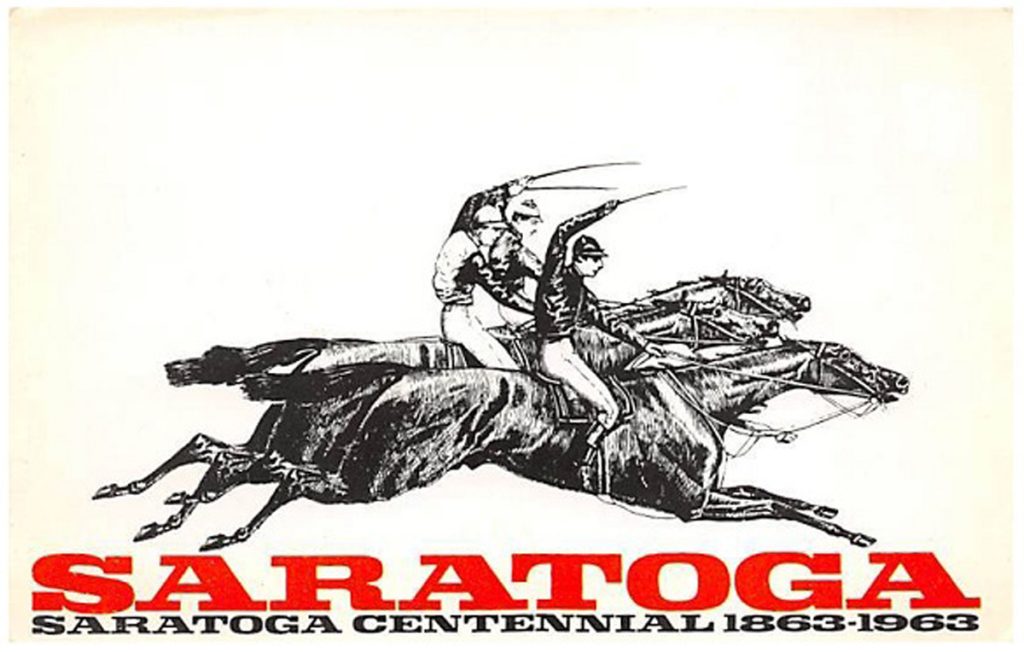
The summer of 1963 was the centenary of thoroughbred racing in the Adirondack foothills, and the citizens of Saratoga Springs marked the celebration with pomp and circumstance. Some years later the Saratogian Sports Editor Landon C. Manning would recall that the gardeners were busy, “helping to carry out Saratoga’s continuing theme of red and white, which was started in the centennial.”
Especially for the occasion, pioneering horticulturist Eugene Boerner at the Jackson & Perkins Company of Newark, New York had developed a gardenia-like pure white floribunda, which was named the Saratoga All-American Rose, that was dedicated at the celebratory race course in mid-June.
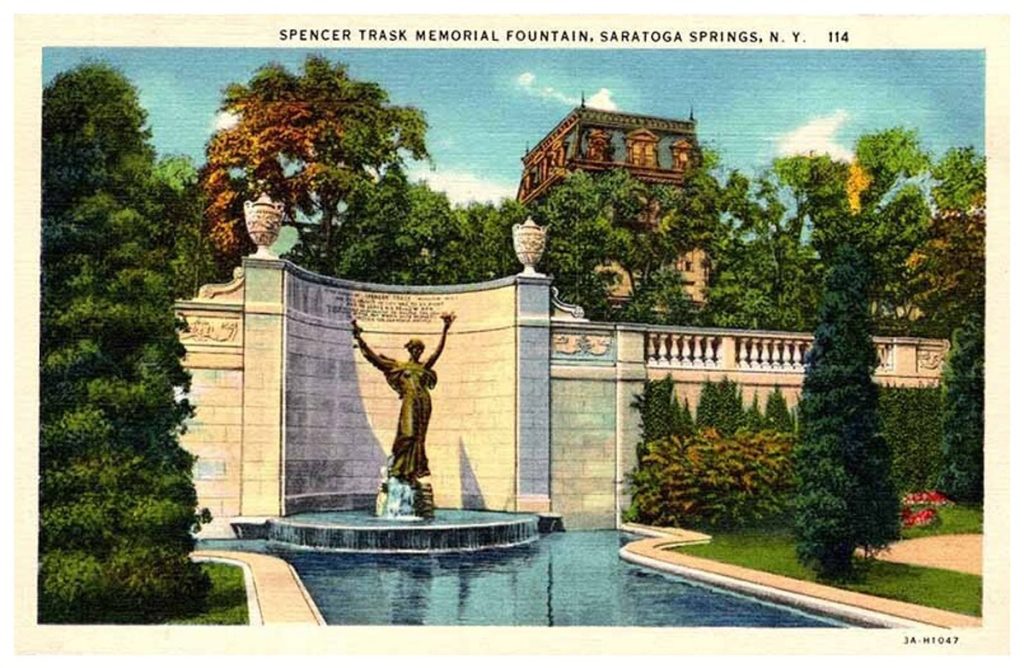
In June of 1963, as part of the 100th commemoration, the Saratoga Rose was placed in several locations in Congress Park. In order to correct what had been a continuing problem with the reflecting pool in front of the Spirit of Life sculpture, workers from the City’s Department of Public Works filled the basin with sand and soil instead of water. The plan was to plant the Saratoga Rose in the hastily created flowerbed.
The Spencer Trask Memorial concrete reflecting pool floor and walls had failed to hold water. Rather than welcome centennial visitors with a broken and cordoned-off component of Saratoga’s iconic sculpture, City Historian Evelyn Britten and DPW Commissioner Charles McTygue decided the Saratoga Rose display was an acceptable, quick and economic “fix” to the monument created by Daniel Chester French.
Mrs. Britten further pointed out that when the City contracted with Elvin C. Eaton to raze the Congress Hall Hotel in record-breaking time in 1913, in order to create the location for the Spirit of Life, that the foundation of the former structure was left in place as an expedient for accepting the setting created by Henry Bacon and Landscape Architect Charles Leavitt.
Reaction to the filled-in pool was swift, strong and negative. Robert McKelvey of 90 Lake Ave, a fervent preservationist who would later play a key role in the creation of SPAC, led the citizen charge on the City Council chambers in a special session. Mr. McKelvey was armed with a letter from Margaret French Cresson, the daughter of Daniel Chester French who had assumed his Chesterwood Studio in Stockbridge, Massachusetts. She wrote of the flowerbed, “It’s disgraceful. Saratoga Springs should be ashamed of itself.”
Evelyn Britten, who was also president of the local garden club, maintained that her motivation with the Saratoga Rose was to beautify Congress Park and was sensible and justifiable in light of the circumstances. Many others felt that a memorial to Spencer Trask, who had done so much to restore the springs in Saratoga, and was in fact killed in a New Year’s Eve 1909 train wreck while traveling to advocate on their behalf, needed to include the original flowing water element.
Mayor James E. Benton concluded that the DPW action of filling in the reflecting pool was “arbitrary and unauthorized” and the City Council voted unanimously, including DPW Commissioner McTygue, to provide funds immediately for a proper repair to the pool. The basin bottom was resurfaced, and walls rebuilt, so that shortly after Labor Day 1963, the Spirit of Life again flowed with its symbolic water from the bowl of the seraph who had come on wings.
As for the author, I am wondering what was left behind in the Congress Hall wine cellar, and if this is where the ghosts who haunt the Canfield Casino resort to during daylight hours?