

July Was Not a Good Month for Fred Currier
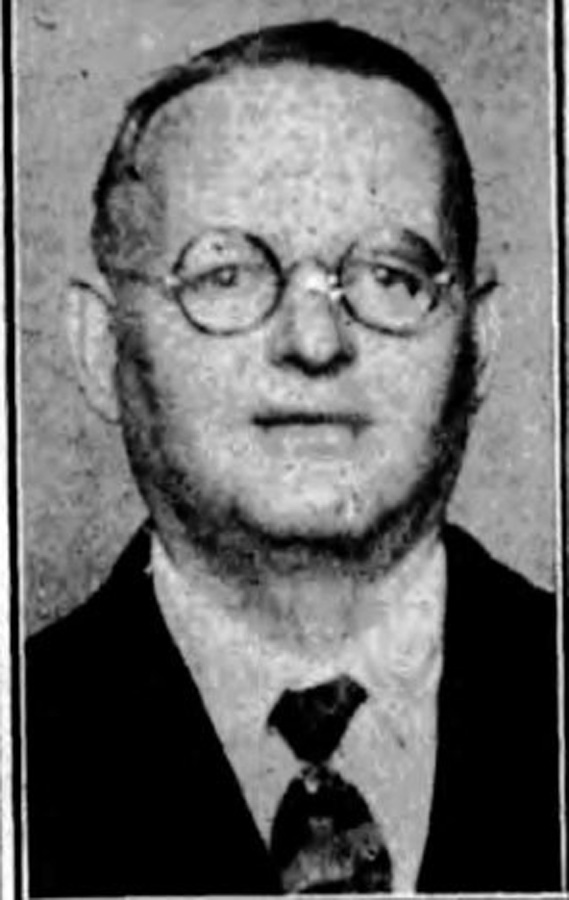
Waterford Town Constable Fred Currier
Russ VanDervoort is the Waterford Town Historian, leader of the Waterford Canal and Towpath Society and a Trustee of the Saratoga County History Center. He is the author of several books on Waterford history and can be reached at russvandervoort@gmail.com
What symbolizes the month of July? We addressed that question on Google. This was their reply. All in all, the symbolism of July speaks of boldness, regality, and outdoor adventures; joy, contentment, and a great deal of fun in the sun. Is this month going to be one of contentment, fun and/or adventure for you? We believe that Fred Currier of Waterford would have had a different response.
Fred was a man of many interests. His actual name was Alfred, but he was known as Fred. For seventeen years, he was a Waterford Town Constable. In 1921, Governor Nathan Miller appointed him Division Superintendent of Canals. When that commission was up, he returned to law enforcement as a Deputy Sheriff, later becoming a Day Jailer. It was his work in law enforcement that would cause Fred to have a different outlook on July than Google’s definition.
Our story begins in late evening on June 30, 1919. It would be July 1, by the time this story ended. Pietro Corso, a recent Italian immigrant, had found employment at the Eddy Valve in Waterford, had bought a small lot in the Dial City Section, and by all accounts was doing well. So well that the local Black Hand had taken an interest in his well-being. The Black Hand was reputedly an American branch of the Mafioso extortion group. Pietro, fearing for his family’s safety after they were visited by several Black Handers, roughed up, threatened and scared, contacted local authorities for help. The County Sheriff and Waterford Constables devised a plan for Pietro’s safety. On this night, Deputy Sheriffs Clarence Hovey, Patrick McCarthy, and Howard Dodge, all of Ballston Spa, along with Constables Fred Currier and William Naylor of Waterford, were dispatched to Dial City to protect Pietro and family.
It should be noted that neither Pietro nor his wife was well-versed in English; none of the listed people were known to the Corsos, and they didn’t know they were coming. It was reported in the July 1, 1919 Saratogian that Pietro saw five men approaching his property, three from the front, and two from the side. The street was poorly lit, and it was very dark. Fearing they were the “Blackhanders,” he opened fire with a shotgun and a revolver. As Currier and Naylor approached, they were fired upon. They were both struck. Dodge and McCarthy fell to the pavement as the second shots rang out, filling Hovey’s legs with shot as he was running behind a tree. Pietro then fled the scene; it was many days before he was located. As anticipated, Pietro thought the men were the Blackhanders he feared. All the wounded officers recovered. Fred, who was shot in the right eye, did lose the use of that eye.
After Pietro fled the scene, Mrs. Corso, who could speak some English, offered her account to the officers. She stated the following. Her husband had obtained a small piece of property, a short time ago. He soon bought a house and had it moved from the Village to the Dial City area. They obtained a cow, some chickens, and two pigs. This seeming prosperity attracted the attention of some avaricious foreigners who sent threatening letters asking for money.
On Saturday night, about midnight, two men went to the Corso home, forced an entrance, and threatened to kill the wife. They slapped one of the children, and when Corso ran for his gun, they left. On Sunday night, someone burned out the eyes of their watchdog. Yesterday, another threatening letter was received, and Corso notified the police that he was expecting another attack would be made during the night. He obtained a shotgun and positioned himself near a window, while his wife and children hid in the back room. After firing twice, he ran from the house. A search for Corso was conducted for two days. When it was learned that the neighbors in Dial City, as well as the local constables, believed that Corso was a law-abiding citizen, no charges were levied, and Corso returned. Apparently, the Black Handlers sought a less combative target. No other activity was reported.
As far as we know, Fred’s Julys thereafter were relatively uneventful until July 28, 1928. He was now with the Sheriff’s Department in the capacity of Day Jailer. Incarcerated that day was Roy Brown, alias George Erwell Fellows, alias George Frank. Brown was jailed as the ringleader of a car-theft group operating out of a barn in Moreau. It was discovered he was wanted in Vermont for car stealing, New Hampshire for assault with attempt to kill, and Tennessee for murder. In the hours that followed, after a visitation by his alleged wife, someone reported they heard the sounds of sawing. Undersheriff George Knight, Night Jailer Benjamin Simon and Day Jailer Fred Currier entered Brown’s cell; Simon pulled the blanket off Brown, who displayed a pistol. He fired four shots, hitting Fred with each bullet.
In our time, we have to wonder how this could occur for a prisoner to come up firing while in custody. It was discovered, after the fact, that Brown had the practice of carrying a cleverly concealed, small-caliber pistol that hung from an interior worn belt, with a cloth holster between his legs. In those days, jailers didn’t check there. It was further discovered that, indeed, two bars on the exterior window of his cell had been sawn through. It was suspected that his alleged wife’s visit had been the source of the saw. Brown would later state that he had carried that in as well. Jailing procedures have advanced since 1928.
Although Fred Currier hovered near death for several days, he did make a recovery. He returned to work and eventually ran in a primary election for the office of Saratoga County Sheriff. He failed in the primary; it wasn’t held in July.
No charges were filed against Corso in the first Fred Currier shooting. Let’s examine the second shooting. George Edwell Fellows, alias Roy Brown, a notorious New England gunman, who shot the undersheriff, Fred Currier of Waterford, was arraigned in Ballston Spa on a charge of first-degree assault. It was soon determined he was also wanted in the state of New Hampshire. He was also wanted in Vermont, as Roy Brown, for automobile theft.
In some accounts, Fellows, or whoever he might be, was listed as a mild-mannered Vermont School Teacher, as well as a sharpshooter in the Marines.
Dell Fellows was charged with assault, to which he pleaded guilty and was sentenced to twenty-five years in prison. In early November, the doors of Clinton Prison in Dannemora, New York, closed behind George “Dell” Fellows, and he settled into the daily prison routine.
Fred enjoyed his retirement and suffered no more shootings.