

Local Folk Singer Unlocks the “Magic” of the Adirondacks
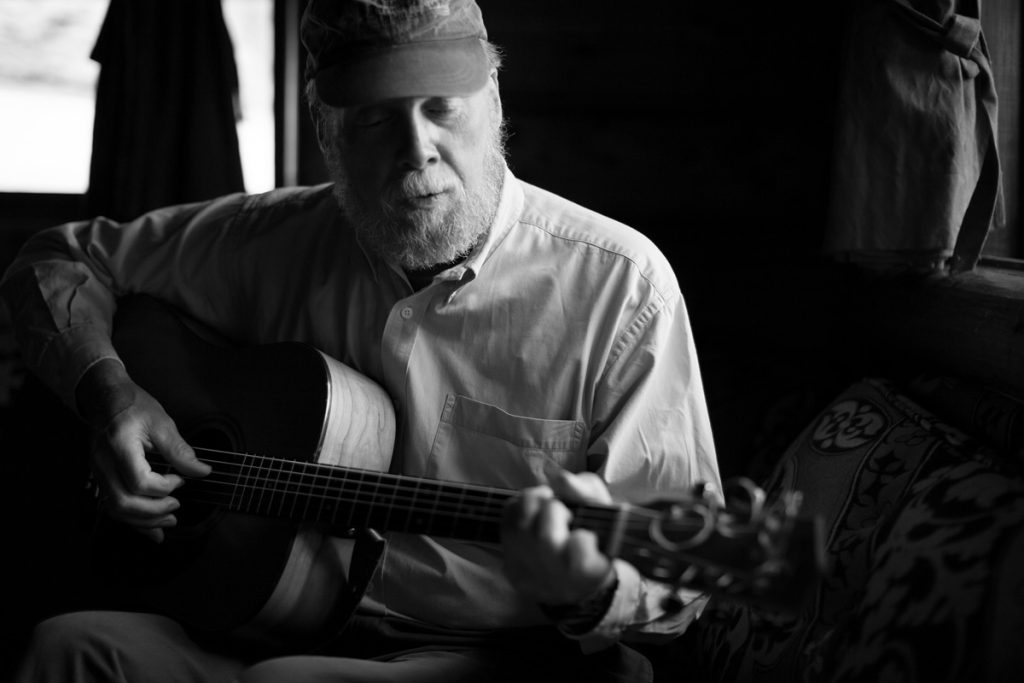
SARATOGA SPRINGS — Inducted into the Capital Region Thomas Edison Music Hall of Fame last year, Dan Berggren is one of a select group of musicians keeping the spirit and traditions of Adirondack music alive.
But what exactly is Adirondack music?
Ahead of his benefit concert scheduled for Friday, March 27 at the Unitarian Universalist Congregation in Saratoga Springs, Saratoga TODAY spoke with Berggren to better understand the unique history and genre of Adirondack-style songwriting. Presented below is that interview in Q&A format, edited for length and clarity.
Saratoga TODAY: How would you describe Adirondack music?
Dan Berggren: The roots are in the days of logging, when, in the 1800s, a lot of Irish immigrants and a lot of French-Canadian immigrants ended up in the Adirondacks because of the demand for cutting trees and getting trees to market. These people brought their music with them, things that they had learned by ear from their parents. Some of the loggers brought songs from other places, and these songs existed over the decades because they just changed the name of the river or the name of the town where the logs were going to. In the case of Adirondack songs, they always mentioned the logs going to Glens Falls. I guess that’s part of the essence of folk music, taking something old and adapting it and making it either new or making it local. That’s the very essence of folk music, to me.
Saratoga TODAY: It seems like you have a history of collaborating with other musicians. Would you say that there’s a healthy community of people who are interested in writing about the Adirondacks, or carrying on the tradition of Adirondack music?
Dan Berggren: It’s a small group, but it’s a vibrant group. One example of this group is something that happens at Great Camp Sagamore in Raquette Lake every June. It’s called Roots & Branches. There’s John Kirk, Trish Miller, Sara Mionovich, Dan Duggan, Peggy Lynn and myself. So, six of us have been leading this Roots & Branches workshop that is open to young people, people in their 20s and 30s, who are interested in this pursuit of carrying on the tradition of folk music, of music that tells stories. Not only the old songs but writing new ones in that tradition. That comes up every June. Actually, it’s free for those who attend. They fill out an online form, and they don’t have to pay for this workshop.
Saratoga TODAY: How did you find yourself becoming someone associated with and interested in this type of music?
Dan Berggren: When I was a little kid, my older brother would bring records home from the public library. They were records like Pete Seeger, The Weavers, Lead Belly, or folk records. My brother went off to college, and when he would come home on vacation, he had a guitar with him, and he knew how to play the guitar. I thought, ‘Wow, that’s magic. Show me a few chords.’ When I was 13 or 14, I started playing the guitar. Jump ahead to after college, I was in the army, and upon arriving back in the Adirondacks in 1975, I discovered that there was this thing called Adirondack music. Marjorie Lansing Porter was a journalist who became the Essex County historian, and she would go door to door (this is in the late 40s, early 50s) looking for old songs, and she would record them on these acetate discs. I discovered this collection at the SUNY Plattsburgh library and wondered ‘How come nobody has ever mentioned Adirondack music to me before? How did I come upon this just by accident?’ I decided if I was going to sing and perform music, why not sing and write about my home? That was 1975 when I started writing songs and collecting songs and sharing them with audiences.
Saratoga TODAY: What is it about the Adirondacks that you think draws people towards them? Obviously, it’s very beautiful and people enjoy hiking, but there also seems to be something about it that inspires a lot of creative types.
Dan Berggren: I think it’s the magic of wilderness. Over 100 years ago, legislators in the state decided it would be a good thing to have 6 million acres, call it the Adirondack Park, and it’d be public and private. We won’t fence it off and have it be separate, but it’ll all be integrated as one park, and that wilderness can exist right next door to a K-12 school. It can exist right next to somebody’s farm. You can drive through little towns like Olmstedville, where I grew up, or bigger towns like Lake Placid, and you’re only minutes from the wilderness… I’ve never been anywhere else where there’s this integration of wilderness and private and commercial and industrial where they can exist in a space, and you can go off on a hike or paddle a canoe and not see another soul, if you want. You can go to Lake George. You can go to a big, populous area downtown, like Lake Placid. But you can also go to a pond and canoe for hours and never see or hear another human being. It’s a balm for the soul that lets you grow in another way.