

Putting Fun in Congress Park
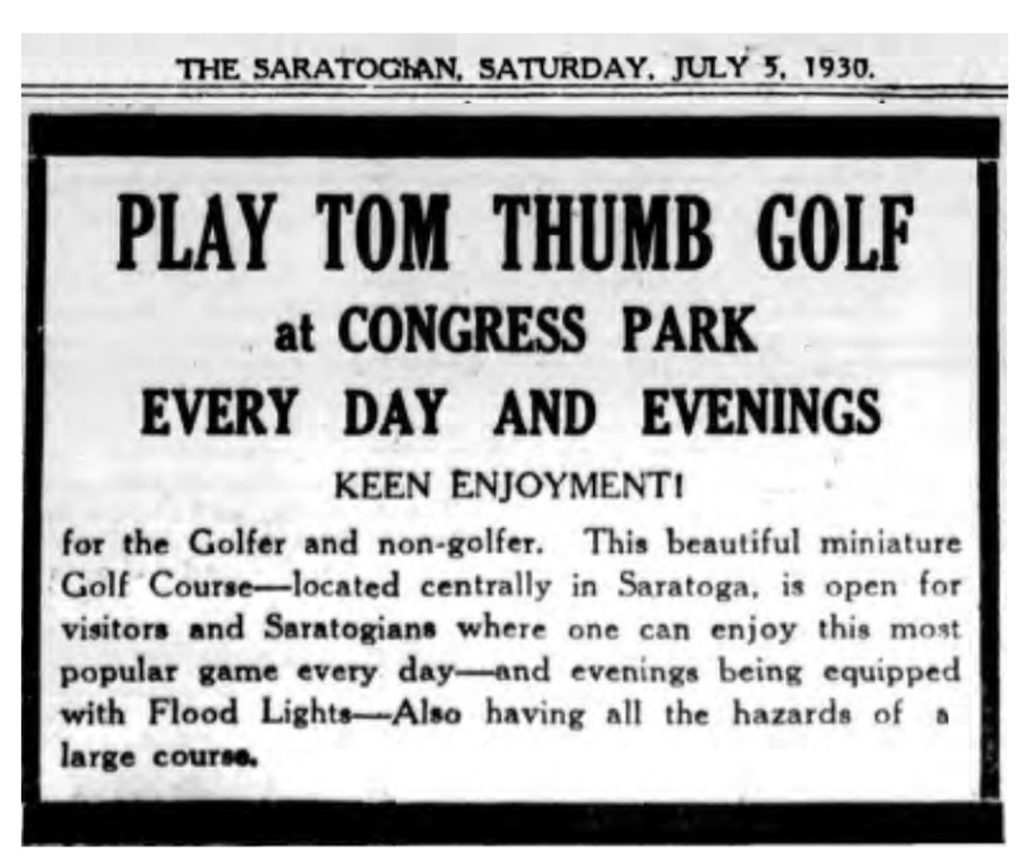
in Congress Park.
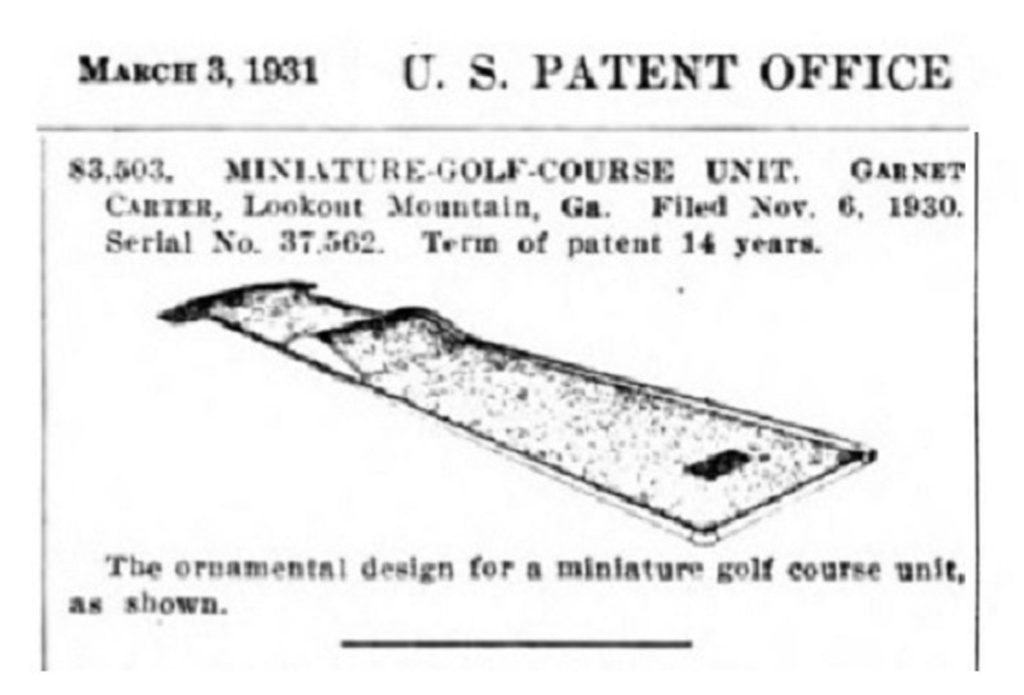
Saratoga Springs has always been on par with its entertainments, yet some of those adopted in the past seem unthinkable in our time. An enterprising gentleman named Garnet Carter operated an amusement park on top of Lookout Mountain near Chattanooga, Tennessee which he called Fairyland. In 1928 he installed a miniature golf course there, which found instant success and was wildly popular.
Newspapers across the country reported the fashionable phenomena, which they also termed “Tom Thumb” golf, as well as pony golf, midget golf, peewee golf, and pigmy golf. Originally conceived as an aid to the serious golfer in practicing putting, Chattanooga’s Mr. Carter patented and marketed a variety of prepared fairways and greens which could be shipped across the country, and laid out in configurations that fit the locality, for fun use and diversion.
In mid-June 1930 the Saratoga Springs City Council unanimously voted to grant a one year lease to Jerry J. Mickle to operate a miniature golf course in Congress Park, expressing the opinion that something of the sort was needed to provide entertainment in the city greensward. Cinders and ashes were drawn into the park to be used as a the foundations for the putting greens, where they were laid out in the section between the Canfield Casino and Spring Street, immediately west of the Spit & Spat fountain in the Italian Garden.
Concessionaire Mickle surrounded his Tom Thumb golf course with an admission fence, and electric lights for nighttime play. The Saratoga Race Course, the Lakehouses and Broadway hotels had long been the dress parade of the democracy, yet this new attraction added another unique facet. The decorated human appreciates being admired and attracting attention, and there was no better opportunity than the brightly lighted stage-like setting of the miniature golf course in famous Congress Park. Yet one more Spa venue to see and be seen.
On the cusp of track season in late July of 1930, the Saratogian reported the heavy use of colored pellets on the cottonseed and cocoa fiber manufactured greens,
“New amusements of this city got a big play over the week-end. At the Tom Thumb golf course in Congress Park, a large number of players went the rounds yesterday and Saturday. The course has been crowded almost every day since its opening and the past week-end marked one of the largest yet seen.”
Tee-mats and scorecards became common sights in the Park.
As a concession on public property, Mr. Mickle was required to keep transparent books, which showed a profit during the season of 1930, with a very thin margin on the black side of the ledger, mostly due to the introductory rental rate the City of Saratoga Springs allowed. In 1931, however, this rate was increased substantially.
The NEA wire service column carried in the October 5, 1931 Saratogian editorialized,
“Miniature golf, having written amusement history last year, now seems to be writing its own obituary in red Ink.”
These were hard times when men would walk along Broadway with their empty pockets turned inside-out, colloquially called “Hoover flags,” in mute protest of the lack of governmental interest in their fiscal plight. The economics of the Great Depression wrought a cruel list of business and bank failure in the early 1930’s, fostering the New Deal as the path through fiscal woe. The miniature golf links in Congress Park were one more victim of the malady. To create a successful start-up business, launched during this severe financial downturn, would be as difficult as caracoling elephants.
In the early summer of 1932 the Tom Thumb course and its surrounding fence were removed, as the City Fathers pondered replacing the operation with shuffleboard courts. The area the diminutive fairways and greens had occupied were reseeded into lawn, and this failed enterprise faded into the long history of Congress Park.