SARATOGA SPRINGS — At its annual meeting on May 14, staff of the Saratoga Performing Arts Center (SPAC) reflected on the past decade of transformations as the organization celebrated 10 years of leadership under CEO Elizabeth Sobol.
“Anniversaries invite reflection as well as celebration,” said Sobol at the annual meeting. “They ask us to look back with clarity and honesty—and forward with courage and resolve. Because sixty years ago, the creation of SPAC was exactly that: an act of bold and audacious imagination.”
Reflecting on SPAC’s evolution over the past decade, Sobol continued, “Ten years ago, we were the stewards of something extraordinary—but also something at risk. And so, we asked ourselves: what would it mean to be as bold now as SPAC’s founders were then? Over the past decade, we have transformed this campus—honoring its history while preparing it for the future. We have evolved from a seasonal presenter into a year-round institution, bringing life, learning, and artistic expression into all four seasons.”
Throughout the meeting, leadership reflected on SPAC’s transformation over the past decade into a year-round cultural organization. Since Sobol’s arrival in 2016, SPAC has expanded its programming, grown its educational reach, renovated and reimagined its campus, and launched new initiatives devoted to increasing accessibility, wellbeing, and connection.
Today, SPAC welcomes approximately 500,000 visitors annually and contributes an estimated $105 million in annual economic impact to the region, according to a 2023 study by Camoin Associates.
SPAC leadership highlighted the growth of its education initiatives, which have expanded from serving 5,000 students annually in 2016 to more than 60,000 individuals today in partnership with over 150 schools and community organizations throughout the Capital Region.
Leadership reflected on the launch of SPAC School of the Arts in 2021, which expanded access to arts education and creative learning opportunities. Additional initiatives highlighted at the meeting included a new collaboration launched last fall with Pilobolus and the Skidmore College Dance Department exploring the relationship between creative movement, social connection across generations, and wellbeing.
Additional initiatives discussed included expanded partnerships with Capital District Latinos, Double H Ranch, AIM Services, the Backstretch Employee Service Team, and the New York Race Track Chaplaincy, as well as continued growth of flagship programs including Classical Kids and the SPAC Dance Project.
SARATOGA SPRINGS — On May 7, Skidmore College opened an exhibit highlighting all projects that the numerous Studio Art majors completed for their senior theses. The exhibit was open to the public until May 16, allowing the community to come together to admire the work of young artists.
The artworks themselves were a mix of different mediums, including oil paintings, photography, animation, sculpture, graphite, and fabrics. These mediums allowed the students to best convey their emotions in a way that clicked with them and resonated with the public.
Each work expressed a layer of vulnerability, individual talent, and emotion that added to the overall magic of the work without needing words or an explanation. The artists let the viewers decide how the piece speaks to them based on their own interpretation of the project.
One artist stood out from the rest, Oliver Frontini. He constructed a massive sculpture that was allotted a separate space, allowing viewers to marvel in its beauty. The sculpture included three life-sized sculptured men, each having uncannily accurate features. The work was raw and original, gathering a decent crowd to observe the show of talent.
The entire exhibition was a wonderful showcase of both Skidmore and local talent, with the community uniting to support Saratoga’s very own Studio Art seniors. The variety in works and skill sets allowed for the audience to get a wide range of sensations and feelings as they walked through the exhibit.
Gov. Nelson Rockefeller mounts a bulldozer during the June 1964 SPAC groundbreaking ceremony. Photo provided by the Saratoga Performing Arts Center (SPAC).
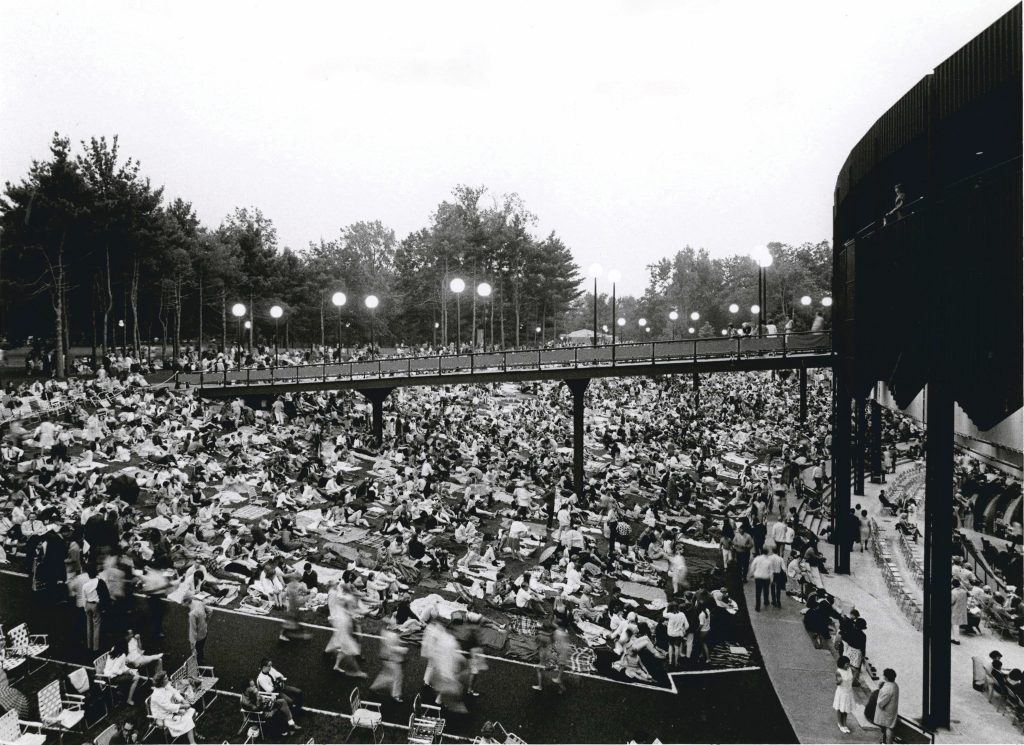
In the 1960s, a crowd of SPAC attendees pack the venue’s lawn. Photo provided by the Saratoga Performing Arts Center (SPAC).
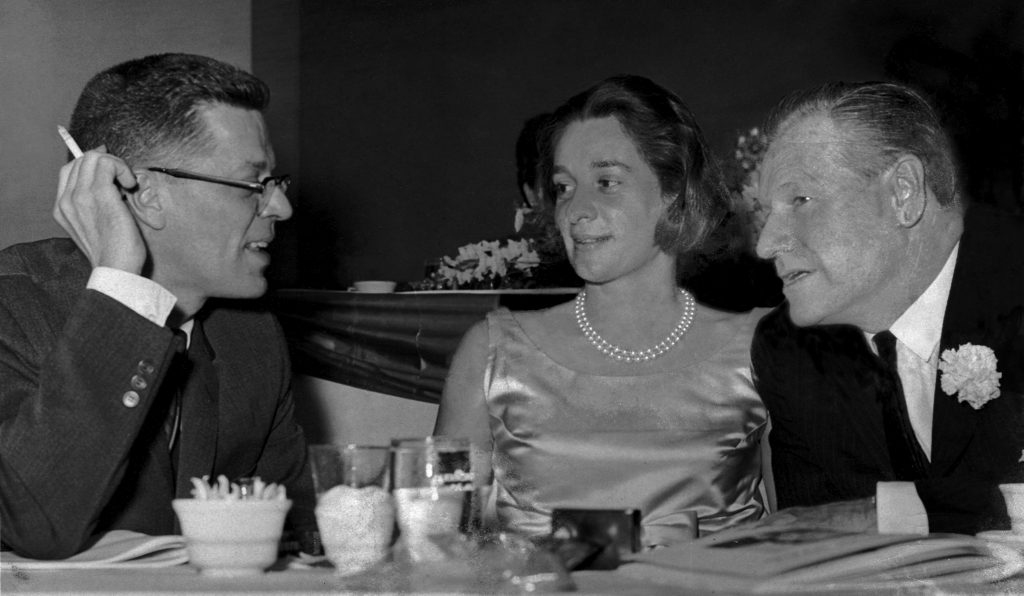
Fred Eaton, publisher of The Saratogian, with Gov. Rockefeller and the governor’s wife, Happy Rockefeller. Eaton and the Rockefellers were instrumental in creating SPAC. Photo provided by the Saratoga Performing Arts Center (SPAC).
THE SPIRIT BEHIND SPAC
Nelson Rockefeller had every advantage in life, descended as he was from the nation’s first billionaire. Opulent estates, an Ivy League education, and colossal sums of money were at his disposal.
But he was also dyslexic, and for much of his life, he didn’t realize he had a learning disability. He believed that his IQ was simply not as high as those around him. This resulted in some intellectual humility. Rockefeller—as governor of New York from 1959 to 1973 and then vice president of the United States from 1974 to 1977—surrounded himself with the best experts his vast fortune could buy.
But Rockefeller’s dyslexia also meant that he struggled with pre-written speeches, a burden for someone so often in the spotlight. Though not typically known for his oratory skills, there were off-the-cuff moments when his passion rendered him eloquent.
One such moment arrived during a heated budget debate with a fellow Republican, who argued that because state spending needed to be reduced, the state council on the arts would have to take a hit. Rockefeller rejected the idea and then uttered these memorable words:
“Let me ask you a question. What is government all about? What is life in this nation all about if it’s not centered around our culture? You indicate that these issues of dance and the arts have nothing to say to us, but they are absolutely the essence that holds our culture together… This isn’t silliness. This is what we’re all about.”
Rockefeller’s sentiment, spoken decades ago, is in many respects embodied by the existence of the Saratoga Performing Arts Center (SPAC), which is celebrating its 60th season this summer.
“If you think about Rockefeller and his view of society, he really looked at the arts as the foundation of a democratic society,” said SPAC’s CEO Elizabeth Sobol. “I’d love to think that spirit permeates what we do.”
“People forget now what a radical departure it was 60-plus years ago for a state government, or for that matter, the federal government, to invest tax dollars in culture,” said Rockefeller’s biographer Richard Norton Smith. “Saratoga was, in a lot of ways, an experiment. And I think [Rockefeller] would be very, very pleased with the way it’s evolved.”
THE LOCAL NEWSPAPER THAT STARTED IT ALL
Before Nelson Rockefeller became entwined in the creation of SPAC, there was an editorial that sparked the idea of a performing arts venue in Saratoga Springs.
Duane LaFleche of the Knickerbocker News, a now-defunct newspaper based in Albany, caught wind of the idea of hosting a summer festival for the New York Philharmonic and the New York City Ballet in Vermont. LaFleche had a different idea.
“It seems strange, somehow, that a New York Orchestra and Ballet should have to look out of the state for a summer home,” LaFleche wrote in his 1961 editorial. “Wouldn’t the State Reservation at Saratoga make a nice location?”
With the idea now out in the ether, prominent Saratogians converged to manifest it. One of those manifesters was another newspaperman, Fred Eaton, publisher of The Saratogian. According to him, “the idea for a performing arts center started with an editorial in The Albany Knickerbocker News, a speech by then State Sen. Eustis Paine, and telephone calls to two people from Saratoga Springs resident Robert N. McKelvey, then with the state commerce department in Albany.”
The idea spread from one interested party to another—McKelvey, the Adirondack Trust Company, The Saratogian, Yaddo, Leonard Bernstein (then musical director of the New York Philharmonic), and Charlie Dake of Stewart’s Shops all played their parts. A veritable who’s who of Saratoga power players had coalesced around the idea. Then, Gov. Rockefeller entered the stage.
ROCKEFELLER’S INFLUENCE
“At a January dinner at the Governor’s Mansion, I got Gov. Rockefeller’s ear and explained our problem – we needed an angel,” Eaton wrote. “His $1.2 million from the Martha Baird Rockefeller [Fund] was a huge stimulus.”
The precise total donated to SPAC’s creation by the Rockefeller family varies from source to source, but all agree that it was substantially more than $1 million (which is equivalent to $11 million today).
“The governor’s support was wholehearted,” states SAPC’s 50th anniversary commemorative book, published a decade ago.
“A lot of things had to come together for the Saratoga Art Center to exist, and it never would have happened, in my opinion, if Nelson Rockefeller had not been governor of New York at that point,” said Smith.
Saratogians also turned out their pockets, committing to fund the entire $1.8 million construction estimate. Again, the Spa City elite (such as the Dake family and Marylou Whitney) stepped up to the plate. By the time they were done, millions had been accrued.
As money fell into place and plans advanced, SPAC was hit with a curveball: the New York Philharmonic decided to present its summer concerts in Central Park, leaving the future SPAC without an orchestra. But Richard “Dick” Leach, then the executive director of SPAC, came to the rescue, securing a commitment from the Philadelphia Orchestra instead. After the New York City Ballet also formally committed to the project, the time had come for a suited Nelson Rockefeller to hop aboard a bulldozer for the groundbreaking ceremony.
THE IMPACT ON SARATOGA SPRINGS
Initially, it made sense that an arts center housing two New York institutions (the Philharmonic and Ballet) should be located in New York. But there were other reasons to build a center in Saratoga.
In 1966, when SPAC first opened, a New York Times article labeled Saratoga Springs “a city in decline.”
“The 1950s were a bleak time for Saratoga Springs,” agrees SAPC’s 50th anniversary book.
According to the Saratoga Springs History Museum’s executive director, James Parillo, the Spa City back then was “struggling to redefine itself.”
Saratoga’s collapse stemmed from a confluence of factors. Tourism declined, in part because it changed. The Victorian era, in which visitors spent weeks or months in summer destinations like Saratoga, had ended. So too had the era of gambling. By 1953, all illegal casinos in town were kaput, which sent many service workers packing. Use of the Spa hydrotherapy facility had been declining for at least a decade. Major hotels along Broadway had become vacant behemoths. The city needed a shock to its system. And then SPAC arrived.
“When SPAC came in 1966…they would start attracting a new audience into Saratoga,” Parillo said. “That’s the real kick that we needed to get going.”
It was, as Nelson Rockefeller declared at SPAC’s groundbreaking, a “new era for Saratoga.” His brother Laurance Rockefeller called it a “rebirth.”
THE LAUNCH
On June 30, 1964, SPAC broke ground. Around 1,000 people attended the ceremony.
“When the Performing Arts Center is completed two years from now, we will have here a unique combination of spa, park, and cultural center whose contribution to the recreational, aesthetic, and economic life of this state will be of major significance for generations,” Rockefeller predicted in his remarks.
The governor also reiterated his firm belief that government should “encourage the arts.”
“[Government’s role] is not to dominate the arts, but to lend encouragement and support,” Rockefeller said.
In 1967, after SPAC had concluded its first year of operation, Rockefeller saluted the Saratogians who joined forces to make the venue a reality.
“As impressive as its appeal has been in the international worlds of music, the dance, and the other arts, even more exciting has been the complete acceptance given the Performing Arts Center by the citizens of Saratoga Springs,” Rockefeller wrote in a statement published by The Saratogian. “They have contributed heavily of their time and money to make the Center an overwhelming success. But they also have supported the Center by attending the performances with warm and enthusiastic applause.”
60 years later, the applause hasn’t died out.
At “This Place Loves You Back,” a photography exhibit unveiled earlier this month at The Pines at SPAC, one testimonial from a veteran SPAC-goer read: “I am 93 years old, my husband and I attended the opening night of ‘A Midsummer Night’s Dream.’ I have only missed two opening nights since that time, bringing my children, grandchildren, great grandchildren, and many friends. It has been a great pleasure.”
Mary Ann Fitzgerald, who watched Rockefeller break ground in 1964, shared similar sentiments with the Times Union a decade ago when SPAC celebrated its 50th season.
“SPAC is the crown jewel in Saratoga,” she said. “I can sit out on the lawn, gaze up at the stars, listen to the rush of Geyser Creek and hear some of the greatest musicians in the world. You can’t beat that.”
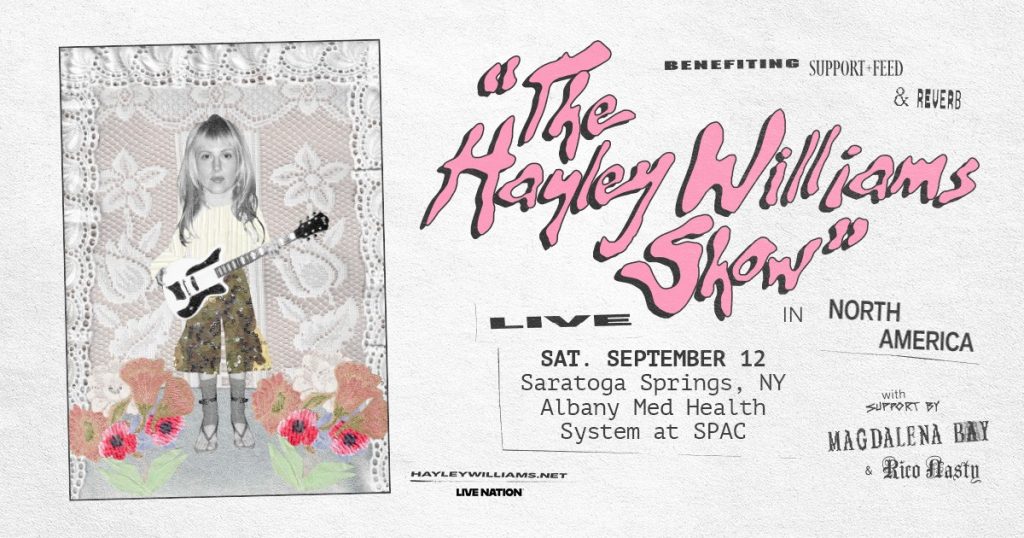
SARATOGA SPRINGS — “The Hayley Williams Show” recently unveiled its expansion across North and Latin America, which includes a stop at the Saratoga Performing Arts Center (SPAC) on Sept. 12.
The North American leg will feature support from Magdalena Bay and Rico Nasty, while singer-songwriter Annie DiRusso joins the lineup for Latin America and Puerto Rico. $1 from every ticket sold in North America will directly benefit REVERB & Support+Feed.
In the U.S., the tour uses Ticketmaster’s Face Value Exchange to help fans get tickets at the original price. Tickets will be non-transferable and can only be resold on Ticketmaster at face value. In New York, where laws prevent resale restrictions, tickets can be transferred but Ticketmaster will still honor Hayley Williams’ terms by keeping resale prices at face value on its site.
For the last few months, Hayley Williams has been touring her most recent album “Ego Death at a Bachelorette Party.” The tour has been a celebration of her critically acclaimed, Grammy-nominated album, which she’s played in full each night. The full North American, UK and European tour legs sold out in seconds, and featured numerous surprise guest stars.
“The Hayley Williams Show” will feature material across all three of the singer’s solo albums, as well as some surprises.
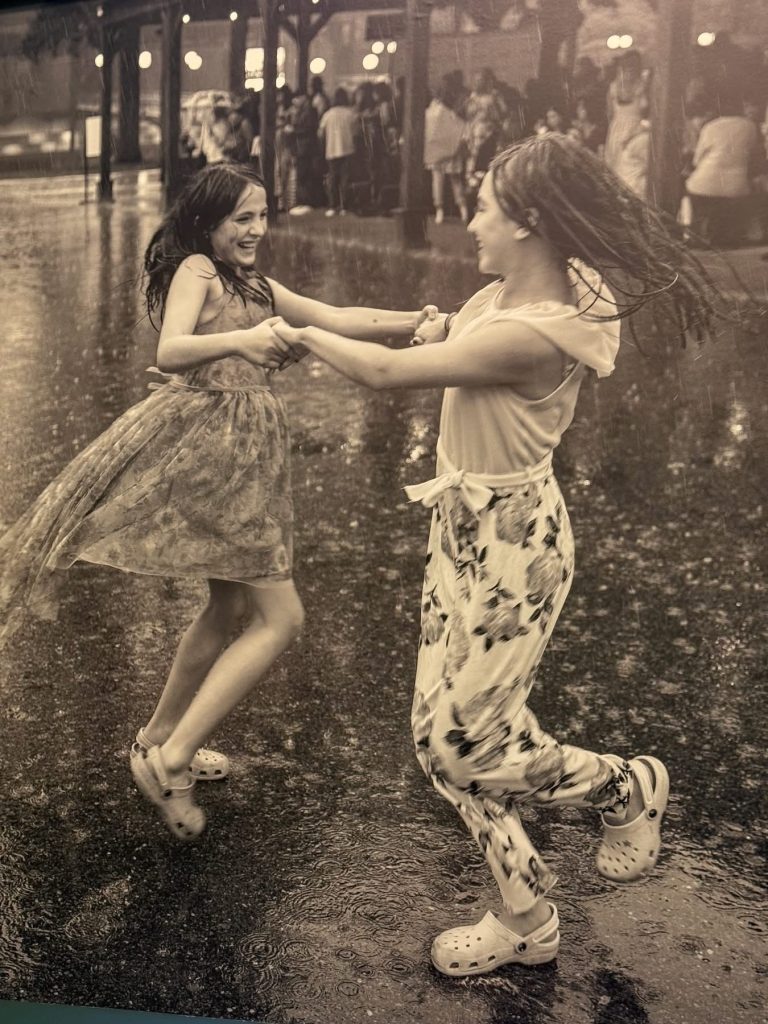
Photo (of the photo by Dave Bigler/Ironglass Productions) by Jonathon Norcross.
SARATOGA SPRINGS — “People gather here for many reasons. For music. For dance. For a night outside under the trees. For the quiet electricity of thousands of strangers paying attention to the same thing.”
So reads a light green-colored wall in SPAC’s new photo exhibition “This Place Loves You Back,” which was unveiled at The Pines last Thursday evening.
The installment, created by artist Whitney Browne, “highlights the intimate, in-between moments that define the audience experience—capturing the spirit of connection that has lived on SPAC’s grounds for generations,” said SPAC.
Browne dug through SPAC’s photo archives to find some of the moments of romance, friendship, joy, relaxation, and community that have occurred at SPAC since it opened in 1966.
The exhibition is well-timed as SPAC celebrates its 60th year of existence.
Of the exhibit, Browne said, “Looking through the archives of Saratoga Performing Arts Center, certain patterns begin to appear—not only the performances on stage, but the quieter moments around them. Over time, places that hold this kind of shared attention begin to gather memories. They accumulate stories, traditions, friendships, and the quiet imprint of the people who have passed through them. This exhibition moves through those traces—photographs and fragments of time. If you have ever sat here, listened here, or looked around and felt yourself part of the moment, you are part of that history too. This place has been paying attention to you, too. And, in its own way, this place loves you back.”
The exhibition includes photography by Francesco D’Amico, Dave Bigler, Jake Ritz and Juan Soler of Ironglass Productions, Bryan Lasky, Erica Miller, Rebecca Loomis, and Shawn LaChapelle.
In addition to images, there are a few short stories and testimonials on the walls of The Pines. They pay tribute to the “pleasure,” “incredible sense of peace,” and “mesmerizing” emotions evoked by SPAC performances.
The exhibition is open to ticketed guests prior to evening performances of BalletX, New York City Ballet, and The Philadelphia Orchestra, inviting audiences to explore the exhibit as part of their SPAC experience. Additional viewing times may be added; visit spac.org for the full schedule.
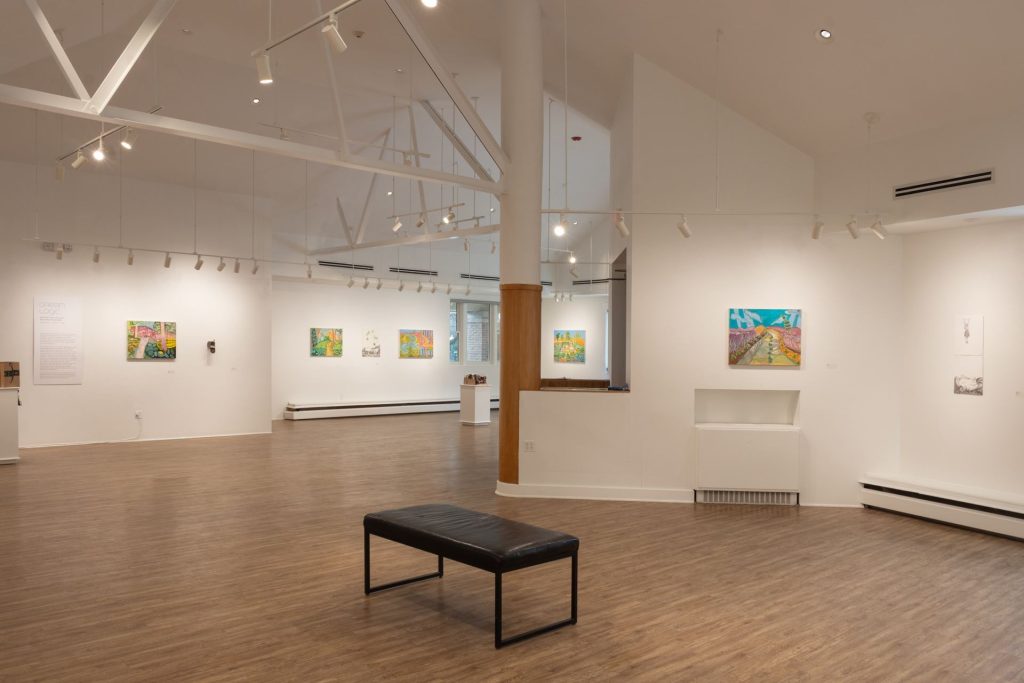
SARATOGA SPRINGS — On Tuesday, May 19 from 5 to 7 pm, Saratoga Arts will dedicate its main art gallery to the Dake Family and Stewart’s Shops.
Longtime supporters of Saratoga Arts throughout its 40-year history, the Dake Family and Stewart’s Shops most recently contributed $400,000 towards the arts organization’s $2 million building renovation.
“This instrumental gift has helped Saratoga Arts realize its next iteration as the community arts center for our region,” said Saratoga Arts.
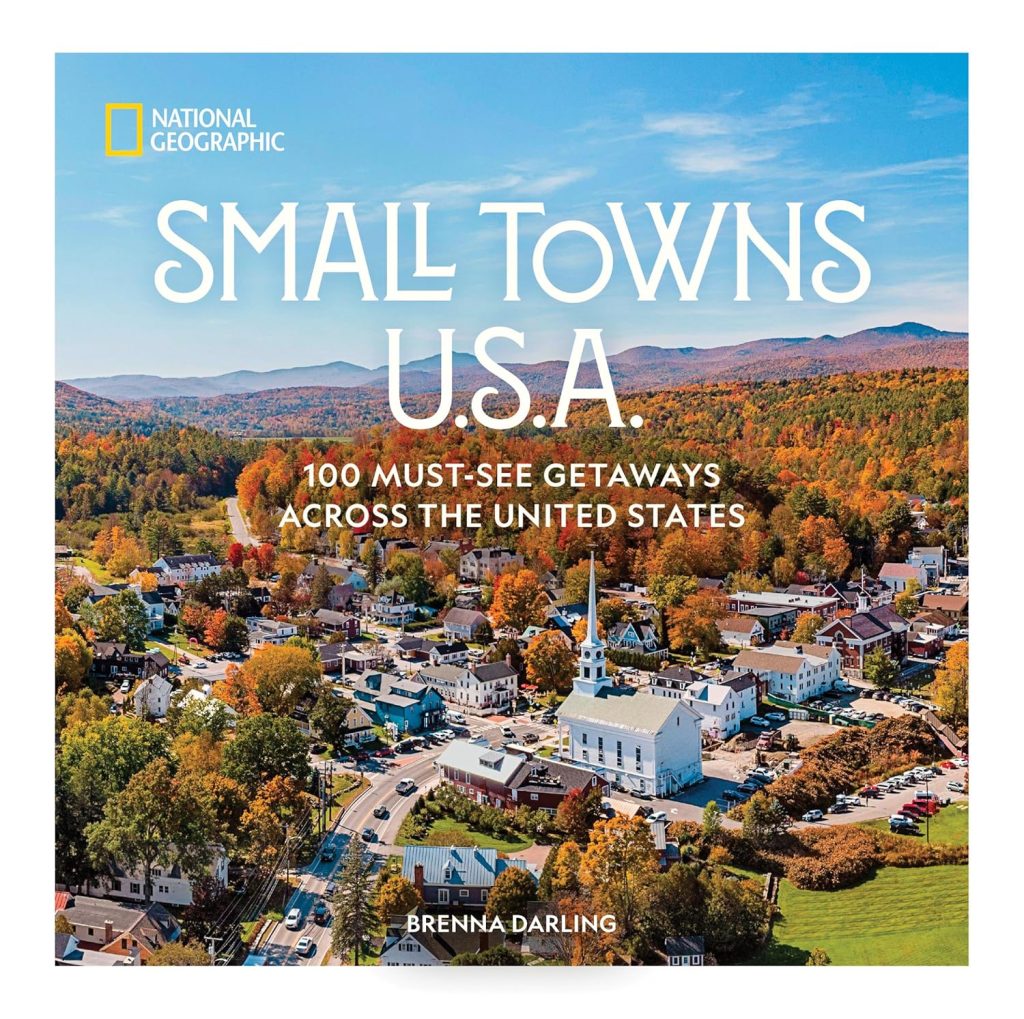
Book cover of “Small Towns U.S.A.: 100 Must-See Getaways Across the United States” via National Geographic.
SARATOGA SPRINGS — Saratoga Springs has been officially deemed one of 100 “must-see getaways across the United States” by a National Geographic book published last week.
The book’s Saratoga entry includes two photographs by Samantha Decker, a Saratogian acclaimed for her evocative captures of all things horses, including the Saratoga Race Course, Oklahoma Training Track, various breeding farms, Therapeutic Horses of Saratoga, and the Saratoga Polo Association.
The coffee-table tome “Small Towns U.S.A.: 100 Must-See Getaways Across the United States” was published on May 5 and is available on Amazon. Other locales featured include Paducah, Kentucky; Broken Bow, Oklahoma; Egg Harbor, Wisconsin; and Cody, Wyoming.
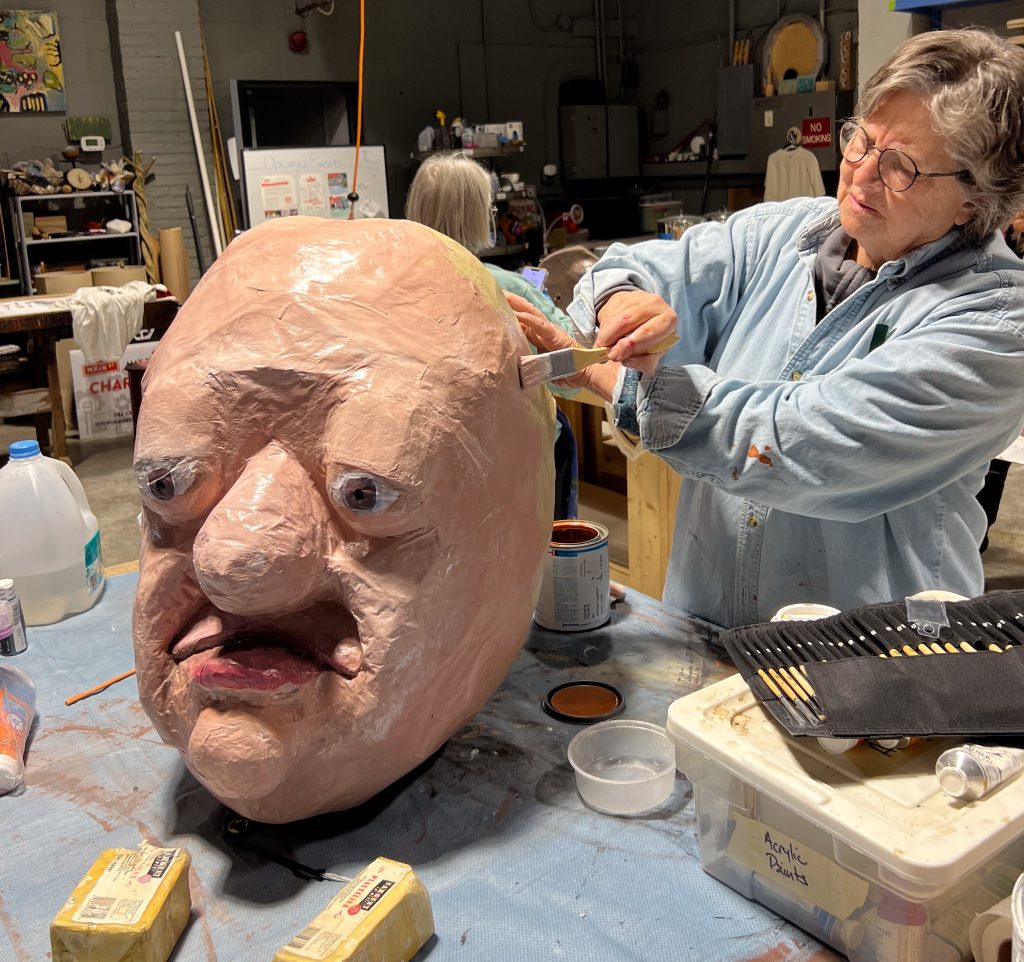
CHARLTON — This spring, neighbors, families, artists, and first-time makers are gathering at Main Street Studio to build a cast of giant parade puppets celebrating the history and spirit of Harmony Corners, a historic hamlet in the northeastern corner of Charlton.
The puppets—which include four large square-dancing backpack figures, a fiddle player, giant strawberries, and a two-person cardboard buffalo—will march in the 2026 Charlton Founders’ Day Parade on Sunday, June 7.
The project is organized by Main Street Studio, a member-supported community craft studio located at 786 Charlton Road in Charlton, right on the parade route.
Unlike floats built behind closed doors, every puppet and prop in Main Street Studio’s procession is constructed by volunteers in open-community build sessions. Participants need no prior experience, just a willingness to cut, glue, sew, or paint alongside their neighbors.
“Whether you have two hours or the whole spring, there’s a place for you in this project,” said Jason Nemec, co-founder of Main Street Studio. “We’ve had kids, grandparents, experienced artists, and total beginners, all working side by side. That’s what makes it special.”
The build sessions are led by local artists Matt Paul, Maria DeAngelo, and Renee Johnson, who are guiding volunteers through papier-mâché sculpting, foam construction, fabric printing, and costume making. The puppets are constructed from recycled materials like newspaper, cardboard and foam, PVC pipe, fabric, and paper-mâché.
The parade entry’s centerpiece—a two-person cardboard buffalo—is a nod to one of Harmony Corners’ most cherished stories.
When the Harmony Corners Volunteer Fire Department purchased a 1929 Buffalo fire truck, completely overhauled it, and entered firematic competitions, that small farming community went on to win first place at the Central New York State Firematic Drill Team Association championship. The buffalo has been painted on Harmony Corners fire trucks ever since. This year, the department celebrates its 100th anniversary.
“How many people drive past the Harmony Corners firehouse and wonder why there’s a buffalo on the truck?” asked Nemec. “Creating these puppets is our way of making sure those stories don’t get lost.”
Remaining community build sessions are free and open to all ages; no experience needed. Saturday sessions continue on May 16 from 11 a.m. to 1 p.m., and on May 30 from 2 to 4 p.m. A Tuesday evening costume-making session with Renee Johnson is scheduled for May 19 from 6 to 8 p.m. All sessions are held at Main Street Studio at 786 Charlton Road.
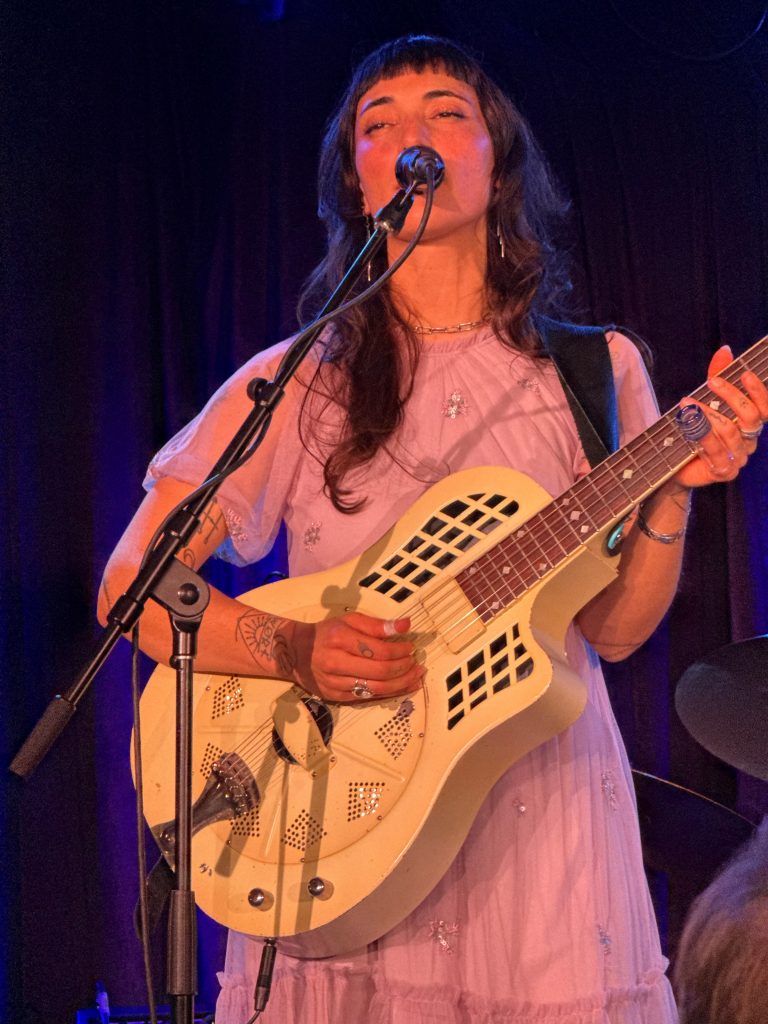
Cristina Vane made her Caffe Lena debut on May 7. Photo by Jonathon Norcross.
SARATOGA SPRINGS — Cristina Vane is Sicilian and Guatemalan; grew up in France, Italy, and England; and now plays traditional blues and country music in Nashville.
Her song “Little Girl from Nowhere,” which she played during her Caffe Lena debut last Thursday, reflected her unique, transient upbringing.
“No roots, nothing to be holding on to,” she sang. “I’ve been in a foreign land ever since I was just a little baby. You can’t understand. Ageless spirit moves upon the water. She bade me sink or swim. I will not be fearful any longer. I am diving in.”
The spirit of fearlessness expressed by the song seems to reflect Vane’s on-stage persona and artistry at large. Although sometimes singing the blues or plucking a banjo, there’s a modern punk-rock, defiant edge to Vane that has likely spurred her rise in popularity over the last handful of years.
In 2025, Vane released the album “Hear My Call,” which is stuffed with a slew of memorable tracks, especially “You Ain’t Special,” which she also played at Lena. The tune sounds like an amiable, country-tinged bop but has an Alanis Morissette attitude.
At Lena, there tends to be a blend of audience members who are discovering a new artist and audience members who are already fans. At Vane’s show, the crowd seemed to be more of the latter.
Take a glance at Vane’s packed tour schedule and this probably isn’t a surprise. She was headed five hours south to Philadelphia the day after her stop in Saratoga. Then she was off to Virginia, then North Carolina.
Vane released her debut record just five years ago but has already attracted the attention of artists such as Bob Weir, Wynonna Judd, and Molly Tuttle (to name a few), all of whom she’s directly supported on stage.
For Vane’s upcoming tour dates, visit www.cristinavane.com.
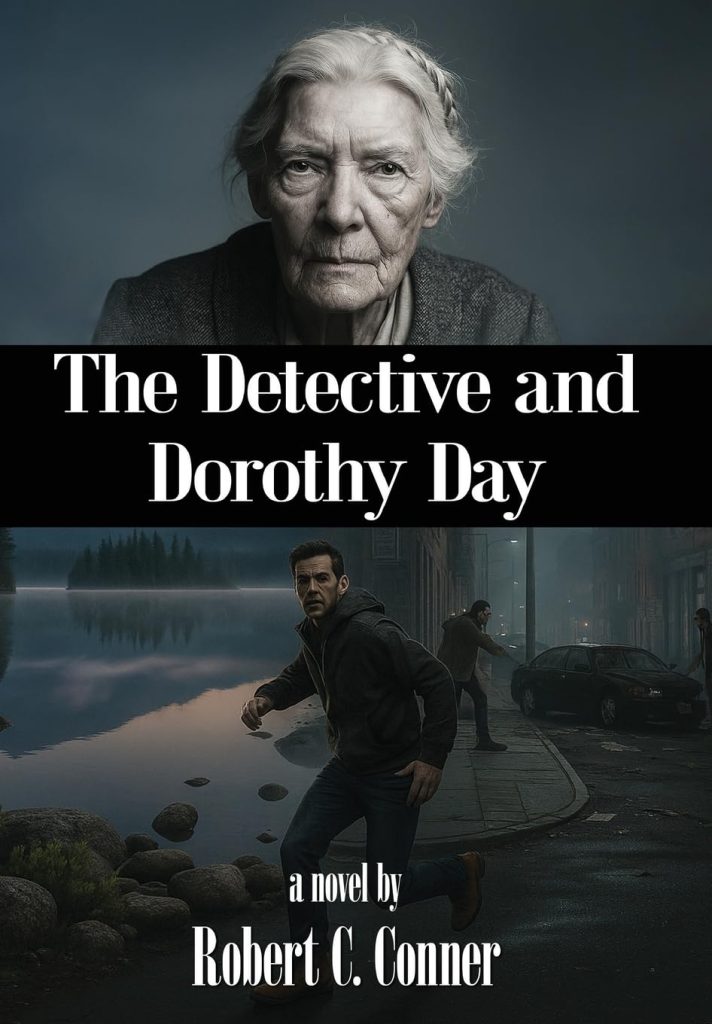
Cover of Malta writer Robert C. Conner’s latest novel The Detective and Dorothy Day via the author/Gatekeeper Press.
SCHUYLERVILLE — Malta-based writer Robert C. Conner will be selling copies of his four books, including the 2026 novel The Detective and Dorothy Day at the Boozy Book Fair from 6 to 8 p.m. on Saturday, May 9 at Old Saratoga American Legion (6 Clancy St. in Schuylerville).
Conner’s previous books include two biographies published by Casemate: General Gordon Granger: The Savior of Chickamauga and the Man Behind Juneteenth (2013) and James Montgomery: Abolitionist Warrior (2018). His previous historical novel was The Last Circle of Ulysses Grant (2018).
The Detective and Dorothy Day is historical fiction, a murder mystery set in 1975 in New York State, including as a major character, the co-founder of the Catholic Worker Movement. Conner lived at what was then the main Catholic Worker Farm in Tivoli for much of 1974 and 1975 and met Dorothy Day there.
More information is available at Conner’s website: https://robertcconnerauthor.blogspot.com/.