What is a Trust and Do You Need One? How a Trust Can Be Part of Your Plan

There is a great deal of misinformation and misunderstanding about what a Trust is and how it can potentially be part of your estate plan.  By reviewing the different types of Trusts frequently used in estate planning, we can hopefully provide some useful information and eliminate some of the common misunderstandings.

What is a Revocable Trust?

A Revocable Trust holds assets for you during your lifetime. You can revoke the Trust and take back ownership of the assets at any time that you choose. Revocable Trusts are generally also amendable, which means you can modify their terms however you see fit over time.  Revocable Trusts are sometimes used in the place of Wills in order to avoid the probate process.  In those cases, attorneys generally suggest you still do a “Pour Over Will”, which directs anything in your probate estate to be distributed to your Revocable Trust.  This is done so that if you die with probate assets, despite your efforts to avoid doing so, those assets are distributed pursuant to the terms of your Revocable Trust.  Probate assets are assets owned solely by you and not held jointly with someone else, payable to a named beneficiary, or held in trust.

What is an Irrevocable Trust?

An Irrevocable Trust cannot be revoked by the creator and is often used in asset preservation planning to assist the creator in later qualifying for Medicaid to pay for nursing home care. Anything transferred into a properly drafted Irrevocable Trust more than five years before a Medicaid application is filed will not be counted as an asset of the Medicaid applicant.  Irrevocable Trusts are also generally not amendable, however certain changes may be possible after their creation.  For example, Irrevocable Trusts used for Medicaid planning often include a limited power of appointment, which will allow the Trust creator to change the beneficiaries of the Trust.

What is a Third Party Supplemental Needs Trust?

A Third Party Supplemental Needs Trust can be set up for the benefit of a disabled person by a third party. For example, a father may set one up for his disabled child in his Will, so that money will be available for the child’s care after the father’s death. This type of Trust does not affect the eligibility of the disabled child for governmental benefits, such as SSI or Medicaid. One of the advantages of a Third Party Supplemental Needs Trust is that the remaining principal of the Trust can be left to other family members after the death of the disabled person.  

What is a Special Needs Trust?

A Special Needs Trust is similar to a Third Party Supplemental Needs Trust in that it does not affect the eligibility of a disabled beneficiary for governmental benefits.  A Special Needs Trust, however, is set up with the disabled person’s own funds.  In some cases, the funds may be made up of the proceeds of a personal injury settlement. In addition, funds left in the Trust after the disabled person’s death must be used to pay off any lien Medicaid has for providing medical care during the disabled person’s lifetime.

What is an Irrevocable Life Insurance Trust?

An Irrevocable Life Insurance Trust (ILIT) is often used to assist with the payment of potential estate taxes. When the ILIT is established, the creator gifts money to the Trust to purchase a life insurance policy on his or her life. Over the course of the creator’s life, he or she gifts additional money to the ILIT to pay annual premiums, keeping the annual gifts below the annual exclusion amount for federal gift tax purposes. This allows the value of the insurance policy to grow outside of the taxable estate of the creator. Upon the creator’s death, the death benefit paid under the life insurance policy is not part of the creator’s taxable estate and is therefore available to help pay any estate taxes that are levied on the creator’s estate.

Can I have a Trust and a Will?

Yes.  In fact, it is quite common to have Trusts set up within a Will.  These Trusts are known as Testamentary Trusts.  When the person doing the Will has younger children, a Trust is often set up in the Will to manage the assets for the children until they are older.  In addition, Revocable or Irrevocable Trusts can work in conjunction with a Will, based on the individual needs of the client.

Whether a Trust should be part of your estate plan is a discussion you should have with your attorney. As you can see, Trusts come in a great variety of types and serve many purposes. An experienced professional can help you make the right decisions based on your personal circumstances.

Matthew J Dorsey, Esq. is a Partner with O’Connell and Aronowitz, 1 Court St. Saratoga Springs. Over his twenty-six years of practice, he has focused in the areas of elder law, estate planning, and estate administration. Mr. Dorsey can be reached at 518-584-5205, mdorsey@oalaw.com and www.oalaw.com.

The China Boogeyman, Revisited (Part I)

Exactly a decade ago, I wrote an article called “Of Eagles and Dragons”. The US economy was slumping a bit, and there was talk (even panic among some) about the prospect of China overtaking the US, and the yuan replacing the dollar. 

Today we’re hearing much of the same rhetoric, and I’m going to remind you, again, why that’s unlikely to happen any time soon.

For this installment, let’s address the notion that the dollar will soon be replaced by the yuan because it’s, frankly, farcical. 

In order for the dollar to be overtaken by the yuan, economies would need to simultaneously stop wanting dollars and start wanting the yuan as a replacement. 

Today, the US dollar represents more than 60% of foreign currency reserves (a further 20% being in euros), and the yuan constitutes less than 3%. The dollar is used in roughly 80% of trade worldwide, which is roughly the same as in 1989 (when Japan was the boogeyman of choice). The world is hooked on dollars.

The United States has had the largest economy in the world since 1890. Its ability and willingness to pay its debt obligations without default has meant that people and economies around the world could depend on the dollar as a stable store of value. Some nations even use the dollar as their official currency, and in many others the dollar is more highly prized than the local currency. 

In order to entice the world to hold yuan, the Chinese government would need to relinquish control over its exchange rate. Giving up control over anything is not something the Chinese communist party is known to be keen on, but let’s pretend for a minute that it did just that.

One of the first things to happen is that every Chinese citizen who could, would run out to exchange their yuan for some other currency. Given their druthers, not even the Chinese populace trusts the Chinese government, and they’d much prefer to hold euros or dollars.

If you don’t believe it, here’s a short story.

In 2014 I visited Argentina. At the time the currency exchange rate was very tightly controlled at about 8 pesos per dollar. The general population, however, didn’t trust their government, and didn’t want pesos, and I could go out on the street, literally, and buy pesos at a rate of about 12 per dollar. In other words, the people were willing to pay me a 50% premium rather than hold their own currency. Since then, the government has stopped controlling the exchange rate, in the same way China would need to. 

Go ahead and Google “USD to ARS”, and see what the rate is today… 

So, while the Chinese economy is far better than that of Argentina, in principle, something similar would happen, and the value of the yuan would crash. That’s certainly not something people want to see in a reserve currency. 

Consider that Chinese billionaires are buying up incredibly expensive real estate in Europe and North America, and many of these properties are never seen, let-alone lived in. One simple reason for this phenomenon is that these Chinese nationals are using foreign real estate as a store of value that is well out of reach of the Chinese government, and denominated in currencies other than the yuan.

Let’s suppose that the yuan, by some miracle, became freely traded without wrecking its value; it would still need to be seen as a safe alternative to the US dollar in order to gain market share. 

Roughly 25% of China’s currency reserve is in US dollars. There are some who say China could dump the dollar and crush its value. Consider, however, that there are two sides to every transaction. In order sell its dollars, it’s got to find a buyer. Who is going to buy all of those depressed dollars, and what will China be trading them for? 

The reality is that the US dollar is so widely held, with the US issuing more debt daily, that it is in no nation’s interest to destroy the dollar, and certainly not in favor of the yuan. 

Conceivably, the only way the US dollar loses favor in the foreseeable future, is if the US government destroys it itself, through poor fiscal and monetary policy. A massive default, and the ensuing sprint to safety would likely benefit the euro, pound, Swiss franc and yen, but hardly the yuan. 

Stephen Kyne, CFP® is a Partner at Sterling Manor Financial in Saratoga Springs and Rhinebeck. Securities offered through Cadaret, Grant & Co., Inc. Member FINRA/SIPC. Advisory services offered through Sterling Manor Financial, LLC, an SEC registered investment advisor or Cadaret Grant & Co., Inc. Sterling Manor Financial and Cadaret, Grant are separate entities.

You’re Doing A Great Job! 

I was talking to a first-time mom recently who was sure that certain things her little one is struggling with are, somehow, her fault: perhaps she didn’t play with him enough, she suggested, or spend enough one-on-one time with him. Mind you, her son is barely more than one; she and he are just out of the intense newborn/infant/first year time when there’s little else parents do than spend time with their baby. 

During that same conversation, another mom joined us — one whose kids are in college — and, though she didn’t know what we’d been talking about, she was eager to talk about motherhood with us because of us all having children. She mentioned something about how she’s sure she made so many mistakes when bringing up her kids, but they don’t seem to be “broken,” as she’d worried they might be.

A colleague of mine recently retired; I met her twenty-five years ago when she went back to work after raising a large family (her youngest was three at the time). Because of the number of kids she had, my friends and I looked to her as all-knowing about mothering, so it really made an impact on me when she replied to a coworker’s comment that she’s an expert on motherhood with, “You never become an expert.”

I’ve spent a lot of time on motherhood-focused social media and web sites over the past nineteen years and, if they are to be believed, the world is rife with mothers who don’t think they know what they’re doing, who are sure they’re doing it wrong, who are sure they’re ruining their kids somehow. Even those moms who seem super confident about their opinions and decisions struggle with this — you might not see it, but I can almost guarantee that it’s there. I’ve suffered from this quite a bit myself — there are so many things I worried about in the moment when my big boys were little (too much TV), things I wish I had given to my kids throughout my motherhood (cleaner house), and things I currently wish I could do (be at everyone’s game even though they’re all at the same time at different places). 

Though there are certainly things that mothers shouldn’t do, and legitimately bad mothers do exist, I thought that an article I read recently called “For Moms Who Worry a Lot” (2011) by Elliot Cohen, Ph.D. on the Psychology Today web site gave a good perspective: he pointed out that if you are a mother who worries, it is because “you are a very caring human being. You want to do the right thing. You want to be there for your children.” How lucky your children are to have a mother who cares about them so! He also noted that a strategy that might help if you’re feeling overwhelmed with the certainty that you are a terrible mother is to “distinguish between morally responsible decisions and ones that aren’t. In general, the former are more caring, beneficial, and respectful than the latter.” I liked this a lot, because it might help weed out worry about whether or not to introduce a sippy cup, or whether or not to sign your child up for T-ball, or whether or not your children will be traumatized by having to share a room — in general these kinds of decisions wouldn’t fall in the “moral” or “immoral” category, and I find that a very helpful way to recalibrate my thinking and reduce my worry about possibly making the wrong decision.

I read another article called “You’re Doing It All Wrong” by Natalie Nevares on the Mommywise site, which presented a helpful perspective in an ironically stern way. She wrote, “You’re wrong to expect that you’ll ever be perfect. You’re wrong to feel guilty for anything you’re not doing right. You’re wrong to think that there is any right way to mother or parent. You’re wrong to believe that self-flogging will serve you or your family in any way. The media gives you trillions of reasons to feel like a bad mom, or not good enough in myriad ways. But that doesn’t mean it’s true, or that you’re failing at anything. You’re doing your best. You’ve got a hard job, but you’re showing up every day. The only thing wrong you’re doing right now is being hard on yourself.” 

I thought these were perfect reminders for all mothers of all-aged children on Mother’s Day! As my own mom always says, “Pray and do the best you can” — it’s really that simple! I hope you all have a wonderful Mother’s Day!

CHIROPRACTIC AND HEALTHY JOINTS

Human joints come in many shapes and sizes and allow us to move and carry out normal activities of daily living. Joint health is imperative. Without joints, we would be rigid and immobile. But they are also often injured, causing pain and discomfort. Almost 80% of injury-related healthcare visits (that’s about 65.8 million visits per year) are the result of musculoskeletal injuries involving bones, joints and muscles. Commonly injured joints include the knees, shoulders, ankles and spine.

How do joints work?

Joints are designed to withstand the loads placed on them and provide a full range of motion. Each joint is made up of at least two surfaces that touch each other and allow for movement. These include ball-and-socket joints like the hip, hinge joints like the knee and elbow, and gliding joints like those in the spine.

The bones that make up the joint allow for movement, and the muscles that pull the bones produce the movement. Muscles are attached to bones by structures called tendons. Tendons must be both strong to facilitate movement and compliant to prevent damage to the muscle tissues. Ligaments, which are stiff structures that connect bones, help to prevent excessive movement.

Muscles, tendons and ligaments are attached around each joint at very specific positions, with joint surfaces shaped in exact dimensions. Fluid within most of the joints lubricates the joint surfaces to reduce friction and allow for lifelong use.

How do I keep joints in good shape?

The movements that you perform on a daily basis are critical to long-term joint health, as are proper nutrition, a healthy exercise regimen and a healthy lifestyle. Proper lifting is also important.

Moving a joint through its full range of motion serves several important purposes. Joints are not supplied directly with blood as are other organs within the body, so the saying “Use it or lose it” applies to joint function.

Most joints in the body are lined with cartilage—a firm but pliable tissue that covers the surfaces of the bones that make up the joint. Cartilage within a joint is nourished by synovial fluid, which is “forced” into the joint cartilage through a process called imbibition.

The pressure within the joint providing nourishment to the cartilage occurs only when joint movement happens. This is why movement is critical to joint health. Grinding of bone on bone without a cartilage covering leads to degenerative joint disease, tearing up the bones and creating cysts, bone spurs and excess bone production.

A spinal disc is made up of two parts: a larger, outer-most, more ligament-like portion, and an inner jelly-like portion. These two structures are primarily fluid- or water-based, and they also rely on movement for their nourishment. Therefore, movement in the spine is also critical to the health of the spinal joints.

Proper diet and nutrition also contribute to joint health by providing the joints with enough healthy nutrients for long-term stability and resistance to wear and tear. A healthy lifestyle – one that is free from tobacco products and other toxins – helps to ensure proper blood supply to tissues surrounding joints and speeds up the healing of joint injuries when they occur.

How are joints injured?

Most of the injuries to joints occur because abnormal stresses are placed on a normal joint. A joint can be injured acutely from a single traumatic event, like an ankle sprain. The ankle joint is protected by ligaments on the inside and outside. When the ankle moves excessively inward, the ligaments on the outside of the joint are torn. The ankle swells, leading to bruising and pain. In some cases, small pieces of bone and cartilage may be torn away. Fracture of the tibia and/or fibula (ankle bones) can also occur.

Other joint injuries are called repetitive-stress injuries or cumulative-trauma disorders. These injuries occur when relatively small abnormal stresses are repeatedly placed on normal joints. The stresses placed on joints by poor posture, poor joint position during the performance of a task, and/or poor workstation ergonomics make these joints more likely to be injured.

How can I prevent joint injuries?

There are three basic principles that are especially important when considering the impact of proper joint movement:

• When lifting an object, be sure that the largest muscles in the area perform the task. The larger the muscle or muscle group utilized for lifting, the less stress placed on smaller, more vulnerable muscles and the joint itself.

• During any activities, you should be able to comfortably assume several different postures, to avoid staying in one posture for extended periods. Muscles will fatigue and joints are more likely to be injured when you hold a particular posture, especially a poor one, such as staying partially bent forward at the waist.

• When performing tasks, keep the joints that are being used either in their neutral posture or approximately halfway into their range of motion. Working with your joints at the extremes of their ranges of motion for prolonged periods places abnormal stress on those joints and can result in repetitive-stress injuries.

When lifting heavy objects, follow these simple suggestions:

• When lifting anything from the floor, keep the spine straight and lift with the legs.

• Do not bend over at the waist and lift primarily with the muscles of the low back. Your body is more easily injured in this position.

• Keep the object being lifted close to your body.

• Keep your elbows flexed.

• Keep your head up and your neck straight as you lift.

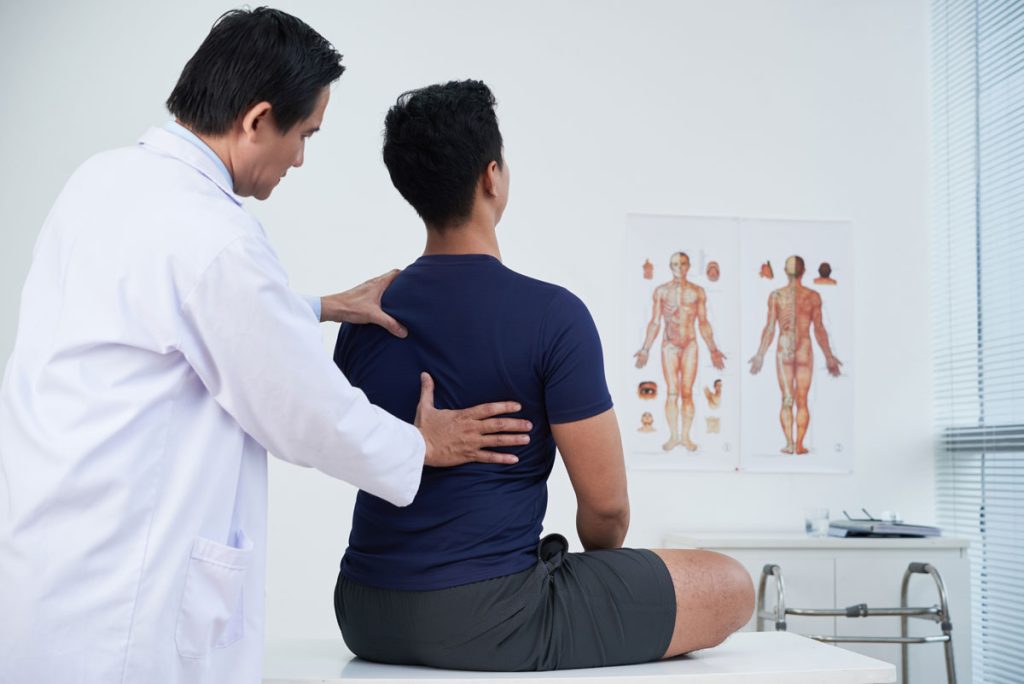
If you experience pain, consult your doctor of chiropractic. Chiropractors are uniquely trained to treat common musculoskeletal conditions, including low back pain, neck pain and joint pain. They can also help you choose proper rehabilitation exercises and prevention techniques to get you back on your feet and reduce the likelihood of future injuries.

Feeding Everyone On Busy Spring Evenings

I know that spring is just about here when I hear the ding of baseball bats in the evenings as I’m driving past the recs and parks — it’s a sound I love! Softball was one of the great loves of my life when I was growing up, and I love watching my boys play baseball. As is often the case with me, the food associated with baseball and softball is also part of my love of the sports — I’m sure I caught the unmistakable smell of French fries and Swedish fish recently! Even though we rarely buy food from the concession stands, I still get a thrill out of the spring-sports-food smells, and I like to have something delicious for us to eat while at the games.

I only have two little guys playing baseball this year, but between their games and practices and my older boys’ track meets, many of our evenings this spring will be spent at the field or the track. I’ve written a couple of articles in the past about foods that are easy to bring on the road for dinner, which I’m going to update below, but I also wanted to share for the younger parents that what started as a necessity for us has become not so necessary: when my kids were all little, they couldn’t wait until we got home at 7:00 or later from games to eat, so I either had to feed them before we left the house, which would mean eating before 5:00 (ridiculously early for our daily schedule), or bring food with us. But now, the kids are all old enough that if I wanted to wait until we got home to feed them dinner, that would be fine! It’s amazing how things change as kids get older!

I still find bringing food to the field to be easier than putting dinner together after getting home, and more fun too — we all love it, seriously! As long as I stick to my simple system, our sports dinners are streamlined and satisfying.

My basic formula is: entrée (protein + carb/grain) + fruit + dessert. I like the entrée to be a cooked item (even though it’s no longer hot when it’s time to eat); the fruit is either fresh fruit or applesauce pouches; dessert is usually a prepackaged baked good. I find this to be an easy formula to work with and it provides a meal that’s easy enough to transport. Favorite entrees include:

Hot dogs, meatballs (frozen), chicken nuggets (frozen), taquitos (frozen), dumplings (frozen), salt potatoes with beef jerky or sausage

All of these things are easily cooked on a baking sheet in a 400 degree oven for twenty minutes while I’m getting everyone ready to go. Hot dogs get put in buns; meatballs are either eaten as they are, or I’ll bring a bag of slider rolls with us; chicken nuggets are well paired with chips/pretzels/popcorn; taquitos don’t need anything else, nor do dumplings. As for salt potatoes, this Syracuse favorite is easy to prepare, and a big hit with my boys! Boil the small potatoes in heavily salted water for twenty minutes or so, and that’s it. My boys eat them like apples! For protein, I will usually either bring a box of beef jerky, or, if I’m feeling energetic, I’ll cook breakfast sausage links in the oven while the potatoes are boiling (can you tell I’m a big fan of cooking things in the oven? Even things that don’t include that information in its preparation instructions! Twenty minutes at 400 degrees is perfect for lots of things). 

Go-to fruit options are grapes, strawberries, clementines, applesauce pouches

For fruit, I find bringing a big bowl of washed grapes makes all my boys happy. Less easy and more expensive but still part of our rotation are strawberries. A bag of clementines is easy to bring and particularly perfect on hot days. I also always have applesauce pouches on hand, so they do nicely as well. 

Desserts include cookies, donuts, brownies, rice crispy treats.

We are big fans of prepackaged Hannaford cookies, Stewart’s donuts, Cosmic brownies, and rice crispy treats! They’re good incentives for the boys (especially the littlest boys) to eat the rest of the food I bring.

As for drinks, sometimes I’ll bring juice pouches or boxes, but I prefer for them each to bring their own water bottle. I also bring a bag of lollipops to encourage my youngest to keep it together until the sporting event is over. And I only bring napkins, no plates, bowls, or utensils. I try to keep it as easy as possible! Whatever isn’t eaten at the field is brought home and everyone can have more there if they want; if all the food is gone and they’re still hungry, they’re also welcome to have cereal when we get home. (I also leave some of what I make at home for anyone who doesn’t go to the game or meet.)

This is the way we eat two or three times a week from the second half of April through the middle of June. I hope it’s helpful for some of you as you navigate your evening spring activities (and really, all of your evening activities all year long!).

Kate and her husband have seven sons ages 18, 16, 14, 13, 11, 8, and 4. Email her at kmtowne23@gmail.com.

Saratoga Senior Center Calendar

April Events at the Center! 

Live Music with Rod Driscoll 

Friday, April 14 • 2 p.m. 

$10. Pizza from 9 Miles East served! A lively & engaging concert featuring golden oldies and classic popular music from the 1930’s all the way to the 1960’s. Swing, sway and sing a long with Rod’s singing and guitar playing. Laugh along with his jokes, stories and off beat humor! Join us for a great afternoon of music and fun! 

Trivia Night!

Monday, April 17 • 5:15 p.m.

“Where all those useless facts you’ve been collecting can finally come in handy!” Pizza bites served. Bring your own beverage. Join us for fun, friendly competition! Prizes! Please sign up, seating is limited. $5. Sponsored by Humana.

PaL’s Meals To Go 

Prepared meals you just have to heat up. Pick up any time Monday or Tuesday between 9:30 & 3:30 p.m. Order by noon the Friday before.

Monday, April 17 and Tuesday, April 18: 

Baked chicken, roasted potatoes, carrots

Monday, April 24 and Tuesday April 25: 

Meatloaf, mashed potatoes, gravy

Tarot Card Reading

facilitated by Mary Shimp

Thursday, April 20 • 10-2 p.m.

$5 donation. Do you have some unanswered questions about your life? A tarot card reading provides insight into what the future holds. Call for a 15 minute appointment.

AARP Driver Safety Course

facilitated by Warren Lavery

Friday, April 21 • 9:30-4 p.m.

In-person at the Senior Center. $25 for AARP members and $30 for non-members. Payment by Check only, made out to AARP. Bring your drivers license and AARP card to the training. Bring your own lunch and beverage. Advance registration required, seating is limited. Call the front desk at 518-584-1621.

The Wild Irish Acres Step Dancers under the direction of Terri Hughes 

Sunday, April 23 • 4 p.m. 

A return visit from these lively dancers. Irish step

dance is a wonderful celebration of the arts and Ireland’s unique culture. Please sign up. 

Beading Workshop 

facilitated by Jerry Matthews

Monday, April 24  • 1:30 p.m.

$10 materials fee. Whether you are just beginning or an experienced beader, join Jerry to create beautiful and one of a kind jewelry. Please sign up, seating is limited.

Dine in Dinner – Old Bryan Inn

Tuesday, April 25 • 5:30 p.m.

Dinners are held at the Senior Center. $12 per dinner. Roast pork with Honey Sage Gravy. Please sign up. Sponsored by Humana.

ADVANCED DIRECTIVES WORKSHOP AND PANEL DISCUSSION

Wednesday, April 26 • 1:30 p.m. 

Light Lunch. 2 p.m. Film and Panel Discussion.

St. Peter’s Health Partners Medical Associates -Palliative Care Partners in conjuction with the Saratoga Senior Center will be presenting the documentary film Extremis. Extremis is a short documentary that follows Dr. Jessica Zitter, an ICU and palliative care specialist who leads a hospital ICU team. The film addresses the challenges patients and families face when making decisions in the midst of a medical crisis. During the panel discussion following the film, we will be discussing the importance of advance care planning and serious illness discussions. RSVP is requested as seating is limited. Call the Senior Center at 518-584-1621

Controlled Chaos Improv Performance Troupe

Friday, April 28 • 3 p.m.

$5. Refreshments served. Do you love watching “Whose Line Is It Ayway?” Then this is the show for you. Controlled Chaos loves to “mix things up” by making each show unique in its selection of short-form games, in- cluding some they invented themselves. They are not afraid to try anything! 

Poetry Workshop

facilitated by Marissa, Senior Skidmore Student

Fridays • 2 p.m.

Love poetry? Marissa is bringing poetry to you in all different manners. Poetry bingo, make a song sonnet, share your favorite poems, learn some basic poetic tecniques and write a poem! Please sign up, seating is limited.

NEW! Massages facilitated by Zuzia

Wednesdays • 11 a.m. – 1 p.m.

$5 donation. Zuzia’s work is deeply relaxing and supports profound release, gently and effectively, of long.

How To Avoid Mosquitos Using a Natural DIY Repellent

How to Avoid Mosquitos Using a Natural DIY Repellent 

With the change of seasons comes pesky ticks, mosquitoes and biting flies. Mosquitos can be quite the nuisance, producing itchy little bumps. However, on the rare occasion they have been known to be carriers of West Nile Virus (WNV). According to the New York State Department of Health, “Mosquitoes become infected (with WNV) when they feed on infected birds. The infected mosquitoes can then spread the virus to humans and other animals.” NYSDH also states that “In humans, WNV may cause a mild illness, but may also cause encephalitis (inflammation of the brain) or meningitis (inflammation of the lining of the brain and spinal cord).” While these instances are rare, it is important to reduce the threat of disease and find ways to protect yourself as well as avoid the unpleasant side effects associated with mosquito bites.

Why Are Mosquitoes and Biting Insects Attracted to Us?

It has been said that mosquitoes will travel upwards of one to two miles in search of a meal (your blood) and they are mostly attracted to carbon dioxide emitted by humans and animals. The more carbon dioxide you emit, the greater the attraction.

Genetics are also said to play a role in how humans attract mosquitos. Individuals with higher concentrations of natural steroids and cholesterol on their skin, those who produce higher amounts of acids (uric) may be more likely to attract mosquitoes.

On the upside there are some tactics to reduce the likelihood of getting bitten. There’s also a simple and effective recipe to ward off these pesky critters. 

Tips to Avoid Mosquito Bites
• Avoid wearing sweet smells, perfumes and colognes (especially those with nonanaldehyde-this will increase your chances of getting a bite by 50%)
• Avoid wearing black, cyan, red and orange. A recent study conducted by the University of Washington, found that black attracts mosquitoes the most, while colors like green, purple, blue and white may actually deter different species of mosquitoes.
• Avoid drinking alcohol, eating bananas and sweets, as these items sweeten up your blood and make you very attractive to these little vamps.
• Wear long sleeve tops and full coverage on legs, when outside during mosquito season.  Be careful not to wear loose clothing, when going outside, as loose clothes can trap insects, especially an issue for ticks.
• In addition to covering oneself, there are other options like bug repellants to help prevent bites, however avoid DEET where possible due to the potential toxicity and hazards linked to effects on the central nervous system.

Why to Avoid DEET Where Possible

DEET (also named N,N-diethyl-meta-toluamide) is one of the key ingredients found in common on-the-shelf bug repellant products. DEET is an organic solvent used in plastic and rubber cements and paint removers. The Medical Sciences Bulletin, published by Pharmaceutical Information Associates Ltd. reported, “Up to 56% of DEET applied topically penetrates intact human skin and 17% is absorbed into the bloodstream.” DEET is absorbed by the skin and gut and the most serious concerns about DEET are its effects on the central nervous system. 

A Duke University study revealed that combined exposure to DEET and an ingredient called permethrin, a mosquito spray ingredient, can lead to motor deficits, as well as learning and memory dysfunction. Another 2009 study indicated that DEET is not only a behavior modifying chemical, but that it also inhibits cholinesterase activity, one of many important enzymes needed for the proper functioning of the nervous systems in humans, animals and insects, putting it in a class with other hazardous pesticides that have been shown to do the same.

Natural Repellents As An Alternative

Natural bug repellent has a long use throughout history. Some people swear by folk methods such as ingesting large amounts of garlic, however there is little evidence as to whether or not garlic is effective for everyone. Other proactive treatments include taking Vitamin B at least a month before mosquito season, but the jury is still out on this too. While it doesn’t hurt to try these, it is suggested to wear a bug repellant, and below is an easy recipe to get you started.

Essential Oils Used  to Repel Biting Insects

First off let’s explore some plant based ingredients and essential oils that are used in natural bug repellents to ward off mosquitoes and biting insects. All of these essential oils can be purchased at www.saratogabotanicals.com: lemon eucalyptus, citronella, peppermint, lemongrass, geranium (also effective for ticks), pine, cedar, thyme, clove, patchouli, wintergreen, and tea tree (also effective for ticks).

The most effective essential oils for repelling mosquitoes include citronella, thyme oil, geranium, peppermint oil, cedar oil, patchouli and clove, which have been found to repel malaria, filarial and yellow fever vectors (in countries with these known risks) for periods of 60-180 minutes. The most effective for ticks are tea tree and geranium.

DIY Natural Bug Repellent Spray

When following this recipe it’s important not to make any essential oil substitutions without fully researching the individual oil and possible contraindications. Also safety first: Gloves, goggles, and protect your surfaces. Essential oils are strong and must always be diluted for use on the skin. The following essential oils were chosen because they are considered generally safe and non-toxic for use on people, with some exceptions. Recipes that will be used on children over the age of three should contain no more than 1% essential oils. Avoid use on children under the age of three years old. This  recipe contains approximately 2%. If you intend to use this on children, only use half of the amounts indicated for each essential oil. Avoid use if pregnant or breastfeeding and always consult your doctor should you have a chronic medical condition or concerns regarding essential oil use.

Ingredients:

• 4 oz of carrier oil (jojoba, sunflower, olive oil, neem etc)

• 15 drops of citronella oil

• 15 drops lemongrass essential oil

• 10 drops lemon eucalyptus essential oil

• 5 drops thyme essential oil

• 3 drops peppermint essential oil

Instructions:

Pour carrier oils into desired container. Add essential oil drops. Shake well to incorporate ingredients and also before each and every use. Label your product and keep it out of reach of children. 

And voila! You’ve got a natural solution to ward off those pesky biters just in time for the spring and summer months!

Staying Fit as You Get Older

Exercise is often prescribed for patients of all ages to reduce complaints about pain in muscles and bones, but some feel it gets harder to exercise as they get older. The social aspect of exercise is huge. Exercise is becoming more and more popular among older adults. Seniors can interact with each other while they are at their local gyms. Nowadays, many gyms have hours of operation that are friendly to seniors.

Health and social benefits aside, many seniors still have questions about exercise:

I’ve been inactive for so long. Won’t it hurt to exercise?

You can always become as physically fit as possible, given your current health status and limitations. When you commit to a physical fitness program, you will move toward enjoying life more fully.

First, pick an activity that you enjoy doing and perform it regularly. Make your exercise program as pleasant as possible. If you feel exercising is a chore, you will be uncomfortable with the program and will quit. If you can, ask a friend to exercise with you so you can support each other.

Second, begin your exercise program gradually, starting with five minutes of exercise each day. As you become more comfortable with the routine and notice the positive effects of fitness, you may increase the exercise time.

If you have been inactive for some time, you may feel some small aches and pains. They will fade with time. Be sure to tell your doctor if you experience any unusual pain or other symptoms during or after your exercises. Check with your doctor of chiropractic before starting any exercise or physical fitness program. While exercise is beneficial to your health, the type of exercises you perform can be affected by your health status.

How do I start?

Develop a plan for an exercise program and stick with it. Make your exercise program an integral part of your normal daily activities – or use normal daily activities to help your muscles and bones become as healthy as possible.

• Research shows that “functional exercises”— those that mimic actual daily activities, such as walking up and down stairs and getting in and out of a chair — can be quite effective.

• Research suggests that people who live in two-story houses are less prone to certain types of heart disease. Repeatedly climbing a flight of stairs or rising from and returning to a seated position helps build leg strength and aerobic fitness. If you hold a weight during these exercises, you can increase your level of physical activity even further.

• Household chores, such as vacuuming, loading and emptying the dishwasher and moving wet laundry from the washer to the dryer can increase strength and flexibility. Lift with your legs, when necessary.

I don’t feel as strong as I used to. Can I still exercise?

• As we age, we lose muscle mass. Some healthcare providers suggest that weight training will help prevent strength loss and keep patients feeling younger. Unfortunately, many seniors find they can’t lift the heavy weights necessary to actually build muscle mass, but don’t be discouraged. Recent studies show that while muscle strength diminishes with age, muscle endurance does not. It means that, as we get older, we may benefit from switching strength exercises to endurance exercises, working muscles with lighter weights for a longer period of time.

Exercises that emphasize endurance, such as dancing, walking or bicycling, may be not only more beneficial but also more enjoyable. Many senior citizens have neighborhood areas where they can get together to walk. Walking with a family member or friend helps your physical fitness — and helps build relationships. These exercises are also aerobic and will benefit your heart health. For people who cannot walk or ride a bike, there are endurance- and flexibility-enhancing exercises that can be performed in a chair. Set goals for yourself that can be tracked and make exercise a part of your overall health plan.

I have arthritis. How can I exercise safely?

Physical activity actually decreases arthritic pain. Many people with rheumatic conditions are physically inactive. There is oftentimes a fear factor for seniors when it comes to activity and arthritic pain – a social fear, a fear of pain, a fear of falling, etc.

However, for those with arthritis, the worst thing they can do is stop moving. In most cases, you can — and should — exercise.

In fact, recent research has shown that older people with arthritis gain modest improvements in physical function, pain, general mobility and flexibility, when participating in long-term exercise programs. Water-based exercises, such as swimming or “water walking” can work on joints without putting them through the stress of weight bearing. If necessary, your doctor can show you how to use a cane, a walker or other assistive devices to help prevent falls and injuries while you are physically active.

Which fitness program will help me most?

The best exercise program should be tailored to your individual health status. Your doctor of chiropractic can help you plan the fitness program that is right for you. Typically, low-impact activities that keep joints moving and minimize pain, such as walking, swimming and water-based exercise, are effective. Research has shown that exercise can reduce joint stiffness, pain and inflammation associated with arthritic conditions, which affect most of us as we age.

Doctors of chiropractic can not only help restore muscle and joint function that have been affected by injury, illness and age-related conditions, but they can also maintain the health and flexibility of your muscles and bones. They often prescribe exercise to prevent and treat many of these conditions, helping older patients to remain active and independent.

Dr. Matt Smith has been a Chiropractor in Saratoga Springs for 36 years. He and his daughter Dr. Kevy Smith Minogue can be reached at 518-587-2064 or at MySaratogaChiropractor.com.

Medical Decision Making In Your Estate Plan – The Documents You Need And How They Work

Medical decision making, especially in times of crisis, can be fraught with challenges. If you are not able to make your wishes known at the time, your family may be put in the difficult position of making decisions for you without knowing what you would want. The situation will potentially get worse if family members disagree about what action to take.

To spare yourself and your family from these problems, it is wise to plan ahead for your medical decision making. The documents that should be part of that plan are a Health Care Proxy and a Living Will. In addition, based on your particular circumstances, it may be advisable to complete a Medical Orders for Life-Sustaining Treatment (MOLST) form.

What is a Health Care Proxy?

A Health Care Proxy is a legal document that allows you to appoint an individual, your “agent,” to make medical decisions for you. It only becomes effective in the event that you are no longer able to make those decisions for yourself. If that time comes, your Health Care Proxy agent will ensure that your individual wishes are conveyed to your health care providers.

Do I need a Health Care Proxy?

It is recommended that you have a Health Care Proxy. It allows you to have a trusted person be your voice in the event you are unable to make your own health care decisions. Everyone over the age of eighteen (18) should appoint a health care agent.

How do I choose a Health Care Proxy Agent?

Your agent should be someone you trust, for example a spouse, other family member, or trusted friend. You should choose someone that you believe will adhere to your wishes and instructions. A successor agent should be chosen in the event your primary agent is unable to act for any reason. It is imperative that you discuss your wishes regarding your care, clearly and in detail, with your agent.

What as a Living Will?

A Living Will is a legal document in which a person directs the types and duration of treatment, such as artificial nutrition, he or she would want to receive if ill and unable to communicate their wishes at the time of treatment. 

Do I need a Living Will?

It is advisable, because if you do not have a Living Will, the decisions regarding your medical treatment may become a dispute between family members and doctors. Such a dispute may result in a judicial proceeding to determine your wishes. Having a Living Will increases the chances that the decisions made regarding your care will be consistent with what you want.

Do I need a living will if I already have a health care proxy?

A Living Will is different from a Health Care Proxy. It does not appoint an agent to make your decisions. It serves as a way to express in greater detail the types of decisions you would want your Health Care Proxy agent to make. 

What kind of wishes should I address in my Living Will?

You should address whatever is important to you regarding your health care decision making. For example, people often describe their wishes regarding the administration of artificial hydration and nutrition, their religious beliefs regarding illness and death, and their thoughts regarding physician assisted termination of life.  

How does a Living Will become valid?

There are no formal requirements for executing a Living Will. It is suggested that to be sure your Living Will constitutes “clear and convincing evidence” of your wishes, you should put your desires in writing, and sign and date the document in the presence of two witnesses. 

What as a Molst?

A Medical Orders for Life-Sustaining Treatment (MOLST) form (NYS DOH-5003) is a medical order form printed on bright pink paper signed by a patient or their representative and a physician, nurse practitioner, or physician’s assistant. The MOLST form details the patient’s medical orders for life sustaining treatment.

How is a Molst different from a Health Care Proxy or Living Will?

The MOLST form is not intended to replace a Health Care Proxy or Living Will, and it is not generally completed as part of a person’s normal estate planning. Instead, it is often used in cases where a patient has serious health conditions, which potentially could result in their death within the next year.

What type of issues does a Molst address?

A MOLST form addresses whether the patient wants particular medical interventions or assistance, such as cardio-pulmonary resuscitation (CPR), intubation, transfer to a hospital, and artificially administered fluid and nutrition. If these interventions or types of assistance are not authorized, then medical providers would be directed to not provide them.

As part of proper estate planning, it would be advisable that you have a Health Care Proxy and Living Will. A MOLST form would likely not be necessary, unless you are facing serious health challenges that may result in your passing within the next year. These documents, along with a Power of Attorney, a Will, and/or a Trust are the basic components of a proper estate plan.

Matthew J. Dorsey, Esq. is a Senior Partner with O’Connell and Aronowitz, 1 Court St, Saratoga Springs. Over his twenty-five years of practice, he has focused on the areas of elder law, estate planning, and estate administration. Mr. Dorsey can be reached at 518-584-5205, mdorsey@oalaw.com and www.oalaw.com

Things Will Get Better

If there is one word to describe the current public sentiment, it’s “tired.”

For the better part of the last three years, it seems, we’ve been moving from crisis to crisis to crisis, and people are simply exhausted. 

It began with the life-bending changes that came with the pandemic, and the government’s well-intended but socially and financially damaging, and often contradictory response. We’ve been subjected to forced isolation which has exacerbated already prevalent mental health and substance abuse issues. Despite the daily sacrifices, more than a million of our friends still succumbed to the disease.

And now, even the most trivial political issues are being leveraged to pit family against family and neighbor against neighbor on a daily basis. Many of us walk on eggshells in order not to inadvertently wade into a political fight, while others troll for sport to instigate them. 

For the last year, we watched as the wanton printing of money spawned the highest inflation in over four decades, absolutely eviscerating the purchasing power of the middle and lower-middle classes, and decimating their ability to provide for their families. All the while, the Fed’s ham-handed strategy of rapid monumental interest rate increases to rein in inflation, which it insisted against every economic principle was “transitory”, has already resulted in a handful of notable bank failures, and greater economic uncertainty. 

There’s an old Chinese curse that says, “May you live in interesting times.” I think it’s fair to say that we are, and have been, and the hits just keep coming. 

For the last year, market conditions have been the worst we’ve seen in nearly fifteen years. As a Certified Financial Planner® professional, people ask me all the time if my phone is ringing off the hook. People assume there is a lot of panic among those planning for their major financial goals. The truth is, I rarely get any panicked calls. 

People have been living with heightened stress for so long that most seem to be taking the market in-stride. While past performance is no guarantee of future results, every US market downturn, no matter how deep, has eventually resolved itself, with markets going on to find new highs. The US economy is so massive and diverse that it has successfully grown itself out of every problem it has ever faced. This time should be no different.  

I know you’re tired. We’ve all been coping with the experiences of the last few years in our own ways. The tide is out right now, but it will come back. We’ll all appreciate it a bit more when it does. Continue to keep your chin up, and your head on straight. 

Remember to work with your trusted advisors to help you navigate these uncertain times. Things will get better.

Stephen Kyne, CFP® is a Partner at Sterling Manor Financial in Saratoga Springs and Rhinebeck. Securities offered through Cadaret, Grant & Co., Inc. Member FINRA/SIPC. Advisory services offered through Sterling Manor Financial, LLC, an SEC registered investment advisor or Cadaret Grant & Co., Inc. Sterling Manor Financial and Cadaret, Grant are separate entities.