Ballston Beatdown: Local Wrestler Takes Third at Nationals

Photo by Elle Hutton, provided by Todd Collins.

FARGO, ND — Ballston Spa rising junior wrestler Mia Collins returned to Fargo, North Dakota this summer with a goal in mind.

Collins had competed at the USA Marine Corps 16U & Junior Nationals in 2022, and entered the tournament again this year looking to improve on her results from the previous summer.

“Last year, I got into the blood round and I lost, so I didn’t end up placing,” said Collins.

In her second appearance at the tournament this July, Collins earned a third-place finish, posting an overall record of 9-1.

“I tend to put a lot of pressure on myself before matches,” she said. “I think the biggest challenge at Fargo this year was being able to kind of separate myself from the outcome of the match, and be able to focus on just going out and scoring points more than anything.”

Collins overcame a talented slate of opponents in order to earn her third-place finish, opening the tournament with victories over Aleiya Cullinan (North Dakota), Avery Losiewicz (Wisconsin), and Millie Bradley (Oklahoma), according to results posted by FloWrestling.

Collins lost in the Round of 16 to the eventual champion, Isis France of Arizona, but responded with six consecutive wins in the consolation bracket to finish in third place.

Collins opened her portion of the consolation bracket with wins over Hayden Bratland (Iowa), Savanna Franklin (Missouri), and Emma Chacon (Arizona). 

She then defeated three wrestlers who are nationally ranked in Lilliana Banks (Wisconsin), Timberly Martinez (Colorado), and Cassandra Gonzales (Minnesota) on her way to a third-place finish.

Collins said that while the final three matches were the most stressful, the key for her was “just focusing.”

“You can’t get caught up in the worry and anxiety that comes before those matches,” said Collins. “You really have to get yourself in the right mindset to be able to go out there, do your moves, and score points.”

Gonzales, who Collins beat to earn third place, is ranked 18th in the country in the 132-pound weight class in national rankings released in early July by USA Wrestling, FloWrestling, and the National Wrestling Hall of Fame and Museum. 

Martinez ranked 28th, while Banks ranked 29th. Isis France, the eventual champion who gave Collins her only loss of the tournament, ranked ninth.

Collins said her time in Fargo this year was “a really good experience.”

“It was super nice for me to be able to have my third-place finish this year,” Collins said. 

She noted her results from this summer’s tournament were meaningful after falling in the blood round at the 2022 tournament.

“It also makes me more confident as a wrestler, because now I know how I rank,” said Collins. “So I think, having achieved it, I can now set my goals even bigger.”

In addition to competing with the Ballston Spa varsity wrestling team, Collins also said she recently began training at Curby Training Center in Troy.

Now entering her junior year of high school, she said she is hoping to continue her wrestling career in college, adding that it is “exciting” to see more opportunities arising in girls wrestling. 

“There’s more and more opportunities opening up as I’m progressing through high school, so that’s pretty exciting,” said Collins. “I’d definitely like to wrestle at the collegiate level.”

LAFFIT PINCAY JR…. a Conversation with a Living Legend


Laffit with agent Vince DeGregory. Photo provided.

With the Hall of Fame induction ceremonies upon us, there is no better time to hear from Laffit Pincay, Jr. He is without question one of the greatest jockeys to ever ride on an American Racetrack. His exploits on the turf are legendary. Laffit arrived here from Panama at the age of nineteen. He became a member of the Horse Racing Hall of Fame in less than a decade.

At age 28 he became the youngest jockey to enter the Hall.

In a career spanning 39 years, Laffit won 9,530 races. He won five Eclipse Awards as outstanding jockey of the year. Seven times he led the way in money earned. To list all of his accomplishments would require much more space than is available here.

The stage has been set. It’s time for the master’s comments on various aspects of his fabulous career.

I asked Laffit how difficult it was making the transition from riding in Panama to here in the states. He explained it this way.

He made his American debut at Arlington Park in Chicago. It was a difficult transition. Laffit was up against some very talented jockeys in his new surroundings. He had to adjust his riding style to compete with them. His time in Chicago was also an opportunity to study some of the great jockeys that came in from New York and California to ride in stakes races. Bill Shoemaker and Braulio Baeza were among them.

Laffit was honing his trade. It was a natural progression to head east to New York. He credits trainer Frank Martin with giving him good mounts to ride. He took advantage of the opportunity, quickly racking up a winning resume. He soon had the reputation of a go-to rider. With his career heading into high gear, he decided to try his luck on the lucrative Southern California circuit.

Laffit. How did the West Coast jockey’s riding styles differ from their East Coast counterparts? He described it this way.

In New York you could lay back and make a late move on the leaders. In California it was all speed. If you didn’t get out of the gate quickly and stay close to the pace it was nearly impossible to win a race. It didn’t take long for Laffit to make the adjustments to be successful on his new home turf. He soon became a very big star in the horse racing universe. For the next three decades Laffit would be on a collision course with the record books.

Great jockeys ride great horses. It’s as simple as that. When conversing with Laffit Pincay Jr., one topic that requires attention is his relationship with the all-time great Affirmed.

Laffit. When did you realize that Affirmed was a special horse with a potential for greatness.

The first time Laffit rode Affirmed, he worked him five furlongs at Hollywood Park. When the workout was over, he thought that he went in about 1:01. When told that he was clocked at 58.2, almost three seconds faster, he felt that Affirmed was destined for greatness.

No conversation concerning Laffit and Affirmed can be complete without discussing the 1978 Travers Stakes here at the Spa. It was the last of the legendary meetings between Affirmed and Alydar. The race drew all the hype surrounding a mega sporting event. The two heavyweights were about to settle old scores in a race for the ages. Let’s hear from Laffit as he describes the race.

Affirmed accelerated and took the lead on the outside of Shake Shake Shake midway down the backstretch. Laffit decided to maneuver Affirmed towards the rail to save ground. Alydar, simultaneously was making a move on the same path. Laffit didn’t realize that he was only a length and a half behind him. Alydar’s rider, Jorge Velasquez didn’t shout out that he was ranging up on Affirmed. When Jorge charged up to the inside of him, Alydar had nowhere to go and bounced off the rail. He lost several lengths before composing himself. Laffit had no idea that the mishap had occurred. He takes the blame for not realizing that Alydar was so close to him. If he did, he would have taken off, distancing himself from Alydar. Affirmed went on to win the race over his gallant adversary. When the stewards called for an inquiry, Affirmed was disqualified and Alydar was declared the winner. Laffit had a very difficult time dealing with the outcome. It affected him to the point that he had no desire to compete the day after the tarnished event. He considers it to be the worst afternoon of his career. Laffit also stated that Alydar may have made it close if the race was free of problems. He also is highly doubtful that he could have won it. Affirmed always had something left in the tank. That little extra to get the job done.

With the Hall of Fame induction ceremony on tap this week, I asked him what it meant to be a top echelon member.

Laffit considers it a great honor to be a member of the Hall of Fame. He says that it is something that requires hard work and perseverance. He is very proud of that achievement.

Who do you believe should be enshrined in the Hall that has been overlooked from your era?

Laffit is very high on Cash Asmussen. He says that he had all the skills that mold a great rider. He proved that both here and then abroad on the racecourses of France. He hopes that someday soon Cash will get a well-deserved welcome to the Hall. Another jockey that Laffit has the highest regard for is George Chavez. He hopes that someday “Chop Chop,” as he was nicknamed will get the nod.

I also wanted to know who he considers the best jockeys on today’s scene. He said without hesitation that he is very impressed with the Ortiz brothers. Luis Saez also quickly came to mind. Laffit then mentioned Joel Rosario. He is as good as you will ever see.

I asked him as a super achiever how did you keep your skills at an optimum level. Laffit stated that a diet of fruits, vegetables and nuts gave him the strength to compete at the highest level as he got older. It sounds like a good lesson for all of us.

I reached out to Saratoga native Vince De Gregory and Laffit’s agent in the 1970s to give us his thoughts on what made Laffit a great jockey.

Vince credits Laffit’s drive and determination as the catalyst for his massive success. He fought weight problems throughout his career. Vince says that Laffit needed to lose between three and five pounds daily to compete with his lighter rivals. His morning routine included a 6:30 a.m. appointment in the sauna. Then he would run a mile around the racetrack turf course in a rubber suit. If he needed to lose more weight, it was time to hit the hotbox in the Jockey Room to shed more.

His fellow jockeys were in awe of his willpower and dedication. Vince, an agent for nine Hall of Fame jockeys, stated that he doesn’t know of any other jockey that worked as hard as Laffit to keep his weight at a competitive level. Despite his intense morning routine, Lafitt still had incredible strength when it came time for the races.

Thanks to Laffit and Vince, and kudos to my brother Pat and Laffit Pincay III. Their chance meeting at Mark Thomas Apparel made this interview possible.

Behind the Gates – Villa Balsamo Hits The Market

“The tile work which we performed could only be compared in extent and quality with that found in such places as Newport, R.I. or Hollywood, California where price was of secondary consideration. The objective for the entire house and grounds was it be the finest that could be produced. The first consideration was always quality.”

– Excerpt of a letter written by J. Francis Purdy, of the J. Francis Purdy tile and marble company of Albany, to J.B. White, J.B. Realty of Saratoga Springs, Sept. 14, 1951.    

photo provided

SARATOGA SPRINGS — Strands of rope and twisted wire span the metal gates and stone entryway stations of the Ballston Avenue estate. A pair of ornate lamps peek streetside across the busy Route 50 thoroughfare where motor vehicles speed on by. A large marquee standing tall atop all of it spells out the most recent use of the property: Villa Balsamo – Restaurant, Cocktail Lounge.      

The property, which measures 14 acres in all and features natural ponds, sites a nine-bedroom, six-bathroom mansion set back approximately 350 feet from the road. In its near-century of existence, the 10,240 square-foot structure has served a small handful of owners and has functioned as a private home and as a public restaurant. A return as either one of those options is possible in the future. 

“It’s waiting for its next owner and occupant,” says Patrick Gibson of the Diehl Done Team at Keller Williams. The property is listed at $4.3 million. 

Floyd J. Shutts, a bank manager-turned-knitting-business-wholesaler, purchased the land in 1927 and reportedly invested a half million early 20th-century dollars to build his 15-room mansion two years later.  Following his death – Shutts’ was buried at Ballston Spa Village Cemetery in 1934 – the estate was purchased in turn by restaurateur Gerald King (during whose ownership in the 1960s Bing Crosby was among the visitors, vintage scribes insist), and by Schenectady businessman Chester Hotaling – who turned it into the Chester House restaurant. 

At some point in the mid-20th century, Saratoga Springs realtor J.B. White, whose offices were at 100 Broadway, sought to put the property up for sale and apparently reached out to the J. Francis Purdy Co. of Albany for detailed information about the work Purdy had conducted during the initial development of the mansion. The historical files of the Saratoga Room in the Saratoga Springs Public Library provide a copy of the letter response penned by J. Francis Purdy to J. B. White dated September 14, 1951.    

“In reply to your letter of the 12th regarding the Shutts estate on Saratoga-Ballston Road – the tile work which we performed for Mr. Shutts in his home could only be compared in extent and quality with that found in such places as Newport, R.I., or Hollywood, California where price was of secondary consideration,” the letter reads. 

The tile used in the master bathroom “were of the most expensive produced,” Purdy writes, and “the tile work in the other bathrooms, solarium, game room, kitchen, halls, pavement over garage, etc., represented the best that our industry could produce according to the standards of 1929.” 

Purdy concludes: “It was a sad development that Mr. Shutts did not live long to enjoy with his family the beautiful home and grounds he developed.”  

An undated advert regarding “The King Shutts Estate” indicates the property would to be shown only through appointment by J.B. White. Price for the complete property: $85,000.  

In the mid-1970s, the property was purchased by Joseph Balsamo. Balsamo came to America in 1950 from Sorrento, Italy, served in the Merchant Marine, and was reportedly part-owner of a restaurant in Queens that stood half a mile north of Kennedy International Airport and half a mile east of Aqueduct Racetrack.

“When he saw this place, it took him a year of driving up here from Brooklyn once a week and waiting for the owner to come out to collect his mail,” Ralphie Balsamo told Saratoga TODAY regarding his father’s efforts to purchase the estate. 

The persistence paid off. Joseph Balsamo, who died in 2018, successfully convinced the owner to sell, and soon after Villa Balsamo began its offering as a restaurant, showcasing the culinary talents of the family’s Southern Napolitan cooking. 

Ballston Spa Sunshine Kids, Ribbon Cafe Hold Fundraiser for Local Seven-year-old

Aiden Rodriguez visits with miniature donkeys from Maple Rock Farms at Saturday’s fundraiser. Photo by Super Source Media Studios.

BALLSTON SPA — The Ballston Spa Sunshine Kids and the Ribbon Café held their third annual fundraiser on July 29, raising money for local seven-year-old Aiden Rodriguez of Queensbury.

In September 2022, Rodriguez was diagnosed with Grade 3 Choroid Plexus Carcinoma, a rare form of brain cancer, and Li-Fraumeni Syndrome, which causes an increased risk for several types of cancer. Patricia Rodriguez, Aiden’s mother, said the community support shown on Saturday was “very overwhelming.”

“We are humbled, we are surprised, thankful,” said Patricia Rodriguez. “I mean, beyond grateful.”

“We didn’t ask for any of this, it just came around,” added Jason Rodriguez, Aiden’s father. “We’re very appreciative of how the community has put this together.”

The fundraiser was initially started by local parents Kate DuBois-Huskie and Tricia Stevenson, who said they have worked with Ribbon Café owner Kevin Myers and his sister Christine Pyle to hold the event each of the past three years.

“It’s just amazing to see people in the community that want to help,” said DuBois-Huskie. “I feel lucky to have the connections and the people that want to help. Hopefully every year we get a little bigger, and help more kids.”

The lemonade stand itself was run by DuBois-Huskie and Stevenson’s children; four-year-olds Dax Huskie and Sophia Stevenson, six-year-old Addison Huskie, and seven-year-old Scarlett Stevenson.

“I think any time the community can come together to support somebody, it’s just a really feel-good environment for everybody,” Tricia Stevenson said.

The portion of Prospect Street directly in front of the Ribbon Café was closed to traffic on Saturday, instead filled with the stands of numerous local businesses and organizations. The fundraiser featured a DJ, children’s games, miniature donkeys from Maple Rock Farm, and many local vendors.

The event also featured performances by dancers from the Carol Lawrence School of Dance, where DuBois-Huskie and Stevenson’s daughters participate. The two parents said they initially met after enrolling their daughters at Carol Lawrence.

“Again, it’s just great to see the community show up,” said DuBois-Huskie.

Aiden has undergone numerous procedures, and recently was the first person to be enrolled in a clinical trial in New York, where he underwent intra-arterial fusion of chemotherapy, his mother said.

Following the clinical trial, the tumor was removed on June 13, Patricia Rodriguez said. The family recently traveled to Rochester, where Aiden received what was described as “high doses of chemotherapy.” Aiden will return for another round of chemotherapy this month, his parents said.

The Rodriguez family offered thanks to several hospitals and medical centers that have assisted in Aiden’s treatment. Patricia Rodriguez emphasized she believes that everyone should be tested for Li-Fraumeni Syndrome at birth, and again mentioned the strong community support the family has received.

Saturday’s event raised over $4,300 as of Aug. 2, DuBois-Huskie said via email, while a GoFundMe page for Aiden (https://gofund.me/687adc9d) has received over $12,000 in donations.

“The community has been great for us everywhere,” said Patricia Rodriguez. “So much support. … There’s no words to describe it.”

Application Filed for Spa City’s First Cannabis Dispensary

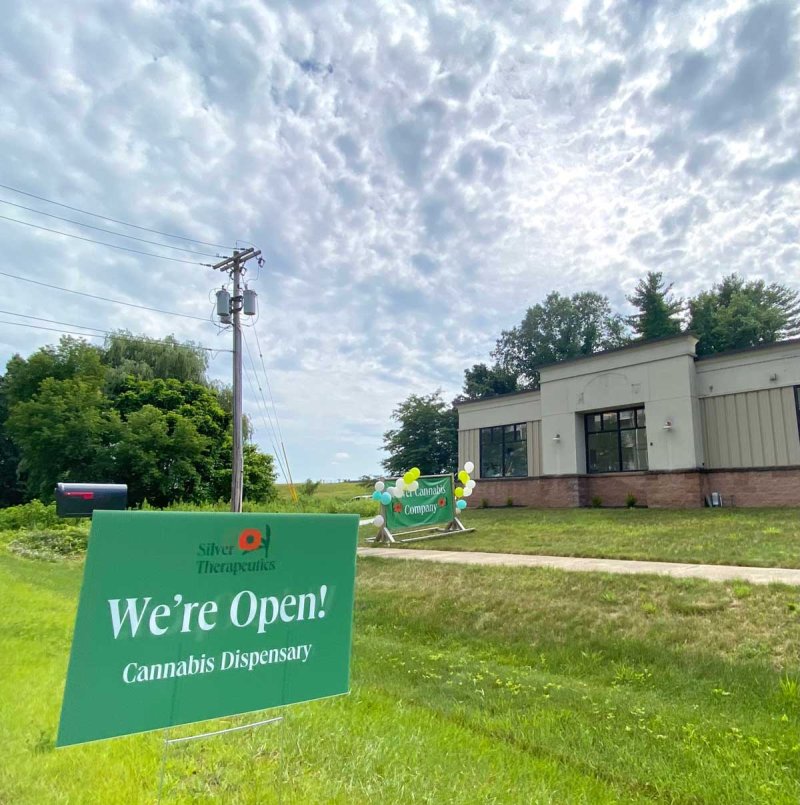
Photo by Dylan McGlynn.

SARATOGA SPRINGS — The Saratoga Springs Planning Board has received plans for what could become the city’s first licensed cannabis dispensary.

A special use permit application has been filed for Reverie Dispensary, which would be located at 95 West Ave, occupying approximately 2,200 square feet in the West Hill Plaza.

According to the New York State Office of Cannabis Management’s website, the Capital Region currently has recreational dispensaries in Albany, Schenectady, and Rensselaer.

Reverie is set to be run by Jody Cracco, her daughter, Brittany Cracco, and Marcy Leventhal, who brings significant experience in the regulated cannabis industry.

The Cracco family also runs Dairy Haus and Doggy Playcare, two businesses located next door to each other on Maple Ave. Brittany Cracco said she has been long-time friends with Leventhal, and initially reached out to her for advice on infusing cannabis into ice cream.

“When I called Marcy to kind of poke at her vast wealth of knowledge, she told us about the application process and what the qualifications were,” Brittany Cracco said. “Between my mom, Marcy, and I, we qualified, and we went for it.”

Leventhal said she has 20 years of industry experience and has worked in 22 states, having operated a dispensary in the Bay Area of California, and also having worked as a consultant and for a cannabis advisory firm.

“So I’m very familiar with the licensing and application process, which we’re going through right now,” said Leventhal. “We’re really excited to curate a shop with my knowledge of the industry and their knowledge of Saratoga to make, hopefully, one of the premier shops in the state.”

Brittany Cracco said Reverie will look to highlight local farms and manufacturers, saying, “There are a lot of farms really close.”

“That’s what I would love to bring to the community, is the community’s product,” said Brittany Cracco. “That is going to be a really big part of it for me, is bringing in our local farmers and manufacturers.”

“To be able to sort of close the loop, so that we’ve got local people buying from local farmers at a local dispensary, is a really exciting prospect to us,” added Leventhal, who noted that Reverie will also carry additional outside brands that “appeal to the masses.”

The application describes the location as a “conditional adult use retail dispensary,” and states that it has been approved by the New York Office of Cannabis Management, but must receive special use designation from the City. The Saratoga Springs Planning Board is set to discuss the application at its meeting on Aug. 3, according to a posted agenda.

The group said they are aiming to open by the end of August if their application is approved.

“Obviously, being compliant and following their processes is really important to us,” said Leventhal. “… Not rushing it just to get open, but rather, getting open in a responsible way is important. But with that said, we’d love to capture some of the seasonal travelers in Saratoga. We’re going to hustle as hard as we possibly can to get open by the end of August, provided we get the approval at the Planning Board on August 3.”

Jody Cracco emphasized the importance of supporting local, and said she hopes Reverie will feel “comfortable” to its customers.

“We want them to come in and feel so comfortable in our place,” said Jody Cracco. “We want it to be a great experience.”

“Walking into a dispensary, it can be overwhelming,” said Brittney Cracco. “You don’t really know the product, and you may want to ask questions, but you may feel like it’s not your place to ask questions, or a little silly. We don’t want that. We want it to be a comfortable environment, and we want people to know the same people that are serving you your ice cream cones are the same people that are serving you over at the dispensary.”

Jody Cracco said the three partners are “really excited.”

“It’s been great,” said Jody Cracco. “And to be the first to open, we are so honored to be able to, hopefully, say that.”

“I’m really excited at what we’re going to be able to do,” added Leventhal, citing her background in the cannabis industry and the Cracco family’s background in operating businesses. “I would encourage everyone in the state to come check us out when we open.”

When Hoffa Halted the Horses

Photo provided. 

There were only 14 horses at Saratoga Racecourse in late July of 1961.  By that time, it was expected that at least 200 would have arrived for the racing season.  Strikes led by Jimmy Hoffa and a branch of his Teamster Union, Local 917, halted the transportation of horses from New York City to Saratoga Springs. Teamsters wanted to force themselves into a position of being representatives in labor negotiations for approximately 1200 backstretch workers at Belmont and Aqueduct racecourses.  Picket lines consisting of these workers formed outside the racetracks and Teamster truck drivers were ordered not to cross.  No horses were to be delivered until better pay and improved working conditions were granted to the workers.  

Horse owners, who normally decides wages for the workers, refused to negotiate with the Teamsters and were stuck in a difficult position. Who was going to bring their horses to Saratoga Springs? They could have found different trucks and drivers, but increased violence in the picket lines kept them from doing so. A stabbing occurred on July 22, which involved both union and non-union workers. That same day, a van operated by non-union drivers was pelted with rocks as it attempted to deliver horses to Aqueduct. The risk involved with crossing the picket lines was too great and deterred horse owners from employing any outside help for the job.

During the days that followed, the strikes and picketing continued while negotiations between Teamsters and the State Labor Board remained at a standstill. Consequently, horses were not being delivered at a rate that would ensure races could proceed as scheduled. With about a week until opening day, the entire racing season was put into question. Tension began mounting as this news spread and the Mayor of Saratoga Springs, James Benton, reached out to anyone who could help aid the situation.  Among others, he was communicating with the State Labor Board, the Chamber of Commerce, the State Mediation Service, Lieutenant Governor Malcolm Wilson, and Governor Rockefeller. Everyone he spoke to assured him that racing would proceed as scheduled. These assurances were difficult to get behind though since negotiations between Teamsters and Labor Board representatives were making no progress. 

Perhaps trying to circumvent these complications, Benton went straight to the top and spoke with Jimmy Hoffa on July 25.  Aside from his role as mayor, Benton was the owner of the Grand Union Motel on South Broadway and was involved in many city projects.  His ultimate concern was for the city and understood that its livelihood depended on business generated during the 24-day racing season.  Hoffa was also aware of this and used it to his advantage.  He made it clear he would only transport horses once labor demands were met.  Benton suggested that Hoffa allow his drivers to move the horses and resume strikes in Saratoga, but Hoffa remained obstinate and rejected any pleas or compromises presented to him. 

In the meantime, plans for using trains to move the horses had been quietly formulated.  Trains were an outdated method of transportation at that point, but the equipment needed for the task was still available.  The New York Racing Association employed “special cars,” for the use of transporting horses and, on July 26, D&H Railroad was seen putting up a “horse siding,” at their West Circular Street depot.  The trains were to be routed through Connecticut and Massachusetts before coming to New York.  Changes made to the railways in recent years prevented the special train cars from clearing certain bridges, so this indirect route had to be taken.

On July 27, the first bulk of horses arrived successfully.  As early as 5 a.m., 60 people gathered outside the D&H depot to watch the horses unload and parade their way to the stables.  In a way, this was reviving an old tradition, albeit against the will of the city.  Back when horses were normally brought by rail, people would gather to watch as they were unloaded and then guided across Broadway and down Union Avenue to the racecourse.  The event was symbolic of mid-summer and assured citizens that the city would soon be booming.  A total of 3 trains and 8 vans arrived between 3 a.m. until around noon that day, bringing a total of over 100 horses.  The vans were able to make the trip undisturbed thanks to protection given along the way by state police, city police, local sheriffs, and Pinkerton Security.

The operation continued into July 28 and approximately 400 more horses arrived.  This shift in momentum, from no horses to suddenly over 500 horses delivered in 2 days, coincided with a break in the Teamsters’ position.   A spokesman for the Eberts Van Co., one of the major horse transporters that was previously honoring the picket lines, said that 6 of his 7 drivers went back to work.  It’s likely that with little headway being made with negotiations, drivers chose to resume work and not completely lose out on money.  The next few days were relatively peaceful, and Saratoga Springs continued to receive horses uninterrupted.

On July 31, opening day at Saratoga Racecourse, the front page of The Saratogian announced, “Fans, Horses, Stream to Racetrack.”  With nearly 1300 horses on the grounds and over 12,000 people attending, races proceeded as usual that day. Threats of pickets and strikes coming to Saratoga Springs were revealed to be harmless. Only a handful of picketers were seen outside the gates of the track that morning. Even though labor disputes would continue through the following months, they would never reach the level they did during the week leading up to opening day.

Special thanks to Chris and Larry Benton for telling me stories about their father, Mayor James Benton, and offering their insight regarding the lead up to the 1961 racing season.

Matt Bonk graduated from SUNY Albany in 2019 with a bachelor’s degree in History and is currently working at Brookside Museum in Ballston Spa as a museum assistant and has recently curated the new exhibit “A Saratoga Family Tale.”

Let the Skating Begin

Photo by Super Source Media Studios.

SARATOGA SPRINGS — The City of Saratoga Springs celebrated new renovations to the East Side Recreation Skatepark on Thursday, with a ribbon-cutting ceremony marking improvements to the park.

The park has been updated with concrete, replacing the former metal ramps. It features a concrete bowl, mini-ramp, manual pads, ledges, flat bars, and more, said Brad Siedlecki of Pillar Design, who designed the park.

Benj Gleeksman, vice president of local nonprofit ON DECK Saratoga, said it was “amazing” to see skaters at the upgraded park on Thursday.

“Just to finally see it done, I don’t know how to describe it. I’m so excited,” said Gleeksman. “But the thing that I’m most excited about is seeing how happy it makes other people. I love skating it, but I love sitting on the bench and just watching kids enjoy it.”

The renovations were priced at just under $446,000, according to a presentation by John Hirliman, the city’s Administrative Director of Recreation. ON DECK Saratoga raised and contributed roughly $70,000 to the project through fundraising and support from the local community.

The park was constructed by Artisan Skateparks. While speaking to those in attendance, Gleeksman noted that the park features pink and brown colors, in a nod to the Silly Pink Bunnies, which he said is an international skateboard community that began at the East Side Rec skatepark in the early 1990s.

“So it’s been over 30 years of Silly Pink Bunnies. They started here,” said Gleeksman to those in attendance. “There’s hundreds of them skateboarding all around the world.”

He offered thanks to Siedlecki and Pillar Design, and to Artisan, who he said completed the park’s construction a month ahead of schedule.

Belinda Colón, president of ON DECK and Gleeksman’s wife, thanked the Saratoga Springs City School District, which owns the property, as well as the Mayor’s Office, City Council, the Saratoga Institute, Spring Street Gallery, and the local artist community.

Gleeksman offered thanks to local businesses such as Stewart’s Shops, Darling Doughnuts, and Death Wish Coffee, who he said provided $25,000 of matching donations.

He also thanked Scotia-based Town and Country Skateboards and Albany-based Seasons Skate Shop, as well as Fran Love-Aveta, who ran Jah Skate Shop on Caroline Street and was in attendance at Thursday’s ribbon-cutting. 

Hirliman offered thanks to ON DECK, the school district, and to the City Department of Public Works, who demolished the former metal bowl. He said it was “great to see” skaters enjoying the updated park.

“It’s pretty surreal,” said Hirliman. “It’s amazing to see it completed, and see how many kids are skating right now.”

Gleeksman said construction took roughly two months to complete. He noted that ON DECK held numerous events to help raise awareness and funds for the skatepark.

“As the fundraising started to gain momentum, we started to grab the attention of the business community,” said Gleeksman. “Darling Doughnuts stepped up, Smashburger stepped up, Death Wish stepped up huge.”

He noted it was meaningful to see the support from the local community, saying that to him, the skatepark is “more than just a place to come and go skate.”

Gleeksman said the park can attract tourism, and also hopes it will inspire other local communities to follow Saratoga Springs’ lead.

Andrew Cecala, a local skater who said he has been coming to the park for 20 years, noted the updated park is “very smooth.”

“I’m ecstatic,” said Cecala. “It’s like having a skatepark in your backyard. It’s awesome.”

20-year-old skater Reymond Garcia said it was “really exciting” to see people of all ages enjoying the park.

“The renovation just brought everybody,” Garcia said. “It makes me so happy to see, because there’s just all ages here. … It’s what you want to see out here. It’s really exciting.”

New Senior Center Opens

SARATOGA SPRINGS — After more than 40 years of setting up shop on Williams Street, the Saratoga Senior Center this week began its physical relocation into the future: one mile southwest and to its new home adjacent to the Saratoga Regional YMCA at 290 West Avenue.    

“Shut down, packed up, and moving over here,” executive director Lois Celeste explained to hundreds of visitors attending the center’s first event staged at its new location. The senior expo was held July 20 and featured a variety of speakers, presentations and more than 40 community vendors.  

The new site hosts multiple classrooms, a kitchen and dining room, a chair-and-table area for card games, an art room, exercise room, employee offices, and an education center. 

The Meeting Room will host gatherings of the Alzheimer’s Association as well as various medical insurance organizations, and the Game Room will be fitted with computer stations, a TV, ping-pong tables and a pair of pool tables. 

“We actually have a sound system and a projector – we’re coming into the next century here,” said Celeste, flanked by the new-look gleam of marble and glass.  

The new location boasts plentiful parking and a quartet of columns that frame the entryway that lead to a main reception area inside. A physical therapist will be on-site five days of the week. There is still some work to be done prior to the new center’s opening.  

“We don’t know how long it is going to take to set up operations, but our goal is to have a soft opening with classes by the first or second of August,” Celeste said.  “It will be a kind of a one-stop shop.” 

The non-profit, non-residential community center welcomes adults aged 50 and over. Cost is $35 a year to participate in programs, trips and social activities tailored to adults and seniors.

The Center was founded in 1955, purchased its own building at 162 Circular St. five years later and in 1979 relocated to a larger facility at 5 Williams St. The Williams Street venue that is being vacated is owned by the city of Saratoga Springs. 

The city last year announced plans to use the location when empty to site a 24/7 permanent homeless shelter. Earlier this year those plans were quashed, however, after the proposal met with a backlash from some community members and parents of students of the nearby Saratoga Central Catholic School. Plans for the future of the city-owned property are not currently known.  

Mapping Progress: Local Man’s New Venture Helps Others Find Their Way 

A section of Saratoga County depicted in the most current edition of Discovery Map.

SARATOGA SPRINGS — “Even after 17 years, I’m still in a honeymoon period with Saratoga,” says Dan De Federicis. “It’s just a wonderful place to be in any stage of your life.”

The retired State Trooper relocated from his native Buffalo to Albany in 2001 after being elected president of the NYS Troopers PBA. “Each successive year, I found myself coming to Saratoga Springs more and more. It was 4th of July holiday weekend in 2005 when I drove to Saratoga from Albany four times! That’s when I said, ‘That’s it. I’m moving to Saratoga Springs.’” 

These days, De Federicis operates Saratoga Report – a local news aggregator website that collects and displays links to Saratoga-related stories. 

“It’s funny, for my website, Saratoga Report, I do all these searches every morning – anything to do with Saratoga – and I came across this sale offer,” he says. “I made some calls.”  

The calls led him to Charlie McCabe, handler of the estate of his dad Matt McCabe – a much loved Saratoga Springs businessman, musician and a former city commissioner. Notably, Matt McCabe operated Saratoga Guitar for more than a quarter-century until his untimely passing in January 2021 due to complications of COVID-19.    

In October 2020, McCabe had purchased a franchise in Discovery Map of Saratoga. The Discovery Map International brand was founded in 1981 and features hand-drawn maps of more than 130 largely tourism destinations with more than 90 franchisees. 

The maps, which are free, provide travelers a resource to find local lodging, dining, shopping, services and fun things to do in their focused locations. Overall, more than 16 million maps are printed annually, according to the company.  

Focus areas range from Santa Monica, California to the Berkshires and Hyannis in Massachusetts. Eight municipalities are showcased by Discovery Map in New York State alone – East Hampton, South Hampton, Lake George, Lake Placid and Saratoga Springs, among them.  

“As much as we rely on our smartphones, people still prefer printed-out maps,” McCabe said at the time of his franchise purchase. “The maps are truly like works of art and reveal the character of an area… and there is a lot of that in Saratoga Springs and the surrounding areas.”

“I did my due diligence, looked into the company, called other franchisees around the country and learned they’re really good to work with,” says De Federicis. “I saw it as an opportunity, and that it was Matt McCabe who had previously owned it, only added to it. I feel honored to follow in his footsteps.” 

Paper maps have made a resurgence in recent years, with maps and atlases selling 1.8 million units last year, up 20% over 2021, according to the NPD Group, an international agency that measures business data and analytics.   

The Discovery Map of Saratoga covers all of Saratoga County. It is colorful, two-sided, measures about 18 inches by 14 inches and is bordered by thumb-sized adverts. It folds neatly into quarters and depicts a large segment of Saratoga County on one side, and a close-up of downtown Saratoga Springs on the other.  

De Federicis found a business opportunity as well as something close to his heart. 

 “There is so much going on in Saratoga, there is a lot of opportunity to grow this. I not only wanted to work in Saratoga, but I wanted my work to be about Saratoga,” he says. “What I’m doing now, I love doing. It doesn’t even seem like work to me.”  

The franchise term is for 10 years, and the maps are updated and printed annually. De Federicis said his plan is to secure advert sales from those who want their establishments depicted on the map for next year’s edition through this calendar year and go to print on the 2024 issue in January.  Interested parties can contact Dan De Federicis at: dand@discoverymap.com. 

“The support (from Discovery Map) is incredible. For instance, let’s say I sign up a new restaurant. Well then, their staff adds the building to the map. And they’re not just going to draw a dot or a square, the building will look like the building it’s representing.” 

The maps are folded to a convenient 8.5-inch by 11-inch size and available free of charge up and down Broadway and all-around town, as well as across the county in local stores, restaurants, hotels and tourist attractions, among other places.  

While the maps will be updated annually, one characteristic will be preserved, De Federicis says. 

“On the map itself there is a caricature of Matt McCabe with his guitar. As soon as I saw that, I told Charlie that his father’s caricature will stay on there for as long as I own this map.” 

Saratoga High Parking: New Rules in Effect in September

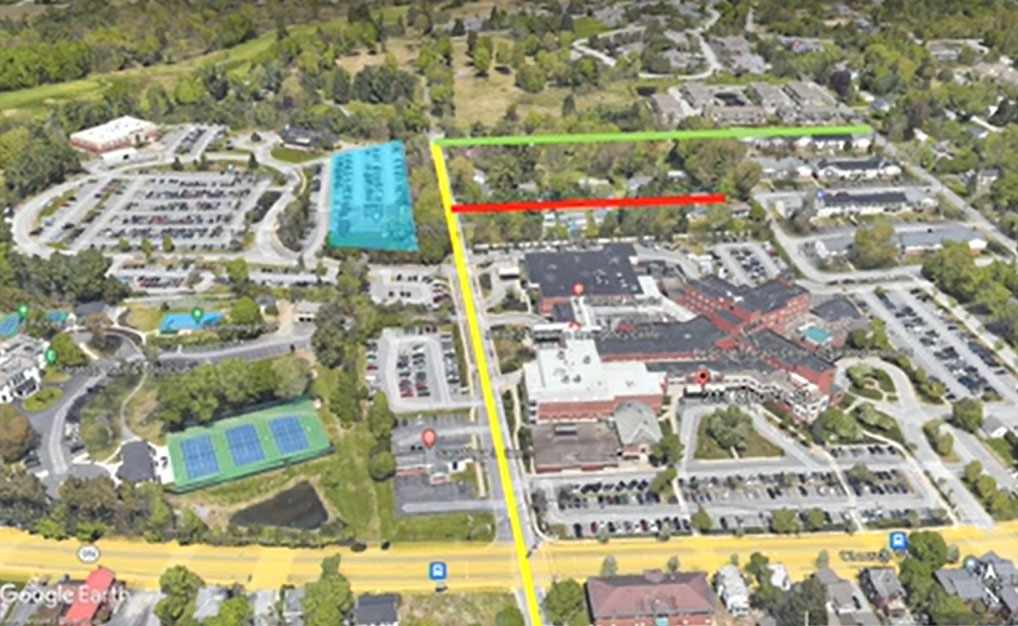
Streets affected by new time-limit parking rules. 

SARATOGA SPRINGS — There will be new parking rules in effect on public streets in proximity to Saratoga Springs High School this fall that are anticipated to affect neighborhood residents and student drivers alike.   

Citing public safety hazards and disruptions caused by Saratoga Springs High School students parking vehicles on residential streets near the school, a group of affected residents took their grievances to the City Council this week.  

The residents, led by speaker Melissa Thompson-Flynn, provided a presentation that they said illustrated issues created due to the number, and in some cases the manner, in which students park their vehicles on streets neighboring the school during the semester.  The issues stated include: allowing little parking for residents or delivery vehicles, blocking residents’ access to their homes, difficulties for other vehicles to navigate, and insufficient clearance for emergency vehicles. 

Thirty-five signatures from 21 households were presented to the council on behalf of signees supporting the implementation of two-hour parking restrictions on five streets. The presentation, a Public Hearing and council discussion and eventual vote were held at City Hall July 18.    

Ultimately, the City Council, by a unanimous 5-0 vote, approved an ordinance to implement the “Time Limit Parking” on Willow Lane and Ash, Hyde, Birch, and Joseph streets.  

While students may continue to park on the streets come fall, they must now move their vehicles every two hours. 

The council said it anticipates – with no further action – that this will likely create similar problematic scenarios on other neighboring streets as students will seek a place to park their vehicles a few blocks further from the school. As such, they noted they were approving the ordinance with the acknowledgement that “this now puts pressure on us” as a council, as well as the school and potentially other stakeholders, to find a long-term solution.