Creation of the Saratoga Battlefield

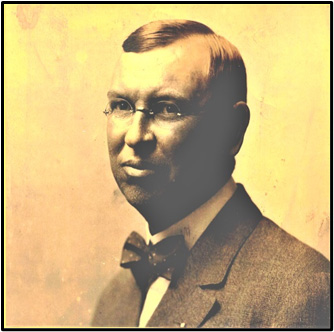
George Slingerlands, First Superintendent, Saratoga Battlefield.
Photo provided by The Saratoga County History Roundtable.

Saturday, October 8, 1927, was a great day for a burglar in Ballston Spa. The Saratogian newspaper announced that “Ballston Spa closed down shop this noon and went to the Saratoga Battlefield celebration. Scores of Ballstonians, many of them taking part in the pageant, went to the historic battlefield this morning, but the great exodus did not take place until early this afternoon. Stores, mills, offices and shops closed at noon and throughout the forenoon there was a hustle and bustle of people getting ready to go to the celebration.”  

The early 1920s was a period of intense growth in the Rotary movement in Saratoga County. On May 1, 1922, the Ballston Spa Club was chartered, followed by the Mechanicville and Saratoga Springs Clubs in 1924.

With the energy and enthusiasm of recent converts, they looked around for “big” projects to tackle to demonstrate their commitment to the ideals of Rotary. The upcoming sesquicentennial anniversary of the Battle of Saratoga, scheduled to take place in 1927, appealed to the “live wires’ of the nearby Rotary Clubs who quickly became a part of a movement which included citizens of Vermont and New England (whose ancestors fought at the Battle of Bennington and Saratoga).  

Two men; Adolph Ochs, owner of the New York Times and George O. Slingerlands, Mayor of Mechanicville and founding member of the Mechanicville Rotary Club soon emerged as the movement leaders.  Because of Ochs’ social status, he is often cited as being the prime mover in the effort, but this is what Ochs said of Slingerlands’ role “My interest in the Battlefield of Saratoga is due to the enthusiasm, self-sacrifice and patriotism of Mayor George O. Slingerlands of Mechanicville. He is the man who brought me to the field.”

On September 18 and 19, 1925, over 400 Rotarians and their wives from New York, Vermont and Massachusetts gathered at the site of the Battlefield, which at that time was privately owned. They passed a resolution calling on Rotarians to work for a sesquicentennial commemorative event and urged support for permanent recognition of the Battlefield by either the State or Federal government. Spurred on in large part by Slingerlands, this grassland campaign took root and blossomed.  

In 1926, the State of New York approved the purchase of four farms and created a State Historic Preserve which became known as the Saratoga Battlefield.  Slingerlands was appointed the first Superintendent. One of his first duties was to begin planning for the upcoming sesquicentennial celebration scheduled for October 8, 1927. Judging by the numbers involved, the celebration was a great success. An estimated crowd of 100,000 spectators and participants viewed the pageants and heard speeches from the governors of New Hampshire, Massachusetts, and Governor Al Smith, of New York. The 25,000 automobiles that tried to get to the event overwhelmed the primitive road system and many were still in long lines at the close of the day’s program. Crowd control was handled by a 200-member contingent of State Troopers and logistics by units the New York National Guard.

The pageant was directed by Percy Burrell the “king” of pageants.  Each of the 6,200 participants was provided with a four-page set of instructions which covered everything from the time and place of assembly to what to do about their costumes and such items as chewing gum, wrist watches and glasses – all prohibited.

The pageant started at 2 p.m. but was preceded by a 150-gun salute at 9 a.m., the dedication of the New Hampshire monument at 10 a.m. and speeches by the three governors at 11 a.m. The show was described as “(a) gigantic historical pageant depicting in dance, song, and drama the opening scenes of the American Revolution, and more particularly the striking events and episodes in the Battle of Saratoga.” Participants included musicians, choristers, dancers, and volunteers costumed as soldiers, farmers, Indians, and women and children.  

After the excitement of the sesquicentennial celebration, Superintendent Slingerlands began working toward including the Battlefield in the National Park System.  Although he did not live to see it, (dying in 1932) in 1938, with the help of former Governor and later President Franklin Roosevelt, the Saratoga Battlefield became part of the National Park System, as it remains today.  

Paul Perreault has been the Malta Town Historian since 2009. He served as principal in the Ballston Spa School District from 1978 until 1998 and as a history teacher at Shenendehowa High School from 1967 until 1975. He is a member of the Association of Public Historians of New York State, the Saratoga County History Roundtable and the Ballston Spa Rotary Club. Paul can be reached at historian@malta-town.org

Boy Scout’s Camp Saratoga

Camping has been the backbone of the Boy Scout program since its inception.  The national Boy Scouts of America kick started its organization with a 2-week summer camp at the YMCA’s Silver Bay facility on Lake George in August 1910.  BSA commissioned its first scoutmaster – S.F.Lester, Troy N.Y. – Sept. 10,1910.  Lester brought his troop to summer camp at the Vermont YMCA camp in 1911. 

Many early Saratoga County troops established their own summer camps such as Mechanicville on Assembly Point Lake George 1921 and Burden Lake 1922. Troop 1 Ballston Spa hiked to summer camp at White Sulpher Springs, Saratoga Lake in 1922.

Saratoga County Council was organized in 1924. The Executive Board’s top priority was acquiring property for the Council’s summer camp. The search reviewed properties in Luther Forest, Corinth, Stillwater and others.  The search continued as the Executive Board authorized Troops to use Albany Council’s Camp Hawley for summer camp in 1925, 26, 27, and 28. Saratoga County Council’s first summer camp was held in 1929 at American Manufacturing Company’s employee recreation property on Fish Creek near Grangerville. The camp was called Camp Saratoga although not on the property to become known later as Camp Saratoga.

Saratoga County Council’s executive board finalized the property search on April 24, 1930 purchasing 290 acres of the Gick family farm near Gansevoort for $3,000, which came with two buildings, the farmhouse and barn. The property had no electricity.  Water came from a manual well pump at the farmhouse.  Sanitation facilities consisted of a single pit type “outhouse” attached to the farmhouse.  The property had extensive fields devoid of trees. Delegan stream had a dam creating a very small shallow pond.

Scouting’s spring 1930 expansion of property facilities included construction of a $1,700 mess hall complete with shallow well. The small pond’s $700 expansion included a sandy beach and diving board.  Mechanized machinery was not available. Harnessed horses removed stumps, dredged, and expanded the pond. All was complete in time for the July 1930 summer camp start, running for 3 periods (6 weeks) serving 129 scouts.

Fall of 1930 saw the community step up its scouting commitment. The Lions Club of Saratoga, Mechanicville Rotary Club and others sponsored construction of seven “cabins” on the hill, enclosing five by 1932.  The Ballston Spa Rotary Club provided one enclosed cabin including a fireplace. The “Bears Den,” as it was known, allowed winter camping in December 1932. Hilltop cabins received the camp’s second “latrine” in 1933.

Forestation of the farm’s grazing fields was an early objective of the council.  5,000 white pine and 5,000 red pine saplings were planted by scouts in 1930. Substantial plantings by scouts continued for many years (21,000 total by 1934) into the 1960’s.

An “Indian Teepee Village” was established for summer camp in 1933.  The village housed 12 senior scouts for a Native American program. The remaining 48 scouts in camp were housed in the Hilltop Cabins.  A single “lean-to” replaced the Indian Village in 1936.  The lean-to was removed in 2014.

The 1933 spring “Pow-Wow” was the first camporee at Camp Saratoga.  Earlier “Pow-Wow’s” were held at the Saratoga Battlefield. 

Continual improvements were instituted over the years. The rifle range was added in 1935, Rabbit Hole in 1941. The pig pen was moved to a remote location in 1939, thereby reducing the “fly problem.”  Electricity was added in 1945 along with telephone service.  Cooks cabin, IP Lodge, chapel, health lodge, ranger cabin, pond shower building, dining hall extension, IP shower building, and others were added in the 1960’s/70’s.  The Rabbit Hole was expanded by attaching one of the hilltop cabins.  Water was first distributed to tent sites in the late 1960’s.

Individual troops were allowed to develop dedicated camp sites beginning in 1941.  1984 saw the first troop “lean-to” built, followed by others. Tent campsites at North Tent, Hilltop and South Tent served multiple units.

Maintenance of the camp was largely done by volunteers. Membership in the “Beaver Club; “Beaverettes” and “Beaver Scout” being cherished indications of contributed hours.  Order of the Arrow spring inductions provided needed service to open summer camp.

Income was generated for the council thru “ice harvesting” and selected logging.  True “ice boxes” were required to preserve camp food prior to 1945’s electrification.  An ice house was located behind the Ranger Cabin.  Ice was transported to Gansevoort, loaded on trains for distribution. Local vendors/residents came to camp to purchase ice.

Summer camp was the cornerstone of a Scout’s career.  Advancement; merit badges in natural sciences – forestry, botany to bird study; aquatic badges; pioneering; handicrafts; marksmanship; archery.  Scout skills such as hiking, camping, cooking; off-site badges in horsemanship and forestry.  Mile swim, BSA lifeguard, NRA awards.  Something for everyone.

Some merit badges – including some required for Eagle such as swimming and lifesaving – were only available to many scouts at summer camp. A highlight of any scout week was the opportunity to demonstrate scout skills on Family Night during the weekly water carnival.  Scouts demonstrated their new ability to swim.  They competed in swimming races and relays, diving, boating races, and the lost art of canoe gunneling, etc. Those who took a swim prior to breakfast each day earned the coveted Polar Bear patch.  Brrr!  

Off-site trips to Mt. McGregor (hiking and/or camping) and Schenectady Council’s Camp Rotary on Lake George for inter-council competitions and hikes up Sleeping Beauty mountain were all part of the experience. Off-camp treks were held to Mt. Marcy (1987) and Mt. Haystack (1988).

The Rabbit Hole, Bears Den, and IP Lodge created memorable experiences in Winter camping allowing scouts to complete year-round camping awards.  Spring camporees featured the annual OA tapout with the scenic canoe entrance of OA chief Allowat Sakima in full regalia across Delegan pond.

Who can forget the many veteran scouters – Ed Thielmann, Harry Hayward, Victor Parmenter; Camp Directors John McCarty, Dick Reeves, Bob Wicks, Allen Remaley, Charles Baker, Fred Cable, and others.  Camp Rangers Ray Gates, Larry Gordon, Mike Shaver, Paul Woschanko. Memories Forever

Gene Phillips grew up on Mount McGregor and owned a consulting engineering firm in Saratoga Springs. He has a lifelong association with the Boy Scouts of America, serving in positions with local Troop 24, Twin Rivers Council, early 1960’s summer camp counselor, and is interested in local scout history.

John Taylor: New York’s “Only” Speaker of the House 

John Taylor 1784-1854.
Photo provided by The Saratoga County History Roundtable.

What do you suppose history will say about politicians of current times? Hindsight is often different from what was presumed by contemporaries. But for John Taylor, who became New York’s first Speaker of the House of Representatives, that does not seem to be true. He was always seen as a man of high standards, even if those high standards irked some people in his own political party.

Many years ago, it was said by an unknown author that “Mr. Taylor was a gentleman of the old school, polite and courteous, an eloquent and forcible speaker, and delivered frequent orations on literary and national topics…..In private life he was retiring, fond of cultivating his garden, and generous in distributing its fruits and flowers.  He hated corruption in politics and spurned the use of money for political personal success, and his constituency always returned unwavering confidence in his sterling integrity.” John Taylor (1784-1854), whose house still stands on West High Street in Ballston Spa, was a highly respected gentleman and a man who gave a great deal of his life in service to our country.

Taylor was born in what would become Charlton, lived in Ballston Spa, and then for a time in Corinth.  He was a graduate of Union College, the valedictorian of his class at the age of 19, and, soon thereafter, was admitted to the bar to practice law.  He was elected to the State Assembly (1812-1813) where he was known for his efforts to combat corruption especially in relation to banks who were exercising more power and influence than they should at the time. After that short stint, he was elected to the US House of Representatives where he served for 20 years, from 1813-1833.  It was during that time that he was Speaker of the House twice, making him fourth in line in the succession to the Presidency, should anything happen to the President, Vice-President, and President pro-tem of the Senate.  (In later years, the positions of the President pro-tem and Speaker of the House were reversed in the Presidential succession order.)

His goal as Speaker was to be totally impartial, not favoring either party’s agenda but doing what he felt was best for the country.  That did not set well with some of his colleagues, thus ensuring that his two terms as Speaker were split, as he lost an intervening term.  Then, after losing the election of 1832 because the party leaders were again dismayed with his non-partisan performance, he resumed the practice of law in Ballston Spa.  Later he became a member of the State Senate.

In the state legislature, he was actively involved in the conduct of the War of 1812 and, while in the Assembly, he became highly respected and known as an excellent debater.  In the Congress, he aligned himself with James Tallmadge and Rufus King, both from New York, who strongly believed that slavery should not be extended into the territories.  With that belief, he disagreed with Henry Clay, the “Great Compromiser” of the time. 

Despite those differences with the very influential Clay, the two men maintained a healthy respect for each other. Clay visited Ballston Spa at one point and made quite a scene with his praise for the integrity of Taylor.  Taylor also knew Dolly Madison, the President’s wife, who remarked once that there was “always something wanting at a dinner or a party if Mr. Taylor was absent.” Her respect for him was exemplified by the fact that she gave him a small piece of Martha Washington’s wedding dress as a memento.  In addition, he accompanied General Lafayette of France, famous in our Revolution, around the New England states while Lafayette was visiting the country in 1824.

It was from his State Senate position that he resigned in 1841 because of a crippling stroke. He moved to Cleveland, Ohio to live with his daughter where he died on September 18,1854.  He is buried in Ballston Spa Village Cemetery.

But, besides the esteem, his fame truly lies in the fact that he was the only New Yorker to ever be Speaker of the House of Representatives…… sort of.  In reality, there was ONE other person from New York who was Speaker of the House, but for a very short period of time.  His name was Theodore M. Pomeroy, born in Elbridge NY and later moving to Auburn, NY. Schuyler Colfax, who was Speaker from 1863-1869, was elected Vice-President with Ulysses S. Grant.  In order to be sworn in at noon on March 4, 1869, inauguration day at that time, Colfax resigned his speakership at 11AM the day before. Within about an hour, Theodore Pomeroy was sworn in as the new Speaker. Since that 40th Congress ended at noon the following day, so did Pomeroy’s term as Speaker, the total length of his term approximately 24 hours.  It was the shortest term of office for a Speaker in our history and since his term is often forgotten, Taylor usually gets the credit for being the only New Yorker to be Speaker of the House of Representatives! 

Rick Reynolds has been the Ballston Town Historian since 2004. He is a retired social studies teacher at Burnt Hills-Ballston Lake Middle school and is the author of the book “From Wilderness to Community: The Burnt Hills-Ballston Lake Central School District. Rick can be reached at rreynolds@townofballstonny.org

The Saratoga Economic Development Corporation

Photo courtesy of the Saratoga Economic Development Corporation.

As the 1970s dawned, Saratoga Springs was showing exciting signs of rebirth after half a century of decline. The new Skidmore College campus, the performing arts center, the historic preservation movement and, especially, a downtown revitalization campaign (“The Plan of Action”) promised a bright future. 

The “Plan” grew out of the work of the half-century-old Greater Saratoga Chamber of Commerce. Over the years its efforts had centered narrowly on coordinating events and promotion for tourism. That was changing rapidly in the early 1970s under new leadership as it broadened its scope to include economic development. But with an otherwise full program and a small staff, there was a limit to what it could take on.

There was a challenge ahead, more daunting than the shopping-mall competition facing Broadway stores that had spurred the Plan of Action. Saratoga County was losing its manufacturing base. While tourists were its bread and butter, well-paying factory jobs had been plenty in Schuylerville, Mechanicville, Waterford, South Glens Falls, Corinth—even in resort-oriented Saratoga Springs. In 1976, manufacturing provided the county with one-third of its jobs and fully one-half of its payroll. But like everywhere in the Northeast, the factories were moving South or closing. During the 1960s alone 12,000 to 14,000 manufacturing jobs were lost. As they disappeared, unemployment rolls grew. This was a challenge not usually addressed by chambers of commerce in that era. 

The solution grew out of a November 1977 lunch at the Hayner House in Ballston Spa. Bob Schock, the chamber chairman, and Joe Dalton, its president, met to discuss the county’s economic future with Paul Brown, a Ballston Spa attorney who was about to become chair of the county board of supervisors. They proposed an entirely new agency, the Saratoga Economic Development Corporation (SEDC). It was to be independent of the chamber but work closely with it; most importantly, it would be independent of government so that its beneficiaries would not be indebted to politicians. “That was the first major hurdle, and we got over it,” remembers Dalton. The SEDC would provide financial planning, site analysis, tax planning, and employment training, all to smooth the path for potential manufacturers interested in locating in the county. It would even have the ability to buy land and build and equip a building.

Brown was elected in January, and immediately presented the plan to the county board, which demonstrated a willingness to trust the private sector, providing $40,000 in seed money. Schock raised an additional $12,474 from business people. On March 23, 1978 the SEDC was incorporated, a “private sector, non-profit consulting firm that works to create jobs in Saratoga County, New York.”

It was understood that it had three years to prove its value—or dissolve. A jump start was essential. Frank Quinn of Saratoga Springs met a dynamic young man at a seminar in Oklahoma and the new board invited him to apply. “We interviewed him at 10 o’clock in the morning,” said Schock, “and at 1 o’clock in the afternoon we had hired 22-year-old Jeff Randol as executive director of the SEDC.”

Randol and Dalton went to work immediately. They made the rounds to  sell the SEDC program along with a new state tax-abatement program that reduced taxes for a number of years in return for job creation. Best of all, SEDC offered to help companies design advantageous financial services packages, something that other communities were not doing at the time.

In that first year, four new companies made a commitment to locate in Saratoga County, bringing 70 new jobs. But that was just the beginning. 

Executives from Ball Corporation visited Saratoga County, but Randol didn’t know about their visit until they had left. In two days Randol assembled a package of information and shipped it to Ball where it was waiting for the executives when they returned to their desks. Securing Ball’s commitment required land, railroad tracks, roads and sewers, as well as financing, but it was done. On October 16, 1981 the first cans rolled off the line. SEDC had landed 250 to 300 jobs with a $6 million payroll. Nationwide visibility followed: in Newsweek magazine, Ball’s CEO praised SEDC.

The next big success was Quad/Graphics, which announced plans in 1983 to bring 1,000 jobs to the county. By January 1985 the presses were rolling, soon to print Time magazine and later People as well.

As early as 1982 Randol had speculated that Canadian and European businesses and technology firms offered great opportunities. Marketing efforts abroad had already begun in 1981. Then, in 1985, SEDC began negotiating with a state agency for the purchase of acreage in Malta for a high-tech industrial park.

The project stalled due to the parcel’s Superfund status, but SEDC went ahead with the purchase of 100 acres in Halfmoon for another industrial park.

In 1987 SEDC added the development of corporate office parks to its goals in order to retain college-educated natives. The new initiative got a strong start beginning with Clifton Corporate Park that summer, while in autumn State Farm announced its plan to build a regional service center in Malta, bringing 500 jobs to the county. And there was a changing of the guard: Randol left to start his own consulting firm and was succeeded by Ken Green, who had joined SEDC in 1981 to direct the increasingly essential research and marketing initiatives.

Two decades of successes were followed in the late 1990s by a big push to develop high tech industry. The target location was the tract in Malta that had been in negotiation back in 1985. The state turned over the land in 1997 and SEDC filed a Planned Development District (PDD) application with the Malta and Stillwater towns.

The PDD was approved in 2004, and SEDC purchased 1,186 additional acres surrounding the original tract. At the suggestion of state Senator Joseph Bruno, who had been influential in setting up the land transfer, SEDC spun off an independent agency, the Luther Forest Technology Campus Economic Development Corpration, with its own board. 

In June 2006, Advanced Micro Devices, Inc. (AMD) announced it would build a$3.2 billion microchip fabricating plant there. It would be the most advanced semiconductor manufacturing facility in the world, and the largest private sector industrial investment in New 

York State history. AMD spun off its manufacturing, forming the new division named GlobalFoundries early in 2009, soon after the start of construction. Manufacturing began in 2012, and the payroll quickly grew to 3,000 employees.

Meanwhile, there was another leadership transition when Green left in 2007 and was succeeded by Dennis Brobston. This remarkable continuity, with only three presidents in 40 years, has been part of the SEDC success story. 

At 40, SEDC looked back with satisfaction on an impressive record. It has brought 21,000 jobs to the county, with $16.5 billion invested. Well over 100 firms have come to Saratoga as a result, and over 150 existing firms have been provided the assistance they needed to remain profitable without relocating. It has had a pivotal role in the arrival of such now-iconic Saratoga County businesses as Ball Metal, Quad/Graphics, State Farm, ACE Hardware, Target Distribution, Cascade Tissue and, of course, GlobalFoundries. 

But most of its work has been less glamorous, yet equally important to the county’s economic well-being: the daily efforts to assist small start-up and existing companies and to expand employment.

It brought together private business and government—successfully. Without the innovative model of SEDC, Saratoga County’s economy in 2019 would far less healthy and dynamic.

Tothmea’s Travels

Tothmea at the Round Lake Auditorium 1888. Photo Source: Saratoga County History Center Collection, provided by The Saratoga County History Roundtable.

Local historians and writers have previously told the story of Tothmea, the 3600-year-old Egyptian mummy that was presented to a local museum in Round Lake in 1888. Her travels have taken her from Egypt to Round Lake to Brazil and several places in between. After I learned of some recent developments in her story, I was inspired to recount her journey and update it a bit more.

Tothmea was first discovered in the Egyptian city of Thebes. Sources differ on her discovery date, but she was found either in the late 1700s or in the 1880s. Some sources indicate she was a priestess, but what is more likely is that she was a musician, likely a singer, and served the goddess Isis when she was alive. She was one of a pair of mummies initially given to Samuel Cox, an American ambassador to Turkey in the 1880s. Cox took a trip to Egypt and was gifted the mummies by the khedive after he read Cox’s book titled, “Why We Laugh.” Upon Cox’s return to America, Dr. H.C. Farrar, curator of the George West Museum of Art and Archaeology in Round Lake, expressed his interest in Tothmea and eventually obtained her.

In 1888, a reception took place for Tothmea, where she was presented to a large audience at the Round Lake Auditorium. The picture accompanying this article features some of the men who spoke during the reception. Bishop Newman, the second man from the right, delivered, “the first in a series of lectures on biblical archaeology.” Professor Lansing, who is on the far left, spoke of, “the history and styles of embalming.” The man on the far right is said to be unknown, but some sources identify him as Dr. Farrar. Farrar is recognized for giving Tothmea her name, as her original name is unknown. After the men spoke, Tothmea’s casket was tipped up, the lid was removed, and she was revealed to the audience. 

She was then taken out of the casket, unwrapped, and examined. Unfortunately, preserving Tothmea was not on the list of concerns that day. At one point, they wanted to move her into a sitting position and broke several bones, including a rib. After her reception, she was kept on display at the George West Museum until it closed in 1919. It seemed no one knew what to do with Tothmea at this point. There are stories of village residents, on several occasions, staging her around town to scare people, including one Halloween. Tothmea was eventually purchased by a man named J. Franklin Clute shortly after the museum closed.

In 1939, Tothmea was loaned to the Schenectady Museum by Mr. Clute. Much of Tothmea’s time in Schenectady was spent in the basement of the museum. The museum’s director, George Cole, was quoted as saying Tothmea was, “a rather disgusting mummy.” It’s not clear when it happened, but an object had fallen onto her head and created a hole on one side of her face. Also, the material she was wrapped in was very tattered and decayed. 

Much of what I found about Tothmea’s time in Schenectady indicated that the museum was trying to find another home for her. One issue was that the museum was provided, “unauthenticated documents,” and didn’t have the funds to spend on affirming her authenticity. Since Clute loaned Tothmea to the museum, they needed his consent to get rid of her. Any attempts made by the museum to contact Clute were unsuccessful. After The Knickerbocker News published an article about Tothmea in 1972, the museum received an outpouring of calls asking to “adopt Tothmea.” She was also put on display for a fundraising event benefitting a local tv station, but other than this, she remained in the museum’s basement.

Tothmea’s next move came in 1978. Mary Hesson, Round Lake Historian at that time, placed a call to the Schenectady Museum asking for the mummy back, to which they agreed. Hesson placed her in a plexiglass case and would occasionally display her during festivals, or for schoolchildren. In October 1978, a competition was held for children to submit pictures and write letters to Tothmea telling her what they loved about Round Lake. As time passed, Hesson recalled that Tothmea’s smell began overwhelming her office. A decision was made to find a place to bury her, rather than display her, since she had deteriorated so much over time. To do this, they needed the permission of Inez Sewell, who had inherited Tothmea from Clute.

In 1984, Tothmea was stored at the residence of one of Sewell’s relatives, while plans were made to find a burial site. When Tothmea’s burial site was confirmed and arrangements were made to get her, she had disappeared. Years later, Hesson received several newspaper clippings that revealed Tothmea was in California. A 1988 Los Angeles Times article indicated Tothmea was a part of an Egyptian mummy collection at the Rosicrucian Museum in San Jose. Then, in 1995, the museum in San Jose decided to donate her to the Rosicrucian Museum in Curitiba, Brazil.

The most recent development in Tothmea’s story was the result of the “Tothmea Project” at the museum in Curitiba. In 2019, the museum did a digital facial reconstruction to show what she may have looked like while she was alive. Pictures of this can be found on the museum’s website. Tothmea is still in Curitiba today and is the only Egyptian mummy in Brazil. The museum has a dedicated a climate-controlled room for her that mimics the appearance of an ancient Egyptian tomb.

Matt Bonk graduated from SUNY Albany in 2019 with a bachelor’s degree in History and is currently working at Brookside Museum in Ballston Spa as a museum assistant.

McGreivey’s Restaurant Not Guilty

An 1896 law, the Raines Law, brought these three gentlemen together in a most ungentlemanly nature.

The New York State liquor tax law of 1896, also known as Raines law, was authored by the State Senator John Raines and adopted in the NY State Legislature on March 23, 1896. It took effect on April 1, 1896, was amended in 1917, and repealed in 1923.

Among other provisions, the Raines law increased the cost of liquor licenses, raised the drinking age from sixteen to eighteen, and prohibited the sale of alcoholic beverages on Sundays except in hotels, as well as in lodging houses with at least 10 rooms that served drinks with complimentary meals. Most men worked a six-day week, and Sunday was the only free day for recreation, so the new law was not very popular.

Governor Morton inherited the law.  Henry Lyman on the other hand had spent the better part of the last five years preparing to enforce this law.

John Crowe McGrievey, in the tavern business since 1872, was an outspoken critic of this 1896 legislation.  He was not alone in his criticism, and many tavern owners pledged to resist this tax levy.  Lyman has pledged to target the collection of excise taxes on bars and taverns, so conflict was inevitable.  McGreivey had become a case in point.  But, at the outset, he played along. 

The law stated that; the sale of Intoxicating Liquor shall be taxed by the population. Laws 1896, c. 112, § 11, assessed excise taxes upon the business of trafficking in liquors, based on population numbers.  It further provides that all taxes assessed upon the business of trafficking in liquors, except taxes assessed in counties containing a city of over 1,500,000 people, and on a business conducted on a railroad, steamboat, or other vessels, which taxes were to be collected by and paid to the state excise commissioner or his deputies, shall be paid to the county treasurer of the county in which the business is carried on.

John has complied with this edict by filing with the Saratoga County Treasurer the sum of $100. The amount of the tax assessed upon the business of trafficking in liquors in the village of Waterford, Saratoga county, under class 1, subdivision 1, § 11, of the act, which established the amount for villages with a population between 1,200 and 5,000.  This was duly paid, as prescribed, to the Saratoga County Treasurer. 

But this did not satisfy Lyman. He responded with the following notice and ordered the Saratoga County Treasurer to affect the following steps.  Based on  the returns of the last United States census for the districts embracing the town and village of Waterford, Lyman concluded that the United States census did show that the population of the village of Waterford was more than 1,200 and less than 5,000, and thereupon, in December 1896, he stated “the amount of the tax assessed at $200 for the year commencing May 1, 1896, and then instructed the county treasurer to give the defendant notice and to demand the unpaid balance of  $100. This the county treasurer did.

The defendant (McGreivey)  refused to pay the additional $100. The treasurer demanded a return of the tax certificate. This the defendant refused. The plaintiff thereupon caused a notice of a lien for $100 to be filed with the clerk of the town of Waterford upon the property of the defendant in the premises where he carried on his liquor traffic, assuming to act under section 12, and then commenced this action to foreclose the lien. McGreivey hired Waterford Attorney Thomas O’Connor to represent his interests in this case.

The result of the Hearing: The action by Henry H. Lyman, as state excise commissioner, against John C. McGreivey was dismissed. It was then argued before P. J. Parker P. Landon, Herrick, Putnam, and J.J. Merwin.  Nussbaum & Coughlin, for appellant. (Lyman) Thomas O’Connor and J. W. Houghton, for respondent (McGreivey).  Lyman took the stand and reiterated that McGrievey should have remitted excise tax in the amount of $200, not the $100 received by the County Treasurer.  The defense called its only witness, George S. Donnell, Chief of Census Division, of the Department of the Interior, who was called to testify, “that the paper hereto attached is a statement as nearly correct as can be ascertained from the population schedules of the population according to the census of 1890 of the towns and villages named therein.” The paper thereto attached stated the population of the village of Waterford to be 4,251. The official character of Mr. Donnell was duly certified.

The Verdict:  The trial court properly excluded the certificate, and properly held that resort could not be had to any other evidence than one or the other census to show the population of the village. The defendant paid the tax that the statute assessed, and no larger sum could be lawfully required of him.  The judgment was affirmed, with costs. All concur.

The hearing was summed up in the Glens Falls Post Star as follows.

Judgment in the amount of $1,714.43 have been entered in Saratoga County against Excise Tax Superintendent Lyman on the finding of Justice McCloughlin in the action of the superintendent against John McGreivey of Waterford and 15 others.  The judgment in favor of McGreivey is $592.33, 3 others receive $76.44 each, and remaining 12 $75.44 each.

McGreivey’s currently operates in Waterford, now in its 150th year.

Russ VanDervoort is the Waterford Town Historian and leader of the Waterford Canal and Towpath Society and can be reached at russvandervoort@gmail.com

Presentation: Celebrating the Feast ofSt. Michael in Saratoga Springs Sept. 27

The Bandstand on Oak Street, ca. 1950. Photo by Mario Izzo.

SARATOGA SPRINGS — City Historian Mary Ann Fitzgerald will deliver a presentation about the Feast of St. Michael, celebrated on the city’s west side dating back to the early 20th century.   

The event, free and open to the public, will take place 7 p.m. on Tuesday, Sept. 27 at The Saratoga Springs History Museum, 1 East Congress St.

Starting in 1914, the Feast of St. Michael was celebrated in late September in Saratoga Springs’ Dublin neighborhood, which had started as an Irish enclave, then became home to Italian immigrants and African Americans, among others, and is now known as the Beekman Street Arts District. 

As the statue of Saint Michael was paraded down Beekman Street, people pinned money to him, which benefited the Principessa Elena Society, a community resource for newly arrived Americans that still exists today in the neighborhood. The “Festa” grew into a widely beloved celebration that embraced live music, plentiful cuisine at Dublin’s numerous Italian restaurants, and even fireworks on the outskirts of town. It ended in the 1970s, occasionally revived between 1997 and 2001.

“Everyone in Saratoga Springs went to the St. Michael’s Feast street celebration, not just Catholics and not just Italians,” says Fitzgerald, co-founder of the Saratoga Springs West Side Oral Narrative Project, which is the basis for the presentation. Funding for the event is provided by the Alfred Z. Solomon Charitable Trust.  

“One commonality of the interviews in the project,” Fitzgerald says, “was that everyone remembered the Feast of St. Michael, and everyone wished it could come back.” 

The City Center

Overlooking the Saratoga Springs City Center and pedestrian connector from the parking structure, 2020. Photo by Thomas Dimopoulos.

Many consider the opening of the City Center in the summer of 1984 to be one of the most important achievements in the rebirth of Saratoga Springs. Without it, Saratoga would not have the substantial convention business that has strengthened the city’s economy. Saratogians worked for more than 18 years to make the new facility a reality, ever since the city’s historic Convention Hall was destroyed by fire in 1965.

The convention business began in the 1830s. Political conventions, professional meetings of dentists and teachers, reformers, and religious conferences were among the large events that found Saratoga Springs a perfect meeting place. The American Bar Association and American Bankers Association were both founded in City Hall. All but a handful of these meetings were scheduled between May and September, as the vast majority of Saratoga’s 3,000 hotel rooms were unheated. The convention business expanded so rapidly during the 1870s that by 1883, civic leaders admitted that a larger facility was needed and citizens voted to build one. Groundbreaking took place in 1892, and Convention Hall opened in 1893.

The massive building with its twin towers rose on South Broadway where the Park Place condominiums now stand. The hall seated 5,000 in its auditorium and balcony and was key to attracting convention business, which began to boom. Its zenith was almost certainly in September 1907 when 40,000 Civil War veterans descended on Saratoga Springs for the “encampment” of the Grand Army of the Republic.

As the 20th century went on, the mix of events attracted to Convention Hall changed. The hall provided space for pro, semi-pro, industrial league, and high school basketball competitions – repeatedly hosting the Harlem Globetrotters – as well as wrestling matches and Skidmore College commencements. Enrico Caruso and John McCormack sang there; Paul Whiteman’s and Fred Waring’s orchestras, the Kingston Trio, and Peter, Paul and Mary performed there in concert. But the stock of hotel rooms declined dramatically when the grand old hotels came down between 1943 and 1953. It became difficult to house conventioneers; in 1960 only nine conventions came to Saratoga, bringing fewer than 3,000 conventioneers.

Another Convention Center to replace the one that burned was proposed at the present city arts council site. But before a final  decision was made, catastrophic fire destroyed the old hall. The building was insured, and Commissioner of Public Safety John T. Roohan insisted that the $800,000 payout be deposited in a dedicated account. The Chamber of Commerce urged the City Council to take “immediate” action and a planner was soon hired, but no decisions were made, in part due to the insurance fund’s inadequate size. Years followed without decisive action by successive city councils. Fifteen years passed before newly elected Mayor Ellsworth Jones joined forces with the Chamber of Commerce to identify completion of a new City Center as top priority.

The plan was to increase sales tax by one percent for three to five years, raising $4 million, and the City Council adopted it in August 1981.

A group of the city’s civic leaders traveled to various convention centers sites in the eastern U.S. looking for design and financing ideas.

Planners estimated that the new facility would lose $150,000 to $200,000 a year, so it was clear it would require a subsidy. Under the chairmanship of Charles Wait of the Adirondack Trust Company, a planning committee began in December 1981 to assemble a creative and complex financing plan: the plan called for the city to build the new $4 million Convention Center, and sell it to an investment group. The city would then lease the facility from the investment group for fifteen years. At the conclusion of the fifteen year lease the city would purchase the center at a price agreed upon to at the initial sale. Due to the interest rate differentials, the city would then own the building it had maintained and still have over $3 million of the original $4 million in the bank. The operating deficit would be paid by a hotel built adjacent to the City Center through a “payment in lieu of taxes.” This assured that the anticipated City Center deficit would be covered by the privately owned hotel complex and not by the existing property tax base.

Meanwhile, planners recognized that the City Center would not be successful unless its operations were independent of political forces. In July 1982, a bill creating a seven-member Saratoga Springs City Center Authority, sponsored by State Senator Joseph Bruno, was enacted into law.

The new City Center could seat 2,500 in 37,000 square feet. After 19 long years, the city once again had a convention facility and, unlike the beloved Convention Hall, the new one was up-to-date.

Filling it was the next challenge. David Morris of the Saratoga Harness Track, Dan Murphy of the adjacent Ramada Renaissance Hotel, and Mary Reed of Saratoga Circuit Travel & Tours formed the Saratoga Convention and Tourism Bureau. The bureau, in cooperation with Mark Baker, president of the City Center, initiated action that began filling the center on a regular basis. 

In 1999, the city bought back the facility. Ten years later, the timing was right for a major expansion. The City Center board, headed by Michael Toohey, led the planning process. 

A funding package of $16 million was secured, including $12 million from the state by-Senator Majority Leader, Joe Bruno, plus Authority funds. Expansion would increase floor space by 50 percent.

Through an increase in the room occupancy tax the City Center cover its operating deficit, maintenance, and capital improvements.

Through convention business, Saratoga Springs had permanently broken its old reputation of “The August Place to Be.” It is now “The Year-Round Place to Be.”

The Corinth Connection to the Final Heroic Flight of a WWII Bomber

Residents of an alpine valley in Northern Italy still hail as heroes the two American pilots of a crippled U.S. plane who crashed into the side of a mountain rather than release their bomb load onto the villages below during a World War II mission.

Both pilots died, but they bought enough time for the five other crewmembers aboard their crippled B-25 Mitchell bomber to bail out. One of them, 1st Lt. Franklin Lloyd Darrell, Jr., the bombardier-navigator, lived for a time during and after the war in Saratoga County, as did his parents.

Earlier this summer, the International Tyrolean Trentino Organization of North America, a Northern Italian cultural heritage group, honored the crew of the bomber nicknamed “Maybe” during the group’s convention held Aug. 4-7 at the Crown Plaza Albany-The Desmond Hotel in Colonie.

For group member Ivo Finotti, the events of Feb. 6, 1945, have a personal connection. He grew up near where the Maybe crashed, and he has relatives who were living in the plane’s final flight path who may have been injured or killed if the pilots had jettisoned the bomber’s 3,000-pound payload.

“It’s all about keeping this history alive,” said Finotti, of Toronto, Canada, who gave a presentation on the Maybe’s last flight and the fate of its crewmembers, including Darrell, whose parents were living in Corinth when his plane was shot down and he became a prisoner of war.

Franklin Lloyd Darrell, Jr. was born on June 29, 1921, in Kenogami, Quebec, where his father was employed as an engineer at a paper mill. Franklin Sr. was born in Brooklyn in 1889. While attending engineering school at the University of Maine in Orono, he met Elizabeth Merrill, a native of Bangor, Maine.

They were married on June 10, 1916, in Bangor. The couple also had another son, Alan, and a daughter, Betty.

By 1940, the Darrell family was living in Minneapolis, Minnesota, where Franklin Sr. was working at the International Paper mill. It was in Minneapolis where Franklin Jr., called Lloyd by his family, met his future wife, Jeanne Herbacek, a Chicago native. In the early 1940s, Franklin Sr. was transferred to the IP mill in Corinth, where he was assistant plant engineer.

Franklin Jr. enlisted in the Army Air Forces in May 1942 after two years of studies at the University of Minnesota. He was trained as a bombardier and navigator aboard B-25s, and in between postings that took him from to Alabama to New Mexico he married Jeanne on Jan. 20, 1944, in Minneapolis.

Darrell was assigned to the 447th Bomb Squadron, 321st Bomb Group, which by September 1944 was flying bomb missions against Nazi forces being driven up the Italian peninsula by Allied ground troops.

On Feb. 6, 1945, while on a bombing run in the Italian Alps, the Maybe was hit by German anti-aircraft fire. Pilot 1st Lt. Earl Remmel of Oklahoma and co-pilot 2nd Lt. Leslie Speer of Kentucky kept the plane in the air long enough for the five other crewmembers to parachute to safety before the bomber crashed into a mountain outside the village of Ronzo di Chienis.

The surviving airmen – Darrell, Sgt. Silas Barrett of Connecticut, 1st Lt. Harlan Tulley of Wyoming, Tech. Sgt. Bernard Gould of Massachusetts and Tech. Sgt. Isadore Ifshin of Brooklyn – were captured by the Germans and sent to prisoner of war camps.

Jeanne Darrell spent the last months of the war living at her in-laws’ home on Main Street in Corinth, a not-uncommon arrangement at a time when stateside housing for military spouses was scarce. Franklin listed her as his next of kin with an address in Palmer, a neighborhood in Corinth.

On Feb. 24, 1945, Jeanne received a Western Union telegram from the Pentagon informing her that her husband had been reported “missing in action since Six February over Italy.”

A day earlier, Franklin had written a postcard, addressed to his parents in Corinth, from a stalag in Nuremberg, Germany. “I’m as well as could be expected but of course the thought of home is very strong,” he wrote. “Maybe Jeanne will come there to stay with you now so we can all be together when I come home.”

Darrell’s POW camp was liberated by American troops in early April 1945, about a month before Germany’s surrender on May 7. On May 13, a Western Union telegram from Darrell was delivered to his parents’ home in Corinth, telling them he was “well and safe.”

The news of his liberation was announced in the May 24, 1945, edition of his mother’s hometown newspaper, the Bangor Daily News, with a photo of Darrell in uniform and a caption that listed his hometown as Palmer, NY.

Among his surviving wartime keepsakes is his handwritten note that says he was a POW at two stalags, returned from France aboard a ship that docked in New York, then he traveled to Minnesota before he “returned with Jeanne to Corinth, NY on June 23, 1945.”

According to the 1950 census, Franklin and Jeanne were then living in Richfield, Minn., where he was employed as an aeronautical engineer. Franklin III and Richard, the first two of their five children had been born by then. The elder Franklin re-enlisted in the Air Force in 1951 and spent the next 18 years in the service, retiring as a lieutenant colonel in 1969.

Franklin L. Darrell Jr. was 80 when he died in Nebraska on Oct. 20, 2001. Jeanne Darrell remained in Nebraska, where she died on June 27, 2018. She was 93.

Guild died in 2003, Tulley in 2006 and Ifshin in 2017. Barrett, the last surviving member of the Maybe’s crew, died in 2019.

Ben Appleby, a British expatriate teacher living in Northern Italy, led an effort in 2014 to have a memorial to Remmel and Speer placed near where the Maybe crashed. The same year the memorial was dedicated, Appleby co-authored a book on the Maybe’s final flight.

Chris Carola is a former Albany-based Associated Press reporter who lives in Saratoga Springs. He can be reached at ccarola@nycap.rr.com

Marquis de Chastelliux visits Saratoga Battlefield

The Battles of Saratoga drew visitors to the region even before the Revolutionary War ended.

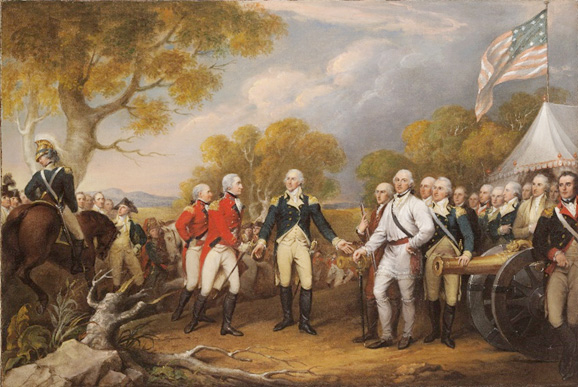
It is well known that the American victory at Saratoga garnered the outright support of the French. Not only did the French decide to send part of their navy, but they also sent troops under General Rochambeau. A member of Rochambeau’s staff, François Jean de Beauvoir, Marquis de Chastellux, was incredibly interested in the Battles of Saratoga. Being the ninth child of an aristocratic family, Chastellux entered into a military career. Eventually his military career and his knowledge of English allowed him to hold conversations with people in America and led him to join Rochambeau’s staff. This position brought him to the United States and allowed him to visit some of the major battlefields of the Revolution to that point, including Saratoga. He wrote the annals of his travels and published this account in his book Travels in North America in the Years 1780-1781-1782.

On December 29, 1780, General Philip Schuyler accompanied Chastellux on his trip from Albany to Saratoga. When they passed over the Mohawk River on the ice, they were delayed, but only by mere minutes, by a couple of the horses falling through. Once the horses had been retrieved and revived, they moved north to Half Moon and Stillwater, then to “Stillwater Landingplace,” then to Bemis Heights which he calls Bream’s Heights. In his account, he spends a great amount of time describing the land, and he writes that he does not want to call the area a field of battle, “for these two engagements were in the woods, and on ground so intersected and covered, that it is impossible either to conceive or discover the smallest resemblance between it and the plan given to the public by General Burgoyne.” While Chastellux does tend to be relatively impartial and focus on the facts of the battle and what he sees, he does show disapproval on more than one occasion towards General Burgoyne’s account of what happened during and surrounding the Battles of Saratoga.

Chastellux finishes off his account and observations regarding the Battles of Saratoga by writing that “the more you examine the country, the more you are convinced that the expedition of Burgoyne was extravagant, and must sooner or later have miscarried, independent of the engagements which decided the event.” This is a different interpretation than is frequently heard, which tends to blame the events on Howe’s failure to reinforce Burgoyne from the south. Chastellux instead believes that Burgoyne’s plans were doomed for other reasons.

After touring the fields where the Battles of Saratoga had occurred, he stayed at General Schuyler’s home in the country, located in what is now Schuylerville. He remarks that Saratoga is on the bank of the Fishkill, and one of Schuyler’s former houses was on that same river. In addition to the house, there had been “a large farm depending on it, two or three saw-mills, a meeting-house, and three or four middling houses.” Chastellux also tells the story of why Schuyler’s large original house was no longer standing; “General Burgoyne had scarcely reached the other side of the creek, before he set fire to General Schuyler’s house, rather from malice, than for the safety of his army; since this house, situated in a bottom, could afford no advantage to the Americans, and he left the farm standing, which is at present the only asylum for the owner.” Schuyler had immediately rebuilt a more modest home on the site that remains today, managed by Saratoga National Historical Park.

Chastellux’s visit to Saratoga not only gave a small glimpse of the land on which the battles were fought, but it demonstrated how the Revolution had touched the people of Saratoga County.

Joanna Case is a senior at Siena College majoring in history, minoring in French, and working towards a certificate in American Revolutionary War Era Studies through the McCormick Center for the Study of the American Revolution. She is from Tully, NY and frequently takes part in historical reenactments with the 2nd Albany County Militia. She can be contacted at jmcase2421@gmail.com.