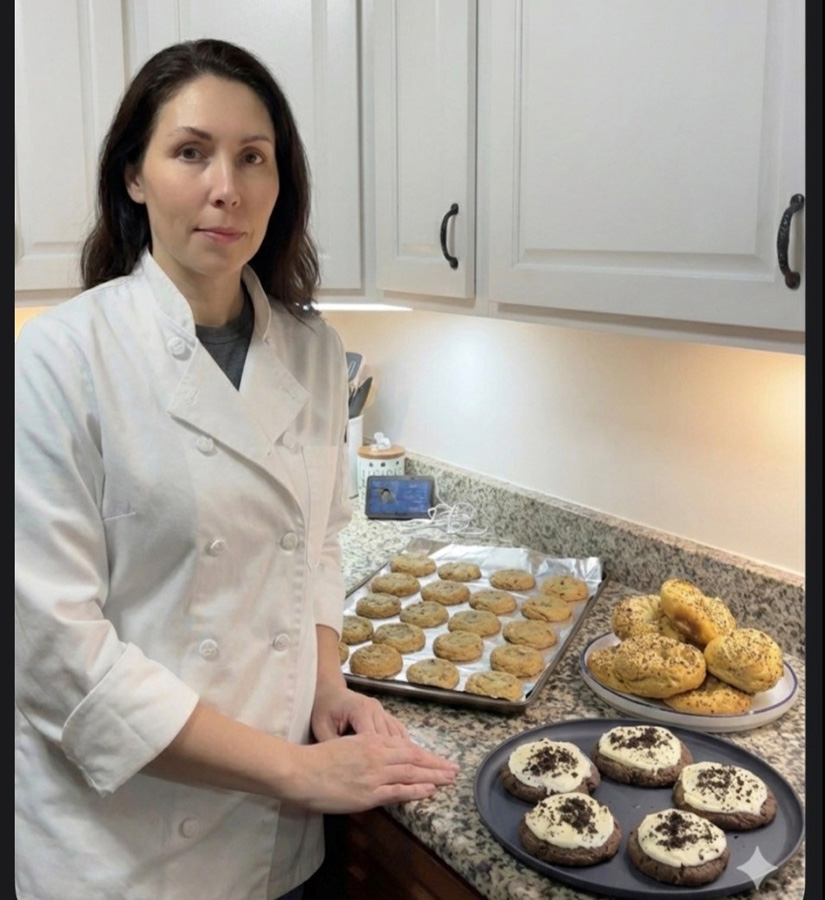
BALLSTON SPA — All Things Gluten-Free, a Ballston Spa-based bakery, has reached the top 5 of a national “Greatest Baker” competition.
“This journey is a tribute to my late father,” said Shannon Welch, the bakeshop’s owner. “He was my biggest supporter, and I bake every batch in his memory.”
Welch is competing to win $10,000 to build a “backyard bake shed” to expand her business, while also raising money for childhood cancer research.
To learn more or to vote for All Things Gluten-Free in future rounds of the competition, visit https://greatestbaker.org//shannon-welch-ebvo.
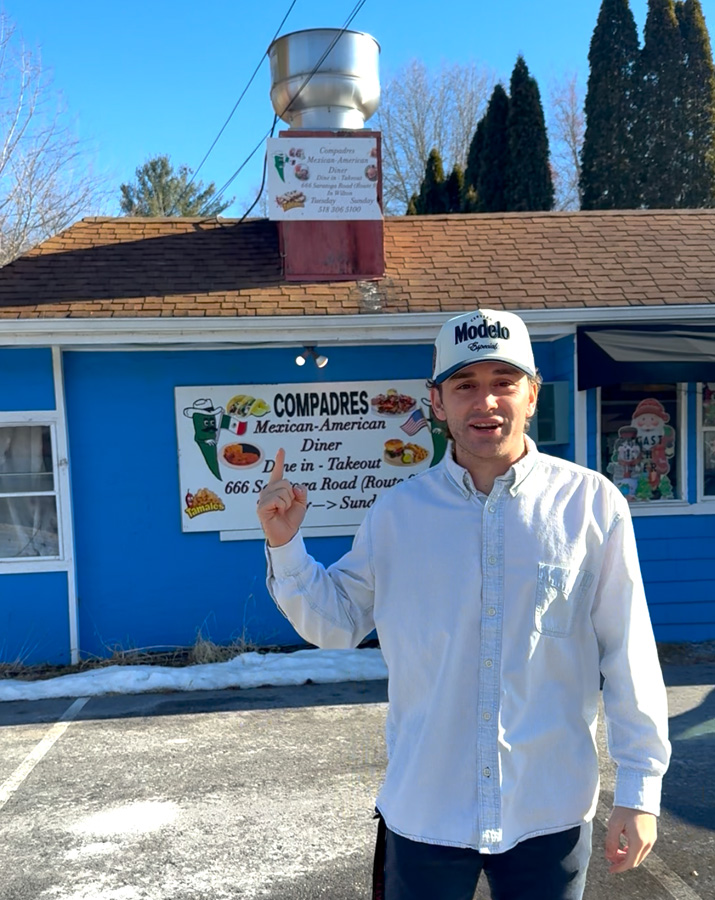
“Another Day, Another Diner” host Pat Fleming outside Compadres Diner in Gansevoort. Photo provided.
SARATOGA SPRINGS — In a world increasingly filled with AI slop, there may be something refreshing about social media content that feels authentic.
Pat Fleming, a self-described “Troy boy” and newly-minted Saratogian, has been to more than 100 diners, filming his experiences at 73 of them.
His lifelong love of a good greasy spoon led to “Another Day, Another Diner,” an ongoing video series that features Fleming stopping by small-town diners to enjoy whatever the establishment recommends, plus his signature “big black coffee.” Sometimes he devours the meal accompanied only by a cameraperson, other times he’ll be joined by mayors, local politicos, or even a UFC fighter. His videos have earned him tens of thousands of followers, and, in some cases, hundreds of thousands of viewers.
“I just loved going to diners, and then one day, I looked around and noticed that almost all the diners I was in were either empty or had an older crowd, and I realized that they were kind of dying out,” Fleming told Saratoga TODAY. “I had this idea to try to attempt to connect the next generation to these family-owned restaurants, these diners, which are unique to American culture.”
Despite having little experience in the content creation world (Fleming said he had only been on social media for a few months before launching his video series), “Another Day, Another Diner” quickly took off. Fleming attributes this to the series’ authenticity.
“It’s nothing fancy, but it’s sure not fake either,” he said. “I’m not going to record the best videos or have the best editing…the food might not always look the best, or whatever it is, but I think that’s what people are drawn to nowadays. It’s getting back to the authentic greasy spoon-style restaurants. I think social media is full of AI and fancy stuff. I just think people want the real thing.”
Part of capturing that authentic experience entails Fleming typically arriving at a diner anonymous and unannounced, although he said that since his video series has become popular, he’s often recognized at Capital Region eateries.
As a connoisseur of local restaurants, Fleming has eaten just about everywhere in the Saratoga area. Compadres Diner is not just an under-the-radar gem, but “one of my favorite diners of all time,” Fleming said. He also named Manory’s and Duncan’s Dairy Bar, both in Troy, as two of his top picks.
With a GOAT diner located near Saratoga, it’s perhaps unsurprising that Fleming now lives in the Spa City. “You have the racetrack, you have awesome food, excellent nightlife culture, the cafe scene is really cool…I mean, Saratoga is awesome,” he said.
But Fleming isn’t limiting himself to just the Saratoga area. He’s been to greasy spoons all over the country, and has trips planned to New York City, Salt Lake City, Tampa, and Vermont, where he’ll likely shoot more videos.
Of course, there is one, sometimes hotly debated issue Fleming must contend with: What exactly is a diner? In a series of man-on-the-street-style interviews filmed in downtown Saratoga during the annual SantaCon event, Fleming quizzed locals on their favorite diners. Many named Compton’s or Triangle, but a few may have stretched the definition of “diner” by naming Sweet Mimi’s, The Merc, and the Charlton Tavern.
“Typically, booths and countertop seating are very big metrics,” Fleming said. “That’s how I try to weigh it out. Does it have a booth or countertop seating, and is it cheap food?”
As his diner-going adventures continue to generate buzz, Fleming’s “Another Day, Another Diner” brand has branched out. On his website, Fleming now sells merch that includes sweatshirts, t-shirts, and his very own ground coffee.
To follow along with Fleming’s diner tour, visit anotherdayanotherdiner.com, or you can find him on TikTok, Instagram, and Facebook.
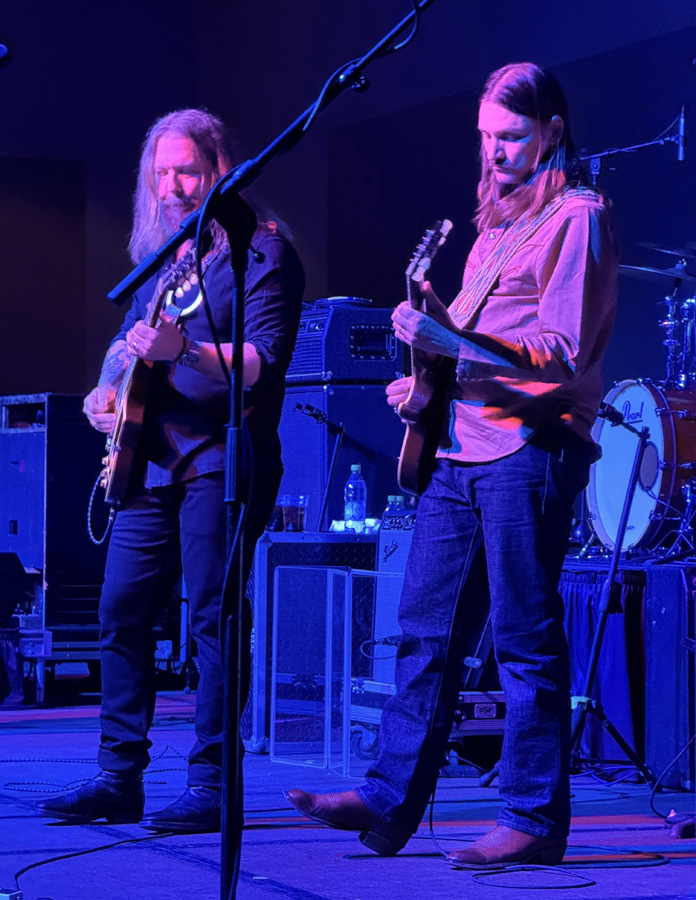
The Allman Betts Bandheadlined Saratoga’s New Year’s Eve music lineup, taking the main stage at the City Center at 8 p.m. Introducing the group, which includes the sons of three founding members of the Allman Brothers Band, was outgoing Accounts Commissioner Dillon Moran. “The Allman Brothers, for me, pierced me like no other band,” Moran said. “I think you’re all sitting here for a reason. I actually was, I would guess, the youngest person that was at the famous 1971 concert up at Skidmore. As a 10-month-old, I was taken to that concert by my dad. Apparently, I was drinking Mateus wine all day and eating cigarette butts. Nothing’s changed since, but it brings me extreme pleasure to introduce the progeny of the band that makes me love music, The Allman Betts Band.” Photo by Jonathon Norcross.
Ally the Piper, a Capital Region native who plays the bagpipes, rose to fame thanks to millions of social media followers. She played in the second-floor room at the City Center around the same time as Allman Betts. Her proud mother was in the audience, issuing the occasional “whoop!” of encouragement. Photo by Jonathon Norcross.
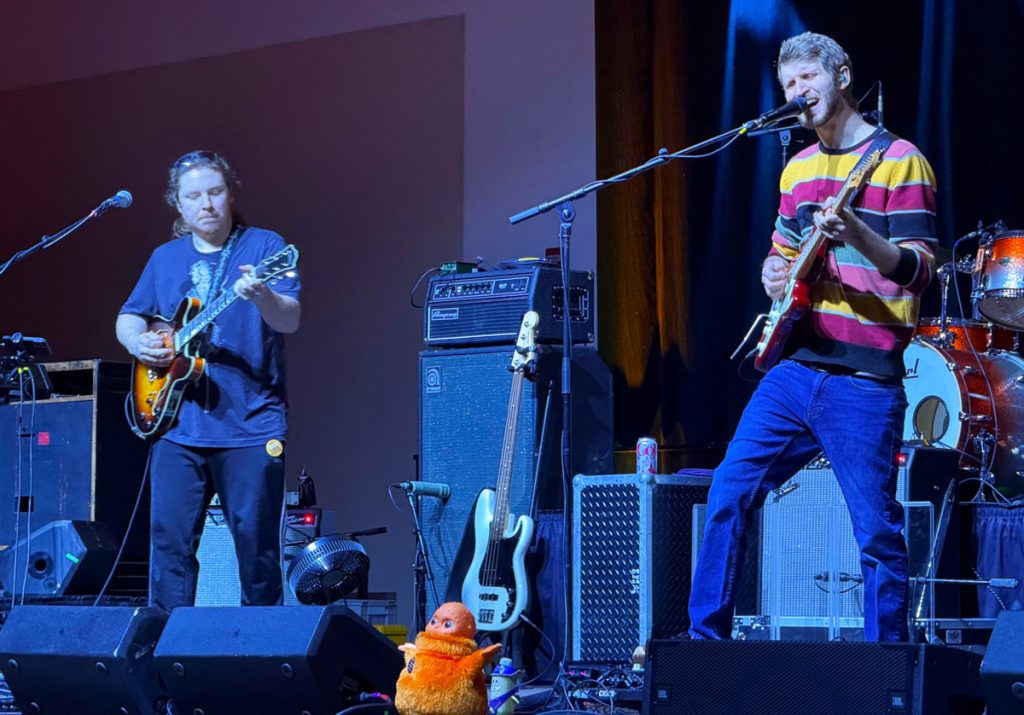
Glass Pony, an Albany-based group that bills themselves as a “psychedelic groove circus,” opened for Allman Betts on the main stage. The jam band featured Greg Pittz on lead guitar, who impressed the cheering audience by shredding some solos. Glass Pony’s drummer, Chanda Dewey, states on the group’s website that she “was born in an oyster shell off the coast of New Zealand.” Saratoga TODAY is still working on fact-checking that biographical claim. Photo by Jonathon Norcross.
Heard— a world jazz band that incorporates influences from West Africa, Brazil, and the Caribbean—played in the City Center’s second-floor room prior to Ally the Piper. The group led audience members in several dance sessions, one of which included a modified “Macarena.” Photo by Jonathon Norcross.
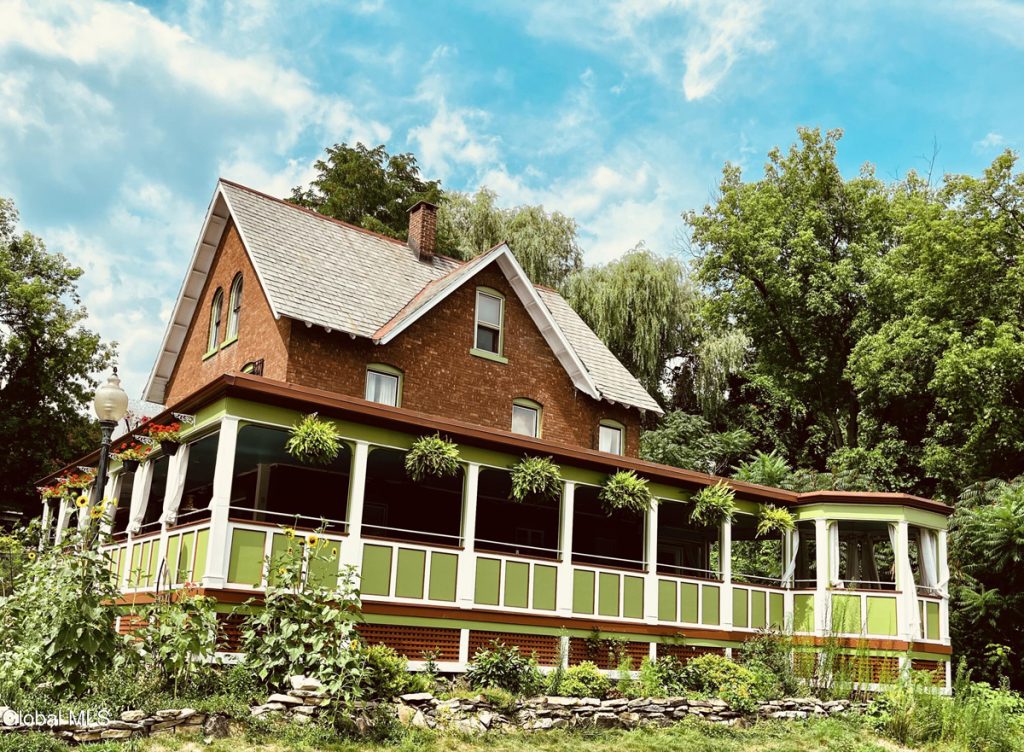
SARATOGA SPRINGS — Mouzon House—a Victorian-style home that more recently served as a farm-to-table restaurant—has been listed by Julie & Co. Realty for $1.75 million.
A year ago, the restaurant announced that it was entering into a “new chapter,” deciding to no longer have regular restaurant hours but instead focusing on its Supper Club, a reservation-only dining experience available on select dates.
“After many years of pouring our hearts into running this restaurant, we’ve made the decision to shift gears and reimagine how we connect with you, our amazing community,” the restaurant said in a statement released in Jan. 2025. “This hasn’t been an easy decision. The restaurant business is a tough one, and after much thought, we realized it was time for a change—one that allows us to continue sharing our passion for food in a way that feels special and sustainable.”
The Mouzon House property at 1 York Street is 2,968 square feet but can expand to around 4,500 square feet of usable space during warmer months.
“The building offers intimate spaces throughout, from the garden area to private dining rooms,” states the listing. “Fireplaces, murals, and unique design at every turn.”
Originally built in 1883, the Mouzon House was purchased in 1919 by Ardel Mouzon, a Cherokee woman who fought to protect the home from demolition. The property was inherited by Ardel’s daughter Mia Mouzon, who was the first American-born woman of color to graduate from Skidmore College. The building was later purchased and restored by the Pedinotti family.
Image of Skylar Diggins via Primo Brands/Saratoga Spring Water.
SARATOGA SPRINGS — Saratoga Spring Water, the increasingly popular water brand founded in Saratoga Springs in 1872, announced on Monday that WNBA and Unrivaled basketball star Skylar Diggins would be the face of its newest advertising campaign.
The first chapter of the campaign will run across TV, digital, and print media nationwide starting this week, Primo Brands announced in a press release.
“Our new campaign with Skylar, and the chapters to come later in the year, reflect Saratoga’s expansion into a broader cultural space,” said Kheri Tillman, CMO of Primo Brands. “Skylar is extraordinary on and off the court, and an ascendant figure in culture. If you could capture a perfect storm in a bottle – of talent, energy, strength and style – she’s it.”
“Saratoga is my go-to for staying hydrated while I’m on the go, and I love how that comes to life in the campaign,” Diggins said.
Following Monday’s debut of the campaign, Diggins will attend the Golden Globes, where Saratoga will return as the “official water” of the show.
In her college career, Diggins led Notre Dame to two consecutive NCAA championship appearances. She’s a 7-time WNBA All-Star, receiving the honor as recently as 2025. She also plays in Unrivaled, a three-on-three women’s basketball league created in 2023.
In March 2025, Saratoga Water went viral thanks to a social media video created by fitness influencer Ashton Hall. In the short video, Hall repeatedly dunks his face into a large bowl filled with icy Saratoga Water.
Saratoga Spring Water Co. maintains a bottling plant on Geyser Road in Saratoga Springs.
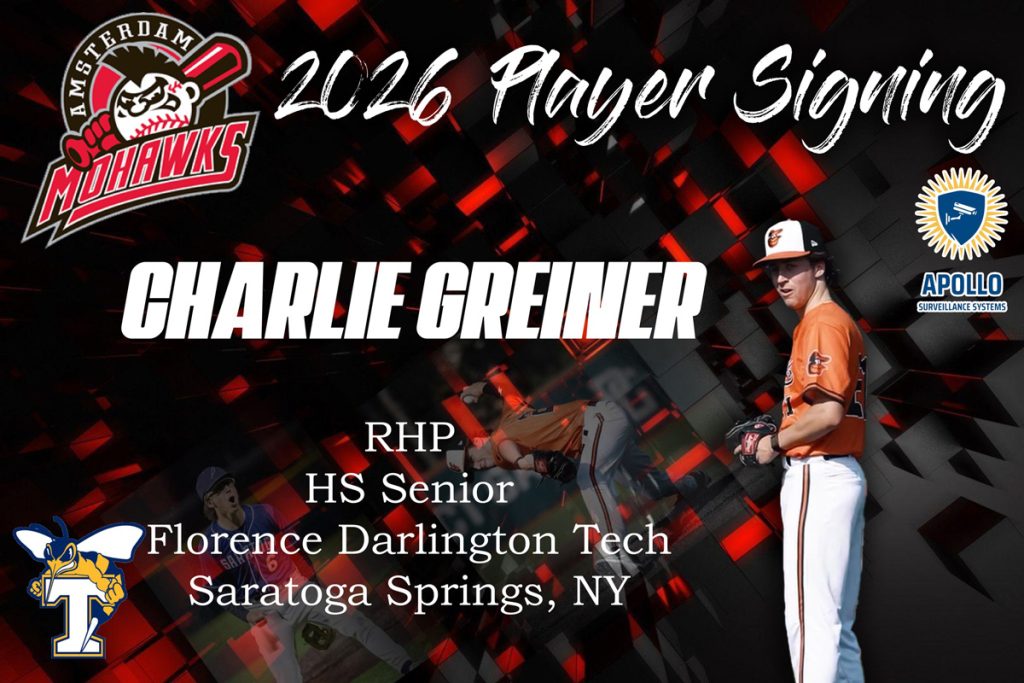
SARATOGA SPRINGS — Charlie Greiner, a right-handed pitcher and member of the 2025 Saratoga Springs Section 2 Class AAA state champion baseball team, has been signed by the Amsterdam Mohawks, the team announced last weekend.
Greiner, who is committed to Florence Darlington Tech, is a submarine pitcher, which means he delivers his pitches closer to the ground in an almost underhanded or sidearm fashion.
“Greiner has exploded on the area baseball scene over the last two years,” the Mohawks said in their signing announcement.
The Saratogian’s fastball has been clocked at 85 mph, and he was the closer on the mound for the Blue Streaks when they won the state title last year. He currently attends the PDG Baseball Academy as a post grad.
The Mohawks 2026 season will begin around the end of May.
Photos of Saratoga Springs varsity wrestler Danny Dacey provided by Coach Jake Zanetti.
SARATOGA SPRINGS — It took around one minute for Saratoga Springs varsity wrestler Danny Dacey to pin his foe and secure a gold medal at the Windsor Christmas Tournament on Dec. 29.
It was an especially remarkable feat considering Dacey had previously finished third at the same tournament a year ago.
Dacey’s rapid rise is attributable to dedication and hard work, said his Coach Jake Zanetti, who described Dacey as “exactly what you want in any athlete, especially in wrestling.”
“He’s a super hard worker,” Zanetti continued. “He leads by example… He’s just doing everything right. He’s super dedicated.”
Zanetti credited Dacey, who as of press time had an 18-1 record this season, with leading the charge on 6 a.m. morning lifts for his team. “He’s not afraid to put in the extra work and be that guy,” Zanetti said.
At the Windsor Tournament, Dacey faced four opponents and pinned all of them. At the Lee Van Slyke Memorial Duals on Dec. 20, he pinned three more competitors, dispatching two of them in under a minute (one in 44 seconds, the other in 25). In one event after another this season, it’s been nothing but W’s for Dacey, until he placed 2nd at the Saratoga Invitational on Jan. 3, his only loss thus far.
But the Blue Streaks as a whole captured their third-straight team title at that home tournament. Brendan Stoutenburg won his second-straight title at 110 lbs., and Chase Matter also took the top prize at 144 lbs.
Matter was plagued by injuries last season but has made up for lost time, earning a 19-2 record this season as of Jan. 7. Stoutenberg, a defending Section 2 champion, is 18-4.
Zanetti said that his squad struggled a bit at the beginning of the season due to some of his athletes still playing football while the wrestling program was starting. (In December, the Blue Streaks competed in a state championship football game for only the second time in program history). But since then, things are starting to mesh, and the victories are piling up.
“We definitely dropped some early team losses, but we’re doing all the right things to hopefully set ourselves up for a good team and individual postseason,” said the coach.
Art and Linda Kranick pose alongside student-athletes after being named the 2022 National High School Cross Country Coaches of the Year. Photo via the Saratoga Springs City School District.
SARATOGA SPRINGS — Just two days before Christmas, USA Track & Field (USATF) banned former Saratoga Springs High School girls running coaches Art and Linda Kranick, rendering them “permanently ineligible” to coach.
USATF listed its reasons for the ban as emotional and physical misconduct.
The decision was announced nearly two months after the death of Art Kranick. Art and his wife Linda both officially retired from coaching in April.
The misconduct allegations against the Kranicks stem from a legal complaint filed in Oct. 2023. In that document, 1989 graduate Kristen (Gecewicz) Gunning said that the running program was “a toxic culture of control and abuse of middle and high school girls all in the name of winning.” 1999 graduate Lauren Hogan said that some aspects of the Kranick’s program “caused immense damage to me both mentally and physically.” An updated version of the legal complaint also included more than a dozen witnesses who made various claims against the cross-country and track program. The claims spanned from the 1980s to 2022.
Despite the allegations, the Kranicks never lost the support of the Saratoga Springs School District, which rehired them even after the abusive coaching claims. Many runners, students, parents, and other members of the community also defended the Kranicks in the wake of the legal complaint.
In an interview with Saratoga TODAY in Aug. 2024, Superintendent Dr. Michael Patton said he did not have any concerns about the Kranicks. “I’ve been here for seven years and have gotten to know the Kranicks very well,” Patton said. He added that, at the time, the Kranicks had met all of the athletic department’s expectations.
In a statement released by the district following the Kranicks’ retirement, school officials said the running coaches’ “impact on our athletics and the larger realm of cross-country and track and field is unparalleled, and their departure marks the end of an extraordinary era in our school’s history.”
Following the USTA’s decision, Linda Kranick told The Daily Gazette that she intended to appeal the ruling. “This is an attempt by a few individuals to tarnish our reputation using lies,” she told the Schenectady-based newspaper.
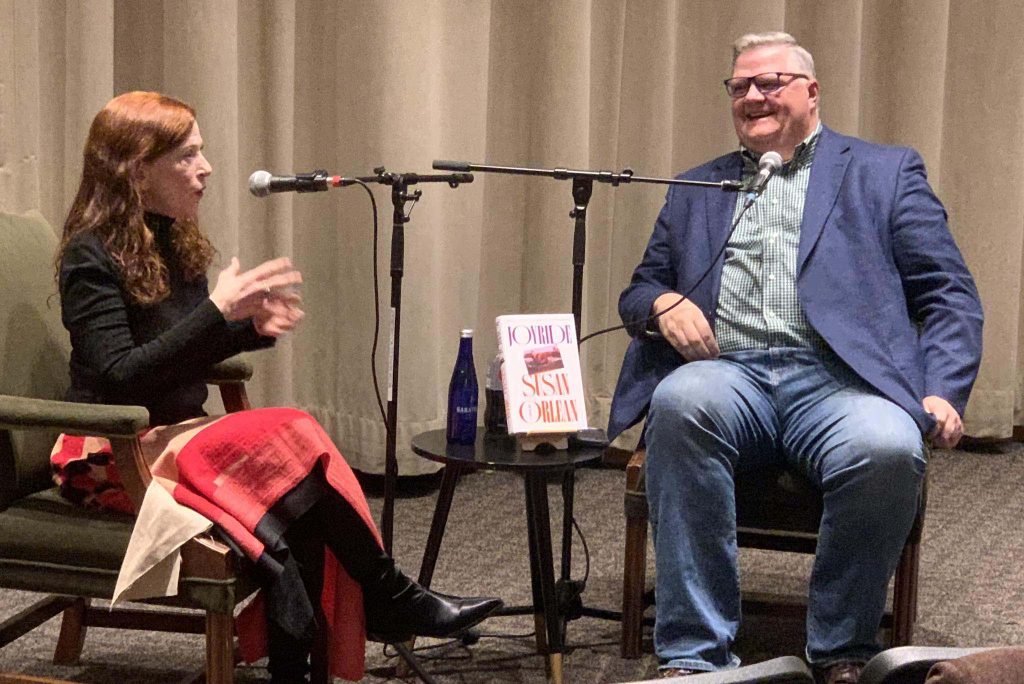
Author/journalist Susan Orlean discussed her memoir “Joyride” at Skidmore College’s Palamountain Hall on Nov. 17. The event was presented by Northshire Bookstore and recorded for WAMC radio.
SARATOGA SPRINGS — Susan Orlean, a staff writer at The New Yorker since 1992, has lived a life worth documenting.
She was portrayed by Meryl Streep (albeit in a highly fictionalized fashion) in the brilliant 2002 film “Adaptation.” As a journalist, she’s spent time on cult compounds, soaked up waves and wisdom with Maui surfers, and maintained decades-long employment at one of the world’s most esteemed magazines.
Her latest book, “Joyride,” is a memoir that offers both a deeper understanding of the author herself and the many fascinating figures she’s profiled. What does it feel like to be welcomed into a cult commune? How did a horticulturist come to be arrested for poaching rare flowers? What is the life of an ordinary 10-year-old suburban boy really like? What exactly goes on at the World Taxidermy Championships?
To promote the release of “Joyride,” Orlean embarked on a coast-to-coast book tour that included a stop in Saratoga Springs. On Nov. 17 at Skidmore College’s Palamountain Hall, Orlean fielded questions from the audience and was interviewed by WAMC radio’s Joe Donahue. The event was presented by the Northshire Bookstore (the shop’s Director of Events Rachel Person called Orlean a “longtime Northshire staff and customer favorite.”)
Below are highlights from Orlean’s chat in the Spa City, edited for length and clarity.
Joe Donahue: At what point did you think to yourself, “Oh, that may be a good idea [to write a memoir]?”
Susan Orlean: I never thought it was a good idea [audience laughs]. What happened was, I had begun thinking about writing a book about writing, and the more I thought about it, the more it sounded like the process of writing a book about writing wouldn’t be very interesting. It sounded really pedantic and dry. At that same time, I was reflecting on this astonishing realization that I had written “The Orchid Thief” 25 years earlier. I was so struck by that, it seemed so monumental. So, it put me in the mind of reflecting on that period of time. “The Orchid Thief” wasn’t even my first book, but I just thought, “Boy, I’ve been doing this a long time and I’ve collected so many stories, not only what’s on the page, but the stories of how I did those stories.” It occurred to me that I could write a book about writing that, at the same time, sort of traced the path that I’ve taken and be a conversation with readers that was more personal than what I’m usually doing.
JD: You write in the book: “Being a writer is so much fun.” And this is a line I love: “It’s Make-A-Wish for the curious.”
SO: It really is. I sometimes am humbled by realizing how crazy it is that I can conjure a thought, like “I really want to learn about taxidermy,” and the next thing I know, I’m learning about taxidermy. Maybe that doesn’t appeal to everybody here, but to me, it was extremely exciting. It’s almost—if I can think of it, I can write a story about it.
JD: How did you write “The Orchid Thief”? You have the book in your hand. Someone from Hollywood takes the book. They go off, and the next thing you know, Meryl Streep is playing you.
SO: Yeah, it was a different experience [audience laughs] than a lot of people have… I thought the whole thing was a joke that it got optioned. Because when this book got optioned, I thought, “This is so not a movie. I cannot imagine why you’re optioning it.” But of course, you’re not going to say “No.” I just thought, “Good luck. I have no idea how you’re going to make this into a movie.” The book was a very interior kind of meditation on orchids, on passion, on Florida. The crime at the center of it is relatively small. No one gets killed. There are no car crashes. I remember at the time that it got optioned, saying to my husband, “They’re probably going to make the crime a murder, they’re probably going to jazz it up and make it a Hollywood movie,” which they kind of did, but not at all the way I pictured that it would be made into a Hollywood movie. The thing is that I never thought it would really get made. Most things that get optioned don’t get made. The percentage is maybe 1% of the things that get optioned. That’s just the way Hollywood works. So, when I got a call and they said, “Well, we’ve got the script.” I thought, “What? Seriously?” And then when they showed me the script, I said, “Seriously? No. Absolutely not.” I said, “You’re going to ruin my career, and I don’t want to be a character in a movie.” I got a lot of puppy-dog eyes. “Really, are you sure? Everybody else said ‘Okay.’” And I kept saying, “No, no, no, no, no, this is nuts.” And then my curiosity got the better of me. That feeling that I have, which is, I’d rather not not do something. I don’t always want to do things, but I don’t want to not do them. So, given this kind of knife edge that I was on, I finally, in the last minute, said, “All right, fine.” And then it was this crazy ride and obviously the film is a very complex meditation on the nature of the book. I’m far more glad that that is the movie that got made than what I pictured, which was basically taking my book, kind of amping up the drama a bit, and making a typical Hollywood movie.
JD: Who were the writers that you were reading in The New Yorker and thinking, “Man, they got it?”
SO: Oh gosh, it’s a long list. Calvin Trillin, Ian Frazier, Marc Singer, Alec Wilkinson, and then the older writers, Joseph Mitchell, A.J. Liebling, E.J. Kahn. I mean, it’s a long list and I’m probably leaving out lots of people. It was an awe-inspiring and, of course, somewhat humbling, rogue’s gallery to be joining. These were the people when I think about John McPhee, and in fact, my first office at The New Yorker was right across from his, and I really felt like, how do I get to sit in an office across from John McPhee? I’m not worthy. That’s why when I wrote the introduction of “Joyride,” I really did feel that I was in the land of giants, that these were the giants of nonfiction writing, and to be in their presence was truly inspiring. They’re in the office regularly, people like Roger Angell and Marc Singer, they were all in the office all the time. So just being around them and also seeing that when they turned stories in, they got nervous. That was actually somewhat comforting to see that even when you reach those pinnacles that they had reached, they still went through all of the same emotions of figuring a story out, not being sure whether it worked or not, waiting to hear from their editor. I remember one day seeing Roger Angell kind of pacing in the office, looking very unhappy. I said something to my editor, and I said, “What’s going on?” He said, “Well, he’s waiting to hear about a Talk of the Town piece he wrote.” The Talk of the Town pieces are these short little pieces. Roger Angell, at that point, had done millions of features, millions of books. He was one of the great writers of The New Yorker and he was still pacing the hall nervously waiting to hear if a Talk piece had worked.
JD: To this day, when you see your work in The New Yorker…still a thrill.
SO: Oh, an absolute thrill. Absolute thrill. I think it’s as exciting, seriously, as exciting as the very first time. I still, after having been there now for a long time, I still see my writing in The New Yorker typeface, and I kind of can’t believe it. I still feel like I can’t believe this. This is so, so exciting.
Audience member: Before, when you were talking about all the different writers that you worked with and that influenced you, it seemed most of them were men. When you started at The New Yorker, were there many women? And would you consider yourself a trailblazer in that way?
SO: No, The New Yorker has always had a very healthy number of women writing for it. In fact, the first, I believe, deputy editor back when the magazine was founded, was a woman. In collaboration with a man, but she was definitely at the forefront. Early on, you had writers like Janet Flanner. When I arrived, there were a lot of women writers. It happens that the list that I gave you, I mean, I could add to that Lillian Ross, Joan Didion. There were a lot of women writers who I really admired. Lillian Ross was a really important figure at the magazine. But also at that time, they had Andy Logan covering City Hall, Pauline Kael. There were a lot of women and there always have been, even at a time when maybe that wasn’t as true at other publications.
Audience member: How does one get a job as a writer in today’s market?
SO: This has been the question that has dogged me on my book tour because, without realizing it, in writing my book, I kind of trace an arc that no longer really exists. I started at alternative news weeklies, which by and large are gone. I wrote a lot for Sunday magazines, which are almost entirely gone. It’s a different world. I don’t have a quick answer to that. I should try to devise one because I’m asked a lot, and I think there are ways that being published has become somewhat easier. Not getting paid but getting published. Anyone can start a Substack. Anyone can post online. There are all sorts of easy ways to get published, but that’s not the same as supporting yourself as a writer or getting editing. One thing that has changed that I recommend to young writers is every magazine has a website that has infinitely more room for writing than the print publication. It’s just a matter of dollars and cents. You can have a gigantic website and it doesn’t cost you the way printing pages costs. So, younger writers have a bit of an easier time getting in through the website. But I don’t have an easy answer. I feel lucky that the things existed when I was coming up because those seem so much more accessible than what is going on today. I remain optimistic about people’s desire to read good writing. I will continue believing that until I’m absolutely proven wrong. But is it easy to make your career that way, or is it harder than it used to be? I think it has become harder.
THOUGHTS ON EDITORS
During her conversation, Orlean also shared her thoughts on some of the well-known editors she’s worked with at The New Yorker.
On Tina Brown: “When Tina came in, she had a completely different attitude. She wanted the writers to be stars. She commissioned fancy headshots of everybody with the idea originally that they were going to run in the front of the magazine. It never ended up happening. But she just didn’t understand why you wouldn’t want to promote your writers as stars.”
On David Remnick: “He knows me well and he knows that if I get really excited about something, that I could probably figure it out. He doesn’t always immediately get what I’m trying to do with the story, but he’s willing to let me take a shot at it. I remember when I had, through an accident, coming across a taxidermy catalog, and I got really excited, and I thought, “Oh my God, taxidermy. Who thinks about taxidermy and who knew that it was such a thriving business that it would have an industry catalog this thick?” I was super excited about it. I Googled taxidermy, and lo and behold, the World Taxidermy Championships were coming up. So, the next day, I burst into the office, and I said to Remnick, “Can I cover the World Taxidermy Championships?” And he said, “Let me think if I already assigned it to someone.”
On Robert Gottlieb: “He was wonderful. He’s a brilliant man and also very playful and very open to eccentricity because he was eccentric himself. He didn’t edit my pieces. He read everything. He wasn’t my hands-on editor, but he absolutely was open to the ideas that I was bringing early on that were pretty out there. He let me go at them. My first full-length feature, which I did under his reign, was I had heard about a cab driver in New York who was the king of his African tribe. I just thought, this is a fantastic story and I really want to do it as a feature. He just said, ‘Absolutely. Go ahead, that sounds great.’ So he was very open to ideas that push the boundaries of what maybe was a typical magazine piece and I loved working with him.”
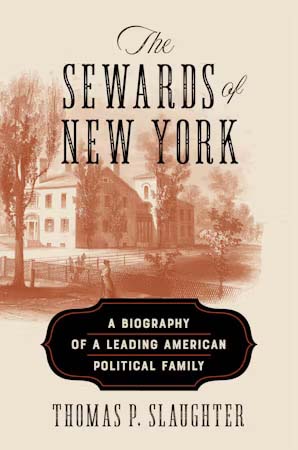
Cover of “The Sewards of New York” via Cornell University Press.
SARATOGA SPRINGS — Upstate New Yorker William H. Seward purchased Alaska, miraculously survived an assassination attempt, led the Republican Party in its formative years, personally housed fugitive slaves as part of the Underground Railroad, and helped guide the Union to victory in the Civil War as President Abraham Lincoln’s Secretary of State.
Yet, the details of the almost-president’s life have been mostly overlooked. Seward, it seems, is always a supporting character in someone else’s story.
A new book that draws upon 25,000 pages of Seward’s never-before-seen private correspondence hopes to change that.
“The Sewards of New York” by Thomas P. Slaughter is the result of a more than 12-year-long project to digitize and archive Seward’s papers that were discovered inside baskets and trunks. The letters shed light on many aspects of the Sewards, revealing them to be one of the most important political families of the 19th century.
The tome includes countless references to the Capital Region (Seward served as both governor of New York and as a member of the state Senate in Albany). It also provides intimate glimpses into the lives of a family rocked by war and violence (an injured and bedridden Seward was viciously stabbed by one of John Wilkes Booth’s co-conspirators; three of Seward’s children were present during the attempted murder).
The book also explores the Seward family’s close ties to Auburn, a small city in the Finger Lakes region that today is the site of the William H. Seward House Museum.
“The Sewards of New York” is currently available via Cornell University Press.