SARATOGA SPRINGS — Last year, two Saratoga Springs high school baseball teams won their first-ever state championships. The successful seasons were remarkable enough to warrant a downtown parade that concluded with mayoral proclamations on the steps of City Hall. This year, both teams are returning with their title-winning rosters largely intact.
For the Saratoga Catholic Saints, the season began disappointingly with a 5-0 shutout loss to Shaker. But the squad quickly rebounded with an 8-2 victory against Greenwich on April 13.
Against Shaker, outfielder Kihl Kelly had two hits and a walk and ended up being one of only three Saints to reach base. Starting pitcher Carson Moser faced 14 batters in 3 innings, striking out 8 of them while allowing 1 run.
Against Greenwich, Kelly had another standout showing, hitting 2-3 with a triple and 2 RBI. Joey Lindner also went 2-3 with a double and an RBI, while Jason Pescetti hit 2-2 and scored a run. Starter Pierce Byrne earned his first win of the season, whiffing 11 batters and allowing just one run in 5 innings of work.
The Blue Streaks, meanwhile, also lost their season opener before notching 4-straight victories, including a gobsmacking 32-2 win against Averill Park on April 8. In that extraordinary contest, Saratoga collectively netted 24 hits, with seniors Jack Rigbar and Raul Rodriguez each earning 4 hits apiece.
After five games, five Blue Streaks have batting averages above .500. Brady Mills led his team early in the year with 12 hits and 4 doubles. Rigbar led in RBI (13), triples (2) and was one of two players to hit a homer.
On the mound, Brendan Kantscheidt has allowed just one earned run in 6.2 innings while also leading the team in strikeouts (10). Also impressive in the early going: Max Sawicz has allowed one run in 6.2 innings, Shea Crotty allowed zero runs and 4 hits in 5.1 innings, and Michael Kakaty whiffed 6 batters and gave up 2 runs in 5 innings.
MALTA — A battle in New York’s Capital Region awaits the Super DIRTcar Series, as the quest for the 2026 championship begins at Albany-Saratoga Speedway.
The 61st season opener on Friday, April 17 will showcase the Beasts of the Northeast with a 61-lap feature paying $6,100-to-win. It’s also the 2026 championship season opener, giving one driver the chance to strike first on the road to the World of Outlaws World Finals.
Joining the Super DIRTcar Series are the track’s DIRTcar Sportsman and DIRTcar Pro Stock divisions.
Here’s a look at what to watch for at Albany-Saratoga:
• With the championship season kicking off on Friday, it also begins Mat Williamson’s quest for a third-straight title, and fourth title overall. Williamson has found plenty of success at Albany-Saratoga in the past, sweeping both Super DIRTcar Series stops in 2024, and earning three consecutive DIRTcar 358 Modified Series podiums. He finished sixth and eighth in the Series’ two appearances at Albany-Saratoga last season. A win by “Money Mat” on Friday will be his 39th career Series win, tying Bob McCreadie for seventh on the all-time wins list.
• The last time the series battled at Albany-Saratoga, it was 10-time series champion Matt Sheppard who stood in Victory Lane during Malta Massive Weekend. The Finger Lakes driver has two series victories at Albany-Saratoga over the past four seasons and has finished in the top five in three of his last four starts at the track. Overall, he’s earned three wins, 12 top-fives, and 13 top-tens. A win by “Super Matt” will be his 104th Series triumph, as he continues his chase of Brett Hearn at the top of the Series all-time wins list (141).
• Friday’s stop at the Albany-Saratoga Speedway marks the first venue the series visits in 2026, where several drivers race at their home track. Defending track champion Mike Mahaney, Felix Roy, Peter Britten, Jack Lehner, and Justin Stone each call Albany-Saratoga home on Friday nights and aim to score a victory in front of their hometown crowd. Lehner resides in Saratoga Springs and is a three-time feature winner at the 4/10-mile oval, reaching Victory Lane in 2024.
• Upset Special: Along with a stout group of Super DIRTcar Series regulars who race at Albany-Saratoga Speedway every Friday, there’s a group of regional drivers aiming to pull an upset victory, including last year’s event winner L.J. Lombardo. Former track champions Marc Johnson and Matt Delorenzo will also be aiming for the $6,100 prize on Friday, as they battle for their first career series victory.
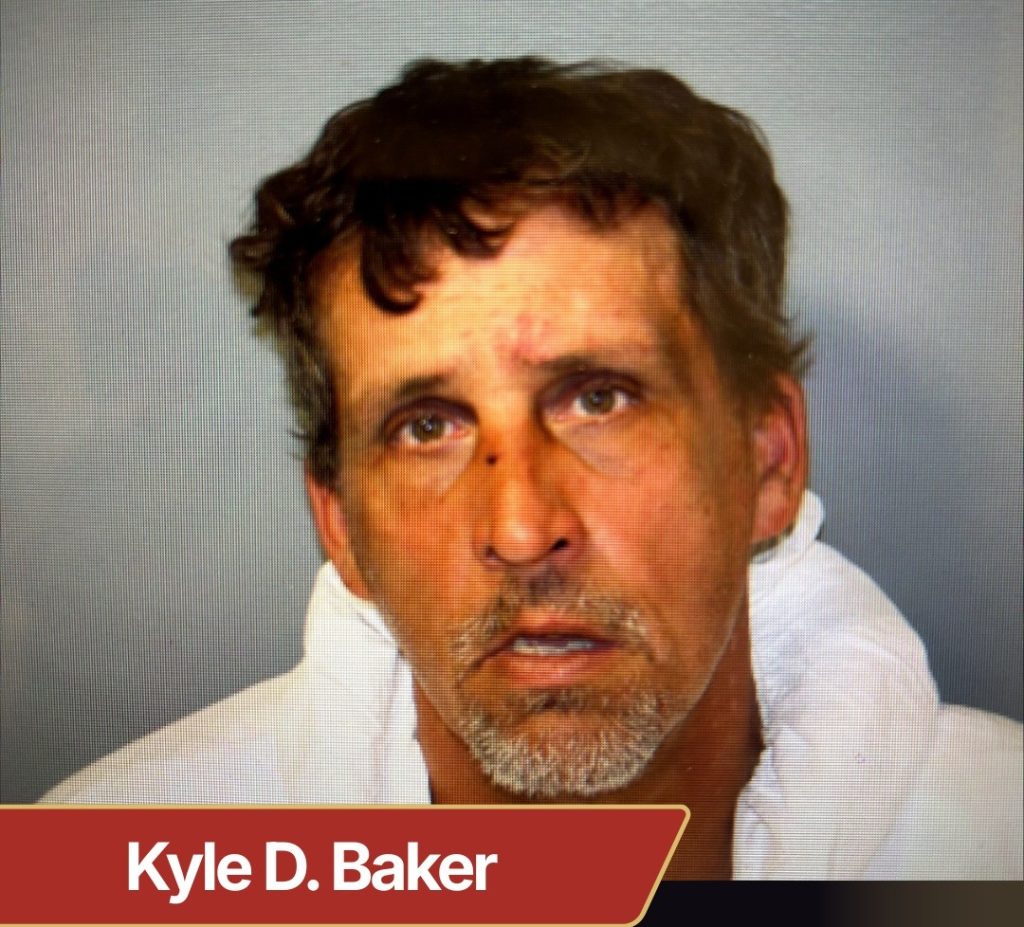
Kyle Baker has been arrested and charged with 2nd degree murder after he allegedly stabbed John “Clay” Williamson to death during a fight. (Courtesy of SSPD)
One man is dead, and another has been charged with murder after a fight in Saratoga Springs.
John C. “Clay” Williamson Jr., 44, died on the morning of Tuesday, April 14, after a fight on West Ave near Station Lane. Saratoga Springs Police say the call came in around 7:30, and officers were on scene within two minutes of being dispatched.
Police found Williamson going in and out of consciousness and bleeding from several stab wounds. He was transported to Saratoga Hospital, where he was pronounced dead. Police said he had been living in a wooded area near where the incident took place.
During the initial investigation, West Ave was closed between Church Street and Washington Street. SSPD said that witnesses called 911 quickly, allowing officers to identify and locate others involved in the incident who cooperated with the investigation.
Another homeless man, Kyle D. Baker, 52, was arrested following the incident and charged with 2nd degree murder. Police allege that Baker stabbed Williamson to death during the fight. Baker was arraigned in the Saratoga City Court and remanded to the custody of the Saratoga County Correctional Facility without bail. As of the time of publication, he is set to appear in court on April 16 at 9:45 a.m.
While Baker has ties to Corinth, he had been living in a wooded area on West Ave at the time of the incident, according to SSPD.
This is not Baker’s first time being arrested in Saratoga County. In June 2020, he was arrested by the Saratoga County Sheriff’s Office after he fired a gun at residences on Hollow Road in the Town of Day as he drove by. A press release issued at the time of the arrest said the homes were occupied. At the time of that incident, he was listed as living in Warrensburg.
In 2021, Baker pleaded guilty to a 2nd-degree felony attempted criminal mischief. He began his sentence in April 2022 and spent nearly a year at the Marcy Correctional Facility before being paroled in March 2023. His parole expired in April 2024, according to records from the New York Department of Corrections and Community Supervision. Baker’s only other felony conviction came in 2012, when he pleaded guilty to Grand Larceny in Warren County Court, according to court records.
The investigation into the alleged murder is ongoing. SSPD has requested that anyone who may have witnessed or recorded the incident contact them at (518) 584-8477 (TIPS) or by e-mail at tips@saratogapolice.org. Specific areas of interest to police include the Stewart’s Shop at 87 West Avenue, Station Lane, the American Legion at 34 West Avenue, and West Avenue between Station Lane and Washington Street.
The Saratoga Springs Police were aided by the New York State Police in securing the crime scene and interviewing witnesses, and the investigation is being done in coordination with the Saratoga County District Attorney’s Office.
Homicides aren’t common in Saratoga Springs or Saratoga County. In 2024, only three homicides occurred countywide, according to state data. The last reported homicide in Saratoga Springs occurred in April 2025 after an individual accidentally killed his roommate with a pellet gun. It was the only reported homicide handled by the SSPD, according to their annual report.
SARATOGA SPRINGS — Got a buckin’ bronco that you’re itching to ride? Grab the reins and mosey that boy on over to the Saratoga Springs School District’s annual Bike Rodeo on Thursday, May 7 (4:30-6:30 p.m.) at the East Side Recreation Field’s track and in-field off of Caroline Street—the rowdiest, rootinest, tootinest street of them all.
Kids with bicycles can get everything checked out before Bike-to-School Day on May 15. Mechanics will be on site for minor maintenance. The rodeo will include a helmet-fitting station, bike safety stations, games, a bike obstacle course, and a relay race contest. All kids participating in the event can fill out a raffle ticket for a chance to win a new kids’ bike from Trek Saratoga Bicycles (up to $350 value).
Registration tables will be at the Caroline Street side of the park entrance. Parents should plan to accompany their kids for the duration of the event. Participating cowboys and cowgirls should wear their helmets (a limited supply of helmets will also be donated when in need). Parking may be limited, so plan to bike over, or check for excess parking at the Caroline Street School and St. Clement’s School.
Those interested in volunteering to help out at the rodeo can do so at the link below.
“The more volunteers we get, the smoother the event runs, and we’re hoping to make this year’s rodeo the best ever,” said Lake Avenue Physical Education Teacher Jake Zanetti.
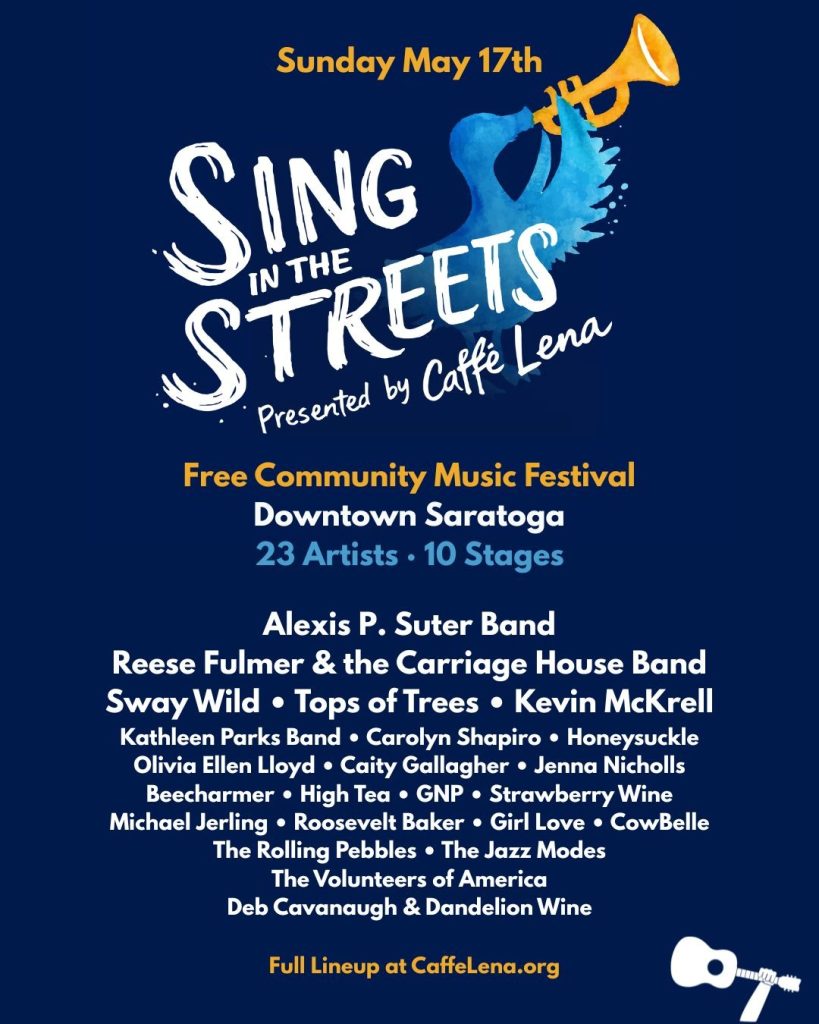
SARATOGA SPRINGS — Caffè Lena will present its fifth annual Sing in the Streets Festival on Sunday, May 17 from noon to 5 p.m.
The free, family-friendly celebration will feature 23 acts across 10 stages, with a genre-spanning lineup that includes folk, blues, jazz, country, and soul. A dedicated Family Stage will offer performances tailored for children and families.
Performers include the Alexis P. Suter Band, Sway Wild, Reese Fulmer & the Carriage House Band, Tops of Trees, Kevin McKrell, Kathleen Parks Band, Carolyn Shapiro, Honeysuckle, Olivia Ellen Lloyd, Caity Gallagher, Jenna Nicholls, Beecharmer, High Tea, GNP, Strawberry Wine, Michael Jerling, Roosevelt Baker, Girl Love, and CowBelle.
The Family Stage performers include The Rolling Pebbles (Caffè Lena School of Music Folk Ensemble), The Jazz Modes (Caffè Lena School of Music Jazz Ensemble), The Volunteers of America (Caffè Lena Volunteers Ensemble), and Deb Cavanaugh & Dandelion Wine.
The festival is open to the public and will take place rain or shine. In case of inclement weather, performances will move to nearby indoor locations. A full schedule and weather plan will be posted at www.caffelena.org/singinthestreets/ in the days leading up to the event.
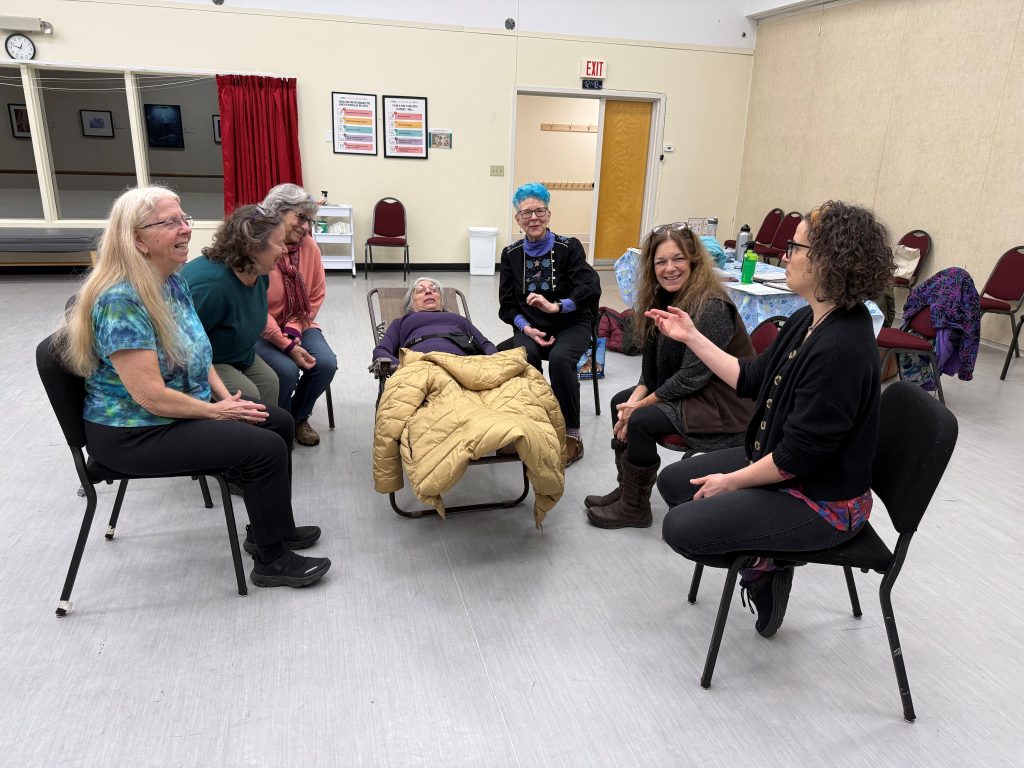
The Saratoga Threshold Singers rehearse inside a studio space at the SPAC School of the Arts on March 23. Photo by Jonathon Norcross.
SARATOGA SPRINGS — What do the final moments of a person’s life on Earth sound like?
For those with the Saratoga Threshold Singers at their bedside, it could sound like the ethereal acapella music that drifted down the echoing halls of the SPAC School of the Arts one recent Monday afternoon.
“Oh, fold thy wings and seek thy nest now; Oh, shine the berry on the bright tree; The bird is home from the mountain and valley,” sang the choir, rehearsing the Gaelic lullaby “Hush Thee My Dove.” The folk song concludes with “Cadul gu lo,” which translates to “sleep on.”
The Threshold Choir operates more than 200 chapters across the globe, each of which offers bedside singing to those on the threshold of life and whatever may follow. The Saratoga Springs-based chapter has nine members and rehearses weekly at the SPAC School of the Arts.
“Six weeks ago, we sang at the hospice for a family where the wife and adult children were there, and they had all said their goodbyes and ‘you can go now’ to their father,” recalled Saratoga Threshold singer Avena Ward, a retired United Church of Christ minister. “We were asked to come in, and we sang several of our songs about being able to release and lay down your burdens. As we left the house, we found out that he had taken his last breath. To be able to communicate something that was needed in the moment is just a beautiful gift that we have with music that you can’t accomplish with words.”
“We sang, via telephone, to my sister as she was dying,” said Threshold singer Lizzie Mehrtens. “She was a Catholic nun, and she had just expressed to people, her friends, that she wasn’t feeling connected to God… That was in the afternoon, and she died the next morning. That, to me, was so special because I couldn’t be there with her.”
“We sang for a woman who was unconscious, or she didn’t appear conscious, but after we sang, she let out an [exhale], a beautiful sound, clearly relaxing with our music,” said Abigail Reid. “I think that [moment] really stuck with me.”
Reid initiated the Saratoga chapter of the Threshold Singers after she stopped teaching. She caught wind of the international Threshold organization, got in touch with them, and was soon provided with a mentor. Reid then found a handful of locals, all of them women, who were interested in volunteering. For about a year, this small coalition worked on a musical repertoire with their mentor. Then they officially launched, and in the past three years, they’ve sung for about 30 different individuals or families.
“The beauty of the greater Threshold community is, if you want, if you’re part of this community, you can travel to anywhere there’s a chapter, and you can sit in on a rehearsal and connect,” said Donna Sardone, a hospice volunteer and massage therapist. “It’s such a wide community of connection, and that’s what I love about it.”
Threshold Singers arrive at their respective chapters with different sets of skills and life experiences. But all members seem united in their willingness to, as ancient philosophers once phrased it, “Memento mori,” or “remember that you must die.” For some, thinking about death is not merely an unpleasant subject; it’s a way to make the most of their finite lives.
“I am a proponent of talking about death,” said Elizabeth Conant, a professional musician who has also hosted local Death Cafes in which participants gather to discuss life’s final departure. “[The Saratoga Threshold Singers] is a lovely combination of the two things I do… What we do here with this group is—I’m not a religious person, but I say it’s God’s work in the world. It really is. We’ll all nod to that. It feels like that. It really does. It’s a beautiful thing that we’re able to do. I feel so honored to be a part of it.”
Those interested in either joining the Threshold Singers or requesting their services can do so by emailing saratoga@thresholdchoir.org.
To learn more about the worldwide Threshold organization, visit thresholdchoir.org.
A Corinth man has been arrested after he allegedly threatened to throw a kitchen knife at Saratoga County Sheriff’s Deputies back in February.
Roy Cheyenne, 49 was arrested April 7, 2026, on charges of felony menacing a police officer, felony 3rd degree criminal possession of a weapon, felony first degree unlawful imprisonment and misdemeanor 4th degree criminal possession of a weapon.
According to the Saratoga County Sheriff’s office, Cheyenne allegedly threatened deputies with kitchen knives and acted as if he was going to throw them at the officers. In addition, Cheyenne is accused of unlawfully restraining someone by not providing them with a key to open a padlock while he was armed with the knives.
The incident occurred Feb. 24 on Main Street in the Village of Corinth. Cheyenne was arraigned in the Corinth Town Court and remanded into custody pending proceedings.
On March 29, 2026, State Police of Wilton arrested Clinton J. Breault, 55, of Moreau, NY, for:
o Assault, 2nd, a class “D” felony
o Criminal Possession of a Weapon 3rd, a class “D” felony
o Criminal Possession of a Weapon 4th, a class “A” misdemeanor
On March 29, 2026, at about 2:51 p.m., troopers responded to a residence on Bluebird Road in Moreau for the report of an individual suffering from a stab wound. The investigation determined that during a dispute Breault allegedly stabbed the victim, who was known to him, in the hand. The injury was determined to be non-life-threatening, and the victim was transported to Glens Falls Hospital for treatment.
Breault was arrested and transported to SP Wilton for processing. He was then arraigned at the Moreau Town Court, where he was released on his own recognizance.
On April 6, 2026, State Police of Wilton arrested Tiffany L. Cary, 39, of Queensbury and Stanley L. Whitted,63, of Lake George, each for Assault 2nd, a class “D” felony.
On March 6, 2026, at approximately 2:48 p.m., State Police responded to the report of an individual with a stab wound at a residence on Bluebird Road in Moreau. On arrival, a man was located with stab wounds to the chest and facial area and was transported by EMS to Albany Medical Center for evaluation and treatment.
The investigation determined the stabbing occurred at the boat launch parking lot located on Nolan Road in Moreau, and the injured individual fled the location to the residence on Bluebird. Further investigation determined that Cary and Whitted met with the injured individual at Nolan Road when a physical altercation occurred, during which the individual was stabbed and struck by a vehicle. All individuals involved in this incident were known to each other.
Cary and Whitted were located at a residence on Cherry Street in Hudson Falls, NY a short time later, taken into custody, and transported to SP Wilton. Cary and Whitted were then arraigned at the Moreau Town Court, where Whitted was remanded to the Saratoga County Correctional Facility without bail. Cary was also remanded to the Saratoga County Correctional Facility in lieu of $1,000 cash, $2,000 bond, or a $10,000 partially secured bond.
The injured individual was treated and was released from the hospital. The investigation is ongoing.