



District Attorney Brett Eby Announces Creation of Narcotics and Special Investigations Bureau
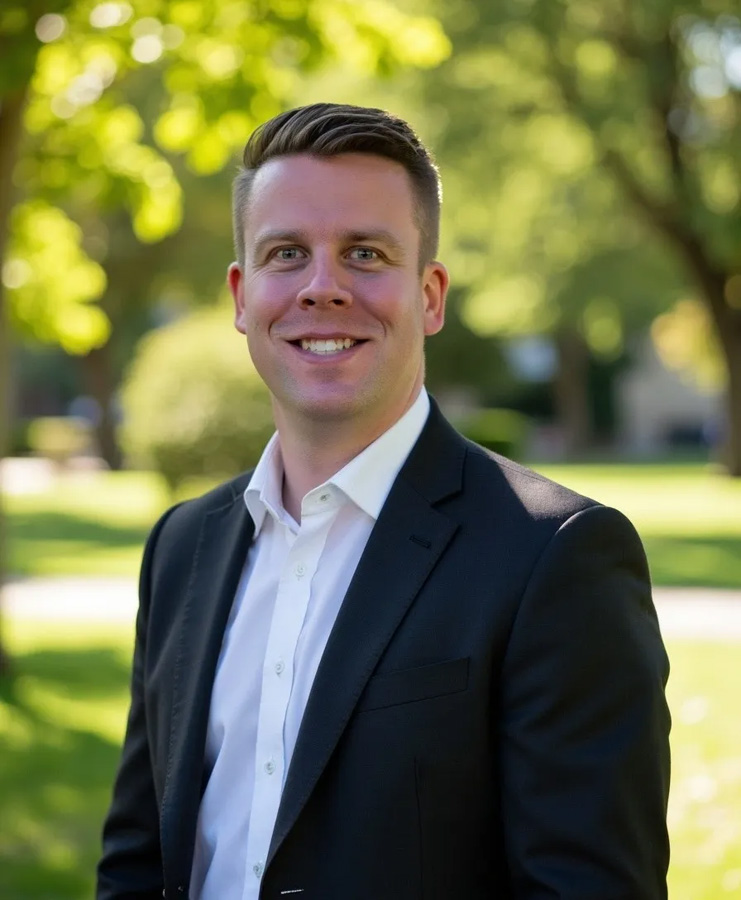
Saratoga County District Attorney Brett Eby today announced the creation of a new Narcotics and Special Investigations Bureau, a specialized unit dedicated to aggressively combating narcotics trafficking, illegal firearms, sex trafficking, and human trafficking throughout Saratoga County.
The Bureau will be led by Chief Meghan A. Horton, an experienced prosecutor with a proven record of success in complex investigations and high-stakes felony trials.
The Narcotics and Special Investigations Bureau will focus on dismantling criminal enterprises that profit from the sale of controlled substances, the illegal possession and trafficking of firearms, and the exploitation of victims through sex and human trafficking. The Bureau will work closely with local, state, and federal law enforcement partners to conduct long-term investigations, utilize advanced investigative techniques, and ensure the most dangerous offenders are held fully accountable.
“This Bureau reflects our commitment to taking an aggressive, intelligence-driven approach to some of the most serious crimes facing our communities,” said District Attorney Eby. “Drug trafficking, illegal guns, and human trafficking threaten public safety and devastate families. This Bureau is designed to confront those threats head-on.”
Chief Horton brings extensive experience in narcotics, firearms, violent felony, and sexually motivated offense prosecutions. She serves on the Tri-County Narcotics Task Force. Chief Horton has successfully tried numerous cases to verdict. Horton also has extensive experience drafting search warrants, devising operation strategy, obtaining trace orders and leading investigations. She is also cross designated as a Special Assistant United States Attorney. “Chief Horton’s exceptional courtroom abilities, sharp investigative skills, relentless work ethic, and aggressive prosecutorial style will lead this Bureau to success,” said District Attorney Eby. “She is one of the most talented prosecutors in Upstate New York, and I have complete confidence in her leadership.” Chief Horton’s courtroom successes include:
• People v. Shahid Smith — Secured guilty verdicts on multiple counts of Criminal Sale of a Controlled Substance in the Third Degree, resulting in a 31½-year state prison sentence.
• People v. Ryan Jewett — Obtained a conviction for Course of Sexual Conduct Against a Child and a 29-year sentence of incarceration.
• People v. Michael Zakrzewski — Achieved guilty verdicts for Kidnapping in the Second Degree, Strangulation in the Second Degree, and Criminal Contempt, resulting in a 34-year state prison sentence.
• People v. Sean Cherven — Won a jury trial resulting in a conviction for Rape in the First Degree and a sentence of 18 years in state prison.
“I am honored to be chosen to lead the Narcotics and Special Investigations Bureau,” said Chief Horton. “I am ready to take on this responsibility and to work aggressively with our law enforcement partners to protect the public, pursue justice for victims, and hold dangerous offenders accountable.”

Saratoga Film Showcase Returns: Dozens of Films, an Oscar Winner, Secret Screenings, and Parties Galore

SARATOGA SPRINGS — January tends to be a sleepy month in Saratoga.
The steady stream of eaters, drinkers, and shoppers who usually fill Broadway instead hibernate in their homes, perhaps weary from the holidays or wary of winter winds.
The Saratoga Film Showcase, which returns for its second year this weekend, is an invitation for 518-ers to hit the town, without having to spend too much time in the snow.
The festival, spearheaded by Spencer Sherry of Saratoga Arts and the 518 Film Network, includes in its 2026 lineup four blocks of short films (with each block running around 60 to 90 minutes), a special effects panel and demonstration featuring Oscar-winning makeup artist Annemarie Bradley, an opening night party with live music (Caity & the Gallaghers), a cocktail reception, and some secret off-the-books screenings.
“There will be a couple opportunities that pop up throughout the weekend, word-of-mouth only, to see some stuff that nobody’s ever seen before,” Sherry tantalizingly told Saratoga TODAY.
As a filmmaker himself, Sherry has attended countless festivals. Perhaps mentally taking notes to file away for a future opportunity, his experiences taught him what to do and what not to do. Some festivals demand that filmmakers pay hefty submission fees. Other fests are unable to house visiting filmmakers, making directors, writers, and actors less likely to appear in-person at screenings. And passes to film festivals can get pricey, presenting a barrier for cash-strapped artists who might’ve maxed out a credit card or two to finance their latest endeavor.
The Saratoga Film Showcase does things differently. The Holiday Inn in Saratoga donates rooms so that visitors have a place to warm up and snooze after a busy day of screenings and networking. There are no submission fees for those hoping to enter their work into the festival. Festival passes (good for the entire weekend) are sold at a sliding scale of anywhere from $10 to $100, making them affordable for nearly everyone. And free meals are dished out to filmmakers, who have access to their own lounge stocked with drinks and snacks.
“We try as much as possible to highlight [filmmakers] and showcase them and make it, structurally on our end of things, inherently worthwhile for them to be a part of this,” Sherry said. “We can bring filmmakers in from out of town that are hosted by our community, connect them with the local, independent filmmakers that are living and working here, and then all of that goodwill and energy goes directly towards inspiring the next generation of artists.”
It also doesn’t hurt that Spa City’s downtown is an ideal place to host a film festival, with multiple venues, restaurants, bars, and hotels all within short walking distances. This weekend, the showcase will be spread across Saratoga Arts, Putnam Place, and Harvey’s. If a festival attendee were to walk to all three locations in one go, it would take a grand total of about five minutes.
This year, the festivities begin at Putnam Place with “Shorts After Dark” on Jan. 23 at 7 p.m. The films include “La Diablesse,” written and directed by Grace Perez; “Kombucha!” directed by Jake Myers; “Bloodercream,” written and directed by Elise Valderrama; “Baby Fat,” a film by Elliot Frances Flynn (who played Zora in James Gunn’s hit series “Peacemaker”); “Affirmation,” directed by Emily Bennett (winner of a 2023 Fangoria Chainsaw Award); “Vanilla,” directed by the duo Nora Kaye and Nadia Nadim; and “The Man & the Scarecrow,” written and directed by Justin Knoepfel.
Sherry calls this block of films “weirder, more adult, or boundary-pushing.” Last year’s “Shorts After Dark” was apparently a hit, with headlining filmmaker Brit McAdams (director of the Saratoga-shot movie “Paint,” starring Owen Wilson) declaring it to be one of the best blocks of short films he’d ever seen at a festival.
Following “Shorts After Dark” is the showcase’s opening night party, which starts at 9 p.m. at Putnam Place.
Day two begins at noon at Saratoga Arts, with the “Coming to Terms” block. This lineup features “Golden Afternoon,” directed by Mathilde Suissa (whose film “Hidden” premiered at Cannes); “Unsaid,” directed by Monique Moses (the co-head writer and co-executive producer of season four of the HBO series “A Black Lady Sketch Show”); “Unidentified Caller,” directed by Alexander Cope; “The Resonance,” helmed by the husband-wife team of Paul Robinson and Sashia Dumont; “Seedless,” directed by Keenan Gray; and “So Long,” written and directed by Brendan Mascherino and Joey LaFrance.
“A lot of the themes of the movies are somebody facing either an unexpected moment, or a fear, or catharsis, or whatever it might be,” Sherry said. “It’s mostly drama, but there is a really fun comedy in there as well, and a couple spooky ones.”
Following “Coming to Terms” is the special effects panel discussion and demonstration, which begins at 2:45 p.m. at Saratoga Arts.
“[SFX makeup artist RJ Young] is going to come and actually apply a prosthetic to a model that has blood gags and bulge gags and air pockets and things in it,” Sherry said.
Next up after the demo is the “Art About Art” block, which starts at 4:30 p.m. One highlight of this lineup is “Portrait of God,” directed by Dylan Clark. This remarkable film went viral a couple years ago, accumulating millions of views on YouTube. It’s now being adapted into a feature helmed by Clark and produced by Jordan Peele and Sam Raimi. “I got to see it on a big screen with an audience—holy s**t, this thing is sick,” Sherry said.
Also featured in “Art About Art” is “Crying on Command,” directed by Nick Craven; “Cheat” directed by Jackie Mahoney; “You Don’t Say,” a musical short directed by Jeffrey D. Simon (who has worked in the art department of big-budget projects such as “Edge of Tomorrow” and “Spider-Man: Homecoming”); and “Apricot,” helmed by Frank Fascella, who has worked as a writers assistant on the TV shows “Tulsa King” and “Mayor of Kingstown.”
The showcase’s busy second day concludes with a 7 p.m. cocktail reception at Harvey’s Restaurant and Bar.
Last but certainly not least is the “Home-Grown” lineup of shorts on Jan. 25 at Saratoga Arts (the action begins at noon). These projects feature local filmmakers, familiar filming locations, and 518 cast and crew members. On the docket is “Pizza Cutter: A Bite Sized Slasher,” directed by Noah Manglapus; “2 Soldiers,” directed by Perrin Mercer (who lived in the Capital Region for more than a decade); “Dennis,” helmed by the Caldwell brothers; “Servants,” directed by Taylor Jarvis; “Hot Boy Summer,” a film by Albany High School senior Ian Roach; “Casualty,” by Juliette Monarch; “Born a Secret,” written by Miriam Russell; “The Family Coin,” by Jermaine Wells; and “Stakeout,” starring Seth Gillam (of “The Wire” and “Walking Dead” fame) and directed by Micah Khan, a prominent local filmmaker whose work was screened at last year’s showcase.
Perhaps the best thing about this mighty lineup is that, as of Jan. 19, the Saratoga Film Showcase broke even, meaning that all proceeds after that date will be sent straight to Camp Stomping Ground.
“The Saratoga Film Showcase aims to inspire the creation of more art in our community, and is proud to donate all profits to Camp Stomping Ground to continue making art more accessible to our youth,” the showcase states on its website.
A good cause, scary scenes, a jammin’ band, locals networking, and cinephiles tossing back a few—the Saratoga Film Showcase will have it all.

New Jiu Jitsu Academy Opening in Malta

Logo via Malta Jiu Jitsu Academy.
MALTA — The Eddie Fyvie Jiu-Jitsu Academy held its final class on Jan. 3, closing its doors after 13 years in business (Fyvie has joined the Spa City Jiu Jitsu Academy as a full-time teacher). But a new academy is already set to take its place, providing a home for local grapplers.
Kirby Ives is the head instructor of Malta Jiu Jitsu Academy, which is located next door to the old Eddie Fyvie location at 100 Saratoga Village Blvd. Ives is a black belt who trained under Fyvie, and his academy officially opens on Feb. 1 but is already accepting new students. Ives has been active in the local jiu jitsu scene for decades.
“I wanted to be a ninja when I was a little kid,” Ives told Saratoga TODAY. “I saw ‘Enter the Dragon’ when I was four years old and I was like, ‘That’s who I want to be.’”
With visions of Bruce Lee dancing in his head, Ives started wrestling in school and then took up boxing as a teenager before getting into jiu jitsu. One of his early mentors was Saratoga TODAY publisher Chad Beatty.
“Chad brought high-level jiu jitsu to Upstate New York,” Ives said. “After a few months of training in his basement, I was being exposed to unbelievable technique. I was meeting unbelievable guys that fought in Pride and UFC and Pancrase.”
At one point in his life, Ives was forced to navigate a challenging personal situation that left him feeling lost. But rather than turn towards unhealthy ways of dealing with his emotions, he instead found jiu jitsu.
“Jiu jitsu is something that absolutely empowers people and allows for a paradigm shift and gives people a sense of what is possible when you’re firing on all cylinders,” he said. “Your problem-solving skills are better, your sense of confidence is better. You move through space differently, in a physical way. You start to exude a certain vibe that people can recognize.”
For those interested in signing up with the Malta Jiu Jitsu Academy, a founder’s rate discount is available if they join prior to the Feb. 1 official opening.
There are a few ways to get in touch with the new academy: by phone (518-937-4899), email (maltajiujitsu@gmail.com), and Facebook (at the Malta Jiu Jitsu Academy page).

Discover Saratoga Announces 27th Annual Chowderfest

Discover Saratoga is proud to announce the return of its signature winter event, the 27th Annual Chowderfest, taking place on Saturday, February 7, 2026, from 11:00 a.m. to 4:00 p.m. in Saratoga County.
Presented by DeCrescente Distributing Company, Coors Banquet, Saranac, and Surfside, this beloved community event invites locals and visitors alike to sample 4 oz. servings of chowder for $2 each from roughly 80 Saratoga County restaurants and businesses.
“For nearly three decades, Chowderfest has been one of those events that truly defines winter in Saratoga,” said Discover Saratoga President Darryl Leggieri. “It brings people together during the quieter season, supports our local businesses, and reminds visitors that Saratoga County is vibrant year-round. We’re excited to welcome everyone back for another unforgettable day.”
“Chowderfest is one of the best days of the year to go out with friends and enjoy some great tasting chowder and beverages,” said Vice President of DeCrescente Distributing Company Carmine DeCrescente. “Saranac Brewery will be kicking off its seasonal Blueberry Blonde Ale at this year’s event, and you can find it, along with Surfside and Coors Banquet, at bars and restaurants throughout Saratoga County. Cheers to drinking responsibly and may the best chowder win!”
In addition to chowder tastings, attendees can enjoy live entertainment and family-friendly activities throughout Saratoga. To enhance the experience and ensure pedestrian safety, Broadway will be closed to vehicular traffic from Lake Avenue to Washington Avenue from 10:00 a.m. to 4:30 p.m.
Free shuttle service will once again be provided, with four shuttles running continuously between Saratoga Casino Hotel and downtown from 10:00 a.m. to 5:00 p.m.
Official Chowderfest merchandise—including long-sleeve t-shirts, knit beanies, and the Chowderfest spoon—will be available for purchase at the Saratoga Hilton Lower Lobby and the Saratoga Springs Heritage Area Visitor Center.
Voting will take place through the Discover Saratoga mobile app, with one vote permitted per device. Voting closes at 4:30 p.m., and winners will be announced at 6:00 p.m. at the Saratoga Springs Heritage Area Visitor Center.
Participants who vote in the app will be entered to win $1,000 in Saratoga-area gift cards, redeemable at local businesses and restaurants.
“We encourage visitors to turn Chowderfest into a full weekend experience,” Leggieri added. “With special hotel rates, dining, shopping, and winter activities, there’s so much to enjoy beyond the event itself.”
For event details, participating vendors, hotel specials, and shuttle information, visit DiscoverSaratoga.org/Chowderfest or call (518) 584-1531.
Special thanks to our sponsors, including DeCrescente Distributing Company, Coors Banquet, Saranac, Surfside, Westminster Bakers Co., Saratoga Springs City Center, T-Shirt Graphics, Saratoga Hilton, The Daily Gazette, Graves Brothers Home Improvement, Market 32 by Price Chopper in partnership with Old Bay, iHeartMedia, Yankee Home, Nemer CJDR of Saratoga, Upstate Transit of Saratoga, Saratoga Casino Hotel, Saratoga Bridges, Renewal by Andersen, Romeo Ford & Subaru, Saratoga.com, DePaula Auto Group, Townsquare Media, Purdy’s Discount Wine & Liquor, Saratoga Today, Albany Broadcasting, Another Day Another Diner, Reliable Onsite Services, Saratoga Automobile Museum, Julie & Co. Realty, LLC, Saratoga Escape Rooms, Mostly Modern Festival, Adirondack Trust & Amsure, and Impressions of Saratoga.

Bob Weir, Headliner of Biggest SPAC Show, Fades Away


SARATOGA SPRINGS — Grateful Dead co-founder Bob Weir faded away on Saturday, though, as any true Deadhead knows, his music will never stop.
Weir launched one of the most beloved bands in American history, one that inspired countless people to pile into vehicles and explore their country, trailing the Grateful Dead on tour. With the group’s improvisation, experimentation, and innovation also came new ways of performing and thinking about music. Their influence on American art and culture is vast and impossible to measure.
One could not truly experience the Dead without hearing them play live, in an environment that, more often than not, inspired warm feelings of community and, at times, even spirituality. The Grateful Dead’s very name seemed to suggest that although life is brief, it’s still an experience to appreciate (“Such a long, long time to be gone and a short time to be there,” sang Phil Lesh on “Box of Rain”).
The group made its mark almost everywhere, from its origins in San Francisco to the Giza pyramids in Egypt, the site of two 1978 Dead shows. It’s unsurprising then that the Dead’s influence can still be felt here in Saratoga Springs.
The band holds (and may forever hold) the record for the largest crowd to ever gather at the Saratoga Performing Arts Center (SPAC). In 1985, 40,231 Deadheads convened in the Spa State Park, surpassing the previously held attendance record (also set by the Grateful Dead) of 37,801.
Since then, both SPAC and Saratoga at large have become jam band hotspots. Phish and the Dave Matthews Band have played here dozens of times, stopping by almost every summer. Rising acts such as Goose, Dogs in a Pile, and Eggy have all performed in the Spa City multiple times. Grateful Dead tribute bands play here so frequently that one might think they’ve somehow stumbled into Haight-Ashbury circa 1967.
Weir brought Dead & Company (a successor group to the Grateful Dead that featured John Mayer on lead guitar) to Saratoga for the final time in the summer of 2023. He’d been here many times with several different bands. His sound—which could sometimes be joyful, haunting, tender, and invigorating all at once—seemed to fill the air of the park, swaying the leaves of towering trees and hovering above the ancient mineral springs. For those who enjoy this sound (Jerry Garcia famously compared the Dead to licorice, quipping, “Not everybody likes licorice, but the people who like licorice really like licorice”), witnessing Weir play in a bucolic setting was practically nirvana.
Though few can faithfully replicate Weir’s singular playing style, the songs he wrote and sung will be played long after his departure, which is exactly what he wanted.
On Jan. 17, Bearly Dead will take the stage at Putnam Place for an 8:30 p.m. show. The group describes itself as “not just another Grateful Dead cover band,” but rather, “a cosmic exploration of the Grateful Dead catalog.”
“I truly believe that Bob Weir is the most important rhythm guitar player in rock history,” wrote Bearly Dead guitarist Nick Swift in a social media tribute to Weir. “It’s amazing to me how he kept playing music and touring this long into his life. I keep reading tribute posts from musicians who knew him who cite his ‘need’ to play music – that it wasn’t just something fun to do, that it was something that filled a deep void in his soul and he couldn’t stop. He basically lived his life on stage, but not in some need to be an inauthentic celebrity. He just wanted to make music with people for people. And there’s something very magical about that… I look forward to finally getting to play again this Saturday in Saratoga. I’ll give it all I’ve got. We’ll miss you Bobby. We will do what we can to carry your spirit forward into the future.”
Another local tribute to Weir will come in the form of a special, celebratory memorial yoga class at Yoga Mandali on Jan. 18 at 5:30 p.m. The event, organized by yoga teacher and writer Natalli Amato, will send proceeds to the Rex Foundation, which was created by the Grateful Dead in 1983 to provide philanthropic grassroots support.
“I was born in the post-Jerry era,” Amato told Saratoga TODAY. “For me, the person at the spiritual center of the Dead has been Bob Weir. Over the past ten years, Dead and Company gave me some of the best memories and adventures of my adult life. But more important than that, loving this music has brought me into deeper connection with friends, family, and even strangers. Our yoga class Sunday is a place to celebrate that!”

Saratoga Arts Unveils New Look After $2 Million Renovation
Photos via the Saratoga County Chamber of Commerce.
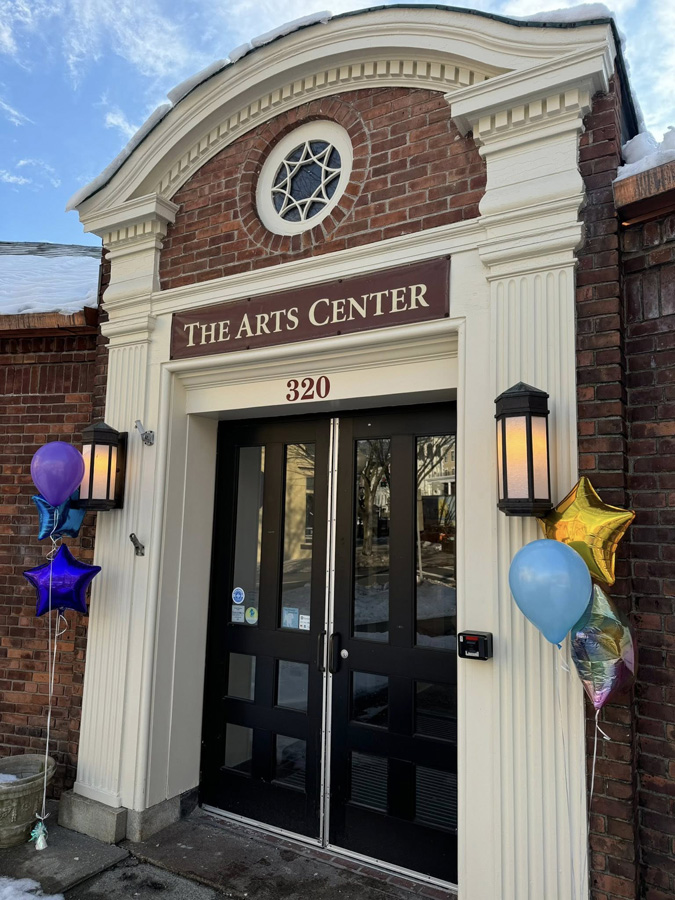

Saratoga Arts opened its doors to the public last weekend, revealing the results of a $2 million, year-long renovation project. The center, located at 320 Broadway, has a wide variety of events on its 2026 schedule, including yoga classes, candle making, the Saratoga Film Showcase, screen printing, collage felting, artist lectures, and the Feb. 6 launch of the “Dream Logic” exhibition. The center features, among other things, multiple studio-style classroom spaces, a dedicated printshop, rehearsal and music studios, a gallery and exhibition space, and a black box theater for film, music, theater, and special events.



New York’s First Public Floating Sauna Opens on Saratoga Lake

SARATOGA SPRINGS — Ice-cold waters surrounded the KOS floating sauna on Saratoga Lake, threatening to cool its steamy inner core. But the chilly foes were fought off by KOS’ interior temperatures, which can reach as high as a sizzling 230 degrees.
KOS (pronounced “cozy” without the y) is a Norwegian word defined as a feeling of comfort, warmth, and togetherness. It is an apt description of New York State’s first public floating sauna, which was filled with local politicos and well-wishers on Wednesday afternoon at a ribbon-cutting ceremony celebrating the Finnish-style sauna’s recent opening.
The 15-person sauna is open year-round and offers everything from communal sessions to private rentals to annual memberships to classes and rituals.
A visit includes access to the sauna, roof terrace, and changing rooms, as well as an invigorating plunge into the lake (in winter, this experience may be for only the boldest of Saratogians). Water served at the sauna is sourced straight from the Spa City’s famed mineral springs. Saratoga’s ancient, mineral-rich agua was the primary reason KOS creator/owner Kate Butchart decided to open up shop here, she said at the ribbon cutting.
KOS is located at the marina near Lago by Druthers, at 550 Union Avenue. It’s open Wednesday through Sunday, from 7 a.m. until 10 p.m., with reservation slots available at 90-minute increments.
Malta Police Chase ends in a Creek
A Malta man has been charged with several traffic offenses after trying to hide in a creek while feeling from a DWI.
Bradley Crannell of Malta was charged with felony DWI, felony unlicensed operation of a motor vehicle, misdemeanor fleeing a police officer in a motor vehicle, speeding, improper plates, uninspected motor vehicle, uninsured motor vehicle, failing to keep right and passing a red light.
According to Saratoga County Sheriff’s Deputies, Crannell was initially stopped for erratic driving on East High Street in Malta. While he initially stopped for Deputies, he is alleged to have fled the area. He later abandoned the car at the former location of Spa Brahuas Restaurant on High Street and fled into the woods.
The Sherriff’s Office subsequently deployed a drone with a thermal camera and spotted Crannell lying next to a creek. He was subsequently taken into custody without further incident.
Crannell’s DWI was elevated to a felony due to a prior conviction. He was arraigned in Malta Town Court and remanded into the Saratoga County Jail pending further proceedings.
Fugitive from Texas Caught after Police Chase in Spa City
The Saratoga Springs Police Department arrested a fugitive from Texas after receiving a report of someone driving erratically on Caroline Street.
Jody Harr, 47, was arrested by SSPD on a slew of charges after he was caught by Saratoga Springs Police during a DWI investigation.
According to SSPD, around 11:00 p.m., they received a report from a concerned citizen about a driver who was possibly intoxicated near the intersection of Caroline Street and Henry Street. When officers approached on foot, the driver, later identified as Harr, fled the scene. This triggered a chase which ended near the intersection of West Circular Street and Union Street.
Harr was initially taken into custody for DWI but further investigation revealed that he was wanted in Texas related to child pornography offenses.
He was charged with being a fugitive from justice, felony DWI- two prior convictions in the last 10 years, felony aggravated DWI, felony operating a motor vehicle with BAC over .08, misdemeanor reckless driving, and misdemeanor unlawful fleeing a police officer in a motor vehicle. In addition, he received several traffic violations including passing a red light, failure to stop at a stop sign, driving to the left of pavement markings, and driving on a sidewalk.
In an email to Saratoga TODAY, SSPD confirmed that the warrants for Harr’s arrest were issued by the Grand Prairie Police Department in Dallas County, TX. While the SSPD couldn’t cite Texas law specifically, they did state that the warrant was related to child pornography charges in Texas.
A review of court records from the Dallas County District Court shows that Harr has been charged with one count of 3rd degree possession of child pornography. During the course of the case, prosecutors alleged in court filings that Harr sent harassing messages to an individual involved and her son.
While bond for this case was set at $20,000, it has since been revoked. The last action related to the case took place on July 8, 2024, and the case is currently listed as inactive. This inactive status is done when something court can’t resume is due to factors beyond the control of the court — such as when a warrant is issued for the arrest of the defendant, according to the State of Texas Judicial Branch.
As for Harr’s other charges, this is far from his first time being arrested for DWI. A review of his criminal record from the Texas Department of Public Safety shows four arrests for DWI in the state — the latest two coming in 2023 and 2017.
Harr was remanded into the custody of the Saratoga County Sheriff’s Office pending extradition back to Texas.