Hundreds of people witnessed a ceremony to swear in 10 new citizens on July 4.
On a site where freedom was secured for all nearly 250 years ago, 10 people swore allegiance to the United States in a citizenship ceremony at the Saratoga National Historical Park in Stillwater.
The ceremony took place on July 4, 2026, the 250th anniversary of the Declaration of Independence going into effect. The 10 people sworn in hailed from Bangladesh, Canada, China, Guyana and India. The ceremony was witnessed by a crowd of hundreds who filled out the tents, sidewalks, and grasses surrounding the ceremony.
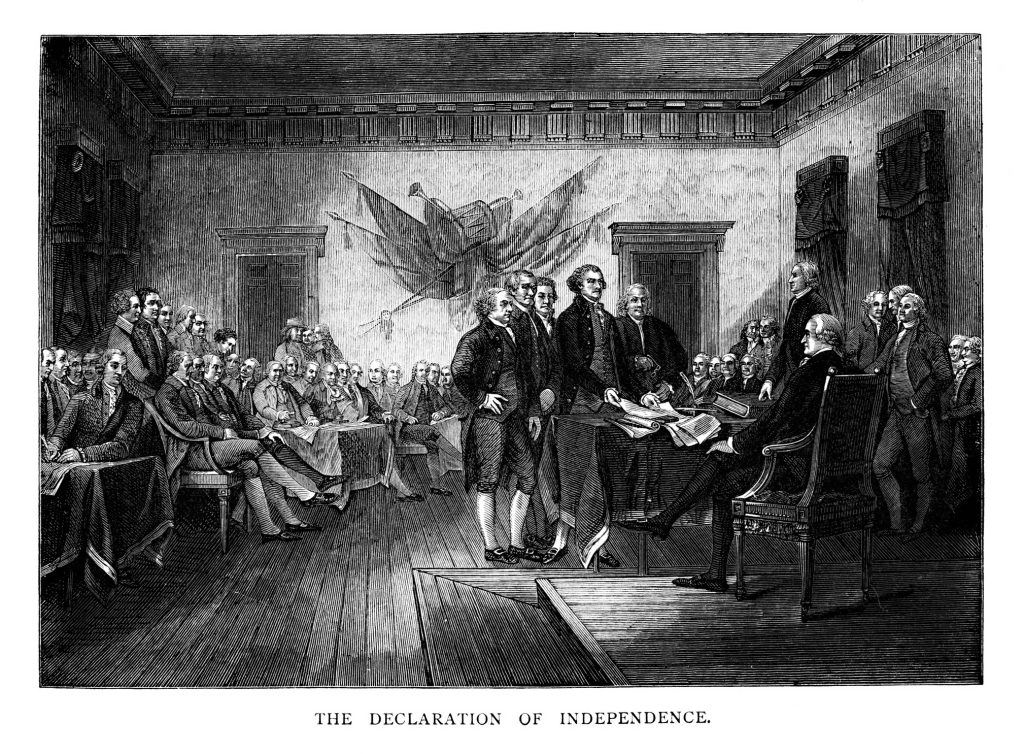
The ceremony featured a performance of the Star Spangled Banner and other traditional American patriotic songs by the Racing City Chorus and a reading of the Declaration of Independence by a park volunteer clad in period accurate regalia.
The citizenship oath was administered by Citizenship and Immigration Services Albany Field Office Director Gwynne Dinolfo. Other speakers included Park Superintendent Leslie Morlock and Assemblymember Carrie Woerner who spoke about her own family’s experience coming the United States from Germany and finding their own version of the American Dream.
Woerner also commended the citizens on their journey, noting the hardship of leaving behind the familiar to seek a better life.
“You came here with your talents your hopes, your dreams, and your energies to join us in making sure that this nation remains a place of opportunity, that the values of liberty and justice for all, freedom, and the pursuit of happiness remain values that future generations hold here,” Woerner said.
The 2026 ceremony marks the 23rd annual ceremony held at Saratoga National Historical Park. Over that time 400 citizens have been sworn in.
If you’ve been living with foot pain, aching knees, sore hips, or persistent lower back discomfort, the source of the problem may not be where you think. Many people spend months—or even years—treating the area that hurts most without realizing the issue may actually begin with their feet.
At The Good Feet Store, many visitors are surprised to learn that poor foot support and improper alignment can contribute to discomfort throughout the body. Because your feet are the foundation for every step you take, problems at ground level can create stress that travels upward through your knees, hips, and back.
Your Feet Are Your Foundation
Think of your body like a house. If the foundation shifts, the effects can be seen throughout the structure. The same is true for your body. When your feet aren’t properly supported, your posture, alignment, and movement patterns can be affected.
Common Types of Pain That May Be Connected to Your Feet
Foot Pain
Heel pain, arch pain, plantar fasciitis, and foot fatigue are among the most common reasons people
visit The Good Feet Store.
Knee Pain
Improper foot mechanics can place additional stress on the knees during everyday activities.
Hip Pain
Poor alignment can affect movement patterns and increase strain on the hips over time.
Lower Back Pain
Better support at the foundation may help reduce stress placed on the lower back.
Why So Many People Visit The Good Feet Store
Many people visit after trying different shoes, inserts, or other solutions without finding lasting comfort. They often discover that personalized arch support and proper alignment can make a meaningful difference.
Every visit begins with a FREE personalized fitting. An Arch Support Specialist takes the time to learn about your lifestyle, daily activities, and comfort concerns before recommending a support system tailored specifically to your needs. There’s no pressure—just an opportunity to experience the difference proper support can make.
Helping Capital Region Residents Stay Active
Whether you’re walking through downtown Saratoga Springs, spending the day at the track, golfing, hiking Adirondack trails, working long shifts on your feet, or simply enjoying time with family, comfort matters. That’s why so many people from Saratoga Springs, Clifton Park, Colonie, Malta, Ballston Spa, Latham, Delmar, and throughout the Capital Region visit The Good Feet Store.
Take the First Step Toward Better Comfort
Don’t wait until discomfort starts limiting the activities you enjoy. Whether you’re walking the neighborhood, playing with your grandchildren, golfing, hiking, or simply getting through the workday, every step matters.
Visit The Good Feet Store today for your FREE personalized fitting and test walk.
Clifton Park
309 Clifton Park Center Road, Suite 10 Clifton Park, NY 12065
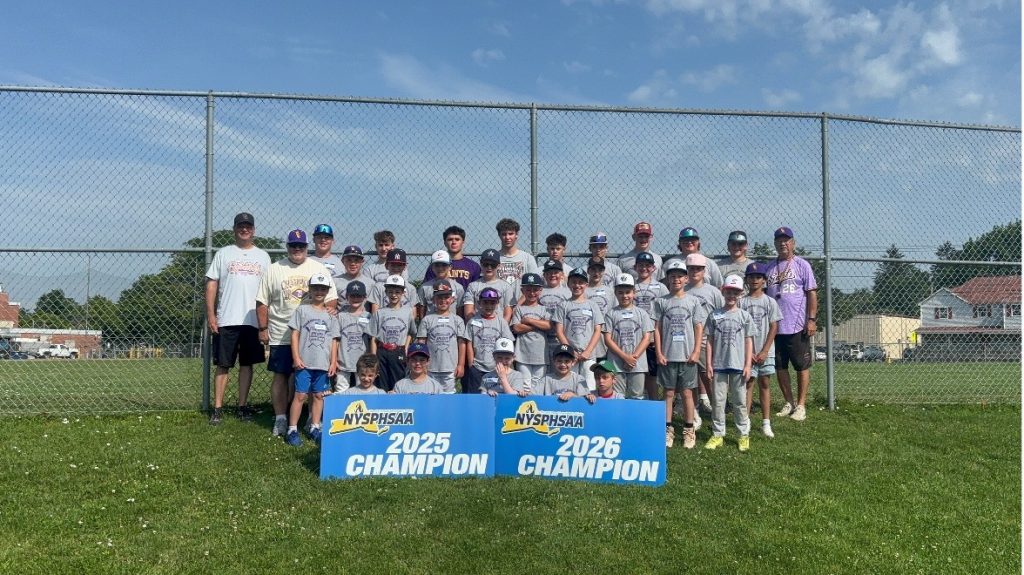
A month after Spa Catholic’s triumphant State Championship, Head Coach Alphonse Lambert returns to his summer camp to again build the foundation of a successful baseball program.
“Probably all of those kids that were on the two state championship teams started at this camp,” said Coach Lambert.
Players from both recent State Championship teams were at West Side Recreational Park at 9 a.m. all week to give back to the program where it all started.
“It’s a real full circle moment, just imagining me as these kids and having an influence on them is really great,” said Sandy McDonald, who will be going into his senior year this fall.
Coach Lambert has been running the Spa City Bombers baseball camp for 38 years. Seeing the same faces in the youth camp through to the varsity program is what keeps him going.
“Hunter’s a great example, here’s a kid that started in our camp. From the first day he moved into town, since sixth grade [he] comes to the camp. Who would have thought that we’d be hugging in the infield after we win a State Championship in Binghamton? It’s just so surreal.”
Coach Dale Long is now in his 20th season working with Coach Lambert and the baseball program. His son graduated from Spa Catholic in 2011 and was a part of the team that won three straight sectional championships. Sometimes when a coach describes the team as family it seems hyperbolic, but for Coach Long the sentiment resonates.
“You know what, it’s kind of a family situation. We have a very close relationship with our players. We’ve got three or four coaches here who are no longer in high school, and they want to come back and be with the program.”
Coach Lambert and Coach Long will host another week of camp from July 13th through the 17th.
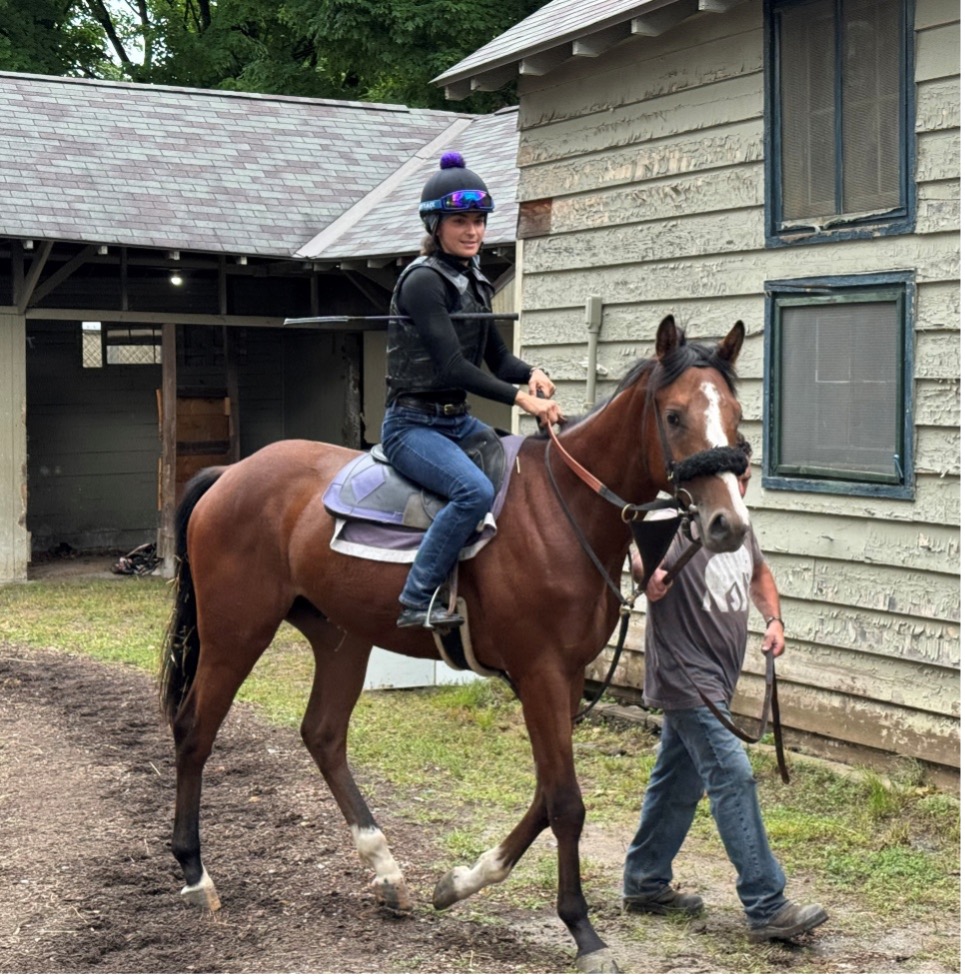
Glens Falls native Makaia Carpenter has found a career as an exercise rider started at Saratoga Springs and brought her to Saudi Arabia
Makaia Carpenter (Photo Provided by Tony Podlaski)
Makaia Carpenter always had the passion for working with horses since she was younger, but she needed opportunities to make it happen.
For more than a decade, the Glens Falls native has found those opportunities, building a career as an exercise rider – whether at Saratoga, other racetracks across the United States, or even in Saudi Arabia.
Carpenter has been galloping horses each morning for a variety of trainers, including Richard “Kerry” Metevier, Anthony Dutrow, and Michelle Nevin. She also ridden horses for Saratoga Springs native Jen Paragallo and Marialice Coffey.
“I’ve been pretty lucky,” she said. “Everything has taken off. I’m so lucky to just wake up and do something every day that I absolutely love.”
One of the people who has been supportive of Carpenter’s love for horses is her mother, Suzanne Carpenter, who asked a familiar question that is applicable to many younger children.
“I was three years old when my mom asked me what I want to be when I grew up, and I told her a cowgirl,” Carpenter said. “She did buy me little boots and hats, so I can say that my mother, since day one, has been supportive.”
Carpenter’s trail into riding horses didn’t happen immediately. Like many middle school and high school girls, she tried other sports, but she struggled to find success. Knowing that other girls were taking riding lessons, she began convincing her mother about this venture.
“I was terrible at school sports like soccer and basketball. I couldn’t do anything with a ball, a goal, or a bat. I really want to take riding lessons. I had heard a couple kids in school take riding lessons. That’s what I want to do.”
However, Carpenter faced a common challenge for families whose children are involved in youth sports, including equestrian riding: a 60-minute private lesson that can start at $100 or more, depending on the instructor.
“I didn’t come from a lot of money, and horses cost a lot of money,” she said. “My mother said if you want riding lessons, then we’re going to have to work something out.”
To help cover riding lessons, Carpenter and her mother, who still works as a special education teacher during the school year, worked for Bill Johnson and his Stonegate Stables in Fort Edward during the summer.
Once Carpenter graduated early from Glens Falls High School, she began working with horses for Jeffrey Tucker and his Stone Bridge Farm in Gansevoort. Over the next four years, she learned how to handle Thoroughbreds, particularly yearlings preparing for the Fasig-Tipton sales.
“I was good with the horses on the ground. They utilized me where I excelled, which was on the ground with young horses,” she said. “There’s a lot to be said for learning from the ground up.”
However, just 18 years old at the time, Carpenter wanted more – especially the chance to ride.
“I saw the exercise riders out on the track, and it dawned on me that I could have a career where I just rode horses every day,” she said. “I kept dreaming about being a rider. I became kind of obsessed with the idea of being a rider. However, you cannot just walk in and become a rider.”
After six years of working on farms, Carpenter began to worry that her dream might never become reality.
“People start galloping horses when they’re 18 years old, and I’m going through my whole life with just a dream. I didn’t want to do that,” she said.
Carpenter took an unorthodox approach by visiting barns on the Oklahoma Training Track in search of an opportunity. After receiving no offers beyond hotwalking, she caught a break from Hall of Fame trainer Nick Zito and veteran outrider Lance Cronk.
Together, they helped Carpenter become an exercise rider with her first horse – Heavenly Lucky.
“She took great care of me. She was so sweet,” Carpenter said. “I took her out to the track. I pointed her in the right direction. She knew what to do. At that point, I had talked to a couple of people about what I was supposed to do. I was going in a little bit blind.”
“Lance also took me kind of under his wing and said, ‘Makaia, make sure you mind this about the traffic,’” she added. “He went over some key points with me early so that I wouldn’t go out there and get myself in trouble.”
From Saratoga, Carpenter followed Zito’s stable to Keeneland, Churchill Downs, and Oaklawn Park before branching out to other trainers that included Paragallo, who brought her to Belmont Park and Aqueduct before going to Tampa Bay Downs for the winter.
Earlier this year at Tampa Bay Downs, trainer Greg Sacco needed an exercise rider for Just Beat the Odds for the Grade 2 Riyadh Dirt Sprint at King Abdulaziz Racecourse in Saudi Arabia.
Sacco contacted Carpenter, about working with the 6-year-old gelding for a couple of weeks in Saudi Arabia as preparation for the race. Leaving the country for the first time, Carpenter took the opportunity and helped prepare Just Beat the Odds, who finished just behind winner Imagination.
“That was the experience of a lifetime. The racetrack experience was incredible,” she said. “Though, it was a little bit like culture shock for me. I did a lot of reading before I went to kind of learn what was expected of me. Going to Saudi really made me realize that there’s a lot more out there.”
Now, Carpenter continues to wake up at 3:45 a.m. to commute from South Glens Falls to Saratoga. For her, it’s worth it, especially if there are more opportunities, whether it is riding horses or assisting in the training.
“I’m kind of happy to stay where I’m at,” she said. “However, being in different barns, I feel like there are so many opportunities.”
The 2026 Saratoga race meeting begins Friday July 3rd offering a historic 46 racing days, almost doubling the traditional 24 day meets of yesteryear. The way the calendar falls this year July 4th and Labor Day are as far apart as possible thereby making for a long racing season. The New York Racing Association has decided to continue from its opening July 3rd right through Labor Day, running a modified schedule by racing only four days per week for the first three weeks (with Wednesdays being dark) most of July. The usual five day per week schedule will resume July 29th.
Competition
This is an important race meet for the New York Racing Association which has enjoyed the popularity of its Saratoga meet. This year, in addition to the competing Del Mar meet on the West Coast, Saratoga faces stiff competition from two Kentucky race tracks. Ellis Park in Kentucky has offered increased purses for its summer meet and figures to draw away several Kentucky bred maidens which will run for purses of $100,000 in maiden races there. Separately, Kentucky Downs, with its short, boutique meet offering grass racing, overlaps the Saratoga meet on six of its seven race days. This overlaps more than in other years and in the past, we have seen horses, trainers and jockeys lured to Kentucky Downs from Saratoga by the oversized purses offered on those days.
It remains to be seen to what degree increased racing competition will dilute the quality and quantity of horses, jockeys and trainers participating in the Saratoga meet but it figures to be significant. NOTE: The weather is always a wild card both here and in Kentucky and at least for opening day and opening weekend the expected heat could jeopardize the Saratoga cards.
Racing
Significant race dates:
August 1st – Jim Dandy Stkes 3-year-olds
August 8th – Whitney Stakes – older horses
August 22nd – The Alabama Stakes – 3-year-old fillies
August 29th – The Traves Stakes – 3-year-olds
The highlight of the Saratoga meet is always the Travers Stakes – known as the Mid-Summer Derby. This year’s renewal has already been thrown a curve when it was announced that Kentucky Derby and Belmont Stakes winner Golden Tempo has suffered a slight illness and will be skipping the Jim Dandy Stakes. Trainer Cheri DeVaux now plans to train Golden Tempo directly to the Travers without a prep race and such a change could be significant. Golden Tempo as of now is a question mark.
The marquee race for older horses, the Whitney Stakes to be run on August 8th is expected to draw a stellar cast as usual. The race has already generated some buzz with trainer Mark Casse announcing plans to enter his classy filly Nitrogen against the boys. Nitrogen has an affinity for the Saratoga course and the old adage “horse for courses” most certainly was a factor in these plans. It figures to draw its usual strong field.
On-track Attendance
This year may prove a daunting one for the New York Racing Association as it tries to extend the excitement of Saratoga racing to a long 46 days. A racing facility without fans can be a sterile place and even Saratoga is not immune. In recent years there have been days (and parts of days) where the facility is more empty than full and despite good overall attendance figures hollowness can emerge. The length of the race day, the number of race days and (despite protestations to the contrary by some), the cost of the race day can combine to depress on-track attendance. To maintain enthusiasm the New York Racing Association would be wise to take steps to ensure that people are in the building for the bulk of each racing day, particularly local residents.
Farewell to Aqueduct
Racing said goodbye to Aqueduct Race Track this weekend with the final race run Sunday afternoon. The sendoff was bittersweet as many fans attended the final day jamming the now limited space dedicated to horse racing at the facility. The crowd was decidedly different than a large stakes day crowd in terms of dress, style, affluence – it seemed genuine and passionate about what the facility personally meant to them.
Races were run at this location for an astounding 132 years. A full review of its importance to racing and the legendary performances and performers on these grounds is beyond the scope of this column but suffice it to say it cannot be overstated.
In addition to races of major importance, for decades it was the economic engine of the New York Racing Association and provided the revenue to sustain the more expensive Belmont Park and Saratoga operations. It’s location on the New York City subway system made it a home for all economic classes.
In later years Aqueduct was converted largely into a casino and fell upon tough times as a racing facility. However, to judge Aqueduct on its final state and disregard its history is a mistake. Change happens but Aqueduct carried the load for decades. Farewell Aqueduct– racing owed you more.
In an effort to keep the back stretch staff and jockeys out of billiard halls and bar rooms, a racetrack recreation center was constructed in 1928. These high minded ideals were furthered by operations coming under the Young Men’s Christian Association, or YMCA.
The grounds provided a ball diamond, and the back of the structure offered a fine space for an outdoor illuminated boxing ring. The activities for boxing training, including running, speed bag, heavy bag, and sparring, are complementary to those required to keep a jockey fit.
Both sports require strength, speed and endurance, and also require the participants to make weight. The squared-circle of the boxing ring, and padded gloves, also provided an outlet to vent those small differences that arose in the close quarters on the backside. For many years boxing matches were staged at the Jockey “Y” between amateurs, which included jockeys, exercise riders and grooms.
During the Great Depression, economic failures placed the Jockey “Y” under the operation of the Saratoga Association. The 1930’s also saw the entrance of Francis John “Jock” Labelle, Saratoga native and star High School athlete, despite an unlikely 5’2” stature. He gained his lifelong nickname after he ran away from home with ambitions to become a jockey.
Jock operated a lunch counter on Church Street, and was a basketball official at scholastic/college games, where his humorous demeanor enchanted fans and earned him a tour with the Harlem Globetrotters.
He acted as personal trainer to heavyweight boxing contender and Saratoga resident Bob Pastor, and was in his corner as a second in his championship challenge with Joe Louis in the Brown Bomber’s hometown of Detroit. Jock LaBelle organized the boxing programs at the Jockey “Y” and often times acted as both announcer and referee. Jock also launched successful recreation programs at Hialeah, Delaware Park and Atlantic City racetracks.
The decade of the 1940’s began with the affable George Bull as President of the Saratoga Association and Anna Clare, who had recently been appointed Track Supervisor upon the death of her husband Tom, both strongly behind the broad operations of the Recreation Center.
In the 1950’s, established trainers such as Max Hirsch and Lucien Laurin would look to bring on exercise riders and grooms with boxing abilities, to improve their stable’s ring chances during August at the Spa.
The public was always welcome at the bouts, and real interest was shown by many prominent persons in racing, who would sponsor prizes for the fighters. Notables included Prince Aly Khan and Alfred G. Vanderbilt, who even qualified as a boxing Ref!
The boxing matches continued into the 1960’s, but with jockeys more often acting as judges, rather than combatants. Jockey Angel Cordero became a sponsor of middle-weight fighter Roul Melendez and Victor Gonzales.
By the late 1960’s interest in participating in boxing contests waned, and basketball became the preferred recreation among the backstretch employees. With the hoop sport contested among individuals, or teams of 3 or 5, lent to the participation of many more workers during their free time.
In 1968, a basketball court, which could also be used for volleyball, replaced the squared-circle of the Recreation Center boxing ring.
Admission gates open at 11a.m. with an 11-race program underway at 1:10 p.m.
Saratoga Casino Hotel Harness Track Fundraiser:
Fans can purchase a specially designed T-shirt to support those impacted by the recent fire at Saratoga Casino Hotel Harness Track. Available at the NYRA Gift Store with 100 percent of all sales donated to the Saratoga Harness Horseperson’s Association.
Saratoga 250, America’s Turning Point Cannon:
A three-pound replica cannon will be prominently displayed near the paddock throughout the holiday weekend. This exact working replica of a 1777 Saratoga Campaign cannon will be part of the 250th commemoration of the “Henry Knox Noble Train of Artillery.”
Victory at Saratoga Samplings:
All weekend long, fans 21 and older can enjoy complimentary samplings of the Saratoga 250 signature summer cocktail, Victory at Saratoga, which features Freeman’s Farm at Saratoga Bourbon produced by War Cannon Spirits of Crown Point, NY. Available at the Saratoga 250 Tent by the paddock.
Horse Themed Carnival Game:
Fans can win prizes on Friday and Saturday at a horse-themed roller ball carnival game, located in the backyard near Horse Sense.
saturday, july 4:
Admission gates open at 11 a.m. with an 11-race program underway at 12:35 p.m.
Dollar Dogs:
$1 Carnegie Deli Hot Dogs are available at concession stands where hot dogs are traditionally sold.
1776:
Saratoga’s Home Made Theater will perform a musical selection from the Tony Award-winning production “1776,” bringing the story of America’s founding to life through song.
Ma’alwyck Fife and Drum Corps and Historical Reenactors:
The Scotia-based Ma’alwyck Fife and Drum Corps will help transport guests back to the Revolutionary War era. The ensemble will feature percussionist Andrew Janack, who performs regularly with the Albany Symphony Orchestra, alongside flutist and fife player Dr. Yvonne Chavez Hansbrough. The musicians will be accompanied by historical reenactors in period attire roaming the grounds and interacting with fans.
Declaration of Independence Reading:
Following the 4th race, Town of Saratoga Historian and Vice Chair of the Saratoga 250 Commission, Sean Kelleher, will offer a reading of the Preamble to the Declaration of Independence.
Uncle Sam:
A beloved American icon whose roots are traced back to nearby Troy, NY, Uncle Sam will stroll the track grounds in celebration of Independence Day.
Adirondack Dreamcatcher Farm:
Complimentary pony rides, a petting zoo and opportunities for children to interact with friendly farm animals will be available free of charge in the Saratoga Family Zone.
Subourbon Life Samplings:
Fans 21 and older can enjoy complimentary samples of Subourbon Life Bourbon-based Ready-to-Drink cocktails just outside Subourbon Beverage Express, while supplies last.
Saratoga Springs Fireworks:
Saratoga’s All-American Celebration will culminate with a spectacular fireworks display from atop the Saratoga Springs City Center Parking Garage at 9 p.m. Sunday, july 5:
Admission Gates Open at 11 a.m. with a 9-race program underway at 1:10 p.m.
Yankee Doodle Band:
The patriotic Opening Weekend celebration continues with performances from the Yankee Doodle Band of Rensselaer, NY. Founded in 1927, the Yankee Doodle Band has earned recognition at American Legion events, parades and patriotic ceremonies.
Adirondack Dreamcatcher Farm:
Complimentary pony rides, a petting zoo and opportunities for children to interact with friendly farm animals will be available free of charge in the Saratoga Family Zone.
FIFA World Cup 26 Viewing Parties all Weekend
Michelob Ultra, the official beer sponsor of FIFA World Cup 26™, will host FIFA World Cup 26™ Viewing Parties in partnership with Saratoga Eagle Sales & Service each day of Opening Weekend. Fans on-track will enjoy big-screen televisions in the Backyard Festival Tent with the opportunity to take home official giveaways from Michelob Ultra and other FIFA World Cup 26™ partners, while supplies last. Drink specials, soccer-themed décor, interactive activations and an inflatable soccer shootout game will be part of the entertainment.
Saratoga Tumbler Giveaway, Presented by Saratoga 250:
Fans can celebrate America’s 250th anniversary on Friday and Saturday with a Stars and Stripes Saratoga tumbler presented by Saratoga 250. The 16-ounce, double-walled insulated clear tumbler features the logos of Saratoga Race Course and Saratoga 250. Free with paid admission, while supplies last.
While the most notable contribution of Saratoga County to the American story may be the battles that took place here, it’s not where our contributions end.
Saratoga County has been home to some of the most influential Americans to ever live, people who contributed to our shared success in numerous wars, and blazed trails that have been followed by millions of Americans.
While the battle may have ended on October 7, 1777, our story didn’t. Here are some events, people and innovations that shaped the history of this nation from Sea to Shining Sea.
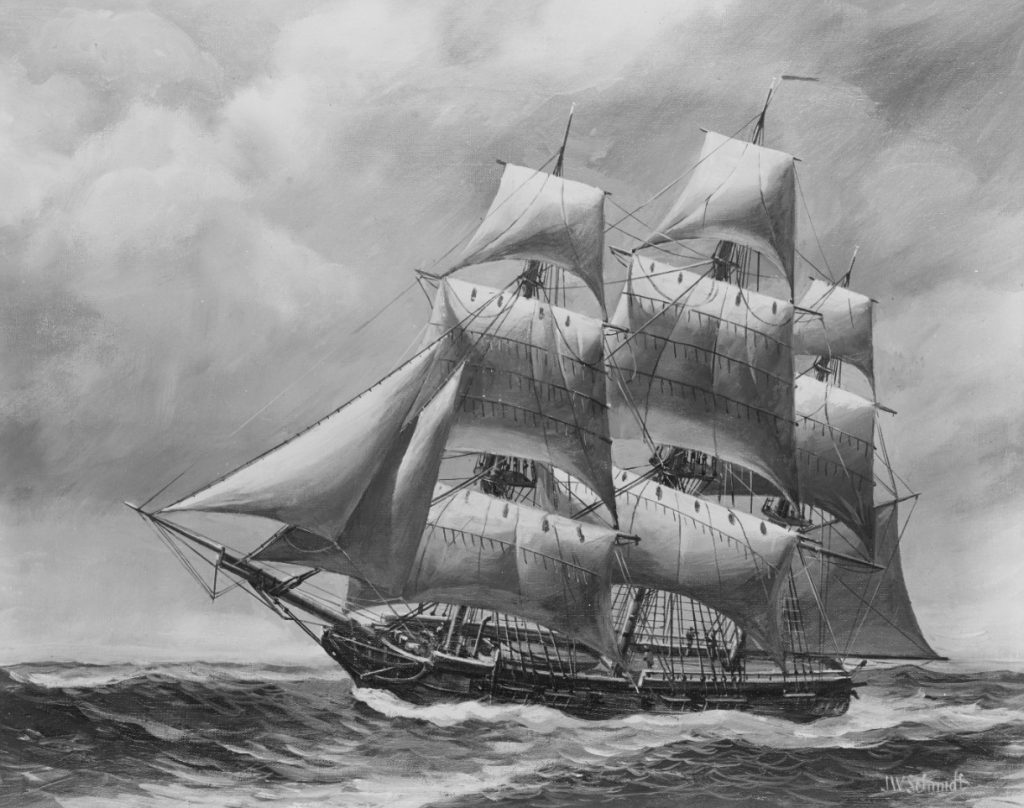
1780 – Saratoga I is Launched Less than three years after the Battle of Saratoga, Saratoga’s name would be placed on a U.S. Navy warship for the first time. The Saratoga I was a 68 ft, 150-ton sloop armed with 16 nine-pound cannons and two four-pound cannons. It had a crew of 86 personnel and was launched from Philadelphia on April 10, 1780. During its career the ship was responsible for capturing or recapturing 12 British or American ships. She was lost on March 18,1781 and was the first of six ships to bear her name.
These ships include a Corvette launched in 1814 which saw action in the Battle of Plattsburgh, a sloop of war which saw constant decommissioning and recommissioning from the time it was launched in 1842 to when it was sold for scrap in 1907, a cruiser which was renamed three times, and two aircraft carriers — the first of which deserves its own entry on this timeline.
The First ship to bear Saratoga’s name served for only a year but managed to capture 12 ships (Courtesy of US Navy Heritage Command)
1802- Gideon Putnam Builds what becomes Grand Union Hotel- One of the most prominent features of Saratoga County is the mineral springs. World renowned for their health benefits, the springs brought thousands of visitors, including prominent aristocrats and world leaders, to Saratoga County — specifically Saratoga Springs and Ballston Spa. While it’s true that Ballston Spa was the first to take advantage of this, building two hotels in 1792, Saratoga Springs would have more staying power.
The first to take advantage of this was Gideon Putnam who built what would become the Grand Union Hotel in 1802 in the vicinity of the Congress Spring. Putnam would lay out much of what would become Saratoga Springs, tubing and connecting its springs. Putnam was in the process of building Congress Hall when he died in 1812.
While the opening of a hotel may seem like a trivial event in the broad story of the American mosaic, its impact can be seen both in what Saratoga became and the places it inspired. The list of famous figures to visit Saratoga Springs and their significance on American history could go on for pages, and the legacy of Saratoga Springs can be seen in the places named for it in Utah, Nebraska, California and Disney World. And, yes, the paper does regularly get calls from people thinking we are in Utah or California.
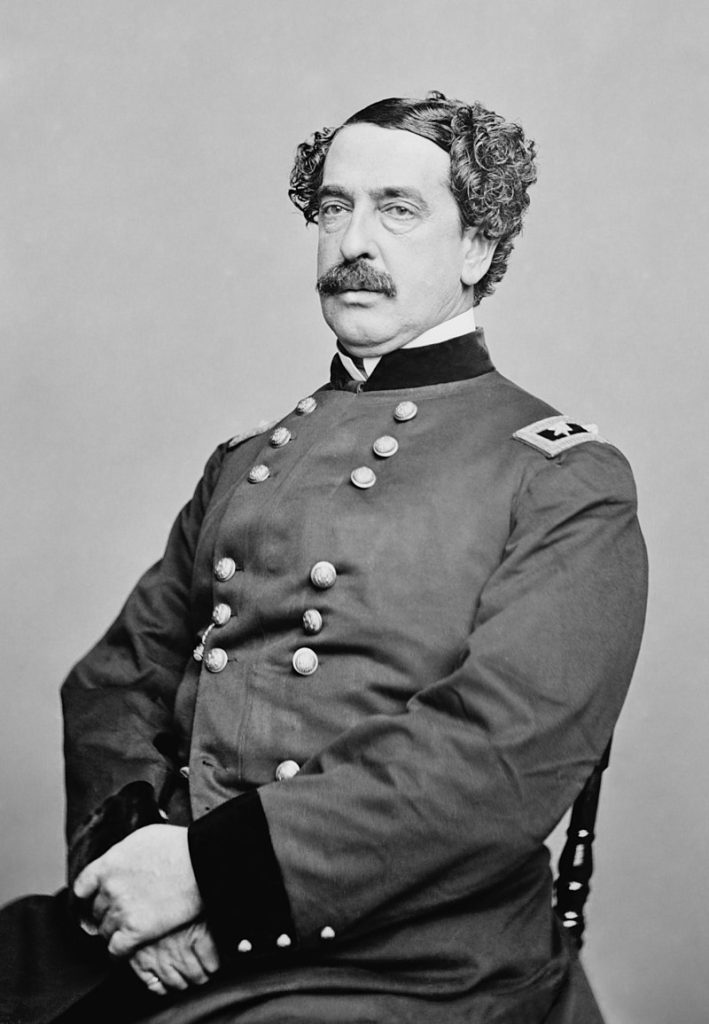
1819- Abner Doubleday is Born in Ballston Spa- As legend goes, baseball was created by Abner Doubleday in Cooperstown, New York in 1839. This story is based on the 1907 Mills Commission report which was largely influenced by Abner Graves’ testimony.
While the story has been refuted due to the fact that Doubleday’s diaries make no mention of baseball, he never claimed to invent baseball and would have been in his plebe year at West Point when the story is supposed to have happened, what is true is that Doubleday had a pretty remarkable life, even without inventing baseball.
Doubleday was the second-in-command at Fort Sumpter at the very start of the Civil War and fired the first shots of the Union Army. Doubleday commanded troops throughout the conflict in many notable battles. His most famous moment came in the Battle of Gettysburg when he took command of I Corpe and repelled a numerically superior force. Throughout his career, Doubleday is reported to have ordered baseball bats and balls for his troops because he believed sports were a good way to build unit cohesion.
While Cooperstown may be the birthplace of Doubleday’s myth, the man himself was born in Ballston Spa.
Baseball or no baseball, Abner Doubleday’s story is still worth telling, and that story began in Ballston Spa. (Courtesy of Library of Congress)
1825- Erie Canal Completed- The Second of the two Canals in Saratoga County, the Erie Canal was completed in 1925 with the ceremonial dumping of water from Lake Erie into New York Harbor on November 4, 1825. The canal’s completion would fundamentally shape New York and connect New York City to Midwest markets in Michigan, Indiana, and Ohio. It drastically reduced the cost of transporting goods, meaning that agricultural products made in those Midwest states could be shipped to New York.
The cost of transporting a ton of goods from Lake Erie to New York City went from $100 to $9, and freight traffic surpassed that of the Mississippi River. This prosperity propelled New York to become the largest port in the country within five years and led to the boom in cities such as Syracuse, Utica, and Rochester.
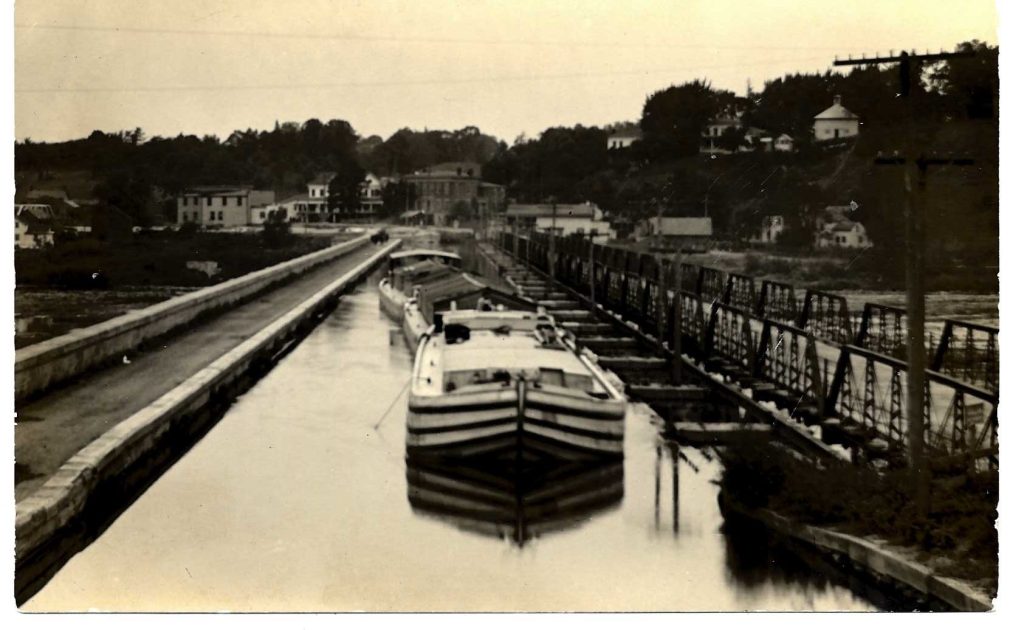
Saratoga’s connection to this route can be seen in the southern part of the county in Halfmoon and Waterford. Originally the Erie Canal bypassed the Cohoes Falls through a series of locks in Cohoes before crossing the Mohawk River at the Lower Mohawk Aqueduct in Halfmoon — today the site of the Crecent Bridge. In 1918, new locks to facilitate barge traffic were completed which bypassed the Cohoes Falls to the north in Waterford.
Canal Boats transit the Lower Mohawk Aqueduct in the Town of Halfmoon (Courtesy of CPH Library Local History).
1841- Saratoga Springs Resident Solomon Northup is Kidnapped into Slavery – In April 1841, Solomon Northup, a free Black man living in Saratoga Springs and working various jobs was enticed by two circus men to travel with them to Washington, DC as a traveling musician.
In Washington, Northup was drugged and kidnapped into slavery beginning a 12-year ordeal. Northrup was held in slavery in Louisiana under the name Platt Hamilton. In 1842 Northup was sold to plantation owner Edwin Epps for $1,500, where he would remain in bondage until 1853. Northup’s ordeal ended after Epps hired a Canadian Carpenter by the name of Samuel Bass. Bass in June 1852 managed to get two letters to William Perry and Cephas Parker who were friends of Northup in Saratoga. The two men contacted Northup’s wife and an attorney named Henry Bliss Northup whose relatives had at one point owned his father.
Henry Northup soon gathered documents to show that Solomon Northup was a free man and in bondage in Louisiana and received permission from New York Governor Washington Hunt to travel to Louisiana and rescue Northup in accordance with New York law. Henry Northup first went to DC to receive the backing of the Secretary of War and one of Louisiana’s senators. He contacted Bass in Louisiana who instructed him on where to find Solomon Northup and successfully freed him on January 3, 1853. That year Solomon Northrup and David Wilson would publish a book “Twelve Years a Slave,” which recounted his time in bondage. In 2013, the book was adapted into a movie which was nominated for 315 awards and won 145 of them — including three Academy Awards.
12 years a Slave Solomon Northup, as depicted in Twelve Years a Slave
1861- Malta Man is First Union Officer Killed in Civil War- The first officer to give his life in support of the Union cause was a man from Malta — Elmer Ellsworth. Ellsworth was born in Malta in 1837, grew up in Mechanicville and made his way to Illinois in 1854. Ellsworth, who had a fascination with all things military history, formed a militia company based on the French Zouave Regiment. The Company was known for its discipline and soon grabbed the attention of a Springfield lawyer by the name of Abraham Lincoln. The two became close friends with Ellsworth working in Lincoln’s law office as a clerk and participating in his 1860 presidential campaign.
When war broke out, Ellsworth returned to New York and recruited a 1,100-man unit, the 11th New York Infantry Regiment. Known as the “Fire Zouaves” due to its heavy recruitment of New York City firefighters, this unit was tasked on May 24, 1861, with crossing the Potomac River to seize Alexandria, VA. After the city was secure, Ellsworth went to a hotel to take down a Confederate flag that flew over it. While he was carrying down the captured flag, Ellsworth was shot and killed by the hotel owner, James Jackson. Jackson was then immediately killed by one of Ellsworth’s men who later received the Medal of Honor for this action.
Ellsworth’s death became an early rallying cry for the Union cause. His body lay in State in the White House before being buried in Mechanicville. Spurred by his death, another regiment, the 44th New York, was formed with the nickname “Ellsworth’s Avengers.”
1863- Thoroughbred Racing Begins at Saratoga- The so-called “Mecca of American horse racing” got its start mere weeks after the battle of Gettysburg. At the time, horseracing wasn’t new in Saratoga Springs as harness racing had been going on since 1847 at the Saratoga Trotting Course. In August 1863, the track would see something new to the Spa City and put its place on the map for the next 166 years: thoroughbred racing.
On August 3, 1863 — a month to the day after the Civil War’s turning point — the Irish born bare-knuckle boxer John “Old Smoke” Morrissey held the first thoroughbred race in Saratoga Springs at the Trotting Course. While the number of horses was limited, the crowd wasn’t, with 15,000 people attending. The next year Morrissey along with Leonard Jerome, John Hunter and William Travers would build the Saratoga Race Course as the Trotting Course was deemed to be too small for their operations.
Morrissey’s race paid off for the city. Already a resort town with its spas and springs, Saratoga Springs became a hub of gambling and horse racing for years to come. In 2024 with its normal home down for maintenance, the Belmont Stakes were held in Saratoga Springs, adding a jewel to the Saratoga Race Course’s history of excellence.
1885- Ulysses S. Grant Dies in Moreau – While Ellsworth and Doubleday may have commanded troops when the Civil War began, it was Ulysses S. Grant who commanded its conclusion. And as the two Saratoga County born officers started their stories Upstate, Grant would end his here — both literally and figuratively.
Dying of throat cancer, the former 18th president and General of the Army made his way to a cottage on Mt. McGregor in the Town of Moreau in June 1885. The cottage was owned by a friend of his who offered it as a quiet respite to spend his finals days. It was here where Grant finished his memoirs on July 18, 1885, and died on July 23. His body would be transported to New York City where it lies in a grand tomb in Upper Manhattan.
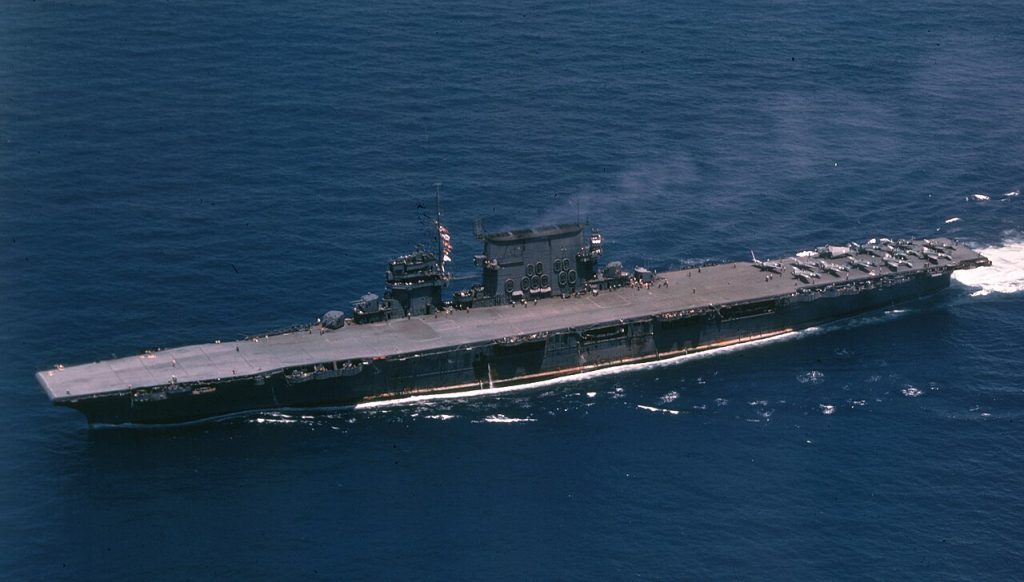
1925- USS Saratoga (CV-3) Launched- The fifth ship to carry the name Saratoga, the USS Saratoga (CV-3) had arguably the most interesting service run of the six “Saras.” She was originally designed and laid down to be a battle cruiser, but post-World War 1 naval limitations forced Navy planners to find a new role for her. That new role was to become one of the Navy’s first fast aircraft carriers. Launched in 1925 and commissioned in 1927, the Saratoga helped the Navy develop its tactics and train aircrews in the leadup to World War 2. She was in San Diego when Pearl Harbor was attacked and sortied to Pearl Harbor shortly after. In January 1942, she was struck by a torpedo and missed the Battle of Midway due to subsequent repairs.
The ship would take part in the invasion of Guadalcanal and the subsequent Battle of the Eastern Solomons, sinking a light carrier in the process. Throughout 1943 and 44, she would take part in several campaigns throughout the Central and South Pacific, striking targets and providing air cover to invasions. In February 1945, Saratoga was providing air cover for the invasion of Iwo Jima when she was struck by five bombs and three aircraft. After repairs in Washington, she spent the rest of the war as a training ship.
At war’s end, Saratoga was used to ferry troops home from the Pacific theater as part of Operation Magic Carpet. She ended up transporting 29,204 personnel, the most of any ship. When she retired from service, aircraft had completed 98,549 carrier landings on her deck, the most of any ship at the time. Her end would come in 1946 when she was sunk by the second of two atomic bombs during Operation Crossroads.
The USS Saratoga served for nearly 20 years and was one of the US Navy’s first modern carriers
1945- Malta Test Site Begins Operations-
In order to test rocket rockets seized from the Germans in World War II and develop our own capabilities, the nation turned to Saratoga. In 1945, General Electric established the Malta Rocket Test Station to test rocket engines, fuels and other weapons for the military. At the site, rockets would be held in the gantries and tested prior to flight tests elsewhere the United States. Rockets tested at the site included the Bumper, Vanguard Vega, Discoverer, Centaur, Polaris and Skybolt rockets. In 1964, GE sold the site to the New York State Energy Research Authority and later the Wright-Malta Company.
The site continued to test ordinance for the US Army when Global Foundries took over the site as part of their technology campus making semi-conductors.
1955- Kesselring Site begins Operations. It’s not just the USS Saratoga that ties Saratoga County to nukes and the navy. While initially built as a test site for nuclear reactors, it was quickly transformed into a training center and research facility to assist sailors and officers training for duty on-board nuclear-powered Navy ships. Over 50,000 sailors have trained at the site, including future President Jimmy Carter. The site is still in operation today, training sailors on the S8G nuclear reactor in use on Ohio Class Submarines.
This Independence Day, it is worth reflecting on what the Founding Fathers meant when they used the term “independence.” On one level, July 4th is about our national independence, securing for America the “separate and equal station” befitting of a sovereign country. On another level, the founders sought to recognize and promote the political and economic independence of the American people, setting forth the continuous project of maintaining an independent American mind.
For a first glance at what the Founders meant by “independence, it may actually be helpful to consider Noah Webster’s 70,000-word American dictionary from 1828, which is often cited by the Supreme Court to evidence the original meaning of the Constitution and is credit with, “capturing the language of the new nation.” That dictionary offers these varying definitions of independence:
1. A state of being not dependent; complete exemption from control, or the power of others; as the independence of the Supreme Being.
2. A state in which a person does not rely on others for subsistence; ability to support one’s self.
3. A state of mind in which a person acts without bias or influence from others; exemption from undue influence; self-direction. independence of mind is an important qualification in a judge.
These versions of independence are related, interact in important ways, are grounded in nature, and have limits, as can be discovered by examining the writings of the Founders further. Exemption from control is the right of self-government, which is accompanied by corresponding duties. Economic independence is freedom to use one’s talents and abilities to obtain property and support one’s self, but also to secure the good life. Independence of mind, which enables one to direct the will toward justice, is the culminating freedom of an economically independent, self-governing citizen.
While Founders like Thomas Jefferson, James Wilson, and Mercy Otis Warren used “independence” in varying ways, none of their definitions is synonymous with the radical autonomy that progressives push today. When considering the conditions of the time and place that the Founders found themselves in—that is, putting their ideas in the proper context—this becomes obvious. Individual independence for the Founders is always situated within a transcendent moral order, human nature, and an understanding of what enables human flourishing.
The first usage of the term “independence” refers to the right of self-government. In Thomas Jefferson’s original draft of the Declaration of Independence, he wrote that, “all men are created free and independent,” reflecting the language of the Declaration of Rights in his home state of Virginia. “Equal,” which was the word used in Jefferson’s final draft, is related to this understanding of “independence.” Both carry with them the connotation of self-ownership or self-government. As James Wilson explained, “All men are, by nature, equal and free: no one has a right to any authority over another without his consent: all lawful government is founded on the consent of those who are subject to it: such consent was given with a view to ensure and to increase the happiness of the governed, above what they could enjoy in an independent and unconnected state of nature.” The Founders considered that mankind’s independence exempted him from the arbitrary rule of fellow human beings and that his nature fortified him with the dignity of self-government.
But exemption from undue human rule does not elevate mankind above the dictates of nature. As Wilson further explained, “Justice, I tell him, is a part of the law of nature; give me a reason drawn from human authority… Humanity is a duty; generosity is a virtue; but neither is to be referred to human authority.” In other words, citizens are obliged to fulfill the obligations they have consented to undertake through the social compact. However, certain virtues and duties are not derivative of consent but rather ingrained in the nature of human beings, meaning that men and women can never will themselves to become independent of a higher order. As Jefferson succinctly articulated, the people “are inherently independent of all but moral law.” While each individual is free to govern his or herself, he or she is also obliged to aim towards virtue and strive for reason to govern passions, impulses, and desires.
This understanding of man’s nature forms the basis of another kind of independence the Founders believed characteristic of republican citizens: economic independence. Per the Declaration of Independence, all citizens, being naturally equal, have the right to pursue happiness. That is, they have the right to pursue “something like occupying one’s life with the activities that provide for overall wellbeing,” as professor of political science James R. Rogers put it. What it doesn’t constitute, though it is often taken to mean as much, is a prescription to a licentious or morally relativistic pursuit of economic success at all costs.
Of course, economic freedom includes a right to “material things,” but—as always with the Founders—this freedom is imbued with an ethical dimension and thus goes beyond the material to touch on “humanity’s spiritual and moral conditions.” Individuals’ talents and abilities are justly utilized in securing temporal prosperity and security, but also in fostering virtues within themselves so they are more capable of fulfilling the obligations of self-government. The Founders’ understanding of what individuals can and cannot do was always placed in the broader context of a moral order consistent with the life well lived. In short, the pursuit of happiness is both a right, and prescription to live the good life.
This understanding of the pursuit of happiness, and American natural rights more broadly, is especially clear in James Madison’s view of property. As he put it, property is not just physical land. An individual also has “equal property in the free use of his faculties and free choice of the objects on which to employ them. In a word, as a man is said to have a right to his property, he may be equally said to have a property in his rights.” As noted in Federalist 10, the primary object of government is to protect the faculties of men, which are diverse and naturally give rise to differences in property. Which is to say, because men and women are equal, they own their unique talents and abilities, and should be able to utilize those gifts without any hinderance by arbitrary barriers.
This definition of economic independence is brought into clearer focus when we place it in context by contrasting the American regime with the British aristocratic system the Founders were seeking to replace. In aristocratic societies, gentlemen rely on those under their auspices to work; having leisure time is a mark of status and labor is looked down upon. Republics, in contrast, elevate the dignity of honest work and merit-based achievement. The many are independent and free to rely on their own talents and abilities rather than being dependent on the patronage and whims of a few aristocrats whose rule results from an accident of birth. Consequently, individuals in the American system were far more economically independent and upwardly mobile than was possible or permissible in the United Kingdom.
This emphasis on individual talents, however, did not lead to radical autonomy. The absence of aristocratic hierarchies in America demanded interdependence within families and communities. French political philosopher Alexis de Tocqueville observed that:
In aristocratic societies men have no need to unite to act because they are kept very much together. Each wealthy and powerful citizen in them forms as it were the head of a permanent and obligatory association that is composed of all those he holds in dependence to him, whom he makes cooperate in the execution of his designs. In democratic peoples, on the contrary, all citizens are independent and weak; they can do almost nothing by themselves… They therefore all fall into impotence if they do not learn to aid each other freely.
Clearly, being an independent American is not equivalent to being an autonomous individual, but rather a competent and industrious one who labors to take responsibility for him or herself, family, and community. With the severing of feudal ties and the rise of nuclear families over intergenerational ones, the republican citizen is, in a sense, even more dependent on those closest to him.
The third definition of independence invoked by the Founders was independence of will, which is a mind directed towards justice and supported by the moral qualities fostered by self-government and economic independence. The first two definitions of independence are prerequisites for independence of will, the culmination of their interaction.
Historian and Founder Mercy Otis Warren provided a robust description of people who achieved this independence of will. Writing approvingly of a Boston assembly, she noted that it was “composed of the principal gentlemen and landholders in the province; men of education and ability, of fortune and family, of integrity and honor; jealous of the infringement of their rights, and the faithful guardians of a free people. Their independency of mind was soon put to the test.” Individuals with independent minds know what they are about. Their self-direction (a qualifier in Webster’s third definition) can survive being tested by others because it is fortified by and directed towards a justice superior to human will. Such citizens have upstanding characters, are committed to republican principles, and put the common good above their own self-interest. By pursuing a liberal education and being well-informed about public affairs, they can be elevated above the deception of conniving, self-interested individuals.
As economic independence and political self-government inculcate and reinforce one another, independence of will gradually forms. Equal citizens, for example, are free to use their talents to secure their stability and advance prosperity to better fulfill the obligations of self-rule. In turn, those who are economically free tend to develop the spiritedness characteristic of republican citizens. As Warren (and John Adams) argued, “both public and private virtue sink with the loss of liberty, and that the nobler emulations which are drawn out and adorn the soul of man, when not fettered by servility, frequently hide themselves in the shade, or shrink into littleness at the frown of a despot.” Living under tyranny enfeebles men and women whose behavior and spoken opinions are influenced by those upon whom their livelihoods depend. Individuals who cannot freely set their opinion against others can be deprived of a deliberative mind. Being economically free helps guard citizens against political tyranny and supports the development of an independent will.
Independence of will had serious implications for voting regulations, but many such regulations were matters of condition. To be clear, the Founders did not believe any human being is naturally inferior, but they did believe that some people were more likely to be subject to undue influence. As Alexander Hamilton, wrote:
If it were probable that every man would give his vote freely, and without influence of any kind, then, upon the true theory and genuine principles of liberty, every member of the community, however poor, should have a vote… some who are suspected to have no will of their own, are excluded from voting; in order to set other individuals, whose wills may be supposed independent, more thoroughly upon a level with each other.
Hamilton felt, in other words, that the circumstances necessary to insulate the everyday individual from undue influence had not been realized and remained infeasible prior to America’s founding. Indeed, without the Revolution—not to mention America’s expansive territory, which Madison and Jefferson suggested introduced the possibility of everyday citizens becoming landowners—aristocratic societies might have remained the norm. But that’s what makes the American story so remarkable, and the Fourth of July worth celebrating. Declaring that “all men are created equal” (and by “men” they meant “mankind”) at the nation’s birth provided the philosophical reasoning to extend full citizenship to all.
Today, we enjoy the fruits of that founding vision. Despite our nation’s problems, America’s core principles remain true. Suggesting otherwise, and reading radical autonomy into the founding, is to read the story out of context. Forming and maintaining an independent country composed of an independent people was never an easy task and always a continuous and impermanent one. America has been secured as a sovereign nation, a nation that respects economic freedom and enjoys unprecedented prosperity. Citizens’ political rights of self-government have been recognized. The work of fostering a people replete with the moral resolve, spiritedness, and character of an independent will perpetually remains unfinished. For its ever-invoking realization is dependent on the choices and conduct of each generation of Americans.
This piece originally appeared in Law & LIberty on July 4, 2023