With Mom at Her Side, Spa Catholic Player Makes History


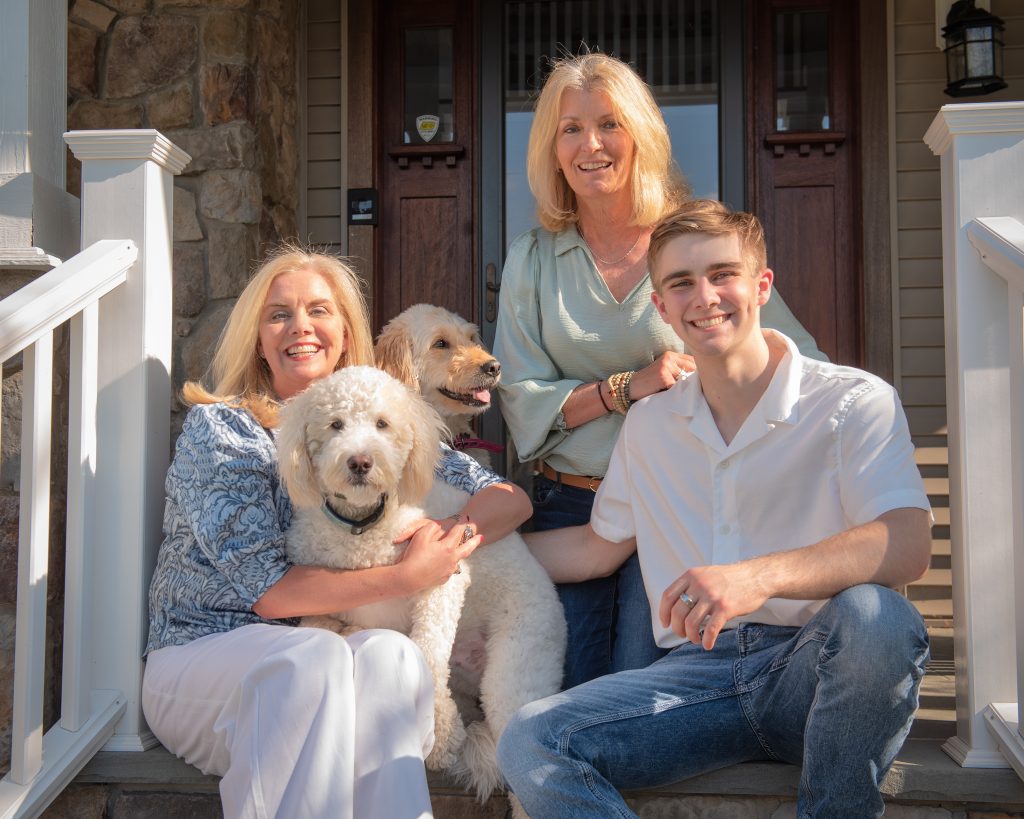
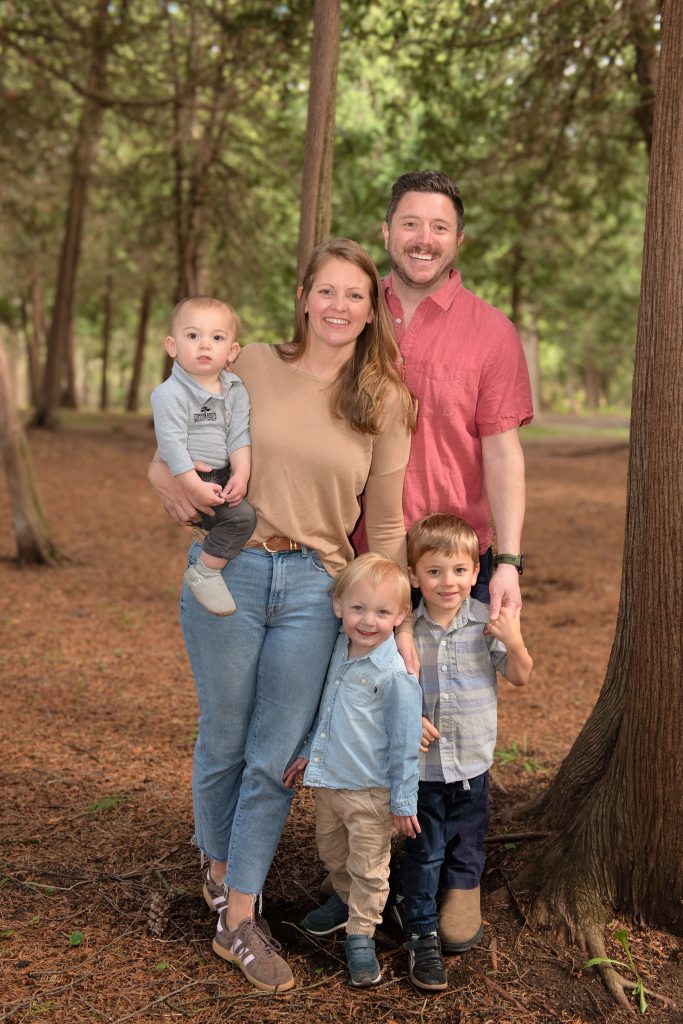
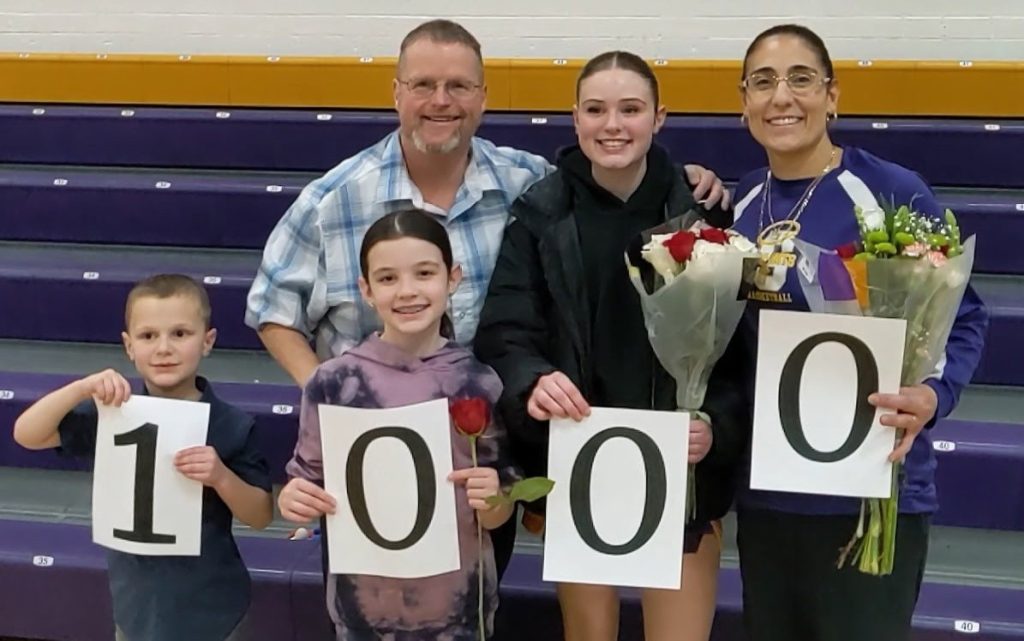
Saratoga Central Catholic basketball player Sophia Ryan celebrates with her family after scoring her 1,000th career point in a game against Lake George on Dec. 4. Photo provided by Athena DiLorenzo-Ryan.

SARATOGA SPRINGS — It’s been 45 years since the 1,000 career points threshold was crossed, but Sophia Ryan didn’t do it alone.

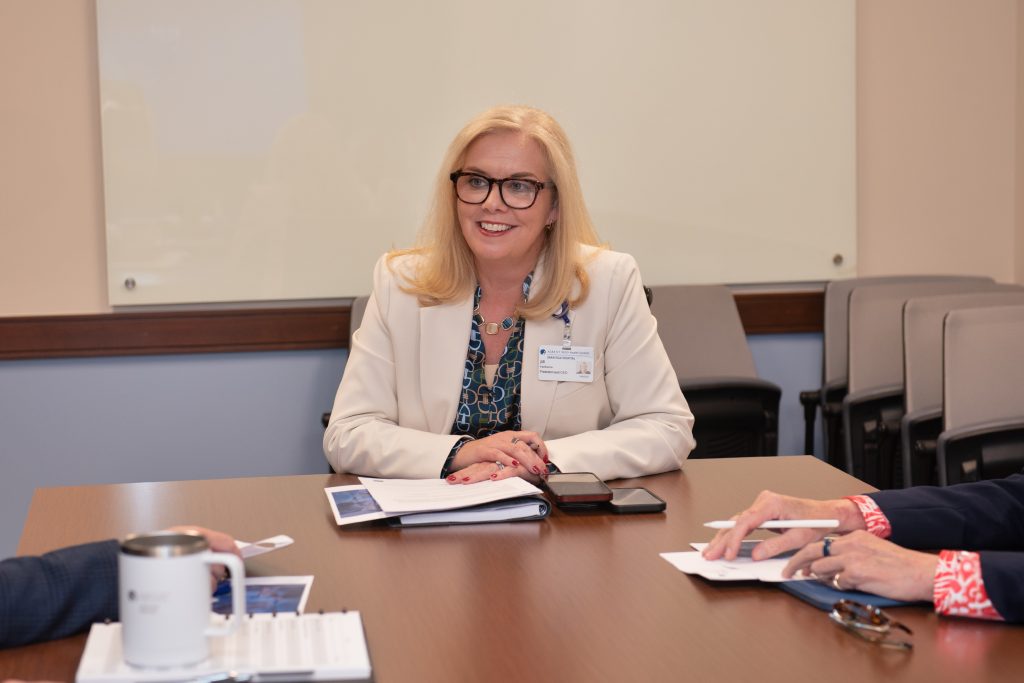
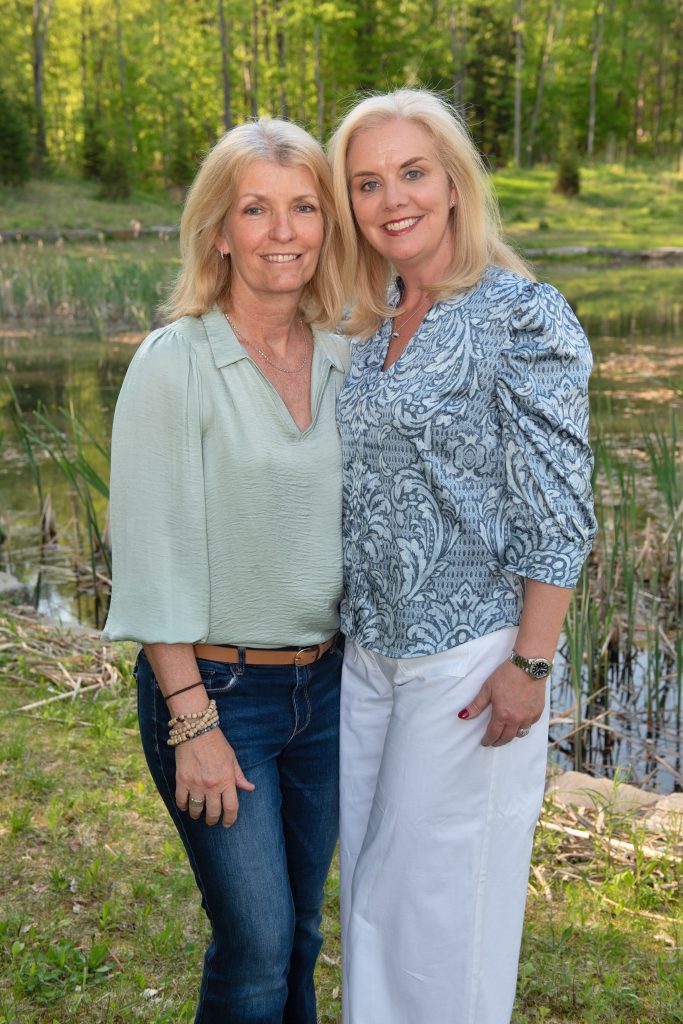
From the sidelines, Saratoga Central Catholic basketball coach Athena DiLorenzo-Ryan witnessed history being made by a girl who is both her star player and her daughter. 

“When she was going up for that last shot, I just had this exhilarating feeling come over me as a mother,” DiLorenzo-Ryan said. “As a coach, it’s great to see that big milestone for her… I didn’t want to show too much emotion as a mother. I think if I was out in the stands, I might have shed some tears.”

On Dec. 4, Ryan scored her 1,000th point as a high school basketball player in a victorious home opener against Lake George. The last time someone achieved that feat was in 1980, when Patti King finished her career with 1,031 total points. As of press time, Ryan was only 5 points away from breaking that all-time record. But don’t expect too much fanfare when it happens. Ryan and her coach/mom are laser-focused on winning. 

“We’ll just pat her on the back and say, ‘Congratulations,’” DiLorenzo-Ryan said. “She knows she’s got bigger fish to fry now. We’ve got some big games coming up, so [we’ve] got to refocus.”

Ryan wants to ensure her team finishes the season with a winning record, stays competitive against bigger schools, and works hard in practice. Although adept at scoring, Ryan seeks to contribute to her team in other ways; some stat-driven, others more intangible. As a leader, she offers advice and inspiration. As a player, she contributes by racking up assists, rebounds, and steals. “I like to try to make the right play every single time,” she said.

Ryan admires basketball players who maintain their composure during tense or exciting moments. “Cool under pressure” seems to be her mantra. But another source of inspiration is closer to home. “[My mom] is definitely someone that I want to play like,” Ryan said. 

Having a parent as a coach is “definitely hard at times,” Ryan said, “but she’s always there to support me, on and off the court.”

Henry Knox’s Holiday Stay in Saratoga

Knox recreated artillery sled. 
Photo provided by Saratoga County History Center

Two hundred and fifty years ago, a 25-year-old bookseller from Boston was a guest in Stillwater on Christmas Eve. His name was Henry Knox, and he was on an important expedition. Sent by General George Washington, Knox was to retrieve artillery that had been taken from several forts captured by the fledgling American Army and bring them 300 miles to relieve the Siege of Boston in the winter of 1775. Knox, well-read and possessing incredible confidence for someone with his level of experience, left Boston in November and headed to Fort Ticonderoga where 59 pieces of artillery were selected to be part of his “Noble Train of Artillery,” a phrase penned by Knox himself in a letter to George Washington. 

Knox arrived at Fort Ticonderoga on December 5th, 1775, and after overseeing the preparations for the first leg of the journey, which meant moving the cannon out of the fort and up to the landing at the northern end of Lake George, he proceeded ahead of the gun-laden boats and made his way to Fort George. His younger brother William stayed behind with the bateau, “pettiauger” and scow as they made their way up a cold, though not frozen, Lake George. 

After Henry arrived at Fort George, he was delayed while waiting for sleds, draft animals and snow. While there, he had time to write in his diary and catch up on correspondence with Gen. Philip Schuyler, Gen. George Washington and his wife Lucy. In these letters he described weather conditions, anticipated timelines and logistics for the upcoming overland journey. Washington had ordered Schuyler to assist Knox on this mission, and, since Schuyler was familiar with both the local landscape and many of the contractors in the area, he was not shy about informing Knox who he should, and should not, be working with. Knox had contracted with George Palmer of Stillwater to “purchase or get made 40 good strong sleds… and likewise that you would procure oxen or horses as you shall judge most proper to drag them.” In the same letter, Knox goes on to promise Palmer that, “whatever expense you are at I shall pay you immediately.” 

Palmer was a well-known Patriot, serving as a member of the Albany Committee of Correspondence. Though he clearly believed in the cause of independence, he may not have been above profiting handsomely from Knox’s naiveté. When Schuyler became aware of this agreement he pumped the brakes, telling Knox that paying Palmer to build new sleds for this journey was an unnecessary expense since these sleds already existed in the region and presumably could be hired at a much lower cost than what Palmer was about to charge. 

Knox followed Schuyler’s sound advice, though it was clear that Palmer was not happy about this reversal. A letter from Palmer to Knox written on Christmas Day 1775 expresses his disappointment in the cancelation of the contract and even warns Knox that there may be dangerous consequences in letting down all the people who stood ready to assist the artillery train. If Knox responded to this thinly vailed threat, it has been lost to history. 

Knox left Fort George ahead of the artillery to go to Schuyler in Albany and work out the new plan for obtaining sleds. Though pages of his diary are missing during this time, it seems that he left on December 24th in the middle of a heavy snowstorm. After noting that Judge “Dewer” helped him obtain a sleigh to get to Stillwater, he explains how difficult it was to make forward progress in the snow. Stopping at Arch McNeals in Saratoga (now Schuylerville) to take in a meal, they left there at 3pm, “it still snowing exceeding fast” and only made it to Stillwater before having to stop for the night. He spent the night at Ensign’s Tavern and woke up on Christmas morning to over two feet of snow on the ground. While he had worried just a few days earlier that there would not be enough snow for the sleds, now there was too much snow for him to even make it to Schuyler’s house. He notes, “we got a sleigh to go to Albany but the roads not being broken prevented our getting farther than New City (now Lansingburgh) about 9 miles above Albany – where we lodg’d.” 

Knox eventually made it to Schuyler’s house in Albany on December 26th though the travel continued to be very difficult and Knox “almost perish’d with the cold.” The first order of business was to send for George Palmer and see if an agreement could be reached regarding the much-needed sleds. A lengthy conversation took place between Palmer and Schuyler, but they remained at an impasse over the price Palmer demanded and he was eventually dismissed. Schuyler then took matters into his own hands to obtain the sleds and draft animals, sending out his wagon master to make connections with local teamsters. By New Year’s Eve, the wagon master had returned to Schuyler’s, with the names of the teamsters who were on their way to Fort George with sleds to begin loading the cannon. Knox estimated that approximately 124 pairs of horses were employed to move the 60 tons of artillery. While it is often thought that oxen were used exclusively to pull the artillery train, from Fort George to Springfield, Massachusetts, it was primarily horses that were given this task. 

With the matter of the sleds and draft animals settled, and the desired snow blanketing the ground, Knox and his noble train were finally on their way towards Boston. Though difficulties still lay ahead for this expedition, they wouldn’t experience any more significant delays and by the end of January, they had arrived in Cambridge. In the coming weeks Washington’s army would successfully mount several cannons atop Dorchester Heights in a move that convinced the British Army it was time to leave the city of Boston, which they did on March 17, a date still known as “Evacuation Day”.

Knox’s successful mission was a key victory in the American War for Independence. It showed the British that the American Army was capable of completing complicated expeditions, it showed Washington that Knox was someone he could rely on and it boosted the morale of the Patriots, who knew they were up against an army that bested them in numbers, experience, material and money. It was a feat worth celebrating. 

And even now, 250 years later, we are continuing that celebration. This December, a bi-state commemoration is taking place in honor of Knox. Programs and processions are taking place all the way from Crown Point to Dorchester Heights. In Saratoga County, several events are scheduled on December 13th and 14th, with Knox Fest at Fort Hardy Park, an 18th Century Candlelight Concert at the Arts Center on the Hudson in Mechanicville, and a ceremony at the Knox Trail Marker in Soldiers and Sailors Park in Waterford. These events are all free and open to the public and we encourage you to come experience this history in your backyard. For more information on these events, and others across the region, visit knox250.com

First Snowstorm Sees Double Digit Crashes in Saratoga County

Residents were advised to stay indoors when the first major snowstorm of the 2025-26 winter season hit the capital region this week. 

The storm started around 7 a.m. on Dec. 2, with heavy snow reported across the county. Within 24 hours, several inches of snow had fallen with one report in Clifton Park seeing 10.6 inches of snow by 11:30 that night, according to the National Weather Service. The highest total for Saratoga Springs was 7.1 inches, reported on the morning of Dec. 3. 

While the snowfall total was well above the 0.3 inches usually seen on Dec. 2 historically, it falls well short of the 11.2 inches seen during a snowstorm in 2019 and far below the single day record seen on Dec. 17, 2020 when 32 inches of snow fell in Saratoga Springs. 

During the storm, New York State Police responded to 49 accidents and disabled vehicles in Saratoga County, the majority of which occurred on the I-87 according to a New York State Police Blotter. Conditions on the interstate got so bad that at 1 p.m., State Police asked drivers to avoid driving on the highway due to accidents between the Twin Bridges at the Saratoga-Albany County line and exit 16 in the town of Wilton. 

The snow also prompted the Saratoga Springs Department of Public Works to declare a snow emergency in order to clean up from the storm. The emergency went into effect at 8:00 p.m. Dec. 2 and ended Dec. 4 at 8:00 p.m.

During the emergency, residents were required to move their vehicles to a cleared or plowed parking space every 12 hours or risk being towed or ticketed. 

“I want to applaud the DPW workforce for their efforts today in keeping the roadways safe, and I am declaring this snow emergency to help with the snow removal efforts in the coming days,” said Marshall. “Please be courteous and conscientious of the DPW team while they work through the night and day to cleanup from this storm.”

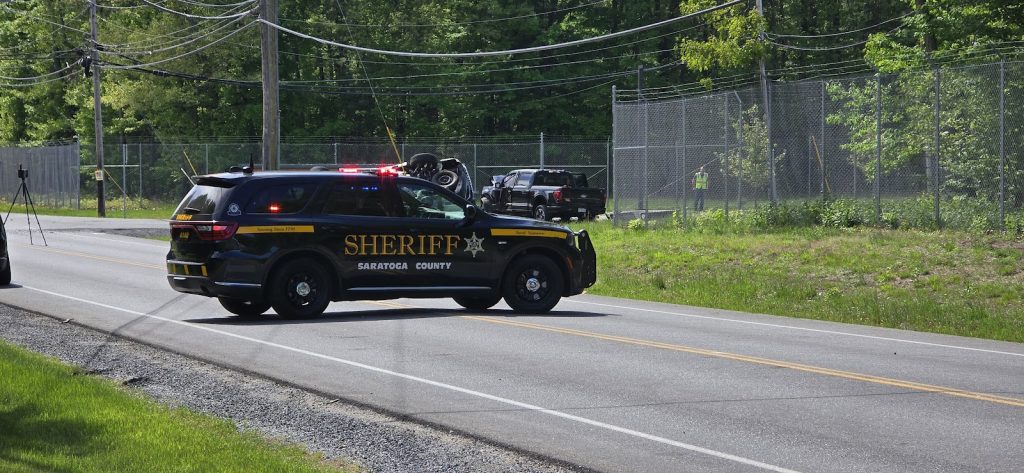
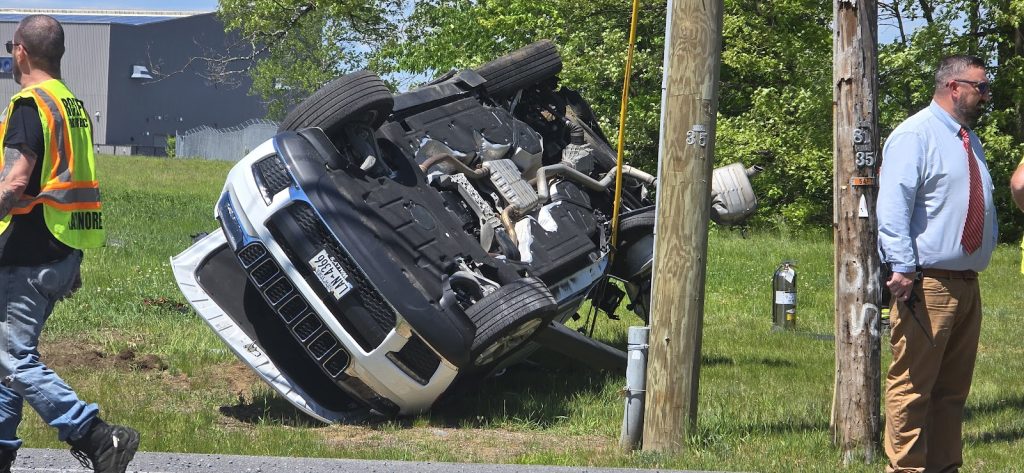
It wasn’t all bad news. Due to the snow, school districts including Saratoga Springs, Ballston Spa and Schuylerville closed and declared a snow day for the students and teachers. 

No Real ID? Pay a $45 Fee.

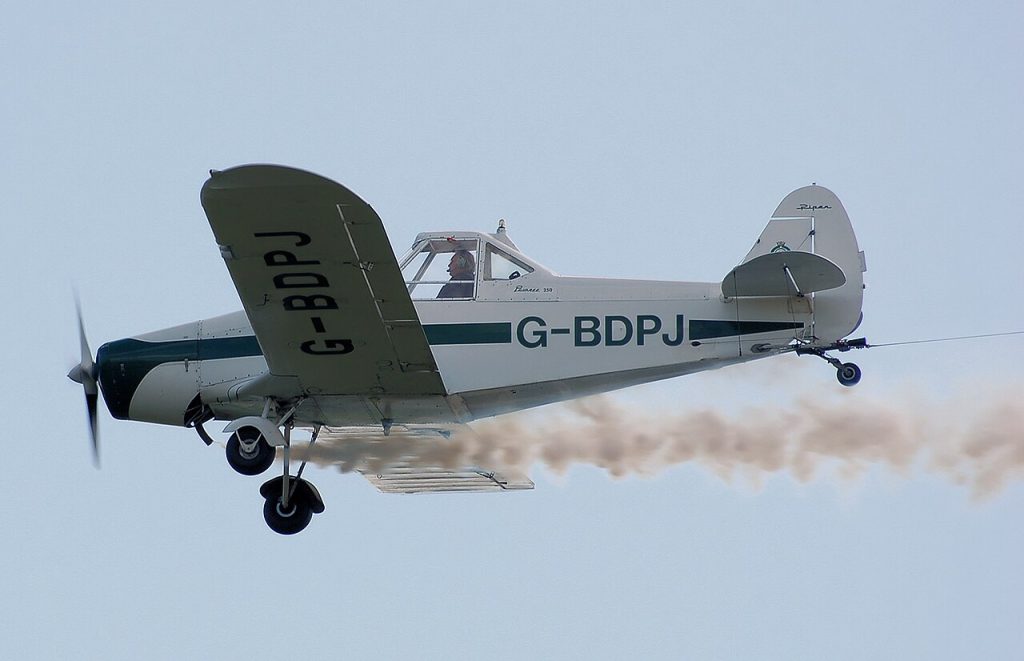
Got Real ID? Green Road Sign with Low Flying Airplane Just Above with Landing Gear Down.

 A new rule published by the Transportation Safety Administration (TSA) will make travel more expensive for those without a real ID. 

Starting Feb. 1, 2026, travelers going through airport security checkpoints without a real ID or other approved document will have to pay a $45 fee under the TSA Confirm.ID program, the agency announced on Dec. 1. 

Notice of the fee was first published on Nov. 20. At the time the proposed fee was $18, however it was updated due to a reevaluation of costs and historic precedent. Once the fee is paid, travelers will be able to use their ID for 10 days. 

While 94% of travelers currently use a Real ID or other accepted form of ID, TSA expects those who don’t a real ID to have longer waits at checkpoints. 

“Identity verification is essential to traveler safety, because it keeps terrorists, criminals, and illegal aliens out of the skies and other domestic transportation systems such as rail,” said Senior Official Performing the Duties of Deputy Administrator for TSA Adam Stahl. “The vast majority of travelers present acceptable identification like REAL IDs and passports, but we must ensure everyone who flies is who they say they are. Beginning February 1, travelers who do not present an acceptable form of ID at our security checkpoints and still want to fly can pay a $45 fee and undergo the TSA Confirm.ID process. This fee ensures the cost to cover verification of an insufficient ID will come from the traveler, not the taxpayer. The security of the traveling public is our top priority, so we urge all travelers to get a REAL ID or other acceptable form of ID as soon as possible to avoid delays and potentially miss flights.”

Acceptable forms of ID include:

• REAL ID-compliant driver’s licenses or other state photo identity cards issued by Department of Motor Vehicles (or equivalent) State-issued Enhanced Driver’s License (EDL) or Enhanced ID (EID)

• U.S. passport

• U.S. passport card

• DHS trusted traveler cards (Global Entry, NEXUS, SENTRI, FAST)

• U.S. Department of Defense ID, including IDs issued to dependents

• Permanent resident card

• Border crossing card

• An acceptable photo ID issued by a federally recognized Tribal Nation/Indian Tribe, including Enhanced Tribal Cards (ETCs)

• HSPD-12 PIV card

• Foreign government-issued passport

• Canadian provincial driver’s license or Indian and Northern Affairs Canada card

• Transportation Worker Identification Credential (TWIC)

• U.S. Citizenship and Immigration Services Employment Authorization Card (I-766)

• U.S. Merchant Mariner Credential

• Veteran Health Identification Card (VHIC)

The TSA is encouraging those without a Real or acceptable form of ID to pay the fee in advance of their flight with more information to come regarding how to pay at specific airports. 

The Real ID law was first passed in 2005 and started roll out in 2008 buy has faced challenges due the COVID-19 pandemic and state implementation, according to reporting from the Associated Press. TSA began requiring a Real ID in May 2025 however passengers without one only got a warning and additional screening. 

Saratoga Springs to Hold Participatory Budgeting Vote December 6-12

 The Saratoga Springs Participatory Budgeting Committee announced Cycle 4 voting will be held December 6-12. 

City residents aged 18 and over may vote online using the program portal at https://pbstanford.org/2025-saratoga-ny or using this QR code. The program, which was introduced to Saratoga Springs by Commissioner of Finance Minita Sanghvi, has received an overwhelmingly positive response over the four years it has operated. 

 “I am thrilled with the project proposals we received this year. Our theme for 2025 projects is the Year of the Child, and the response has been amazing,” Sanghvi said, “Saratoga Springs is fortunate to have such creative energy around providing services and opportunities for young people.” 
Participatory Budgeting Committee Chair, Jeff Altamari, stated that the Committee volunteers put in many hours this year to make ’The Year of the Child’ theme successful. He noted they took great satisfaction in their work. 

The Cycle 4 ballot includes nine projects: 

Caffe Lena Folk Club Kids Concert Series ($12,700) A free and weekly concert series for preschoolers and their caregivers at Caffe Lena. A professional folk trio performs interactive songs to support early childhood development, social skills, and a love of music. The program is drop-in with no barriers to participation. 

Children’s Museum Revolutionary War Education ($8,050) The Children’s Museum at Saratoga will create and present educational programs about the lives of children during the American Revolution. Programs will be offered at the museum, in Saratoga Springs classrooms, and at public spaces like the farmers’ market. It connects local history to the nation’s 250th anniversary celebrations. 

Division Street Elementary Paint and Sip Art Night ($800) A “Paint and Sip” art night for students and their families at Division Street Elementary School. Led by the school’s art teacher, families will create paintings together in a fun, guided setting. The event aims to build community and connection between families and the school. 

Division Street Elementary New Art Room Kiln ($5,900) A new kiln will be purchased for the Division Street Elementary School art room to replace the aged and inefficient kiln currently in use. The new kiln will allow as many as 3,000 students to enjoy pottery projects over the next ten years. 

National Museum of Racing Field Trips ($7,726) Funds field trips for hundreds of local students from Saratoga Springs and the Public Library’s Afterschool Program. The money will cover the cost of bus transportation and any related expenses. This removes financial barriers, allowing students to experience the museum’s history and art collections. 

Pitney Meadows Exploration Garden Expansion ($30,000) This project will expand the children’s Exploration Garden at Pitney Meadows Community Farm into Saratoga’s first public natural play landscape. It will feature interactive zones for music, gardening, and sensory exploration, all built with natural materials. The space is designed for child-led, unstructured outdoor play and learning. 

Saratoga Arts Young Writers Poetry Workshop ($8,450) A free, six-week poetry workshop for youth ages 10-18, led by the Saratoga Springs Poet Laureate, Jay Rogoff. Participants will learn writing skills and explore different poetic styles, culminating in an optional public reading at Caffe Lena. The program aims to foster creative expression and literacy in a supportive environment. 

Saratoga Farmers’ Market Kids Club & Nutrition Education ($29,993) 

This project expands the Farmers’ Market Kids Club to run year-round and partners with Cornell Cooperative Extension to provide nutrition education at the market and in four local elementary schools. Children can earn “produce coins” at the market to spend on fresh fruits and vegetables at the market. The goal is to increase access to healthy, local food and teach lifelong healthy habits. 

Saratoga Springs Housing Authority – Jefferson Terrace Playground ($31,500) A new playground will be installed at the Jefferson Terrace housing complex. It will provide a safe and dedicated space for children living there to play, socialize, and be active. The playground is intended to foster community and support child development. 

The Participatory Budgeting Committee along with Finance, Public Works, and Recreation reviewed all proposals, considered cost, public benefit, feasibility, and need. The final step in the process is for the City Council to decide which projects receive funding – an item on the agenda for the council’s December 16 meeting.

To Be and Not to Be: Saratoga Heads to State Championship, Schuylerville Falls in Semifinals


Saratoga Springs celebrates its 2025 Section 2 Class AA football championship, while Schuylerville repeats as 2025 Section 2 Class C champs. Photos via Section 2 Athletics.

MIDDLETOWN — For only the second time in the team’s history, the Blue Streaks football squad is headed to the JMA Wireless Dome in Syracuse to compete in a state title game.

Saratoga Springs will vie for the Class AA championship against the undefeated, Syracuse-based Christian Brothers Academy (CBA) on Saturday.

To earn their shot, the Blue Streaks first had to vanquish Mamaroneck in the semifinals. They did it, with a final score of 28 to 14, by earning three touchdowns in the first quarter, creating a deficit the Tigers couldn’t overcome. In that contest, quarterback Bobby Morris completed all 5 of his pass attempts for 94 yards and a touchdown. On the receiving end of the 55-yard touchdown completion was junior wideout Gavin Lafrance. 

The run game, per usual with standout back Benjamin Coryea, was exceptional. Coryea rushed for 172 yards and 2 touchdowns on 19 carries. Morris added 5 carries, 35 yards, and a rushing touchdown of his own. Also clutch in the contest, nailing all four extra point attempts, was kicker Olivia Mancini, who is currently ranked 13th in the state in PAT kicks made and 20th in total kicking points.

The next hill to climb will be a steep one for Saratoga. CBA Syracuse hasn’t lost a game since Nov. 13, 2023. They are 12-0 this season and finished 14-0 the past two seasons. A Blue Streak victory would be unexpected, but then again, the team’s entire season has been one big, successful surprise.

Elsewhere in high school football postseason play, the reigning Section 2 Class C champion Schuylerville Black Horses were felled by the Bronxville Broncos, 49 to 16, in the state semifinals. The Horses mounted a fourth-quarter comeback attempt, racking up 16 points in the final stanza, but it was too little too late for a team overwhelmed by Bronxville’s steady stream of touchdowns.

For Schuylerville, quarterback Ben VanVegthen tossed for 126 yards and a touchdown, adding 42 rushing yards. On the ground, junior Blake Cumm led his team’s rushing efforts, scooping up 52 yards and a touchdown on 9 carries.

The loss to Bronxville snapped the Horses’ 22-game win streak. Their season ended with an 11-1 record.

New Book Spotlights the Revolutionary Schuyler Sisters


Book cover of “Pride and Pleasure: The Schuyler Sisters in an Age of Revolution” via the publisher, Farrar, Straus and Giroux.

SARATOGA SPRINGS — Angelica and Elizabeth Schuyler had just reached their early 20s when their country home in present-day Schuylerville was incinerated.

“On October 11, surrounded and desperate, his army depleted by casualties, [General] Burgoyne petulantly put the torch to Schuyler’s house, barns, and mills, reducing everything to ashes and charred timber,” writes Amanda Vaill in her new book, “Pride and Pleasure: The Schuyler Sisters in an Age of Revolution.” “On the thirteenth he began negotiations for capitulation, and on the seventeenth his entire army of nearly six thousand men, seven thousand muskets, and forty-two cannon—in addition to tents, blankets, and other military provisions—was surrendered to Horatio Gates at a meeting place ‘150 rods south’ of the still smoking ruins of Schuyler’s estate.”

The Schuyler sisters not only bore witness, but also participated in a turbulent time of war, death, and the pursuit of a republic. The odds seemed to be always stacked against them, just as the ragtag colonists were thought to have little chance of success against the British Empire—that is, until Burgoyne’s surrender at Saratoga changed everyone’s fortunes.

The remarkable story of the Schuylers, especially the glamorous Angelica and the steadfast Elizabeth (wife to Alexander Hamilton), have been recounted time and again, most famously in the “Hamilton” musical and in Ron Chernow’s brilliant biography, “Alexander Hamilton.” But there’s often been a tendency to cast these characters in supporting roles, relegating them to shiny accessories.

The historical record reveals Angelica and Elizabeth to be fascinating figures in their own right; well-read, insightful, and influential women living in a time when women’s ambitions were restricted. Vaill, a bestselling author and Emmy-nominated screenwriter, explores their stories in her new book.

In advance of her Dec. 3 appearance at the Northshire Bookstore in Saratoga Springs, Vaill spoke with Saratoga TODAY about her new tome. Below is our interview, which has been edited for length and clarity.

Saratoga TODAY: Of all the things you could have written about, why the Schuyler sisters?

Amanda Vaill: If you look at my past publications, you’ll notice maybe that what I seem to be attracted to are these kind of turning point moments in history when things are changing. The ground is shifting under everyone’s feet… I’m attracted to this like bees to honey and I like thinking about the way people interact with those moments; how they’re caught up in them, how much they can influence them or not, how much they are affected by them. And in this case, I had these two women who did something so different from what they would have been expected to do. They didn’t just marry the right guy, they married the wrong guy [laughs]. They married really wrong guys, and one of them actually so much so that she had to elope, and her parents threatened to disown her. Of course, they didn’t. But Alexander Hamilton, even though Philip Schuyler became enamored of him…he was a real outsider. And the fact that these women decided, ‘Oh, I think I’ll cast my lot in with this guy,’…I thought that was awfully intriguing.

ST: I’d love to talk a little about Eliza. On paper, Angelica’s life seems so exciting and romantic, but Eliza always seems like someone who gets cast as a dull background character.

AV: Oh, you have put your finger right on it.

ST: What makes Eliza more interesting than perhaps we’ve been led to believe?

AV: If I may say so, I think a lot of historians who’ve looked at [Angelica and Elizabeth Schuyler] are as enthralled by Angelica’s flirtatious charm as men in her own time were, and I think they all kind of want to date her… But the fact is, [when] these very same people think about Eliza, ‘Well, she was a good housekeeper. She could do the household finances. She could bear a bazillion children. She could do all of these things. They’re not very glamorous. Don’t I wish I had that person at home to do all my stuff for me.’ I feel as if people have willfully not paid attention to the evidence in front of their eyes. She is a beautiful woman. She was as beautiful as her sister. In some respects, maybe more so… They’re ignoring the things that she did to help Hamilton’s career, and it’s not just by being a hostess, although she was one. When people maintain that she wanted Hamilton to leave the government, they’re only relying on one witness for this… She also, of course, helped Hamilton with drafting his political papers and memoranda. She was there when he wrote the memoranda that justified the Bank of the USA. And in fact, [she’s] probably the person who read all of the horrific, thick tomes about economic history because it’s her name in those books, not his… She has an incredible ability to run things. Once Hamilton is dead, she’s able to collect all of his papers, which is an extraordinary undertaking. This little woman is traveling all up and down the eastern seaboard copying letters… She ran an orphanage for 20 years, an entirely woman-run nonprofit, and got it a state charter. She got money from the state. She got bills passed that would enable it to receive funding. She did all of that. This woman is really pretty formidable.

ST: Near us, we have the Schuyler family’s country estate. Could you talk about why you think these types of sites are important? If you go to the estate, what can you learn about the family and about the people who lived there?

AV: The thing that’s really stunning about going to the historical residence is the scale that life was lived on in this country. If you go to England or any of those stately houses, they’re Downton Abbey. They’re giant, huge things. Even the grandest places here are not that imposing. It’s a big house that you could kind of manage by yourself. I mean, you couldn’t manage it by yourself if you had to do all the cleaning and everything yourself and keep things up to the standards that people wanted, and also take care of all the agricultural work that went along with them because these were working farms and they needed a lot of attention. But they’re not immodest. There’s a scale that’s human about them, and it makes you suddenly realize that these are people that lived at a scale that’s a little less grandiose than you might imagine, given the fact that Philip Schuyler owned thousands and thousands of acres of New York State… The other thing is the relationship that the houses have to the land around them. When you go to see them, you can see how the people lived in them and related to their surroundings in a way that you wouldn’t if you had never seen it. And of course, in the case of the Schuyler Mansion—where so much of the furniture has been reassembled or they’ve made real efforts to replicate some of the objects that they had to make the house appear, at least in part, the way it might have when [the Schuylers] were there—you get a sense of: What was the material texture of life for these people? What kind of beds did they sleep in? How many people slept in a bedroom? All that kind of stuff is fascinating.

ST: Based on your research, what do you think the Saratoga estate meant to the family?

AV: Oh, a lot. The first house, the one that was burned by Burgoyne, Catherine Schuyler was really fond of that house. She loved it. I think it must have caused her terrible pain when it was burned. But [Philip] rebuilt it pretty much as fast as he could. Right after it was destroyed, he used Army carpenters and construction people and he really got that house put up pretty quickly. It’s grander now than it was because originally, when it was first built, the floors of the second story were the ceiling of the first story. They weren’t putting insulation and layers of stuff in between. It was just, ‘Get something put up here quickly.’ Because they wanted to have a place there. He had all of that real estate and all of the farms and the mills and the fisheries along the river there, and I think it was important to him to be able to be close to them to supervise them. But the family also appears to have had a real fondness for the house and the country because Albany was not New York City, but it was a pretty bustling small city. And Saratoga was just the country, and I think they loved it the same way people do now.

Amanda Vaill will appear in person at the Northshire Bookstore in Saratoga Springs on Dec. 3 at 6 p.m. Her book about the Schuyler sisters, “Pride and Pleasure,” was released on Oct. 25 and is available everywhere books are sold. 

Local Professor Hopes to Use Cutting-Edge Tech to Improve Horse Industry


Spectators prepare to hear business pitches at Startup Saratoga, an annual event that occurred this year at Innovation Center Saratoga in Ballston Spa. Photo by Jonathon Norcross.

BALLSTON SPA — Startup Saratoga—an annual event similar to “Shark Tank” that allows local innovators to pitch their business ideas—took place, appropriately enough, at Innovation Center Saratoga last Thursday. 

Five entrepreneurs presented their ideas to a packed house of business leaders, investors, mentors, and students. Of those five pitches, one was especially applicable to Saratoga Springs and its equine industry.

Riley Studebaker, a professor at Rensselaer Polytechnic Institute (RPI) who focuses on advanced digital fabrication, is perhaps best known as the founder of MetaOrnate, a company that installed the first, permanent 3D-printed ceramic façade in the western hemisphere in 2024.

But Studebaker also grew up on a horse farm, and his latest ambition is to use a new method of 3D scanning and printing to better the equestrian world.

Saddles, Studebaker said, can be uncomfortable for horses, even when those saddles are designed for a specific horse. And since horses typically only wear their saddles for a relatively small amount of time, there’s not enough opportunity for the animals to break in their saddles in the way that a human might break in a new boot. That’s where 3D scanning and printing technology comes in.

Studebaker wants to fabricate “exact replicas of unique horses’ backs to passively break in saddles when not in use,” he said during his Startup Saratoga pitch. 

The RPI prof acknowledged that some existing companies already provide a similar service, but he said these services were one-size-fits-all, lacked customization, and don’t respond to the curvature or asymmetries of horses’ backs. “It’s not that good because it’s not that accurate,” Studebaker said.

Studebaker’s solution is to use a combination of 3D scanning and what he called a “novel” method of 3D printing to create an uber-precise replica of horses’ backs that would allow saddles to be broken in without the horses having to do much of anything. This process of scanning and creating a horse’s back would only take about five days, Studebaker said.

And because horses are athletes with bodies that can change shape, the 3D scanning and printing service could be repeated a number of times to create up-to-date replicas of horses’ backs. Studebaker’s initial strategy would be to market these products to horse trainers while also partnering with saddle manufacturers and horse show venues. Some lucky horse owners might even be able to get one of these 3D-printed products for free. 

“We want to make some and give them away as first-place prizes for high-profile horse shows in the Saratoga region to get some customer feedback,” Studebaker said. “From there, an active subscription is $800 per scan; four scans per year.”

Although any small boost to a horse’s comfort could positively impact its performance and thus result in more prize money, Studebaker emphasized that the horse owners he’s spoken with prioritize the well-being of their animals most of all.

“Honestly, horse people just love their horses,” he said. “One of them articulated it to me in this capacity: ‘Owning a nice show horse is like owning a race car that’s also your best friend.’”