The Economic Effects of Natural Disasters

interior of an office completely flooded, objects floating in water and selective focus on a chair. 3d image render. concept of problems at work.

Natural disasters can have a significant impact on the economy of an affected region. From hurricanes and earthquakes to tornadoes and wildfires, these disasters can cause extensive damage to infrastructure, homes, businesses, and agriculture. The economic consequences of natural disasters are wide-ranging and can have lasting effects on both local and national economies.

One of the most immediate impacts of a natural disaster is the destruction of property and infrastructure. Homes, buildings, roads, bridges, and utilities can be damaged or destroyed, leading to costly repairs and rebuilding efforts. The costs associated with rebuilding can be substantial, especially in cases of widespread devastation. Insurance claims, government aid, and private donations play a crucial role in funding these recovery efforts, but they may not always be enough to cover all of the costs.

In addition to the physical damage, natural disasters can also disrupt businesses and industries, leading to a loss of revenue and jobs. Businesses may be forced to close temporarily or permanently due to damage from a disaster, resulting in lost income and layoffs. Entire industries may be affected, such as agriculture, tourism, or manufacturing. The disruption to supply chains can also have ripple effects on other businesses and sectors of the economy.

The costs of recovery and rebuilding after a natural disaster can strain government budgets at all levels – local, state, and federal. Emergency response, cleanup, and rebuilding efforts require substantial resources, and governments may need to allocate funds from other programs or raise taxes to cover the expenses. In some cases, governments may need to seek financial assistance from international organizations or other countries to help cover the costs of recovery.

Natural disasters can also have long-term economic impacts on affected regions. Areas that experience frequent disasters may struggle to attract investments and businesses, as investors may be wary of the risks associated with living or doing business in such areas. Property values may decrease, and homeowners may have difficulty obtaining insurance coverage or selling their homes. In extreme cases, entire communities may be abandoned as residents relocate to safer areas.

Perhaps ironically, natural disasters can also stimulate economic activity in some cases. The rebuilding and reconstruction efforts can create jobs and stimulate demand for goods and services, boosting the local economy in the short-term. Investment in disaster-resistant infrastructure and buildings can help prevent or mitigate the effects of future disasters, leading to longer-term economic benefits.

The economic impact of natural disasters is complex and multifaceted. While the immediate costs of damage and loss are significant, the long-term effects on businesses, industries, and communities can be even more profound. Governments, businesses, and individuals must work together to prepare for and mitigate the impacts of disasters, in order to minimize the economic consequences and build resilience in the face of future events.

Stephen Kyne CFP® is a Partner at Sterling Manor Financial, LLC in Saratoga Springs.   

Securities offered through Cadaret, Grant & Co., Inc. Member FINRA/SIPC. Advisory services offered through Sterling Manor Financial, LLC, or Cadaret Grant & Co., Inc., SEC registered investment advisors. Sterling Manor Financial and Cadaret, Grant are separate entities. 18 Division St, Ste 202, Saratoga Springs, NY 12866 518-583-4040

Dealing with Problems of Incapacity in New York

An concept Image of a power of attorney


The Interplay of Guardianships and Advance Planning

I have received a number of questions recently regarding guardianships, powers of attorney, and health care proxies.  There is a certain amount of confusion about the interplay between them, and I have put together a set of questions and answers in an effort to shed light on that area of the law.

How do you plan for your potential incapacity?

The best way to plan for your potential incapacity is to have a power of attorney (POA) and health care proxy (HCP) in place.  A POA allows you to designate someone to handle your financial affairs and an HCP allows you to designate someone to handle your medical decision making.

Does your POA take effect immediately?

Your POA will take effect immediately, unless you put a condition in the modifications section of the document that delays the effectiveness until after a particular condition is satisfied.  You can insert a condition that the POA shall not take effect until you have lost your mental capacity.

Does your HCP take effect immediately?

No.  HCPs take effect after you no longer have the mental capacity to make your own health care decisions.  For example, if you were in the hospital and unconscious, then the HCP would take effect, and the medical providers would turn to your HCP agent to discuss what decisions should be made regarding your treatment.

What if you lose mental capacity and do not have a POA or HCP?

In those cases, someone close to you, presumably a family member or friend, could petition to be appointed as your guardian under Article 81 of the New York Mental Hygiene Law.

What does it mean to have a guardian?

Guardianships can vary depending on what your needs are.  If your incapacity is expected to be temporary, the court can appoint the guardian to serve for a limited time.  The court also has an obligation to tailor the powers granted to the guardian to be only those necessary to address the nature of your incapacity.  

What type of powers could be granted?

The guardianship powers fall into two broad categories – powers granted as guardian of the person and powers granted as guardian of the property.  The personal powers relate to decisions regarding medical care, where you live, and who you have contact with.  The property powers relate to the handling of your financial affairs, including the management of your assets and income.

What does it mean to tailor the powers?

The court has an obligation to grant only those powers to the guardian that are necessary based on the level of your incapacity.  If your incapacity is severe, as it would be if you were in a nursing home with advanced Alzheimer’s Disease, then the powers granted would be extensive.  If you were living independently, and perhaps just needed help with some financial matters, then the powers granted may be somewhat limited.  The court needs to be judicious with what powers it grants, because whatever powers it grants to the guardian are essentially taken away from the person under guardianship.

Does it matter if a POA or HCP are already in place?

As part of the guardianship proceeding, the court will determine whether a valid POA or HCP is already in place.  If one or the other or both are in place, the court has the authority to keep them in place if it wishes to do so.  For example, the court may determine that a valid POA is in place with an agent who is appropriate, and therefore the court might not authorize guardian of the property powers.  However, if that same court determines no HCP is in place and assistance is needed with medical decision making, then it could appoint a guardian of the person with the proper authority to act regarding medical care.

Can the court revoke a POA or HCP?

Yes.  If the court believes that a POA or HCP is being misused or the designated agents are not living up to their obligations, then the court has the authority to revoke those documents and appoint a guardian.

What is the best way to plan for incapacity?

Although guardianships play an important role in providing assistance to individuals who have lost their mental capacity, guardianship proceedings are certainly more expensive and time consuming than having a POA and HCP in place.  The other distinct advantage of having a POA and HCP in place is that you will be sure that the people you want will be making decisions for you.  If you become incapacitated without those documents, you might have someone seek to be your guardian whom you would not want to be in charge of your affairs.

Planning for mental incapacity is an important part of your estate plan.  It is advisable to obtain counsel from an experienced estate planning attorney to make sure that you are prepared should the day ever come when you need help with your affairs.

On a separate note, I am pleased to announce that our firm has recently added three experienced attorneys to our Trusts and Estates Department.  Steven Thomas, James Wighaus, and Anna Myers, all formerly attorneys with the firm of Lavelle & Finn, have joined O’Connell and Aronowitz.  They bring with them a wealth of experience in estate planning, estate administration, and business law.  We would like to welcome them, and we look forward to making their expertise available to our clients.

Matthew J. Dorsey, Esq. is a Shareholder with O’Connell and Aronowitz, 1 Court Street, Saratoga Springs, NY. Over his twenty-seven years of practice, he has focused in the areas of elder law, estate planning, and estate administration. Mr. Dorsey can be reached at (518)584-5205, mdorsey@oalaw.com and www.oalaw.com.  

Safely Raking Leaves This Fall: Protecting Your Neck and Back

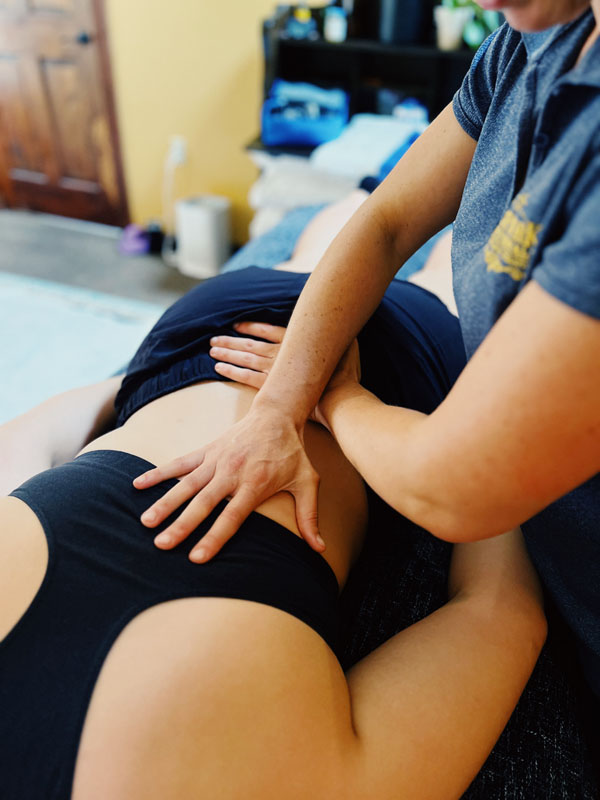
Woman waking up on the bed, morning stretching, pain in the back and neck.

As the vibrant leaves change color and begin to fall, many homeowners take to their yards to rake leaves and prepare for the winter months. While raking may seem like a simple task, it can put a significant strain on your neck and back if proper techniques are not followed. Here are some essential tips to help you rake leaves safely and avoid injury.

1. Warm Up Before You Start

Just like any physical activity, it’s important to prepare your body before raking leaves. Take a few minutes to warm up with gentle stretching exercises. Focus on the following areas:

Neck: Rotate your head gently from side to side and forward to backward. Shoulders: Roll your shoulders forward and backward in a circular motion. Back: Perform gentle side bends and forward stretches to loosen your spine. A proper warm-up increases blood flow to your muscles and can help reduce the risk of injury.

2. Use the Right Equipment

Selecting the right rake can make a significant difference in your comfort level while raking:

Choose a Lightweight Rake: Opt for a rake that is easy to handle. Aluminum or plastic rakes are typically lighter than traditional wooden ones.

Adjustable Handle Length: If possible, use a rake with an adjustable handle to suit your height, minimizing the strain on your back.

3. Pay Attention to Your Posture

Maintaining proper posture while raking is crucial for protecting your neck and back. Keep the following tips in mind:

Stand Tall: Maintain an upright posture with your head up and shoulders back. This aligns your spine and takes pressure off your lower back.

Bend Your Knees: Instead of bending at the waist, bend your knees to lower yourself towards the ground. This technique shifts the load from your back to your legs, which are better equipped for lifting.

Engage Your Core: Tighten your abdominal muscles while raking to provide additional support to your lower back.

4. Use Proper Raking Techniques

How you rake can affect your body’s strain levels. Here are a few techniques to consider:

Short, Controlled Strokes: Use short strokes rather than long, sweeping motions. This approach minimizes the strain on your back and neck and gives you more control over the leaves.

Alternate Hands: Switch hands periodically while raking to distribute the workload evenly between sides of your body. This can help prevent muscle fatigue.

5. Take Regular Breaks

Raking leaves can be physically demanding. To avoid overexertion, take frequent breaks:

Hydration: Drink plenty of water to stay hydrated.

Rest Periods: Every 15-20 minutes, take a short break to rest your muscles and stretch.

6. Know Your Limits

Finally, listen to your body. If you start to feel discomfort or pain, take a break. If you experience persistent pain in your neck or back, it may be wise to consult a healthcare professional. Additionally, if your yard is particularly large or your piles of leaves are substantial, consider enlisting help or hiring a service to assist with the task.

Conclusion:

Raking leaves can be an enjoyable way to engage with nature while maintaining your yard, but it’s important to do so safely. By following these tips and prioritizing your physical health, you can ensure that your fall yard work is both productive and pain-free. Remember, it’s better to take your time and remain safe than to risk injury for the sake of a pristine lawn. Enjoy the beauty of fall and happy raking!

Dr. Matt Smith has been a Chiropractor in Saratoga Springs for 36 years. He and his daughter Dr. Kevy Smith Minogue can be reached at 518-587-2064 or at MySaratogaChiropractor.com.

Celebrating a Legacy of Vision: Join Us for Our Ribbon Cutting Ceremony!

For over a century, our optometric practice has been a cornerstone of vision care in our community, and we’re excited to announce a new chapter in our storied history. On Friday, September 27th at noon, we invite you to join us for a special ribbon cutting ceremony at our new location, 6 Carpenter Lane. Come celebrate with us as we mark this significant milestone with champagne, sweet treats, and a glimpse into our expanded facilities!

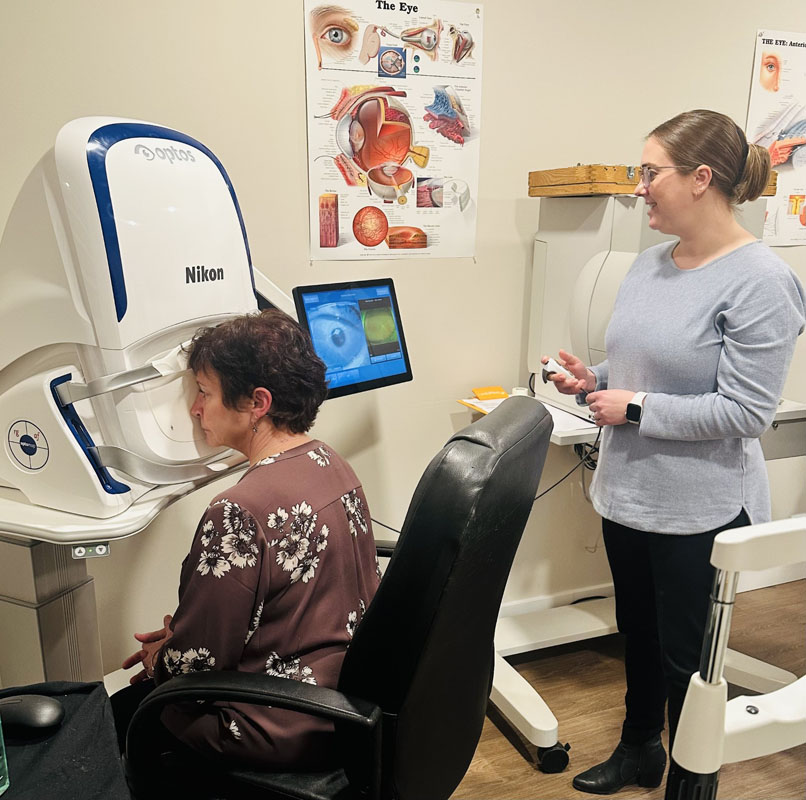
Our journey began in 1920 with Dr. Cline, a distinguished World War I veteran who returned home to establish our practice alongside his stepfather, a jeweler. This first location was on Broadway, where deJonghe Jewelers stands today. Dr. Cline’s legacy of dedication and excellence laid the foundation for what has become a cherished community resource.

In 1955, Dr. William Ling took over, bringing with him a rich history of service as a World War II veteran. Dr. Ling’s tenure was marked by his extensive contributions to the Saratoga community, including his roles as school board president, Lions Club officer, and president of the NYS Optometric Association. His commitment to both his patients and his community set a high standard for those who followed.

Susan Halstead, NYS and Nationally Licensed Optician, who joined Dr. Ling in 1993 and assumed ownership in 1997, continued this tradition of service and community involvement. Susan has been an active member of various local organizations including Soroptimist International, Saratoga Bridges, The Wesley Foundation Board, The Chamber of Commerce, Saratoga Hospital Foundation Board, The Flower and Fruit Mission, and the Women Presidents Organization. Her leadership and dedication have guided our practice through continued growth and innovation.

Our new location reflects this commitment to progress and community. The larger space allows us to introduce a Vision Therapy Doctor and state-of-the-art testing and exam equipment, enhancing the quality of care we provide. Our expanded boutique optical features a beautiful collection of eyewear and sunglasses for the whole family, including exclusive designer collections from LaFont, la Eyeworks, Gucci, Tom Ford, and Silhouette. We are especially proud of our specialty in pediatric care, with our participation in InfantSee, making us one of the few offices in the area that treats infants.

We are excited to share this new chapter with you and look forward to celebrating with our valued patients and community members. Please join us on September 27th at noon for our ribbon cutting ceremony at 6 Carpenter Lane. Let’s toast to a future filled with clear vision and continued service to our community!

For more information or to RSVP, please contact us at (518)584-6111 or via email: Susan@familyvisioncarecenter.com

Saratoga Senior Center Calendar


290 West Ave., Suite 1, Saratoga Springs, NY 12866 • 518-584-1621


September Events at the Center! 

Poetry/Storytelling
Open Mic

Friday, September 13, 1 pm | $5 suggested donation.
The program will begin with a reading by local poet Maggie Greaves followed by the open mic. Each open mic participant has 

five minutes to read two short poems or one long one. Storytellers have five minutes to tell, narrate or perform their piece. If you are reading a poem or storytelling, please be respectful of your fellow writers by reading for five minutes or less. Lite refreshments will be served.

Faylor, Melnicoff and Chirignan Trio

Sunday, September 29, 2 pm.
Join Melinda Faylor, piano; Melanie Chirignan, flute; Laura Melnicoff, cello; and Mercedes Soriano, artist for their performance at the Saratoga Senior Center.

Saratoga Arts made this program possible through the Community Arts Regrant Program, funded by the New York State Council on the Arts with the support of the office of the Governor and the New York State Legislature.

Save the Date – Saratoga Senior Center’s Annual Open House in partnership with CDPHP Healthy Neighborhood

Saturday, October 5, 9 am – 1 pm.
Join the Saratoga Senior Center for their annual open house and a sampling of all the Center has to offer! More information to come.

This event is supported by CDPHP and Home of the Good Shepherd. The interactive programs are supported by Saratoga Hospital and Capital Area Physical Therapy and Wellness.


Bus Trips (Open to the Public)

Bethel & Woodstock, NY Bus Trip

Wednesday, November 6.
Enjoy a guided tour of the Museum at Bethel Woods. This guided tour of the museum is an “Explore the 60’s” program, which will include discussions with teaching artists, art activations and will be focused on the Woodstock Music and Art Fair. Boxed lunch will be provided. After the tour & lunch, you will stop in Woodstock, NY on the way home to explore and shop. Must sign up by 10/23. Call (518)584-1621 with any questions or to sign up. (Meals are not included)

Trip Cost: $82 per person

New York City, NY Bus Trip

Wednesday, December 4.
There is no place quite like New York City at Christmas time. Spend a day on your own shopping at the winter village in Bryant Park, visiting the tree at Rockefeller Center, or experiencing a magical performance by the Radio City Rockettes. Whatever you choose, it’s sure to be a wonderful day! You will be dropped off at Bryant Park. Call (518)584-1621 with any questions or to sign up. (Meals are not included)

This bus trip is sponsored by Home of the Good Shepherd.

Trip Cost: $62 per person

Free Presentations
(Open to the Public)

“A Life Worth Supporting”

Monday, September 16 | 1 pm.
Presented by Gateway House of Peace
Join Kathleen Lowes, former board member and owner of Townley & Wheeler Funeral Home with Executive Director, Maggie Hasslacher, for the informative presentation about advanced planning and Gateway House of Peace. Come learn about Gateway House of Peace and how they support individuals and their families.

Resilience

Monday, September 30 | 1 pm.
Presented by Barry Loffredo
Life is burdensome a lot of the time. If you expect to be happy all the time, you will be sorely disappointed. Learn how to work up a resistance for the hard times.

Self-Management Techniques for Arthritis

Monday, September 23 | 10 am.
Presented by Sara Brown PT, Saratoga Hospital Regional Therapy Center
Join us for an informative session focused on managing arthritis and enhancing your well-being through effective self-care strategies. This event will explore the crucial role of mobility and nutrition in alleviating symptoms and improving quality of life. Learn practical exercises to maintain joint flexibility, discover dietary choices that reduce inflammation, and gain insights into daily habits that can help you manage your arthritis more effectively.

A Different Childhood

One of the things that has probably been overly important to me in my motherhood is making sure my children all have the same childhood. What a silly notion! But it’s been something on my mind for years: we did x, y, and z for the older boys, so we definitely need to do x, y, and z for the younger boys, that kind of thing. Which really is silly, I know, because our boys simply *will* have different experiences growing up, no matter what. Time marches on — and time changes everything.

For one thing, time equals experience, and experienced parents do parenting differently than first-time parents. There’s a funny comic I’ve seen that describes the different stages of parenthood: when your first baby drops his pacifier on the floor, you immediately sterilize it in boiling water before giving it back. When your second baby drops his pacifier on the floor, you run it under water before giving it back. When your third baby drops his pacifier, you give it a quick swipe on your pants before giving it back. It’s true! Things that you absolutely freaked out about as first-time parents don’t phase you at all once you have a couple more kids. 

With my first, I did the homemade baby food route for a while: I steamed and pureed veggies and made homemade applesauce. After a few kids, I was a jar-and-pouch devotee! I was also extremely attentive to strict schedules of eating and sleeping for my oldest. Though schedules have always remained an important part of my mothering, my youngest has a far more relaxed rhythm to his day than his older brother did — he regularly goes to bed far later than my older boys would ever have been allowed to do.

Another thing about time is that older parents aren’t up for as much as younger parents are. When we started our family, we were in our twenties — young and energetic. When our youngest was born, we were in our forties — and I was feeling old and always tired (I’ll let my husband speak for himself!). 

I think back to that young woman I was with all those babies and I’m amazed. I used to take all the kids to the grocery store with me — so many little ones in the cart and on the cart and walking next to the cart — and now, if I have to take my youngest, I’ll sometimes put off my shopping trip for later in the day or another day altogether just so I don’t have to have to tell him seventeen times to stop jumping and walk normally, or to say no to all his requests for all the things.

With the passing of time comes an increase of technology: type and availability. With my older kids, I was determined to keep a tight lid on technology. My oldest didn’t even touch a computer or a tablet or anything like that until he was introduced to it in school. But as my older kids became older and their own technology requirements increased — like the requirement to have their own Chromebooks for middle- and high school, and the phones we determined were necessary for the big boys now that pay phones no longer exist — it all trickled down to the youngers. My older boys sometimes let their little brothers play games on their phones (under strict supervision), and my youngest often instructs me to “look it up on your phone!” when he asks me a question that I don’t know the answer to.

I often find myself starting to sink into a lament about my little guys not having the same kind of unplugged childhood that my older boys did. I worry about how the older boys’ busy schedules — work, sports, friends, school — interfere with the younger boys’ peaceful time at home. I wistfully remember the long walks I would take with all my little ones during our long, slow days at home together years ago, that I simply don’t have the time for now with my little guys. My little boys are left in the care of others far more than my olders ever were because of my own work. The big boys grew up surrounded by babies and smaller children; my youngest wishes he had the same — he has frequently asked me for a baby brother, and smothers his baby cousins with hugs whenever he sees them (which isn’t nearly often enough for his liking). The older boys have always had to share their space, have always had to deal with a houseful of people and noise; my youngest will be the only boy living full time at home for the entirety of his high school years.

I’ve heard many times from those who grew up in big families that the older siblings and the younger siblings all have a sense of being brought up by totally different parents. We even joke about that in my own family of origin — it’s generally acknowledged that my two youngest sisters, who are nine and eleven years younger than me, were brought up with a different set of rules than the rest of us. It’s funny and makes for good stories, but it can also sometimes feel unfair, which I think is what I’m trying to avoid the most. In the end, all I can do is pray and do the best I can, as my mom is always reminding me, and keep loving my kids. I hope the school year has started well for all of you and your little (and not so little) ones!

Kate and her husband have seven sons ages 19, 18, 16, 14, 12, 10, and 5. Email her at kmtowne23@gmail.com.

What Happens When the Fed Lowers Interest Rates?

The Federal Reserve has been working aggressively for the last two years to rein in inflation without bringing the economy to a grinding halt. This is the “soft landing” you’ve probably heard about, and it appears it may have been mostly successful. Next week the Fed is widely expected to begin unwinding its strategy by lowering rates.

After the Federal Reserve decides to lower interest rates, there are several potential outcomes and implications for the economy and financial markets. This decision is typically made in an effort to stimulate economic growth, encourage borrowing and spending, and combat potential downturns in the economy. While the immediate effects of a rate cut can vary, there are some general trends and expectations that can be observed.

One of the first effects of a rate cut is a decrease in borrowing costs for consumers and businesses. Lower interest rates can make it more affordable to take out loans for purchases such as homes, cars, and other big-ticket items. This can stimulate consumer spending and investment, which in turn can boost economic growth and job creation. Businesses may also be more willing to invest in new projects or expand their operations when borrowing costs are lower, leading to increased economic activity and potential job growth.

In addition to lower general borrowing costs, lower interest rates can also impact the housing market. When interest rates are decreased, mortgage rates tend to follow suit, making it more affordable for individuals to buy homes or refinance their existing mortgages. This can lead to an increase in home sales and construction activity, providing a boost to the real estate market and related industries. However, lower interest rates can also contribute to rising home prices, as increased demand for housing can lead to competition among buyers and bidding wars in some markets.

Lower interest rates can also have an impact on the stock market. In general, lower interest rates can make stocks more attractive to investors, as the potential returns from equities may be more appealing compared to other investments such as bonds or savings accounts. As a result, stock prices may rise in response to a rate cut, especially for companies that are expected to benefit from increased consumer spending and economic growth. However, the relationship between interest rates and stock prices is complex and can be influenced by a variety of factors, so it is important to consider the broader economic and market context when analyzing the impact of a rate cut on the stock market.

Another potential effect of lower interest rates is a depreciation in the value of the U.S. dollar. When interest rates are lowered, investors may seek higher returns in other currencies or assets, leading to a decrease in demand for the dollar. A weaker dollar can make U.S. exports more competitive in international markets, potentially boosting demand for American goods and services. However, a weaker dollar can also lead to higher prices for imported goods, which can contribute to inflationary pressures in the economy.

Overall, the decision by the Federal Reserve to lower interest rates can have wide-ranging effects on the economy and financial markets. While the immediate impact of a rate cut may be positive for consumers and investors, it is important to consider the potential longer-term consequences and risks associated with lower interest rates. As always, continue to work closely with your Certified Financial Planner® professional to help ensure your financial strategy reflects changes in the markets and in your life.

Stephen Kyne CFP® is a Partner at Sterling Manor Financial, LLC in Saratoga Springs.   

Securities offered through Cadaret, Grant & Co., Inc. Member FINRA/SIPC. Advisory services offered through Sterling Manor Financial, LLC, or Cadaret Grant & Co., Inc., SEC registered investment advisors. Sterling Manor Financial and Cadaret, Grant are separate entities. 18 Division St, Ste 202, Saratoga Springs, NY 12866 518-583-4040

Beginning the Process for a Successful Estate Plan

When clients come to me for estate planning, they often struggle to know where to begin.  With the internet, social media, and now artificial intelligence, there is an overabundance of information available on estate planning.  What should you focus on and what is useless white noise?

Now that summer is over and the kids are back at school, this is an excellent time to take a breath and think about your estate planning.  Below is a set of questions and answers that are designed to help you focus on the important things and start the process of getting your affairs in order.

What should I do before meeting with an estate planner?

Before going to see an estate planner, you should compile basic information regarding your family, the people or entities you want to give to, and your assets.  Some attorneys use questionnaires to facilitate the gathering of this information.  If people request a questionnaire of me, I am happy to provide a basic form for that purpose.  It is also fine to simply write out the information on a couple of sheets of paper and bring that with you to the first meeting.

What information should I compile?

You should list the members of your immediate family, the members of your extended family which you would like to make gifts to, the friends you would like to remember, and any charitable entities that you wish to provide for.  In addition, you should compile a list of all your assets with their values and how they are titled.

What information is needed for those I want to give to?

For the family members, friends, and charities you would like to give to, you should have their full name as it should appear in any legal documents, their address, and their phone number.  For individuals, it is also helpful to have their age and to note whether they have any sort of disability.  People often ask whether social security numbers are necessary, and the answer is no.  When it comes to charities, you should note whether you wish to give to a local chapter or the national organization, if there is one.  It is also helpful to think about whether you want to designate the funds given to the charity for a particular purpose.

What information is needed regarding my assets?

As I noted above, you should get together the information regarding the values of all your assets and how they are titled.  You should not worry about getting precise values – estimates are fine.  Approximate values for real estate from an internet source like Zillow will suffice, or you can use your own estimate based on what you know has sold in your area.  Similarly, you need not provide values for monetary assets down to the penny.  It is important, however, to determine how the assets are titled.  Are they held by one person?  Are they held jointly with someone else?  Are they payable to a named beneficiary, like an IRA or life insurance?  If you are not sure on some of these questions, just provide what you do know, and the estate planning attorney can help you figure out the rest.

After I get this information together, what is the next step?

The next step would be to schedule a meeting with an estate planning attorney to discuss your wishes.  Most first meetings are in person, however if phone calls or Zoom conferences are preferable given your schedule, then such arrangements can likely be accommodated.

What will be discussed at the first meeting?

The attorney will likely go over what you have compiled regarding your family, who you would like to make gifts to, and your asset information.  There will likely be the need for some clarification and follow-up based on that initial meeting.  For example, the attorney may ask you to confirm with a financial institution that the beneficiary of a retirement account is in fact who you think they are.  As another example, the attorney may obtain a copy of a deed to make sure the real property you have is titled consistent with your wishes.

Will we discuss what documents are needed for the estate plan?

Yes.  The attorney will ask what documents you have in place now.  If you have copies of those documents, it is advisable to bring them with you.  Depending on their complexity, the attorney may be able to review them with you at the meeting or may need additional time to examine them and report back.  After reviewing what you have in place, if anything, there can be a discussion about what your goals are and what documents could be drafted and steps taken to accomplish those goals.

What types of documents will be discussed?

Typically, you will discuss whether a Last Will and Testament or a Trust would be advisable.  Those are the two main estate planning documents which will determine the disposition of your assets after you pass away.  Those documents are not mutually exclusive, it may be appropriate to have both a Will and a Trust, based on your circumstances.  In addition, you would likely discuss the need for a Power of Attorney, Health Care Proxy, and Living Will.  Sometimes those last two documents – Health Care Proxy and Living Will – are combined into one.

What else will be discussed?

You would also discuss the status of your assets that will pass outside of any Will or Trust, such as assets you hold jointly with someone else or assets that are payable to a named beneficiary.  An example of a joint asset would be a house you own with your spouse.  An example of an asset payable to a named beneficiary would be an Individual Retirement Account (IRA).

What happens after the initial meeting?

After the initial meeting, the attorney will make a recommendation for your estate plan, based on your goals and the information you have provided.  If you find the plan acceptable, then you can retain the attorney to represent you and move forward with the plan.

As with most things, knowing how to start the process is the first step.  Hopefully this review of the initial steps will help you on your way to crafting a successful estate plan.

Matthew J. Dorsey, Esq. is a Shareholder with O’Connell and Aronowitz, 1 Court Street, Saratoga Springs, NY. Over his twenty-seven years of practice, he has focused in the areas of elder law, estate planning, and estate administration. Mr. Dorsey can be reached at (518)584-5205, mdorsey@oalaw.com and www.oalaw.com.    

The Healing Power of Walking: Alleviating Back Pain Naturally

Back pain is a common ailment that affects many individuals, leading to discomfort and reduced quality of life. While there are various treatment options available, one simple and effective way to manage and even alleviate back pain is through regular walking. Walking, a low-impact exercise, offers numerous benefits for the body, including strengthening muscles, improving flexibility, and promoting overall well-being. In this article, we will explore how incorporating walking into your daily routine can help combat back pain and enhance your overall health.

1. Strengthening Core Muscles:

Walking engages the core muscles that support the spine, such as the abdominals and lower back muscles. By walking regularly, you can improve the strength and endurance of these muscles, which in turn helps stabilize the spine and reduce the risk of back injuries. Strong core muscles provide better support for the back, leading to improved posture and decreased strain on the spine.

2. Increased Blood Flow and Oxygenation:

Walking boosts blood circulation throughout the body, delivering essential nutrients and oxygen to the muscles and tissues in the back. Improved blood flow helps reduce inflammation and promote healing in the affected areas, alleviating pain and discomfort. The increased oxygenation of tissues also aids in repairing damaged cells and supporting the overall health of the spine.

3. Improved Flexibility and Range of Motion:

Regular walking can enhance flexibility in the muscles and joints of the back, reducing stiffness and promoting better range of motion. By incorporating walking into your daily routine, you can loosen tight muscles, improve flexibility, and prevent muscle imbalances that can contribute to back pain. A flexible and mobile spine is less prone to injuries and can better withstand daily activities.

4. Weight Management:

Maintaining a healthy weight is crucial for reducing the strain on the back and preventing back pain. Walking is a beneficial form of cardiovascular exercise that can help with weight management by burning calories and increasing metabolism. By incorporating walking into your exercise routine, you can effectively manage your weight, reduce excess pressure on the spine, and lower the risk of developing back pain associated with obesity.

5. Stress Reduction and Mental Well-being:

Walking not only benefits the physical body but also has positive effects on mental health and emotional well- being. Regular physical activity like walking stimulates the release of endorphins, often referred to as “feel-good” hormones, which help alleviate stress, anxiety, and depression. Lowering stress levels can also lead to a reduction in muscle tension and pain, including back pain.

Conclusion:

Incorporating walking into your daily routine is a simple yet powerful way to manage and alleviate back pain naturally. From strengthening core muscles to improving flexibility and reducing inflammation, walking offers a multitude of benefits for the body and mind. By taking proactive steps to include walking in your lifestyle, you can not only find relief from back pain but also enhance your overall health and well-being. Remember to start slowly, listen to your body, and gradually increase the intensity and duration of your walks to reap the full benefits of this accessible and enjoyable form of exercise.

Dr. Matt Smith has been a Chiropractor in Saratoga Springs for 36 years. He and his daughter Dr. Kevy Smith Minogue can be reached at 518-587-2064 or at MySaratogaChiropractor.com.

Saratoga Senior Center Calendar


5 Williams Street, Saratoga Springs • 518-584-1621

Open to the Public:

Senior Center Olympics

Wednesday, August 7 • 1 p.m.

Let’s celebrate the Olympic games! Play ring toss, ping pong, connect four, board games and more. Watch the Olympics live. Wear your favorite Olympic gear. Snacks and refreshments provided.

“They’re Off at Saratoga” with Charlie Kuenzel 

Tuesday, August 13 • 1 p.m. 

Charlie is President of the Saratoga History Museum and spends his free time educating and entertaining thousands of people about the Spa City’s history. This presentation will be a historical view of the 161 years of thoroughbred racing at Saratoga from John Morrissey to modern icons of the sport. Come and enjoy the history topic that has been such an important part of our city. Enjoy free pizza, refreshments and more.

Dine in Dinner with Home of the Good Shepherd 

Wednesday, August 21 • 5:30 p.m. 

Meatloaf with gravy, mashed potatoes, garlic green beans, gazpacho soup, and peach pie provided by Home of the Good Shepherd.

Senior Day at the Track – Sponsored by NYRA
Wednesday, August 28

Spend the day at the Saratoga Racetrack! Includes grandstand admission, burger or breakfast sandwich and beverage from the Trackside Grill, and a shuttle from the Center if needed. If you would like to use the shuttle, please contact the front desk to sign up for a time slot, spots are limited. Shuttle will pick-up at the YMCA pavilion parking lot.

Labor Day BBQ
Thursday, August 29 • 1 p.m.

Let’s celebrate with a Senior Center BBQ! Join us at the YMCA pavilion for a hearty lunch and live music with Bill Gervasio. Chicken, ribs, mashed potatoes, ice cream social and more will be provided. Play patriotic trivia, bingo, yard games and more. 

Van Trips in August 

Lunch bunch – jumpin’ jack’s drive in – Friday, August 9 • 11 am

Enjoy lunch at Jumpin’ Jack’s Drive In in Scotia, NY. Burgers, fries, milkshakes, and more! 

Pay $10 at sign up. Bring lunch money. Leave the Center at 11 am. Return about 2:30 pm.

Old Tavern Farm – Saratoga springs 

Thursday, August 15 • 12:30 pm

Old Tavern Farm is a private boutique thoroughbred-breeding farm on Saratoga Lake, that also produces wine, flowers and merchandise. Enjoy a tour of the facilities, behind the scenes experience of a working thoroughbred breeding farm, portfolio wine tasting, complimentary charcuterie and interaction with the thoroughbreds.

Pay $40 at sign up. Leave the Center at 12:30 pm. Return about 3:30 pm. This van trip is supported by the Alfred Z. Solomon Charitable Trust.

Saratoga National Historical Park, stillwater 

Wednesday, August 21 • 9:30 am

Enjoy a visit to the Saratoga National Historical Park. Watch a 20 minute video on the Battles of Saratoga, explore a Revolutionary War timeline exhibit, a display on the international effects of the American victory here and shop at the museum store. After, enjoy lunch at Carsons Woodside Tavern.

Pay $5 at sign up. Bring lunch money. Leave the Center at 9:30 am. Return about 2 pm. 

Oklahoma Track Tour, saratoga springs 

Monday, August 26 • 8:30 pm

Saratoga racing season is here! Enjoy a guided tour of the Oklahoma Track with staff from the National Museum of Racing. Learn fun facts about Saratoga’s first racetrack while watching thoroughbreds train. After, enjoy lunch at Shirley’s Diner.

*Must be able to walk independently during tour for up to one mile*

Pay $10 at sign up. Bring lunch money. Leave the Center at 8:30 am. Return about 1 pm. This van trip is supported by the Alfred Z. Solomon Charitable Trust.

TRIP POLICY

• Van trips are for members only

• One day bus trips are open to anyone regardless of age or residence.

• Multi-day bus trips and excursions are open to anyone regardless of age or residence.

• There are no refunds for van or bus trips unless canceled by the Center

• All times for our van trips are approximate. We do not guarantee a return time to the Center